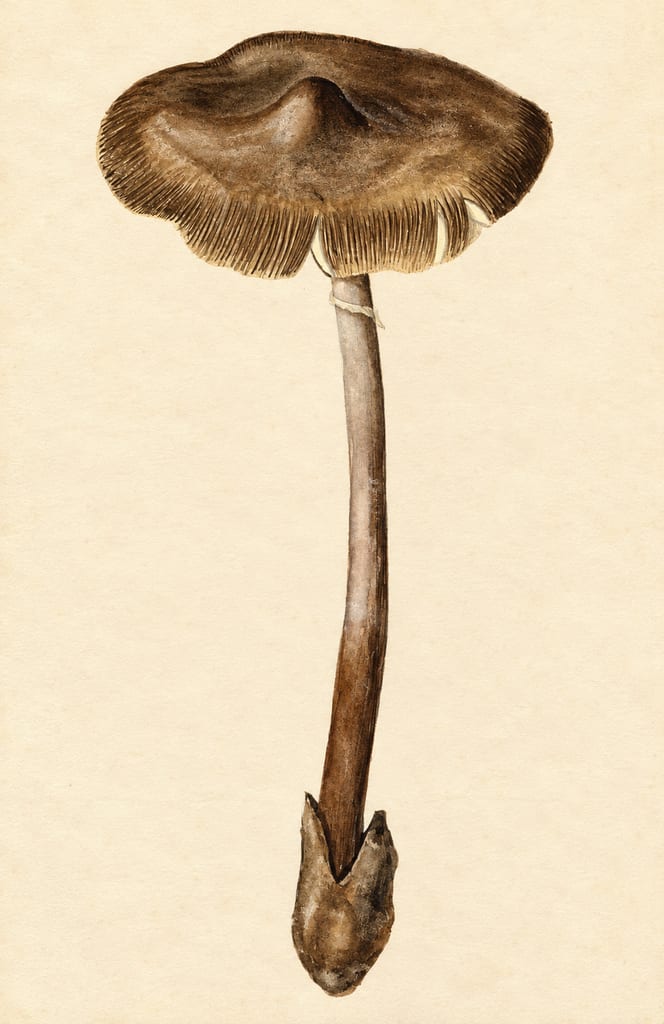
Amanita annulatovaginata
A wild ectomycorrhizal Amanita of the Congo rainforest, recorded as locally consumed in Tshopo province. Its preparation was not established, and the genus includes deadly species.
 FermenteaWhere food goes to change
Mushrooms
A wild Russula recorded as locally eaten in Tshopo province, DR Congo, in voucher-backed interviews. No preparation or toxicity assessment is recorded.
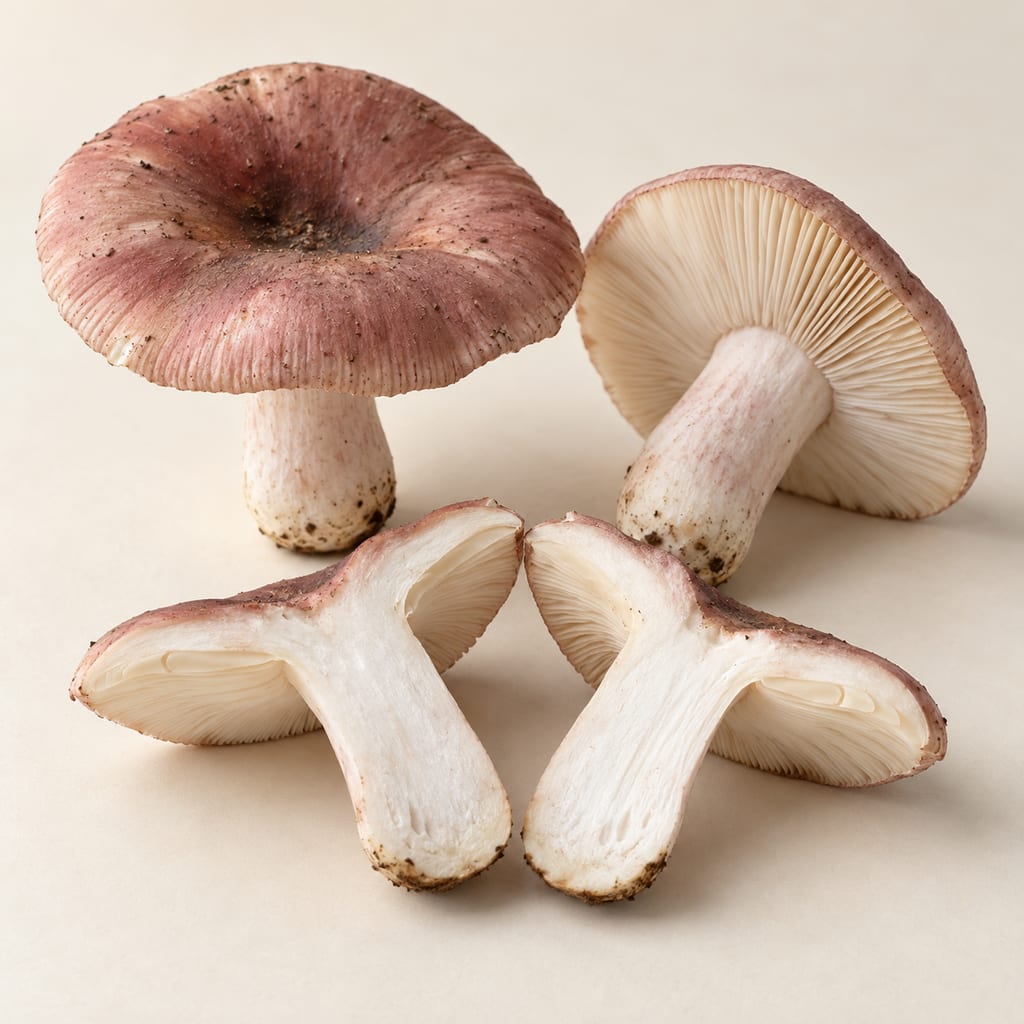
Russula inflata is a wild gilled fungus of the genus Russula, an ectomycorrhizal group that grows with trees. The research record gives the name without a common name and without a reconciled accepted name.
The same voucher-backed Tshopo survey that records Xerocomus spinulosus also records this fungus as locally consumed. The record does not establish a local name, the parts eaten, or the cooking method.
Like the bolete record, this is ethnomycological evidence of use. The research record states that it is not an independent toxicological assessment.
The record describes a rainforest fungus in association with trees. Its supply is recorded as wild.
Russula is a large genus whose members are not all eaten, and the sources read here give no identification features for this species. The page offers none.
Gather or eat no wild fungus on the strength of a catalogue listing, a description or a photograph. Identification needs a qualified expert, and the sources read here do not establish a safe preparation.
A mushroom is a brittlegill, a Russula, only when several features line up. The cap is usually brightly coloured. The gills are brittle: they snap when you try to bend them, and the flesh breaks cleanly like chalk instead of tearing into fibres. The stem carries no ring and no cup or sack at its base, and there are no veil remnants on the cap. The gills are attached to the stem, and a spore print is white, cream or dark yellow.
Two checks separate Russula from its look-alikes. Break a gill or cut the flesh: a brittlegill gives no milky juice, while a milkcap (Lactarius or Lactifluus) weeps latex. Then look at the stem. A ring on the stem, a cup or a sack or bulb with torn remnants at its base, or flesh that tears in fibres points away from Russula and towards Amanita, a genus that includes the deadly death cap and many other poisonous species. A mushroom with a ring or a cup at the base is not a Russula, whatever colour its cap is.
Recognising the genus is much easier than naming the species. Cap colour varies widely inside one species, so experts rely on the colour of the spore print, the taste, colour changes in the flesh, how far the cap skin peels, chemical tests and the microscope. A collector who is sure of the genus but not of the species should treat the species as unidentified.
Foragers have long sorted brittlegills by taste. Break off a small piece of cap flesh or gill, chew it for several seconds and spit it out without swallowing; the burn of an acrid species can take half a minute to build. Brittlegills that taste mild are the traditional edibles. Those that taste hot, peppery or acrid, and many bitter ones, are left alone because they irritate the stomach and bowel and can cause vomiting and diarrhoea.
The method works only inside the genus. Use it once the mushroom is positively a Russula, never to decide whether an unknown mushroom is safe: the deadliest mushrooms do not taste unpleasant, and a mild taste says nothing about an Amanita, a Cortinarius or any other family. Within Russula it is a screen for rejecting species, not proof of safety. Some mild species are poor eating, rare species are poorly documented, and a few brittlegills have been linked with poisoning. Cook what you eat, start with a small portion, and identify to species where you can. This record is not a field guide.
Local names, the parts eaten, the preparation, and whether the specimens match the vouchers under current taxonomy are not established. A specialist identification review and local culinary sources are needed.
Locally consumed in voucher-backed interviews in Tshopo province.
A wild ectomycorrhizal Amanita of the Congo rainforest, recorded as locally consumed in Tshopo province. Its preparation was not established, and the genus includes deadly species.
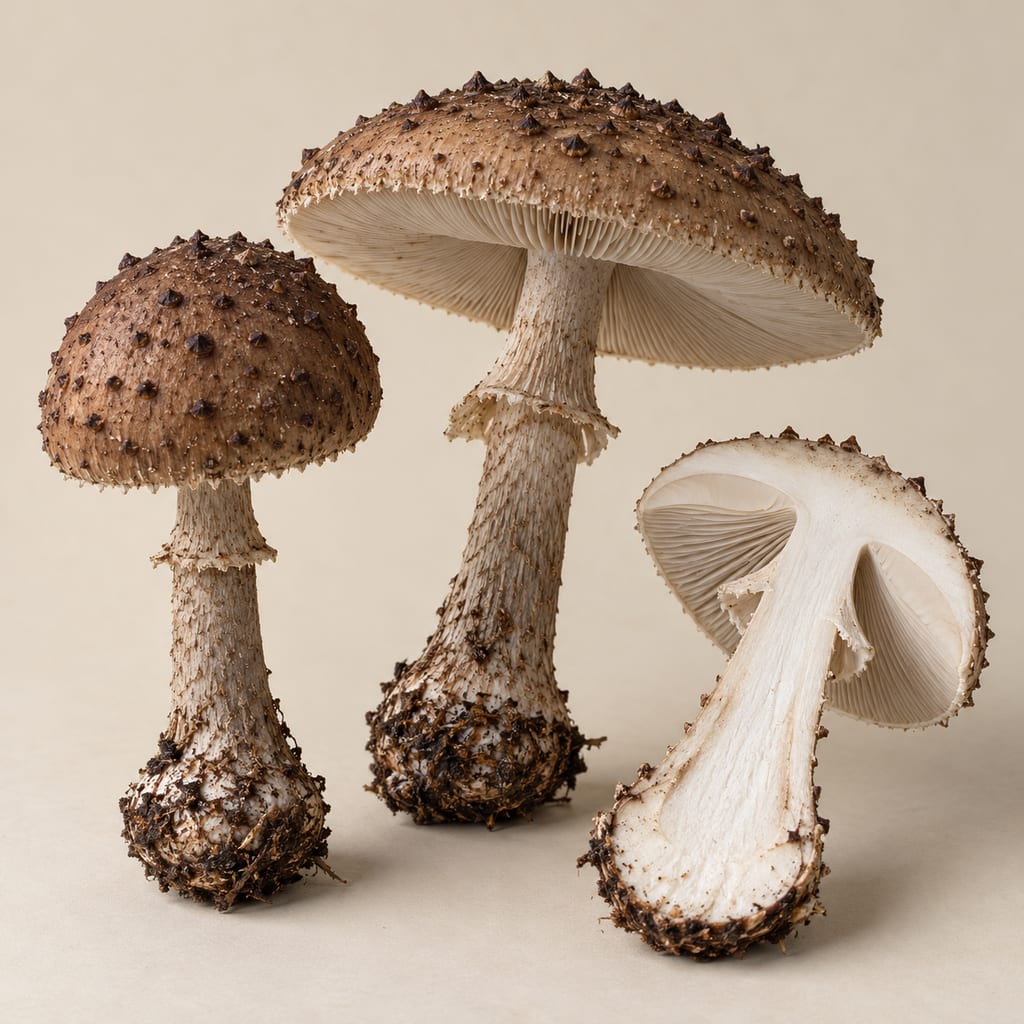
A wild ectomycorrhizal Amanita of the Congo rainforest, recorded as locally consumed in Tshopo province. Its preparation was not established, and the genus includes deadly species.
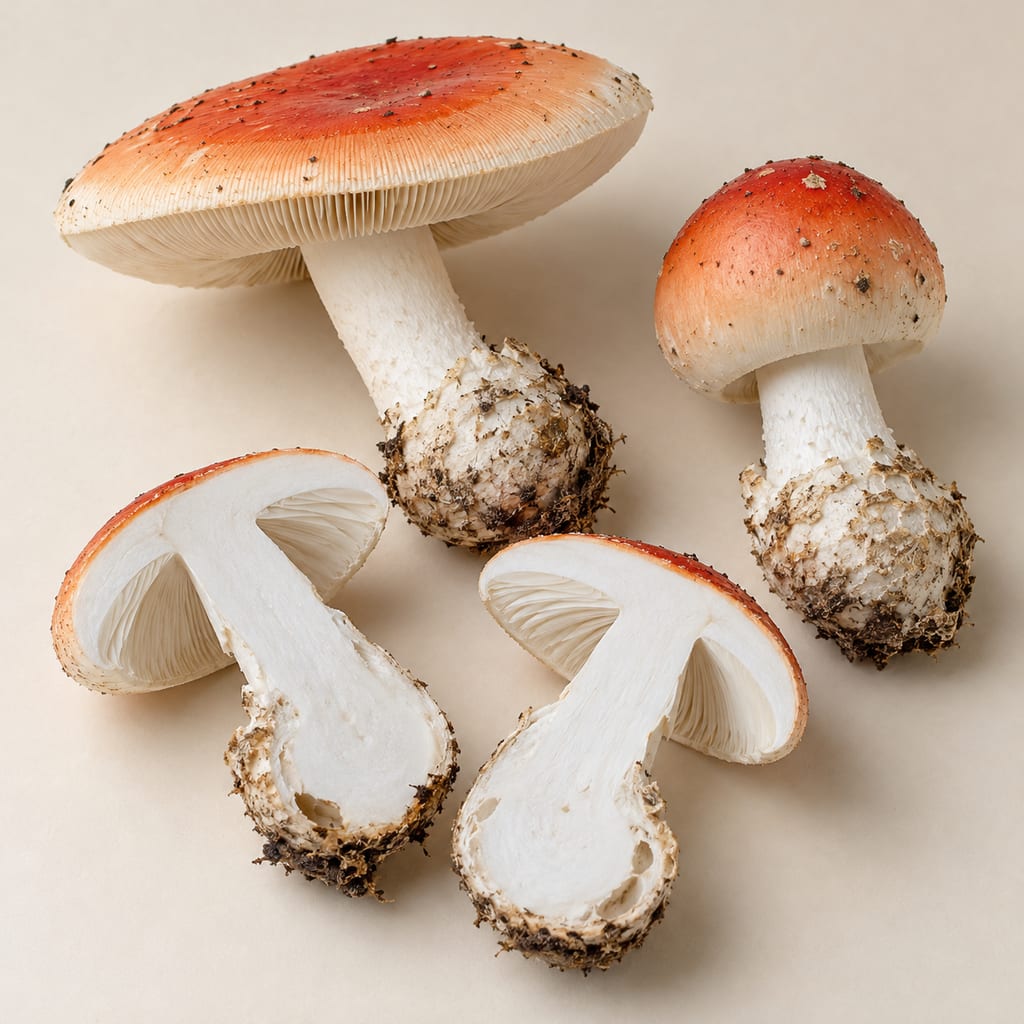
Amanita robusta Beeli is a poorly documented Central African Amanita known from voucher-backed rainforest collections in the Democratic Republic of the Congo and Cameroon. A Tshopo study reports local food use for a taxonomically supported voucher, but neither that record nor the name makes an unknown Amanita safe to identify or eat.
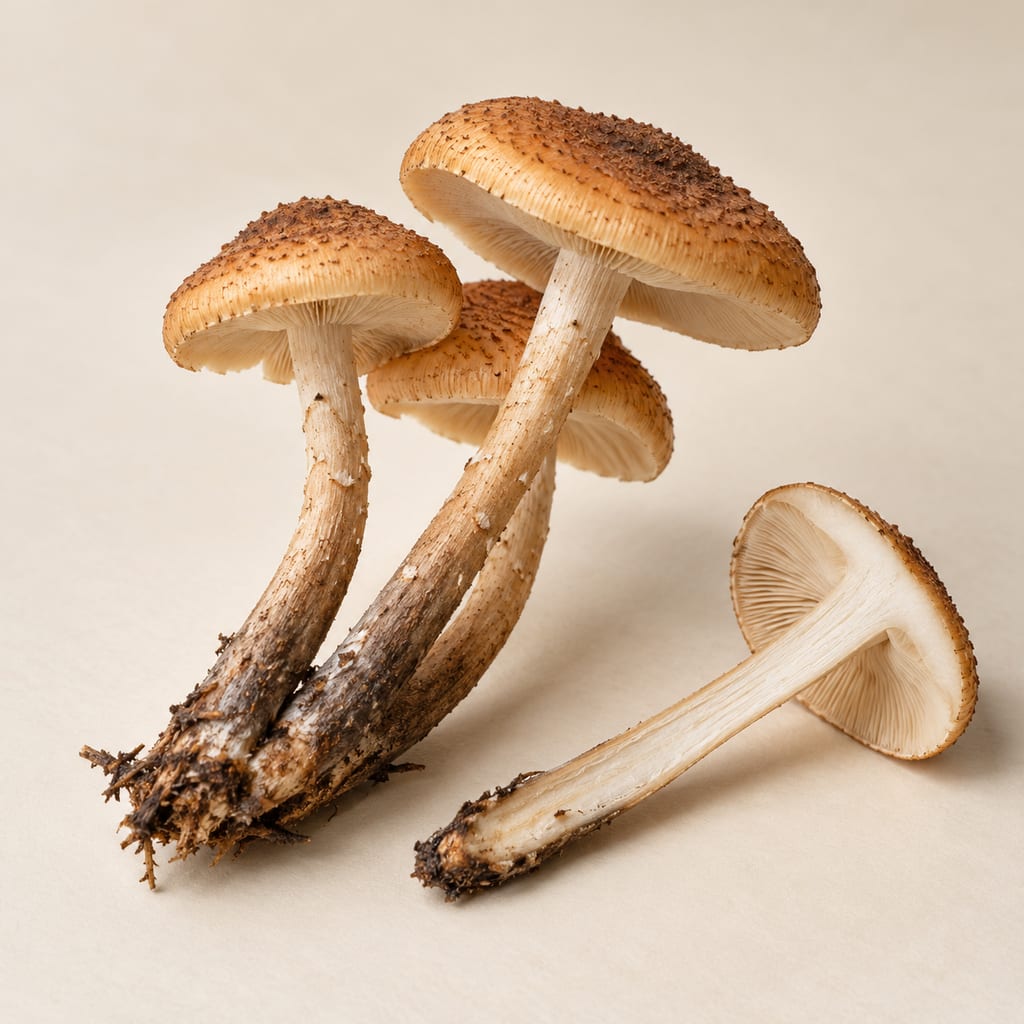
Armillaria heimii is a saprotrophic fungus of the honey-fungus genus, recorded as a wild food in Tshopo province, DR Congo. Its preparation and safety are not established in the sources.
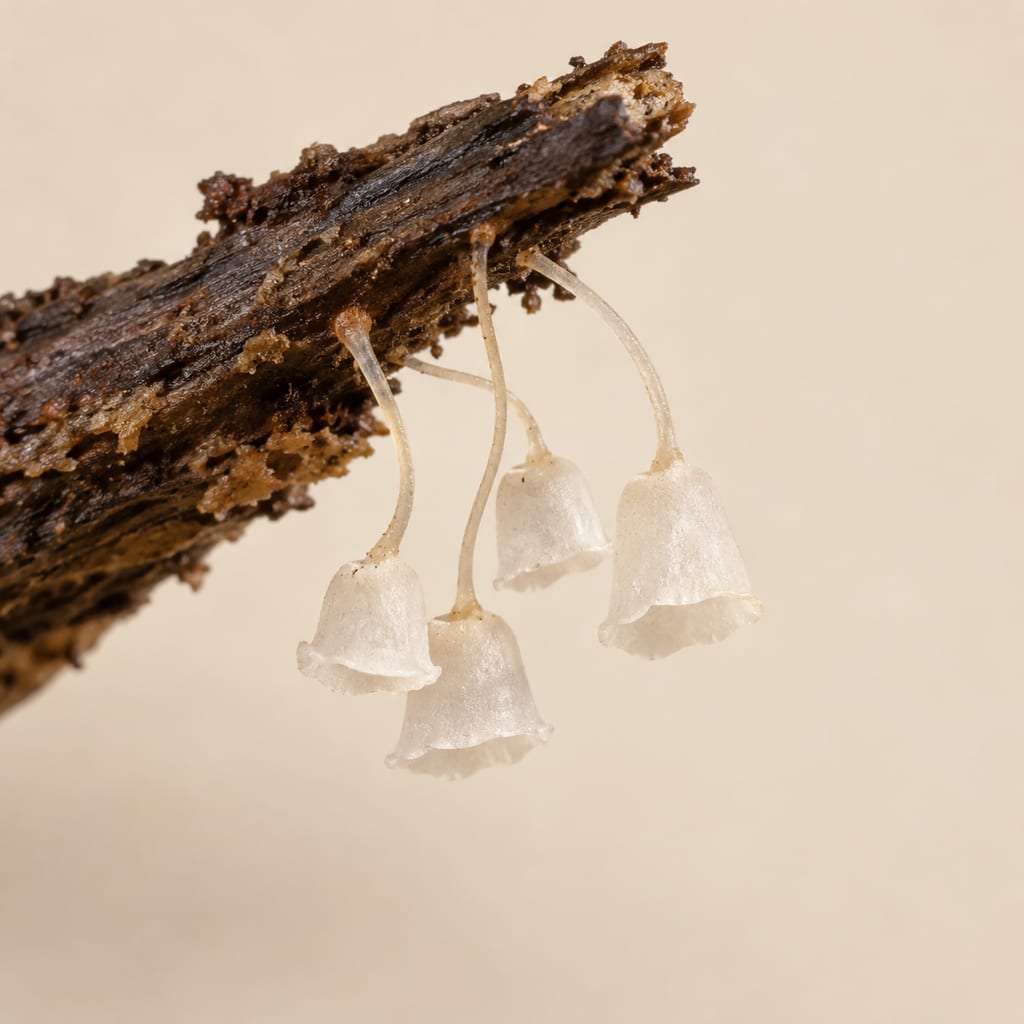
Calyptella longipes is a wood and litter decaying fungus of the rainforests of Tshopo province, DR Congo, where some ethnic groups in voucher-backed interviews eat it. Its preparation was not recorded.
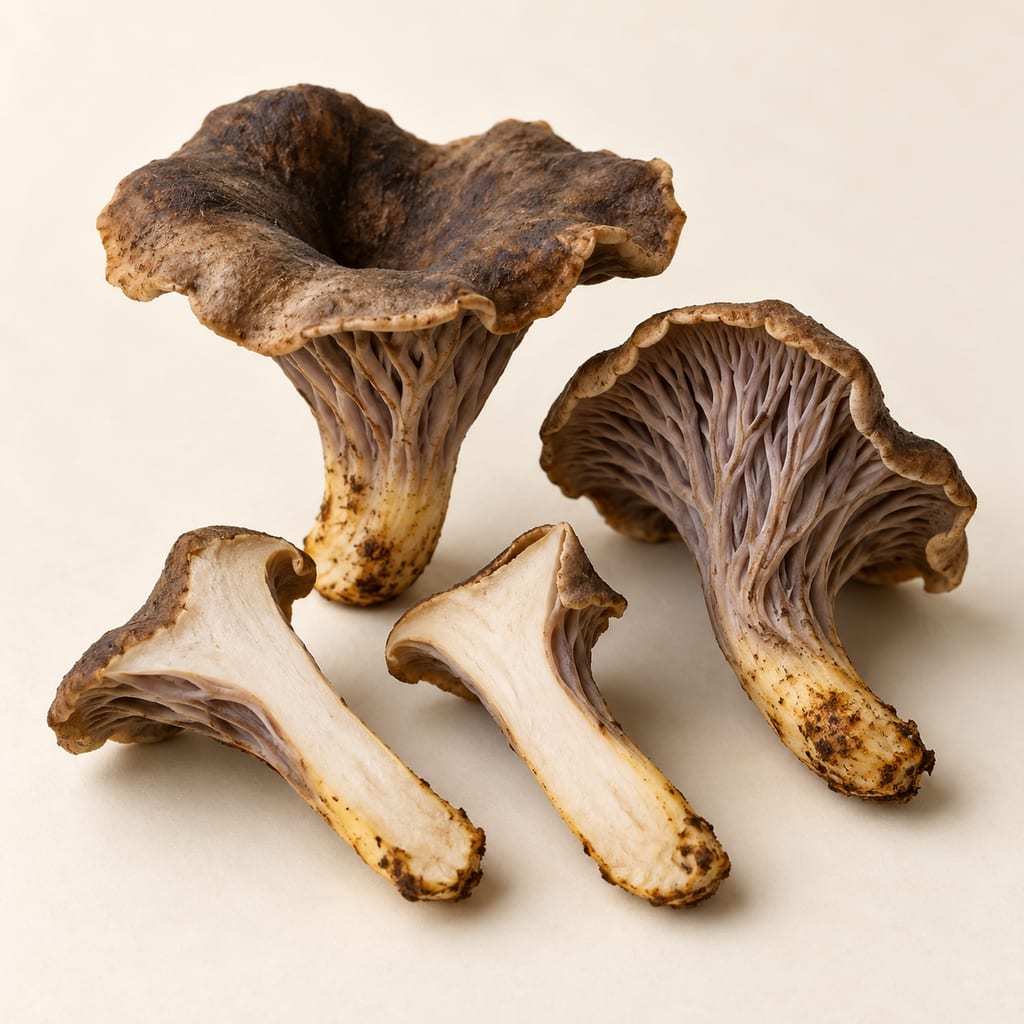
Cantharellus congolensis is an ectomycorrhizal chanterelle of sub-Saharan Africa, eaten in the Democratic Republic of the Congo under local names. Its edibility rests on food-use surveys, not on toxicity tests.
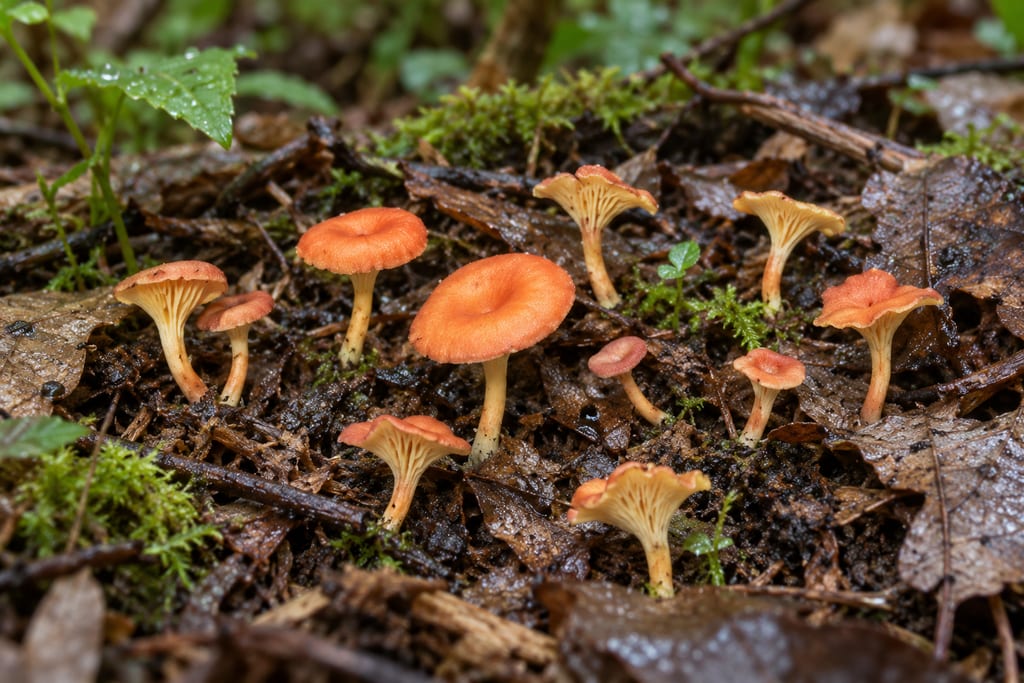
Cantharellus floridulus is an ectomycorrhizal rainforest fungus that informants in Tshopo province, DR Congo, eat in voucher-backed interviews. Its preparation is not recorded, and the source gives no toxicity statement.
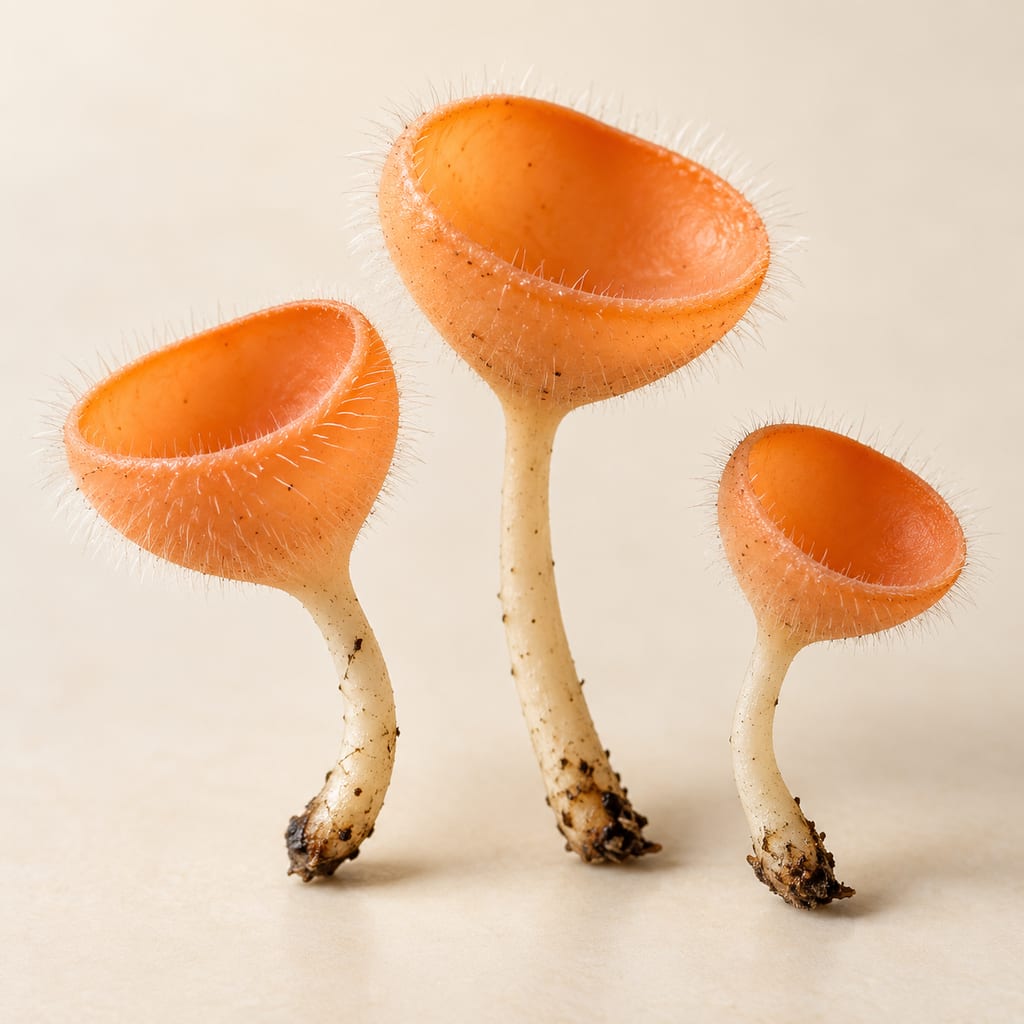
A forest cup fungus of the Tshopo province in the Democratic Republic of the Congo, recorded in local interviews as eaten. The species-level preparation is not established.
No community contributions have been published for this entry yet.
Sign in to contribute. Published comments and photos are free to read.
PubMed CentralHistory
Ethnomycological survey of wild mushrooms, Tshopo province, DR Congo (supplied research record)Recorded as locally consumed in voucher-backed Tshopo interviews; species-specific preparation not established; not an independent toxicological assessment
Cited in: Overview; Food use in DR Congo; Ecology; Identification and safety; Open questions
WikipediaIdentification · Food use
RussulaBrittle attached gills, no latex, no ring or volva; Lactarius weeps latex; taste (mild, bitter, acrid) as a diagnostic character; acrid species are toxic and mild species such as R. cyanoxantha and R. vesca are eaten; the genus is mostly free of deadly species.
Cited in: How to recognise a brittlegill; The taste test, and what it cannot tell you