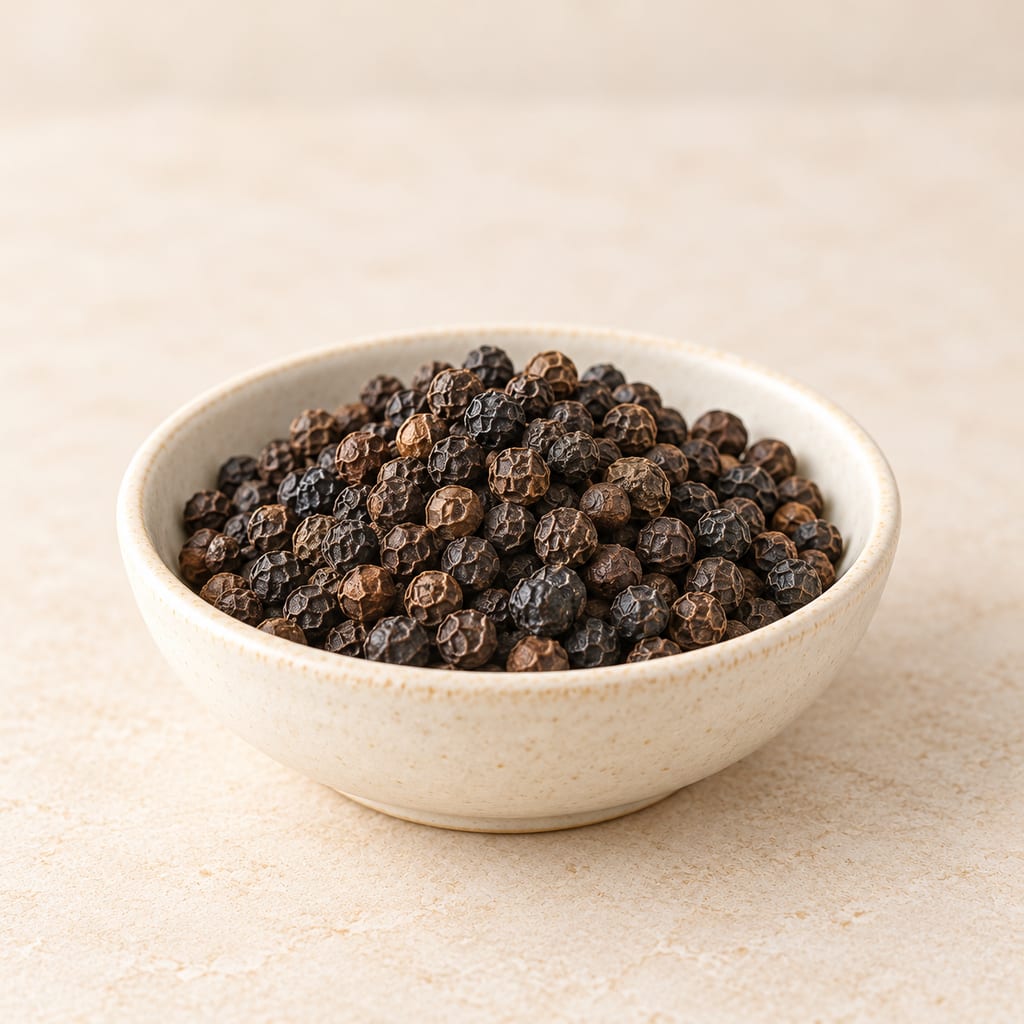
Black pepper
Black pepper is the dried fruit of Piper nigrum, a tropical climbing vine, used whole, cracked or ground for its pungency and aromatic oils.
 FermenteaWhere food goes to change
Substrates
Sago is the starch extracted from the pith of several palms, mainly Metroxylon sagu, and it is dried into flour or pearls that are a staple in Southeast Asia and New Guinea.
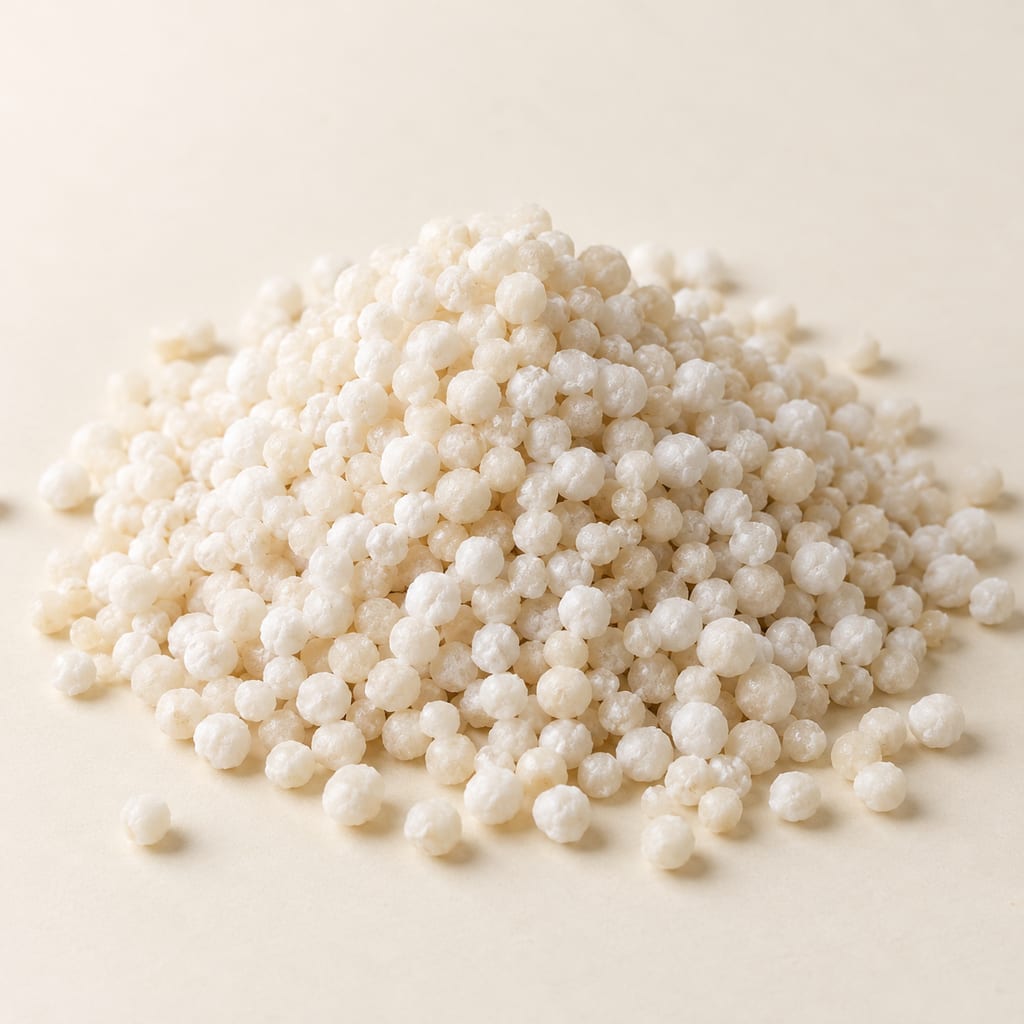
Sago is a starch taken from the trunk of a palm. The main source is Metroxylon sagu, a palm of tropical lowland forests and freshwater swamps in Southeast Asia and New Guinea. Metroxylon salomonense and Metroxylon amicarum are also used in Melanesia and Micronesia. The name sago also covers the starch of the sago cycad, Cycas revoluta, which is not a palm and is highly toxic unless it is processed extensively.
The starch is sold as a dry flour or as pearls, which are made by heating and stirring moist starch so that it forms small granules. The palm itself is the source of the food, so the starch carries the palm's history and its place in local agriculture.
Palms are cut when they are about seven to fifteen years old, close to the time the flower stalk appears, because the trunk is then full of stored starch. One palm can yield 150 to 300 kg of starch. The trunk is split lengthwise, the pith is removed, crushed and kneaded to release the starch, and the starch is washed and strained away from the fibrous residue. The starch suspension is collected in a settling container and then dried.
For the cycad, the pith is ground, dried, pounded and soaked, and the starch is washed repeatedly to remove its toxins.
Dried sago flour is cooked into staples such as papeda, a thick porridge, and linut in eastern Indonesia. Sago pearls are made by heating moist starch, and they are eaten in soups and desserts in many places. The starch is also a staple in the Maluku Islands and in lowland Papua New Guinea, where it is known locally as saksak.
In Malaysia the starch is closely tied to the Melanau people of Sarawak and Sabah, especially around Mukah.
The Wikipedia article does not mention fermentation or wet storage. The food-preservation atlas used for this recovery records that in Papua New Guinea the starch is extracted and stored with spontaneous fermentation, that some organisms survive for a long time, and that contamination depends on the water, the extraction and the storage conditions. The method is treated in full in the separate recipe item for fermented sago starch. This page does not repeat that method, and the atlas gives no time, temperature or safe storage period.
The sources reviewed here give no dated history for the starch, no yields beyond the palm figure, and no storage period for dried sago. The cycad toxicity is documented, and the washing that removes it is the control on which the page relies.
Documented use among the Melanau people, especially around Mukah.
Documented use: papeda and linut.
Known locally as saksak; a major lowland staple.
Black pepper is the dried fruit of Piper nigrum, a tropical climbing vine, used whole, cracked or ground for its pungency and aromatic oils.
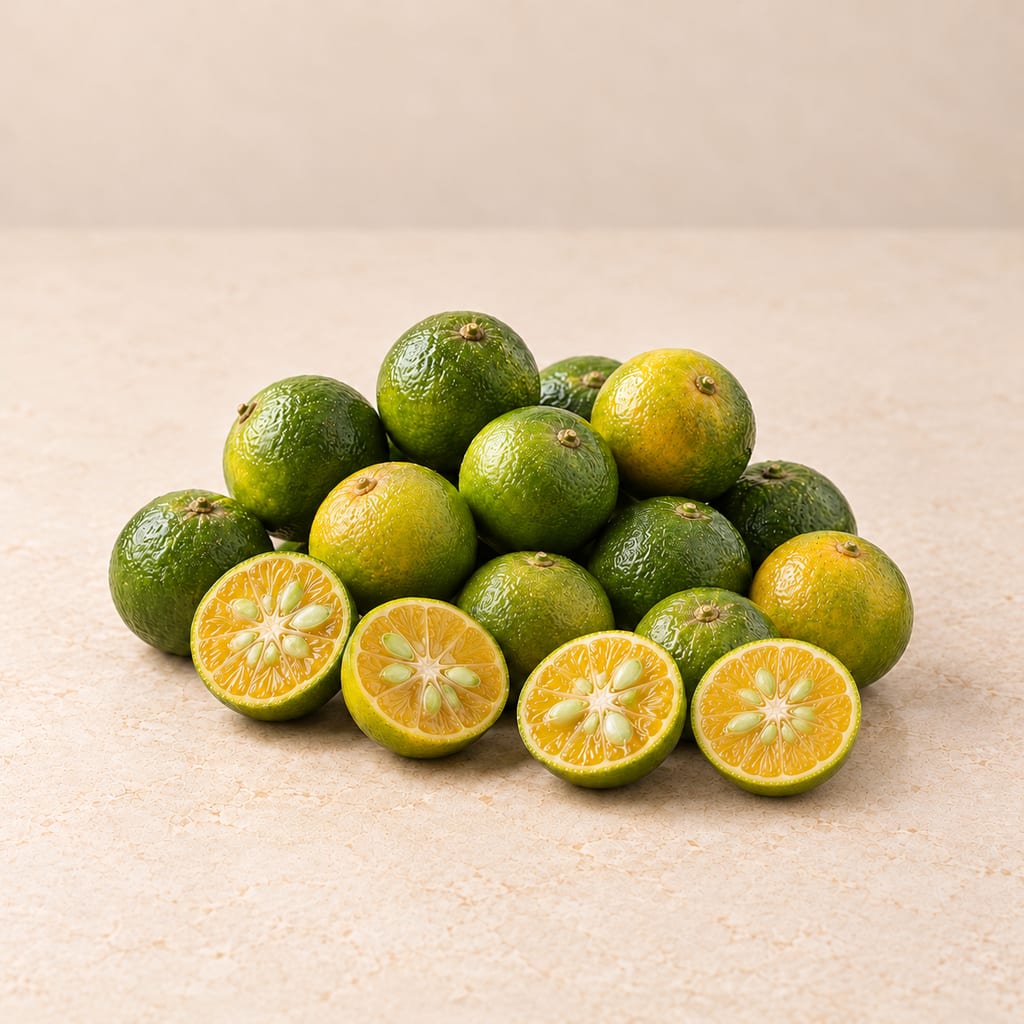
Calamansi is a small, very sour kumquat-mandarin hybrid, Philippine cooking’s all-purpose citrus, squeezed into soy sauce, fish sauce, broths and dips.
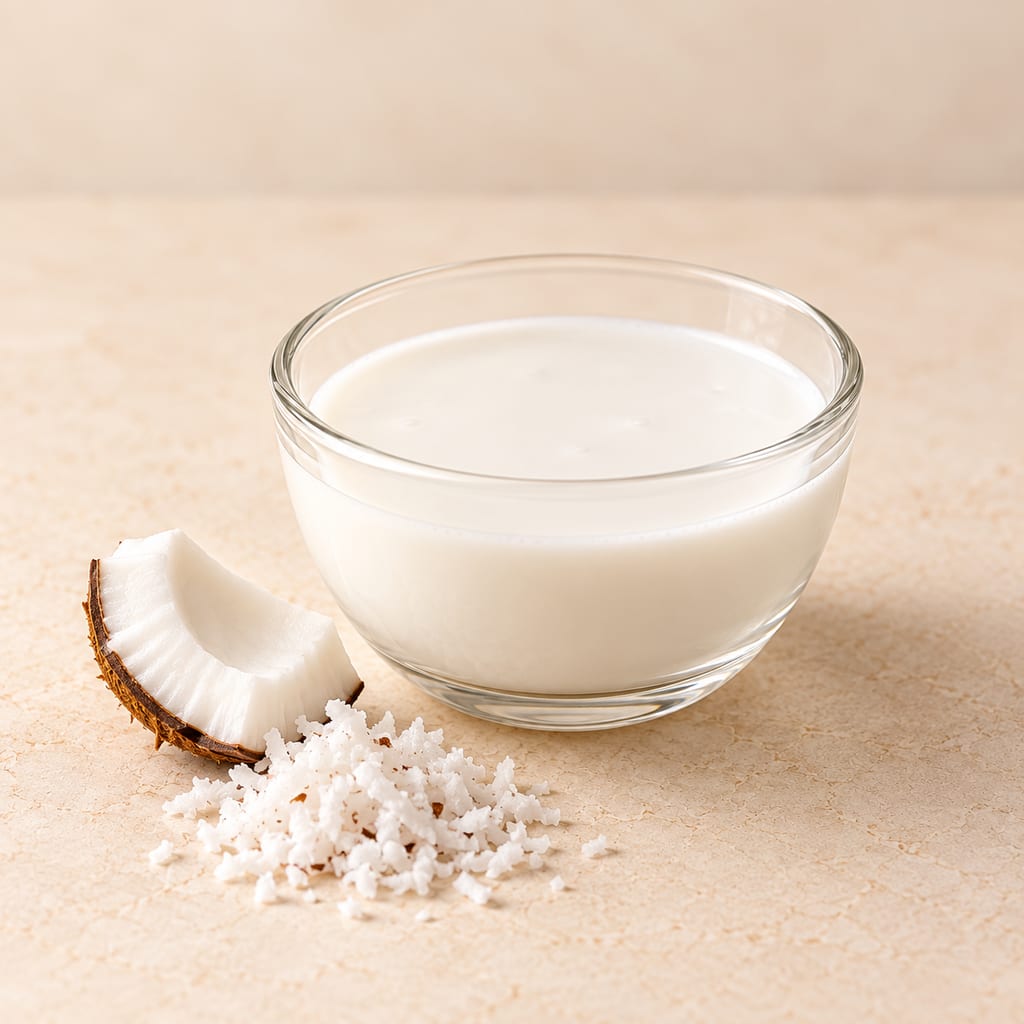
Coconut milk is an aqueous emulsion extracted from mature coconut kernel, sold fresh, packaged or reconstituted. It is distinct from the liquid naturally inside a coconut.
Ragi tapé, also ragi tapai, is a dried mixed starter cake from Indonesia and Malay traditions, used to ferment sweet rice, cassava and related starchy foods.
No community contributions have been published for this entry yet.
Sign in to contribute. Published comments and photos are free to read.
WikipediaLead · Identity · Method · Regions
SagoSource palms: Metroxylon sagu, M. salomonense, M. amicarum; Cycas revoluta cycad toxicity
Harvest at about seven to fifteen years; 150 to 300 kg starch per palm
Pith extraction, kneading, washing and straining; pearls by heating moist starch
Papeda and linut; Melanau, Maluku, Papua New Guinea (saksak)
Cited in: What it is; How the starch is taken; Traditional foods made from sago; Fermented and wet storage; Limits of the sources