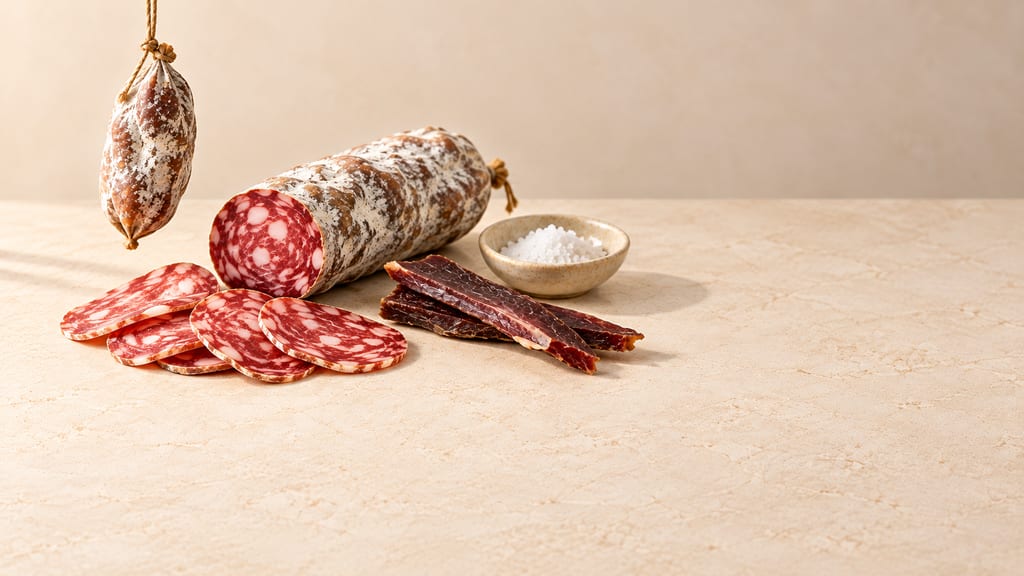
Fermented meat around the world
Dry salami, sour pork with rice, matured sheep and aged blubber follow different paths from animal to food. Their stories connect microbes with climate, slaughter, migration and the meals people share.
 FermenteaWhere food goes to change
Saithe (Pollachius virens), also called coalfish and coley, is a North Atlantic cod-family fish used fresh and in distinct preserved forms. Faroese ræstur fiskur and Shetland salted piltocks are not the same product.
Saithe is the common name used in Britain and northern Europe for Pollachius virens, a marine fish in the cod family. Coalfish and coley are other vernacular names. In the United States, the FDA lists “Pollock” as the acceptable market name for this species and keeps saithe, coalfish and coley as cross-reference vernaculars. The item retains the name saithe because that is the name used in the atlas and Faroese and Shetland sources.
The U.S. label can create confusion: FDA also lists Gadus chalcogrammus under the acceptable market name “Pollock,” and restricts “Alaska pollock” to that species when caught in specified Alaskan waters. That fish is different from Pollachius virens. The FDA pages are useful for interpreting market names, not as evidence that saithe is a kind of Alaska pollock. Keeping the Latin names beside region-specific common names helps prevent the two fish from being merged in ingredient lists.
Fisheries and Oceans Canada describes Pollachius virens as a member of the cod family with a long body, three dorsal fins, a slightly indented tail, a pale lateral line, and a projecting lower jaw. The agency gives a broad North Atlantic range: from the Hudson Strait south to North Carolina on the western side, with populations near southwest Greenland and from the Barents Sea to the Bay of Biscay and around Iceland in the east. These boundaries describe the species, not a specific food tradition.
The species occupies marine waters and supports commercial fishing in Canada alongside other groundfish. DFO describes both mobile fishing gear and fixed gear in the Canadian fishery, with saithe kept as target catch or bycatch in different areas. Those fishery facts do not identify the catch method of a particular Faroese or Shetland household. Nor do a broad range map or a market name identify a fish’s exact fishing ground; a product label or source must provide that information.
Saithe is one of several species used for ræstur fiskur, the Faroese air-dried and fermented fish. Ingvar Svanberg’s 2015 ethnobiological study identifies Atlantic cod and saithe as common choices, with haddock also frequently used and ling occasionally used. The study draws on interviews and observations from fieldwork on the islands since the mid-1990s. Its observations document Faroese foodways; they do not describe a single preparation shared by every household or prove a universal method for saithe.
The archipelago’s sea-based economy and changing seasonal availability made preserved fish an important stored food. Svanberg describes ræstur fiskur as part of everyday eating and as an older Christmas Eve and New Year’s Eve dish, especially among older people in the north, while noting that Danish holiday meals have largely replaced it in that festive role. The fermented fish nonetheless remained popular in ordinary meals. This history connects saithe to a particular Faroese food and social setting rather than treating the fish itself as a national dish everywhere it is sold.
The Faroese vocabulary distinguishes forms during drying and maturation. A fresh catch could be eaten fresh or made into fish cakes, while fish intended for preservation was hung outdoors. Svanberg records visnaður for fish at an early drying stage, ræst for the fermented or ripened form, and turrur for fully dried fish. The boundaries between the stages can be fleeting, and weather affects how quickly fish moves from one form to another. These terms name stages in a documented food practice; they are not interchangeable names for fresh, frozen, salted or fully dried retail fish.
Saithe can appear at more than one of those stages. The ethnography describes visnaður saithe as edible after its skin is removed and the fish is boiled, while fully dried turrur fish is served as a snack or with potatoes and fat. Those examples are not instructions for a modern kitchen. In particular, they do not establish that fresh saithe has become ræst, or that a finished dried product can be handled as if it were the fermented stage. The source’s stage vocabulary should stay attached to the Faroese context.
Ræstur fish is usually eaten cooked, with skin and bones removed at the table. It is served with animal fat such as sheep tallow, including named Faroese accompaniments, and boiled potatoes. Svanberg records an earthy, powerful flavor and aroma that some residents acquire from childhood; responses from visitors vary. These descriptions belong to the named Faroese dish and should not be turned into a sensory test of fish safety or a claim that all saithe products smell or taste alike.
Fish also had a practical role beyond a single meal. The ethnography describes preserved fish as shelf-stable protein in a historical storage economy shaped by weather and food availability. It records saithe as supplementary winter fodder for cattle as well as human food. The same raw material therefore supported more than one use, but the livestock fodder account is not a human recipe. The fish’s role depended on local needs and the preparation form, not only on species identity.
In Shetland, piltock is a local name for saithe. Seafood Shetland preserves Mina Ward’s memory of fishing with her father near Quendale in the South Mainland during the 1950s. They used hand lines from a rowing boat, and some of the fish supplied fresh food. The surplus was salted, dried and kept in a loft; some was sold to a shop in Lerwick. This account is specific to one family and period. It should not be expanded into a claim that every Shetland household used the same fishery or method.
That household’s salted and dried piltocks are not ræstur fiskur. Ræstur is the Faroese term for a ripened fish stage, and the cited ethnography describes its own unsalted wind-drying and fermentation context. Shetland’s account says salt was used, then the fish was hung and stored. The two practices share a species and a need to preserve a catch, but differ in place, language, documentation and process. A page that calls either simply “dried fish” can hide details important to readers.
A Dictionary of the Older Scottish Tongue records historical stockfish terminology and dated Shetland quotations. It defines stockfish as a name for cod and other gadoid fish cured by splitting and drying hard in air without salt, while seventeenth-century quotations describe fish set aside for trade being salted or hung fresh in skeos until completely dry. Those records show that the vocabulary and commercial practice varied. They should not be treated as one recipe or as direct proof of continuity with Mina Ward’s twentieth-century household account.
The distinction matters because salt use separates product histories. Piltocks in Ward’s memory were salted and dried. The historical dictionary’s definition of stockfish foregrounds air-drying without salt, though its citations also document salted fish in the trade. Neither term, used alone, proves which method was followed in another household. Preserved forms need their own geographic and source context rather than a generic label that erases whether fish was fresh, salted, ripened, or fully dried.
Fresh saithe appears alongside preserved saithe in the sources, but the forms are not interchangeable. Faroese households could eat some catch fresh or use it for fish cakes, reserving other fish for hanging and maturation. A fish sold fresh, a salted piltock, a Faroese ræstur fish and fully dried turrur are different ingredients at different stages. Naming the stage matters when interpreting a recipe because salt, moisture, texture and prior handling change with the product.
Commercial fish listings may use the species name, a regional name or a market name. FDA’s naming pages show how the word “pollock” can refer to two different species in U.S. labeling, so product identity should be read alongside scientific and geographic details when available. This ingredient page follows the documented names but does not assign a species, fishing area or preservation state to unlabeled fish. If a source gives only “saithe,” the missing details remain unknown.
The Faroese ethnography records practical observations about preservation: humid weather could interrupt drying and lead to spoilage, so the fish was watched during the process. It also says ræstur fish is usually eaten cooked. These are descriptions of a practiced foodway and the author’s fieldwork, not a validated safety protocol. They cannot be generalized to every saithe product, and they do not show that a raw or partly dried product is safe to eat without further preparation.
Codex’s FAO and WHO code treats fresh, frozen, salted and dried fish as separate product categories; it includes Pollachius virens among Gadidae species covered by standards for salted and dried salted fish. That listing does not cover or certify the Faroese fermented product. The sources here do not establish a universal safe salt concentration, pH, drying duration, fermentation time, temperature or storage life for saithe. No smell, taste, appearance, bubbling or household estimate can verify safety; a name or historical description is not a substitute for validated guidance specific to the product.
Two regional associations are documented here. The Faroe Islands are connected with ræstur fiskur containing saithe, as described in ethnobiological fieldwork spanning several decades. Shetland is connected with piltock, Mina Ward’s household recollection of fresh, salted and dried fish in the South Mainland, and older fish-trade vocabulary in the Scots dictionary. These are distinct accounts. They do not make either island group the origin of saithe as a species or establish a single history for the fish across its North Atlantic range.
The record leaves the earliest use of saithe as food undated because the reviewed sources give product histories, quotations and a family memory, not a first-use account. The current record also leaves the atlas’s Faroese ingredient “saithe” at the species level without adding a local Faroese name the source does not provide. Future community or historical research may document more terms and products. Until then, the page should preserve regional variation and avoid filling gaps with assumed continuity.
Saithe enters kitchens as a fish to be cooked fresh or as a preserved product whose previous handling matters. A fresh or frozen fillet, a whole saithe, a salted piltock and a fully dried fish are not interchangeable forms. Their moisture, salt and texture differ, and a recipe written for one should not be assumed to suit another. The Faroese and Shetland accounts show why a product name can carry process information: ræstur marks a ripened stage in one foodway, while Ward’s piltocks were salted before drying.
Market names also need care. Pollock may identify either Pollachius virens or Gadus chalcogrammus in U.S. trade, while Alaska pollock refers to the latter under FDA naming rules. The fish’s scientific name is the clearest distinction when a seller provides it. DFO’s description of the three dorsal fins, pale lateral line and projecting lower jaw can help identify a whole fish, but appearance cannot establish where it was caught or how it was handled.
The FAO and WHO fish code separates fresh and frozen products from salted and dried-salted fish and gives handling guidance by product type. It does not provide a universal storage life for every saithe product, and the reviewed evidence gives no one salt, acidity, drying or temperature limit that can be applied across fresh saithe, Faroese ræstur and Shetland piltocks. Use current local guidance for the particular product in hand; the historical descriptions here explain foodways, not a home safety procedure.
An ethnobiological study documents saithe among the fish used for Faroese ræstur fiskur. The association is regional and does not identify a universal method for the species.
Seafood Shetland records a South Mainland household account of piltocks and the Scots dictionary documents older stockfish vocabulary. These are separate salted or dried fish histories, not evidence for the Faroese ræstur process.
Dry salami, sour pork with rice, matured sheep and aged blubber follow different paths from animal to food. Their stories connect microbes with climate, slaughter, migration and the meals people share.
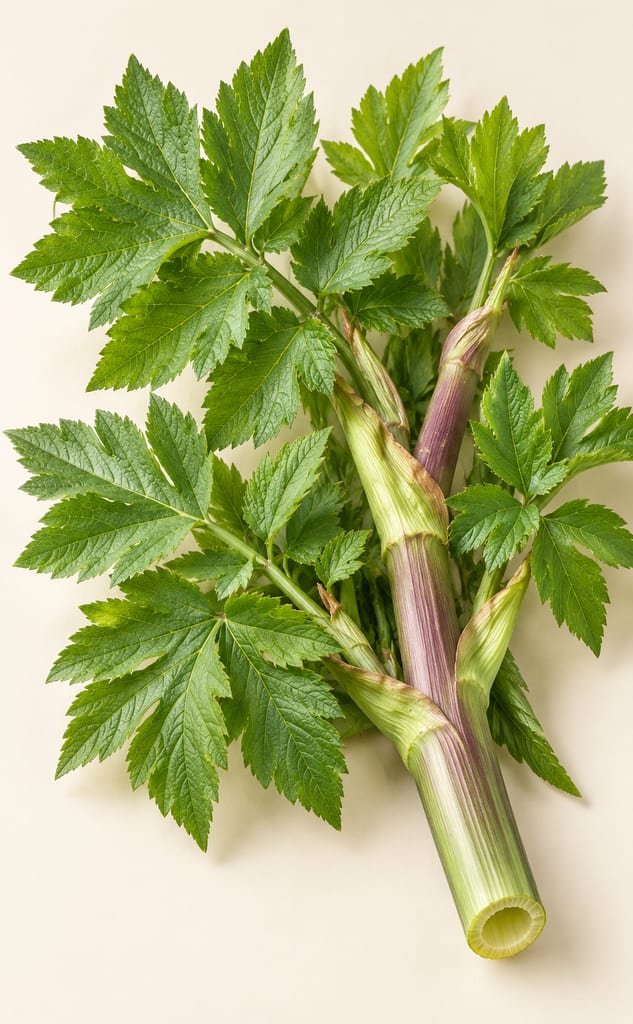
Angelica here means garden angelica (Angelica archangelica), an aromatic Apiaceae used as a vegetable, seasoning and candied stem, with Sámi food traditions linking it to preserved milk dishes.
Faroese spik is the under-skin blubber of the long-finned pilot whale, eaten salted alongside dried fish or whale meat and sometimes spread on bread. It is a distinct fat tissue, not meat, sheep tallow or rendered whale oil.
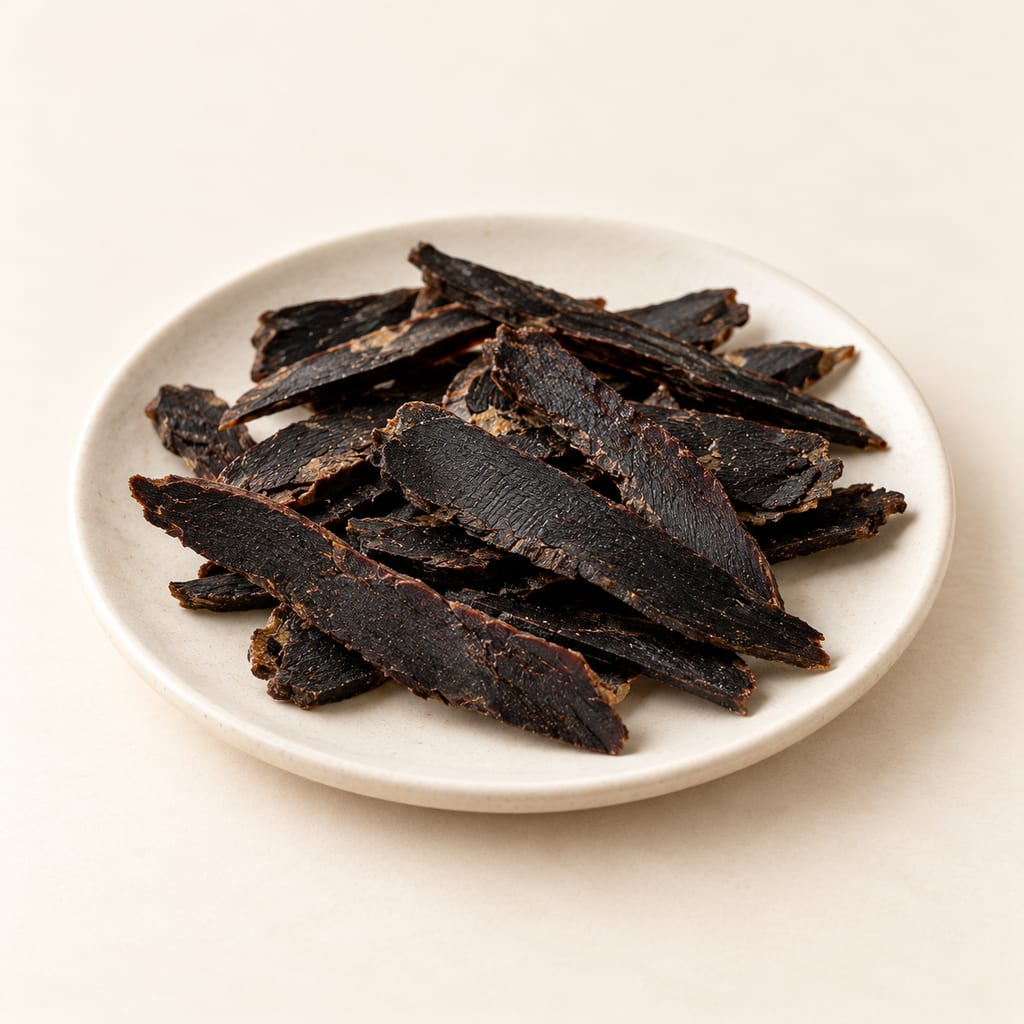
Long-finned pilot-whale meat, called Faroese tvøst, is eaten fresh and preserved in the Faroe Islands. Historical accounts place it among the meats hung to dry and pass through the ræst stage, distinct from blubber and other whale foods.
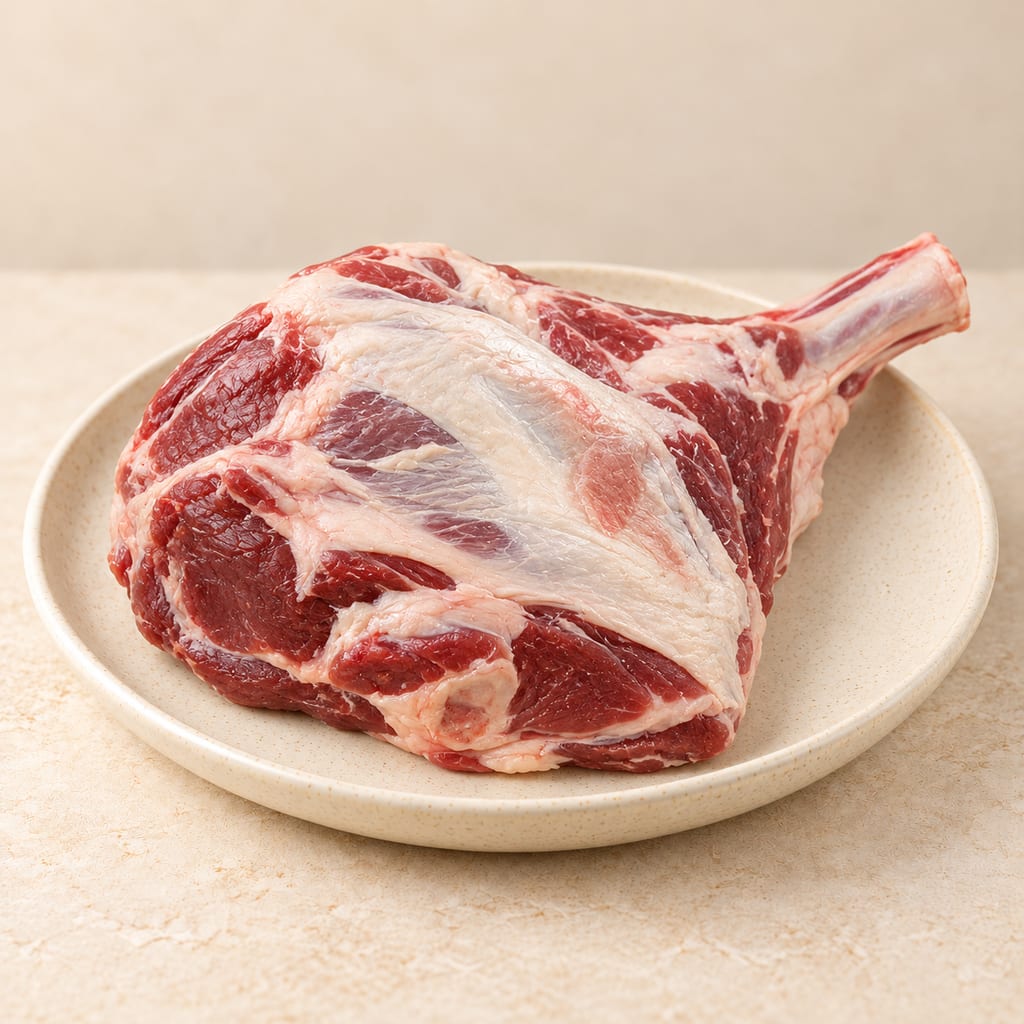
Sheep meat spans lamb from younger animals and mutton from mature sheep; age, breed, diet, cut and fat cover shape its texture and how it behaves in curing and fermentation.
No community contributions have been published for this entry yet.
Sign in to contribute. Published comments and photos are free to read.
Journal of Ethnobiology and EthnomedicineIdentity · History · Geography · Method · Use · Safety
Ræstur fiskur: air-dried fermented fish the Faroese wayIdentifies saithe (Pollachius virens) among fish used for Faroese ræstur fiskur and describes the study's fieldwork basis.
Distinguishes fresh catch, visnaður, ræst and turrur stages; the source describes fresh fish, early-dried fish, the ripened product and fully dried fish as separate forms.
Describes household roles, storage economy, serving with sheep fat and potatoes, seasonal context, spoilage when humid weather interrupts drying, and the usual cooked serving form; this is ethnography, not a validated modern safety procedure.
Cited in: Ræstur fiskur in the Faroe Islands; Fresh catch, visnaður, ræst and turrur; How the Faroese food is served; Piltocks in Shetland; Fresh fish and preserved fish are different ingredients in use; Safety context and process limits; Geography and what is not established; Buying and identifying the fish
Fisheries and Oceans CanadaIdentity · Biology · Geography · Fishery
Pollock (Pollachius virens)Identifies Pollachius virens as a member of the cod family and describes its morphology and North Atlantic distribution.
Describes the Canadian fishery and its capture alongside other groundfish; the profile uses the English name Pollock.
Cited in: Saithe, coalfish and coley; A North Atlantic cod-family fish; Geography and what is not established; Buying and identifying the fish
U.S. Food and Drug AdministrationIdentity · Market names
The Seafood List: Pollachius virensLists Pollock as the acceptable U.S. market name for Pollachius virens and lists saithe, coalfish and coley as vernacular cross-references.
Warns that cross-reference vernacular names may not be acceptable for U.S. interstate product labeling.
Cited in: Saithe, coalfish and coley; Fresh fish and preserved fish are different ingredients in use; Buying and identifying the fish
U.S. Food and Drug AdministrationIdentity · Market names
The Seafood List: Gadus chalcogrammusLists Gadus chalcogrammus separately, also with Pollock as the acceptable U.S. market name.
Explains that use of Alaskan pollock or Alaska pollock is limited to this species caught in specified Alaskan waters.
Cited in: Saithe, coalfish and coley; Fresh fish and preserved fish are different ingredients in use; Buying and identifying the fish
Seafood ShetlandHistory · Geography · Use · Method
Piltock linesIdentifies piltocks as saithe and records Mina Ward's memories of hand-line fishing with her father near Quendale in Shetland's South Mainland in the 1950s.
Records that some catch was eaten fresh, while surplus fish was salted, dried and stored in the loft, with some sold in Lerwick.
Cited in: Piltocks in Shetland; Older stockfish language; Fresh fish and preserved fish are different ingredients in use; Geography and what is not established; Buying and identifying the fish
Dictionaries of the Scots Language; A Dictionary of the Older Scottish TongueHistory · Geography · Terminology
Stok-fisch, n.Defines stockfish vocabulary for fish split and dried hard in air without salt and includes dated Shetland quotations from the seventeenth century on salting or hanging fish for trade.
Shows historical terminology and trade forms; it does not establish that one household's piltocks followed every historic export practice.
Cited in: Older stockfish language; Geography and what is not established
Food and Agriculture Organization of the United Nations; World Health OrganizationSafety · Handling
Code of practice for fish and fishery productsProvides general food-hygiene and handling guidance for fresh fish and fishery products and separate product sections for fresh/frozen fish, salted fish and dried salted fish.
Lists saithe among Gadidae species for Codex standards on salted and dried salted fish; those standards concern those product categories and do not validate Faroese ræstur fiskur.
Cited in: Safety context and process limits; Buying and identifying the fish