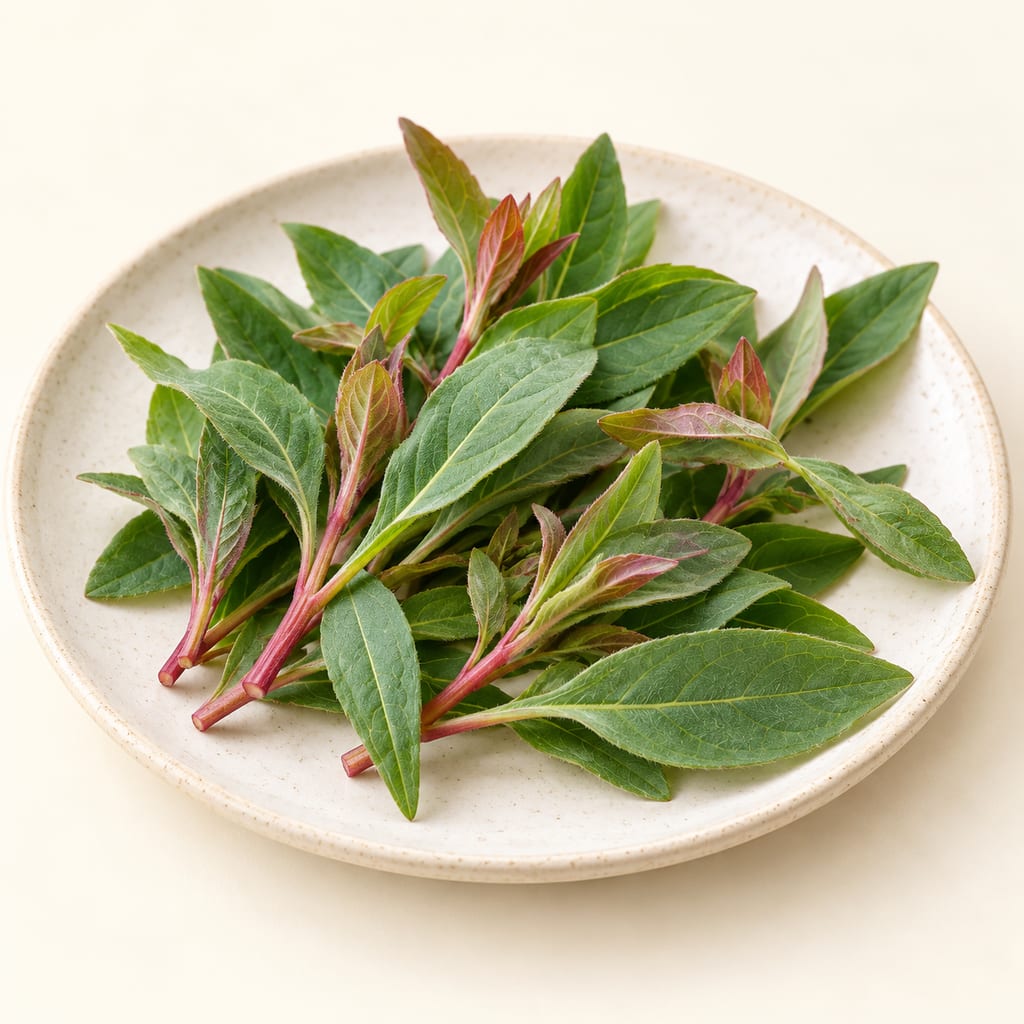
Dwarf fireweed
Dwarf fireweed (Epilobium latifolium) is a northern wild herb whose tender leaves and flowers appear in distinct Arctic food traditions.
 FermenteaWhere food goes to change
Spices and aromatics
Angelica here means garden angelica (Angelica archangelica), an aromatic Apiaceae used as a vegetable, seasoning and candied stem, with Sámi food traditions linking it to preserved milk dishes.
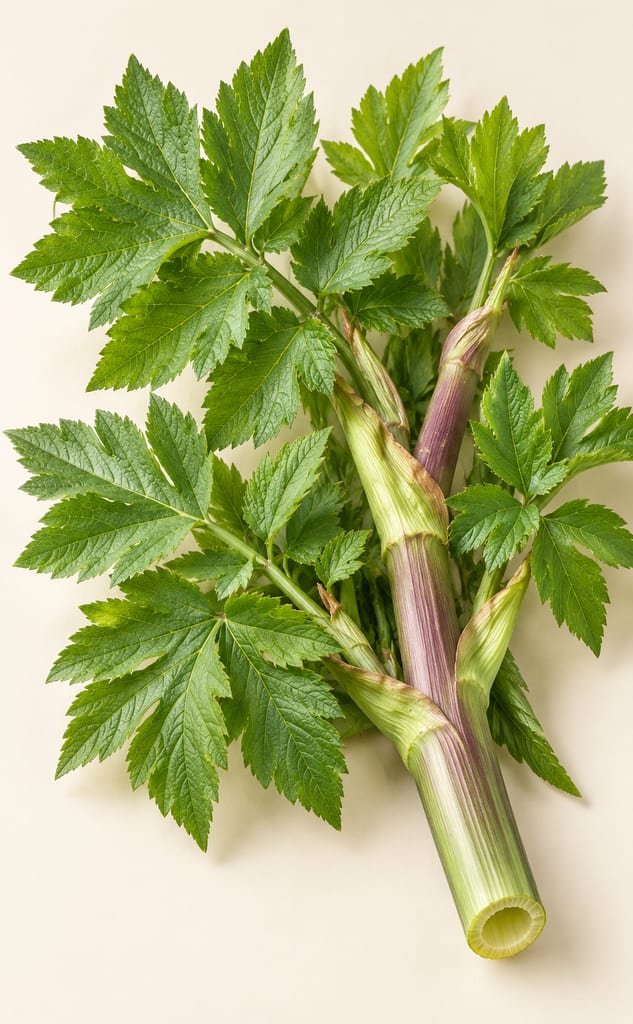
This page uses “angelica” for Angelica archangelica L., the garden angelica of Kew’s species account and the fjällkvanne named by Ájtte, the Swedish Mountain and Sámi Museum. The supplied historical source calls its ingredient “mountain angelica”; the Sámi ethnobotanical research identifies garden angelica as A. archangelica, which gives that historical name a defensible, regional referent. “Mountain angelica” is not a reliable universal common name: it is used for unrelated species in other regions. The genus Angelica also includes multiple plants, and English common names overlap. A product or gathered plant should therefore be identified by the Latin name and source, not by the word angelica alone.
Kew places the species in the carrot family, Apiaceae. It is a tall, aromatic herb with a substantial taproot, large divided leaves, stout hollow green stems that may carry purple colouring, and broad, rounded umbels made of many small greenish or white flowers. It produces dry fruits that split into two ribbed mericarps. The flower clusters are conspicuous, but a photograph or short verbal description is not a safe field identification key. Other members of this family can be toxic, and several have superficially similar foliage or stems. This page is an ingredient account, not an identification guide.
Anna-Maria Rautio’s doctoral thesis studies Sámi plant use from the 1550s to 1900 and treats garden angelica alongside Scots pine inner bark as a culturally important resource in northern Fennoscandia. Her account challenges a picture of plant gathering as merely incidental to reindeer pastoralism: plants formed part of a wider subsistence system, and people made informed choices about what to gather and when. The thesis reports that A. archangelica populations can remain stable under traditional harvesting practices and discusses the possibility that people enhanced or managed useful wild stands. This is evidence about particular places and practices, not proof that every wild population can withstand harvesting.
The Sámi names and seasonal distinctions recorded by Ájtte also show how knowledge was attached to the plant’s development. Its account describes young leaves, later flower-bearing plants, edible stalks and buds, and different names for stages of growth. It records stems eaten raw, roasted or boiled and angelica cooked with meat or with mountain sorrel. Such descriptions do not define one pan-Sámi practice: terminology and foodways vary across Sámi languages and territories.
Rautio frames harvesting as ecological knowledge as well as food collection. Her thesis combines historical records, interviews, field work and harvest experiments to investigate how plant use affected populations and landscapes. Its conclusion that stable angelica populations can be maintained under traditional Sámi practices is significant because it treats the plant as part of a lived, managed environment rather than an inexhaustible wild supply. The study does not establish a single harvesting rule for all regions, nor does it authorize copying a historical practice into a different habitat. The candidate source itself cautions that plant availability varied between landscapes and that older records sometimes use vague words such as “grass.” A reference to angelica in a historical account therefore needs to be read in its own geographic and linguistic context.
Kew records A. archangelica as native across northern and northeastern Europe, Russia, Iceland, Greenland and the Himalayas; it is also cultivated and naturalised in other northern temperate areas. Garden cultivation suits cool settings with moist, fertile soil. Descriptions often call angelica biennial because it typically flowers in its second year and dies after fruiting. Botanically, Kew describes it as a hapaxanthic perennial: a plant that flowers and fruits once, after which that flowering growth dies back. The two descriptions refer to different ways of summarising its life history, not to two different ingredients.
Kew notes two sometimes-recognised subspecies. A. archangelica subsp. archangelica is described as more aromatic, with softer stems that compress easily; subsp. litoralis is sharper-smelling and has harder stems, with a mainly coastal distribution. Cultivated selections can also differ: Kew describes the Norwegian-named ‘Vossakvann’ as selected for sweeter stalks. These details matter because “angelica” bought or gathered from a particular region is not necessarily identical in aroma or texture to a cultivated confectionery crop elsewhere. The original Sámi source record does not identify a subspecies, cultivar or harvested plant part, so this page does not assign one.
In a garden, its preference for cool weather and moist, fertile ground helps explain why northern temperate regions became associated with the crop. The New Hampshire Extension guide presents it as a tall, bold herb and describes sowing and transplanting practices for cultivation; those horticultural directions are not foraging instructions and are not needed to prepare a purchased ingredient. Its unusual life cycle also shapes how growers think about harvest: growth, flowering and fruiting are not interchangeable stages. Ájtte’s account notes that the Sámi distinguished stages with names such as fadnu for first-year growth and båskå for the later flowering plant. Those terms belong to a specific language and cultural source; a modern garden label should not universalise them to every Sámi community.
The plant offers several culinary forms, but the part and stage should be named. Kew describes raw stems eaten traditionally in Scandinavia, leaf stalks blanched and eaten like celery, and stems or leaf stalks candied for cakes and puddings. In Greenland and the Faroe Islands it remains a vegetable; stems and leaf stalks are cooked with rhubarb, while young flower heads are prepared in omelettes or grilled. These are documented regional uses, not a single recipe. The candied form is a made confection: sugar treatment changes the stalk’s texture and produces the familiar sweet green garnish. Niort in western France is associated with commercial angelica candying, and Kew says much of the commercial confectionery crop is grown in France.
A University of New Hampshire Extension guide describes the taste as similar to licorice and lists leaves, stalks, seeds and roots as edible garden uses. That broad horticultural summary must be read alongside the Danish food authority’s more specific plant-part warning below; this page does not recommend seeds as food. The aromatic profile is also why angelica appears as a flavouring in liqueurs and other products, although the part and extract differ by use. Kew documents roots and seeds as liqueur flavourings, but historical or commercial use alone does not establish that every plant part, dose or preparation is suitable to eat.
The contrast between fresh and candied angelica is a useful reminder that the ingredient’s uses are not defined by a single flavour. Tender stalks are eaten as a vegetable in some northern traditions; candying turns the stalk into a sweet, preserved garnish whose bright colour became familiar on European cakes and puddings. Leaves, stalks, roots, fruits and essential-oil preparations are not interchangeable, and product labels may refer to a particular part or extract. Angelica’s aromatic character is reported by Kew and by the extension guide, which compares its taste to licorice. That comparison is descriptive rather than a claim that it can replace liquorice root or anise in recipes. The cited sources do not provide a universal substitution ratio, and the distinctive taste may vary with subspecies, cultivar, plant age and preparation.
In northern Sámi food histories, angelica is associated with gompa: plant material cooked with reindeer milk and preserved as a way of keeping milk for later seasons. Rautio’s research describes angelica as one of the plants used in this practice; the taste and plant mixture could vary, and sorrel or other local greens are also documented. The Ájtte museum describes a related south-Sámi gompa made by cooking mountain sorrel, angelica and torta together and mixing them with fermented milk. The exact name, plant combination and preparation therefore depend on source and locality. These records should not be collapsed into one universal formula.
The historical material supports the cultural role of the plant and the broad operation of cooking plant matter with milk, but the original candidate’s source does not give a complete batch, proportions, vessel hygiene, acidification target, storage temperature, shelf life or microbiological validation. Nor do the cited museum notes constitute a validated preservation procedure. The account belongs on an ingredient page because angelica is used as gathered or purchased, rather than being a product made from angelica. A gompa preparation is a separate recipe record. Do not infer a safe modern fermentation or room-temperature storage method from a historical description.
The preserved-milk association matters because it shows angelica doing more than seasoning a finished dish: plants were incorporated into a strategy for keeping a valuable seasonal food. In Rautio’s account, gompa sits within the practical relationship among plant gathering, reindeer milk and winter subsistence. Northern gathered-plant accounts also place angelica among plants whose collection conditions differed by landscape. These descriptions are evidence of knowledge and historical use, but the words “preserved” and “fermented” do not by themselves establish how acidity, salt, temperature or storage controlled the product. Some records describe a cooked plant-and-milk preparation; another describes mixing cooked greens with fermented milk. Those may represent related but distinct practices.
The New Hampshire Extension guide describes garden angelica as suited to moist, fertile soil and recommends using young leaves and stalks while they are tender. Kew’s account adds that it is cultivated both as a vegetable and for its aromatic stems and roots. These sources describe a plant whose usefulness changes through growth: foliage, stalks, flower heads and root are collected or prepared differently, and not every culinary tradition uses every part. The source record behind this candidate does not specify the harvested part, so it would be misleading to infer that the gompa material was specifically root, seed, or candied stalk.
Harvest timing in the extension guide is horticultural context, not a universal food-safety instruction. It describes leaves and stalks as best used young, and gives separate late-season timings for roots and seed collection. That timing does not override the Danish authority’s warning about seeds. Similarly, a regional Sámi account of collecting early tender growth should not be converted into a general wild-harvest calendar: plants, names and customary practices vary across habitats and communities. For a reader buying a cultivated ingredient, a clear botanical name and plant part are more useful than an unlabeled market name; for a reader encountering wild plants, this page does not provide sufficient information to identify or harvest them.
For cultivated culinary use, the New Hampshire guide recommends young, tender leaves and stalks; Kew’s examples likewise distinguish stalks, leaf stalks and young flower heads. Kew says the plant contains aromatic compounds, but no cited source gives a reliable freshness test, storage duration or household preservation protocol for fresh angelica. Keep those practical limits explicit rather than inventing a shelf life. The harvested ingredient should be correctly identified and its plant part known, particularly when the source is a wild plant rather than a labelled cultivated product.
Angelica contains furocoumarins. The European Medicines Agency’s reflection paper focuses on medicinal preparations and discusses phototoxicity: some furocoumarins become more harmful with ultraviolet exposure, and risk depends on exposure and preparation. This is not a blanket claim that ordinary culinary use causes harm, nor does the paper validate a dose for this page. It does mean that concentrated or medicinal preparations cannot be treated as equivalent to a food garnish. Separately, the French food-safety agency ANSES warns that sap or plant contact followed by natural or ultraviolet light can cause delayed skin inflammation and blistering. People handling fresh plants should avoid sap on skin and sunlight exposure after contact.
The Danish Veterinary and Food Administration gives a plant-part-specific warning for kvan: seed furocoumarin levels may be extremely high and it advises that seeds should not be eaten; roots are described as appropriate only in very small seasoning quantities. It also warns that angelicas can be confused with hogweeds and other Apiaceae, including toxic species. These are relevant regulatory and identification cautions, not a substitute for local rules: food regulations differ by jurisdiction and plant part. Do not eat wild angelica on a common-name match or from this image. The available sources do not establish an allergen profile, safe universal serving amount, or a validated medicinal dose.
Plant contact deserves separate treatment from eating. ANSES describes phytophotodermatitis after exposure to angelica sap followed by light, with symptoms that can be delayed; this is a skin-contact hazard and should not be confused with the EMA paper’s assessment of internal exposure to herbal medicinal preparations. The EMA itself notes that plant preparations contain mixtures whose constituents and exposure are not fully characterised. The Danish authority is more specific about seeds and roots in food, advising against eating angelica seeds and limiting root use to very small amounts as seasoning. Taken together, these sources make plant part and route of exposure essential details. They do not support a blanket statement that the entire plant is either harmless or poisonous. They also do not support a single safe dose for a wild, dried, concentrated or medicinal product.
Foraging risk is especially important in Apiaceae. The Danish authority specifically notes confusion with hogweeds and other angelicas and points out that the family contains poisonous plants. Similarity of divided leaves, hollow stems or umbels cannot confirm identity by itself. A photograph on this page depicts one correctly labelled garden angelica specimen as visual context; it is not a tool for distinguishing edible angelica from toxic plants. The safest scope for this ingredient record is the species-identified culinary product described by its source. Uncertain wild plants, unknown subspecies, seed products and medicinal preparations require separate qualified assessment.
The sources are complementary but not interchangeable. Kew supplies a taxonomic and horticultural overview; extension and museum pages document culinary forms; Rautio’s thesis and ethnobotanical study provide a regional Sámi history; food-authority and medicines-regulator documents address particular safety questions. None provides a single account covering all angelica species, all Sámi communities, every plant part and every modern culinary product. The source supplied with this candidate was already explicit that its process detail was unspecified. That uncertainty remains: a reader can learn why angelica mattered and how different cultures used parts of it, but cannot reconstruct a source-faithful gompa batch or infer safe storage conditions from this ingredient entry.
Rautio identifies garden angelica as a culturally important Sámi plant across northern Fennoscandia; the precise country and local practice vary, so no single country is assigned.
Kew documents angelica as a vegetable in Greenland; the account does not specify every local form.
Kew records continued vegetable use; this is not a claim of origin.
Kew identifies France as the main commercial growing area for candied angelica, with Niort associated with candying.
Dwarf fireweed (Epilobium latifolium) is a northern wild herb whose tender leaves and flowers appear in distinct Arctic food traditions.
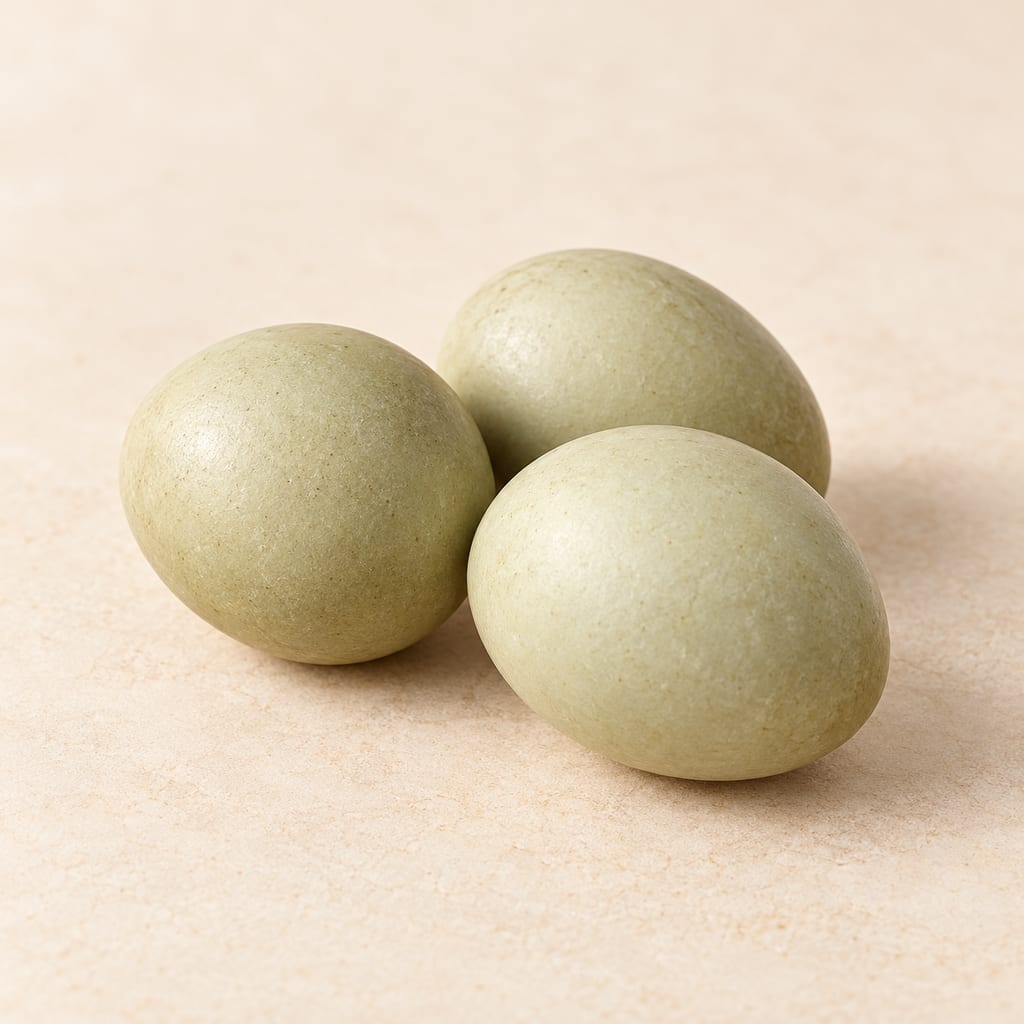
Firsthand accounts describe eider-egg fermentation in Northern Greenland, including a 2019 encounter published in 2024. Sources give no validated controls; egg collection follows Greenland's licensing and seasonal rules.
Reindeer meat is the flesh of Rangifer tarandus, used fresh and preserved across northern foodways; animal populations, cuts, and regional practices differ, and no single culinary origin is established.
Seal blubber is the fat beneath a seal’s skin, used as food and oil. Greenlandic iginneq is a named fermented blubber food, distinct from aged seal meat.
Seal meat is the flesh of hunted seals, eaten fresh, frozen, boiled, dried and, in distinct preparations, aged or fermented. Species and community practices vary; the name describes neither one recipe nor one place of origin.
No community contributions have been published for this entry yet.
Sign in to contribute. Published comments and photos are free to read.
Royal Botanic Gardens, Kew, Plants of the World OnlineIdentity · Botany · Distribution · Culinary use
Angelica archangelica L.Accepted species profile, native range, naturalised and cultivated range, morphology, subspecies, cultivar, edible and commercial uses, Scandinavian and Greenland/Faroe food use.
Cited in: A species, not a catch-all name; Range, growth and regional forms; From tender stalks to confectionery; Cultivation and harvest stages
Swedish University of Agricultural SciencesIdentity · History · Culture · Harvest
People-plant interrelationships: historical plant use in native Sami societiesIdentifies garden Angelica as A. archangelica subsp. archangelica; studies Sámi use from 1550 to 1900; describes the plant as culturally important and examines traditional harvest and management.
Cited in: A species, not a catch-all name; A Sámi food plant and a managed landscape; Range, growth and regional forms; Angelica in preserved milk dishes; What the historical record does not settle
Journal of EthnobiologyHistory · Culture · Harvest · Food use
They Followed the Power of the Plant: Historical Sami Harvest and Traditional Ecological Knowledge of Angelica archangelica in Northern FennoscandiaEthnobiological study of Sámi interactions with Angelica archangelica, including historical harvest knowledge and food uses.
Cited in: A Sámi food plant and a managed landscape; Angelica in preserved milk dishes; What the historical record does not settle
Ájtte Swedish Mountain and Sámi MuseumIdentity · Culture · Food use
Vilda nyttoväxter (Wild utility plants)Names fjällkvanne as Angelica archangelica; documents leaves, stems, buds, cooked/raw uses and gompa as a regional dish with sorrel and torta.
Cited in: A species, not a catch-all name; A Sámi food plant and a managed landscape; From tender stalks to confectionery; Angelica in preserved milk dishes; Cultivation and harvest stages
University of New Hampshire ExtensionCultivation · Culinary use
How to grow angelica (Angelica archangelica)Growing conditions, plant life cycle, young tender leaves and stalks, and reported flavour and culinary uses.
Cited in: Range, growth and regional forms; From tender stalks to confectionery; Cultivation and harvest stages; Choosing, handling and safety
Danish Veterinary and Food AdministrationSafety · Food use
Kvan (root and seed)Warns angelica seeds may contain very high furocoumarin levels and advises against eating them; advises root only in very small seasoning quantities; warns of Apiaceae lookalikes and toxic species.
Cited in: Choosing, handling and safety
European Medicines AgencySafety
Reflection paper on the risks associated with furocoumarins contained in preparations of Angelica archangelica L.A. archangelica preparations contain furocoumarins; some are phototoxic and risk assessment depends on exposure and preparation. The paper concerns herbal medicinal preparations, not a validated culinary serving limit.
Cited in: Choosing, handling and safety
French Agency for Food, Environmental and Occupational Health & Safety (ANSES)Safety
VigilAnses No. 14: Toxicovigilance (plant-related phytophotodermatitis)Identifies garden angelica as a plant capable of causing phytophotodermatitis after plant/sap contact followed by natural or UV light, with symptoms that may be delayed.
Cited in: Choosing, handling and safety