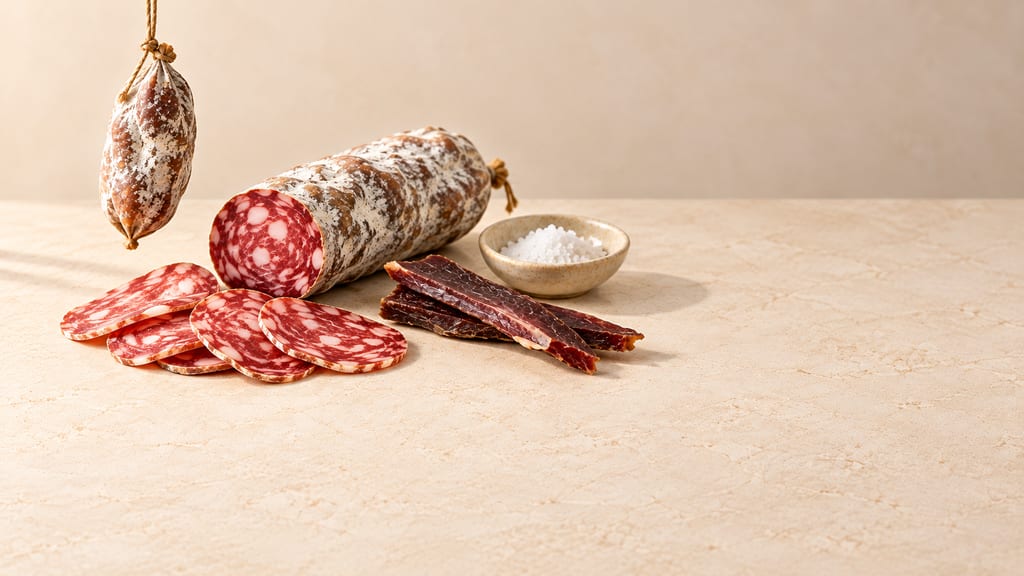
Fermented meat around the world
Dry salami, sour pork with rice, matured sheep and aged blubber follow different paths from animal to food. Their stories connect microbes with climate, slaughter, migration and the meals people share.
 FermenteaWhere food goes to change
Fat or oil
Seal blubber is the fat beneath a seal’s skin, used as food and oil. Greenlandic iginneq is a named fermented blubber food, distinct from aged seal meat.
Seal blubber is not simply the fatty part of a meat cut. It is a distinct tissue taken from beneath the skin, and in Arctic foodways it has served as food, a source of oil, and a material used for light and other purposes. The seal itself supplies meat, skin, blubber and other parts, each of which can have its own use and history. Treating every preparation as “seal meat” erases that difference.
Greenlandic Inuit microbiologist Aviaja Lyberth Hauptmann names iginneq as a fermented seal-blubber food. In her 2021 Fermentology lecture and transcript, she describes blubber placed in bags made from seal stomachs. She reports that the exterior is browned by exposure to sun before it is left to mature, while the interior remains pink. That account gives a useful sensory and material description, but it is a record of a specific practice shared by a knowledgeable speaker, not a universal formula for every community or household.
A UC Davis account of research with Greenlandic fermenters identifies iginneq as a major fermented food of southern Greenland. A Narsaq research-station notice describes a project focused on South Greenland iginneq and its place in food sovereignty and the contemporary use of traditional foods. These sources support a documented southern Greenland association; they do not establish one birthplace or a single standardized method.
The name matters because the raw material changes the food. Hauptmann’s account identifies iginneq specifically with blubber matured in a seal-stomach pouch. Aged seal meat is a different preparation, even where meat and blubber are stored together or where a local name covers several forms. The Northwest Territories seal fact sheet lists blubber and meat among the parts that may be eaten raw, frozen, boiled, dried, aged or fermented; that broad statement describes regional food practices, not the recipe for iginneq.
The Inuit fermentation review by Campbell, Hauptmann and colleagues emphasizes that northern Indigenous foods vary by animal tissue, place and practice, and that the available microbiological research remains limited. It reports distinctive microbial communities in sampled fermented marine-mammal muscle products. That finding should not be presented as a microbiome analysis of iginneq: the study does not characterize this named blubber preparation. The review is useful for setting a boundary around what researchers know, rather than filling the gaps with assumptions from sausage, dairy or vegetable fermentations.
Hauptmann’s lecture places seal blubber among a wider set of Greenlandic animal foods, including distinct preparations of meat, blood, flippers, entrails, birds and eggs. It also names several seal types in a general discussion of fermented seal foods. That list does not identify which species is used for every iginneq batch. The source therefore supports “seal blubber” without a species-level ingredient claim.
Seal hunting and the use of seal parts belong to the lived food systems of Inuit communities across the Arctic, but the details differ locally. Hauptmann explicitly frames the foods in her lecture as practices from Kalaallit Nunaat (Greenland), with many examples from its west coast. The iginneq-specific southern Greenland evidence comes from the UC Davis and Narsaq research accounts. It is more precise to name those documented associations than to assign the food to every Inuit community or to claim a single point of origin.
The sources also show why this ingredient cannot be separated neatly from its environment. A research account on South Greenland iginneq describes work with local fermenters and concerns about how traditional foods are represented and used in contemporary fine dining. The Narsaq notice similarly situates research in community food culture and food sovereignty. These contexts are part of the record: iginneq is knowledge held and practiced by people, not a generic raw material available for an outsider to reproduce from a short description.
Seal blubber has also had an economic history beyond food. Greenlandic seal hunting supplied skins and blubber for local use and colonial trade; blubber was rendered into oil used in Europe for lamps and soap before petroleum products displaced much of that market. That commercial history belongs beside, but should not be confused with, the food history of iginneq. The same animal material can enter very different systems of work, trade and meaning.
The published and project-based sources show a research field built around collaboration with Inuit fermenters. A Greenland regional project report describes work that brings together fermenters and Greenlandic food authorities, and frames the research around local social networks and practices that sustain knowledge of fermented foods. It includes a photograph captioned as preparation of hooded-seal blubber for iginneq in Nanortalik. That image caption supports a specific documented example, while the project description stresses that research questions should be identified with communities rather than imposed from outside.
This collaborative framing matters to readers because the public record is uneven. A lecture can identify a named food and describe its appearance, and an institutional project notice can locate current work, but neither is a full survey of how every family prepares it. The food-safety studies available in English concentrate more on risks in aged marine-mammal meat than on iginneq itself. As evidence grows, it should be added with the relevant community and context attached, not used to replace local knowledge with an invented standardized process.
Seal hunting depends on local access to animals and changing conditions on sea ice and at the coast. Greenland’s government account describes sealing as central to livelihoods in some communities and notes that changes in ice and weather conditions have required adaptation. These statements describe the broader hunting system; the sources do not show that a particular environmental change has altered every iginneq practice. They do explain why a food based on harvested blubber cannot be discussed as an ingredient with a stable supply independent of its place.
Blubber brings a concentrated fat substrate rather than the water-rich muscle tissue that dominates many meat-fermentation studies. Its texture and changing physical state are part of how people recognize and use it. In Hauptmann’s description, the pouch and the sun exposure shape the appearance of iginneq, and maturation changes the material from fresh blubber into a food with a distinct surface and interior. These observations establish a documented preparation and appearance, not a laboratory explanation of which organisms or enzymes cause each change.
The broader review of Inuit fermented foods cautions that these foods have been studied far less than many commercial ferments. The authors note that traditional practices often rely on local environmental conditions and do not necessarily use added salt, starter cultures or controlled temperatures; those observations are not a direction to omit controls or a complete description of every product. For iginneq, the sources reviewed here do not supply a validated time, temperature, salt level, pH, water activity or storage-life specification. None should be inferred from a photograph, color or comparison with another ferment.
Some historical accounts and recent projects refer to blubber becoming liquid or being used as oil, while the iginneq lecture describes pieces with a browned exterior and pink interior. These descriptions need not be forced into one texture: they may refer to different stages, products or communities. The record keeps the distinctions visible and does not claim that all seal blubber ferments liquefy or that any particular texture signals completion.
Seal blubber has served more than one purpose. Greenland’s cultural reference account describes marine mammals as sources of food, clothing, light, heat, tools and transport; it also records the use of seal blubber as oil for lamps and soap in European trade. The Greenland government’s account places hunting and seal products within both household livelihoods and the economy. Those histories help explain why the animal was used across tissues and materials, but they do not make rendered lamp oil equivalent to a fermented food.
That distinction also helps keep the ingredient’s story from becoming a single narrative of preservation. Blubber could be eaten, expressed into oil, used as fuel or incorporated into other materials. Which use mattered depended on community, time and circumstance. Iginneq belongs to the food history: its name in Hauptmann’s account identifies a particular way of maturing blubber. Trade in skins and oil belongs to a connected economic history, but neither proves the origin date or the age of that preparation.
The government report also places seal products within changing livelihood patterns: hunting remains important in some communities while market income and fisheries have changed over time. This is not a measure of how much blubber any household eats, nor evidence that the food has lost its place. It shows that use, exchange and subsistence can coexist and shift. The iginneq sources name a food practiced and studied in Greenland today; the separate history of European oil markets should not be used to suggest that fermented blubber was made for export, or that trade defines its cultural value.
Aged seal foods need specific care. The Government of the Northwest Territories warns that botulism can develop when food containing the organism is held warm without air, and that the toxin has no reliable smell or taste. Its public guidance says seal foods should be aged in cool conditions that allow air in. A Canadian field study of seal igunaq found Clostridium botulinum type E toxin in some of the tested preparations, while others were negative; the authors also describe contamination opportunities during butchering and aging. Those results concern the studied seal-meat preparations, not a controlled safety assessment of iginneq.
This evidence is enough to rule out casual process advice, but not to create a safe iginneq recipe. A seal-stomach pouch is part of Hauptmann’s documented account; the sources here do not define its airflow, sanitation, temperature history or other controls in terms that could validate a home process. Do not treat a familiar smell, a pink center, a browned surface or an experienced-looking appearance as proof that a batch is safe. Follow the food-safety guidance and knowledge of the relevant local community, and do not improvise an aged seal product from this ingredient page.
Seal foods may also carry environmental contaminants, and guidance depends on the animal and harvest area. Advice about another seal population or region cannot be transferred automatically to Greenlandic blubber. Readers should use current local guidance for harvested marine mammals rather than assuming that a traditional food has the same contaminant profile everywhere.
The catalogue links this ingredient to iginneq, the named preparation that matures seal blubber in a seal-stomach container. That relationship lets the ingredient page explain the material while the preparation page carries the particular method and its evidence. It also leaves room for other seal-blubber uses without making them variants of iginneq by default.
For readers comparing animal foods, the useful distinction is tissue and preparation: blubber is not meat; stored or rendered seal oil is not automatically fermented; fresh or frozen blubber is not automatically aged; and the name iginneq belongs with the local evidence that uses it. Keeping those distinctions protects both the historical record and the limits of current technical research.
Hauptmann presents iginneq within Greenlandic Inuit foodways; this country-level association does not identify an origin locality.
Research accounts explicitly identify iginneq as a South Greenland fermented seal-blubber food; they do not establish one birthplace or a uniform practice across the region.
Dry salami, sour pork with rice, matured sheep and aged blubber follow different paths from animal to food. Their stories connect microbes with climate, slaughter, migration and the meals people share.
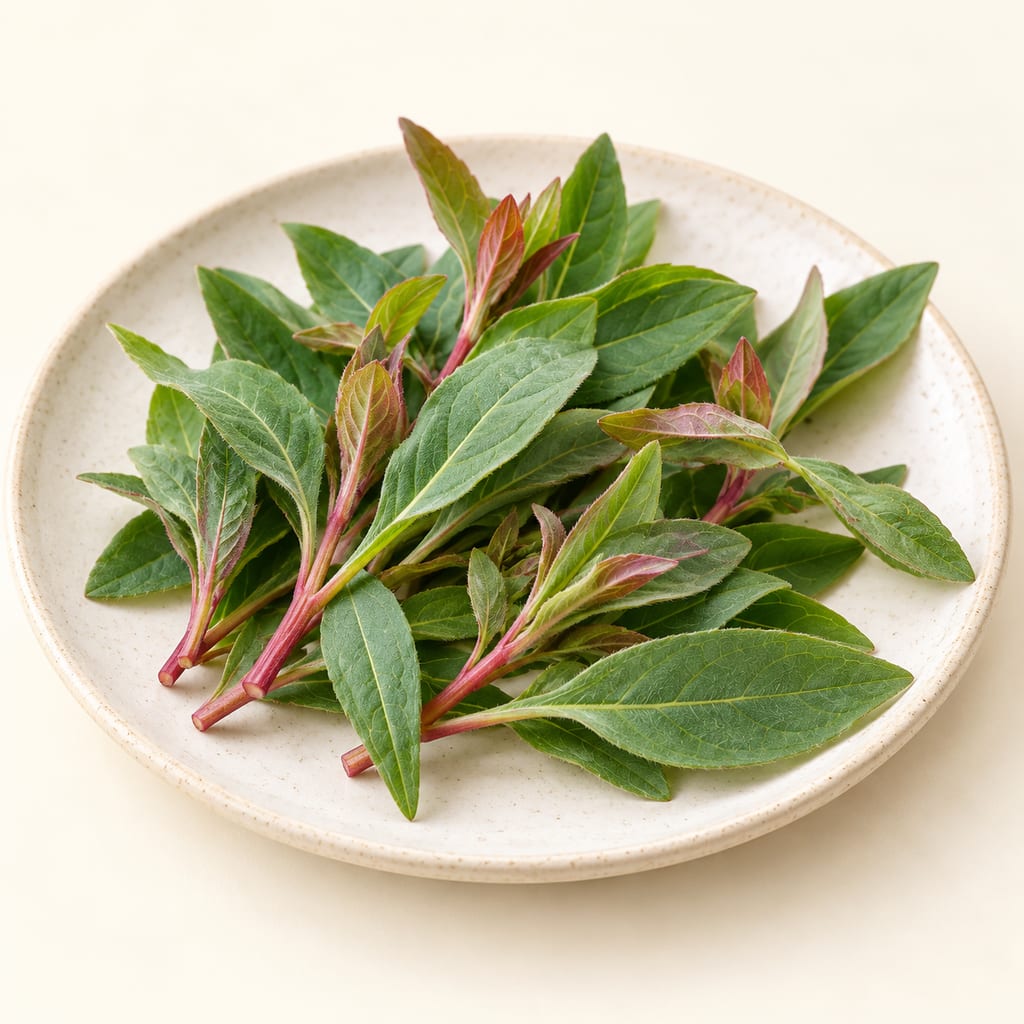
Dwarf fireweed (Epilobium latifolium) is a northern wild herb whose tender leaves and flowers appear in distinct Arctic food traditions.
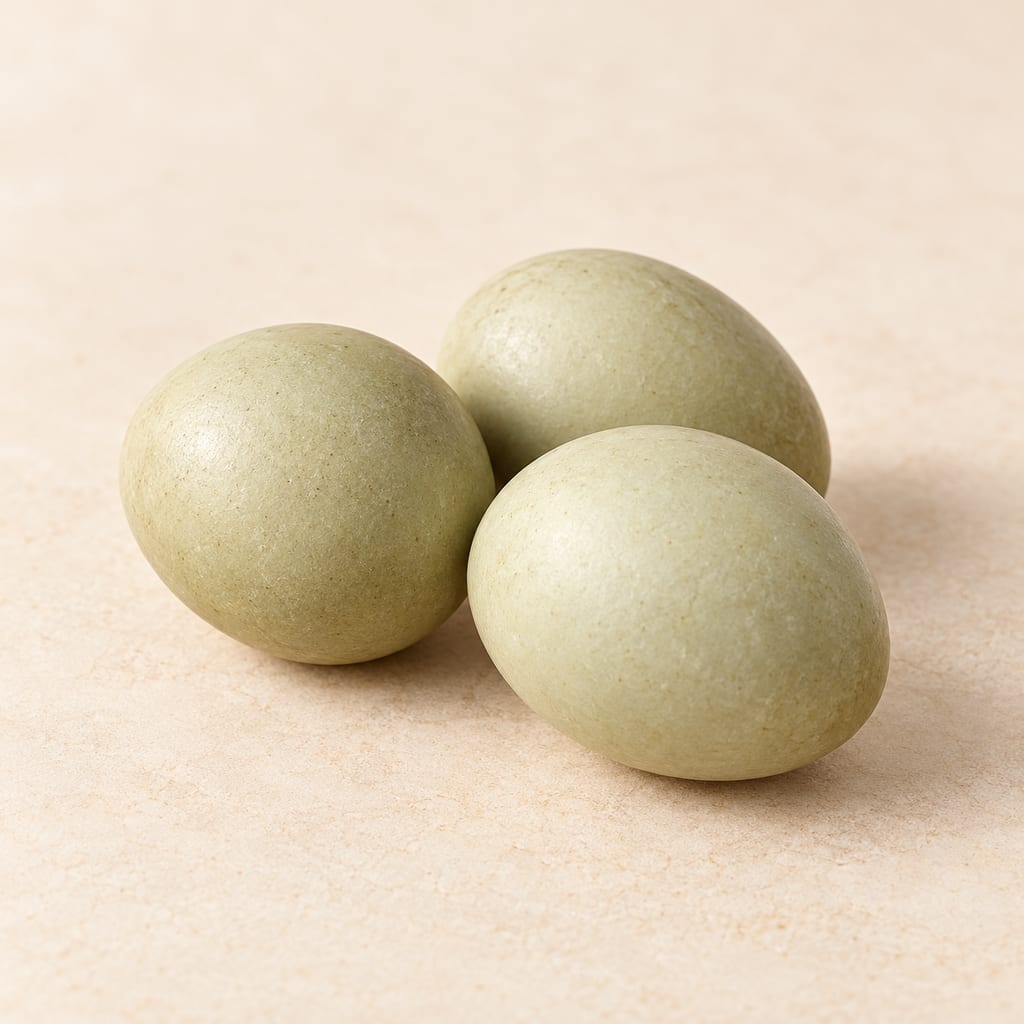
Firsthand accounts describe eider-egg fermentation in Northern Greenland, including a 2019 encounter published in 2024. Sources give no validated controls; egg collection follows Greenland's licensing and seasonal rules.
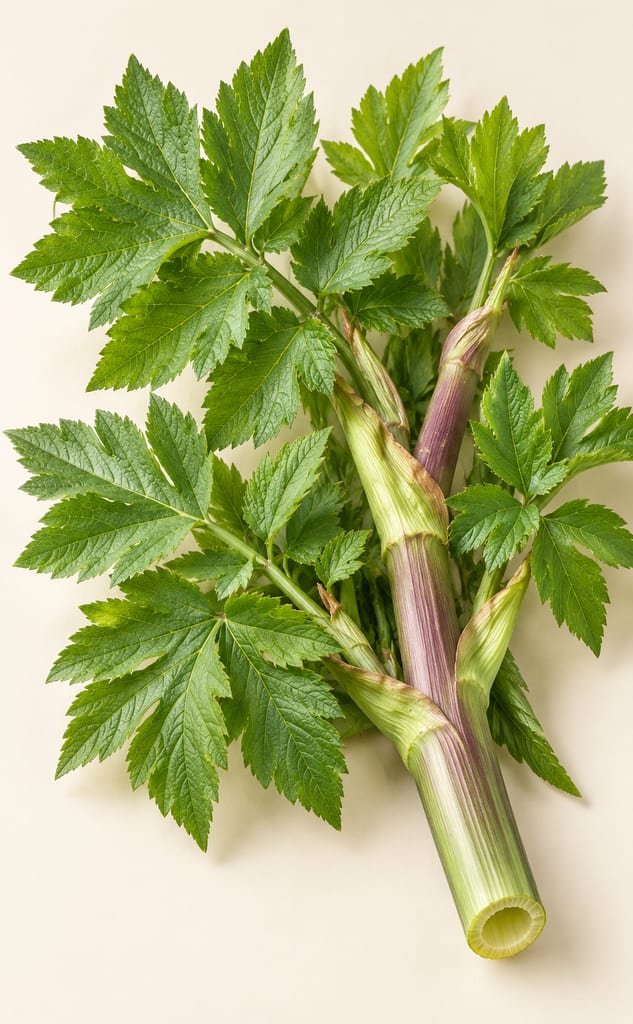
Angelica here means garden angelica (Angelica archangelica), an aromatic Apiaceae used as a vegetable, seasoning and candied stem, with Sámi food traditions linking it to preserved milk dishes.
Reindeer meat is the flesh of Rangifer tarandus, used fresh and preserved across northern foodways; animal populations, cuts, and regional practices differ, and no single culinary origin is established.
Seal meat is the flesh of hunted seals, eaten fresh, frozen, boiled, dried and, in distinct preparations, aged or fermented. Species and community practices vary; the name describes neither one recipe nor one place of origin.
No community contributions have been published for this entry yet.
Sign in to contribute. Published comments and photos are free to read.
FermentologyHistory · Method · Geography
Inuit Fermentation: Animal-Based & ArchaicHauptmann identifies iginneq as blubber placed in seal-stomach bags, briefly exposed to sun before fermentation, with a brown exterior and pink interior.
The lecture and transcript describe Greenlandic Inuit foods, mainly from Kalaallit Nunaat and often the west coast, and distinguish blubber preparations from meat, blood, flippers and other animal foods.
Cited in: Blubber is both food and material; Iginneq is not a synonym for aged seal meat; A landscape-shaped food; Fat, maturation and what is still unknown; Using the ingredient in the catalogue
UC Davis College of Agricultural and Environmental SciencesHistory · Geography
Inuit Foodways Connect Colleges and ContinentThe research account identifies iginneq as seal fat and a main fermented food of southern Greenland.
The project engaged with Inuit fermenters in Greenland and described local research into traditional foods and food sovereignty.
Cited in: Blubber is both food and material; A landscape-shaped food
Narsaq International Research StationHistory · Geography
Fermentation workshop and introduction to project exploring food culture in South GreenlandThe station describes a research project on iginneq as fermented seal blubber from South Greenland and its use in contemporary fine dining, food sovereignty and community experience.
Cited in: A landscape-shaped food; Knowledge, research and changing conditions
Microbiome Research ReportsScience · History
Better understanding of food and human microbiomes through collaborative research on Inuit fermented foodsThe authors describe limited research on Inuit fermented foods and caution against overgeneralizing across products.
The article discusses microbiota in sampled Inuit fermented muscle tissues and related tissues; it does not report an iginneq-specific microbiome analysis.
Cited in: Iginneq is not a synonym for aged seal meat; Fat, maturation and what is still unknown; Handling and food-safety boundaries; Using the ingredient in the catalogue
Government of the Northwest Territories, Department of Health and Social ServicesSafety · Ingredients
SealThe fact sheet lists blubber and meat among seal parts eaten in several forms, including aged or fermented foods.
It warns that botulism can develop in warm, oxygen-limited food and that the toxin cannot be detected by smell or taste; the guidance is for seal foods and is not an iginneq-specific validation.
Cited in: Iginneq is not a synonym for aged seal meat; Handling and food-safety boundaries
International Journal of Circumpolar HealthSafety · Science
Tracking sources of Clostridium botulinum type E contamination in seal meatThe study examines contamination sources and botulinum toxin in seal igunaq preparations, supporting caution around aged seal products; its tested preparations do not establish iginneq-specific controls or safety.
Cited in: Handling and food-safety boundaries
Government of NunavutSafety
Prepare Seal Safely!The public factsheet warns that botulism can be fatal, may not change smell or taste, and that seal foods should be aged in cool conditions allowing air; follow local community expertise.
North Atlantic Marine Mammal CommissionSafety · Science
Food ResourceThe commission describes marine-mammal contaminant exposure and notes that levels vary with species, tissue and feeding geography; regional consumption advice may apply.
Navigating the New Arctic Community OfficeHistory · Geography · Method
NNA-CO Regional Project Report: GreenlandThe regional project report describes research with Inuit fermenters and Greenlandic food authorities, focused on social networks and practices supporting fermented-food knowledge.
A photograph caption identifies preparation of hooded-seal blubber for iginneq in Nanortalik; the caption is a specific documented example, not a general process standard.
Cited in: Knowledge, research and changing conditions
Trap GreenlandHistory · Geography
Inuit hunting cultureThe cultural account describes the roles of marine mammals in Greenlandic food, clothing, light, heat, tools and transport, and seal blubber's historic use as lamp and soap oil in European trade.
Cited in: Blubber as food, oil and traded material
Government of GreenlandHistory · Geography
Management and Utilization of Seals in GreenlandThe government report describes sealing as a livelihood and food system and discusses adaptation to changing Arctic ice and weather conditions.
Cited in: Knowledge, research and changing conditions; Blubber as food, oil and traded material