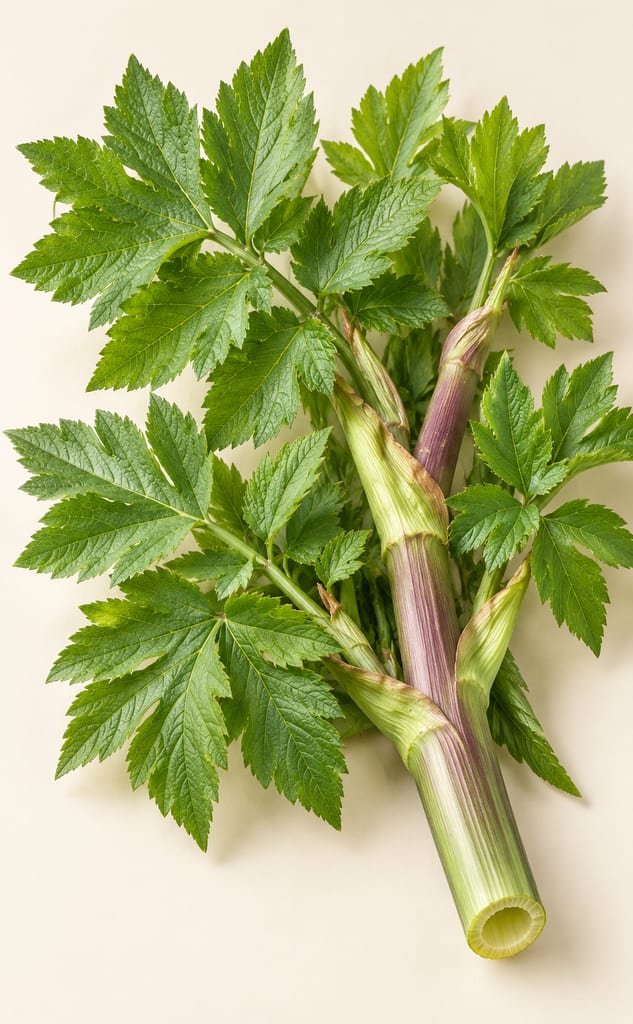
Garden angelica
Angelica here means garden angelica (Angelica archangelica), an aromatic Apiaceae used as a vegetable, seasoning and candied stem, with Sámi food traditions linking it to preserved milk dishes.
 FermenteaWhere food goes to change
Fat or oil
Faroese spik is the under-skin blubber of the long-finned pilot whale, eaten salted alongside dried fish or whale meat and sometimes spread on bread. It is a distinct fat tissue, not meat, sheep tallow or rendered whale oil.
Spik is the Faroese food name for pilot-whale blubber, the thick fatty tissue beneath the skin of the long-finned pilot whale, Globicephala melas. Faroese names keep the animal and the edible parts visible: grindahvalur is the whale, tvøst is its meat, and spik is its blubber. This page is about blubber as food. It does not treat muscle, liver, kidneys, skin, or oil rendered for fuel or industrial use as the same ingredient.
Blubber differs from an ordinary cut of meat in its high fat content, texture and customary role on the plate. Accounts describe it sliced, salted and eaten in thin pieces, with a fatty, chewy or yielding texture that contrasts with leaner dried fish and meat. Its appearance can range from translucent pale pieces to pink or yellow tinges, depending on the source and description. Those visual observations identify the food; they do not establish its age, quality or safety.
The word needs its animal attached. A sheep-fat preparation is not pilot-whale spik merely because it is a fatty Faroese food. Sheep tallow, including named preparations such as garnatálg and sperðil, comes from different tissues and follows a different household history. Nor is spik the same as whale oil: rendering blubber into oil is a separate use and process, even where historical accounts mention both food and grease. The catalogue uses “pilot-whale blubber” in the title so readers can identify the species and tissue before following the local name.
Pilot whales provided both meat and fat to Faroese households, and historical food accounts treat blubber as more than a by-product. It supplied a concentrated marine fat in a place where local diets drew on sheep, seabirds, fish and marine mammals. Ethnobiological research cites early descriptions and later local writing to show that blubber was preserved, stored and eaten alongside other foods. The evidence is strong for a long-standing practice; it does not yield one original recipe or a precise start date.
The 2021 review places whale blubber among the fats used in household cooking and food culture and cites seventeenth-century writers, including Lucas Debes in 1673. In a passage reproduced in later historical scholarship, Faroese scholar Jens Christian Svabo described the blubber in the late eighteenth century as being salted and eaten with fish and bread. These dated records show that the ingredient had a place at the table by the early-modern period. They do not prove that all households ate it in the same way or that the surviving preparations have remained unchanged.
This history overlaps with the broader transformation of the Faroese food economy. Fishing, sheep husbandry, bird gathering and marine harvesting once supplied much of the food households could obtain locally. Fat could enrich a meal and accompany preserved fish or meat; stored foods helped households bridge seasonal variation. Modern supply chains, improved household incomes and refrigeration changed the choices available. A food can therefore keep its cultural meaning even when it no longer carries the same share of everyday calories or household provisioning.
A pilot whale yields several foods, and separating them makes both historical reading and practical cooking clearer. Tvøst is muscle; spik is under-skin blubber; liver and kidneys are organs. The blubber has been eaten as a slice or accompaniment and has also supplied fat for other uses. Meat is cooked, dried or otherwise preserved on its own, though meat and blubber are sometimes boiled together. A page or recipe that names “whale” without naming the tissue hides important differences in texture, composition and contaminant exposure.
The skin and blubber together form an insulating layer in the living animal; the edible food called spik is the blubber tissue, not the entire hide. The sources used here do not specify a standardized commercial cut, thickness, grading system or yield for food blubber. Historic accounts focus on the household and communal distribution of portions, not a modern butcher’s specification. This means the reader can recognize the tissue and its culinary role without inferring exact proportions.
Some historical accounts also describe pilot-whale blubber as a source of oil or grease. That use belongs to the material’s wider economic history, but it should not be confused with salted blubber served at a meal. A rendered oil has been separated from the tissue by processing and has different handling and culinary behavior. The present ingredient page follows food uses of intact or salted spik; it does not offer a rendering procedure or turn old industrial uses into a food recommendation.
Salt is a documented way to preserve and season pilot-whale blubber. Faroese food studies describe both dry-salted and brine-salted forms, while ethnographic descriptions mention blubber kept in salty water and sliced for eating. A later account describes it as usually salted and served with fish or whale meat. These are separate recorded preparations, not interchangeable steps in one universal method. The source material does not supply a validated salt concentration, schedule, temperature or safe storage duration for making it at home.
Some descriptions call the blubber dried in salt. In that phrase, salt is the preservation medium and drying refers to a change in the food’s moisture and texture; the product remains different from wind-dried meat. The meat is commonly hung in moving air, whereas blubber is typically salted. Conflating those processes would wrongly imply that blubber ferments like ræst meat. The available sources do not establish that pilot-whale blubber is itself fermented.
Freezing now provides another way for households to keep whale products. Ethnographic accounts describe how refrigerators became common and that most homes can keep meat and blubber frozen or chilled, alongside continuing salted and dried traditions. Freezing changes storage access but does not sterilize food or destroy every parasite. The source accounts do not give a complete modern cold-storage plan, and a traditional description should not be treated as a tested food-safety instruction.
Because salted blubber can be served in raw slices, readers should not assume that salt alone makes an unknown batch safe. The cited descriptions are cultural and culinary evidence, not validated process controls. No appearance, smell, taste or degree of firmness can establish contaminant content or verify safe handling. The catalogue records the practices sources describe while leaving the missing process limits unstated.
A familiar pairing brings salted blubber together with dried fish or whale meat. The fattiness of the blubber contrasts with the firmer, drier fish or meat; thin slices add salt and richness to a meal built from preserved ingredients. Svanberg’s ethnographic research also records blubber as a spread on bread. These uses explain why blubber can appear as both a food in its own right and a companion ingredient without becoming an anonymous cooking fat.
The phrase tvøst og spik names a meal of whale meat and blubber, often served with potatoes. Contemporary Faroese food descriptions also mention boiling meat and blubber together with potatoes, while other sources describe blubber alongside dried fish. These are serving contexts rather than a single recipe: the sources differ in which preserved forms, accompaniments and cooking steps they discuss. A plate may bring meat, blubber, fish and potatoes together, but each component keeps its own processing history.
Blubber’s flavour has been described as salty, briny and fish-like, with a texture that can be chewy or soft depending on the preparation. Such terms are comparisons, not objective grading labels. The amount of salt, the form in which the blubber is stored and whether it is eaten with another preserved food all influence a diner’s experience. There is no universal way to describe spik’s strength or mouthfeel across all households.
Faroese food knowledge is often learned in households and shared at communal meals. Traditional foods can appear at festive gatherings, but the sources do not say that every serving of spik is ceremonial or that every Faroese family continues to eat it. The ingredient’s meanings vary: some value it as a familiar taste, others avoid it because of contaminants, and some younger households may know it chiefly through family or public discussion.
The documented culinary association for this ingredient is the Faroe Islands. The long-finned pilot whale is a North Atlantic marine mammal with a much wider range, but the named food use of spik recorded here belongs to Faroese foodways. The species’ distribution is not a map of where blubber is eaten, and the presence of pilot whales in another region does not transfer Faroese terminology or preparation to that place.
Within the archipelago, community rules distribute meat and blubber after a hunt among participants and local recipients. Ethnographic work documents the assessment and sharing system, while official accounts describe the communal role of the harvest. Those sources can support a national association and a community context, but they do not identify one village as the birthplace of salted blubber. This page therefore places spik at country-level precision rather than drawing an unsupported line to a single beach.
The ingredient should also remain distinct from other marine fats. Faroese sources include blubber from several cetaceans in their wider food history, and neighboring Arctic communities have their own species, words and rules for animal fats. Pilot-whale spik does not mean seal blubber, bowhead blubber or generic whale fat. Naming the long-finned pilot whale keeps geography, identity and food evidence aligned.
Pilot-whale blubber raises a documented contaminant concern, especially for persistent organic pollutants such as PCBs and related compounds. Faroese monitoring and historical risk assessments distinguish this fat-rich tissue from the muscle and organs. A 1994 study directly examined organochlorines and mercury in blubber from two Faroese catches and considered blubber as a dietary exposure route. It is not valid to transfer the concentration of one tissue to another or to infer that cooking, salting, drying or freezing removes these substances.
The health history developed over several decades. Studies begun in 1977 measured mercury in meat, blubber, liver and kidneys. Later attention also turned to organochlorines in blubber. In 1989, Faroese health authorities advised limits on consumption of whale meat and blubber, with a specific monthly amount for blubber, and advised avoiding liver and kidneys. This account gives those recommendations as dated historical decisions rather than a current instruction for an individual diner.
Two public advisories have since coexisted in the record. In 2008, the Chief Medical Officer and the Department of Occupational and Public Health advised that the Faroese population should no longer consume whale meat or blubber. In 2011, the Food and Veterinary Authority published a separate recommendation allowing adults at most one monthly meal of pilot-whale meat and blubber, with stricter advice for girls and women who may have children and for those planning pregnancy, pregnant or breastfeeding. That 2011 document also advises against eating pilot-whale liver and kidneys.
A 2026 population survey documents continuing awareness and consumption alongside both the 2008 and 2011 advisories. It reports differences in awareness by age, and it treats cultural importance and perceived risk as distinct questions. Surveyed behavior does not replace medical advice or establish that an individual portion is safe. Readers who need current guidance should check the Faroese health authorities, particularly before pregnancy or while pregnant or breastfeeding.
The role of spik has changed with access to other fats and with growing awareness of contaminants. Ethnographic writing describes blubber being replaced by margarine in some households, while older generations and some other diners continue to eat it. A 2021 foodways study discusses its place in local cuisine and its role as a familiar accompaniment. These observations describe differences across generations and households; they do not support a single claim about what Faroese people eat today.
The nutritional history deserves care. Marine animal fats were important in an island diet, and research on elderly Faroese has examined pilot-whale blubber as one contributor to vitamin D status. That research does not make spik a health supplement or show that any benefit outweighs contaminant risks. Dietary relationships are affected by many factors, and a population association is not a personal prescription.
For a reader encountering the ingredient in a recipe, the most useful first question is whether the source means whale blubber, whale meat or a rendered oil. The second is whether it describes fresh, salted, brined, dried or frozen blubber. The third is whose method and which date the description records. These distinctions prevent an account of preserved food from being mistaken for a safety-validated formula or a historical oil use from being presented as a serving style.
The record therefore treats spik as a raw ingredient with documented salted forms and culturally specific uses. It does not give a home preservation recipe, shelf life, salt ratio or safety threshold. It keeps blubber separate from meat and organs, preserves the dates of public advice, and records the Faroe Islands as the supported place association. Those limits reflect what the sources can establish.
The sources support Faroese food use but not a single village of origin.
Angelica here means garden angelica (Angelica archangelica), an aromatic Apiaceae used as a vegetable, seasoning and candied stem, with Sámi food traditions linking it to preserved milk dishes.
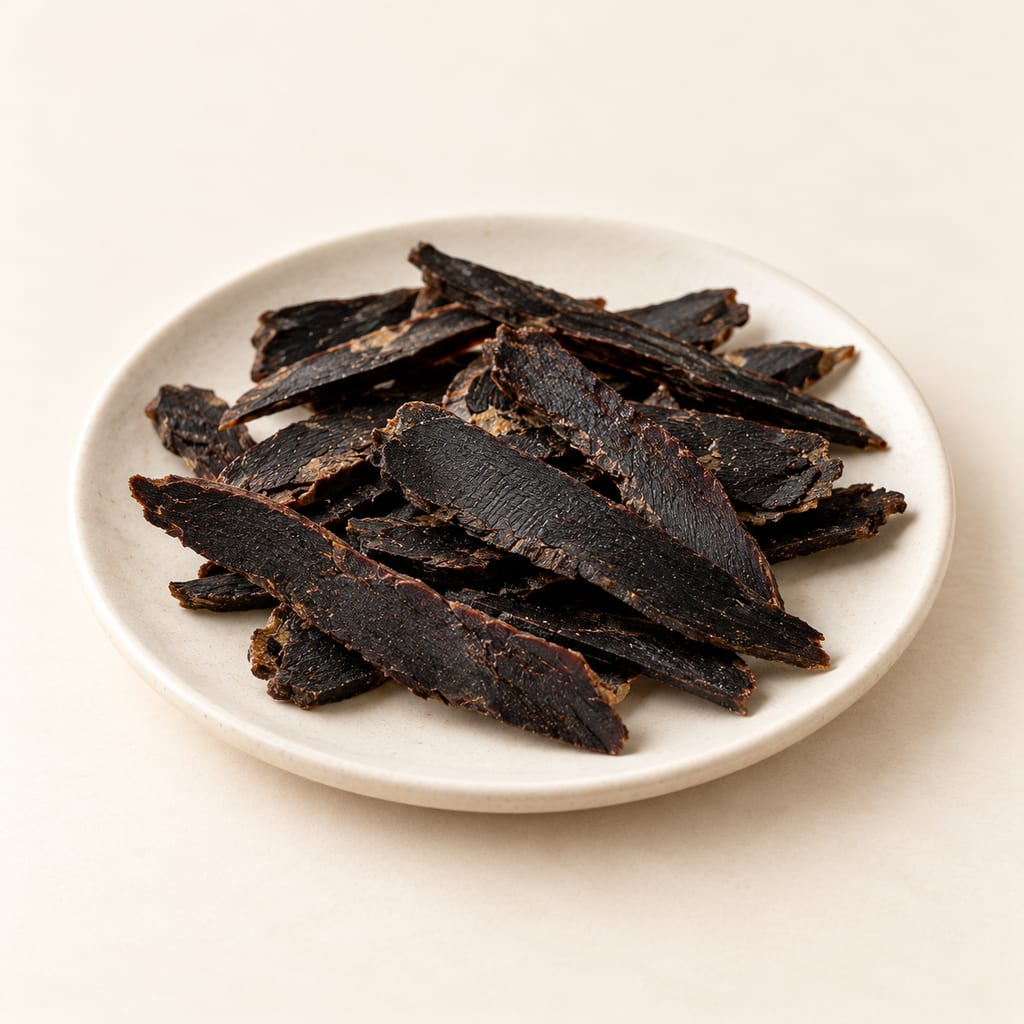
Long-finned pilot-whale meat, called Faroese tvøst, is eaten fresh and preserved in the Faroe Islands. Historical accounts place it among the meats hung to dry and pass through the ræst stage, distinct from blubber and other whale foods.
Saithe (Pollachius virens), also called coalfish and coley, is a North Atlantic cod-family fish used fresh and in distinct preserved forms. Faroese ræstur fiskur and Shetland salted piltocks are not the same product.
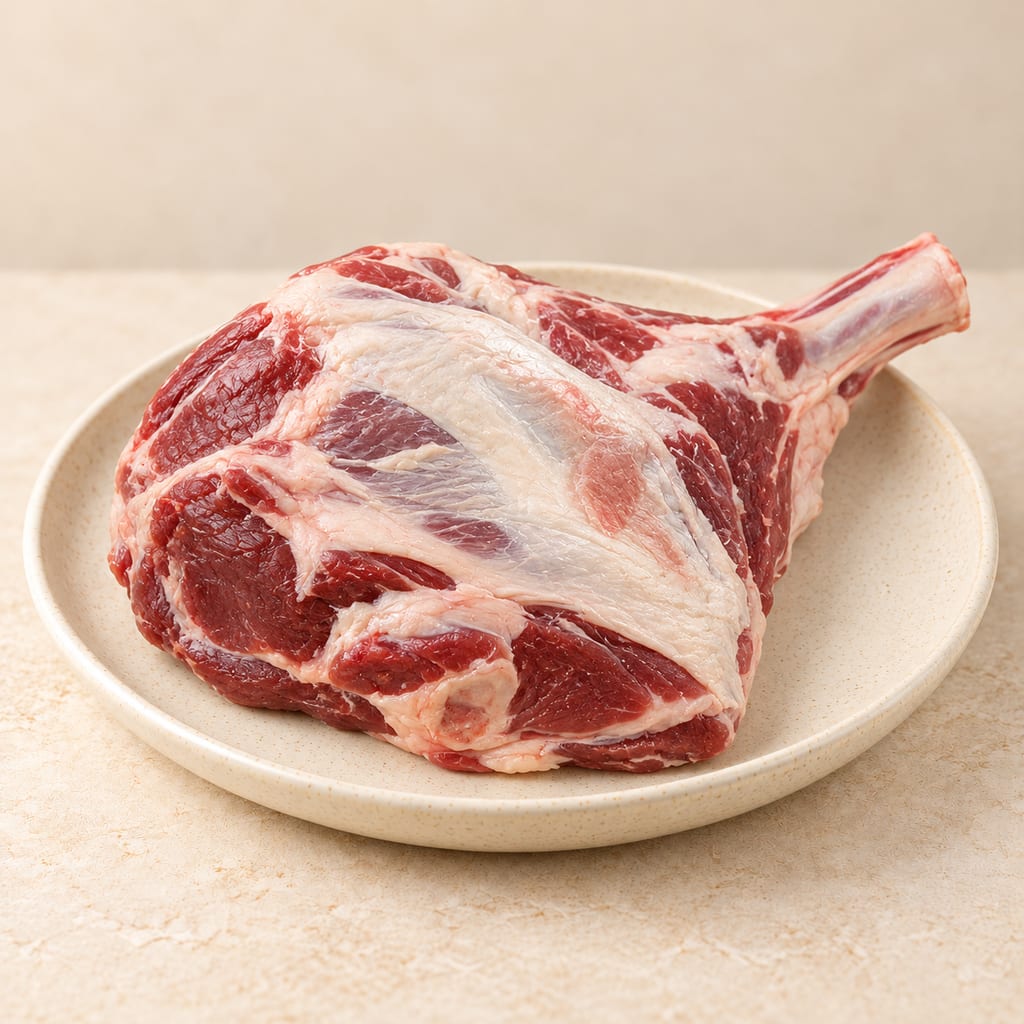
Sheep meat spans lamb from younger animals and mutton from mature sheep; age, breed, diet, cut and fat cover shape its texture and how it behaves in curing and fermentation.

A gelling polysaccharide extracted from red seaweeds, sold as kanten strips or powder; it sets firm at a low concentration and stays solid until about 85 °C.

A Dominican table and seasoning condiment of sour orange juice, mixed with lime and salt and bottled raw; garlic, oregano or a hot pepper may be added for meat or a spicier bottle.

Cicerbita alpina is an alpine perennial whose tender shoots and leaves have been eaten raw or cooked. Sámi milk preparations and modern Carnian dishes are distinct uses, with serious identification and preservation limits.

Japanese skipjack tuna cooked, then repeatedly smoked and dried over a wood fire by the hand-fired tebiyama method into a hard block for shaving into dashi: the first stage of katsuobushi.

A Swedish-style spirit vinegar made by fermenting neutral alcohol with live vinegar bacteria, with a separate guide to commercial ättika strengths.

A yeast-raised wheat ring shaped from a firm dough, briefly boiled and baked. This source-batch formula gives a gently malted crust and a chewy crumb.

A warm dip of garlic, anchovy and olive oil, often enriched with butter, that Piedmont serves over a flame with raw and cooked vegetables and bread.

Bechamel is a white sauce of milk thickened with a butter and flour roux, one of the French mother sauces, and the base from which Mornay and other cheese and cream sauces are made.
No community contributions have been published for this entry yet.
Sign in to contribute. Published comments and photos are free to read.
Frontiers in Sustainable Food SystemsHistory · Geography · Use · Safety
The Importance of Animal and Marine Fat in the Faroese Cuisine: The Past, Present, and Future of Local Food Knowledge in an Island SocietyIdentifies Faroese spik as pilot-whale blubber and tvøst as meat; identifies Globicephala melas.
Describes blubber as food, dry- or brine-salted and eaten with dried fish or whale meat, or spread on bread.
Discusses household distribution, continued use, generational change, vitamin D context and contaminant concerns.
Cited in: Spik is the whale’s blubber; A household food with a long record; Different tissues, different work; Salted, dried and frozen forms; How Faroese households serve spik; The Faroe Islands are the documented food geography; Changing use and careful interpretation
Journal of Ethnobiology and EthnomedicineHistory · Use · Geography
Ræstur fiskur: air-dried fermented fish the Faroese wayDiscusses pilot-whale blubber as an important food item, generally salted and eaten with fish or whale meat, and describes changing use.
Provides Faroese foodways context; its account of sheep-fat preparations is not applied to this pilot-whale blubber item.
Cited in: A household food with a long record; Salted, dried and frozen forms; How Faroese households serve spik
Fróðskapur / Faroe University PressHistory · Use · Geography
Pilot Whaling in the Faroe Islands: History, Ethnography, SymbolReproduces historical accounts of whale blubber as oil/grease and of some blubber salted and eaten with fish and bread.
Describes Faroese pilot whaling and community distribution of meat and blubber.
Cited in: A household food with a long record; Different tissues, different work; Salted, dried and frozen forms; How Faroese households serve spik; The Faroe Islands are the documented food geography
The Government of the Faroe IslandsUse · History
Faroese food cultureDescribes meals of whale meat and blubber with potatoes and the continued presence of traditional preservation alongside freezing.
Cited in: Salted, dried and frozen forms; How Faroese households serve spik; The Faroe Islands are the documented food geography; Changing use and careful interpretation
Faroe Food and Veterinary AuthoritySafety
Dietary recommendation on the consumption of pilot whale meat and blubberDated 1 June 2011; recommends at most one monthly meal for adults with stricter recommendations for girls and women and advice not to eat pilot-whale liver or kidneys.
Discusses mercury, dioxin and dioxin-like PCB risk assessment and historical advisory development.
Cited in: Contaminants are tissue-specific
International Journal of Circumpolar HealthSafety · History
Dietary recommendations regarding pilot whale meat and blubber in the Faroe IslandsReviews mercury studies across pilot-whale tissues and historical advice beginning in 1977.
Describes high organochlorine levels in blubber and the history of Faroese dietary recommendations.
Cited in: Contaminants are tissue-specific
International Journal of Circumpolar HealthSafety · Use
Awareness, cultural importance, risk perception and consumption behavior – the issue of contaminants in pilot whales in the Faroe Islands2026 cross-sectional survey of cultural importance, consumption and awareness of the distinct 2008 and 2011 advisories.
Cited in: Changing use and careful interpretation
Science of the Total EnvironmentSafety
Organochlorines and mercury in pilot whale blubber consumed by Faroe islandersMeasures organochlorine and mercury contamination in blubber from two Faroese pilot-whale catches and evaluates blubber as a dietary source of organochlorines.
Cited in: Contaminants are tissue-specific
North Atlantic Marine Mammal Commission (NAMMCO)Identity · Geography · Safety
Long-finned Pilot WhaleScientific name Globicephala melas and North Atlantic species context.
Summarizes studies of contaminant levels across pilot-whale tissues and notes organic contaminants in Faroese blubber.
Cited in: Spik is the whale’s blubber; Different tissues, different work; The Faroe Islands are the documented food geography; Contaminants are tissue-specific; Changing use and careful interpretation