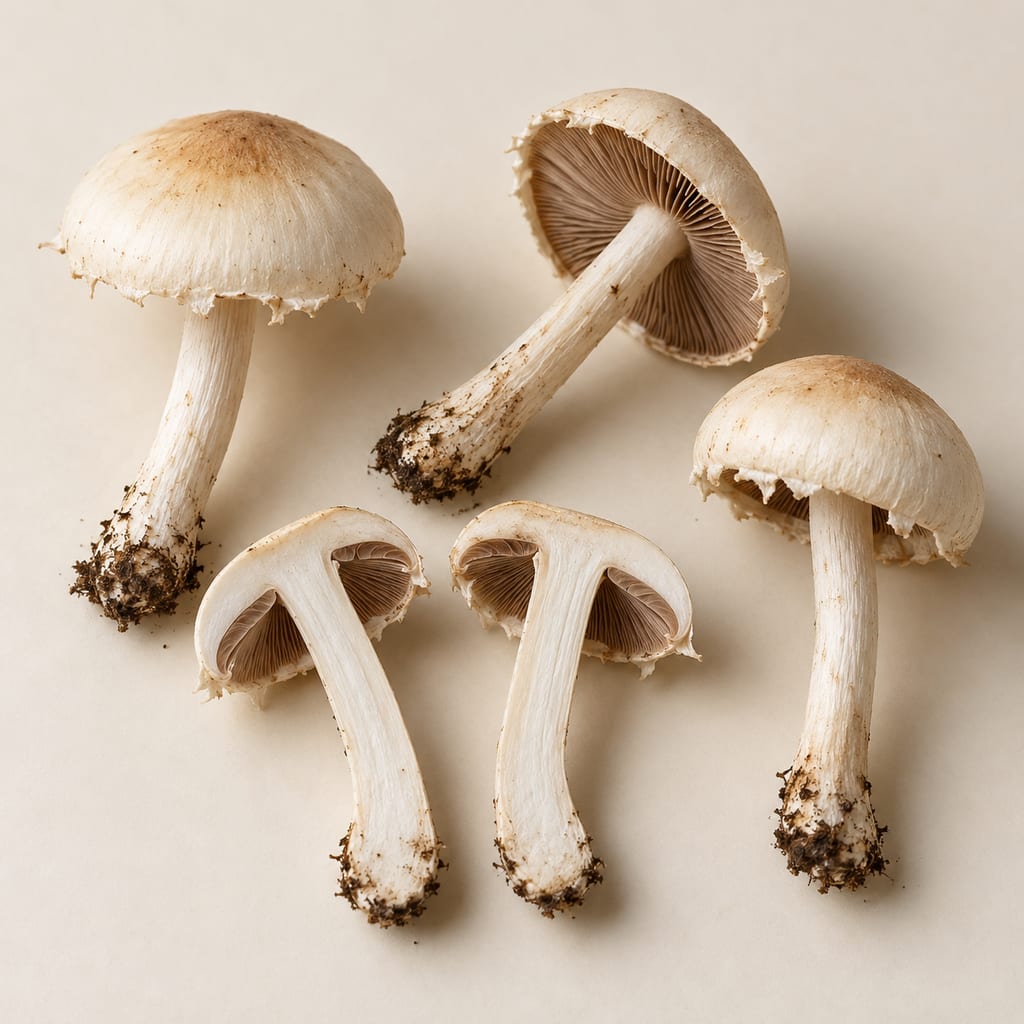
Agrocybe dura
A grassland agaric listed as edible in historical and scientific catalogues for Hong Kong and China. Taxonomic concepts and practical food value vary; the listings do not establish safe identification or culinary practice.
 FermenteaWhere food goes to change
Mushrooms
Snow fungus, Tremella fuciformis, is a white, gelatinous fungus that grows on dead broadleaf wood, and it was farmed for centuries in China before cultivation became a regular practice.
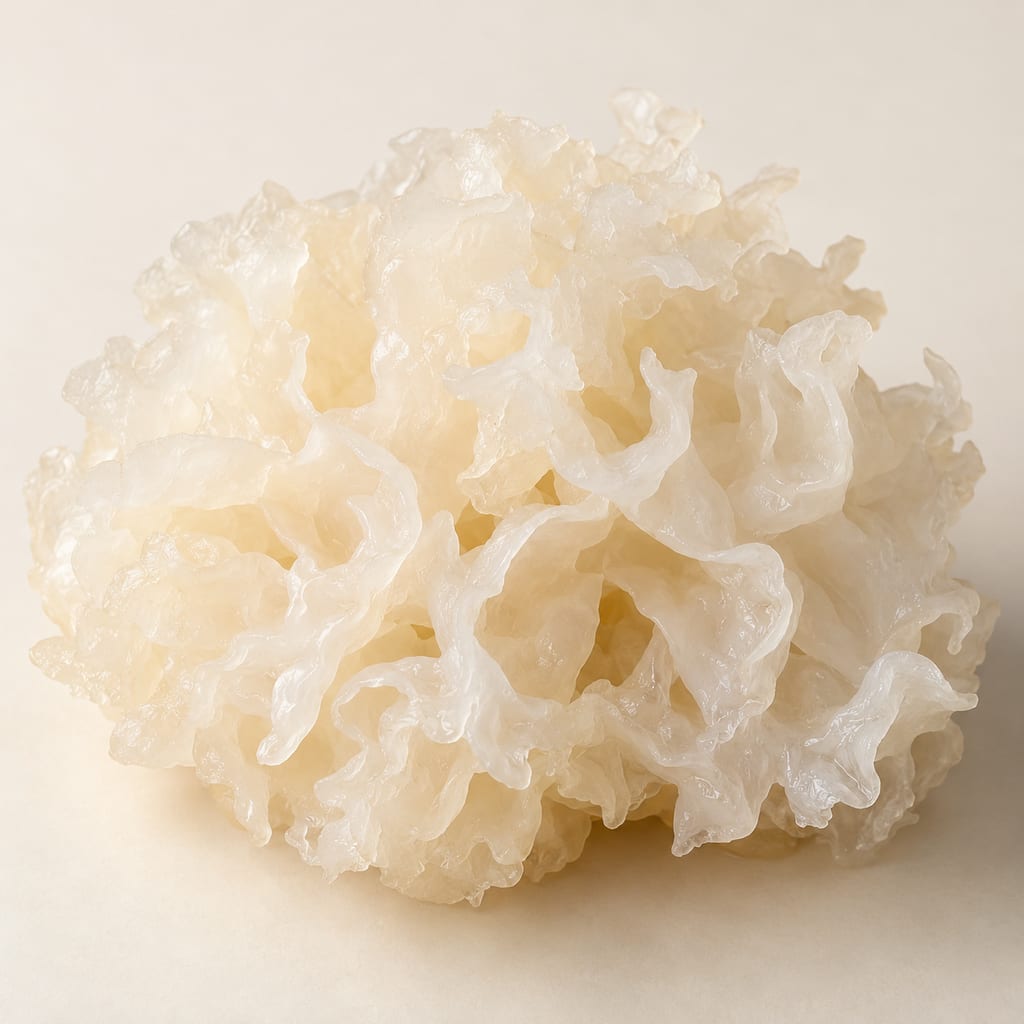
Tremella fuciformis is a gelatinous fungus with white, frond-like fruiting bodies. It is also called snow ear and white jelly mushroom. Its body is soft and translucent when wet, which gives the dried product its character in soups and desserts.
In the wild the fungus grows on dead broadleaf wood, where it parasitises a wood-rotting fungus rather than living on the tree itself. The University of Wisconsin mycology page describes this ecology, and it is the reason the species was hard to grow on purpose: the fungus needed its host fungus, and the cultivation history reflects that.
The University of Wisconsin page says that for many centuries Tremella eluded cultivation. Early growers tried to grow it on wooden poles, and the later improvements came from inoculating poles with spores or mycelium. That account describes a shift from gathering wild fruiting bodies to farming them, although the page does not date the change.
The sources consulted differ on when farming began. One gives about 1914 as the start of cultivation in China and newer techniques arriving in 1968, but the search summary treats that source as less authoritative. The sources agree that cultivation is long established in China, and this page does not choose a start date.
Scale is recorded only loosely. One summary of a reference source gives an estimated production in China in 1997 of 130,000 tonnes. The figure is recorded here as a single source's estimate and should be checked against a primary statistical source before it is quoted.
In Chinese cooking the sources say snow fungus is traditionally used in sweet dishes, and that cheaper cultivated supply has brought it into some savoury dishes as well. The use is a matter of cuisine, and this page does not give recipes or a method.
The sources record use in traditional Chinese medicine and in cosmetics, including products in China, Korea and Japan. Health claims, such as treatment for coughs or tuberculosis, come from traditional or commercial sources. The sources reviewed do not establish those claims clinically, and this page does not endorse them.
The sources consulted do not give a storage life, a drying method or a rehydration ratio, so this page gives none. Buy dried material from a supplier who names the species.
Open questions: the start date of cultivation, the production figures and a primary account of the Chinese culinary history all need better sources. The naming of the species by Berkeley in 1856 comes from a search summary and is not checked against the original description.
Country-level. The sources describe long farming in China. Several sources say its use is traditional in sweet dishes, which is a claim about Chinese cooking and not a single origin.
A grassland agaric listed as edible in historical and scientific catalogues for Hong Kong and China. Taxonomic concepts and practical food value vary; the listings do not establish safe identification or culinary practice.

Akahatsu, Lactarius akahatsu, is a wild milkcap of East Asian pine and mixed forests that is sold in Yunnan markets, with its edibility and identity still needing species-level review.
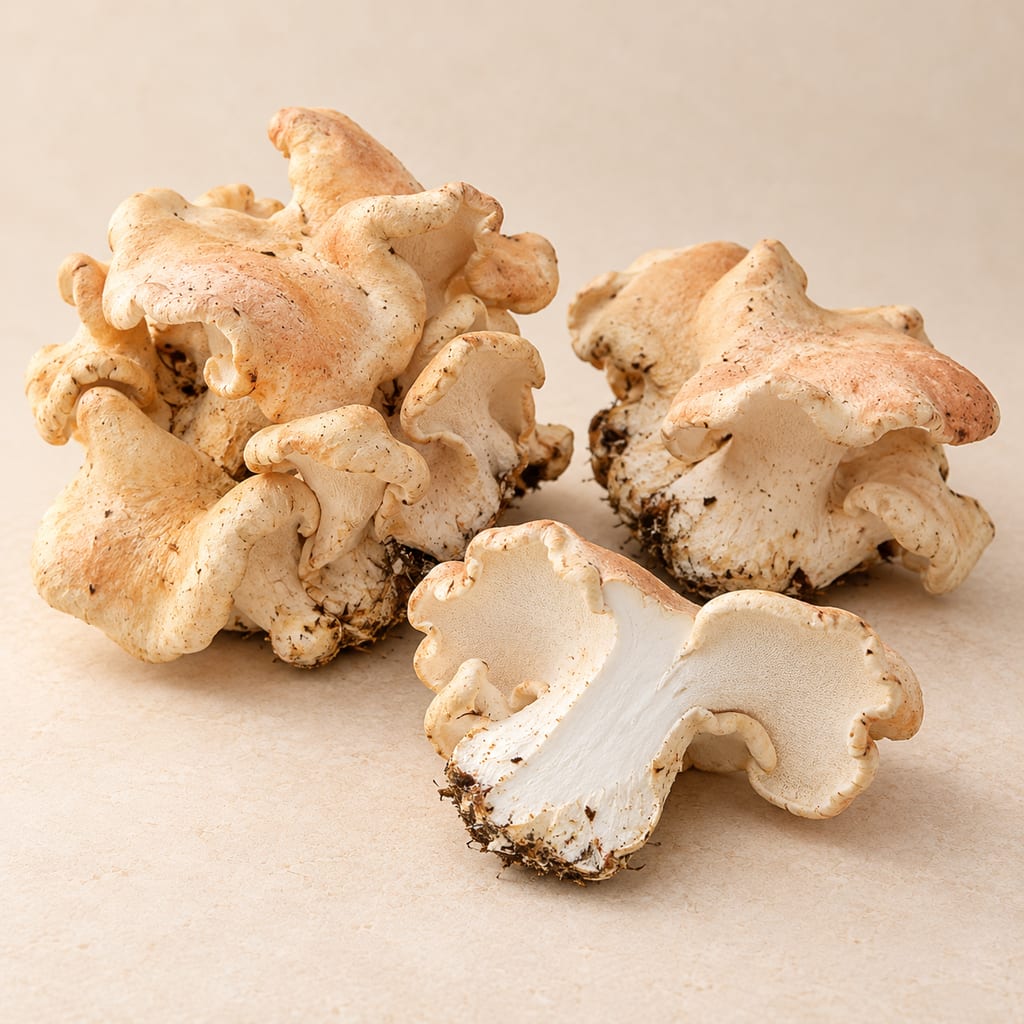
Albatrellus confluens is a ground-growing polypore with fused buff-orange caps. Sources document Chinese market use and regional edibility, but others reject it as too bitter; taxonomy also varies between Albatrellus and Albatrellopsis.
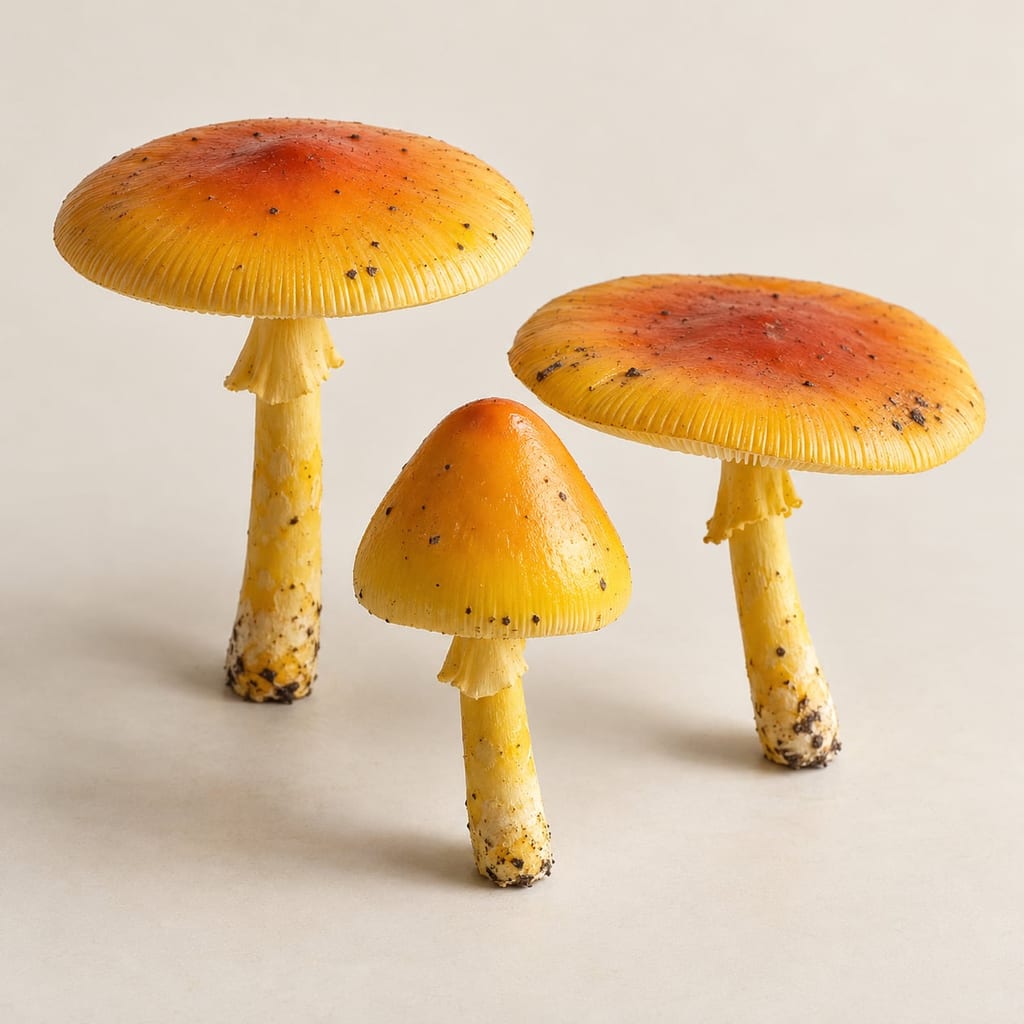
A wild Amanita recorded from China in a 2026 checklist of edible and medicinal fungi. The genus holds deadly species, so this page gives no identification or edibility verdict.
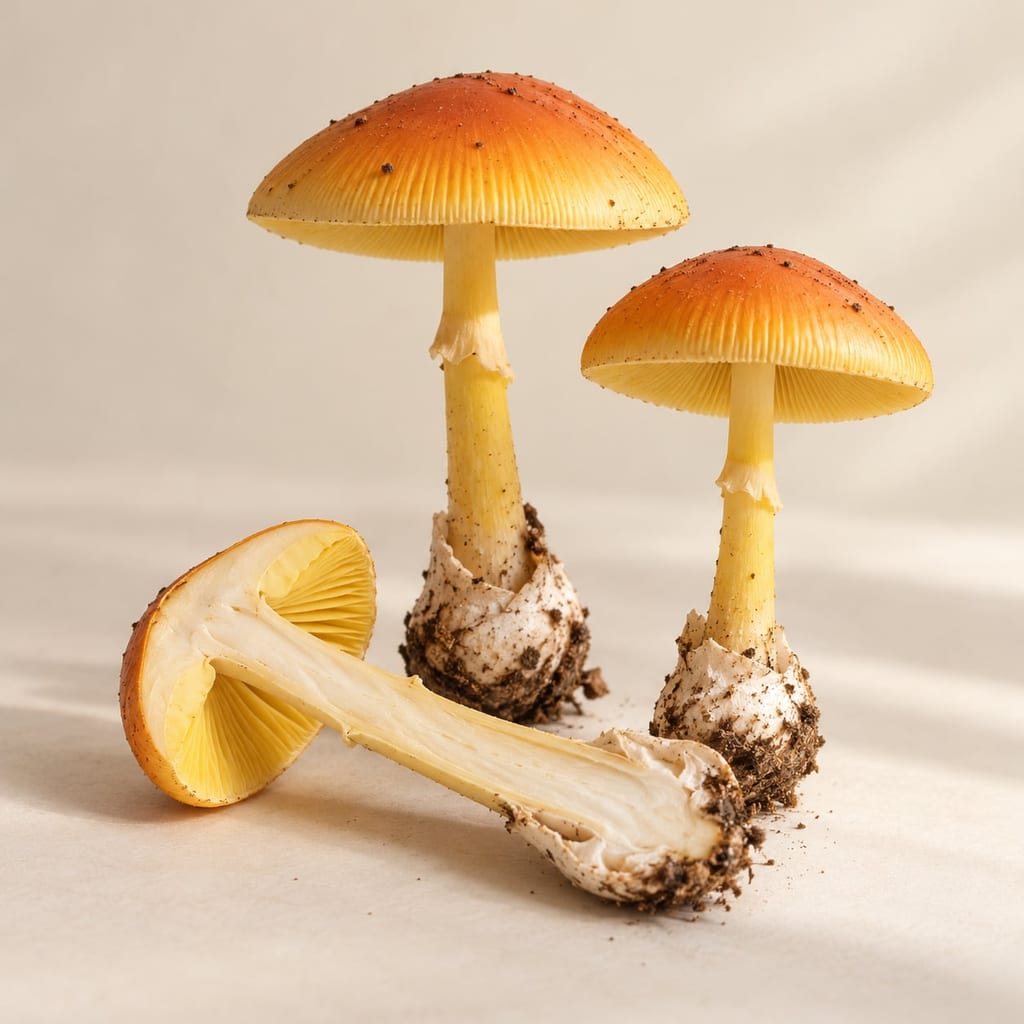
A wild Amanita of China, first reported there and listed as edible in a Yunnan ethnomycology study. The genus contains deadly species, so this page does not support identifying or eating it.
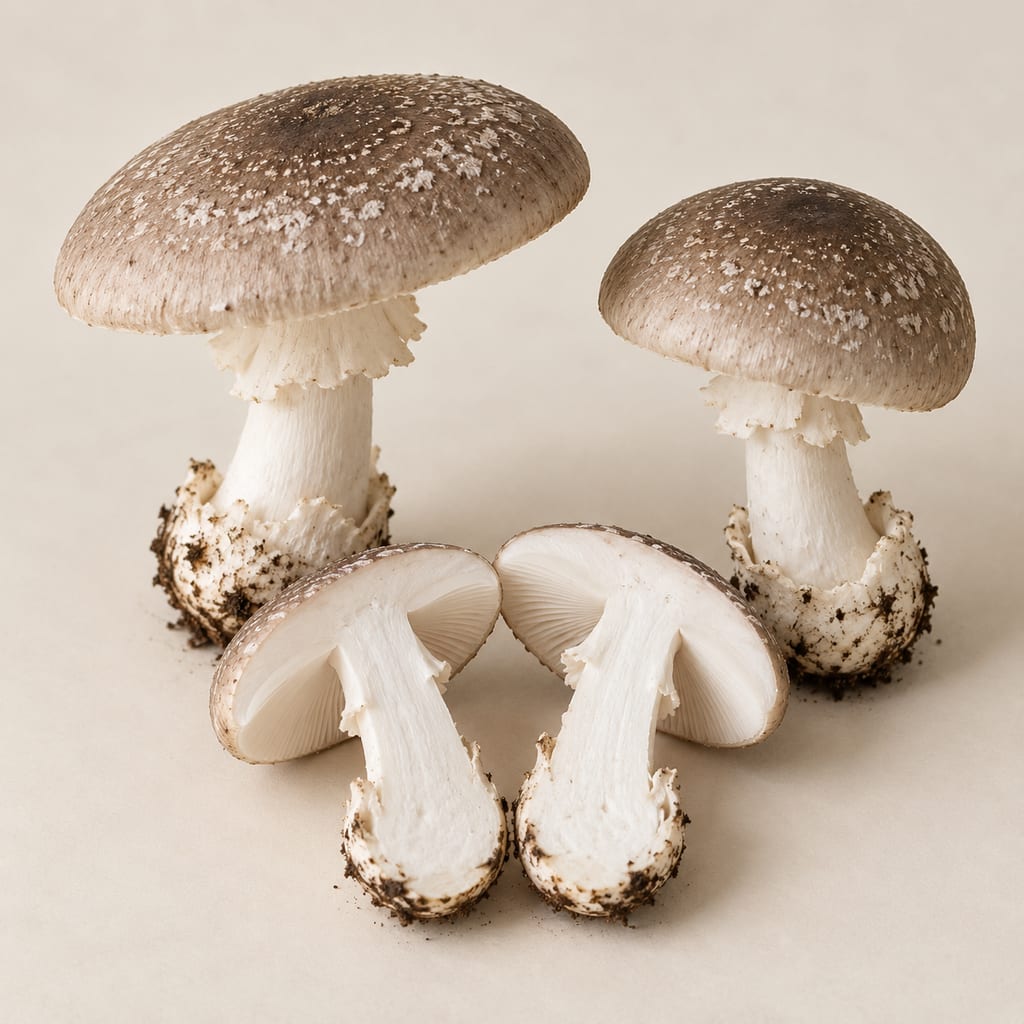
Amanita yuaniana is a Chinese Amanita that a 2023 Yanshan survey and a Yunnan ethnomycology survey list among edible species. No source tests it for safety, and the genus holds the most lethal mushrooms.
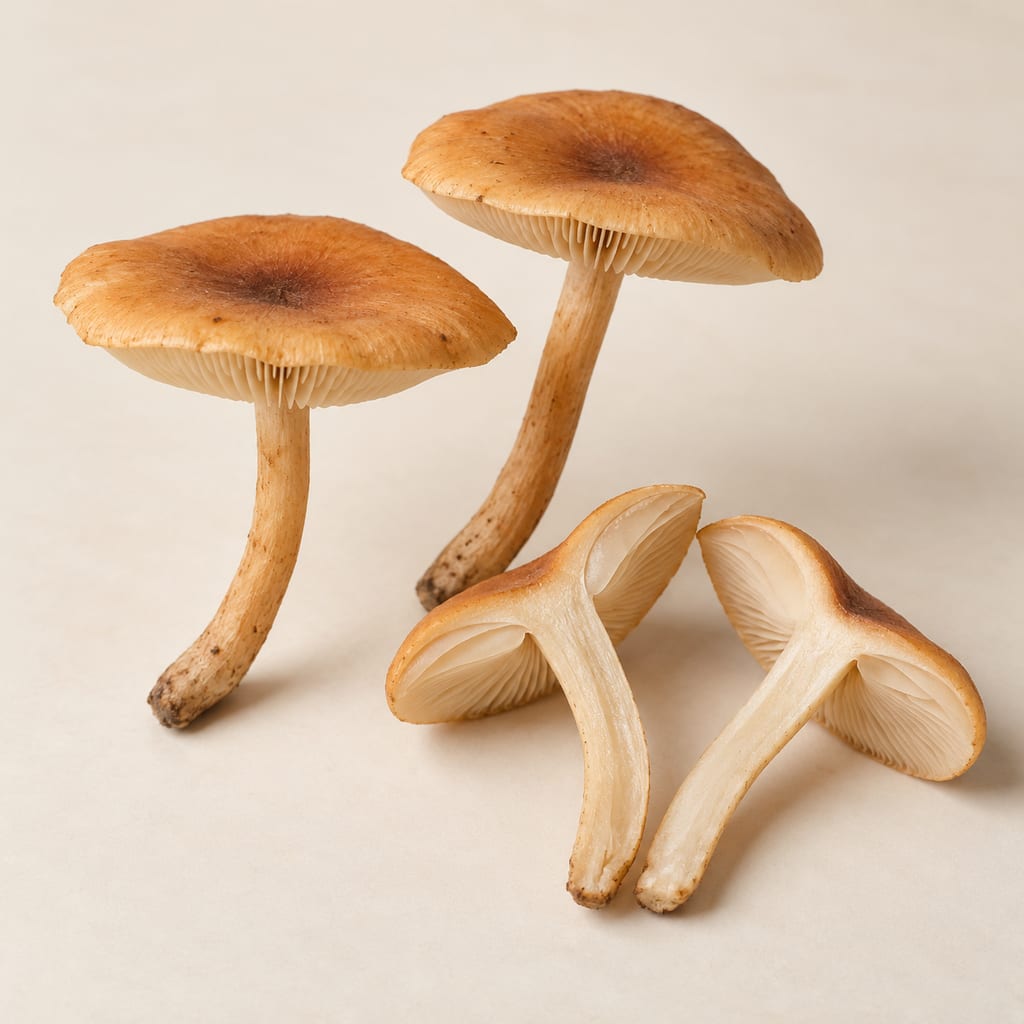
A wood-associated Armillaria recorded in Yunnan and Sichuan, China, and listed as edible in a 2026 Chinese catalogue.
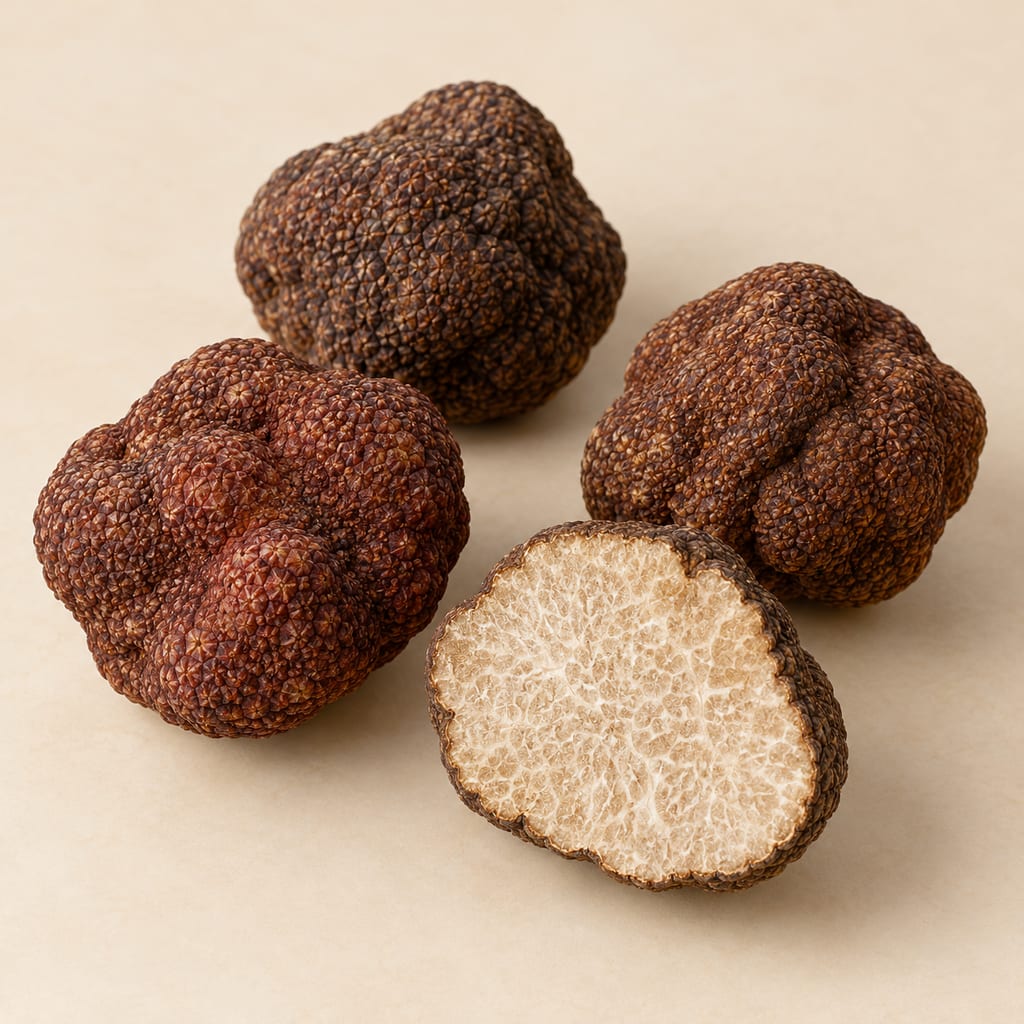
Tuber pseudohimalayense is a wild black truffle from Yunnan, China, listed as edible in a Chinese species catalogue. No independent assessment of its culinary use or safety is available.
No community contributions have been published for this entry yet.
Sign in to contribute. Published comments and photos are free to read.
University of Wisconsin Botany, Tom's FungiIdentity · Method · History
Tremella fuciformis, the snow fungus, an edible jelly fungusSnow fungus is a parasite of wood-rotting fungi on dead broadleaf branches (search summary; primary text not read in full).
For many centuries Tremella eluded cultivation; early growers used wooden poles, later inoculated with spores or mycelium.
Cited in: What it is; How it came into cultivation; Its place in food; Health and cosmetic claims; Handling and open questions
Wikimedia CommonsImage
File:Tremella fuciformis 55896868.jpgReference photograph of snow fungus, CC BY 4.0.