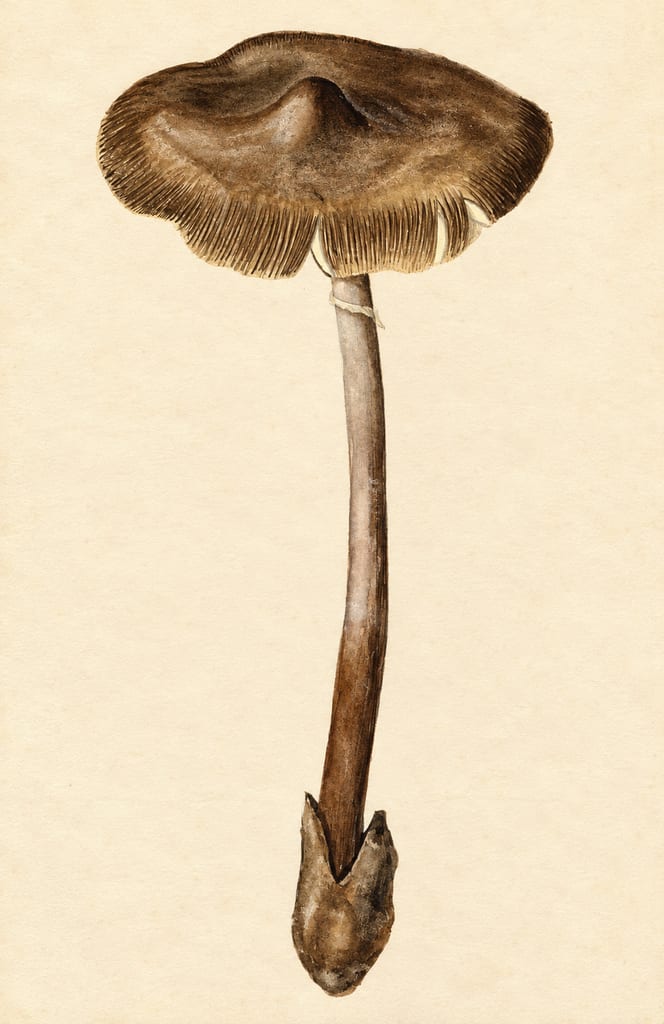
Amanita annulatovaginata
A wild ectomycorrhizal Amanita of the Congo rainforest, recorded as locally consumed in Tshopo province. Its preparation was not established, and the genus includes deadly species.
 FermenteaWhere food goes to change
Mushrooms
A wild forest fungus of the Tshopo province in the Democratic Republic of the Congo, recorded in local interviews as eaten. The species name is a research label, and no preparation is established.
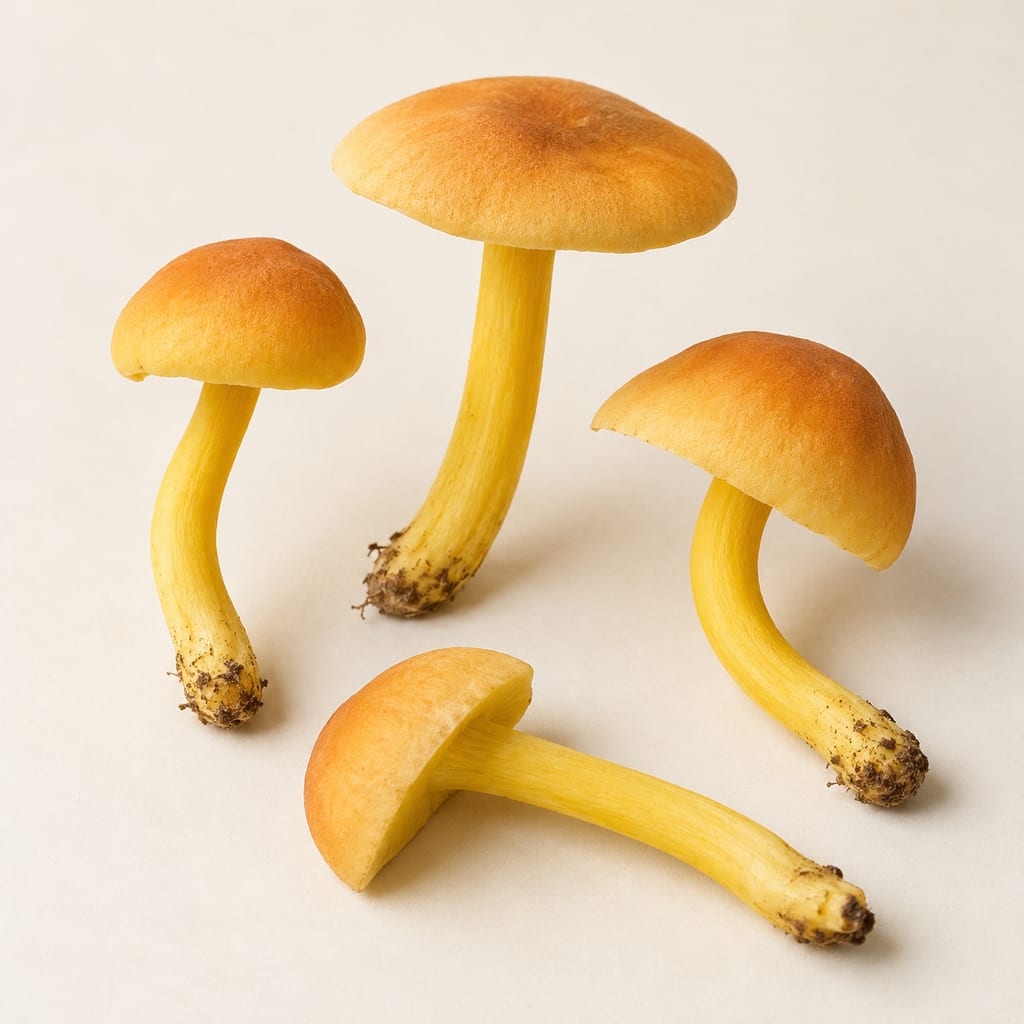
Tricholomopsis aurea is a wild forest fungus. The catalogue records it from Tshopo province in the Democratic Republic of the Congo, where it was named in voucher-backed interviews about locally eaten mushrooms. It has no common name in the record.
The catalogue uses the name as a research label. It has not been checked against a current accepted name, and the interview record does not settle the identity of every specimen that local people call by this name.
Tricholomopsis aurea is recorded as a forest saprotroph, a fungus that lives on dead wood and leaf litter rather than on a living tree partner. Fruiting bodies come up from the forest floor and rotting wood in the rainy season, when the Tshopo collections were made.
The record does not say how often the mushroom is found or whether local people manage the places where it grows.
The interviews record Tricholomopsis aurea as locally consumed. The catalogue does not establish how it is prepared, which dishes it goes into or how it compares with the other mushrooms the same communities eat. A broader survey of the same province recorded many wild species in local use, most of them as food, and it describes wild mushrooms as part of household and forest knowledge. That survey is background for this species, not evidence of its preparation.
No quantity, cooking time or storage practice is recorded for this species.
The food-use record is an ethnomycological record. It is not an independent toxicological assessment and does not show that the species is safe to eat in any preparation. Local consumption is one piece of evidence; it does not replace identification by a specialist.
Catalogue inclusion is not an identification or edibility verdict. A specimen should not be identified or eaten on the basis of this page. Wild fungi need identification by people with local expertise who know the look-alikes in the area. Appearance, smell and taste do not establish that a mushroom is safe.
The record leaves open the accepted name, the full distribution beyond Tshopo, the preparation, the seasonality and any toxicity data for this species. A next research question is whether a voucher specimen from the Tshopo collections has been examined by a mycologist and linked to a verified name.
The food-use record comes from voucher-backed interviews in Tshopo; it does not place the species at a single locality.
A wild ectomycorrhizal Amanita of the Congo rainforest, recorded as locally consumed in Tshopo province. Its preparation was not established, and the genus includes deadly species.
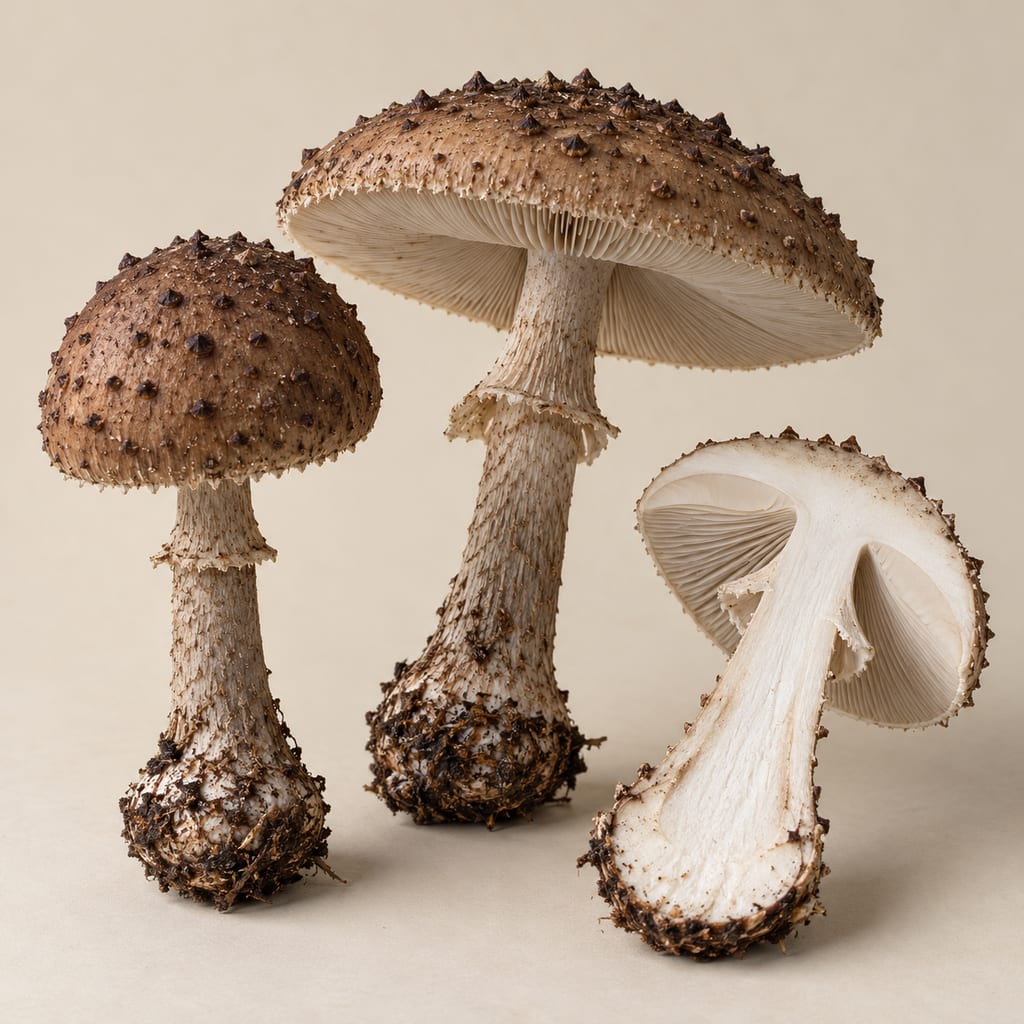
A wild ectomycorrhizal Amanita of the Congo rainforest, recorded as locally consumed in Tshopo province. Its preparation was not established, and the genus includes deadly species.
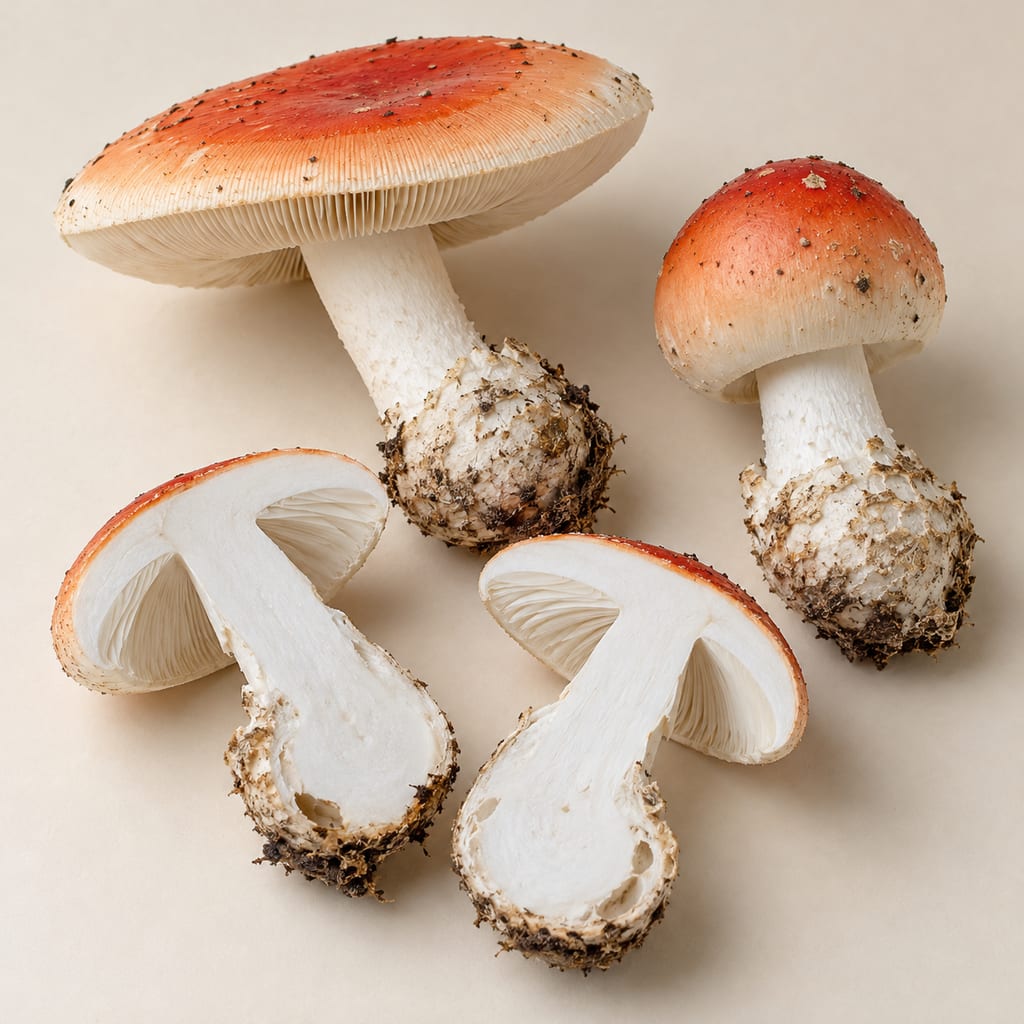
Amanita robusta Beeli is a poorly documented Central African Amanita known from voucher-backed rainforest collections in the Democratic Republic of the Congo and Cameroon. A Tshopo study reports local food use for a taxonomically supported voucher, but neither that record nor the name makes an unknown Amanita safe to identify or eat.
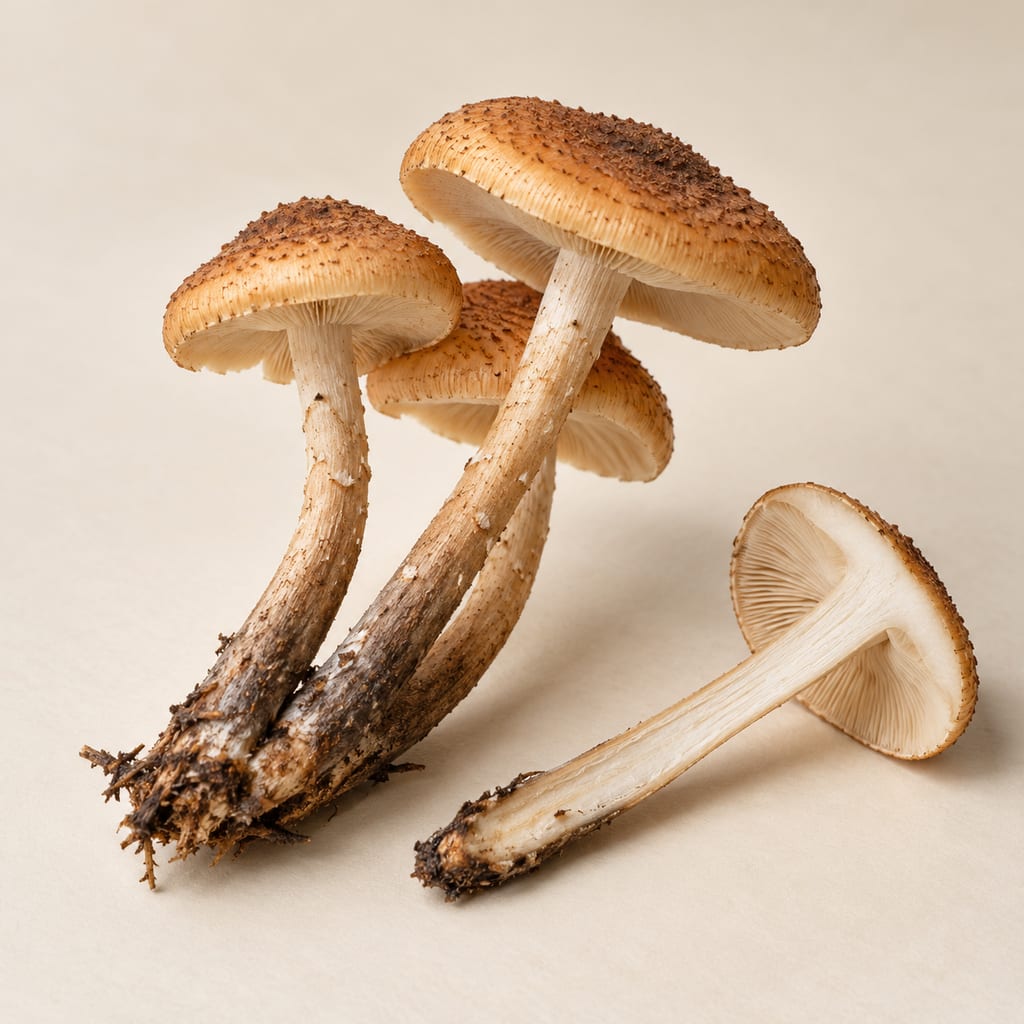
Armillaria heimii is a saprotrophic fungus of the honey-fungus genus, recorded as a wild food in Tshopo province, DR Congo. Its preparation and safety are not established in the sources.
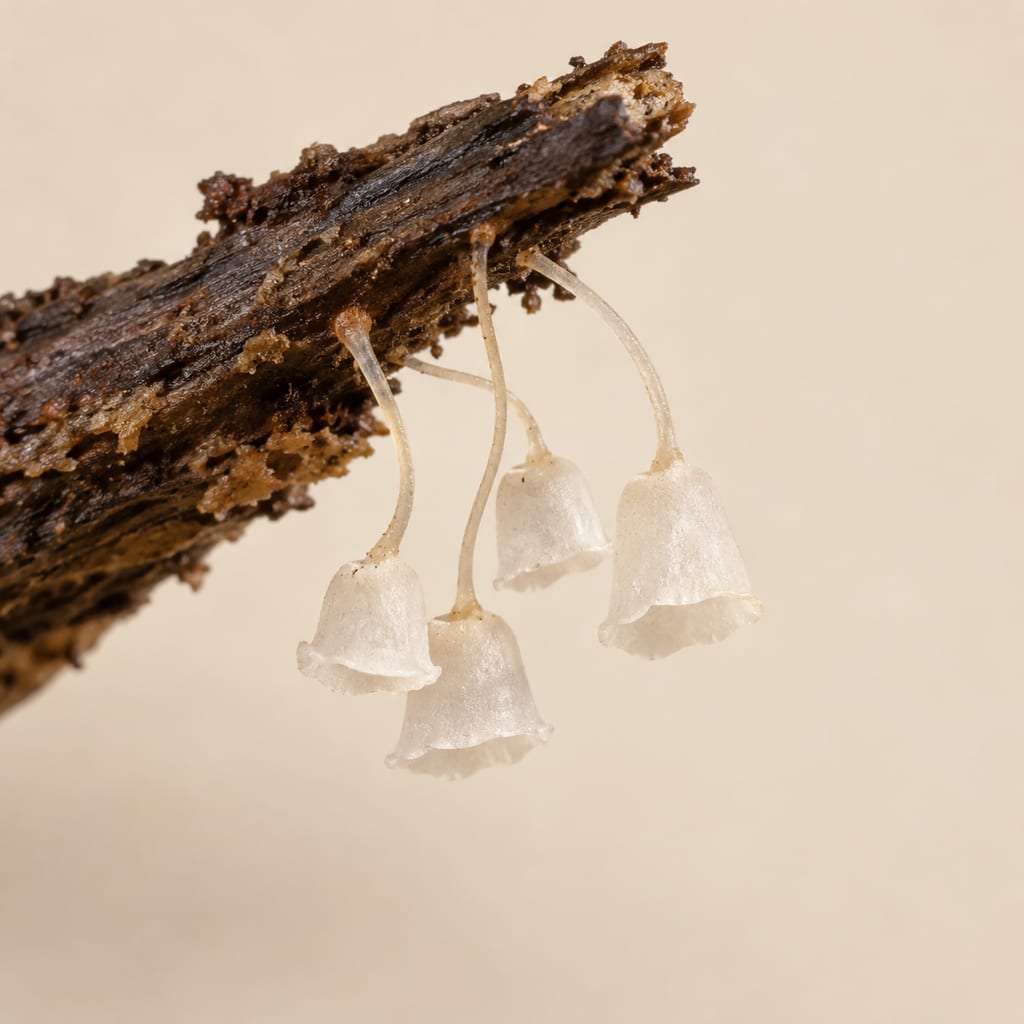
Calyptella longipes is a wood and litter decaying fungus of the rainforests of Tshopo province, DR Congo, where some ethnic groups in voucher-backed interviews eat it. Its preparation was not recorded.
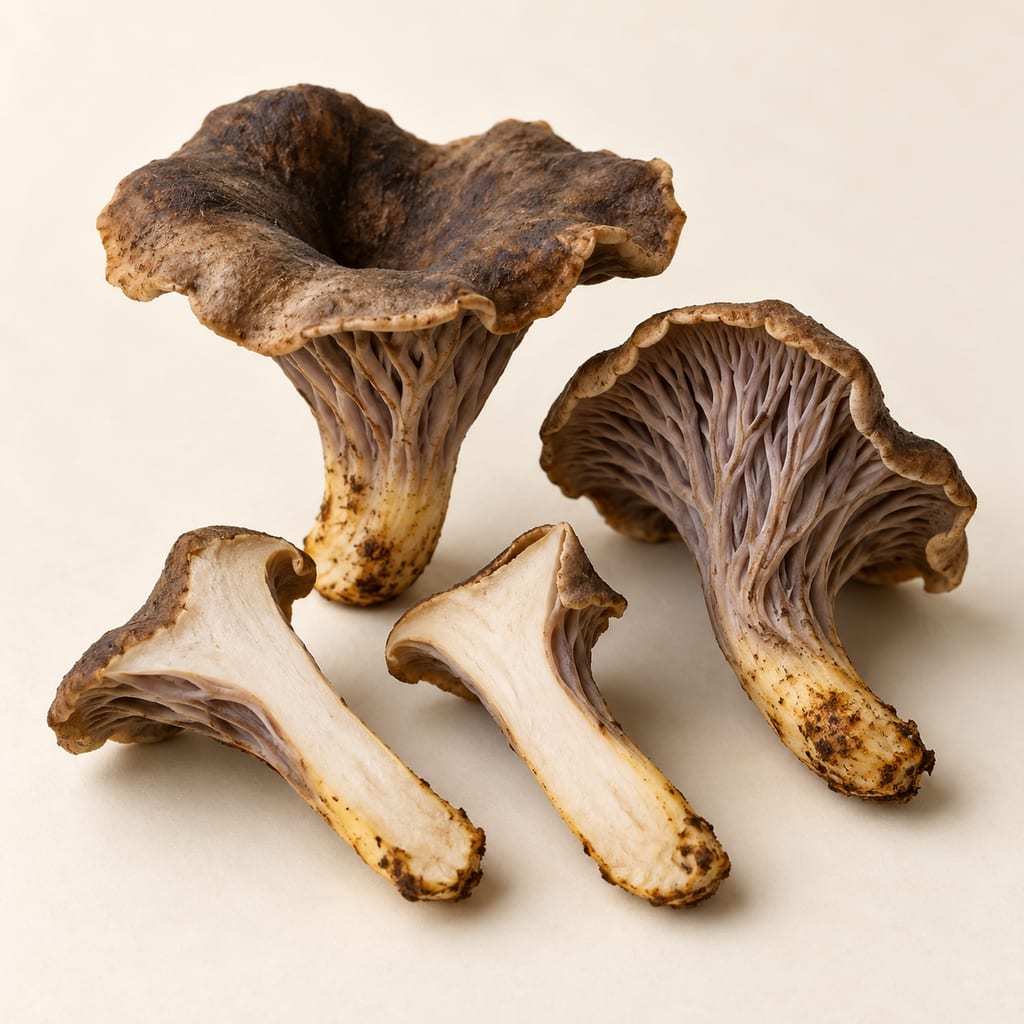
Cantharellus congolensis is an ectomycorrhizal chanterelle of sub-Saharan Africa, eaten in the Democratic Republic of the Congo under local names. Its edibility rests on food-use surveys, not on toxicity tests.
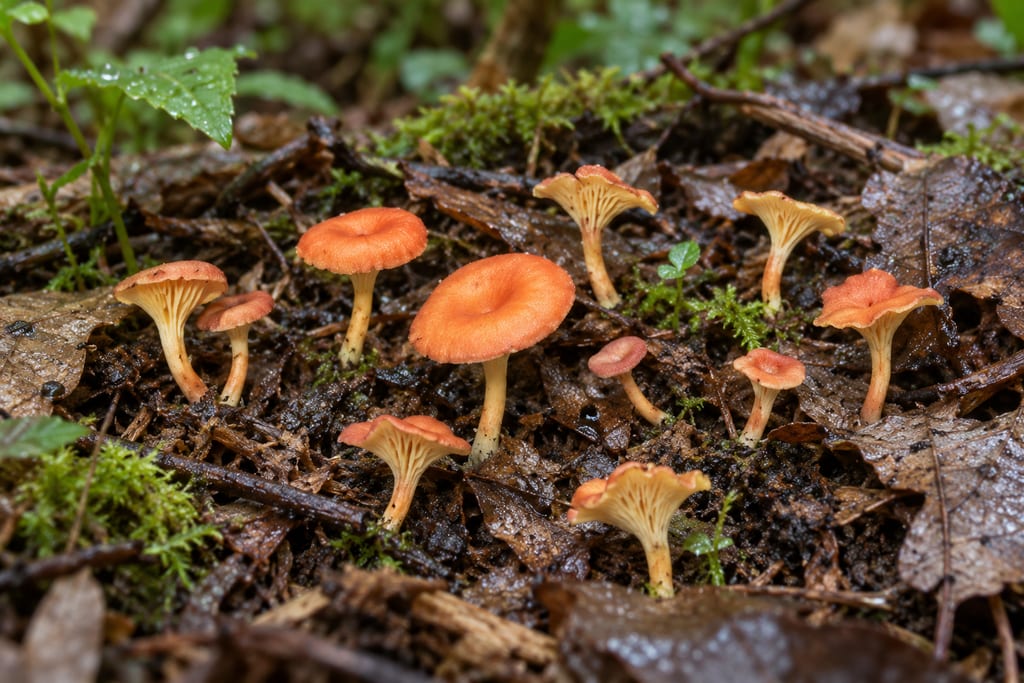
Cantharellus floridulus is an ectomycorrhizal rainforest fungus that informants in Tshopo province, DR Congo, eat in voucher-backed interviews. Its preparation is not recorded, and the source gives no toxicity statement.
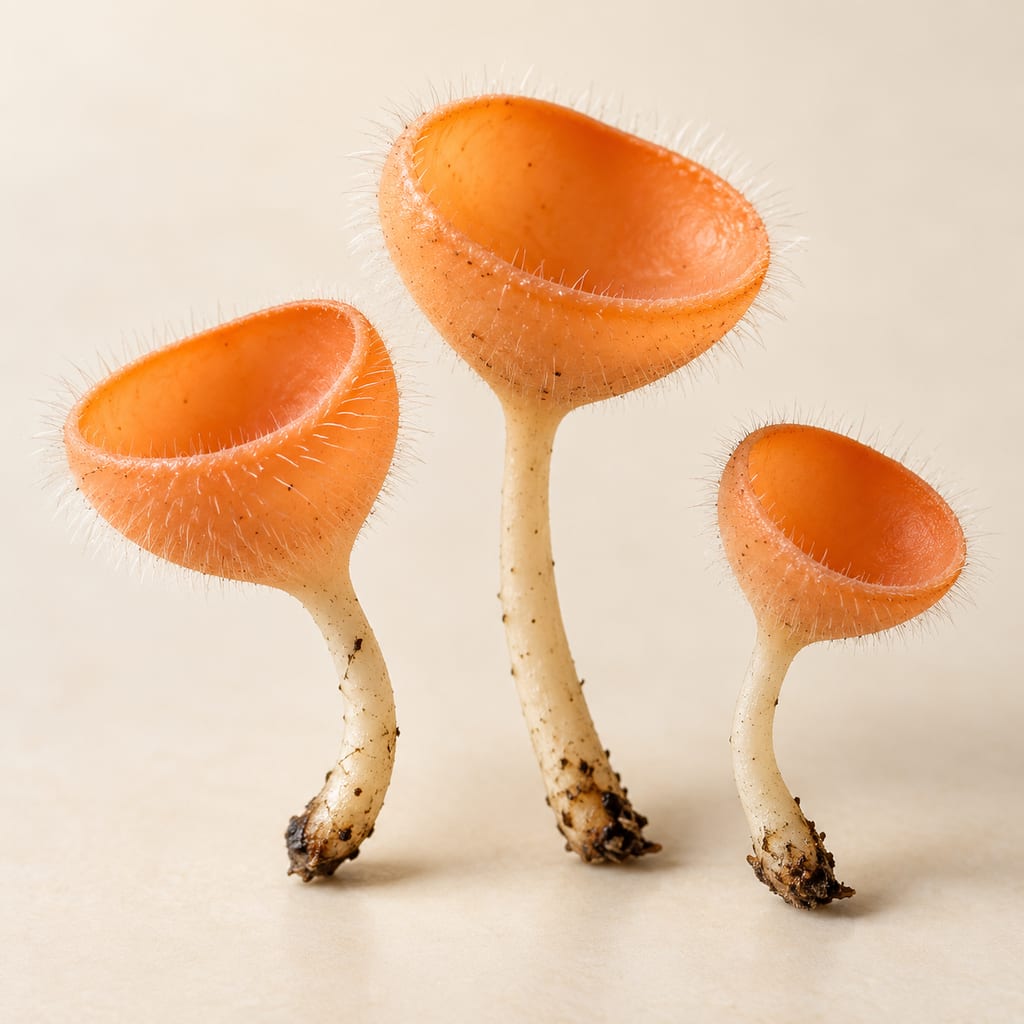
A forest cup fungus of the Tshopo province in the Democratic Republic of the Congo, recorded in local interviews as eaten. The species-level preparation is not established.
No community contributions have been published for this entry yet.
Sign in to contribute. Published comments and photos are free to read.
PubMed CentralFood use · Ecology · Safety
https://pmc.ncbi.nlm.nih.gov/articles/PMC7011311/Recorded as locally consumed in voucher-backed Tshopo interviews; species-specific preparation not established.
Forest saprotroph reported in the source.
The record is an ethnomycological food-use record, not an independent toxicological assessment.
Cited in: Overview; Ecology; Safety and identification; What is still unknown
Journal of Ethnobiology and Ethnomedicine (BioMed Central)Background · Method
Uses and importance of wild fungi: traditional knowledge from the Tshopo province in the Democratic Republic of the CongoWild mushroom use in Tshopo communities near Yangambi and Yoko, documented through interviews and voucher specimens.
Cited in: Local use