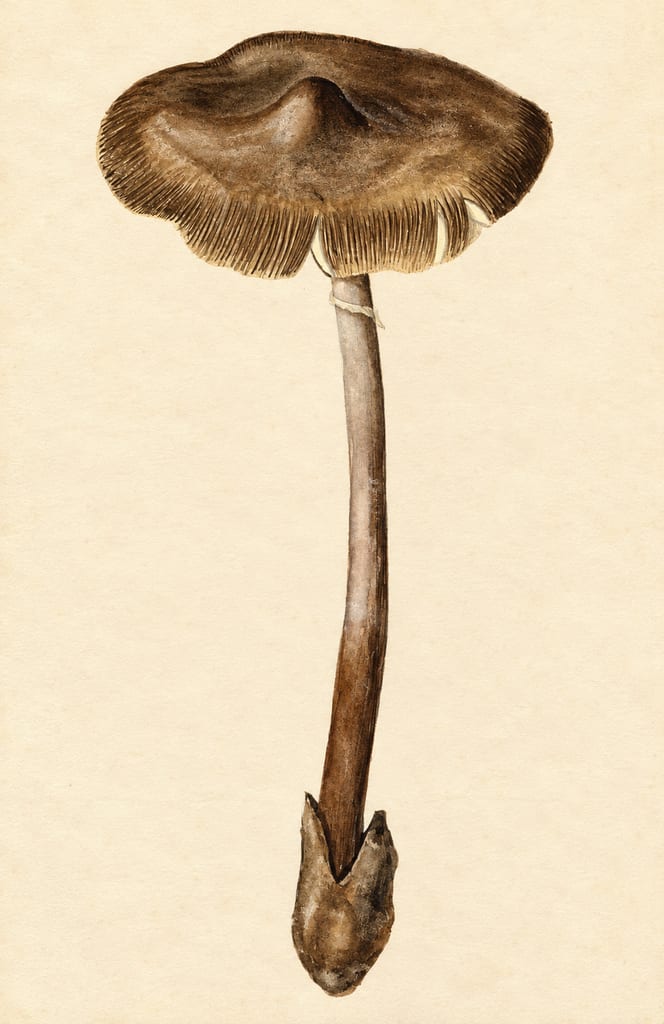
Amanita annulatovaginata
A wild ectomycorrhizal Amanita of the Congo rainforest, recorded as locally consumed in Tshopo province. Its preparation was not established, and the genus includes deadly species.
 FermenteaWhere food goes to change
Mushrooms
Trogia infundibuliformis is a thin, translucent forest mushroom of Central Africa recorded as eaten in Tshopo, DR Congo; it is easily confused with the poisonous Trogia venenata, so identification matters.
Trogia infundibuliformis is a small forest mushroom of the family Marasmiaceae, which grows on dead wood and leaf litter in the warm, wet forests of Central Africa. Its fruiting body is thin, tough and translucent, so it looks more fragile than many forest mushrooms. The catalogue records it as a forest saprotroph with a wild context, and as a locally eaten species.
The species is recorded across the Paleotropics, with records in the DR Congo, Gabon, Malawi and Uganda. In the Republic of the Congo, a field poster lists it among the edible species of the north of the country under a local name. The catalogue records a food use in Tshopo province, in the Democratic Republic of the Congo.
The Tshopo record comes from voucher-backed interviews, in which the mushroom was reported as locally consumed. The catalogue states that species-specific preparation was not established. The sources reviewed do not give a cooking method, a dish, a quantity or a season for this species.
Because Trogia has more than one species with different records, a food record for one name cannot be carried over to all records under that name. The catalogue asks that broad historical name concepts be reviewed before they are used.
The catalogue warns not to confuse this species with the poisonous Trogia venenata. It also states that the Tshopo interview record does not establish the toxicity of every record of T. infundibuliformis, and that the record is an ethnomycological record and not an independent toxicological assessment.
This page gives no identification and no edibility verdict. A thin translucent forest mushroom should be identified by an expert before anyone eats it, and a local food record does not make a specimen safe.
The sources reviewed do not give a preparation, a chemical or toxicity test, or a full list of the Tshopo species. The species tables of the Tshopo studies would show whether T. infundibuliformis is among the species recorded there.
The catalogue records one region; the Congo Basin food record for the species is broader and not confirmed for Tshopo in the sources reviewed.
Distribution records only; the paleotropical range is given for the species, not as a food record.
A wild ectomycorrhizal Amanita of the Congo rainforest, recorded as locally consumed in Tshopo province. Its preparation was not established, and the genus includes deadly species.
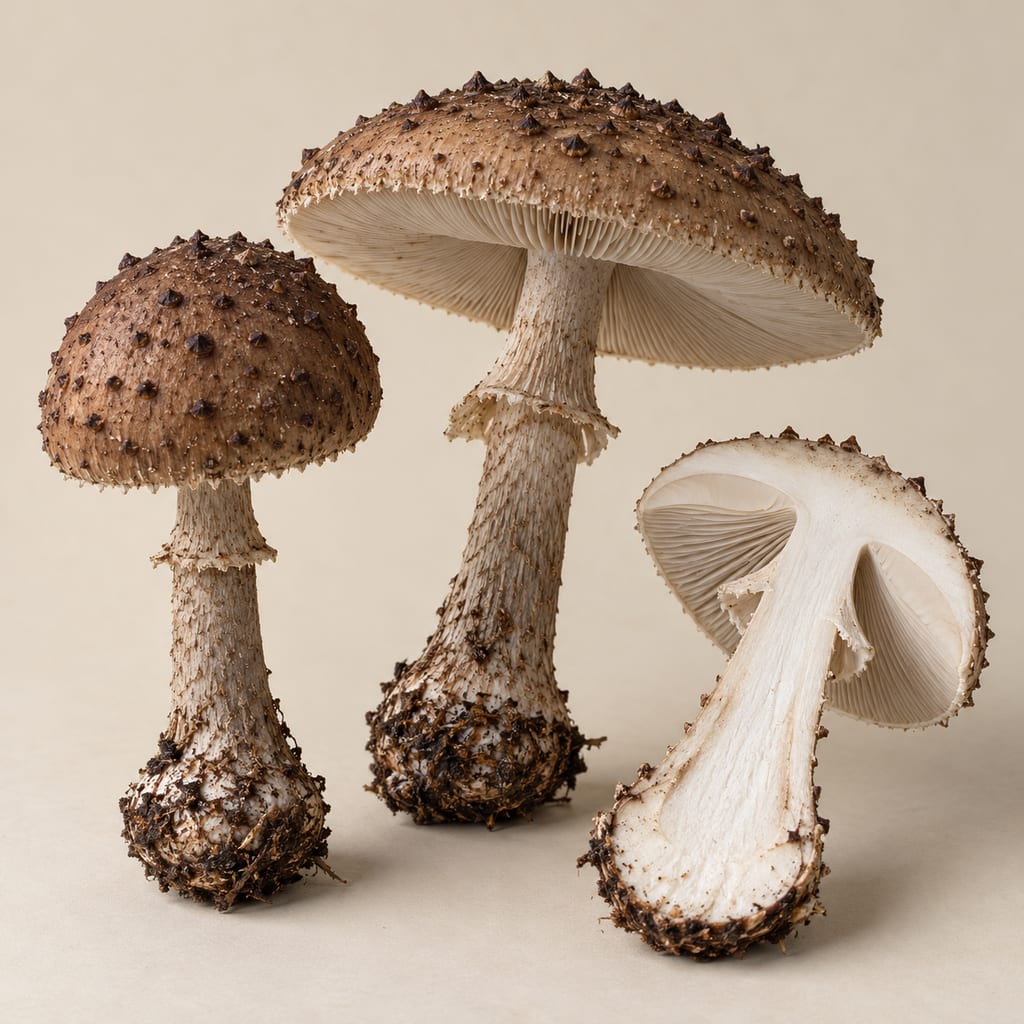
A wild ectomycorrhizal Amanita of the Congo rainforest, recorded as locally consumed in Tshopo province. Its preparation was not established, and the genus includes deadly species.
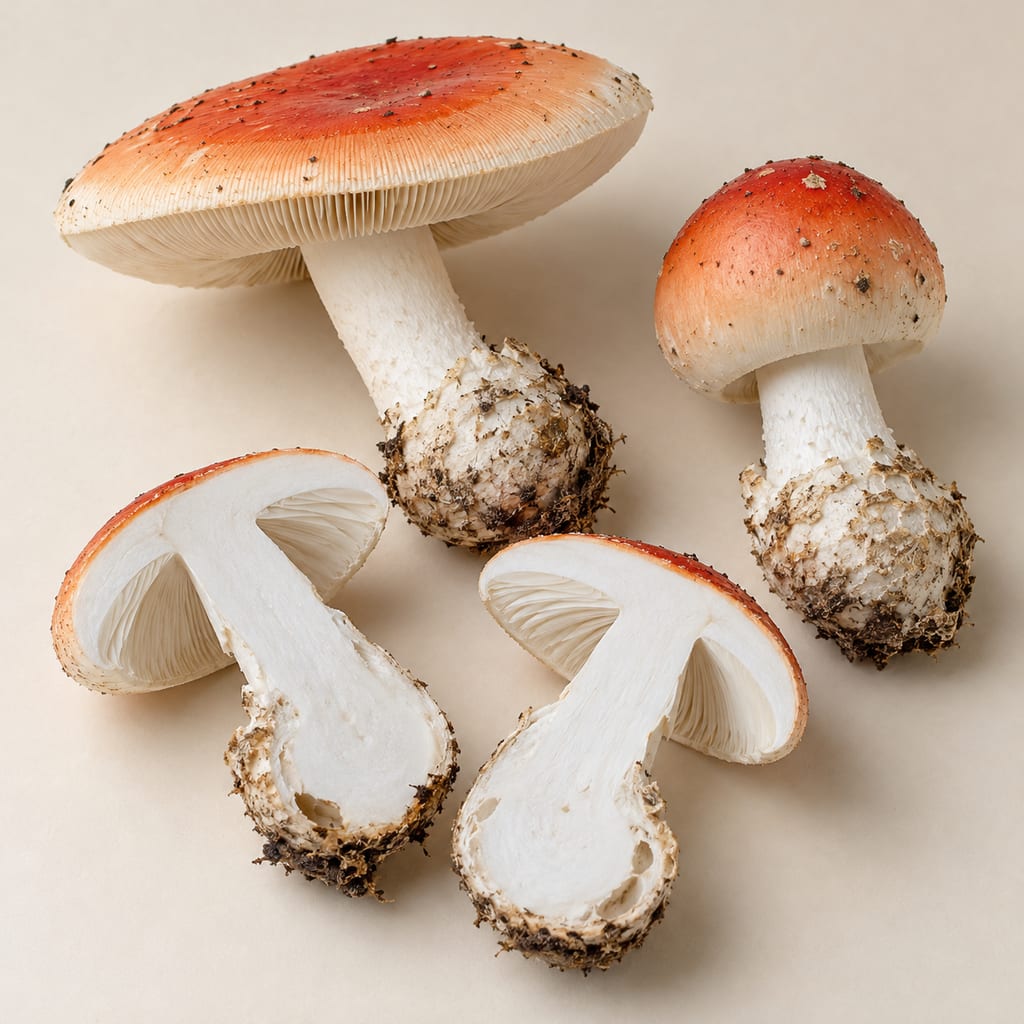
Amanita robusta Beeli is a poorly documented Central African Amanita known from voucher-backed rainforest collections in the Democratic Republic of the Congo and Cameroon. A Tshopo study reports local food use for a taxonomically supported voucher, but neither that record nor the name makes an unknown Amanita safe to identify or eat.
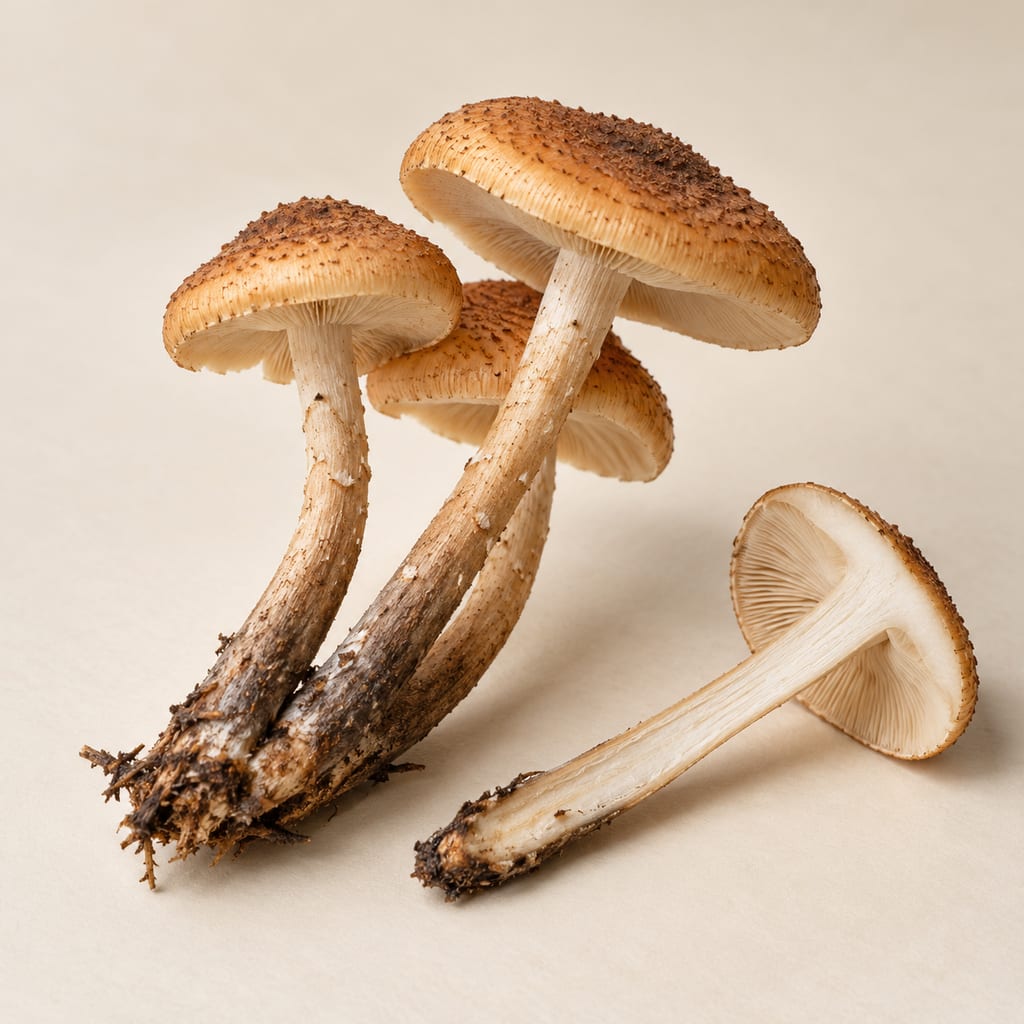
Armillaria heimii is a saprotrophic fungus of the honey-fungus genus, recorded as a wild food in Tshopo province, DR Congo. Its preparation and safety are not established in the sources.
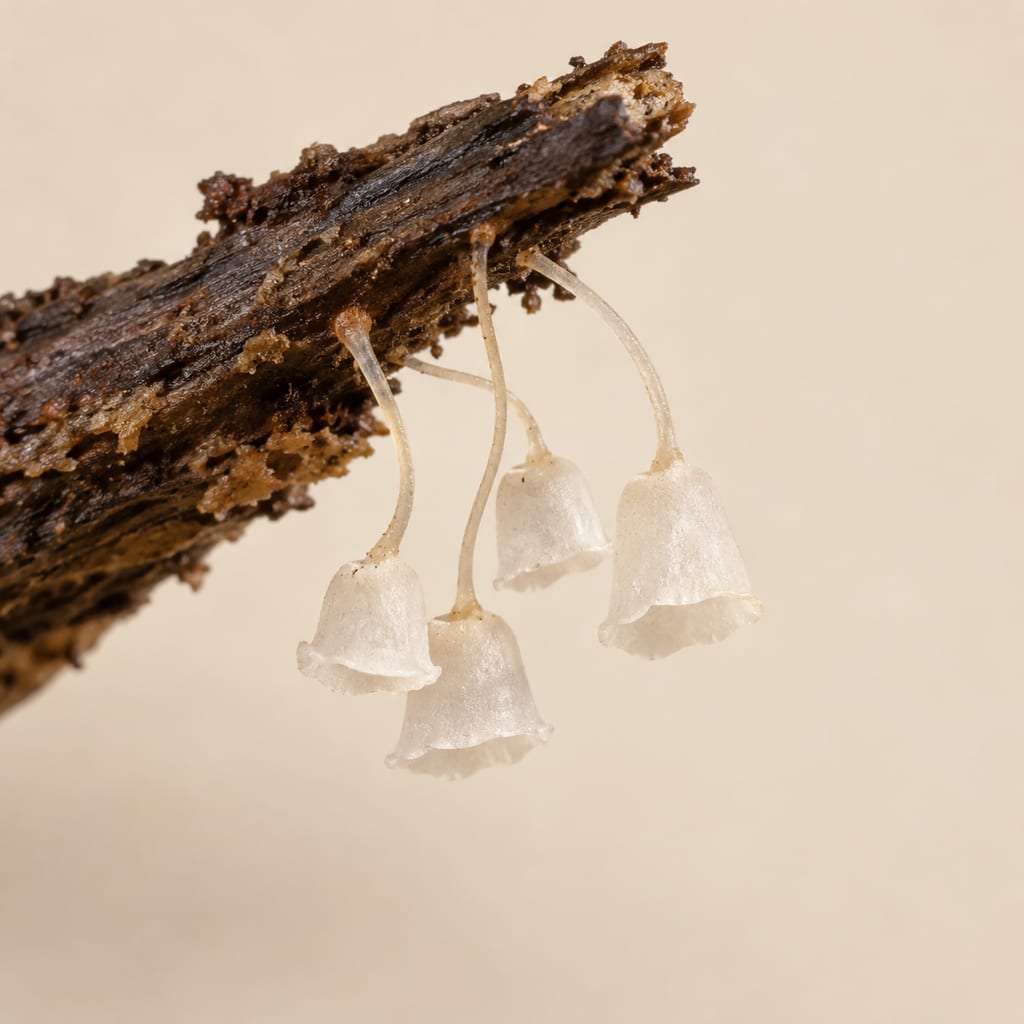
Calyptella longipes is a wood and litter decaying fungus of the rainforests of Tshopo province, DR Congo, where some ethnic groups in voucher-backed interviews eat it. Its preparation was not recorded.
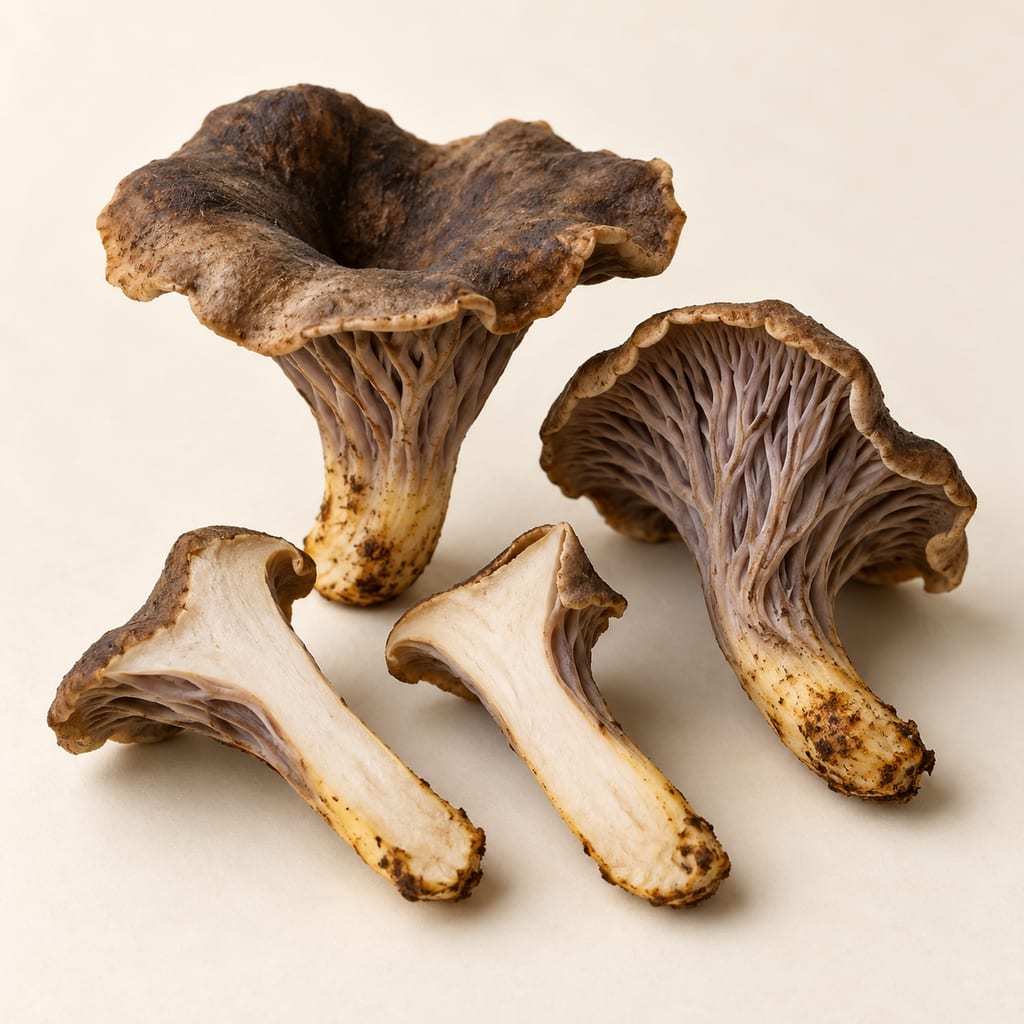
Cantharellus congolensis is an ectomycorrhizal chanterelle of sub-Saharan Africa, eaten in the Democratic Republic of the Congo under local names. Its edibility rests on food-use surveys, not on toxicity tests.
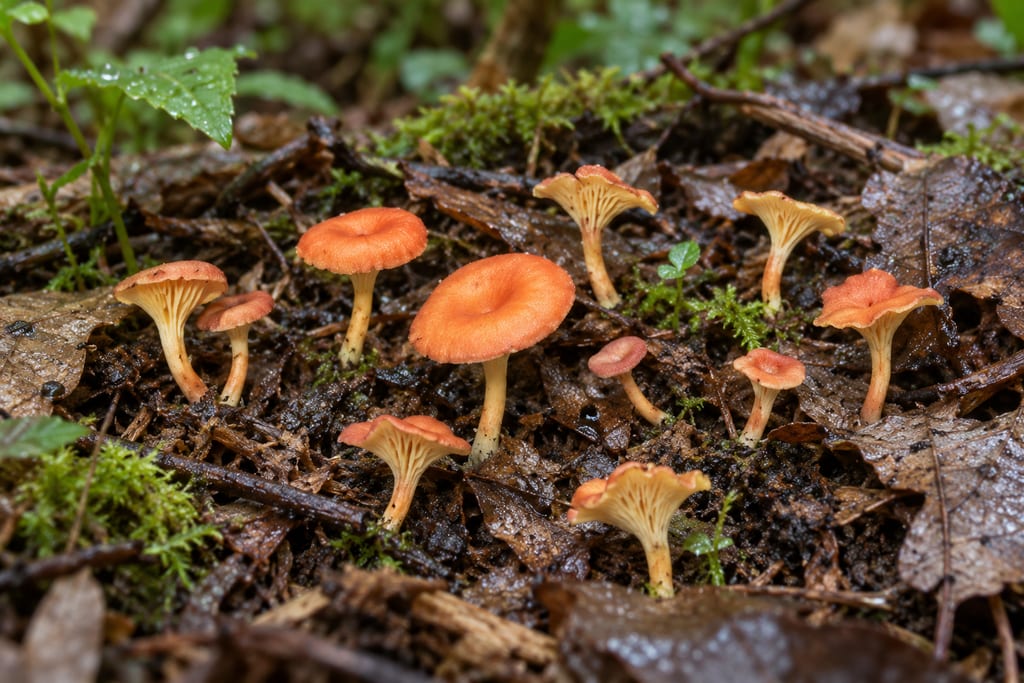
Cantharellus floridulus is an ectomycorrhizal rainforest fungus that informants in Tshopo province, DR Congo, eat in voucher-backed interviews. Its preparation is not recorded, and the source gives no toxicity statement.
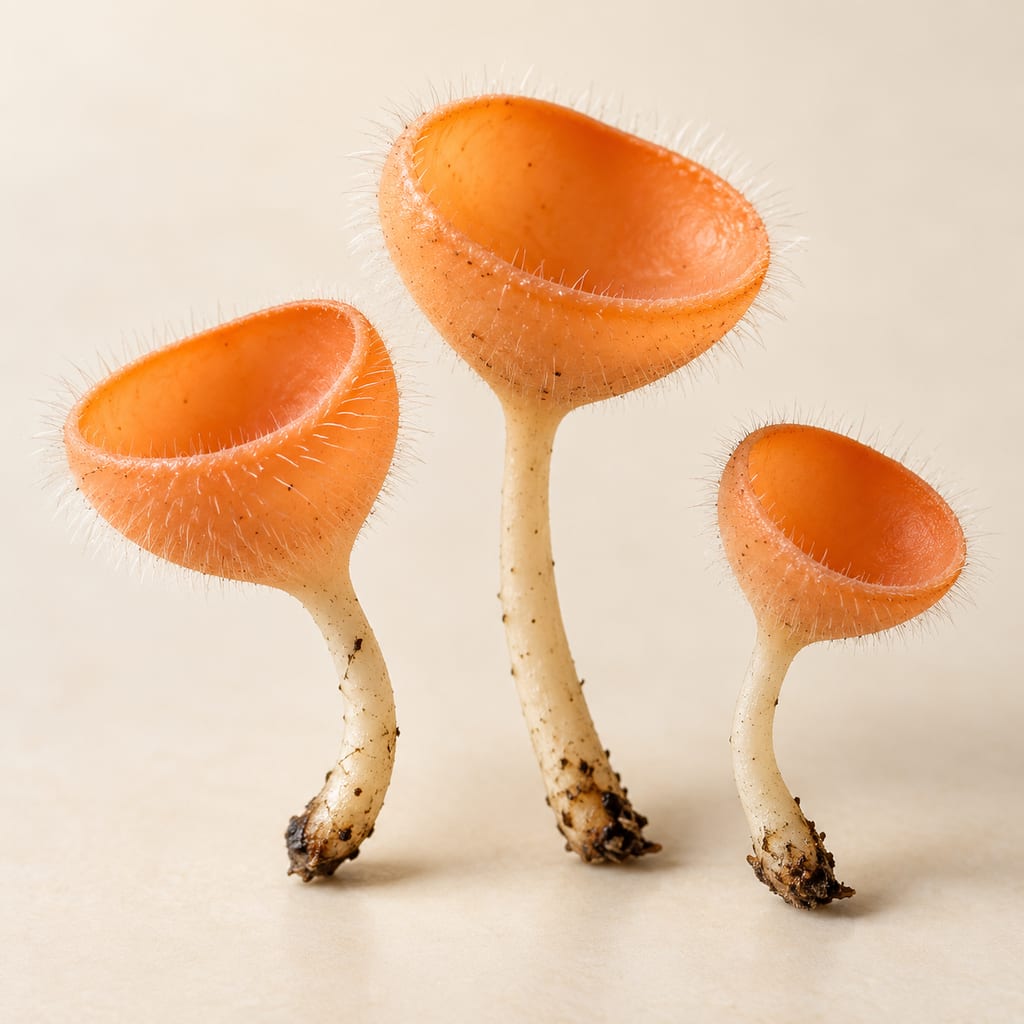
A forest cup fungus of the Tshopo province in the Democratic Republic of the Congo, recorded in local interviews as eaten. The species-level preparation is not established.
No community contributions have been published for this entry yet.
Sign in to contribute. Published comments and photos are free to read.
PubMed Central (NCBI)Food use · Identity
Wild edible ectomycorrhizal fungi: an underutilized food resource from the rainforests of Tshopo province (Democratic Republic of the Congo)Supplied catalogue source for the Tshopo interview record of Trogia infundibuliformis. The article page returned a verification page on retrieval for this revision; its wording is taken from the catalogue record.
Cited in: Overview; Food use; Look-alikes and safety; Open points
EFTAIdentity · Distribution
Trogia infundibuliformis (EFTA species page)Lists the species as Paleotropical, with records in the DR Congo, Gabon, Malawi and Uganda.
Describes the fruiting bodies as thin, tough and translucent.
Read from a search summary.
Cited in: Overview; Distribution
Rufford FoundationFood use
Edible fungi of northern Republic of the Congo (Rufford Foundation project poster)Lists Trogia infundibuliformis among edible species, with a local name in the Mbenzele language; the poster does not describe preparation.
Read from a search summary.
Cited in: Distribution; Food use