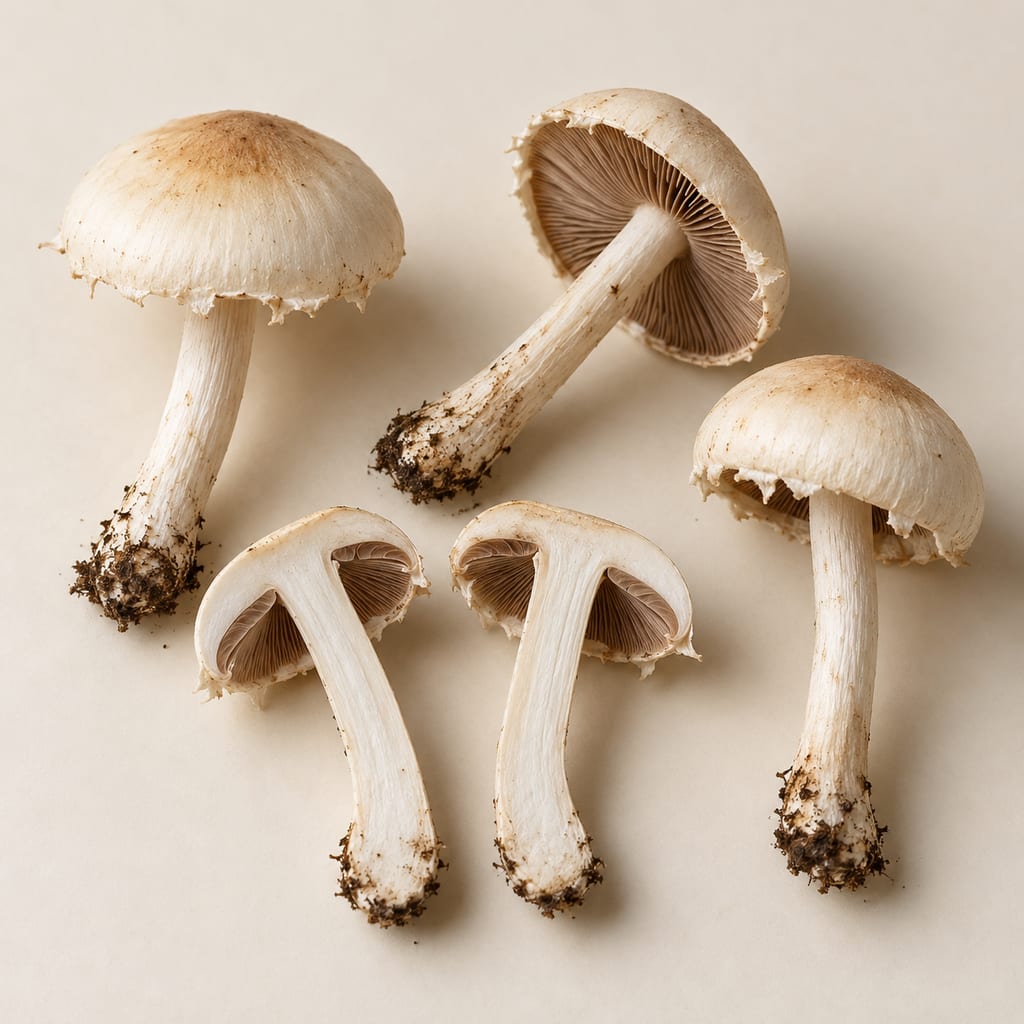
Agrocybe dura
A grassland agaric listed as edible in historical and scientific catalogues for Hong Kong and China. Taxonomic concepts and practical food value vary; the listings do not establish safe identification or culinary practice.
 FermenteaWhere food goes to change
Mushrooms
Tuber latisporum, the Chinese truffle, is a wild ectomycorrhizal truffle listed as edible in the 2026 Chinese species catalogue and sold in Chinese markets, but its culinary tradition and host are not yet documented.
Tuber latisporum is a truffle, an underground fruiting body of the genus Tuber that lives in partnership with the roots of forest trees. In China it is known as the Chinese truffle, and the catalogue gives that as its common name. The catalogue treats the name as a research name, to be checked against current taxonomy.
Chinese truffles have a commercial history that matters for buyers. A review of Chinese Tuber species notes that they have been sold in European and Japanese markets under the name of the European black truffle, Tuber melanosporum, and under other truffle names, so the label on a product does not establish which species it is.
The catalogue gives the regional context as China and records the fungus as wild. The 2017 study of three Chinese Tuber species obtained its samples from markets in Yunnan Province, according to the search summary of that paper.
The catalogue states that the exact host association still needs verifying. The sources reviewed do not name a host tree for this species.
Chinese Tuber species are traditional edible mushrooms with considerable production in China. The 2026 Chinese species catalogue lists T. latisporum as edible or edible and medicinal. That listing is a checklist entry: direct food-use evidence is not established, and it is not an independent safety assessment.
A 2017 study compared the nutritional value and antioxidant activity of three Chinese Tuber species, as summarised in search results. For T. latisporum it reports the highest total sugar content of the three, with sorbitol and trehalose as its main sugars, and the strongest reducing power in the antioxidant tests. These are laboratory results on market samples, not evidence of how the truffle is prepared or eaten.
The sources reviewed do not give a field key, a list of look-alike truffles or a spore and peridium description for T. latisporum. The review cited for the market history notes that Chinese truffles are often misnamed in trade.
This page is not an identification guide and gives no verdict on whether a specimen is safe to eat. Wild truffles should not be picked for food on the basis of this page, and a label naming a truffle species does not confirm the species.
The catalogue gives China as the regional context; no province is recorded for the species itself.
A grassland agaric listed as edible in historical and scientific catalogues for Hong Kong and China. Taxonomic concepts and practical food value vary; the listings do not establish safe identification or culinary practice.

Akahatsu, Lactarius akahatsu, is a wild milkcap of East Asian pine and mixed forests that is sold in Yunnan markets, with its edibility and identity still needing species-level review.
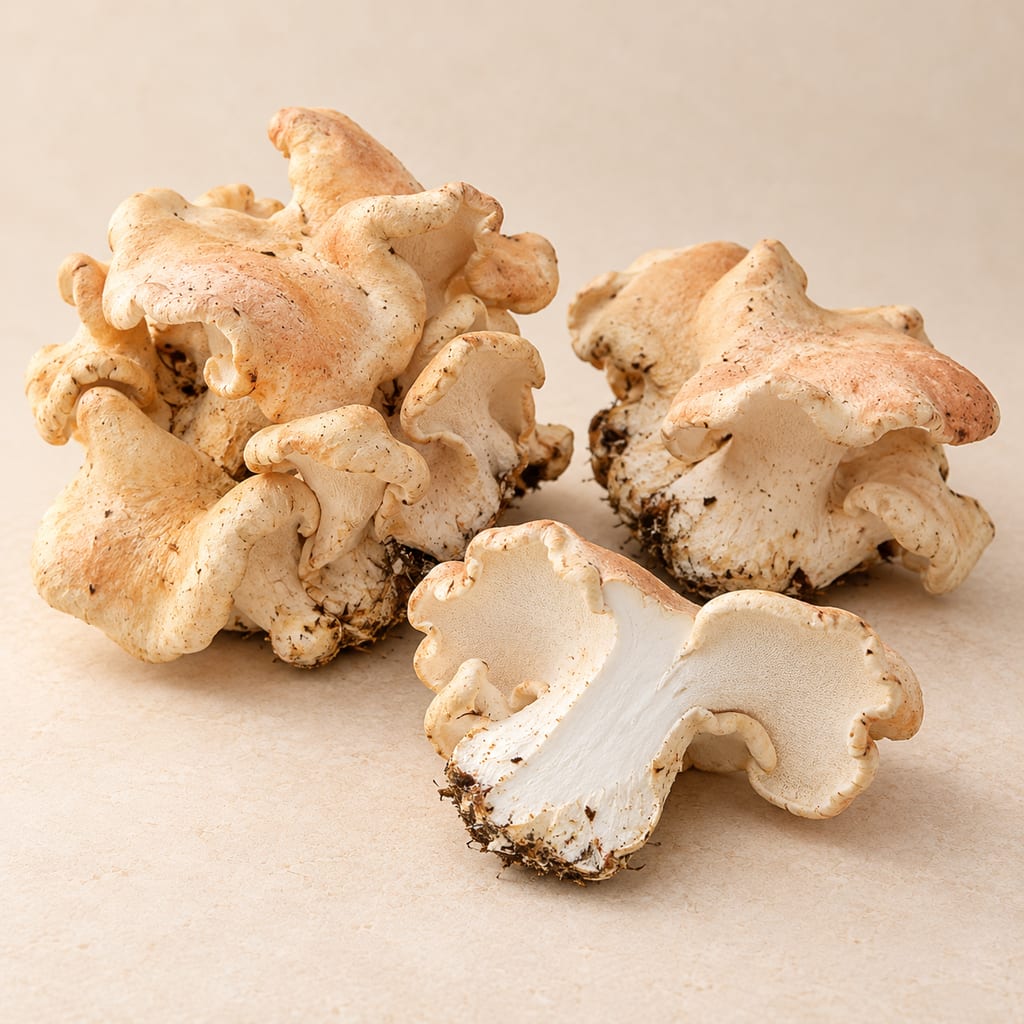
Albatrellus confluens is a ground-growing polypore with fused buff-orange caps. Sources document Chinese market use and regional edibility, but others reject it as too bitter; taxonomy also varies between Albatrellus and Albatrellopsis.
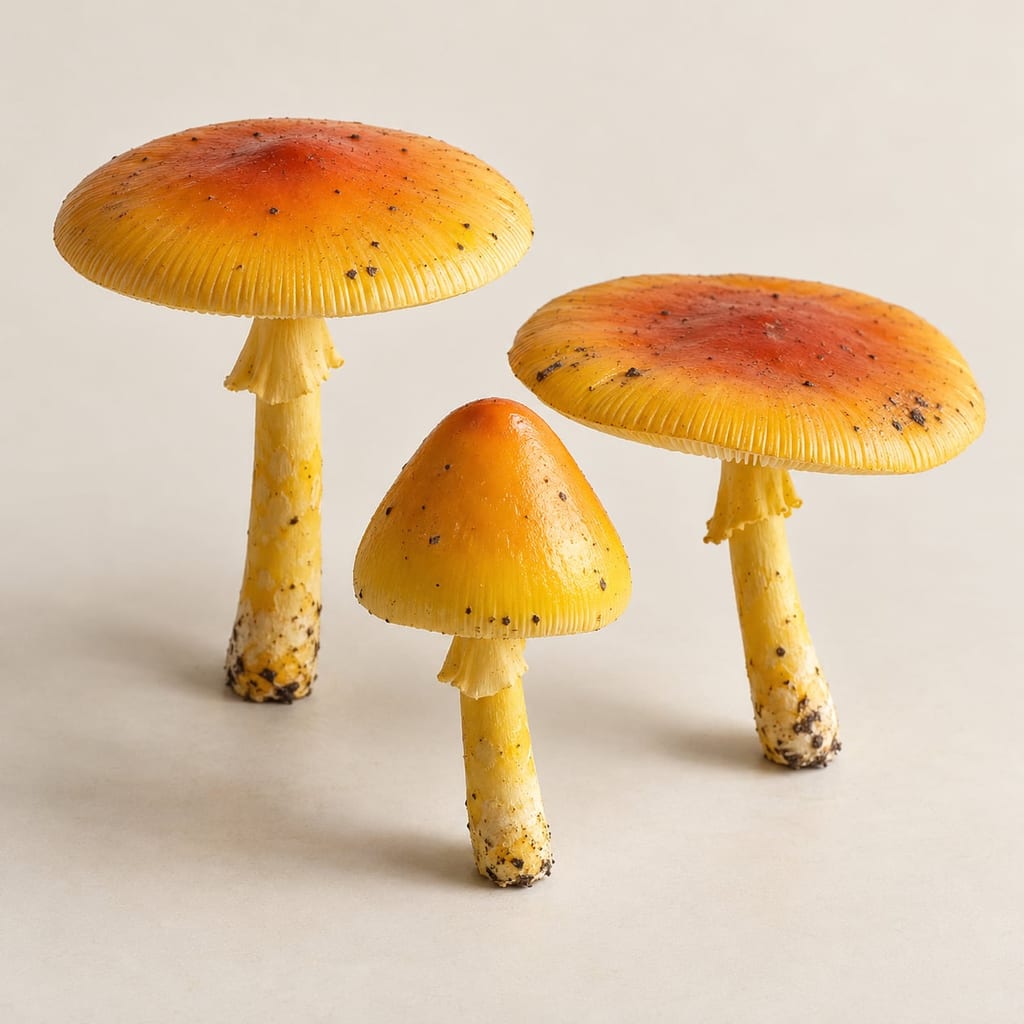
A wild Amanita recorded from China in a 2026 checklist of edible and medicinal fungi. The genus holds deadly species, so this page gives no identification or edibility verdict.
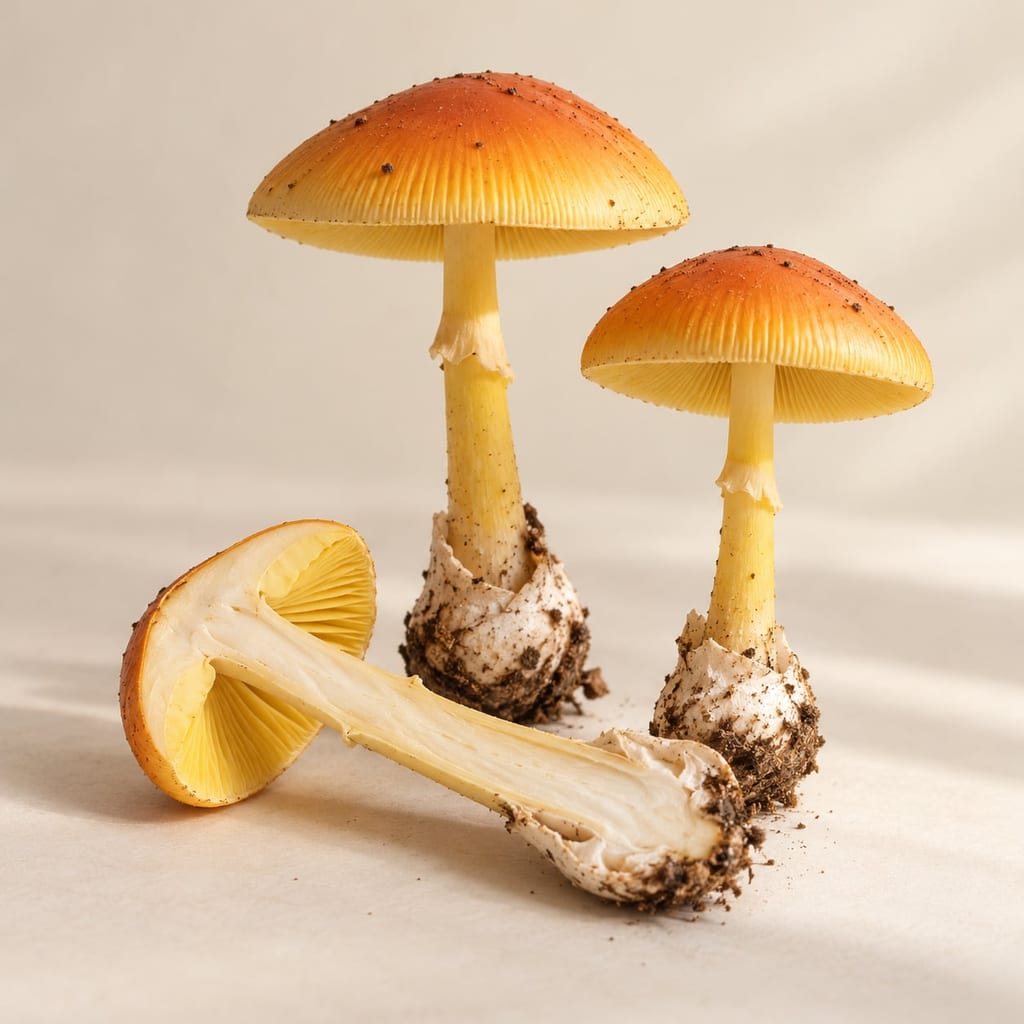
A wild Amanita of China, first reported there and listed as edible in a Yunnan ethnomycology study. The genus contains deadly species, so this page does not support identifying or eating it.
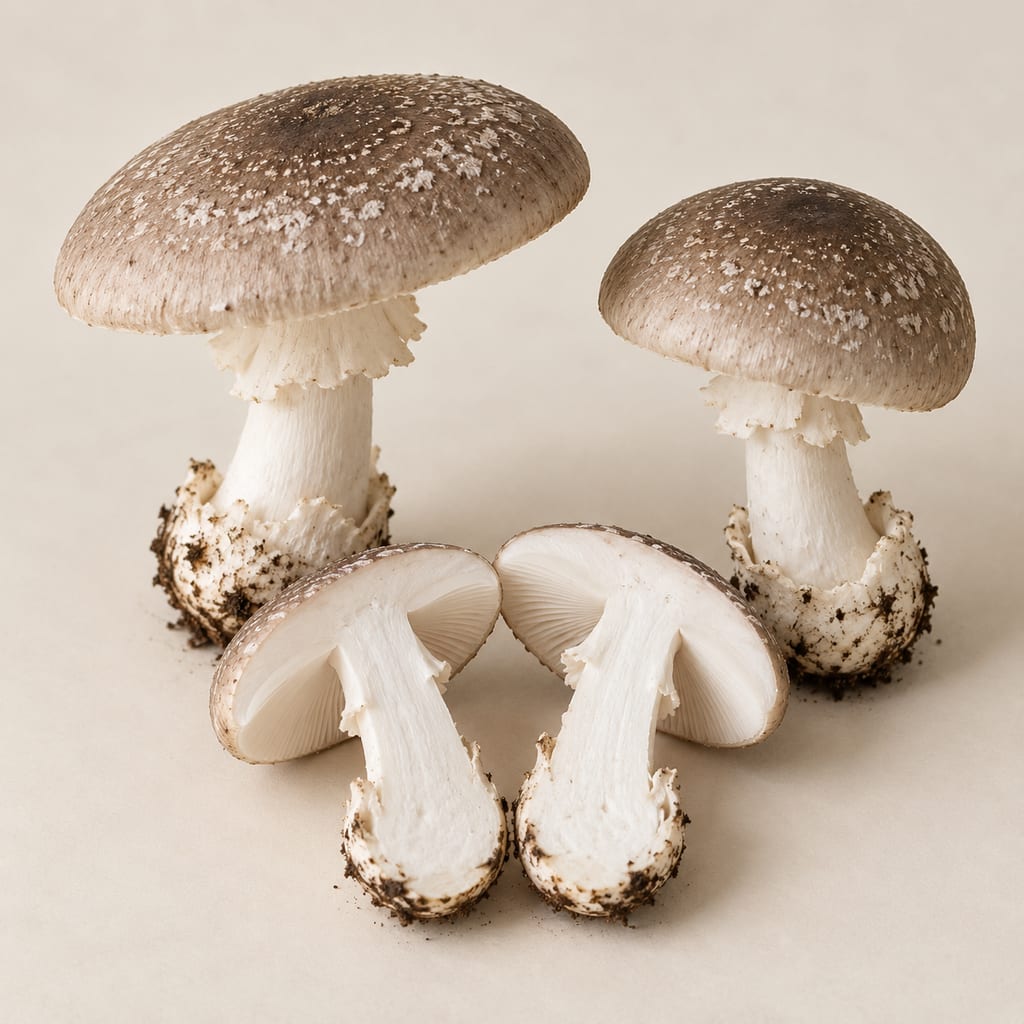
Amanita yuaniana is a Chinese Amanita that a 2023 Yanshan survey and a Yunnan ethnomycology survey list among edible species. No source tests it for safety, and the genus holds the most lethal mushrooms.
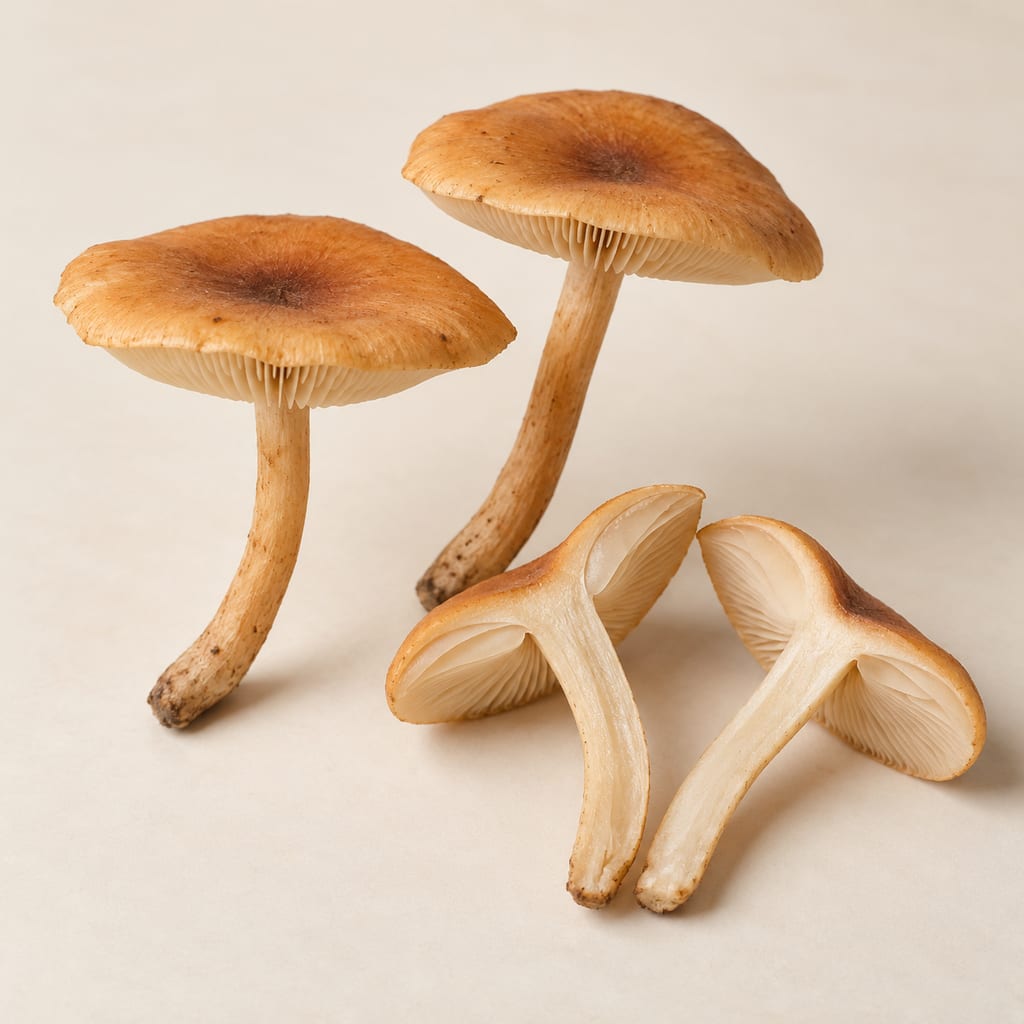
A wood-associated Armillaria recorded in Yunnan and Sichuan, China, and listed as edible in a 2026 Chinese catalogue.
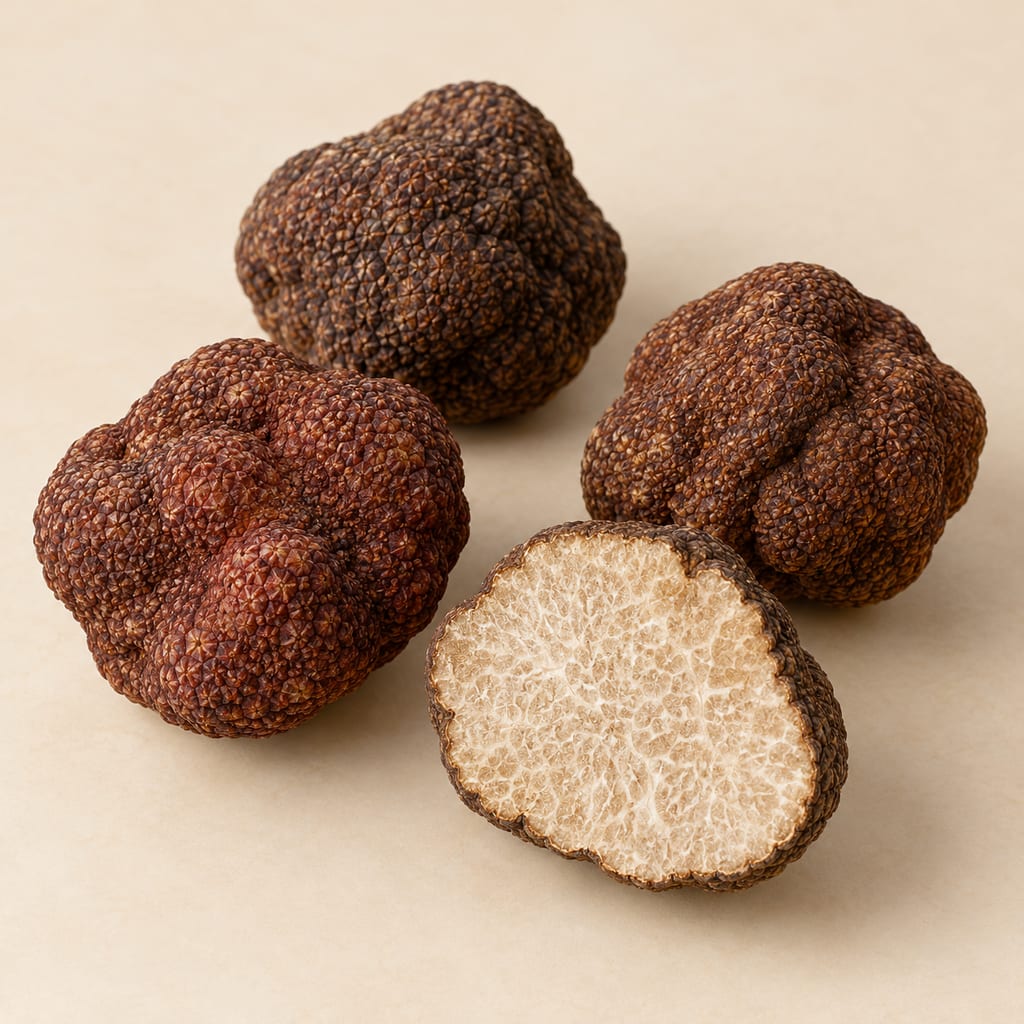
Tuber pseudohimalayense is a wild black truffle from Yunnan, China, listed as edible in a Chinese species catalogue. No independent assessment of its culinary use or safety is available.
No community contributions have been published for this entry yet.
Sign in to contribute. Published comments and photos are free to read.
CAST journal archive (Chinese)Food use · Safety · Geography
Supplied catalogue source for the 2026 Chinese edible-fungus species catalogueListed as edible or edible-and-medicinal in the 2026 Chinese species catalogue; wild; China; checklist lead requiring direct food-use evidence (supplied record; primary article not reopened).
Cited in: What it is; Where it is recorded; Food use and composition; Identification and safety
AMB Express (Springer)Composition · Food use
Nutritional value, chemical composition and antioxidant activity of three Tuber species from ChinaThree Chinese Tuber species compared; T. latisporum highest total sugar, sorbitol and trehalose as main sugars, strongest reducing power; traditional edible mushrooms with considerable production in China; samples from markets in Yunnan (search summary only; article page redirected and was not read).
Cited in: Where it is recorded; Food use and composition
ResearchGate (review record)Market · Identification
A review of research on Chinese Tuber speciesChinese truffles sold in European and Japanese markets as Tuber melanosporum and other truffles (search summary only; full text not opened).
Cited in: What it is; Identification and safety