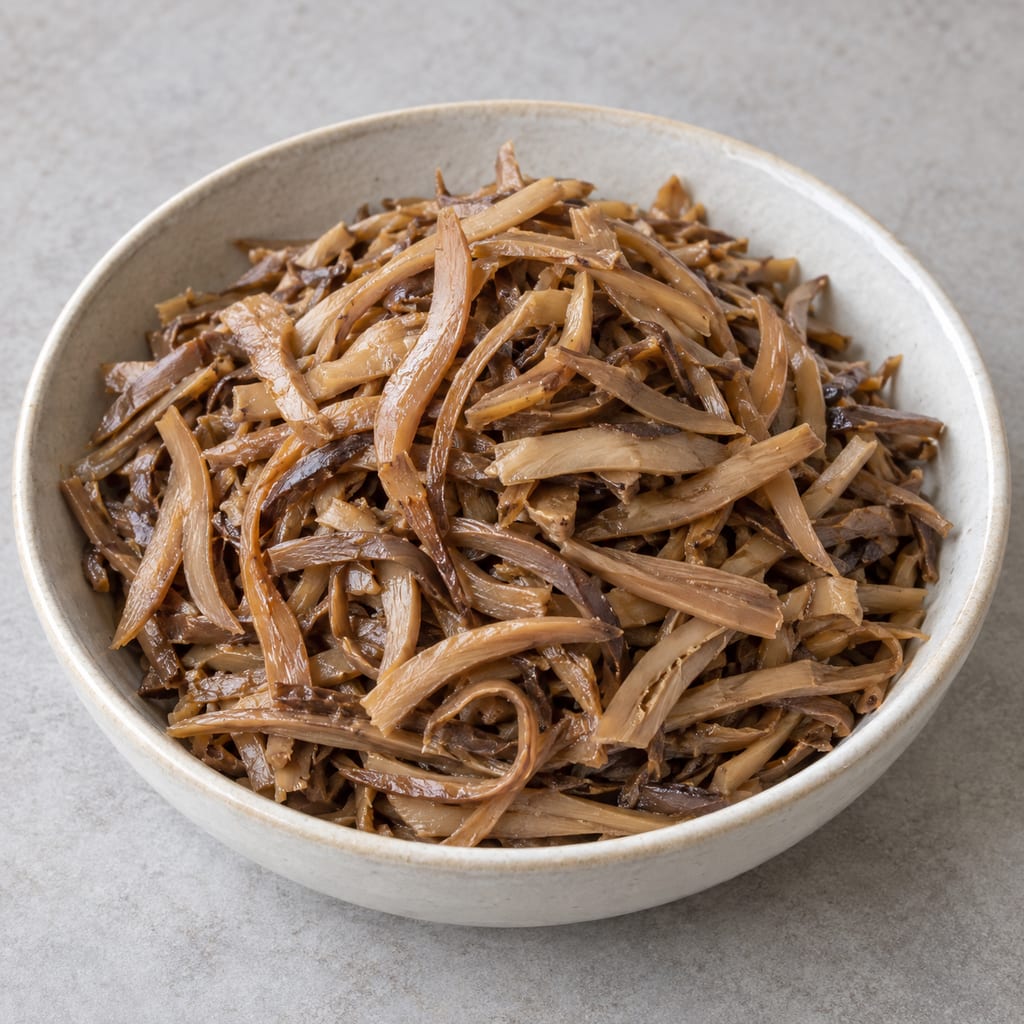
Ugba, Nigerian fermented African oil bean
Sliced cotyledons of the African oil bean, boiled soft and fermented in banana-leaf parcels into the sharply savoury Nigerian condiment and salad ingredient known as ukpaka.
 FermenteaWhere food goes to change
Equipment · Bamboo, leaf and wraps
A flexible leaf parcel encloses sliced African oil-bean cotyledons during some Ugba preparations in southeastern Nigeria. Leaf species and layers vary by documented method.
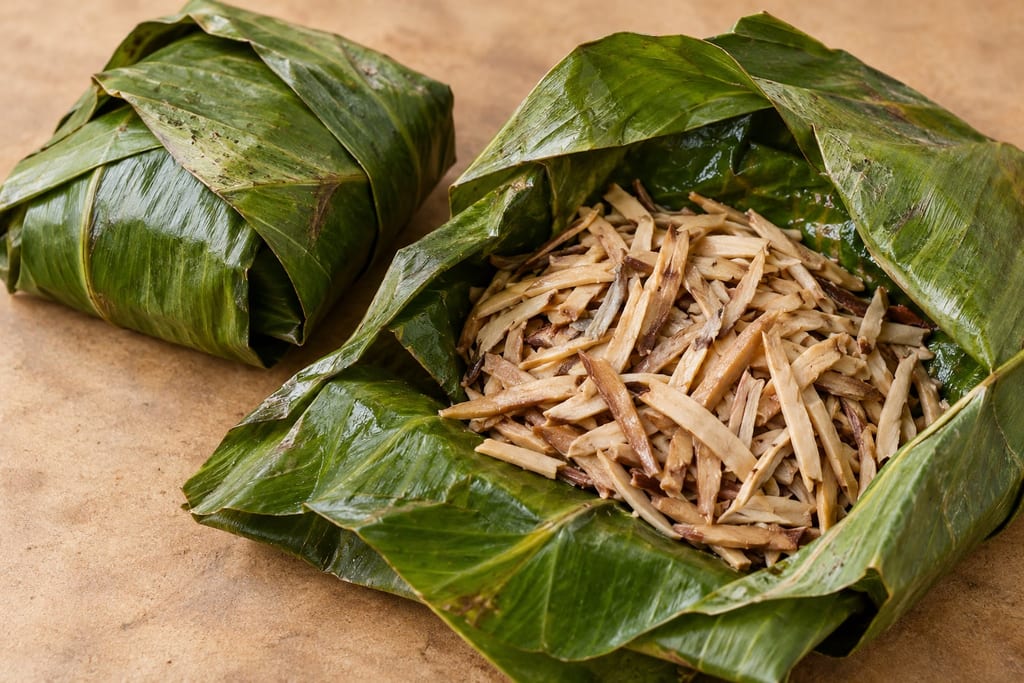
An Ugba leaf parcel is a flexible wrapper around sliced cotyledons of the African oil bean, Pentaclethra macrophylla. Instead of a rigid pot with a floor and a mouth, it is a small packet whose overlapping folds sit directly against the food. The slices are gathered into a portion, enclosed by leaves, and handled as a unit. Published descriptions show packets arranged in a basket or container during fermentation; those surrounding supports are separate equipment, not part of the leaf parcel.
This is a solid-state fermentation package: it holds moist seed slices rather than a free-flowing liquid. The leaf provides a contact surface and physical enclosure while the slices ferment. It is not evidence of a sealed vessel. The available sources do not define a universal fold, shape, size, or closure, so an illustration can show an example but cannot stand for every producer's parcel.
Ugba is associated with Igbo foodways in eastern and southeastern Nigeria. A 2015 experiment compared three distinct wrapping materials: plantain leaves, cocoyam leaves and Okpopia leaves, identified as Alchornea laxiflora. The researchers tested one through five layers. This is useful evidence that leaf choice and layer count matter enough to have been compared, but it does not make the three plants interchangeable or establish one best parcel for every community.
The same study collected those materials at Umuchulu Community in Ngor Okpala Local Government Area, Imo State, and carried out the work in Owerri. These are precise locations for the experiment, not proof that Ugba or its wrapping originated there. Broader reviews place Ugba in eastern Nigeria and describe local variation; they do not date the first use of a leaf parcel.
Banana or plantain leaves appear in several published methods. Other experiments name other local leaves. The choice depends on documented practice and available material. A drawing of one green leaf type should therefore be read as one evidence-backed example, not a claim that all Ugba is wrapped the same way.
The parcel keeps a prepared portion together through the fermenting stage and can be carried, stacked or distributed as a package. Layering changes how the food is enclosed and exposed, and researchers have measured differences among leaf types and layer counts. The evidence does not establish an exact oxygen barrier, a controlled temperature, or a standard humidity for the wrapper. Those properties also depend on the food, surrounding container, handling and room conditions.
One reported method uses a banana-leaf-lined basket to drain sliced seeds, then wraps portions separately in Mallotus oppositifolius leaves. That distinction matters: a liner supports draining, while the parcels are the direct-contact wraps around the fermenting slices. A different experimental account uses banana leaves directly around portions. Neither method should be merged into a single mandatory design.
The 2015 study treated leaf choice and number of layers as test variables while comparing Ugba produced under its laboratory method. It washed and drained the leaves, and blanched plantain leaves to make them less likely to tear during wrapping. Its fermentation and sensory results belong to that experiment; they are not a universal preparation schedule or proof that blanching sterilizes a wrapper.
A separate 2015 laboratory study documents portions of prepared cotyledon slices wrapped in clean, dry banana leaves and held for three days at room temperature. Another method summarized in a 2010 review reports 40–50 g parcels and a 72-hour incubation. These figures describe specific source methods, not a standard parcel capacity. No inspected source establishes standard length, width, volume, or a required count of folds.
Leaves are a food-contact material and their condition matters. The documented experiment washed and drained its leaves; it blanched plantain leaves to reduce tearing and reduce microbial load. That study-specific step should not be mistaken for sterilization or a complete food-safety control. A review also notes that packaging and handling can be contamination routes. The parcel alone does not make an otherwise uncontrolled process safe.
For equipment identification, the useful questions are practical: which leaf species is documented for the method, how many layers were actually used, and whether a basket or other support is separately involved. If those details are unknown, leave them open rather than inventing a canonical package. The date when leaf wrapping began is likewise not established by the cited modern experiments and reviews.
Ugba is an Igbo-named fermented African oil-bean condiment associated with eastern and southeastern Nigeria. Published accounts describe leaf-wrapped seed slices and a 2015 study directly comparing leaf species and layer counts. These sources document use, not its beginning or a single canonical parcel.
No source establishes a standard parcel volume, dimensions, layer count, or a single leaf species for all Ugba. A 2015 experiment tested three leaf types and one to five layers; its results cannot be converted into a universal specification.
Source →The sources do not establish that every leaf parcel is airtight or that wrapping alone controls fermentation temperature or safety.
Source →A leaf-lined drainage basket and a separate wrapping leaf are distinct parts in one published method; the basket should not be described as the parcel itself.
Source →Ugba and leaf wrapping are documented in eastern and southeastern Nigeria; this is not a single-place origin claim.
The 2015 experiment reports collecting its tested leaf species here; it does not identify this locality as the sole or original source of Ugba parcel practice.
Sliced cotyledons of the African oil bean, boiled soft and fermented in banana-leaf parcels into the sharply savoury Nigerian condiment and salad ingredient known as ukpaka.
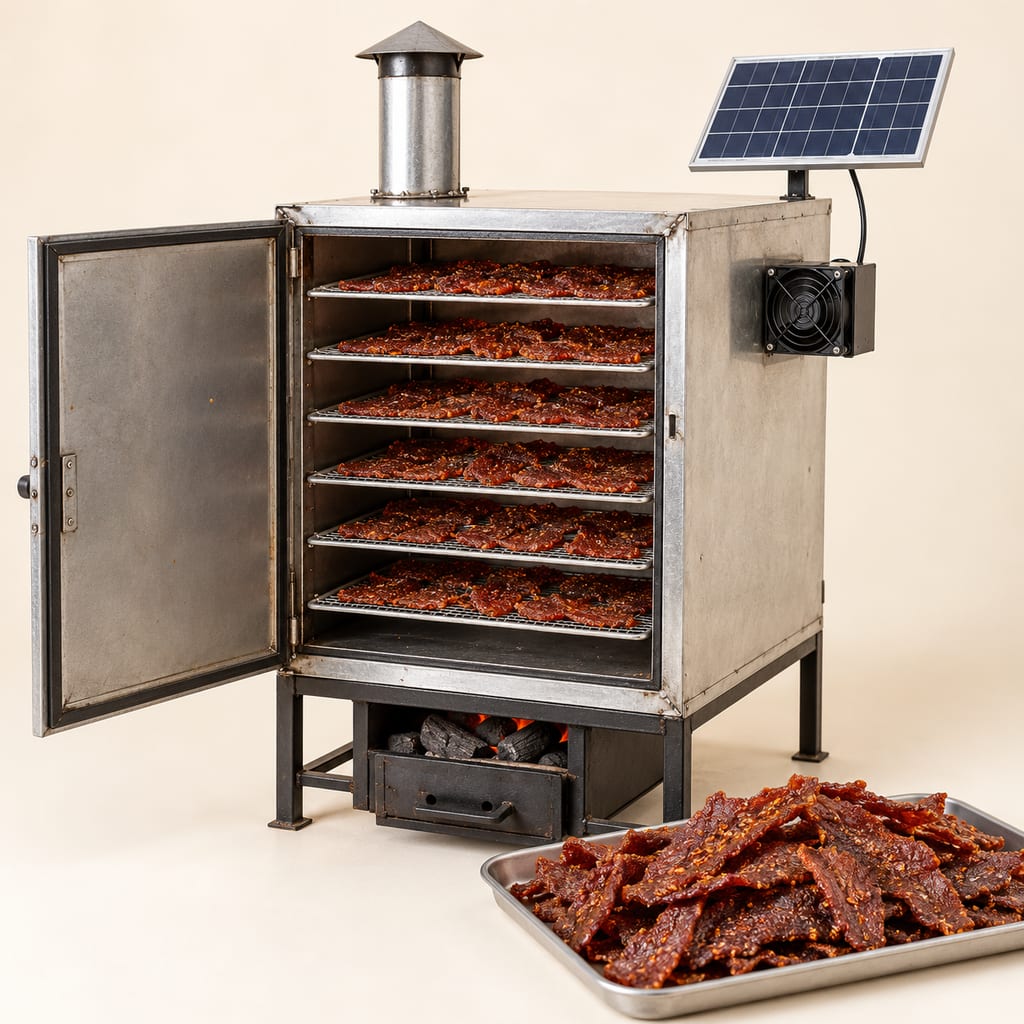
A six-tray charcoal-fired cabinet, modified at Ahmadu Bello University to dry kilishi with insulation, a DC fan on a photovoltaic panel and a relocated chimney.
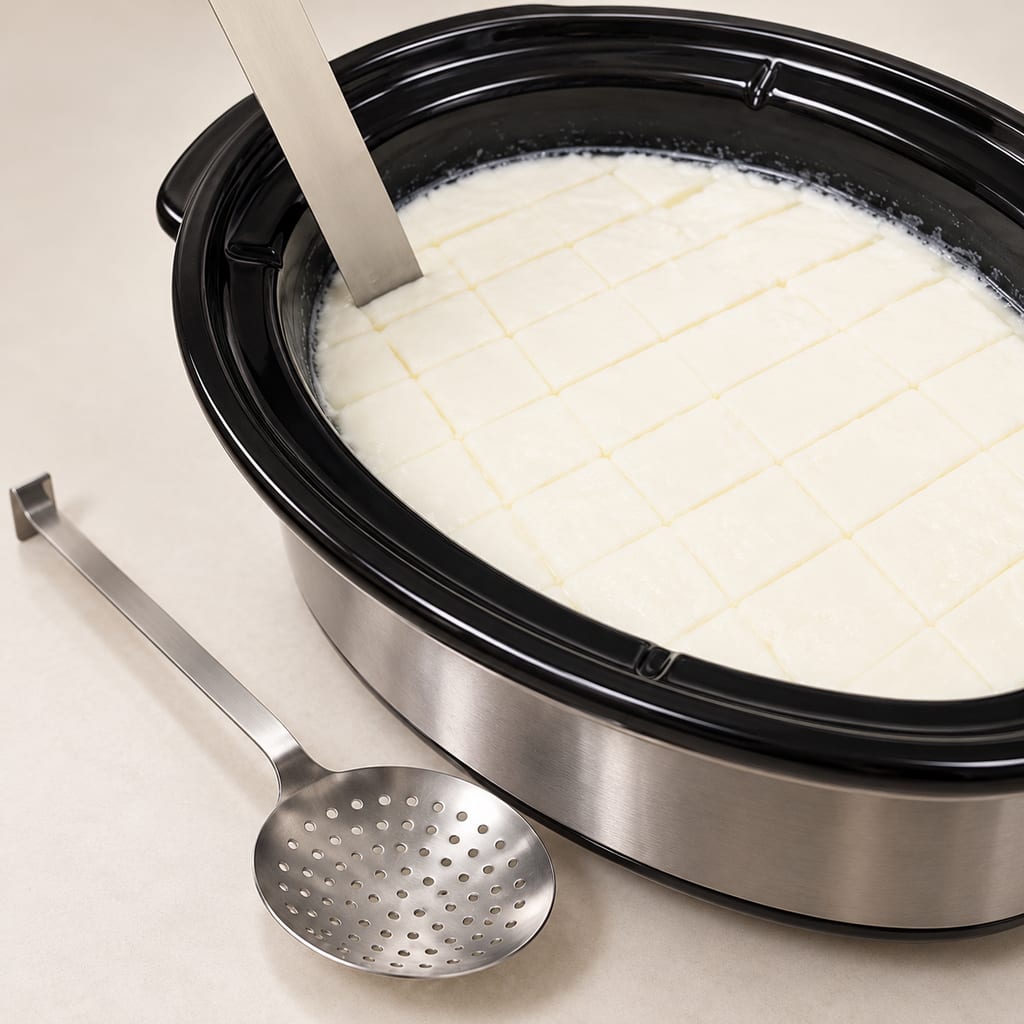
A curd knife cuts set milk into recipe-sized pieces; a perforated ladle lifts and moves curd while whey drains. The hand tools work at different moments in an open cheesemaking vessel.
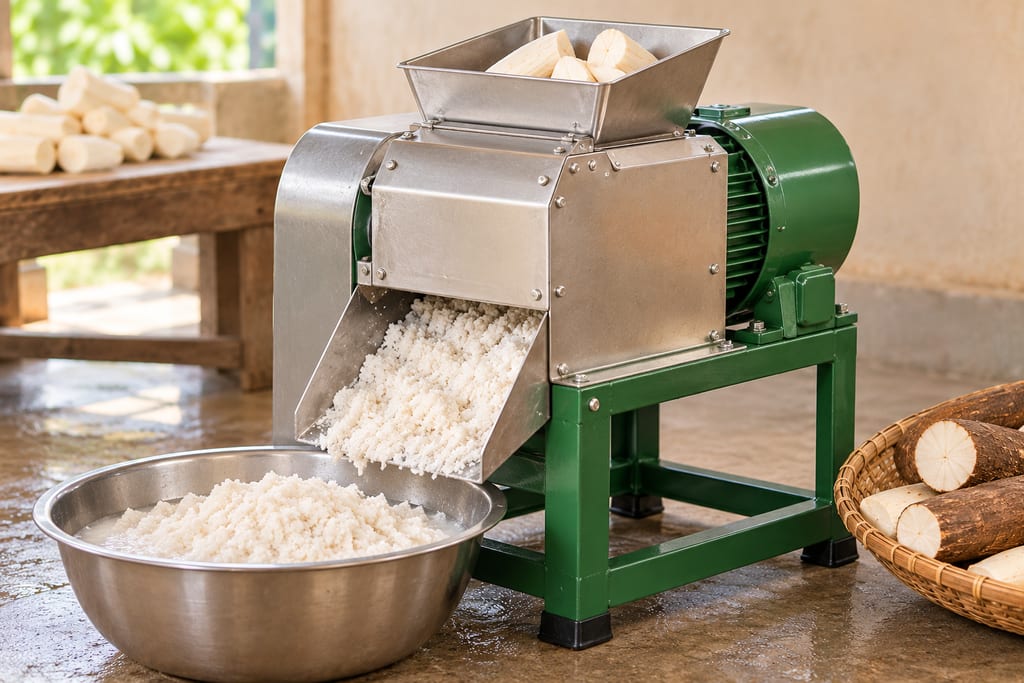
Graters, motorized rasping drums and processor grating discs reduce cassava or coconut to shreds or mash. They perform the grating stage only; later processing determines texture, extraction and cassava safety.
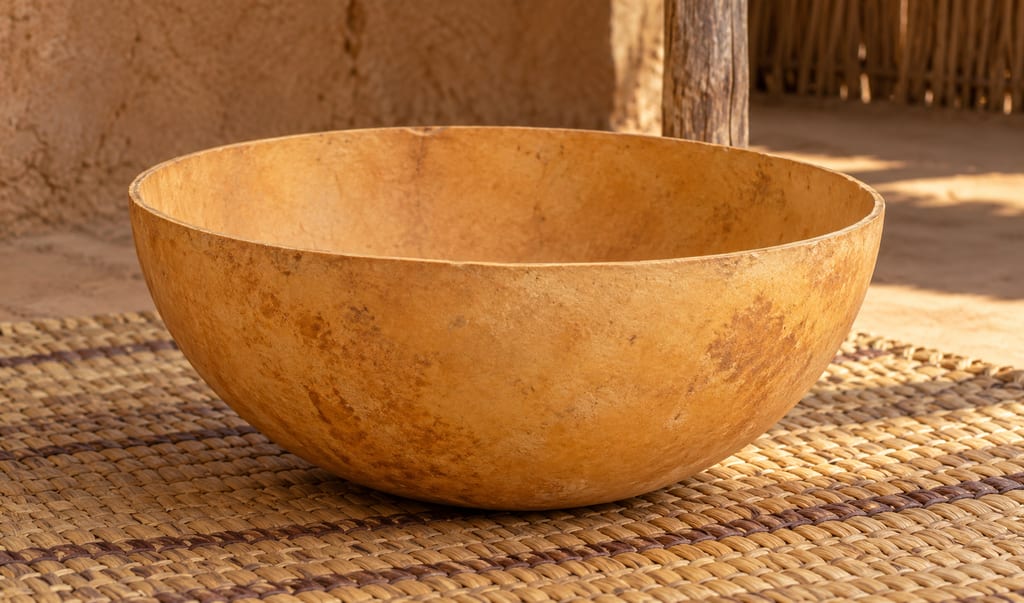
A Kworia is a large calabash used in northern Nigerian nono production: fresh milk ferments in calabashes before cream is skimmed and the sour milk is handled or sold.
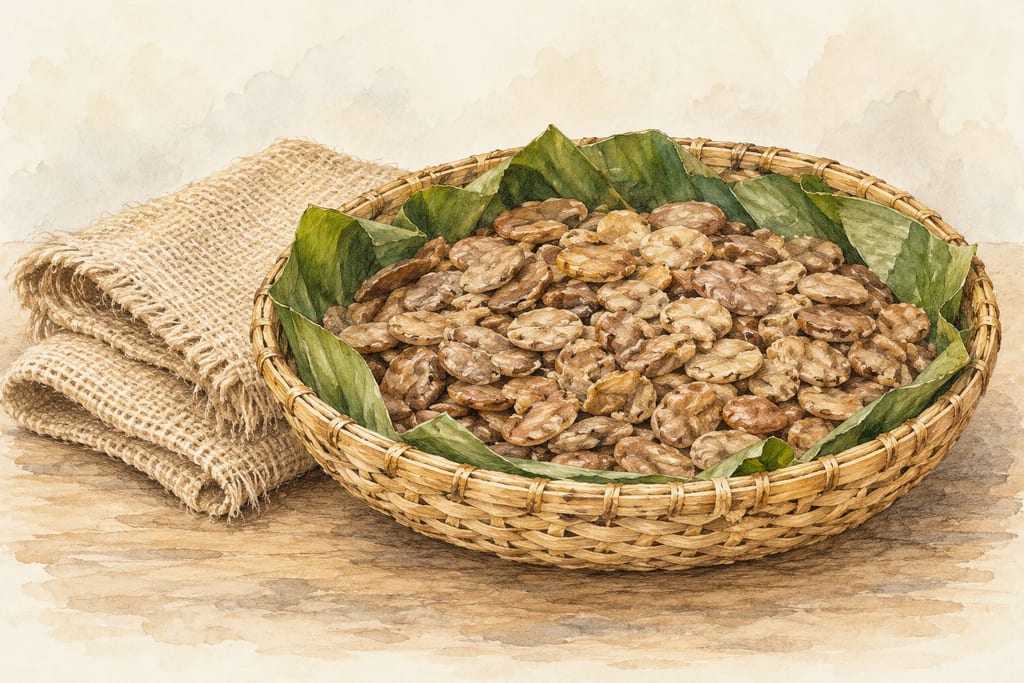
A shallow woven basket or tray can hold cooked, dehulled seeds while they ferment into alkaline condiments. Beninese and Nigerian sources document different basket, tray and cover arrangements rather than one regional standard.
No community contributions have been published for this entry yet.
Sign in to contribute. Published comments and photos are free to read.
European Journal of Food Science and Technology; European Centre for Research Training and Development UKForm · Materials · Geography · Method
Assessment of Leaf-Type and Number of Leaves Used in Wrapping on the Quality of “Ugba” (Fermented Pentaclethra macrophylla Benth Seed)The study compared plantain (Musa paradisiaca), cocoyam (Xanthosoma sagittifolium), and Okpopia (Alchornea laxiflora) leaves and one to five leaf layers.
The leaf species were collected at Umuchulu Community, Ngor Okpala LGA, Imo State; this is the study collection locality, not a claimed origin.
Its method washed and drained leaves and blanched plantain leaves to reduce tearing; samples were placed in leaves and fermented for 72 hours in that experiment.
Cited in: The leaf itself is the vessel; Different leaves and layer counts are documented; A boundary around slices, not a fermentation chamber; What the experiments establish; Handling and limits
Pakistan Journal of Biological Sciences; Science AlertRegional context · Form · Method · Limits
Ugba, the Fermented African Oilbean Seeds: its Production, Chemical Composition, Preservation, Safety and Health BenefitsUgba is associated with eastern Nigeria and methods vary by community and producer.
The review describes banana-leaf wrapping and a distinct method using a banana-leaf-lined draining basket followed by separate Mallotus oppositifolius leaf parcels; those components are not the same object.
One cited method uses 40–50 g portions and 72-hour room-temperature incubation; those measurements belong to that method, not a universal parcel specification.
Cited in: The leaf itself is the vessel; Different leaves and layer counts are documented; A boundary around slices, not a fermentation chamber; What the experiments establish; Handling and limits
International Journal of Food ScienceMethod · Materials · Geography
Evolution of Volatile Flavour Compounds during Fermentation of African Oil Bean (Pentaclethra macrophylla Benth) Seeds for Ugba ProductionA laboratory method wrapped prepared seed slices in clean, dry banana leaves in portions and fermented them for three days at room temperature; these are this study's method conditions.
The study distinguishes its experimental method from a universal household specification.
Cited in: A boundary around slices, not a fermentation chamber; What the experiments establish
Frontiers in MicrobiologyRegional context · Variation · Limits
The Biotechnology of Ugba, a Nigerian Traditional Fermented Food CondimentUgba is commonly wrapped in leaves, often banana leaves, but packaging materials and methods vary.
Packaging may be a contamination route; the leaf itself is not a food-safety guarantee.
Cited in: The leaf itself is the vessel; Different leaves and layer counts are documented; Handling and limits
IntechOpenImage reference
African Fermented Food Condiments: Microbiology Impacts on Their Nutritional ValuesFigure 4 shows raw African oil-bean seeds and fermented cotyledon slices on a leaf; the figure documents the subject and leaf contact, not a folded parcel.