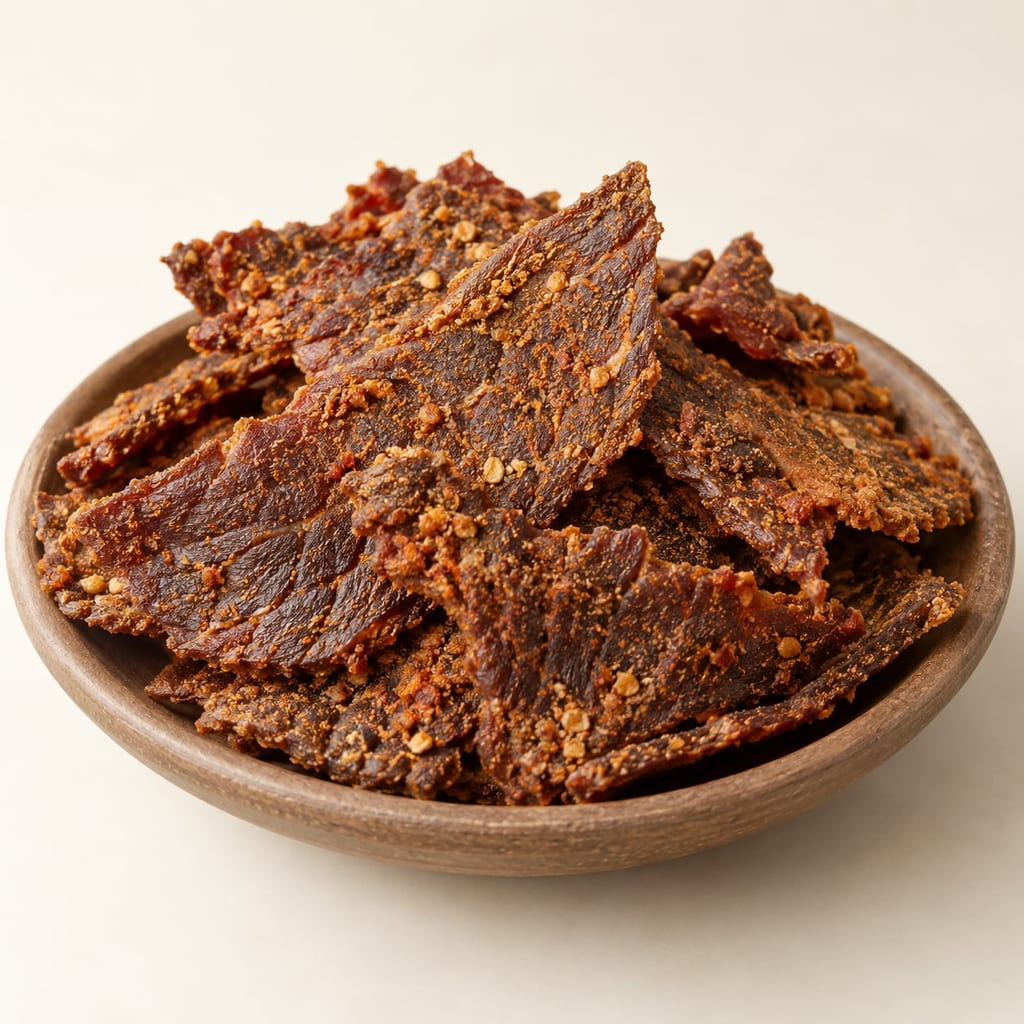
Kilishi
Kilishi is a Hausa-land dried meat from northern Nigeria and southern Niger: thin slices of beef or other meat, dried, coated in a spiced groundnut paste and dried again.
 FermenteaWhere food goes to change
Equipment · Drying kilns and dryers
A six-tray charcoal-fired cabinet, modified at Ahmadu Bello University to dry kilishi with insulation, a DC fan on a photovoltaic panel and a relocated chimney.
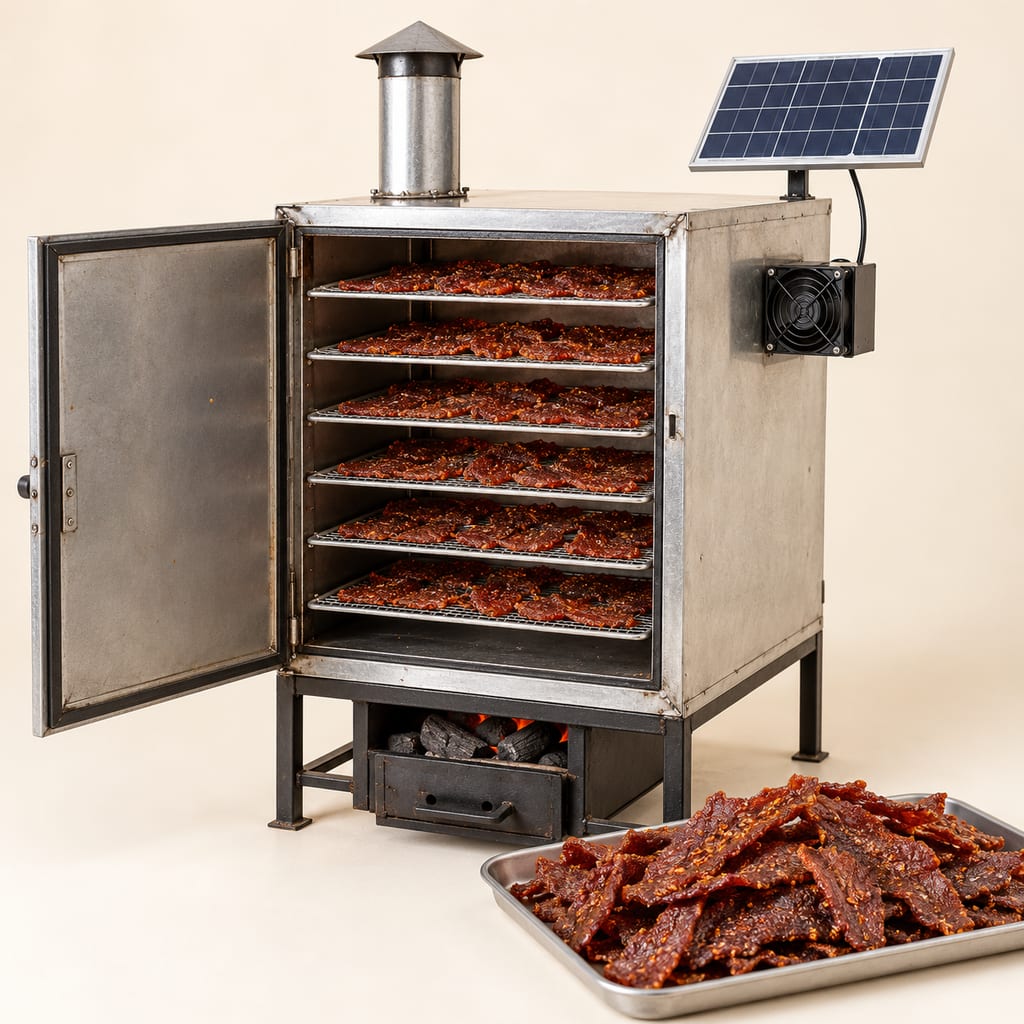
Kilishi is a thin-sliced Nigerian meat product that is dried in stages and then heated. The traditional method exposes the slices to the sun on papyrus mats laid over raised platforms. This page is about a different piece of apparatus: a six-tray cabinet heated by charcoal, which the researchers at Ahmadu Bello University modified to dry the meat more evenly.
The original cabinet lost a great deal of heat and did not move air well. The modifications were ceramic insulation, a DC fan powered by a photovoltaic panel, and a chimney moved from the flat roof to a triangular surface on the sloping top. The fan draws drying air through the trays, and the chimney lets the moist air out.
The paper's design work starts from a minimum batch of 20 kilograms, taken from a survey of local sellers. Its airflow calculation gives about 0.0339 cubic metres per second, and the fan is a 20 watt DC unit run for 8 hours a day. A single 40 watt photovoltaic module is recommended on the paper's stated solar assumptions. The calculated chimney height is 0.567 metres, and the calculated insulation thickness is about 2.92 centimetres.
These are the authors' calculations, not measured drawings. The accessible text gives no cabinet envelope, tray spacing, firebox or grate dimensions, fan curve, wiring or chimney cross-section, so a builder would need the full figure sheets before copying any of them.
The older method is a raised platform with papyrus mats, where the sliced meat is laid to dry in the sun. The sources describe this as an approach rather than a dimensioned structure, and no measurements for the platform are recorded here. It is a separate piece of apparatus and would need its own record if the sources described it in more detail.
The Raw Materials Research and Development Council describes an improved kilishi plant, but its project page gives no construction drawing or dimensions.
The paper reports a comparison of moisture removal for one prototype. It leaves product quality for later work, and it does not establish that the cabinet is a safe process for meat. The authors' 70 °C drying temperature comes from their calculation and a USDA recommendation they cite; it is not a setting this page recommends.
The combustion side and the drying side need to stay separate, and the paper does not show how that separation is achieved. A builder should measure the air on each side and check for smoke or soot transfer before drying any meat.
The paper was presented at the 23rd conference of the Nigerian Institution of Agricultural Engineers in 2023. It describes a modification of an existing charcoal-fired cabinet. The traditional approach to kilishi drying, in which thin slices dry in the sun on papyrus mats over raised platforms, is described in the literature but not dated here.
Keep the charcoal combustion and its flue gas apart from the drying air and the meat. The paper does not show how this separation is achieved, so it has to be checked on the built cabinet.
The paper says the original cabinet lost much heat and had inadequate airflow, which the modifications were meant to address. It reports one prototype comparison, not a transferable design.
Source →The paper states that product-quality parameters remain for future investigation. Its performance results describe moisture removal only.
Source →The modification was made at Ahmadu Bello University. The sources give no locality.
Kilishi is a Hausa-land dried meat from northern Nigeria and southern Niger: thin slices of beef or other meat, dried, coated in a spiced groundnut paste and dried again.
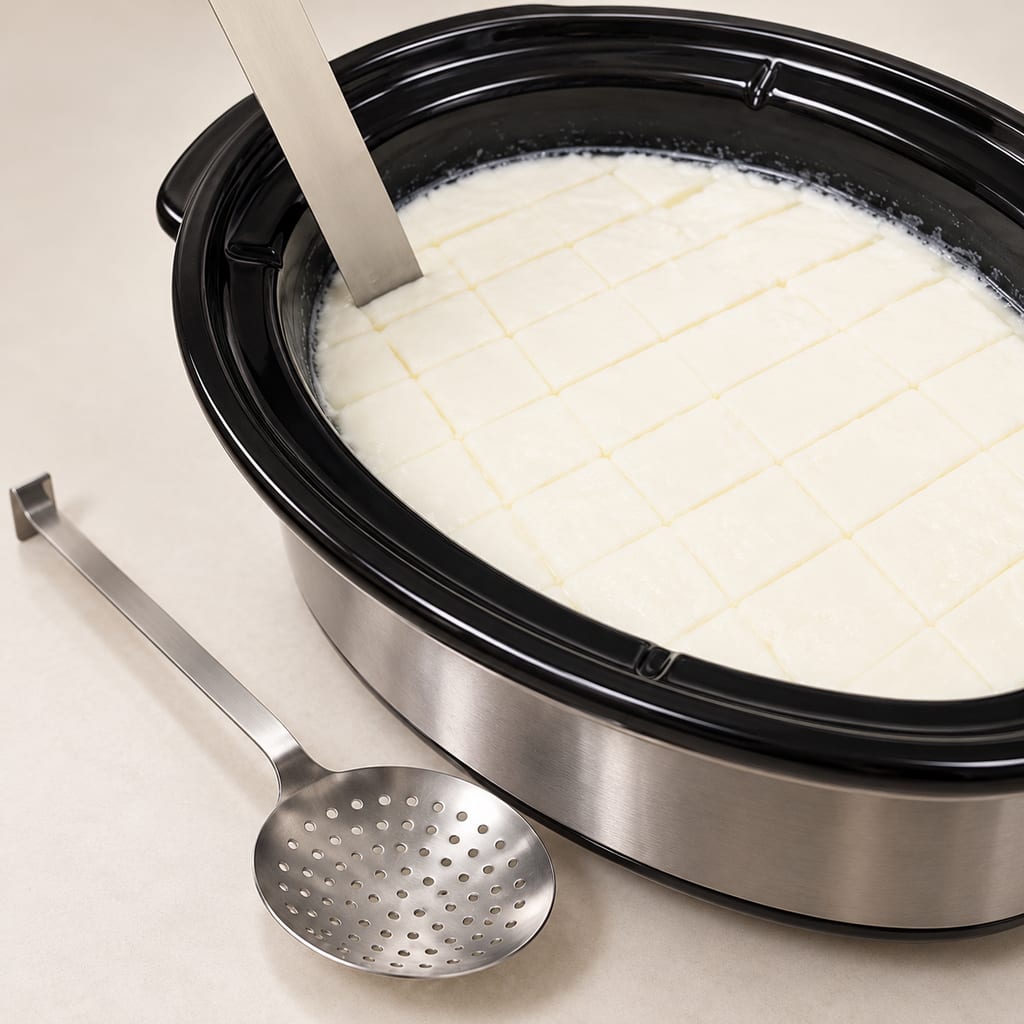
A curd knife cuts set milk into recipe-sized pieces; a perforated ladle lifts and moves curd while whey drains. The hand tools work at different moments in an open cheesemaking vessel.
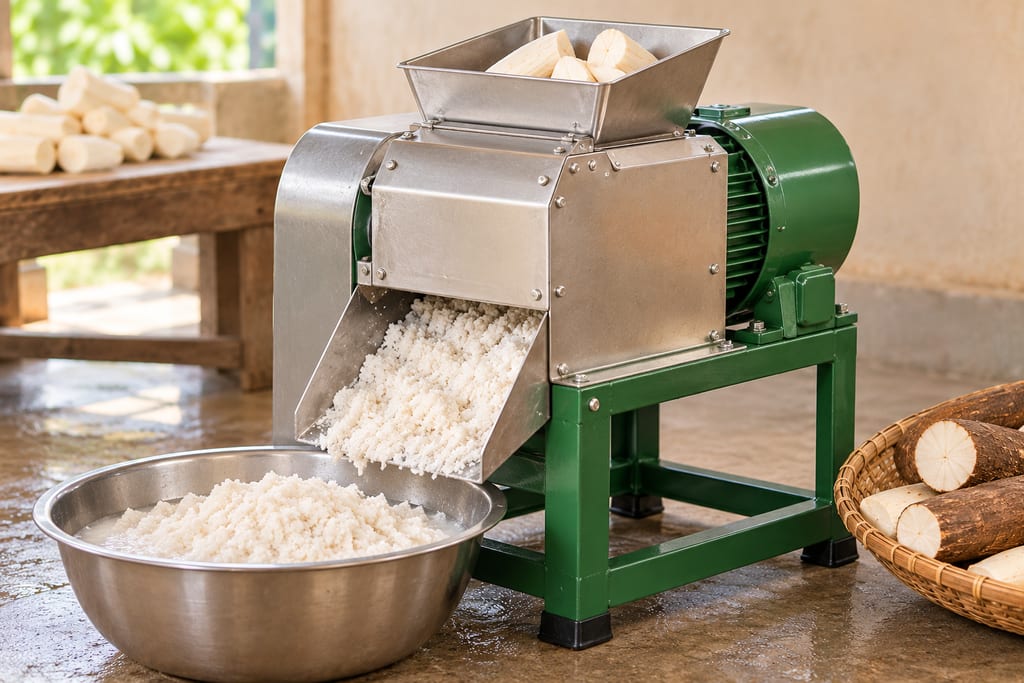
Graters, motorized rasping drums and processor grating discs reduce cassava or coconut to shreds or mash. They perform the grating stage only; later processing determines texture, extraction and cassava safety.

A Kworia is a large calabash used in northern Nigerian nono production: fresh milk ferments in calabashes before cream is skimmed and the sour milk is handled or sold.
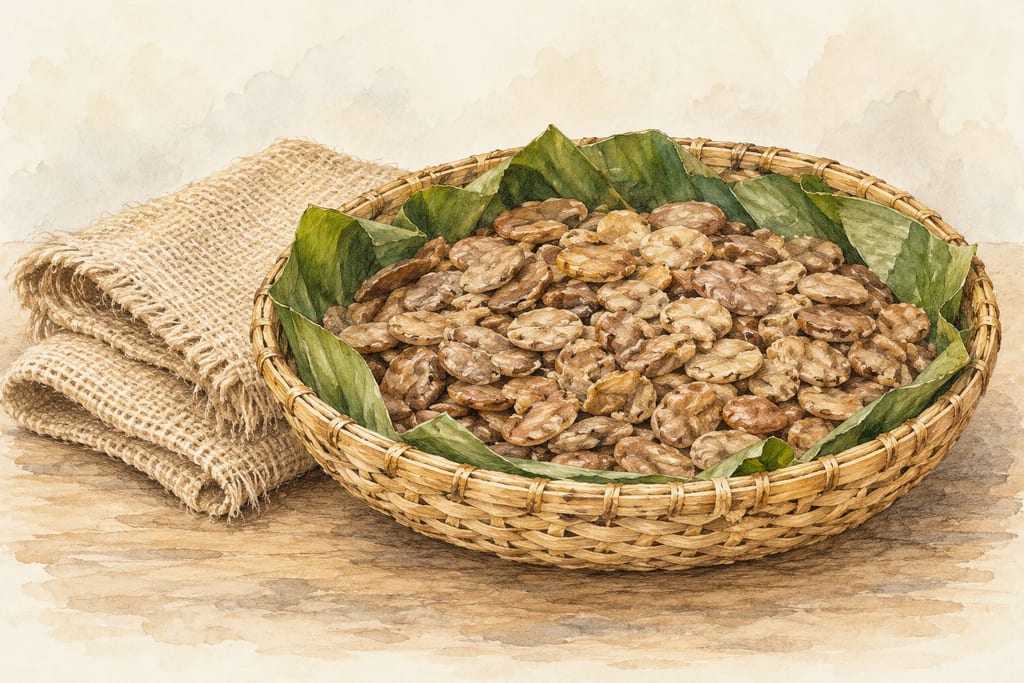
A shallow woven basket or tray can hold cooked, dehulled seeds while they ferment into alkaline condiments. Beninese and Nigerian sources document different basket, tray and cover arrangements rather than one regional standard.
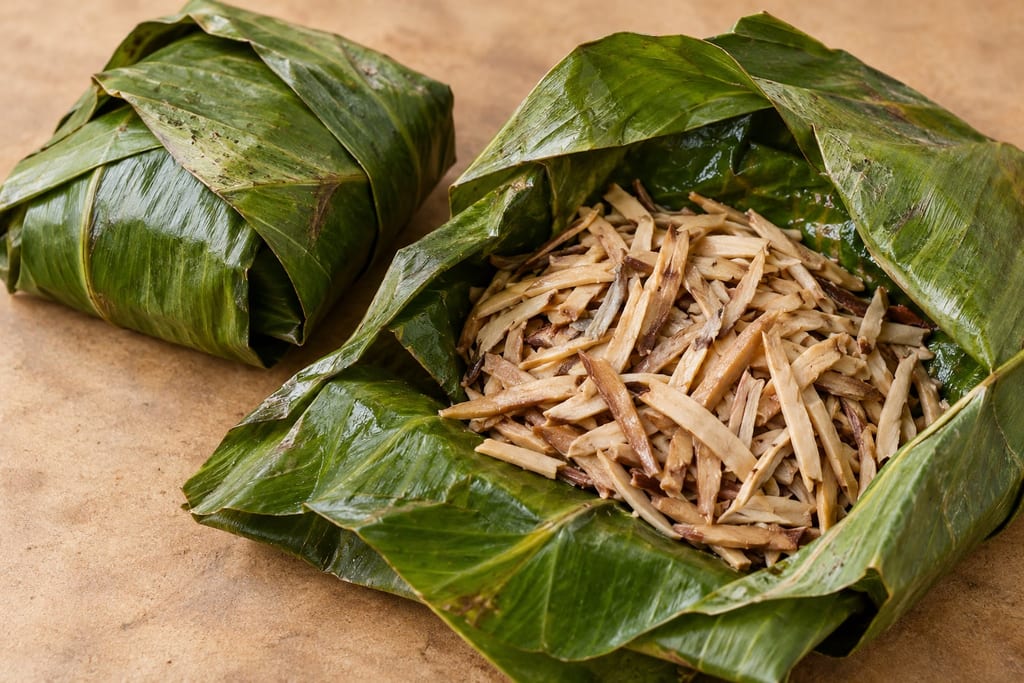
A flexible leaf parcel encloses sliced African oil-bean cotyledons during some Ugba preparations in southeastern Nigeria. Leaf species and layers vary by documented method.

Soft, spreadable Calabrian pork sausage made with a great deal of red chilli and fatty pork, stuffed into natural casings, sometimes smoked and matured while staying soft.

A way to add independent temperature logging to an existing food dehydrator without changing its built-in controls or protections. It is a monitoring method, not a rewiring plan.

Pleurotus cystidiosus is the abalone mushroom, a cultivated oyster-type fungus with dark brown caps that grows more slowly and is more demanding than other Pleurotus species.

A dark, balanced vinegar from Emilia-Romagna made by combining cooked or concentrated grape must with wine vinegar, then acetifying and refining it in wood under a protected specification.

A living dairy inoculum that starts controlled cream fermentation, developing acidity and aroma before sour cream or cultured butter is finished.

A small electric incubator holds jars at a selected temperature for yogurt and other documented warm food preparations. Controls, capacity and vessel arrangement vary by model.

Adygean salt is a seasoned table salt associated with Adygea and the wider North Caucasian culinary tradition. Salt is blended with garlic and a variable selection of herbs and spices; the exact mix depends on the named style and maker.

The African Caesar-group mushroom, Amanita masasiensis, is a wild ectomycorrhizal species of central and southern African woodlands, eaten locally. The genus contains deadly poisonous species, so identification needs care.
No community contributions have been published for this entry yet.
Sign in to contribute. Published comments and photos are free to read.
Nigerian Institution of Agricultural Engineers, Proceedings (23rd conference, 2023)Equipment · Method · History
Modification and Performance Evaluation of a Charcoal-Fired Meat (Kilishi) DryerThe modified six-tray charcoal cabinet has ceramic insulation, a 20 W DC fan powered by a 40 W photovoltaic module and a chimney moved to a triangular surface on the sloping top.
The calculated airflow is about 0.0339 m³/s and the calculated chimney height 0.567 m. The authors' drying temperature of 70 °C comes from their calculation and a cited USDA recommendation.
The paper states that product-quality parameters remain for future investigation.
Cited in: A charcoal cabinet with a fan; The design figures; What the cabinet has not shown
Raw Materials Research and Development Council, NigeriaEquipment
Improved kilishi plant (project page)The project page describes an improved kilishi plant, without a construction drawing or dimensions.
Cited in: The traditional raised platform