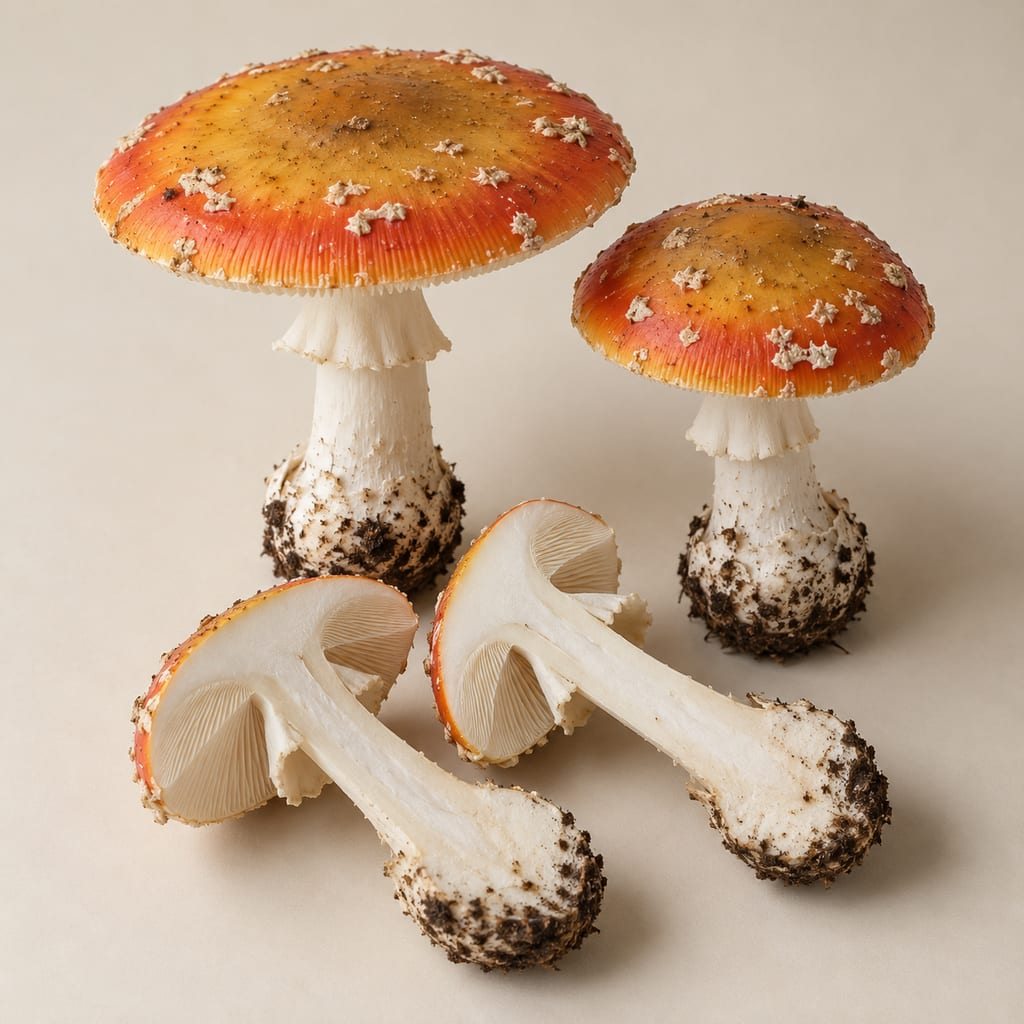
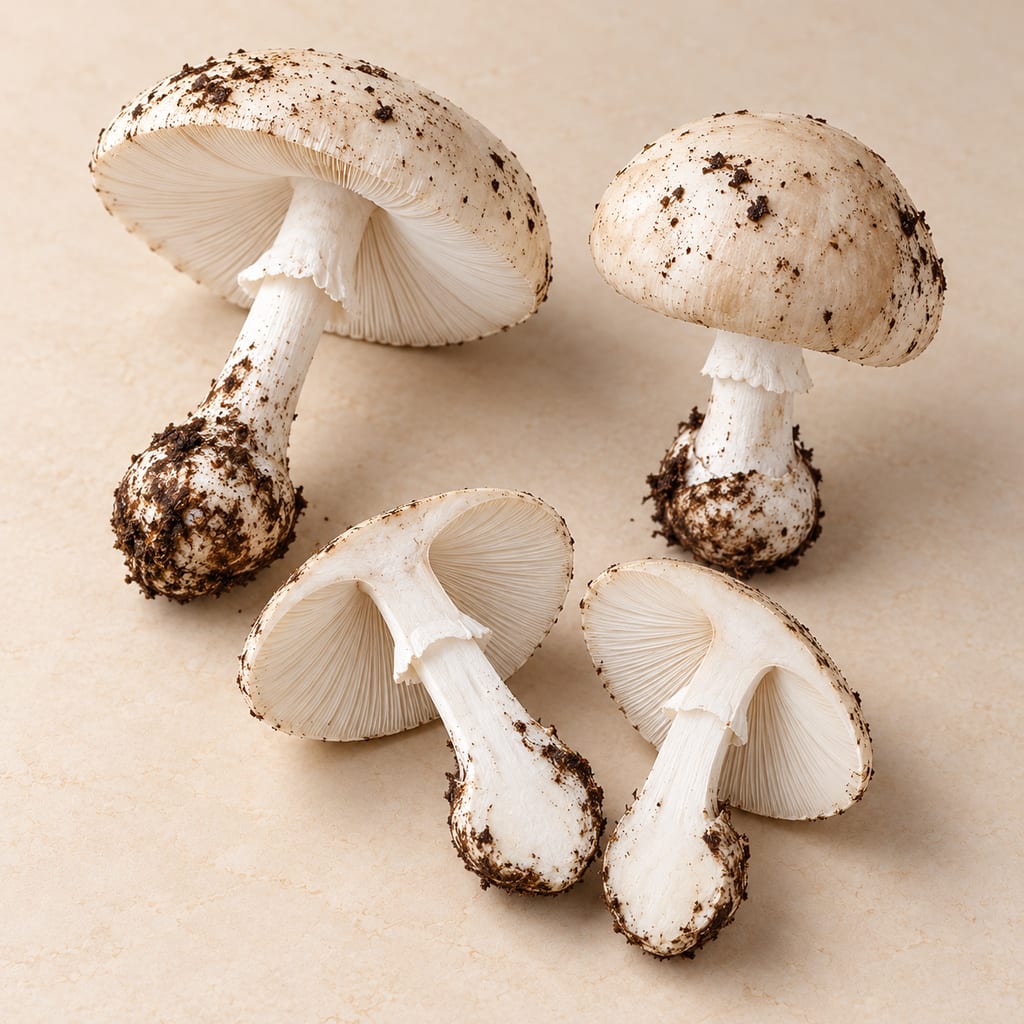
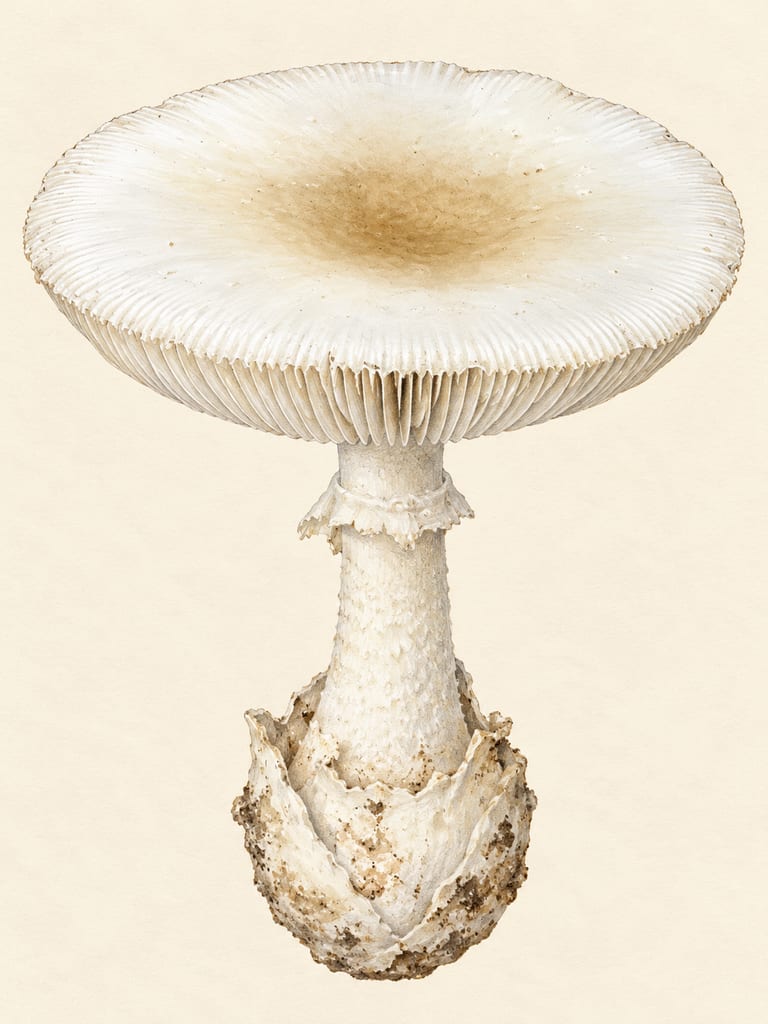
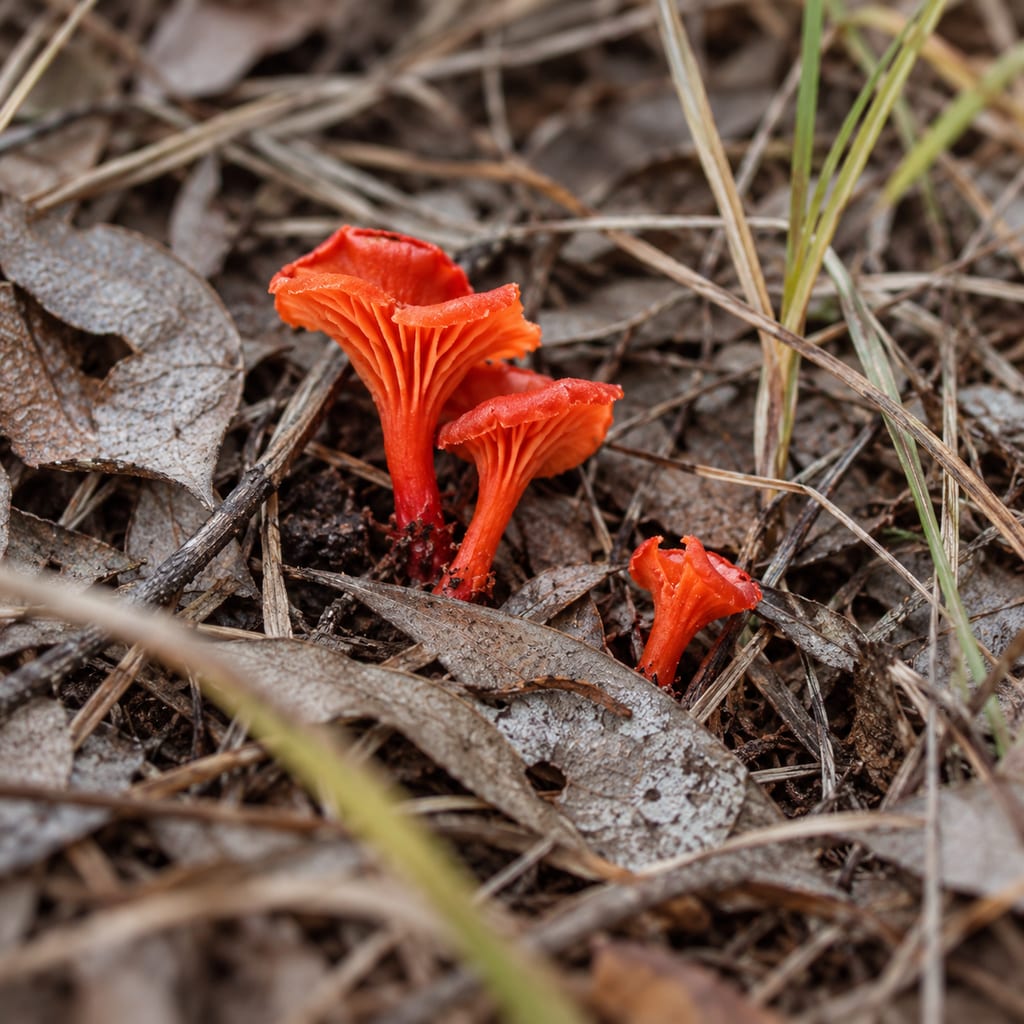
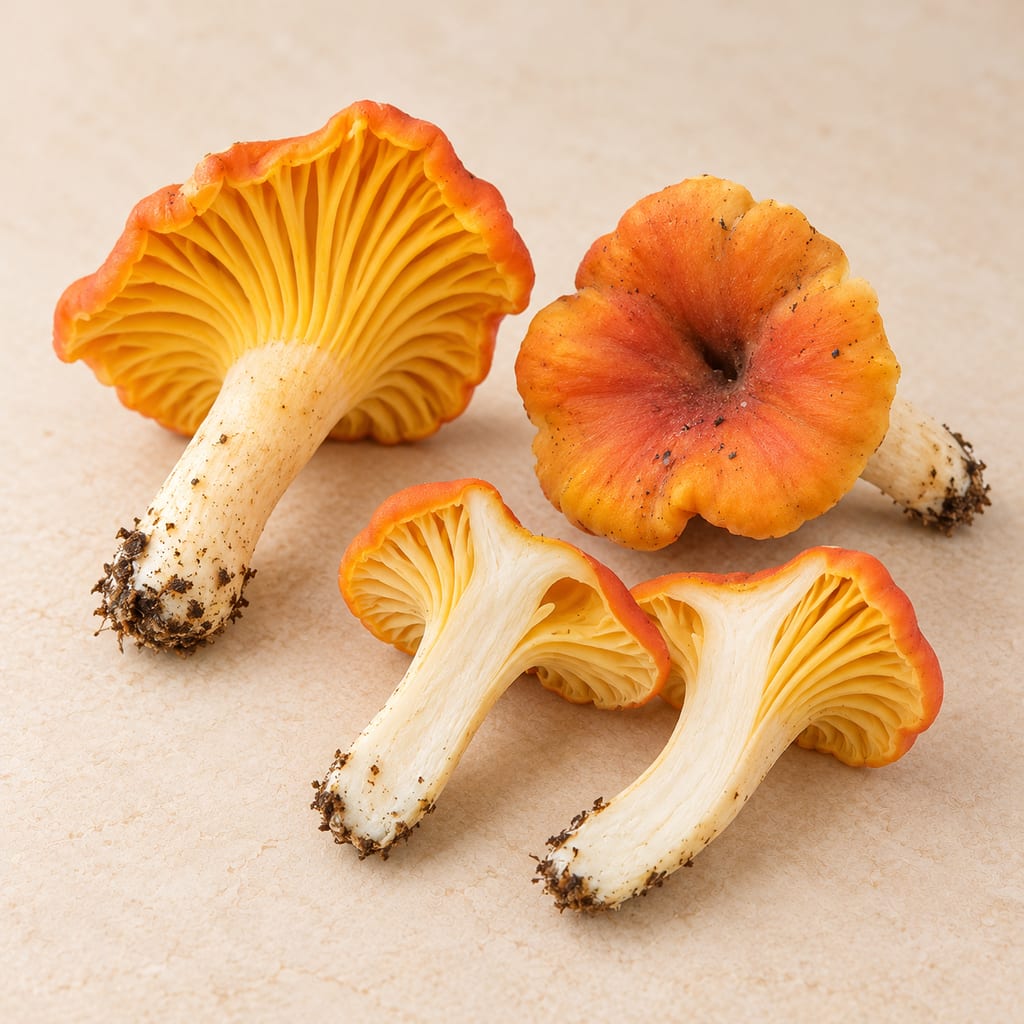
A reddish Amanita from Tanzania
Amanita mafingensis was described in 1994 by Marja Härkönen, Tiina Saarimäki and Leonard Mwasumbi, in the same paper that described two other new Tanzanian species, A. tanzanica and A. masasiensis. The authors treated it as one of three reddish Amanitas that local people know and use. The European Fungi and Tropical Africa database describes its cap as orange brown to dark reddish brown.
The species belongs to the section Caesarea, the group that includes the Caesar's mushroom, Amanita caesarea. The authors relate the new Tanzanian species to A. hemibapha, the tropical relative of A. caesarea. The reddish colour and the relationship to edible relatives are the features the sources use to place it, and neither is enough for a field identification on its own.
Sources for this section
Local use
The 1994 paper states that the three new species are considered edible by the local people. Each tribe has a collective vernacular name for these Amanitas. The paper does not record those names, and the sources consulted for this page do not describe how the mushroom is prepared, cooked or eaten, or how much is eaten.
The record is a statement of local use from a Tanzanian mycological survey. It shows that people there regarded the fungus as food at the time of collection. It does not establish that the same use applies to the species in other countries, or that it is safe for anyone who is not familiar with the local identification.
Sources for this section
The poisonous lookalike
The authors note that the new species are often confused with Amanita muscaria, the fly agaric, which is poisonous. That species is abundant in exotic pine plantations, and mushroom poisonings, some fatal, occur. The confusion is a practical risk in the same habitat where the edible Amanitas grow.
Reddish Amanitas can look alike across species that differ in edibility. A colour in a photograph or a note from a market is not an identification.
Sources for this section
Names and the synonym question
Index Fungorum treats Amanita tanzanica as a synonym of A. mafingensis. The European Fungi and Tropical Africa database says that the two species belong to the same section, Caesarea, but are distinct. The name records therefore differ between sources, and the catalogue name is kept here as a research label until the taxonomy is settled.
The Tanzanian name of this species on the catalogue does not carry a regional name, and no local name is given in the sources consulted.
Sources for this section
Distribution and what is not established
The European Fungi and Tropical Africa database includes the species in its key to edible species in tropical Africa and shows its range on a distribution map. A herbarium specimen from Malawi is recorded in the Kew database. The sources consulted did not establish a record from Mali or from any West African survey, and no edible use in West Africa is claimed here.
The catalogue lists this item as a candidate from research names. Its food use rests on the single 1994 survey and on the EFTA key. No cooking method, quantity or food tradition beyond that survey is established.
Sources for this section
Safety
The genus Amanita includes the most fatal mushroom species. Expert guidance is to eat no Amanita unless it has been identified with certainty by someone experienced with the group. A species described as edible in one place may be confused with a poisonous one in the same habitat.
No source here gives a safe preparation, a safe quantity or a safety verdict for home foraging. Anyone who comes across a reddish Amanita should leave it alone unless a local expert has identified it.
Sources for this section
Places
Tanzania
Traditional use · Country evidenceCountry-level. The 1994 paper records local people treating the species as edible; no locality is given.