
Agar / kanten
A gelling polysaccharide extracted from red seaweeds, sold as kanten strips or powder; it sets firm at a low concentration and stays solid until about 85 °C.
 FermenteaWhere food goes to change
Mushrooms
The beech mushroom, known in Japan as shimeji, is a firm, nutty cultivated mushroom sold in brown and white forms, and it needs cooking to remove its bitterness and toughness.
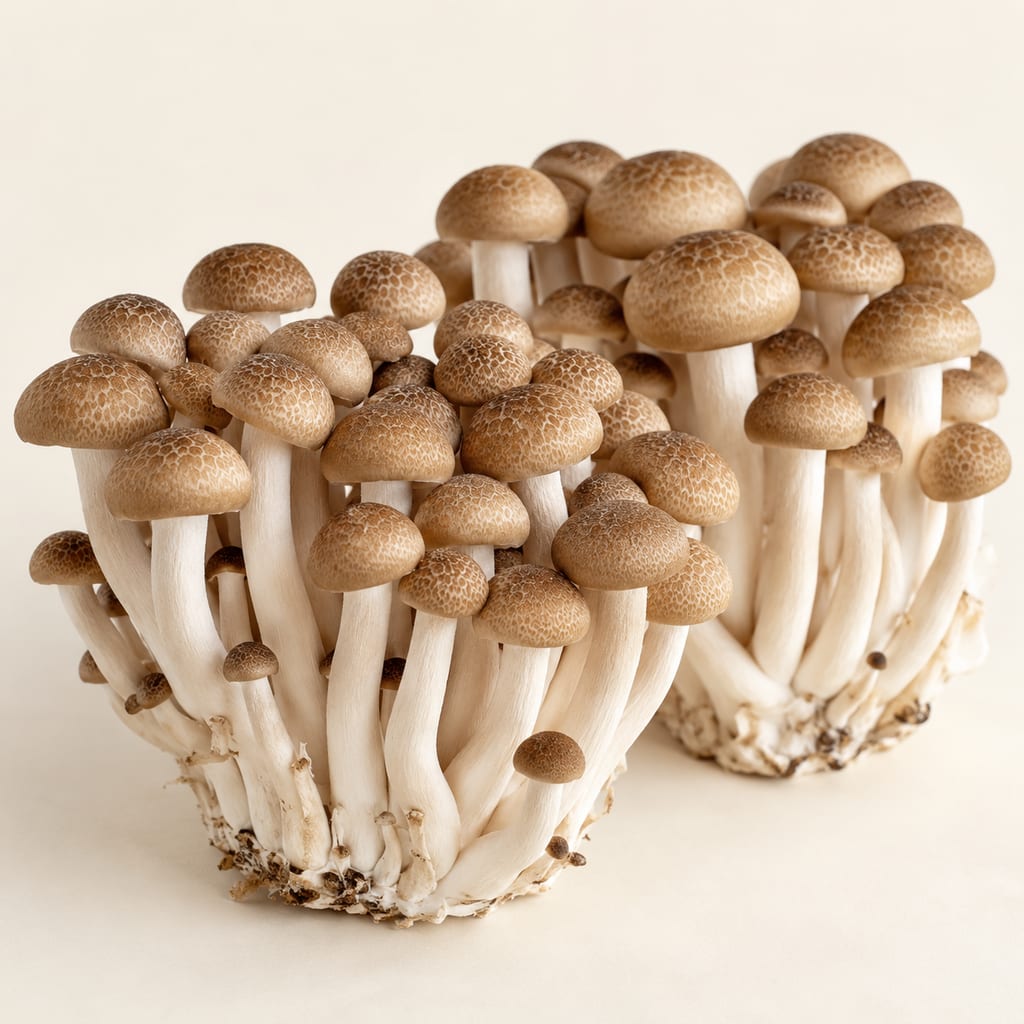
The beech mushroom is a gilled fungus that grows in clusters on hardwood, often high on the trunk, and is frequently found on beech trees, which gives it its common name. Its Japanese commercial names are buna-shimeji, the brown beech or brown clamshell mushroom, and bunapi-shimeji, the white beech or white clamshell mushroom. The white form is a UV-induced mutant of the brown wild type, according to the Wikipedia article.
The scientific name is unsettled. The article treats Hypsizygus tessulatus as the accepted name, with H. marmoreus, H. elongatipes and Pleurotus elongatipes as synonyms, and notes that some DNA barcoding work treats all members of the genus as one species. The catalogue record uses Hypsizygus marmoreus and H. tessulatus as search names. The trade often spells the epithet tessellatus.
In the wild it is saprotrophic, growing singly or in scattered groups on hardwood. The Wikipedia article lists it as native to East Asia, with the note that this needs a citation, and says it is common in northern North America. Cultivated beech mushrooms are grown in temperate parts of Europe, North America and Australia, and sold fresh in supermarkets.
The article gives no cultivation history or dates. It records only that the bunapi strain was registered by Hokto Corporation, without a year. The sources used here therefore do not say when the mushroom entered cultivation or how it was first grown.
The beech mushroom is tough and somewhat bitter when raw, so it should be cooked. Cooking removes the bitterness and leaves a firm, slightly crunchy texture and a nutty flavour. It is used in stir-fries, soups, stews, sauces, nabe hotpots and takikomi gohan. It can be sauteed whole, or slow-roasted with a little butter or oil.
The clusters are usually separated into small pieces before cooking. Because the caps stay firm, the mushroom holds its shape in long simmering, which is why it suits nabe.
The sources reviewed here give no yields, no substrate recipes, no shelf life and no storage method. This page gives none. The wild range is a lead, not a measured distribution, and the point about the East Asian native range is marked by the source as needing a citation.
Commercial brown and white forms are documented as buna-shimeji and bunapi-shimeji; the source gives no dates.
Listed as native to East Asia in the Wikipedia article, marked as needing a citation; treat as unconfirmed.
A gelling polysaccharide extracted from red seaweeds, sold as kanten strips or powder; it sets firm at a low concentration and stays solid until about 85 °C.

Akahatsu, Lactarius akahatsu, is a wild milkcap of East Asian pine and mixed forests that is sold in Yunnan markets, with its edibility and identity still needing species-level review.

The almond mushroom, Agaricus subrufescens, was cultivated in eastern North America in the 1800s, lost its market, and returned as a cultivated mushroom from Brazil, where it is grown under several names.
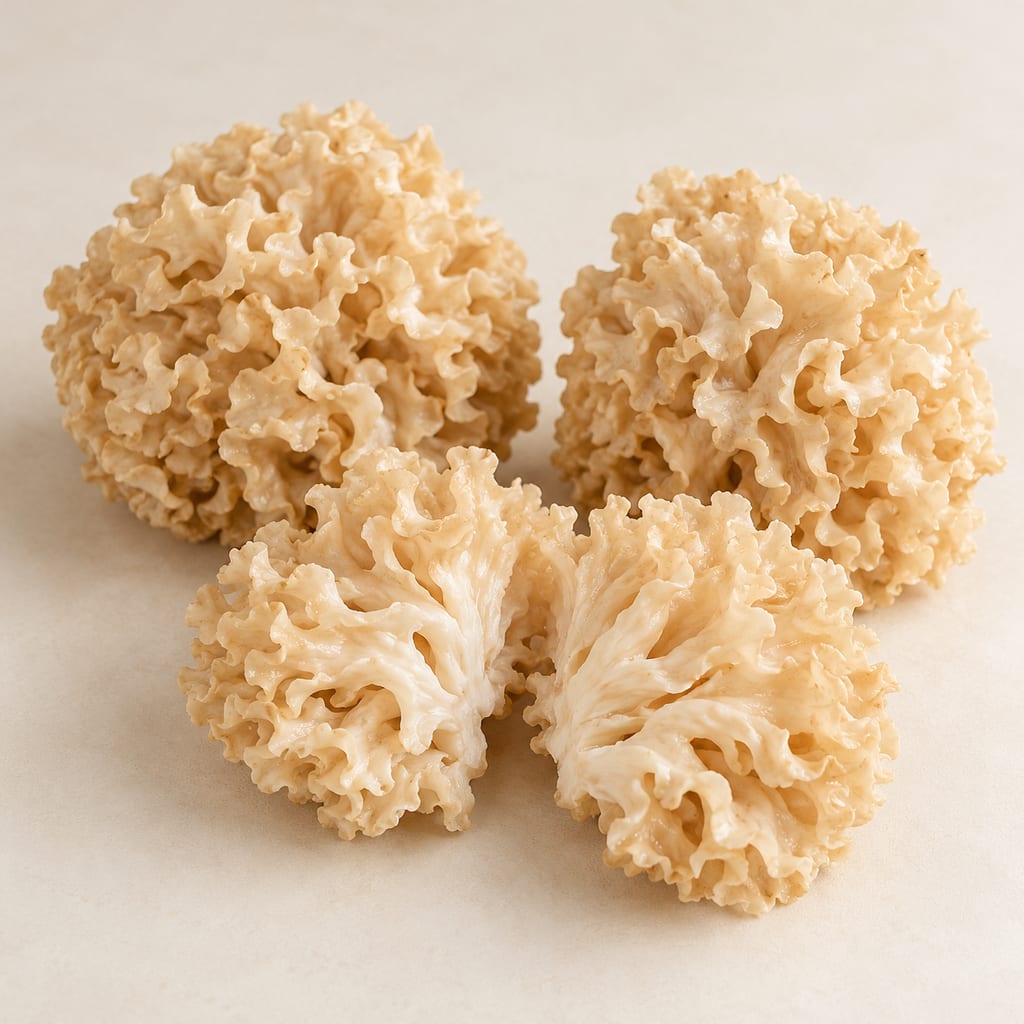
The Asian cauliflower mushroom, Sparassis latifolia, is a cultivated fungus with a frilled, fronded form that is eaten in China, Japan and Korea. Many Asian records under the name Sparassis crispa refer to this species.
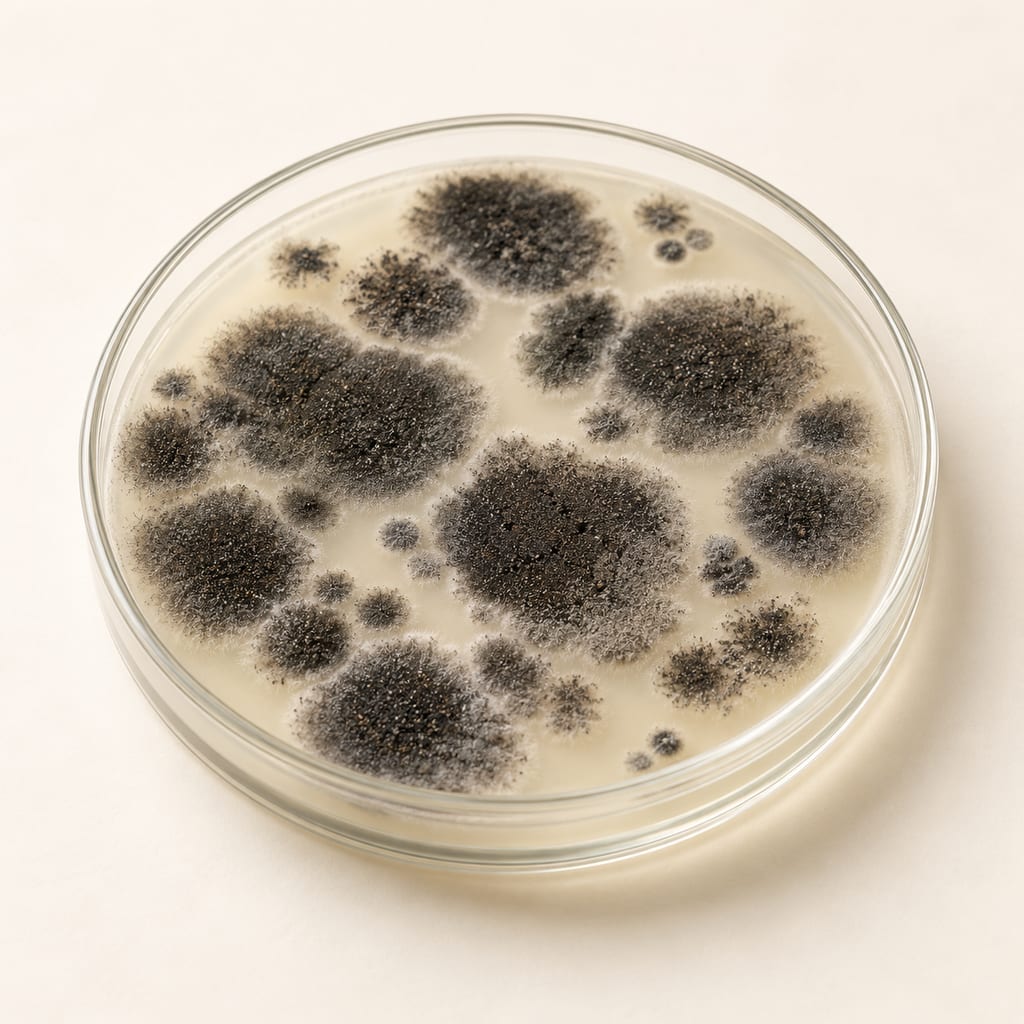
Aspergillus luchuensis is the black koji mould used in Japanese shochu and awamori, valued for the citric acid it makes alongside the starch-converting enzymes of koji.
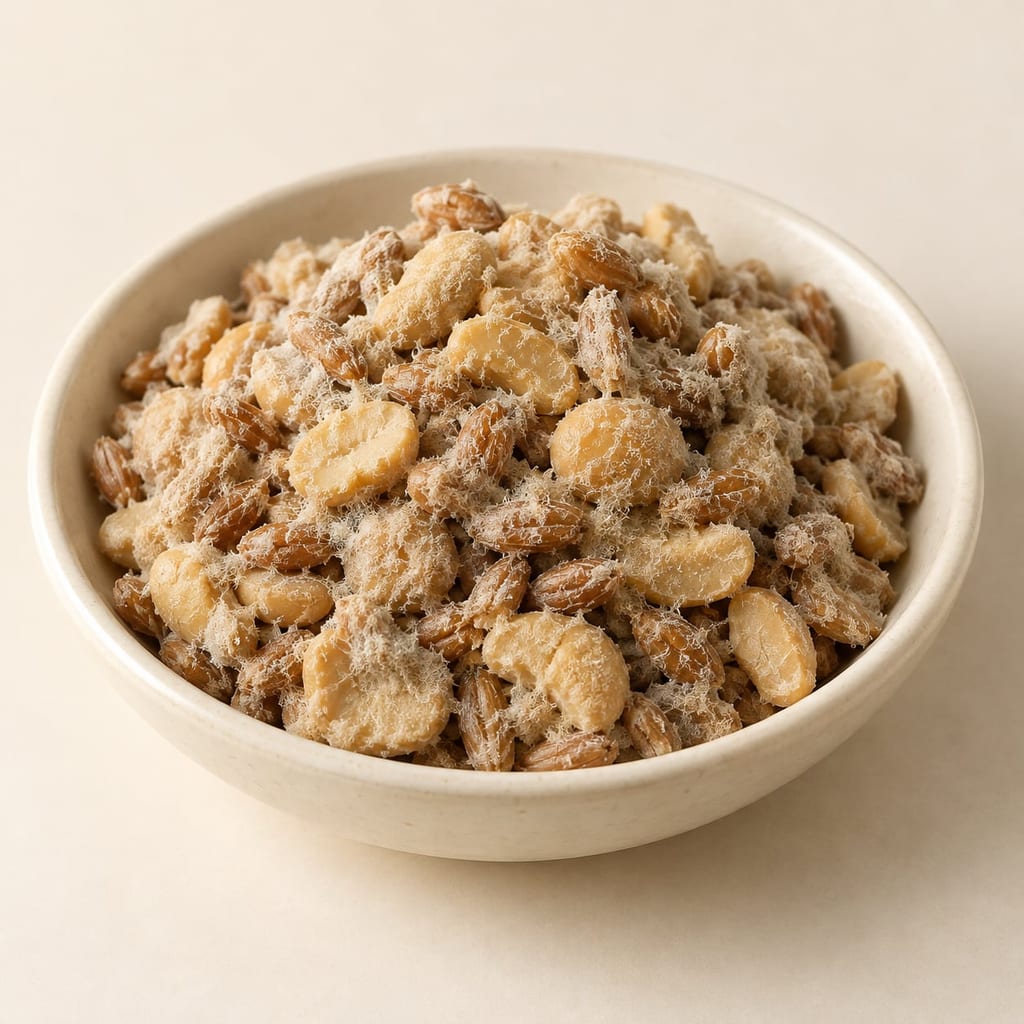
Aspergillus sojae is a koji mould of the Aspergillus flavus group, closely related to A. oryzae, used as a starter in soybean fermentations such as Korean meju, doenjang and ganjang.

Awamori yeast ferments sugar released from rice koji in the Okinawan spirit’s mash. Sakimoto names the ingredient but gives no strain, form, supplier or dose.

Bamboo shoots are the young culms of many bamboo species, eaten after boiling or leaching in Asia, and fermented into sour and preserved foods in the Himalayas, northeast India and Burma.
No community contributions have been published for this entry yet.
Sign in to contribute. Published comments and photos are free to read.
WikipediaLead · Identity · Culinary · Production
Hypsizygus tessulatus (Wikipedia article, under the marmoreus page)Authority (Bull.) Singer 1947 and synonyms
Buna-shimeji and bunapi-shimeji names; UV-induced white mutant
Saprotrophic habit on hardwood, beech in particular
Cultivation in temperate Europe, North America and Australia; Hokto bunapi strain without year
Tough raw, cook to remove bitterness; stir-fries, soups, nabe, takikomi gohan
Cited in: What it is; Where it grows and how it is produced; How it is cooked; Limits of the sources