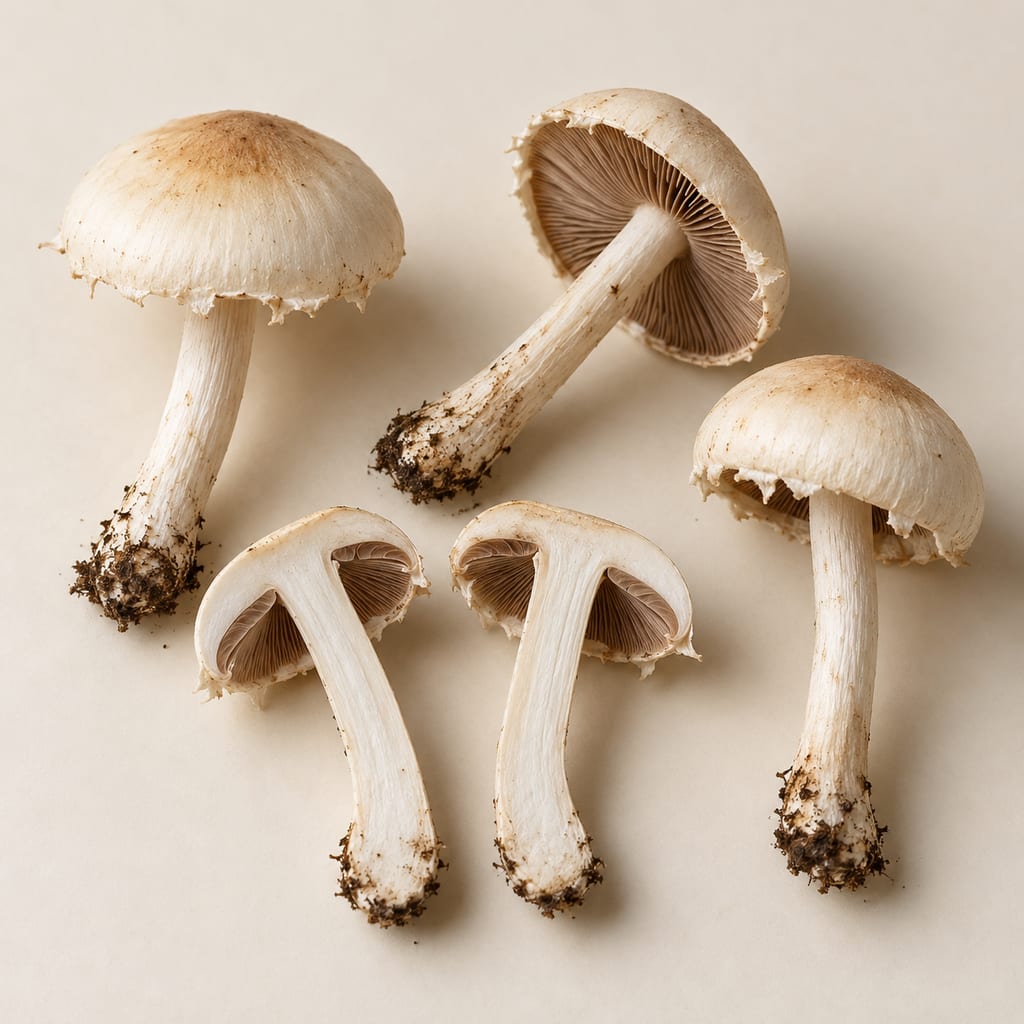
Agrocybe dura
A grassland agaric listed as edible in historical and scientific catalogues for Hong Kong and China. Taxonomic concepts and practical food value vary; the listings do not establish safe identification or culinary practice.
 FermenteaWhere food goes to change
Mushrooms
Boletinus grisellus, the gray larch bolete, is a bolete that grows under larch in China, Japan and eastern North America. Some references describe it as edible. No species-specific preparation is documented.
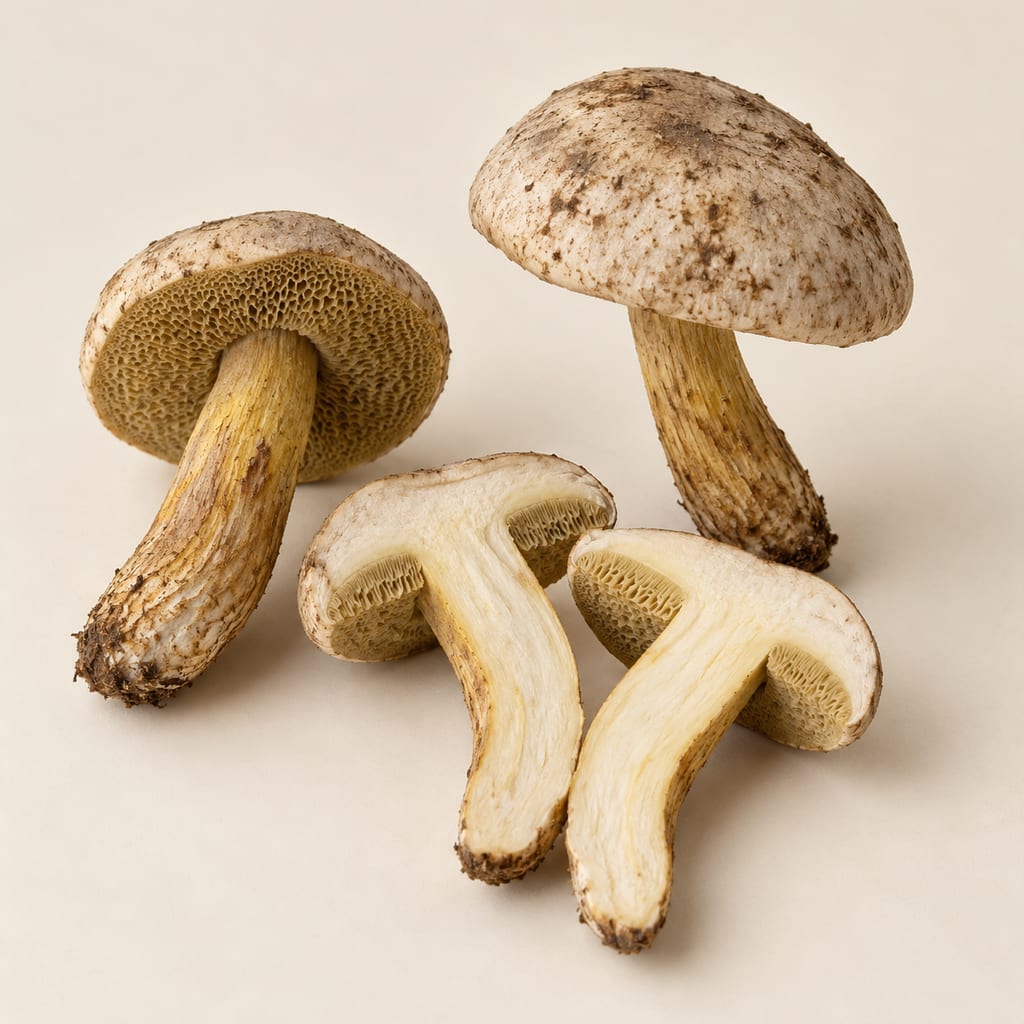
Boletinus grisellus is a bolete of the larch woods. Its cap is dry or slightly sticky and grey-white to olive. The pores are pale grey and can run down the stem, and the stem and flesh are pale. Descriptions tie it to larch, Larix, and to wet, boggy ground. In North America the common name is tamarack, which is the local name for eastern larch.
The species is often placed in the genus Suillus. A 1996 molecular study moved it into Suillus, and specialist works and university collections still use that name. Species Fungorum currently lists the name under Boletinus and gives the reverse synonym relationship. This entry keeps the catalogue name and notes the conflict, because the name in use depends on the taxonomic source. A 2025 multigene revision reports that species associated with larch are spread across continents, so a record from one region may not show which species a local name refers to.
Records come from Heilongjiang in north-east China, from Yamanashi in Japan, and from eastern Canada and the eastern and north-central United States. The type was collected at Natick, Massachusetts. In North America it has been recorded from Canada south to Pennsylvania and west to Minnesota, under or near tamarack, often in wet bog and fen settings. Minnesota herbarium vouchers were collected in late September 2014, and New York State Museum specimens in October.
The fruiting window in these records is late summer and autumn. A Newfoundland account describes a September to October peak that is uncommon and irregular. The Japanese specimen was collected on 18 September 2018. These dates describe local collections and do not give a fixed season for the species as a whole.
The Liangshui reserve checklist in Heilongjiang lists the species in larch forest as edible, and the Chinese 2026 catalogue index includes it on an edible checklist that has not been independently assessed. North American sources describe it as edible too. One Newfoundland account says its author had not eaten it and was reporting the published status only, so the claim rests on reports rather than on tested experience.
The sources reviewed give no recipe, dish or preparation method for this species. No culinary tradition for it is documented, and recipes for other Suillus species should not be applied to it. No species-specific adverse report or toxicity warning was found in the reviewed sources. That absence is not proof of safety, particularly because identification of this group is difficult.
Boletes of this kind are identified from a combination of characters, and their appearance changes with age and reference. The descriptions here are not a field key. A photograph or a written description cannot establish the species, and wild material should not be gathered for eating on the strength of this page.
Use of the ingredient should rest on correctly identified, food-grade supply. Nothing on this page is a safety assessment or a foraging instruction.
Listed as edible in the Liangshui reserve checklist; no collection season given.
Culture-collection specimen record only; no food use reported.
Type locality of the name; no food use recorded there.
Herbarium and regional records, with edibility reported in North American accounts.
A grassland agaric listed as edible in historical and scientific catalogues for Hong Kong and China. Taxonomic concepts and practical food value vary; the listings do not establish safe identification or culinary practice.
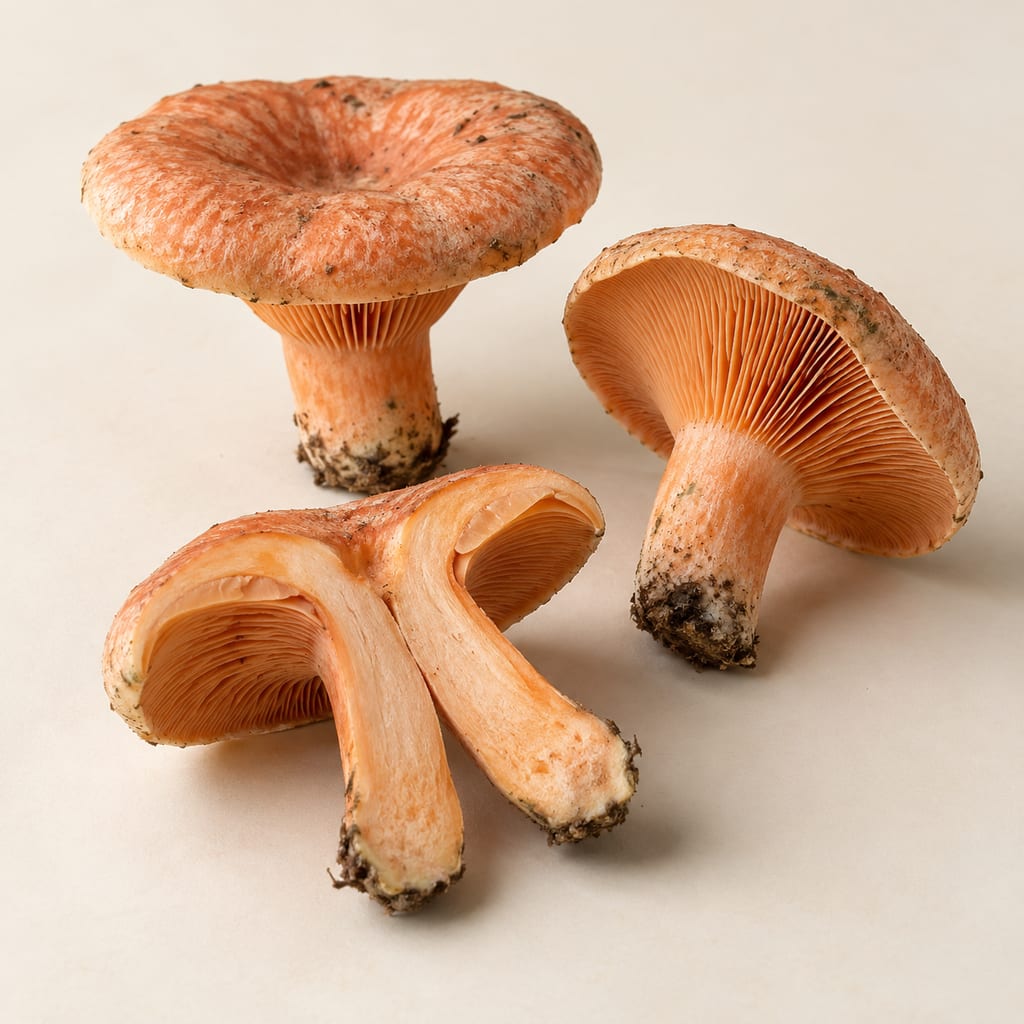
Akahatsu, Lactarius akahatsu, is a wild milkcap of East Asian pine and mixed forests that is sold in Yunnan markets, with its edibility and identity still needing species-level review.
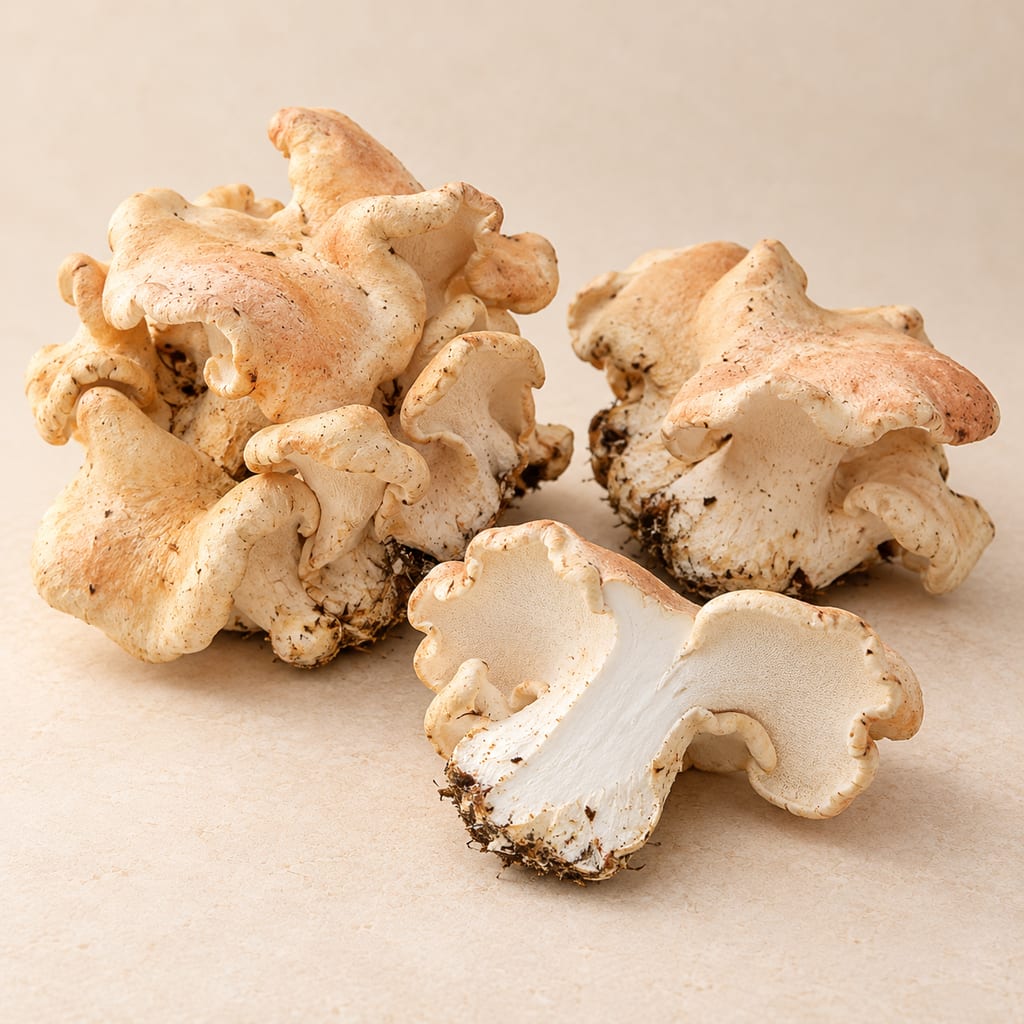
Albatrellus confluens is a ground-growing polypore with fused buff-orange caps. Sources document Chinese market use and regional edibility, but others reject it as too bitter; taxonomy also varies between Albatrellus and Albatrellopsis.
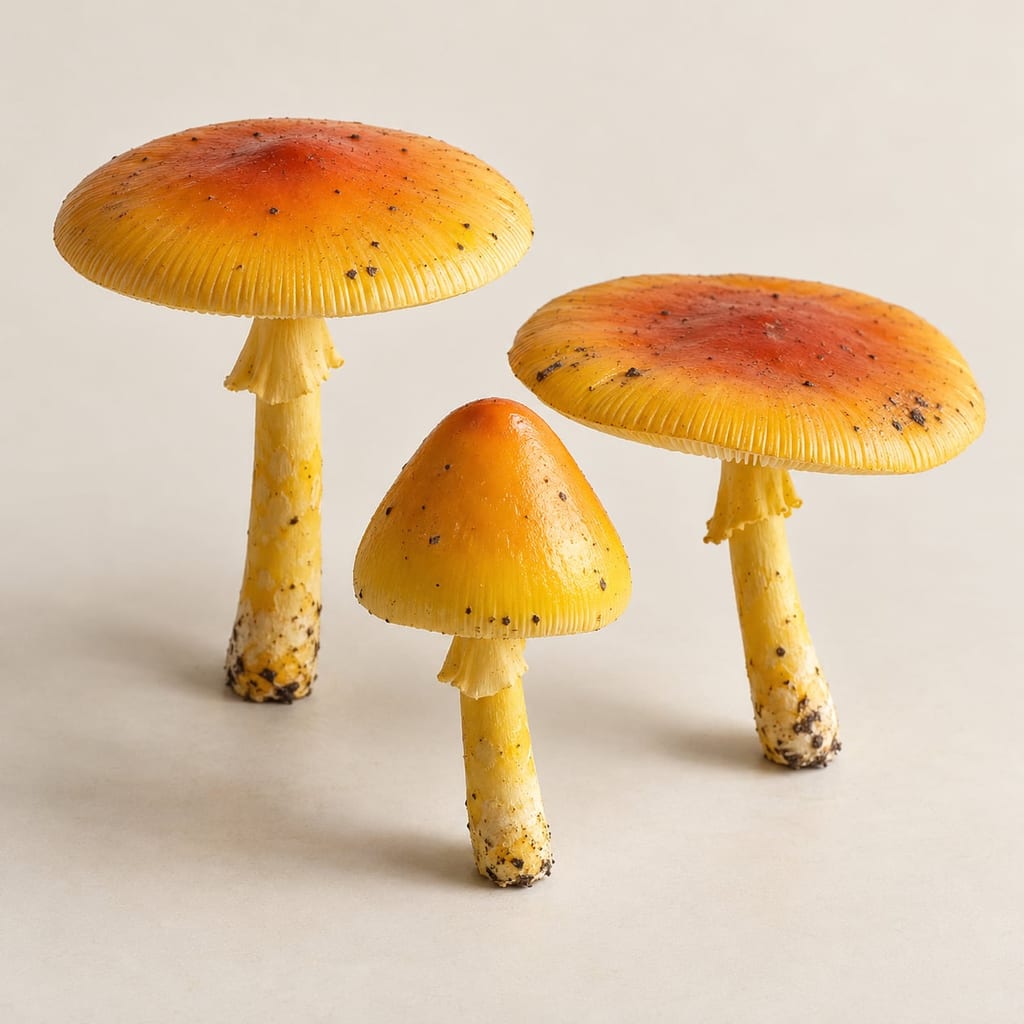
A wild Amanita recorded from China in a 2026 checklist of edible and medicinal fungi. The genus holds deadly species, so this page gives no identification or edibility verdict.
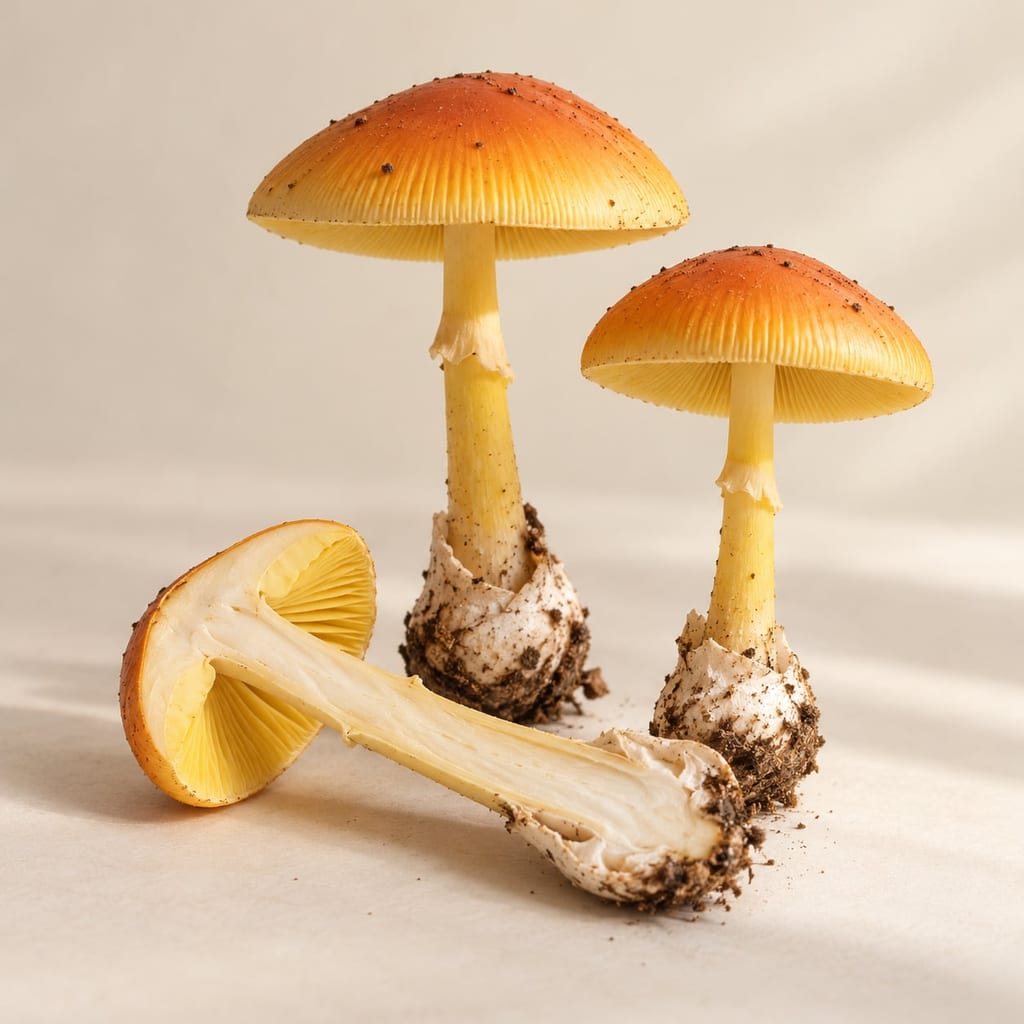
A wild Amanita of China, first reported there and listed as edible in a Yunnan ethnomycology study. The genus contains deadly species, so this page does not support identifying or eating it.
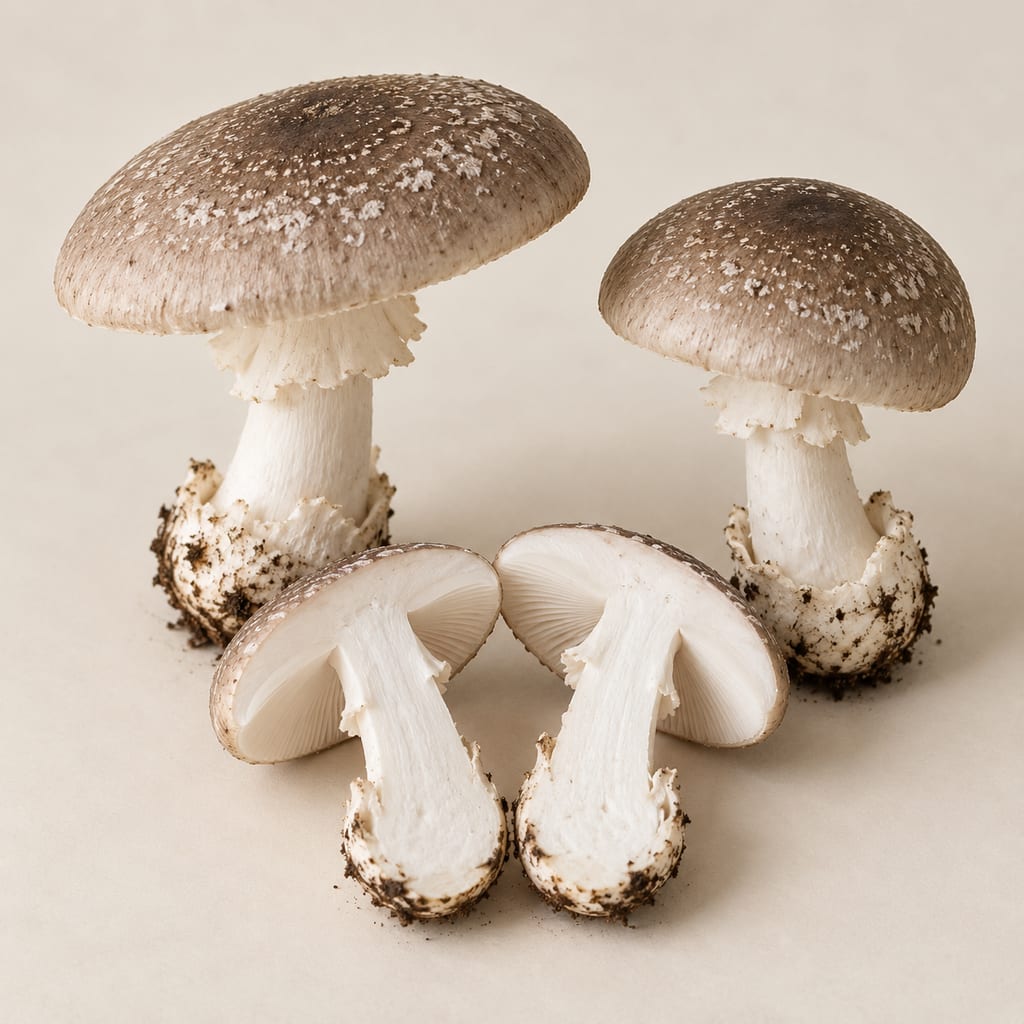
Amanita yuaniana is a Chinese Amanita that a 2023 Yanshan survey and a Yunnan ethnomycology survey list among edible species. No source tests it for safety, and the genus holds the most lethal mushrooms.
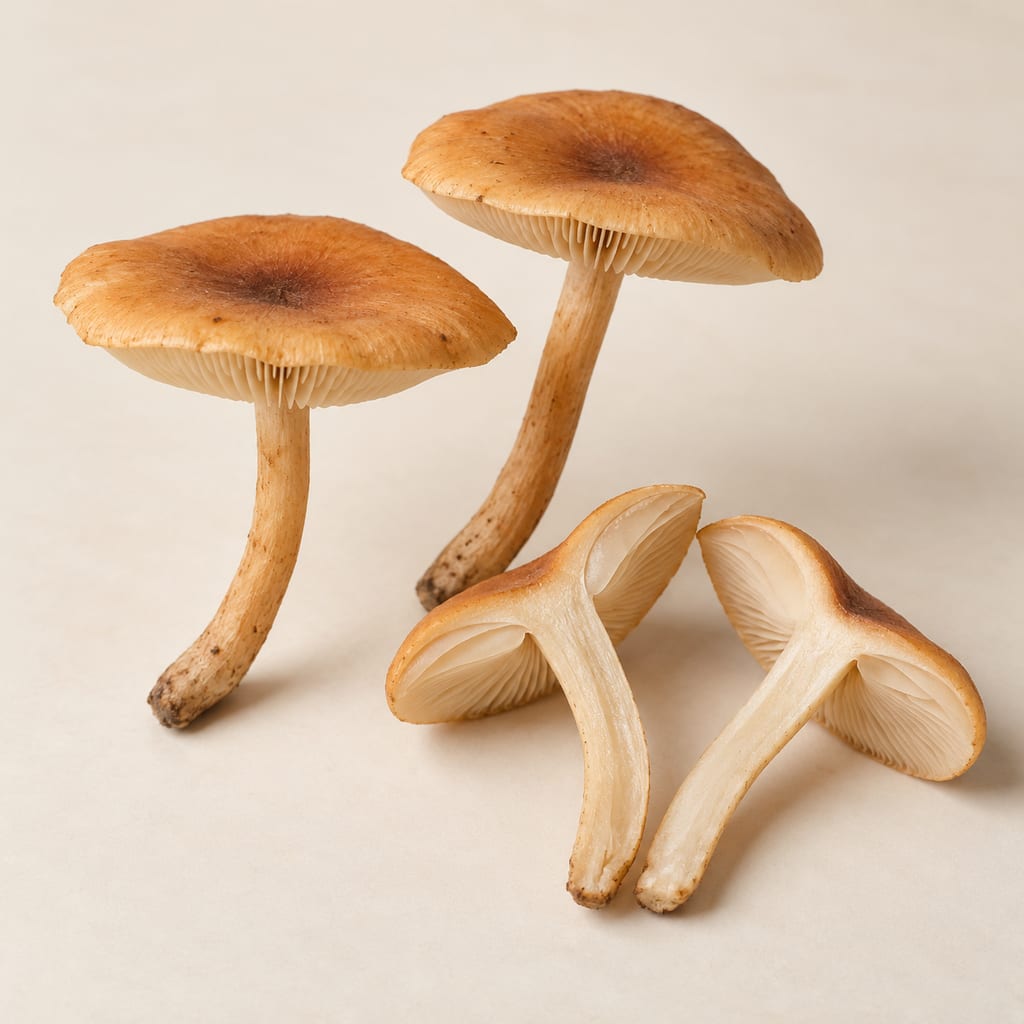
A wood-associated Armillaria recorded in Yunnan and Sichuan, China, and listed as edible in a 2026 Chinese catalogue.
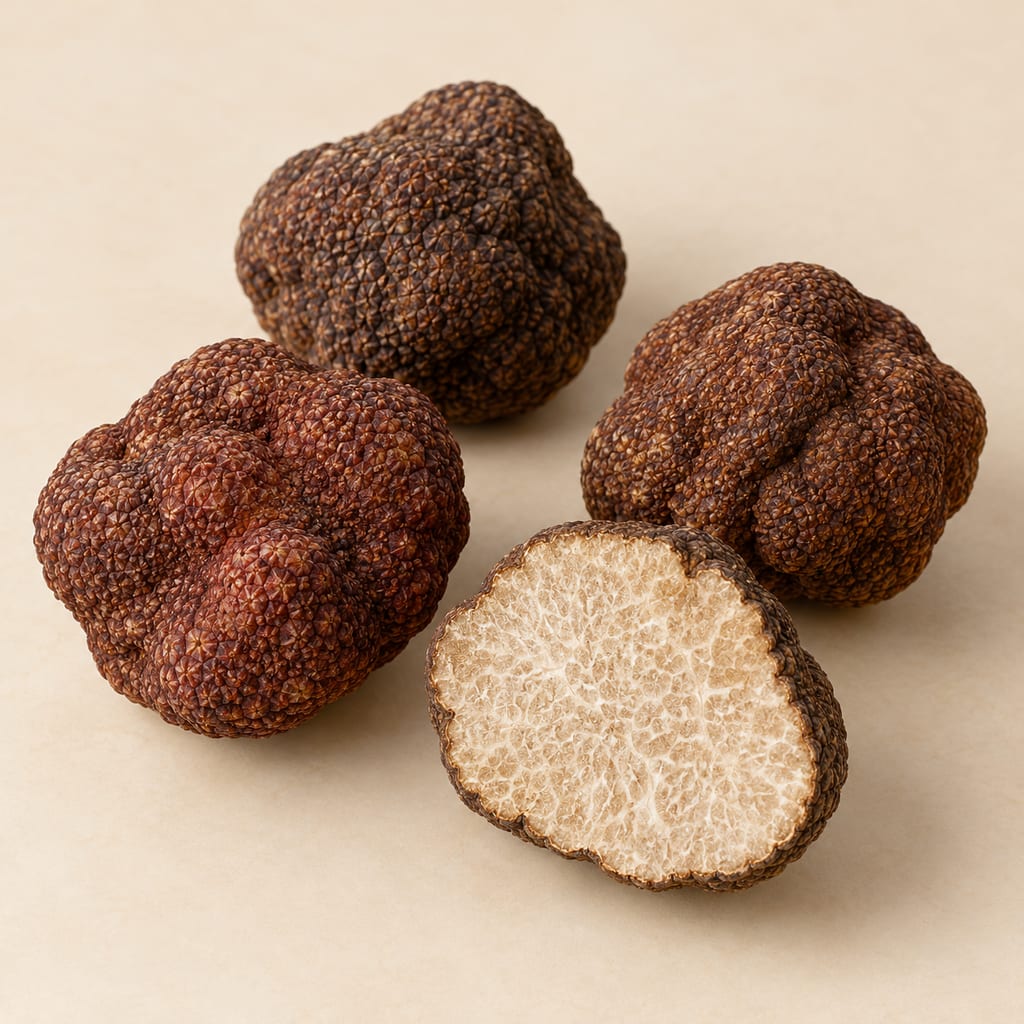
Tuber pseudohimalayense is a wild black truffle from Yunnan, China, listed as edible in a Chinese species catalogue. No independent assessment of its culinary use or safety is available.
No community contributions have been published for this entry yet.
Sign in to contribute. Published comments and photos are free to read.
MycologiaTaxonomy
Internal transcribed spacer sequences from 38 recognized species of Suillus sensu latoFormal combination of the species as Suillus grisellus in 1996
Cited in: Overview
IMA FungusTaxonomy · Distribution
A subgeneric revision of the genus Suillus2025 multigene revision: Larix-associated species distribute intercontinentally
Cited in: Overview
MycologiaTaxonomy
Phylogenetic assessment of global Suillus ITS sequencesGeographic differentiation common across the genus in earlier ITS work
Species FungorumTaxonomy
Species Fungorum name recordCurrent record places the name under Boletinus with the reverse synonym relationship
Cited in: Overview
Northeast Forestry UniversityFood status · Habitat
Liangshui National Nature Reserve fungal checklistListed in larch forest, on soil, edible; no season given
Cited in: Where it grows; Food status
Bell MuseumDistribution · Season
Minnesota Biodiversity Atlas voucher recordsCedar Creek, Anoka County vouchers, 20 and 27 September 2014
Cited in: Where it grows
OmphalinaDescription · Food status · Season
Omphalina IX(2) species accountCap, pores and flesh description; edible report; September to October fruiting peak; the author had not eaten it
Cited in: Where it grows; Food status
New York State MuseumFood status
Edible Fungi of New YorkListed among edible fungi in the 1895 to 1899 survey, pp. 169 to 170
Cited in: Food status
Tottori University Mushroom Resource Research CenterDistribution
Specimen TUFC 101597Yamanashi specimen collected 18 September 2018
Cited in: Where it grows
MushroomExpertIdentification
Suillus keyCharacter descriptions; identification varies with age and reference
Cited in: Identification and safety