
Agar / kanten
A gelling polysaccharide extracted from red seaweeds, sold as kanten strips or powder; it sets firm at a low concentration and stays solid until about 85 °C.
 FermenteaWhere food goes to change
Mushrooms
Eastern American matsutake, Tricholoma magnivelare, is an aromatic wild mushroom of eastern North American forests, a different taxon from the western matsutake sold in the Japanese trade.
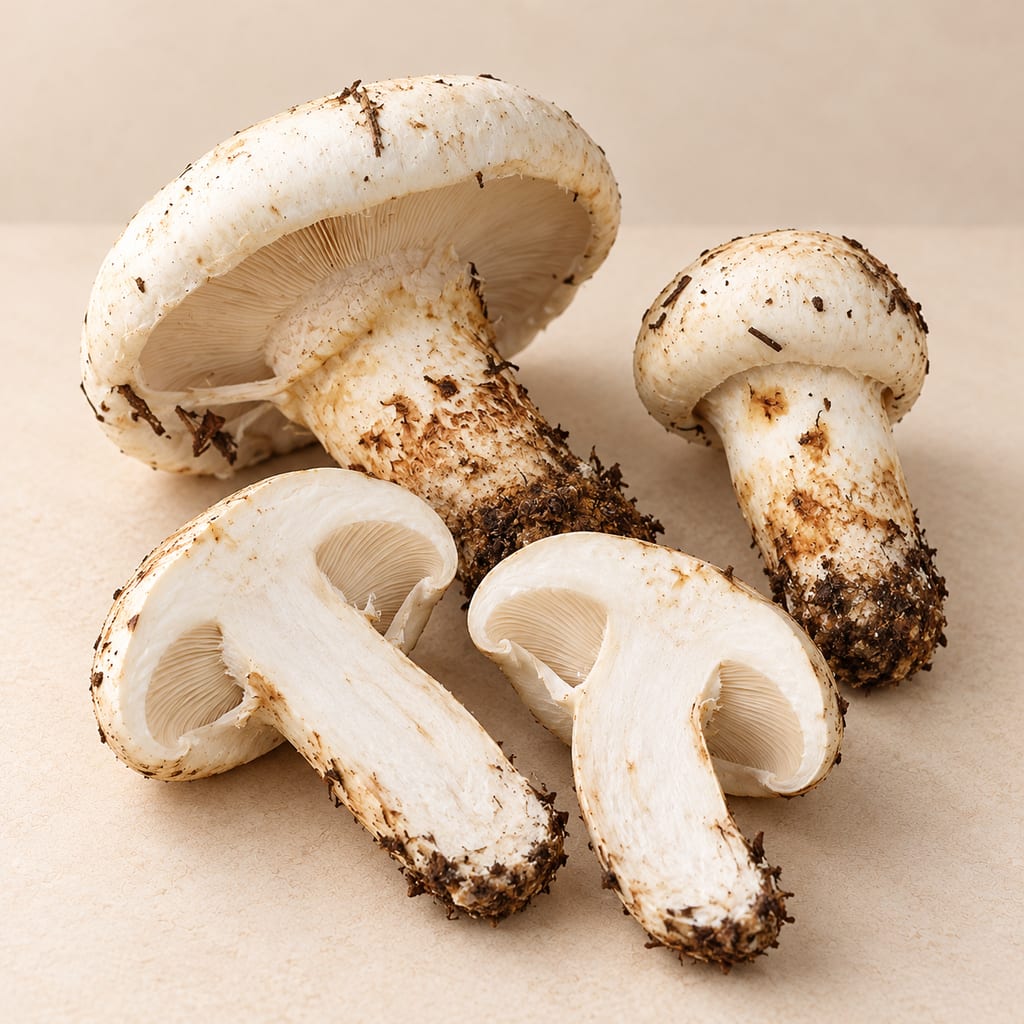
Tricholoma magnivelare is the eastern North American matsutake in the catalogue. Western North American matsutake were long labelled with this name. A 2017 study separated the two, and restricted T. magnivelare to the eastern half of North America. The Pacific Northwest species is now generally called Tricholoma murrillianum, and one source notes that it is found mainly with pine.
The catalogue states that these are distinct taxa, not interchangeable synonyms. Several sources read for this page are older than the 2017 split and treat the western harvest under the former name, so their figures should not be read as figures for T. magnivelare alone. The catalogue's supplied source for this entry is a page on T. murrillianum, which is recorded here as a naming caveat rather than a species match.
The catalogue records the species as an ectomycorrhizal fungus of forests, which forms a partnership with tree roots and fruits in the soil under host trees. Its supply is recorded as wild gathering. The sources read here do not give a fruiting season or an eastern locality beyond the regional record.
The catalogue places the species in eastern North America, and the 2017 study names the eastern half of the continent as its range.
The catalogue describes the species as an aromatic culinary matsutake, used in cooked dishes.
A USDA review of the American matsutake describes a market largely international, with most of the harvest exported, mainly to Japan. One source gives a figure of 97 percent of matsutake consumed in Japan being imported. Those figures predate the 2017 split and concern mostly the western harvest, so they are not figures for the eastern species. Prices peaked in the 1990s, when western matsutake reached up to 600 dollars a pound, and have since fallen sharply, according to the same sources.
The harvest is an economic activity in rural areas. Sources report declines in recent harvests and link them to deep raking and over-harvesting of the forest floor, and a USDA assessment concludes that the American species can remain a sustainable forest product if harvest and forest habitat are managed well.
Safety wording: this page describes what the sources record. It is not an identification guide and it gives no verdict that any wild Tricholoma is safe to eat. The catalogue states that deadly Amanita look-alikes occur, and that this food tradition cannot identify other specimens.
Matsutake look-alikes must be excluded by a qualified expert before a specimen is eaten, and the names used for these taxa are not stable across the trade.
Range named by the 2017 naming study and the catalogue; no locality given.
Main export market for American matsutake, per the USDA review; the review concerns mostly the western harvest.
A gelling polysaccharide extracted from red seaweeds, sold as kanten strips or powder; it sets firm at a low concentration and stays solid until about 85 °C.

Akahatsu, Lactarius akahatsu, is a wild milkcap of East Asian pine and mixed forests that is sold in Yunnan markets, with its edibility and identity still needing species-level review.

The almond mushroom, Agaricus subrufescens, was cultivated in eastern North America in the 1800s, lost its market, and returned as a cultivated mushroom from Brazil, where it is grown under several names.
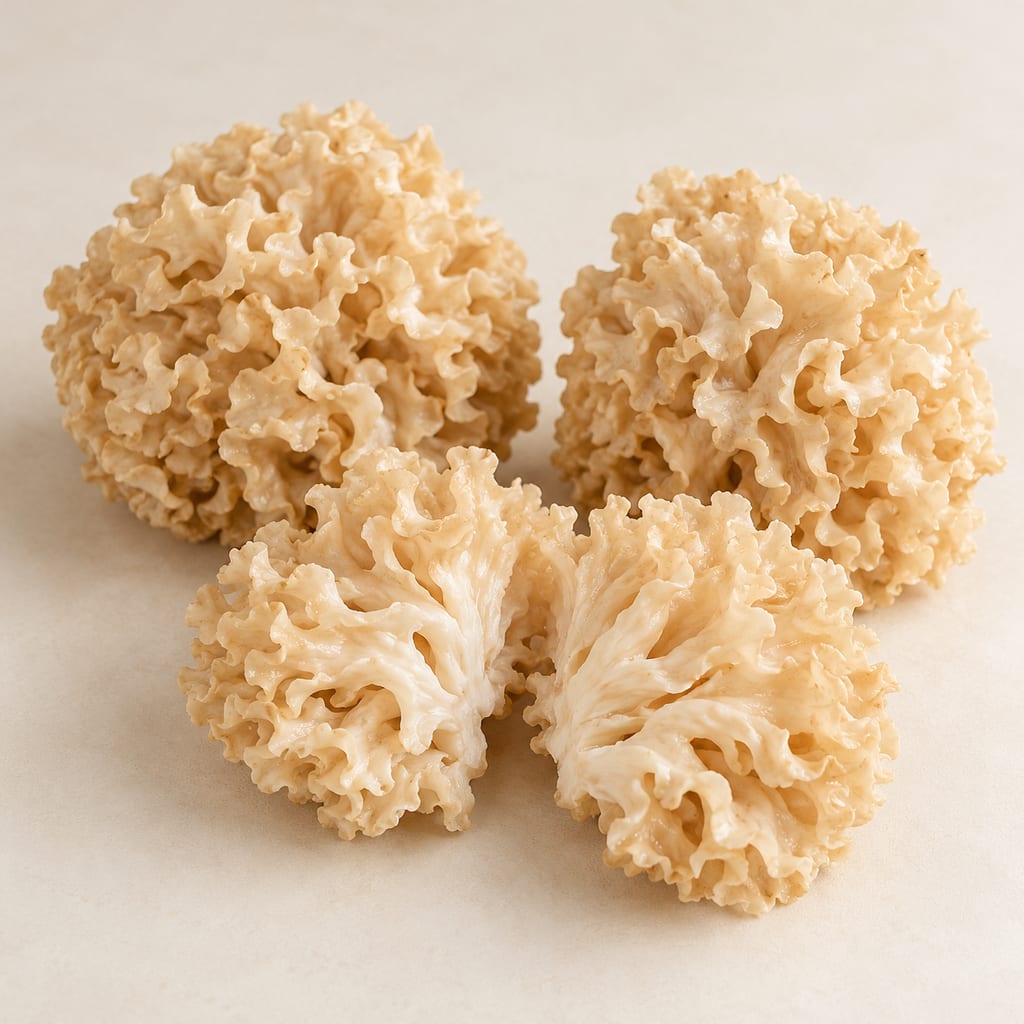
The Asian cauliflower mushroom, Sparassis latifolia, is a cultivated fungus with a frilled, fronded form that is eaten in China, Japan and Korea. Many Asian records under the name Sparassis crispa refer to this species.
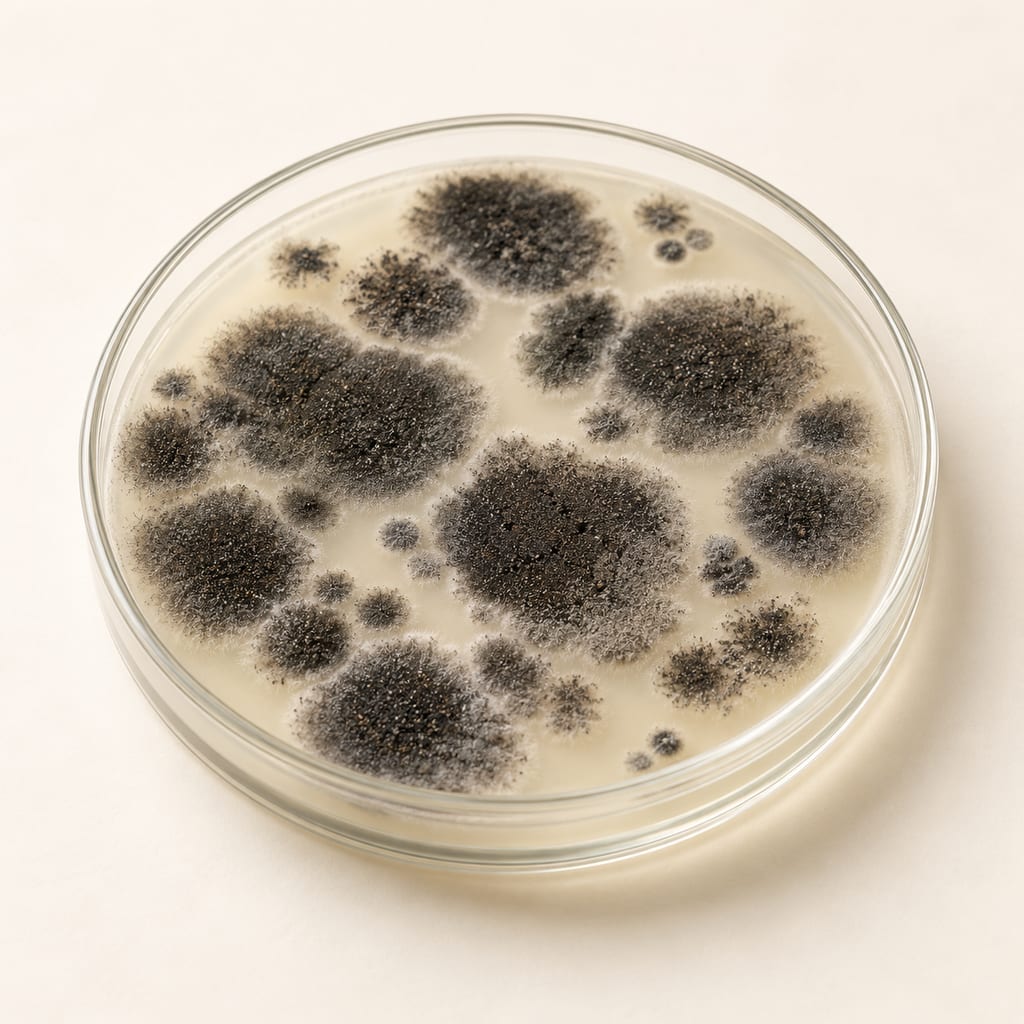
Aspergillus luchuensis is the black koji mould used in Japanese shochu and awamori, valued for the citric acid it makes alongside the starch-converting enzymes of koji.
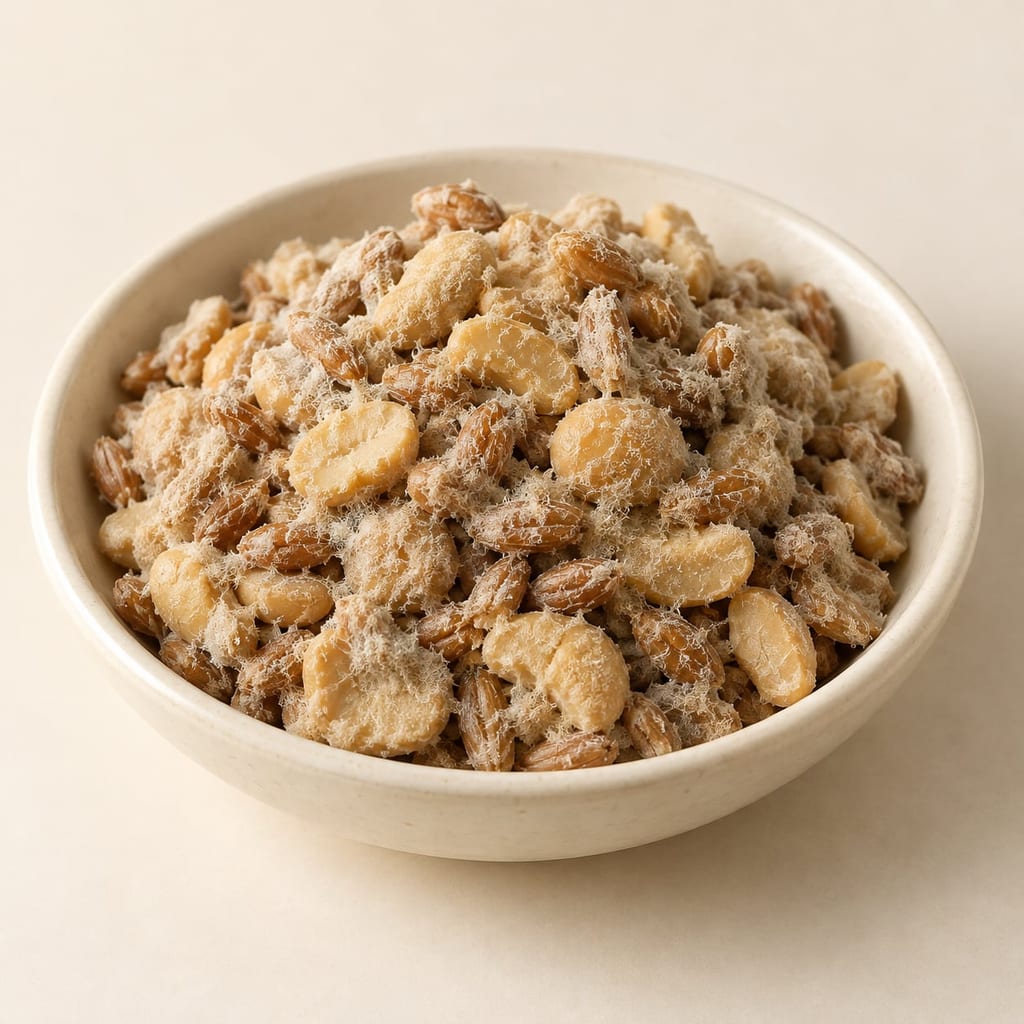
Aspergillus sojae is a koji mould of the Aspergillus flavus group, closely related to A. oryzae, used as a starter in soybean fermentations such as Korean meju, doenjang and ganjang.
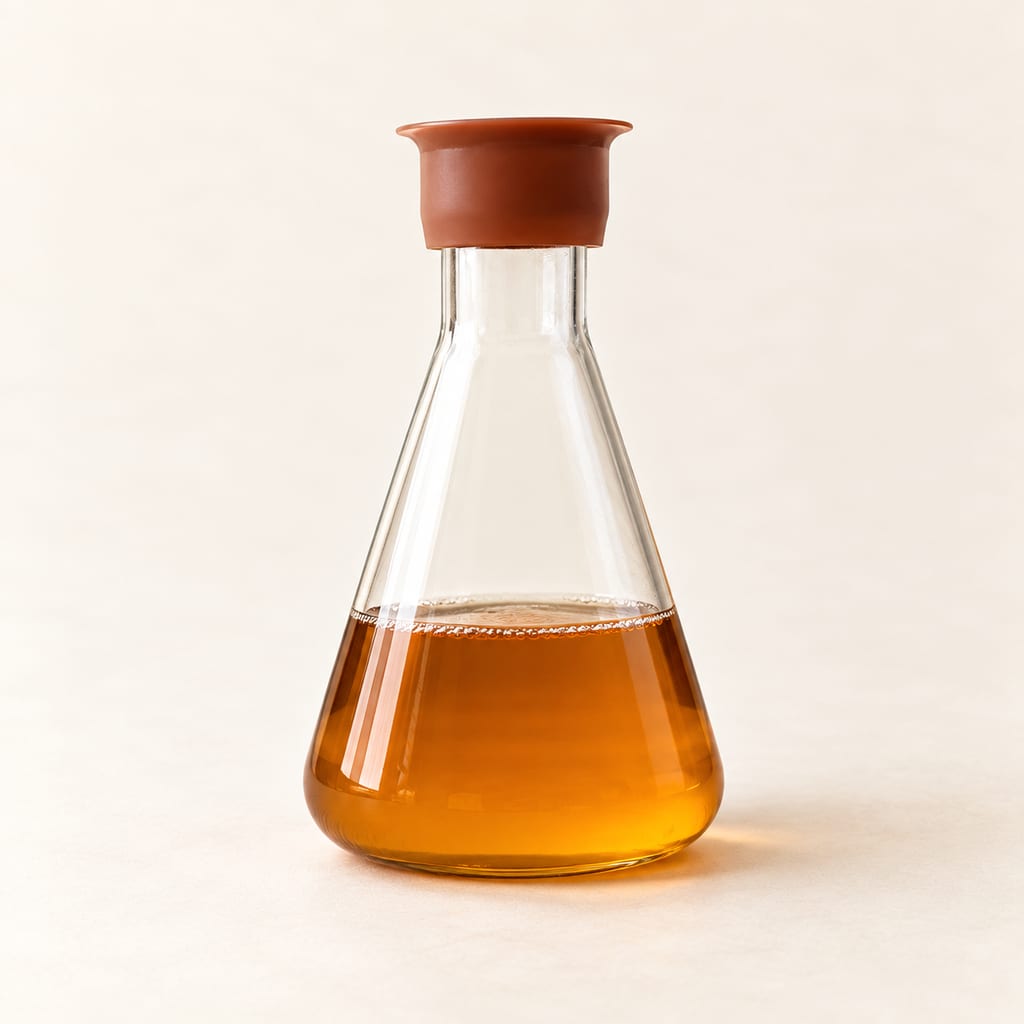
Awamori yeast ferments sugar released from rice koji in the Okinawan spirit’s mash. Sakimoto names the ingredient but gives no strain, form, supplier or dose.
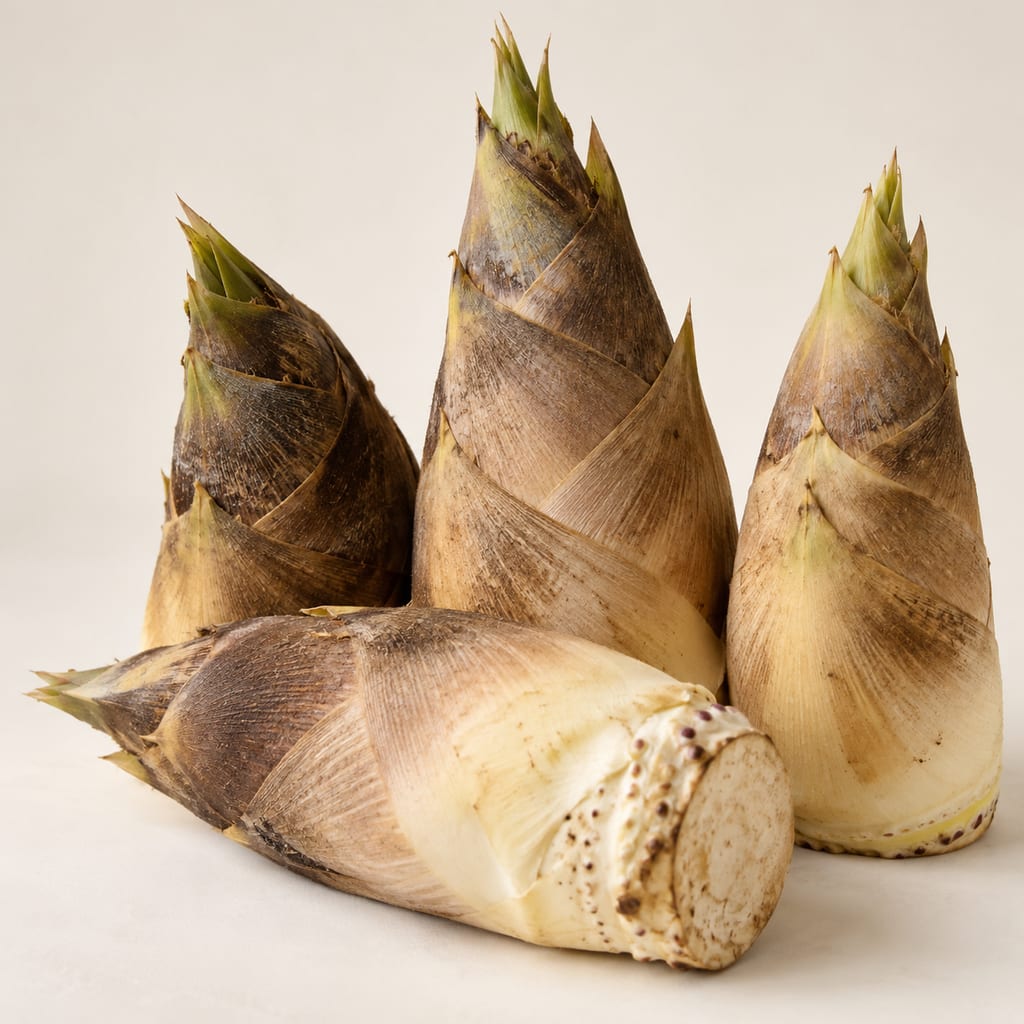
Bamboo shoots are the young culms of many bamboo species, eaten after boiling or leaching in Asia, and fermented into sour and preserved foods in the Himalayas, northeast India and Burma.
No community contributions have been published for this entry yet.
Sign in to contribute. Published comments and photos are free to read.
Beaty Biodiversity MuseumUse
Tricholoma murrillianum (supplied catalogue source)Supplied entry for the catalogue record; read as a naming caveat
Cited in: Ecology and habitat
NLMushrooms (PDF copy of the 2017 study)Identification · History
North American matsutake: names clarified and a new species describedSplit of western and eastern North American matsutake; T. magnivelare limited to the eastern half of North America
Cited in: Identity and naming; Ecology and habitat; Safety and identification
USDA Forest ServiceUse · Safety
Ecology and management of the commercially harvested American matsutakeMarket largely international, mostly exported to Japan; sustainability assessment; older price data
Cited in: Culinary use and trade; Sustainability of the harvest
WikipediaInspiration
MatsutakeOverview of matsutake trade and taxonomy
Cited in: Identity and naming; Culinary use and trade; Safety and identification