
Agar / kanten
A gelling polysaccharide extracted from red seaweeds, sold as kanten strips or powder; it sets firm at a low concentration and stays solid until about 85 °C.
 FermenteaWhere food goes to change
Substrates
Fuki is eaten as leaf stalks and spring flower heads; Japanese sources describe seasonal food use, water-based preparation and region-specific growing guidance.
Kew accepts Petasites japonicus (Siebold & Zucc.) Maxim., lists Nardosmia japonica as a synonym, and recognizes the subspecies P. japonicus subsp. japonicus and P. japonicus subsp. giganteus. In Japanese food sources, fuki (ふき) names the leaf stalk and fukinoto (ふきのとう) the young flower head. These names and food-part records do not identify every plant called butterbur.
A review of a Japanese foodways collection centred on about 1930 lists 218 fuki reports and records it at 78% of the study’s 278 sites. It describes fuki as a vegetable and young fukinoto as a spring food, including tempura and dishes cooked with miso. The figures describe that collection, not uniform or current practice throughout Japan. Akita’s crop calendar is regional and does not establish one nationwide harvest date.
MAFF’s 2015–2016 survey analysed three pyrrolizidine alkaloids in Japanese retail samples: 91 leaf-stalk lots and 62 flower-head lots. The survey also analysed 57 leaves detached from bunches, separately from the two named food parts. Fresh-weight total-PA medians for the stalks were 2.4 mg/kg under the lower-bound estimate and 2.5 mg/kg under the upper-bound estimate; both flower-head medians were 45 mg/kg. The reported maxima were 90 and 330 mg/kg. These are lot measurements, not values for an individual plant; lower- and upper-bound estimates treat below-quantification results differently. In processing tests on 17 petiole and 11 flower-head samples, mean residues after water-based treatment were 33% in stalks and 39% in flower heads after two hours of soaking, and 9.0% and 24% after 20–22 hours, respectively. These test results do not define a home method or safety endpoint. The current ministry page says it considers health concern unlikely after thorough astringency removal if fuki is not eaten in large amounts or continuously, while the survey says risk could not be quantified and an acute reference value had not been set. Separately, the survey’s final discussion recommends that infants and young children and pregnant people refrain from eating fukinoto; this is the report’s specific recommendation.
MAFF’s consumer pamphlet describes separate astringency-removal preparation for stalks and flower heads, including boiling, discarding the water and soaking in fresh water. It says heat alone does not reduce the measured compounds, while water-based preparation can reduce them. The pamphlet is not a complete recipe batch, and neither its advice nor the analytical tests establish complete removal or a validated safe endpoint. For prepared stalks only, the pamphlet gives refrigerated water storage advice with daily water changes for about five days and says to discard cooking, soaking and storage water. This is ministry culinary guidance, not a validated PA safety shelf life, and it does not set flower-head storage guidance. MAFF also warns that fukinoto may be confused with toxic Scopolia japonica shoots; its leaflet is not a field identification key.
Akita’s guide describes fuki as suited to cool mountain and intermediate production areas, with outdoor cultivation, rhizome division and spring or autumn planting. Its regional harvest starts in the second spring; the guide reports one or two harvests a year for three to four years. It describes deep, moisture-retentive soil while warning against high water tables and drought, and suggests summer shade in hot, dry conditions. The RHS profile is separate UK garden guidance: it assigns H6 on the RHS UK hardiness scale, lists shaded positions and moist soil, and warns that unmanaged spread may become a nuisance. Neither account establishes a Japanese frost limit, household container method or greenhouse production protocol.
The survey includes different local and registered types, including the large-leaved subspecies P. japonicus subsp. giganteus, while the food records do not identify a cultivar or specimen. The sources do not establish a universal climate envelope, cultivar-specific frost threshold, home greenhouse/container regimen or complete source-batched dish. PA levels vary among tested lots, and the reports do not provide a validated household safety endpoint. Do not use common names or the lookalike leaflet as a field identification method.
No specimen, cultivar or subspecies identity was established for the historical food records or any future plant material.
No complete fuki/fukinoto dish recipe, measured household process endpoint or validated safety limit was established.
The survey reports lot-level PA concentrations and residuals; these do not predict an individual plant or prove a safe preparation endpoint.
MAFF’s avoidance recommendation is specific to its survey discussion and fukinoto; no individual medical assessment is represented.
No Japanese home-container or heated/unheated greenhouse production guidance was verified; the RHS profile is UK garden guidance.
No local collection permission or conservation status assessment was completed.
Japanese foodways records and ministry guidance document fuki and fukinoto as foods; this is documented use, not a claim about where the plant or its use originated.
A gelling polysaccharide extracted from red seaweeds, sold as kanten strips or powder; it sets firm at a low concentration and stays solid until about 85 °C.
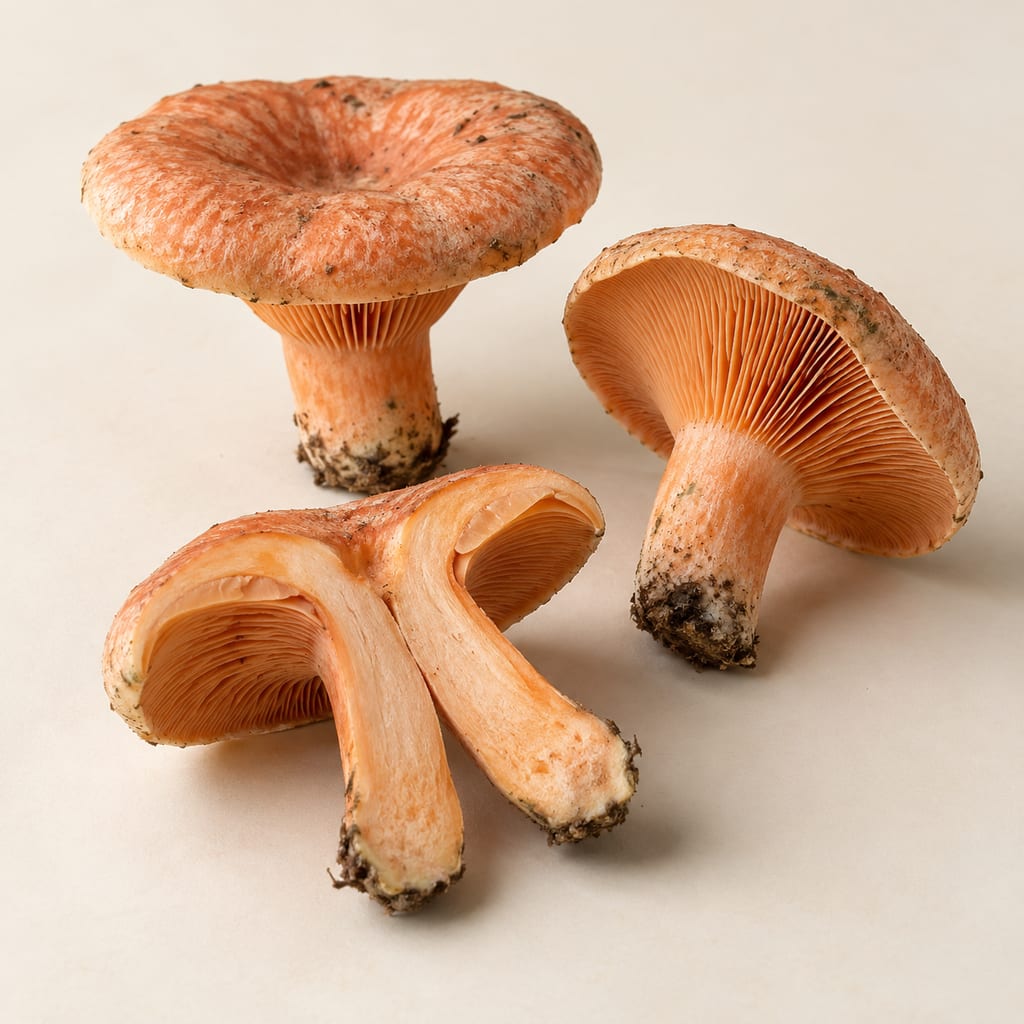
Akahatsu, Lactarius akahatsu, is a wild milkcap of East Asian pine and mixed forests that is sold in Yunnan markets, with its edibility and identity still needing species-level review.

The almond mushroom, Agaricus subrufescens, was cultivated in eastern North America in the 1800s, lost its market, and returned as a cultivated mushroom from Brazil, where it is grown under several names.
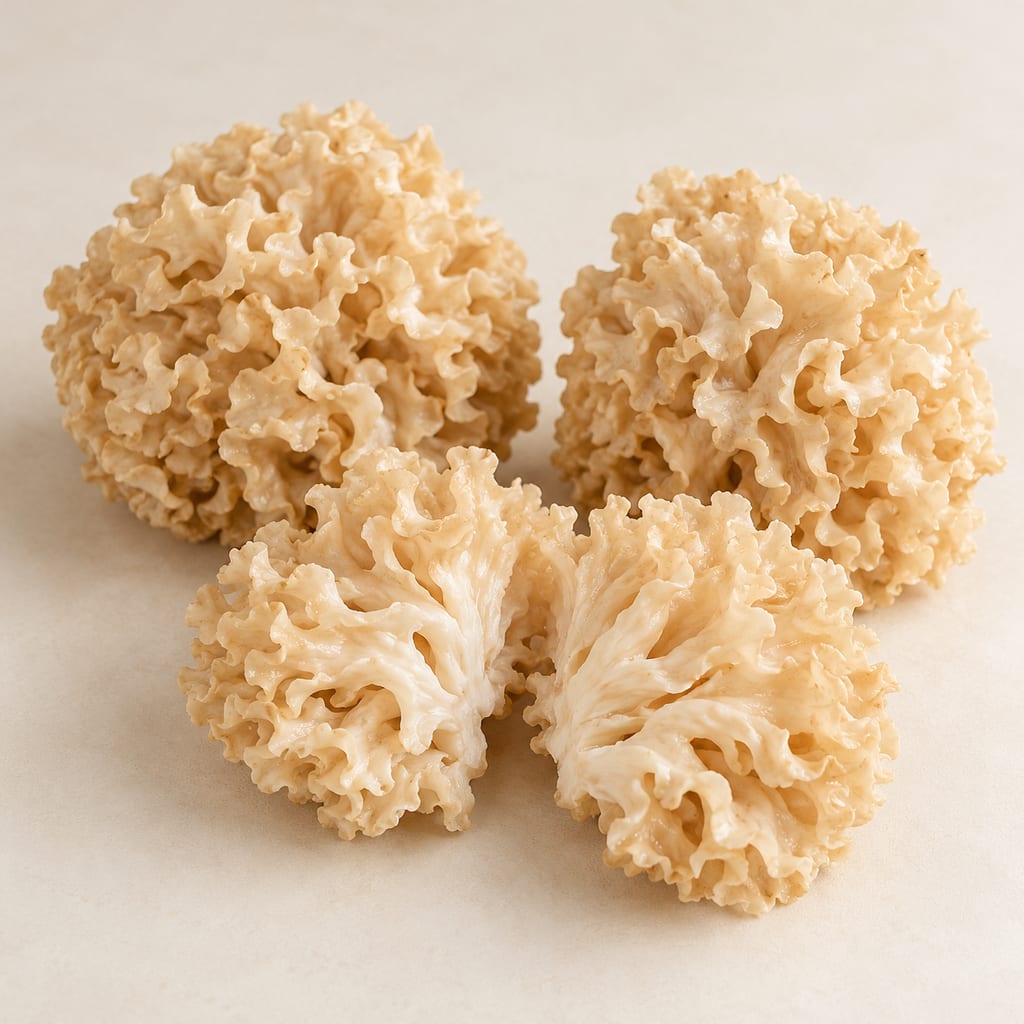
The Asian cauliflower mushroom, Sparassis latifolia, is a cultivated fungus with a frilled, fronded form that is eaten in China, Japan and Korea. Many Asian records under the name Sparassis crispa refer to this species.
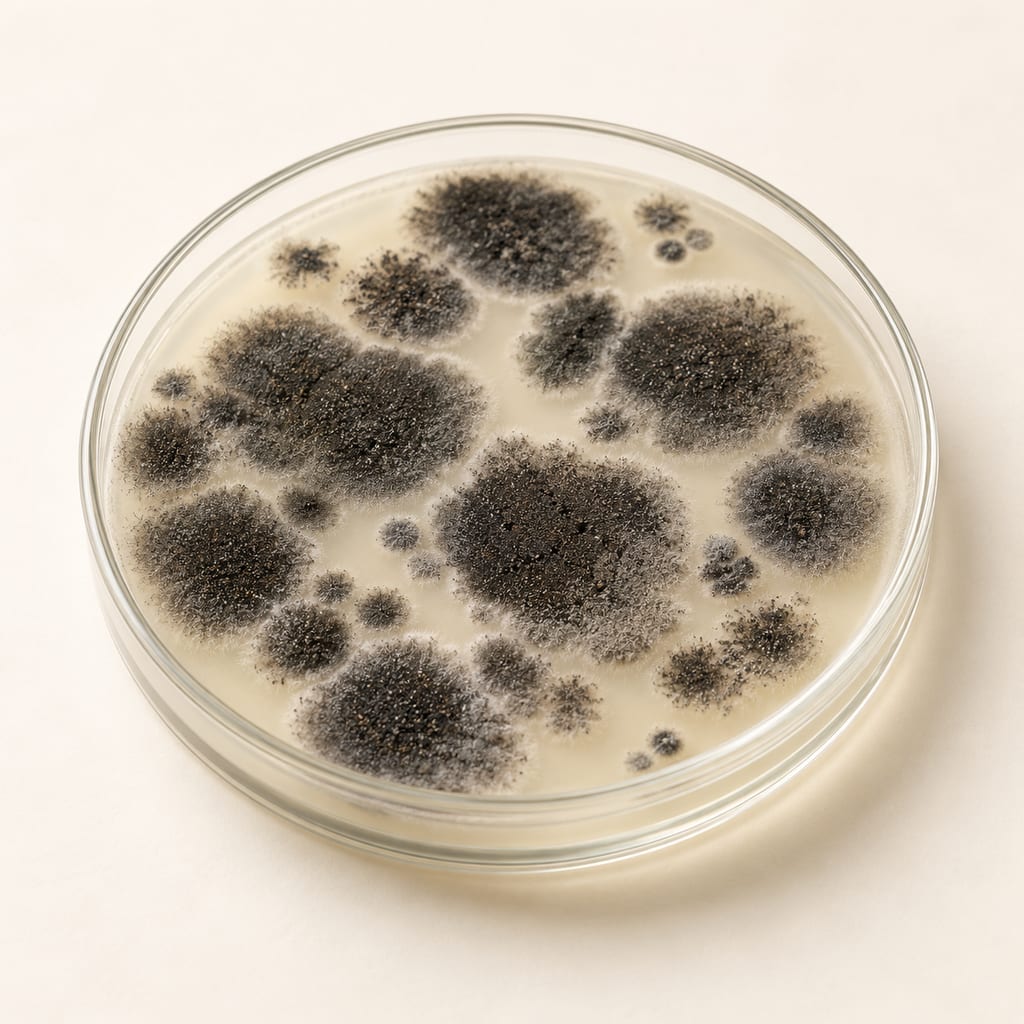
Aspergillus luchuensis is the black koji mould used in Japanese shochu and awamori, valued for the citric acid it makes alongside the starch-converting enzymes of koji.
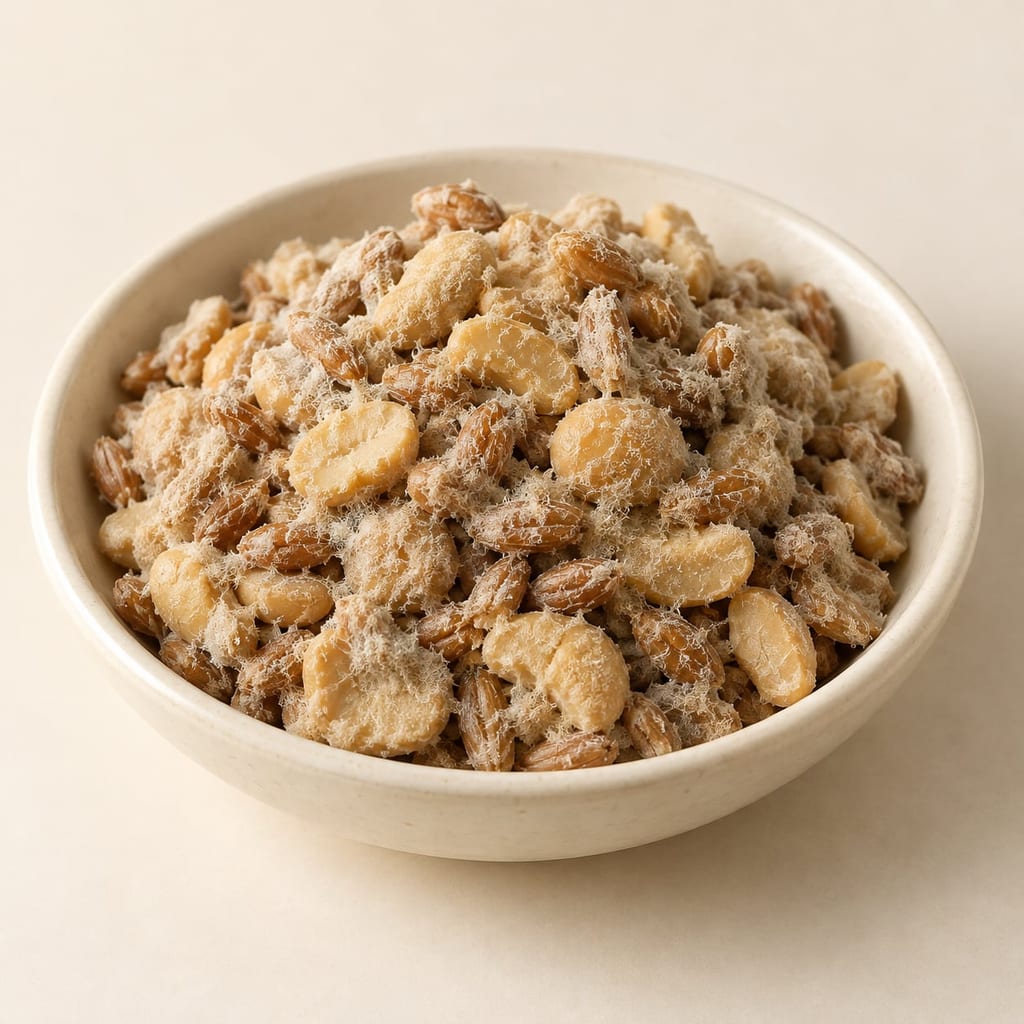
Aspergillus sojae is a koji mould of the Aspergillus flavus group, closely related to A. oryzae, used as a starter in soybean fermentations such as Korean meju, doenjang and ganjang.
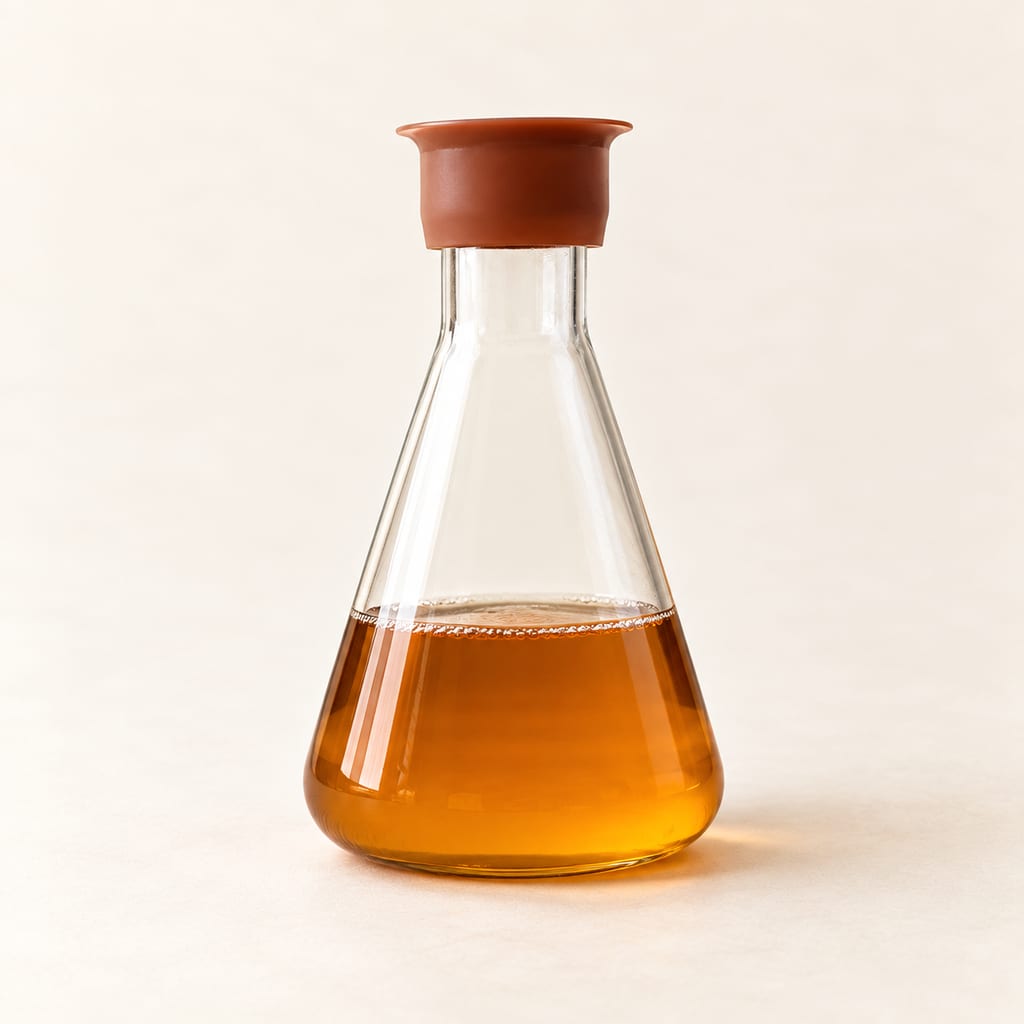
Awamori yeast ferments sugar released from rice koji in the Okinawan spirit’s mash. Sakimoto names the ingredient but gives no strain, form, supplier or dose.
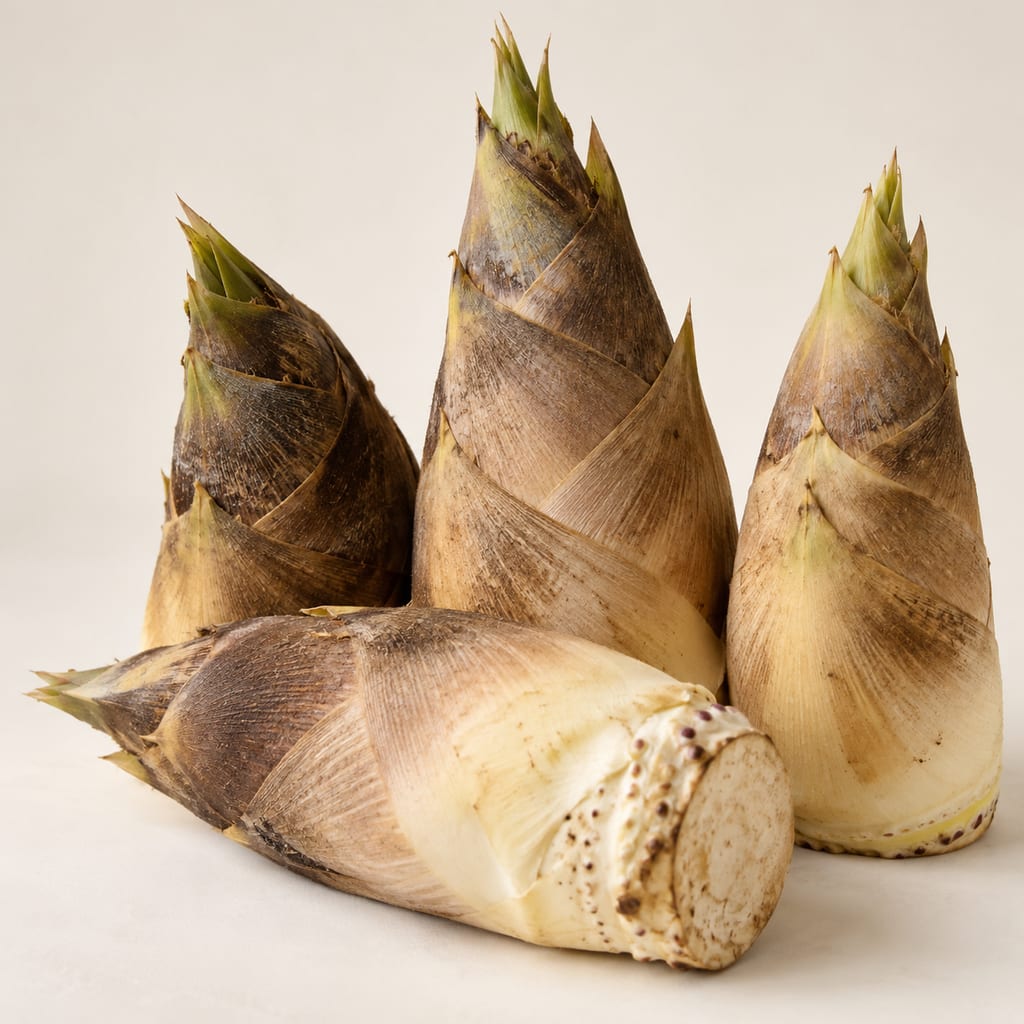
Bamboo shoots are the young culms of many bamboo species, eaten after boiling or leaching in Asia, and fermented into sour and preserved foods in the Himalayas, northeast India and Burma.
No community contributions have been published for this entry yet.
Sign in to contribute. Published comments and photos are free to read.
Royal Botanic Gardens, Kew, Plants of the World OnlineIngredient research
Petasites japonicus (Siebold & Zucc.) Maxim.Cited in: Name and plant parts; Identification and evidence gaps; Research gaps
Osawa et al., Journal of Ethnobiology and Ethnomedicine 20 (2024), article 89Ingredient research
Ethnobotanical review of traditional use of wild food plants in JapanCited in: Japanese food history and season; Identification and evidence gaps; Research gaps
Akita Prefecture; hosted by Japan Ministry of Agriculture, Forestry and FisheriesIngredient research
野菜栽培技術指針 (Vegetable cultivation technical guide)Cited in: Japanese food history and season; Growing in regional settings; Identification and evidence gaps; Research gaps
Ministry of Agriculture, Forestry and Fisheries, JapanIngredient research
食品中のピロリジジンアルカロイド類に関する情報Cited in: Plant parts and pyrrolizidine alkaloids; Household preparation and storage limits; Research gaps
Ministry of Agriculture, Forestry and Fisheries, JapanIngredient research
ふき・ふきのとうはあく抜きして食べましょうCited in: Household preparation and storage limits; Research gaps
Ministry of Agriculture, Forestry and Fisheries, JapanIngredient research
フキ中のピロリジジンアルカロイド類の含有実態調査結果Cited in: Name and plant parts; Plant parts and pyrrolizidine alkaloids; Household preparation and storage limits; Identification and evidence gaps; Research gaps
Royal Horticultural SocietyIngredient research
Petasites japonicusCited in: Growing in regional settings; Research gaps
Ministry of Agriculture, Forestry and Fisheries, JapanIngredient research
野菜・山菜とそれに似た有毒植物Cited in: Household preparation and storage limits; Identification and evidence gaps; Research gaps