
Agar / kanten
A gelling polysaccharide extracted from red seaweeds, sold as kanten strips or powder; it sets firm at a low concentration and stays solid until about 85 °C.
 FermenteaWhere food goes to change
Mushrooms
Iwatake, Umbilicaria esculenta, is a rock-dwelling lichen from East Asia, eaten in Japan, Korea and China after extensive preparation.
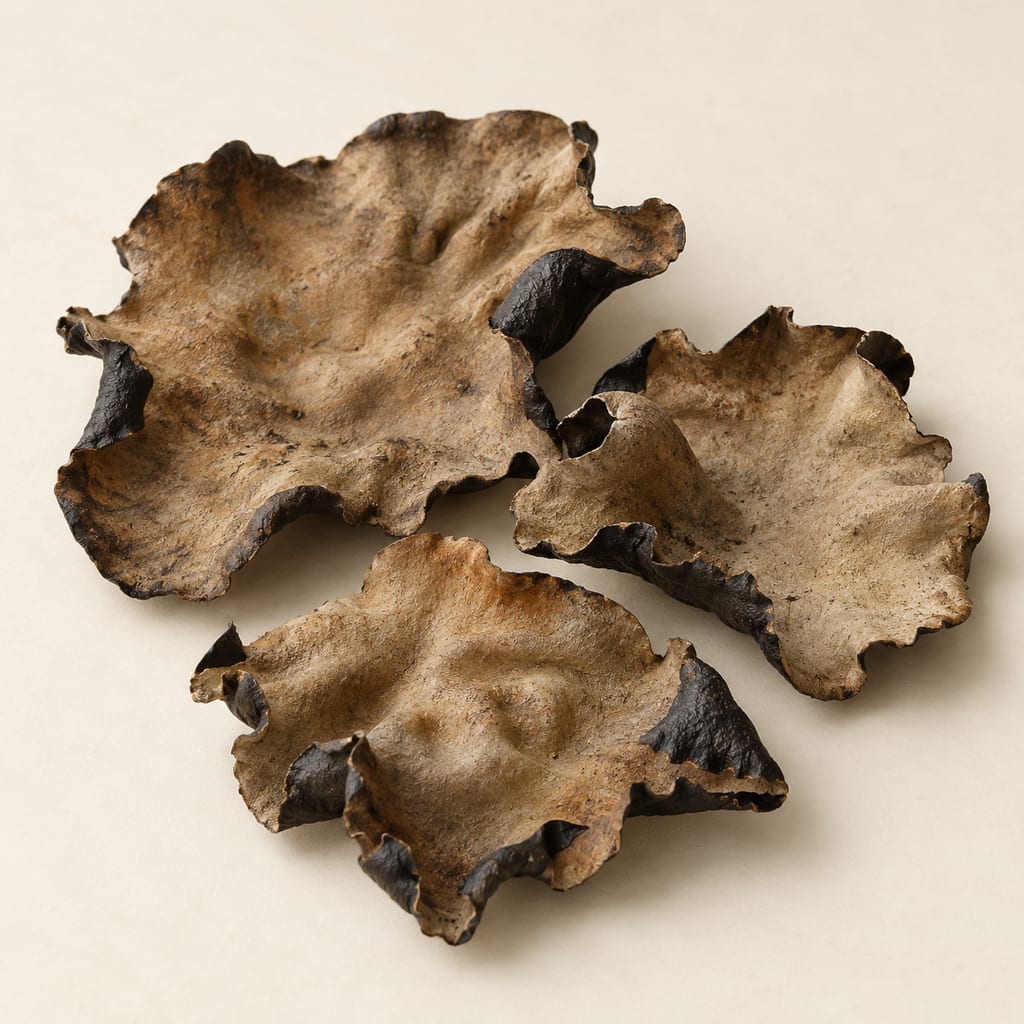
Iwatake is the Japanese name for Umbilicaria esculenta, a lichen that grows on rock at high altitude in East Asia. Its accepted name is Umbilicaria esculenta (Miyoshi) Minks; an older name, Gyrophora esculenta Miyoshi, dates from 1893. In English it is called rock tripe or iwa-take.
The lichen body is attached to the stone by a single central holdfast, and its surface is often veined or wrinkled. Because it grows on exposed rock, the material that comes to the kitchen carries grit and dark residue from the stone, which is why cleaning comes before cooking.
The lichen is treated as a delicacy in China, Korea and Japan, where it is used in soups, dishes and salads. In Japan it is sold under the name iwatake; in Korea it is known as seok-i, and in China as 石耳.
The genus was also used as a food of last resort in North America. Accounts describe Native American and early settler use as famine food, which is a different role from the delicacy trade in East Asia.
One Chinese reference describes reconstituting the lichen in warm water, rubbing it to clean it, and rinsing it in cold water five or six times to remove the black residue and fine sand.
The lichen also contains bitter compounds, among them gyrophoric acid. Accounts of rock tripe describe extensive processing, typically soaking and repeated boiling, to reduce these compounds, and state that poorly processed lichen causes gastrointestinal distress. No account reviewed gives a tested time, temperature or water ratio for household use, so none is given here.
The available accounts do not support a verdict that the lichen is safe to eat in any state, or that a specimen gathered in the wild is safe without preparation. Poorly prepared rock tripe has caused gastrointestinal illness. Identification of a specimen, and the choice between look-alikes, is a matter for a qualified lichenologist or mycologist; anyone gathering the lichen should follow a tested local preparation rather than a general guide.
Laboratory studies have isolated polysaccharides from the lichen and tested them on cells. Those studies do not test food use, dose or safety in people, and they are not evidence that eating the lichen is good for health.
The accounts reviewed do not say how much gyrophoric acid boiling removes, how long a traditional soak lasts in a given kitchen, or how the Korean and Japanese methods differ from the Chinese method above. These are gaps in the record, not settled facts.
Sold as a delicacy under the name iwatake; the source gives no date.
Named as a delicacy in soups, dishes and salads; the source gives no date.
Named as a delicacy in dishes, soups and salads; the source gives no date.
A gelling polysaccharide extracted from red seaweeds, sold as kanten strips or powder; it sets firm at a low concentration and stays solid until about 85 °C.
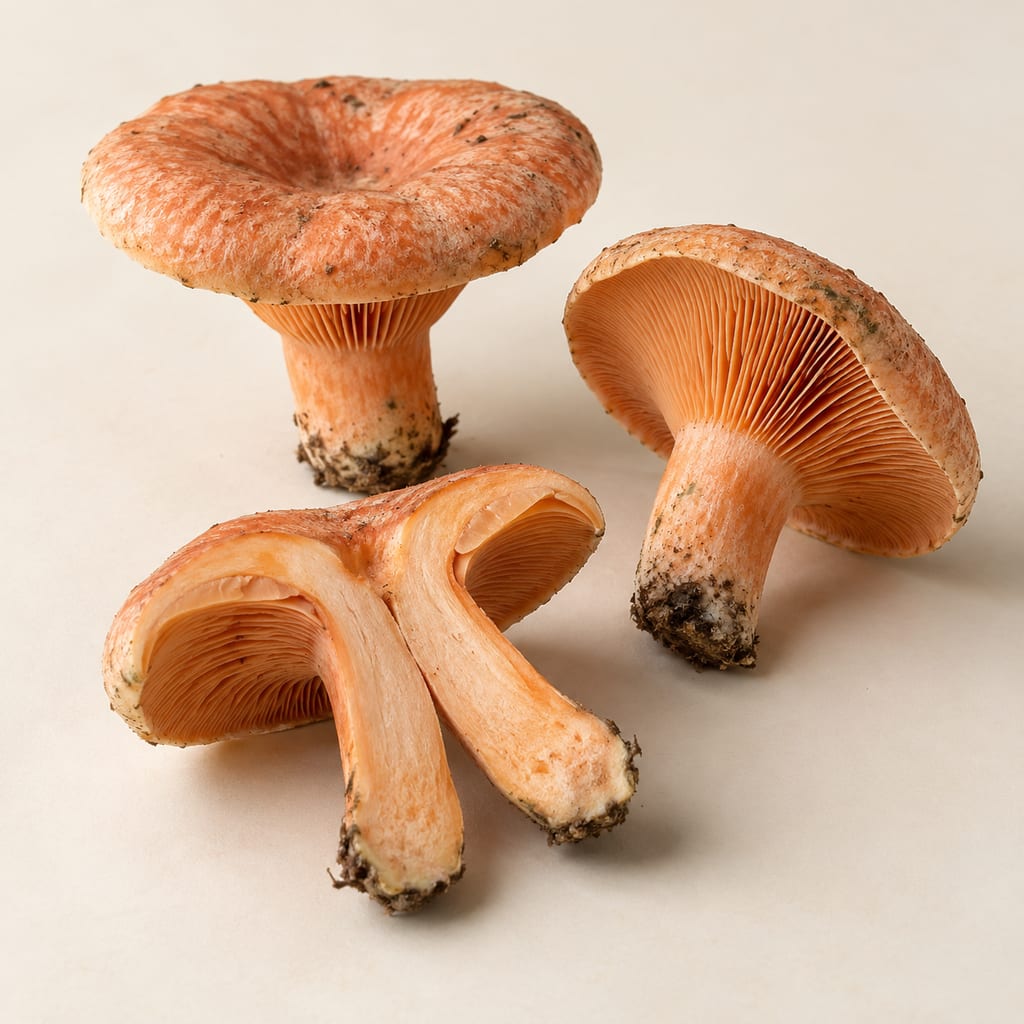
Akahatsu, Lactarius akahatsu, is a wild milkcap of East Asian pine and mixed forests that is sold in Yunnan markets, with its edibility and identity still needing species-level review.

The almond mushroom, Agaricus subrufescens, was cultivated in eastern North America in the 1800s, lost its market, and returned as a cultivated mushroom from Brazil, where it is grown under several names.
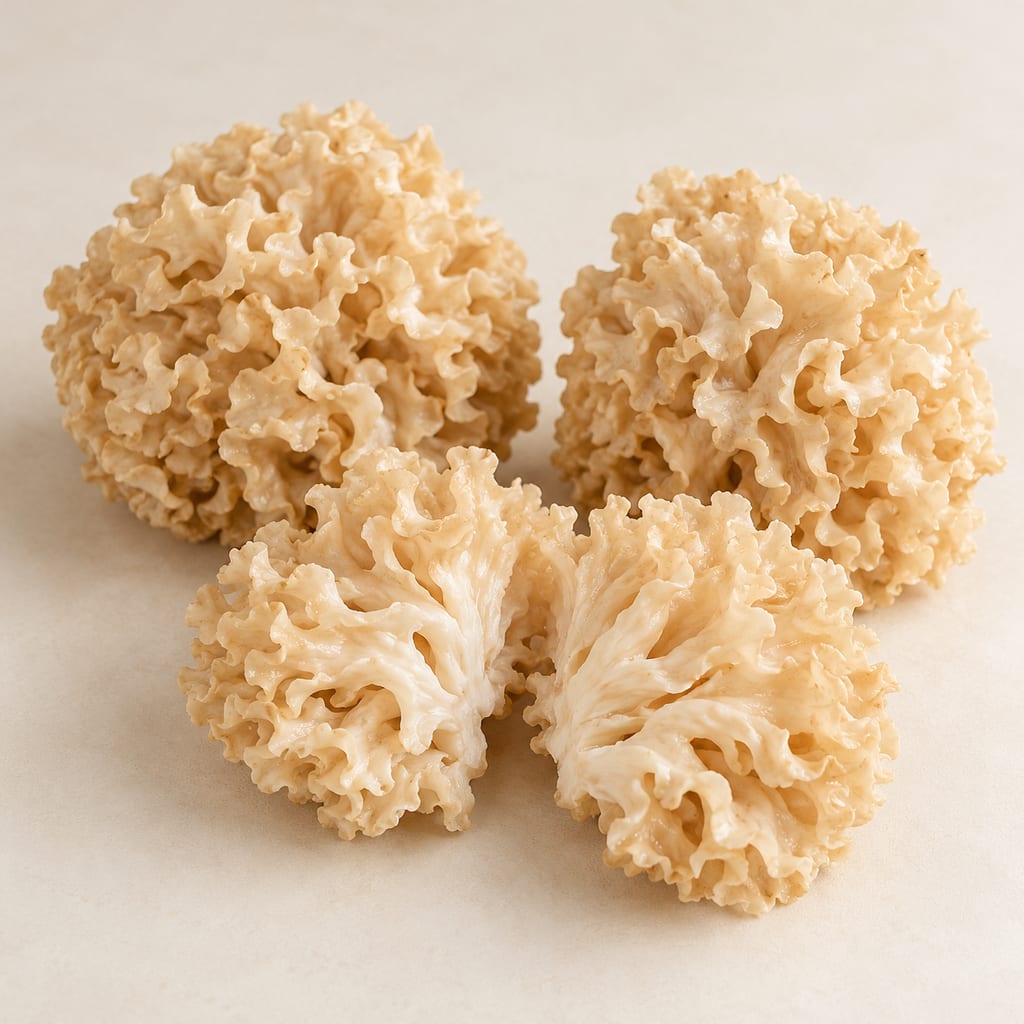
The Asian cauliflower mushroom, Sparassis latifolia, is a cultivated fungus with a frilled, fronded form that is eaten in China, Japan and Korea. Many Asian records under the name Sparassis crispa refer to this species.
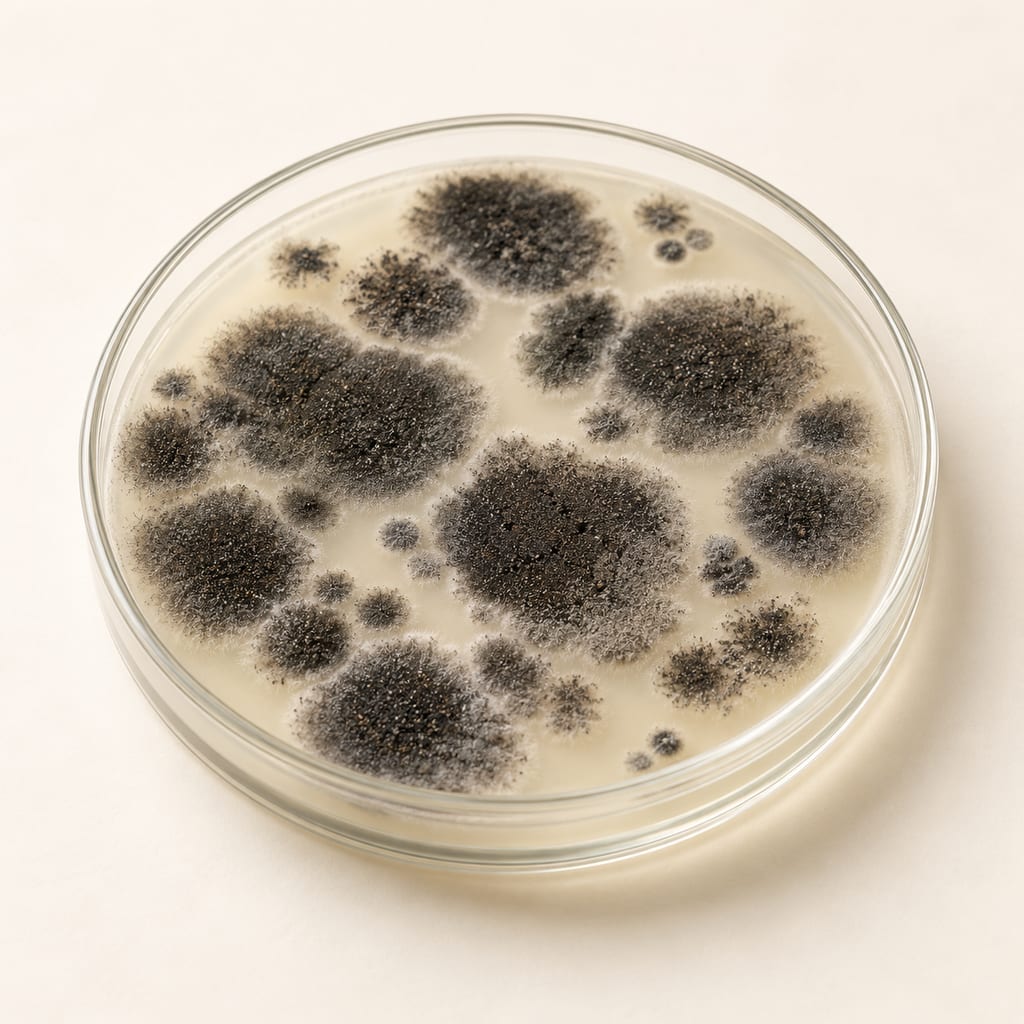
Aspergillus luchuensis is the black koji mould used in Japanese shochu and awamori, valued for the citric acid it makes alongside the starch-converting enzymes of koji.
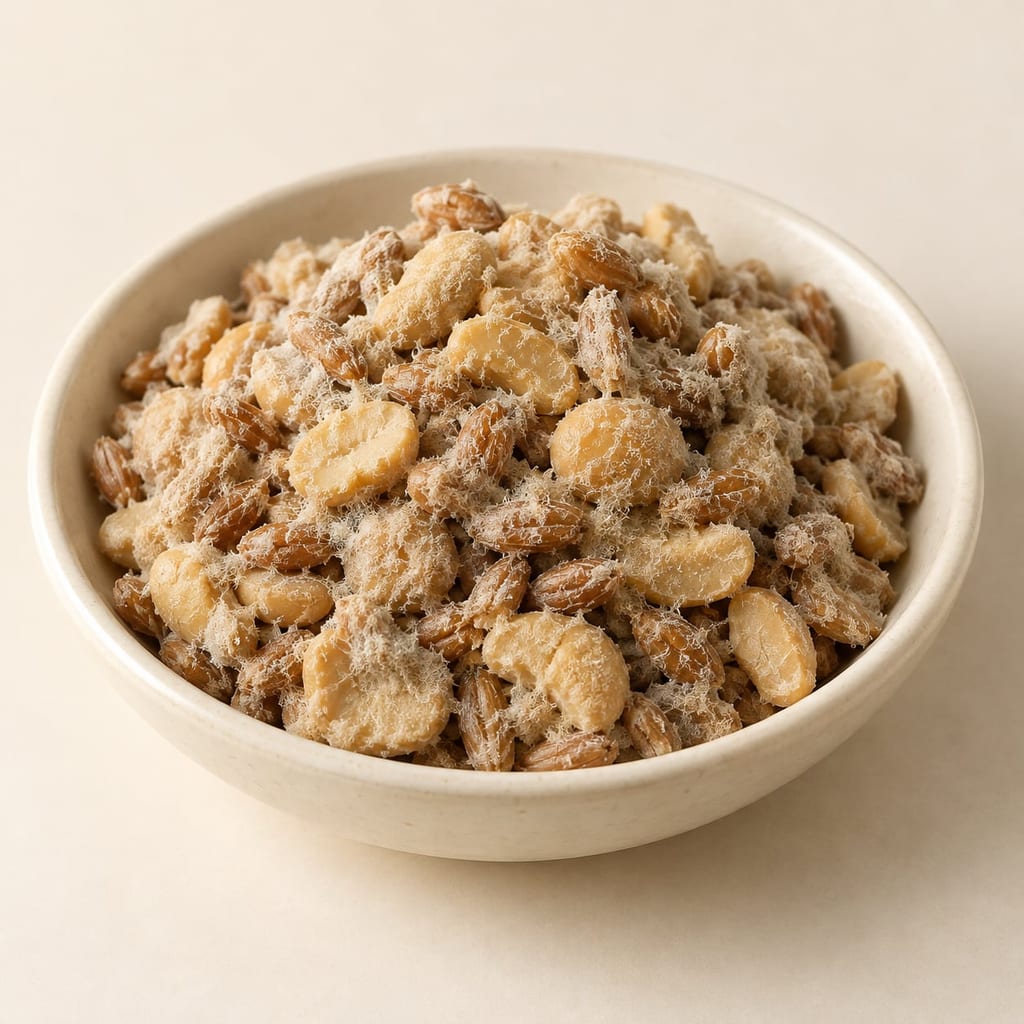
Aspergillus sojae is a koji mould of the Aspergillus flavus group, closely related to A. oryzae, used as a starter in soybean fermentations such as Korean meju, doenjang and ganjang.
Awamori yeast ferments sugar released from rice koji in the Okinawan spirit’s mash. Sakimoto names the ingredient but gives no strain, form, supplier or dose.
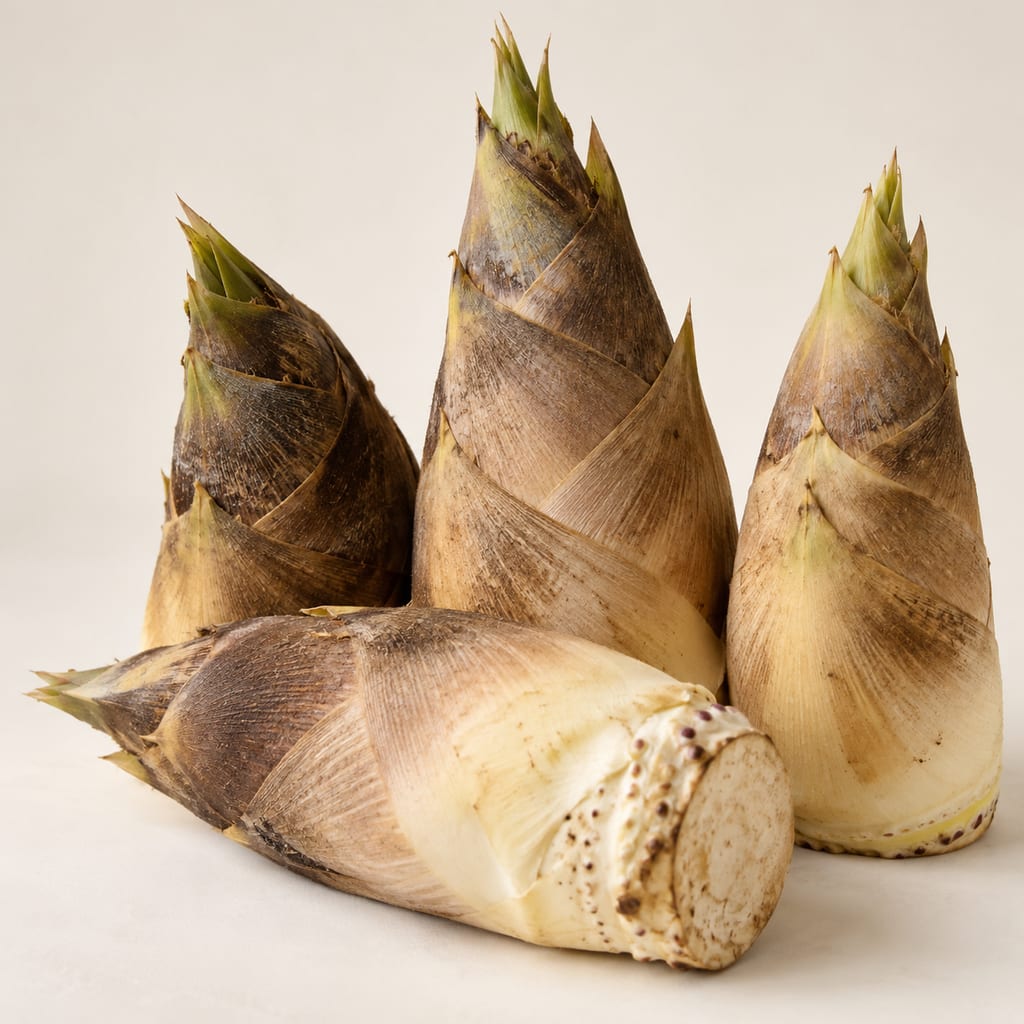
Bamboo shoots are the young culms of many bamboo species, eaten after boiling or leaching in Asia, and fermented into sour and preserved foods in the Himalayas, northeast India and Burma.
No community contributions have been published for this entry yet.
Sign in to contribute. Published comments and photos are free to read.
WikipediaIdentity · History · Food use
Umbilicaria esculentaAccepted name Umbilicaria esculenta (Miyoshi) Minks, with synonym Gyrophora esculenta Miyoshi (1893)
Names rock tripe and iwa-take; Japanese iwatake, Korean seok-i, Chinese 石耳
Rock-dwelling lichen at high altitude in East Asia, attached by a central holdfast, surface often veined or wrinkled
Delicacy in China, Korea and Japan; soups, dishes and salads
Historical use as famine food by Native Americans and early settlers
Cited in: What it is; Food use
WikipediaSafety · Preparation
Rock tripeRock tripe needs extensive processing, typically soaking and repeated boiling, to reduce bitter compounds such as gyrophoric acid
Poorly processed lichen causes gastrointestinal distress
Cited in: Preparation and why it matters; Safety and limits; Open questions
Baidu BaikePreparation
Umbilicaria esculentaReconstitute the lichen in warm water, rub to clean, rinse in cold water five or six times to remove black residue and fine sand
Cited in: What it is; Preparation and why it matters
Biological and Pharmaceutical BulletinResearch
The Polysaccharide Extracted from Umbilicaria Esculenta Inhibits Proliferation of Melanoma Cells through ROS-Activated Mitochondrial Apoptosis PathwayLaboratory study of an extracted polysaccharide on melanoma cells; it does not test food use or safety in people
Cited in: Safety and limits