Tea
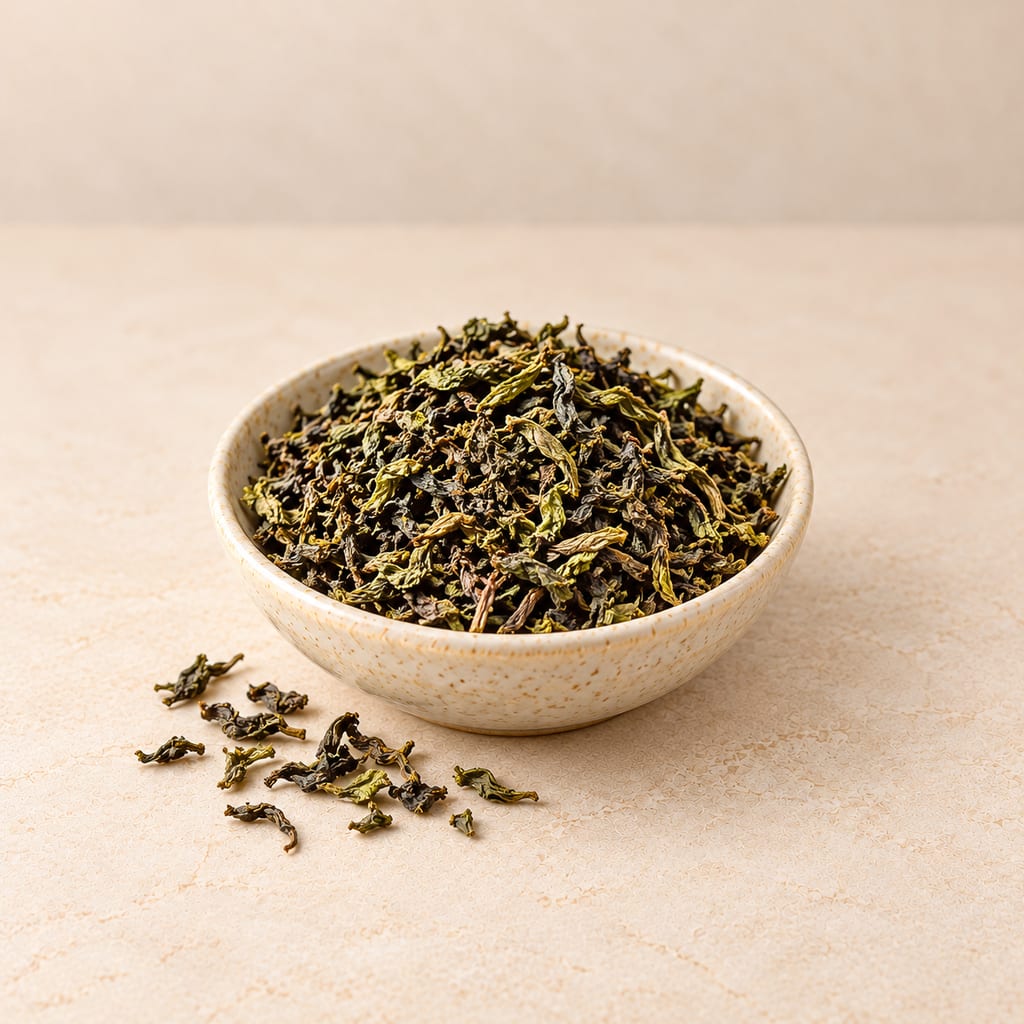
Tea is the processed leaf of Camellia sinensis, an evergreen shrub from the borderlands of south-western China. Steeped and sweetened, it is the base of kombucha and jun.
 FermenteaWhere food goes to change
Cultures
Kombucha culture is the mixed starter, a retained liquid with a cellulose pellicle, that ferments sweetened tea into kombucha. Its organisms vary between samples, and a visible mat does not identify them.
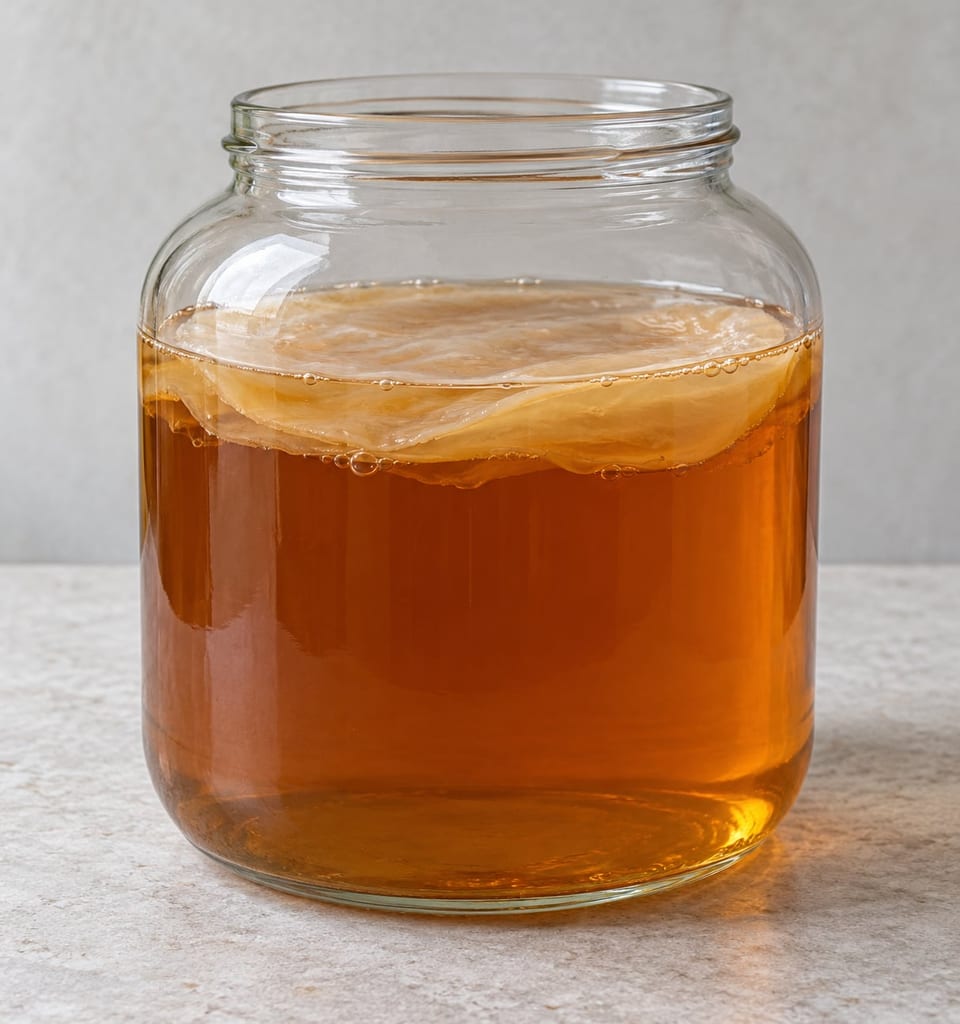
Kombucha is made by fermenting sweetened tea with a mixed culture. The sources treat that culture as a community of yeasts and bacteria rather than a single organism, and they use the word SCOBY for two things: the culture as a whole and, less precisely, the cellulose pellicle that grows on the surface of the liquid.
A brewer keeps the culture as two related parts. One is the liquid from a previous batch, which carries living organisms into the next tea. The other is the pellicle, the gel-like mat at the air-liquid boundary. BCCDC notes that a pellicle can regrow when only liquid is transferred. The two parts belong to one fermentation system, but neither is a complete test of which organisms are present. The mat alone does not establish the microbial identity of a starter.
Colloquial names such as tea fungus and mushroom are common. The sources do not treat the pellicle as a fungus or a mushroom because of those names. A commercial starter label does not establish a species or lineage, and neither does a visible mat.
A widely repeated account places kombucha in northeast China or Manchuria around 220 BCE. That figure appears in BCCDC background material, which is a food-safety guide rather than a historical study. The sources examined do not include a contemporary primary record from that date, so the claim stays a claim.
Elizabeth Yarbrough's 2017 ethnographic work describes the precise origin as contested. Her account recounts several later origin stories, each drawn from secondary sources. The historical record therefore supports describing the origin as unsettled, not assigning a verified birthplace.
Yarbrough also documents a contemporary home-brewing community in San Marcos, Texas, through interviews, focus groups and participant observation. That is evidence of a local practice in the 2010s. It does not show that kombucha began there or that the practice is exclusive to that place.
Yeasts in the culture consume the sugar in the tea and produce ethanol and carbon dioxide. Acetic-acid bacteria use oxygen during the primary fermentation and convert the products of the yeast activity toward organic acids. The acids give kombucha its sour, acidic character, which BCCDC describes as an acidic beverage.
Some acetic-acid bacteria also produce bacterial cellulose. That cellulose forms the pellicle at the boundary between liquid and air, so the mat is formed from bacterial cellulose. The details differ among cultures and conditions, and the sources do not describe one standard sequence of events.
Lactic-acid bacteria are among the organisms BCCDC lists as possibly present. Their presence and role vary from sample to sample. A culture therefore cannot be described by a fixed list of organisms that applies to every starter.
Landis and colleagues analysed 23 kombucha samples from across the United States. They then tested selected pairs of bacteria and yeast in synthetic culture experiments. Their full article reports frequent detection of Komagataeibacter rhaeticus and Brettanomyces bruxellensis in the sample set, and strain- and pairing-specific differences in how biofilm formed.
Those results describe the samples and pairings that were studied. They do not define a universal species list for kombucha or a fingerprint that identifies a household culture. A separate microscopy study by Tran and colleagues examined how the kombucha biofilm forms and how it is structured, using two-photon fluorescence microscopy.
Household practice in the sources centres on a retained starter. The CSU Extension recipe for a first ferment uses prior-batch starter liquid together with one pellicle or culture, added to cooled sweetened tea and covered while the primary ferment proceeds. The source treats the starter as the carrier of the culture from one batch to the next.
A universal activation point for a home culture, a storage duration for a stock culture, a recovery method for a weak starter and a response to failure are not established.
A visually normal mat does not prove that a starter is safe, and neither does a pleasant taste. The taste check in the CSU recipe is a sensory preference for the batch, not a safety endpoint. Smell, taste, bubbles and appearance are not sufficient evidence of safety.
The primary fermentation is aerobic in the sources: the tea is held in a covered vessel, and the acetic-acid bacteria use oxygen during this stage. The CSU recipe names a fine-weave cover for this purpose.
A later stage changes the process. Flavouring and sealing the beverage in bottles allows gas and alcohol to keep forming, and BCCDC lists pressure in sealed packages among the concerns. Its numerical controls and monitoring limits were written for commercial production and inspection in a particular jurisdiction. They are not household limits and are not reproduced here as instructions.
Jun is a related drink made with green tea and honey rather than the sweetened tea of a typical kombucha. BCCDC treats jun separately because its usual tea and sweetener differ. A 2025 study from Vietnam calls jun a kombucha variant, but it does not compare the jun culture with kombucha, so whether the two share a culture is not established.
Ginger bug and ginger beer plant are starters for ginger drinks and are separate from this culture. A drink named kombucha does not say which starter it used.
BCCDC lists excess alcohol, excessive acidity, microbial contamination, surface mould, acid interaction with unsuitable materials and pressure in sealed packages among the concerns in kombucha production. Its recall and case summaries apply to the jurisdictions and events it cites.
Those concerns are the guidance's own list and not a home-care procedure. Acidity, smell, taste, bubbles and appearance do not establish safety on their own, and the sources do not give a home alcohol limit, pressure limit or acidity target.
The origin of kombucha is unsettled, and no primary chronology has been established from the sources inspected. The organisms in a given starter are not identified by its appearance or its label. Activation, storage, recovery and failure limits for home cultures are not established. The page's own image is an AI-generated illustration of a generic pellicle floating on amber starter tea; it is not a photograph of a particular culture, does not identify the microorganisms, and is not a safety assessment.
The northeast China or Manchuria origin is a repeated claim, not an established origin; no contemporary primary record for it was inspected, so the row records a claim, not a birthplace.
Landis and colleagues analysed 23 kombucha samples collected across the United States; this records where the studied samples came from.
A home-brewing community documented through ethnographic fieldwork; it shows a local practice in that period, not the origin of the culture.
Tea is the processed leaf of Camellia sinensis, an evergreen shrub from the borderlands of south-western China. Steeped and sweetened, it is the base of kombucha and jun.
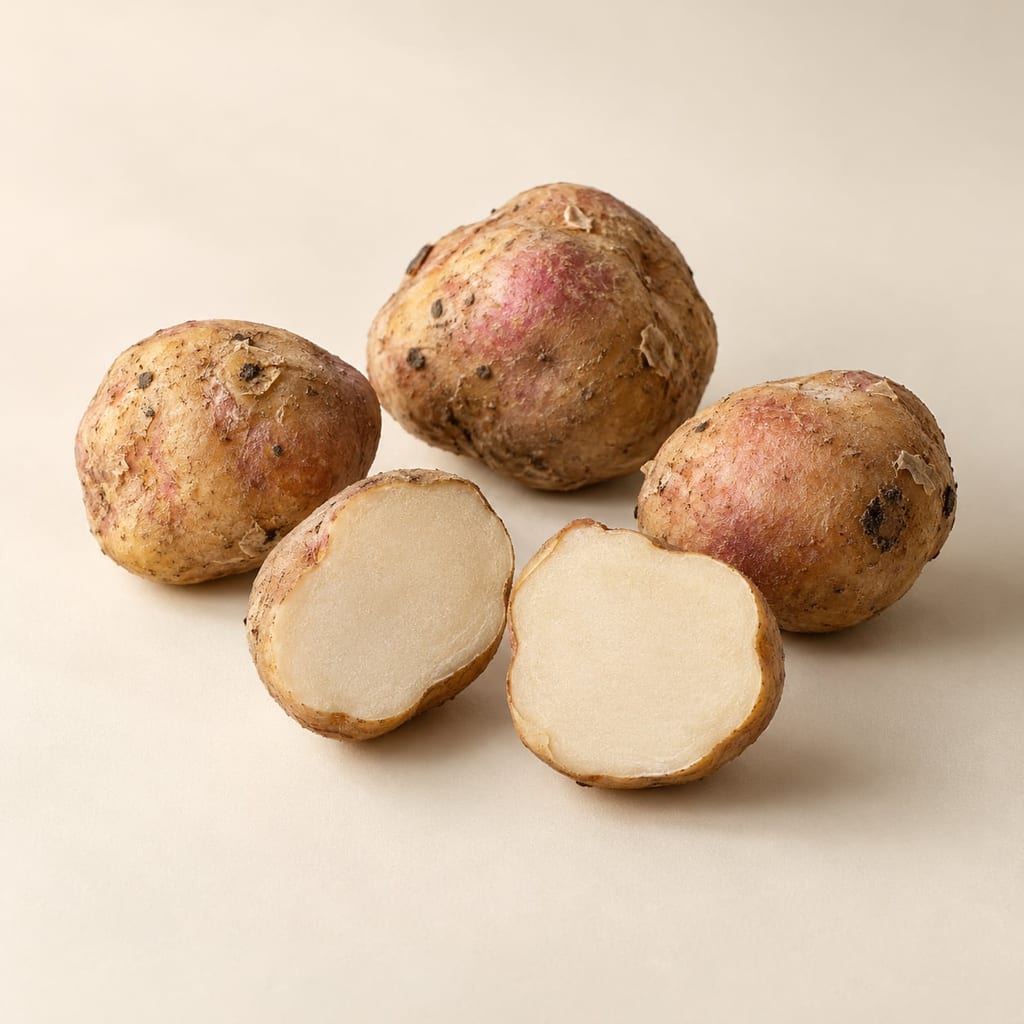
Blushing false truffle, Rhizopogon roseolus, is a pine-associated false truffle. It is recorded as a food in Europe and in Japan, where it is called shoro. Its food use depends on maturity, and its name needs checking.
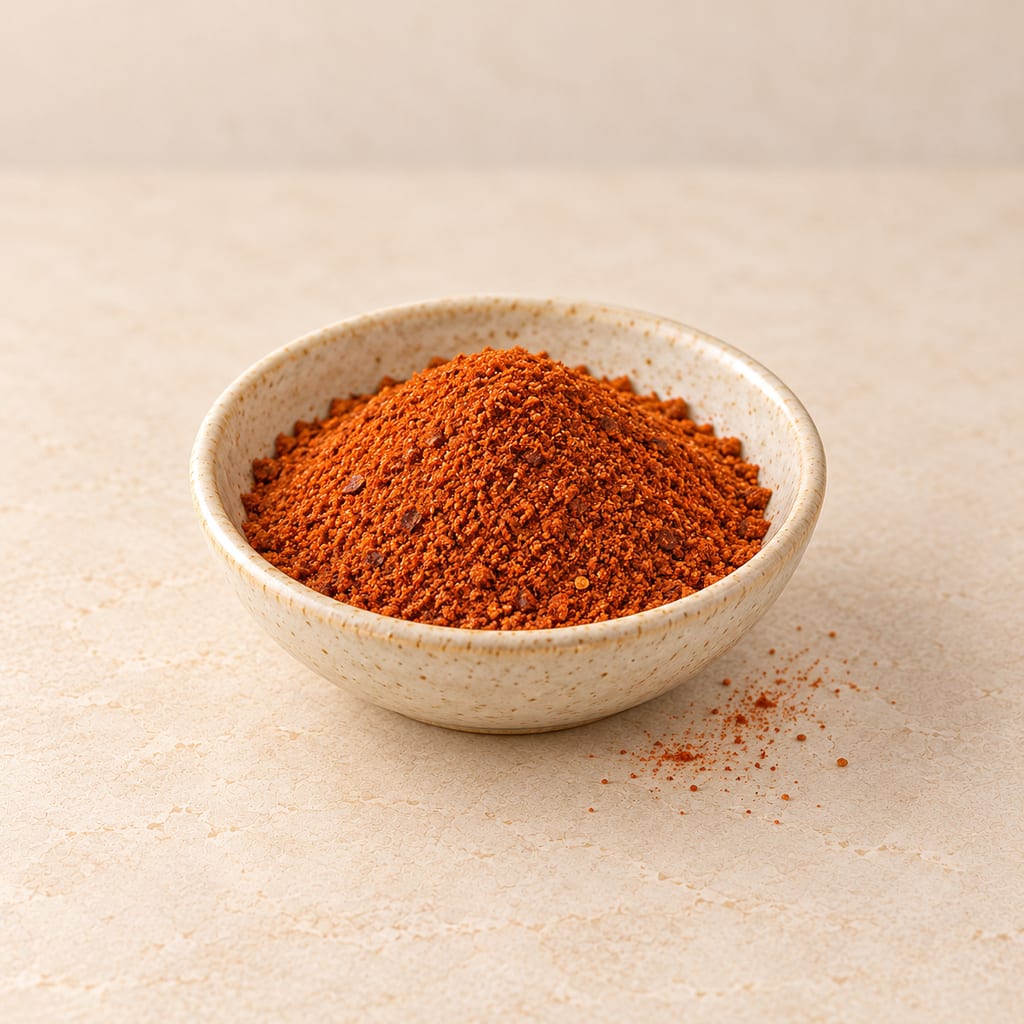
Chilli powder is dried chilli fruit ground fine, sold either as plain ground chillies or, in the United States, as a seasoning blend with salt, garlic and cumin.
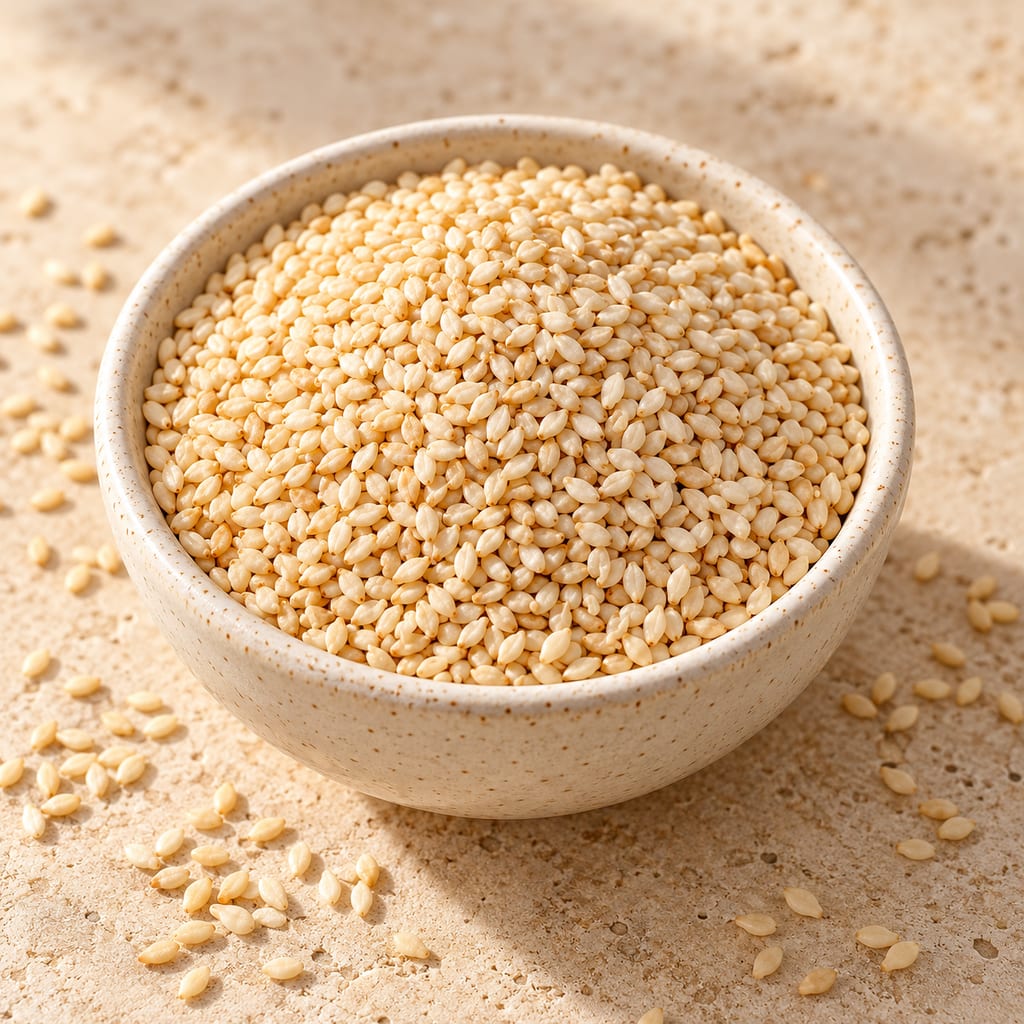
Sesame seed, from Sesamum indicum, is about half oil and is eaten whole, ground into paste or pressed into oil. It was a crop of South Asia by the Harappan period and reached Mesopotamia before 2000 BC.
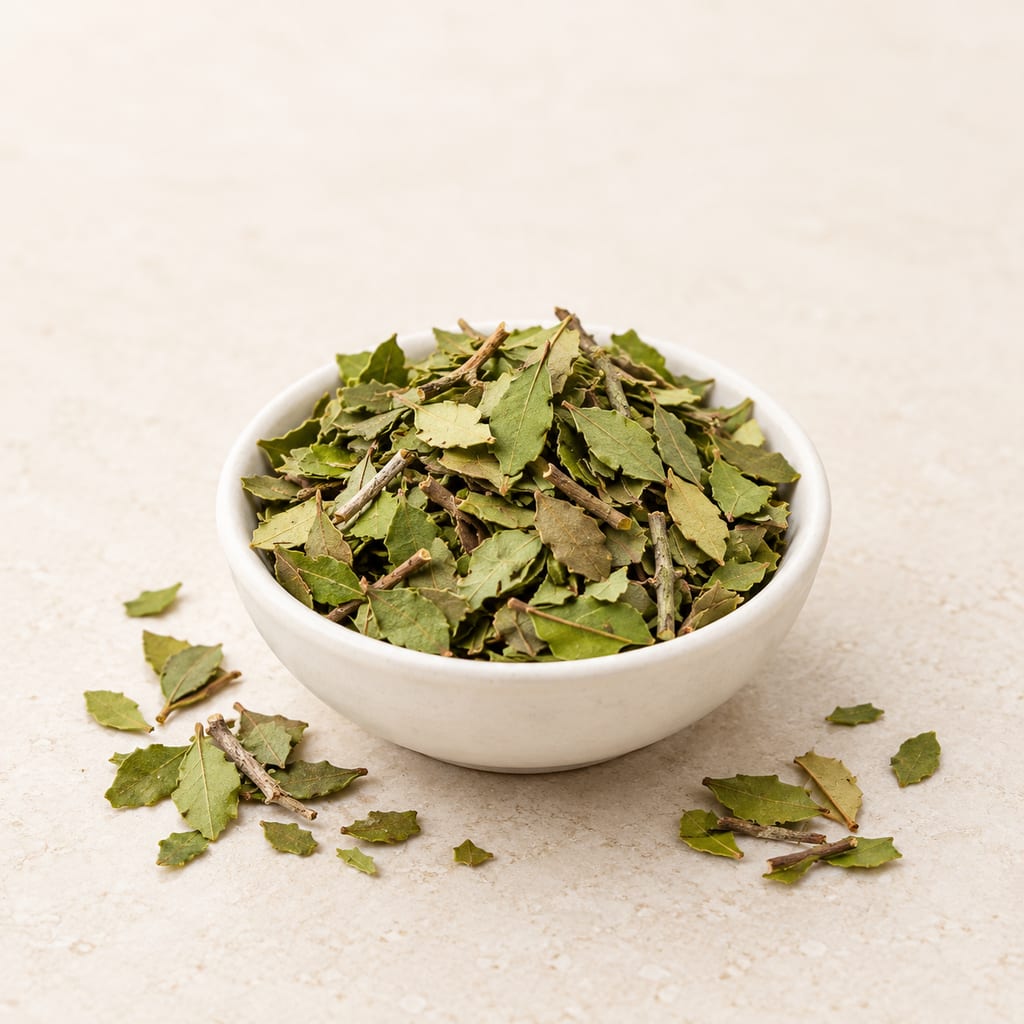
Yaupon is the caffeinated leaf of the southeastern North American holly Ilex vomitoria, dried and sometimes roasted for infusions. Its identity and cultural history differ from other hollies.
No community contributions have been published for this entry yet.
Sign in to contribute. Published comments and photos are free to read.
BC Centre for Disease ControlMethod · History · Safety
Kombucha and Jun (Section 3.11, Fermented Foods Guideline)The starter is described as prior-batch culture liquid and/or pellicle; a pellicle can regrow when only liquid is transferred.
Yeast activity produces ethanol and carbon dioxide; acetic-acid bacteria use oxygen during primary fermentation and convert fermentation products toward organic acids; some acetic-acid bacteria produce the bacterial cellulose that forms the pellicle.
Lactic-acid bacteria are among the organisms that may be present.
Concerns in kombucha production include excess alcohol, excessive acidity, microbial contamination, surface mould, acid interaction with unsuitable materials and pressure in sealed packages.
The origin claim of northeast China or Manchuria around 220 BCE is repeated in this guidance, which is not a historical study.
Cited in: A starter with two parts; Where the culture came from; What the microbes do in the tea; Keeping and renewing a starter; Primary fermentation and sealed stages; Related starters and drinks; Problems the sources name; Open points
Method · Research
Microbial Diversity and Interaction Specificity in Kombucha Tea Fermentations23 kombucha samples from across the United States were analysed.
Komagataeibacter rhaeticus and Brettanomyces bruxellensis were frequently detected in the sample set.
Selected bacterial-yeast pairings tested in synthetic culture experiments produced strain- and pairing-specific differences in biofilm formation.
Cited in: What the studies found
Frontiers in MicrobiologyResearch
Shedding Light on the Formation and Structure of Kombucha Biofilm Using Two-Photon Fluorescence MicroscopyThe formation and structure of kombucha biofilm were examined with two-photon fluorescence microscopy.
Cited in: A starter with two parts; What the studies found
Colorado State University ExtensionMethod · Safety
Understanding and Making KombuchaThe household first-ferment recipe uses prior-batch starter liquid and one pellicle or culture, covered while the primary ferment proceeds.
The taste check for the batch is a sensory preference, and finished kombucha is recommended to be refrigerated.
An optional flavouring and bottle-conditioning stage can build pressure in closed bottles.
Cited in: Keeping and renewing a starter; Primary fermentation and sealed stages
Thesis, 2017History
Kombucha Culture: An Ethnographic Approach to Understanding the Practice of Home-Brew Kombucha in San Marcos, TexasThe precise origin of kombucha is contested; several later origin stories are recounted from secondary sources.
A home-brewing community in San Marcos, Texas, was documented through interviews, focus groups and participant observation.
Cited in: Where the culture came from