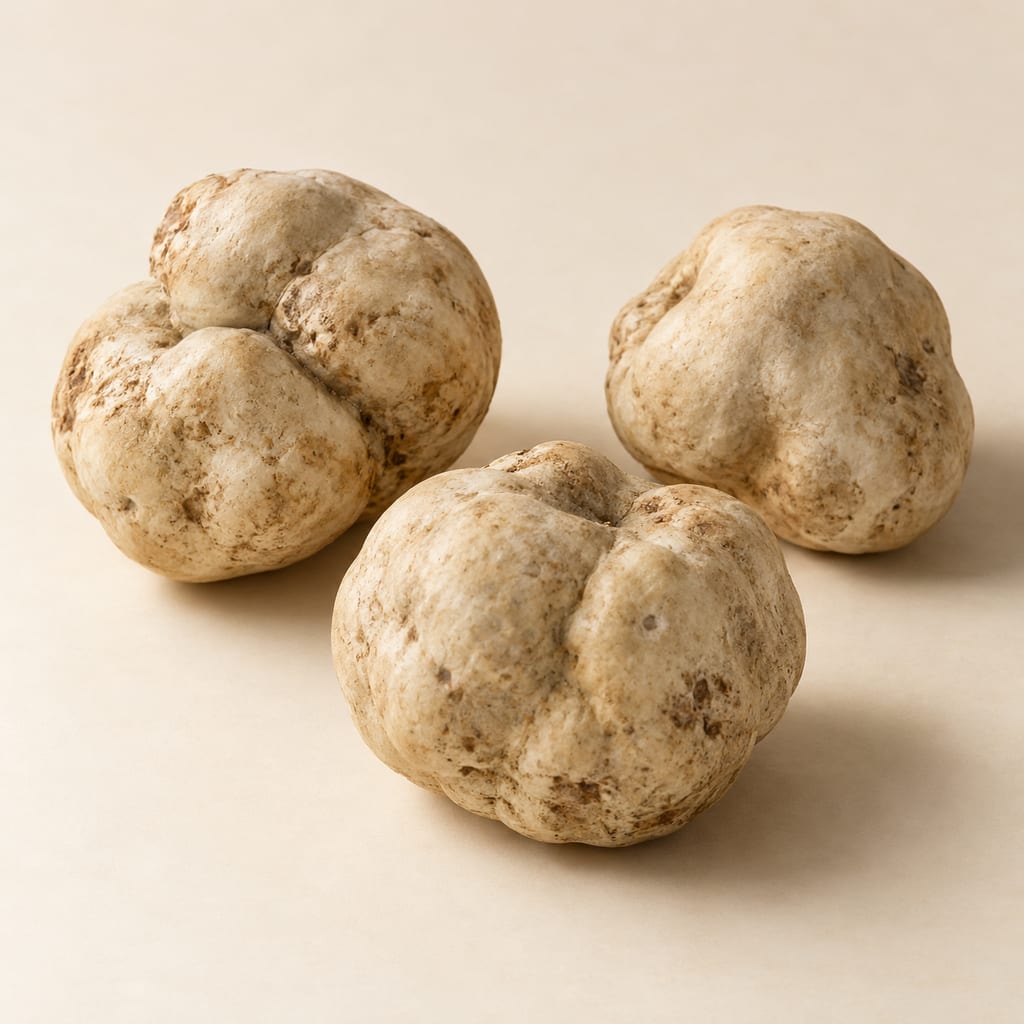
Afrocastellanoa ivoryana
Afrocastellanoa ivoryana is a truffle-like false truffle of African woodlands, ectomycorrhizal with woodland trees and recorded as a regional wild food in West and Central Africa.
 FermenteaWhere food goes to change
Mushrooms
Lactarius tenellus is a small ectomycorrhizal milkcap of the Zambezian miombo woodlands of Africa, recorded in several countries but not established as a food by the sources consulted.
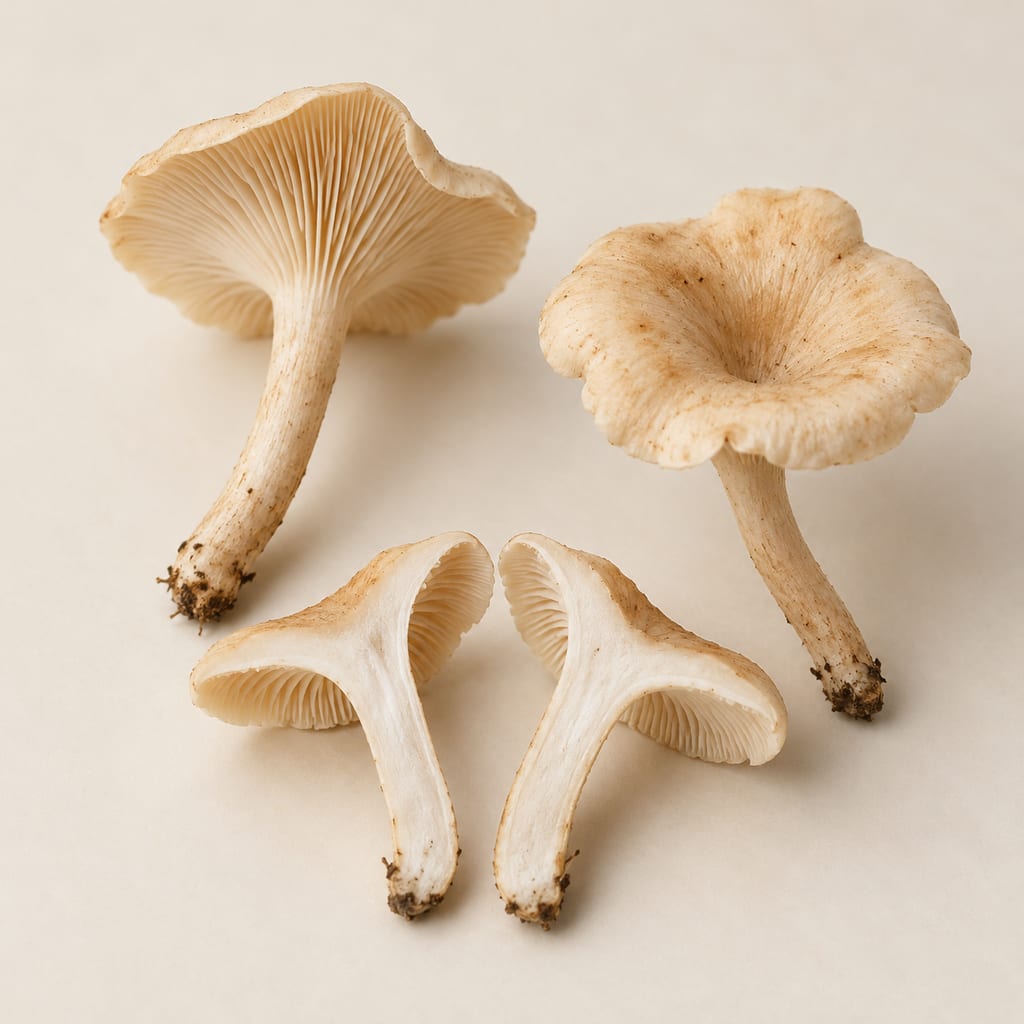
Lactarius tenellus is a milkcap, a member of the genus Lactarius, which produces latex when its flesh is cut. It grows in the woodlands of central, eastern and western Africa and is associated with the trees of the miombo woodland.
The EFTA species page describes its fruit bodies as smaller than those of its close relative Lactarius kabansus, with a strongly crenellated cap margin. The orange tinge at the base of the stipe, which is characteristic of L. kabansus, is absent in L. tenellus. The page notes that the two can grow together, so these features are worth checking before any specimen is collected.
The species has a complicated naming history. Verbeken and Walleyn treated it as a variety of Lactarius kabansus before giving it a separate status in a 2001 synopsis of tropical African Lactarius, where it received a replacement name, Lactarius tenellus Verbeken and Walleyn nom. nov. The older name Lactarius kabansus var. pallidus is still used as a search alias in some catalogues. The Verbeken and Walleyn monograph of 2010 is the main taxonomic reference, and it was not available for this page.
The EFTA entry lists known records from Benin, Burundi, Cameroon, the Democratic Republic of the Congo, Côte d'Ivoire, Kenya, Malawi, Niger, Tanzania, Togo, Zambia and Zimbabwe, and places the species mainly in the Zambezian miombo. These are records of the species in the sources, not a survey of its range, and the entry gives no abundance or seasonal information.
Tanzanian ethnomycology notes that many Lactarius species are regarded as edible in Tanzania, although opinions differ between tribes and some of them contradict each other. That observation covers the genus across the country and cannot be read as a statement about L. tenellus in particular.
The EFTA page does not state that Lactarius tenellus is edible. It describes its close relative Lactarius kabansus as an edible species and treats L. tenellus as a related form that was once part of it. The page gives no preparation or cooking advice for L. tenellus.
The workbook record that brought this species into the catalogue flags it as an institutional edible-species record, with preparation, identification and current safety still needing separate validation. This page does not change that status. Lactarius species are difficult to separate from one another in the field, so catalogue inclusion is not a basis for identifying a specimen or deciding whether to eat it.
The species is ectomycorrhizal, meaning it lives in partnership with the roots of woodland trees. The EFTA entry associates it with Brachystegia, Julbernardia, Isoberlinia and Uapaca in miombo woodland. No consulted source describes its seasonality, its flavour, its texture or any local name in use.
The main open question is whether any community gathers and eats this species with an identified preparation.
The EFTA entry places the species mainly in this woodland type; it records habitat, not food use.
A recorded occurrence of the species in the Togo survey. It is not a food-use record.
Tanzanian ethnomycology records Lactarius generally as edible by many groups. It does not single out L. tenellus.
Afrocastellanoa ivoryana is a truffle-like false truffle of African woodlands, ectomycorrhizal with woodland trees and recorded as a regional wild food in West and Central Africa.
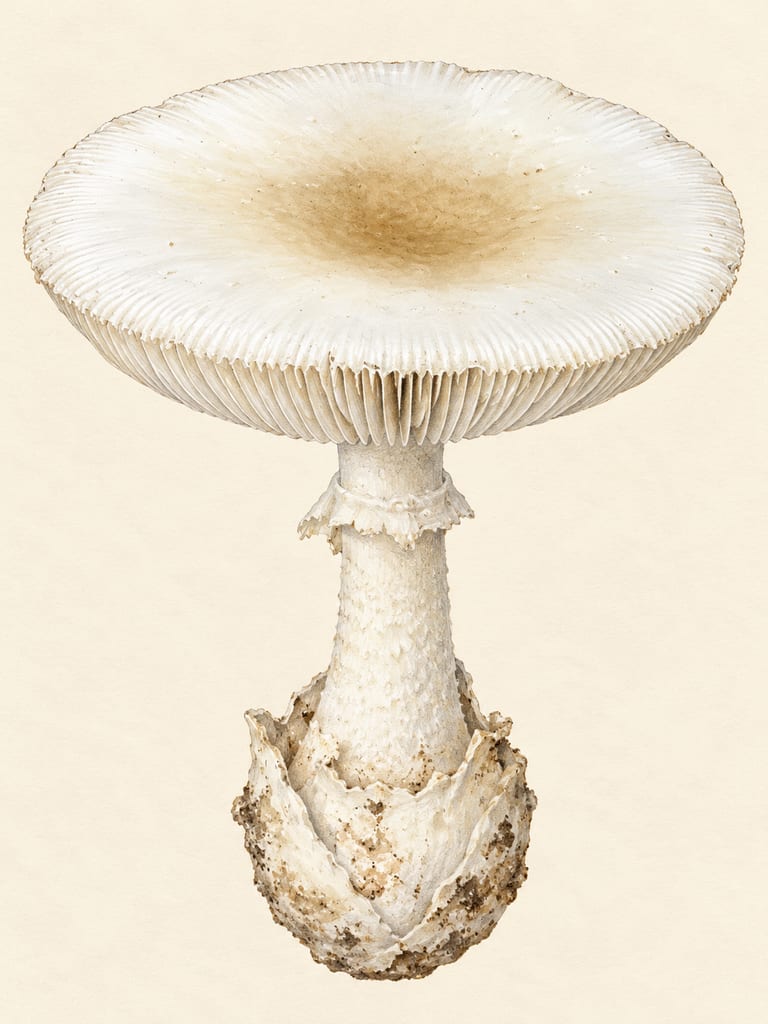
Amanita loosei is a large wild Amanita of tropical African miombo and open woodland, gathered and sold as a valued seasonal food. Regional food-use evidence is not a guide to identifying wild mushrooms.
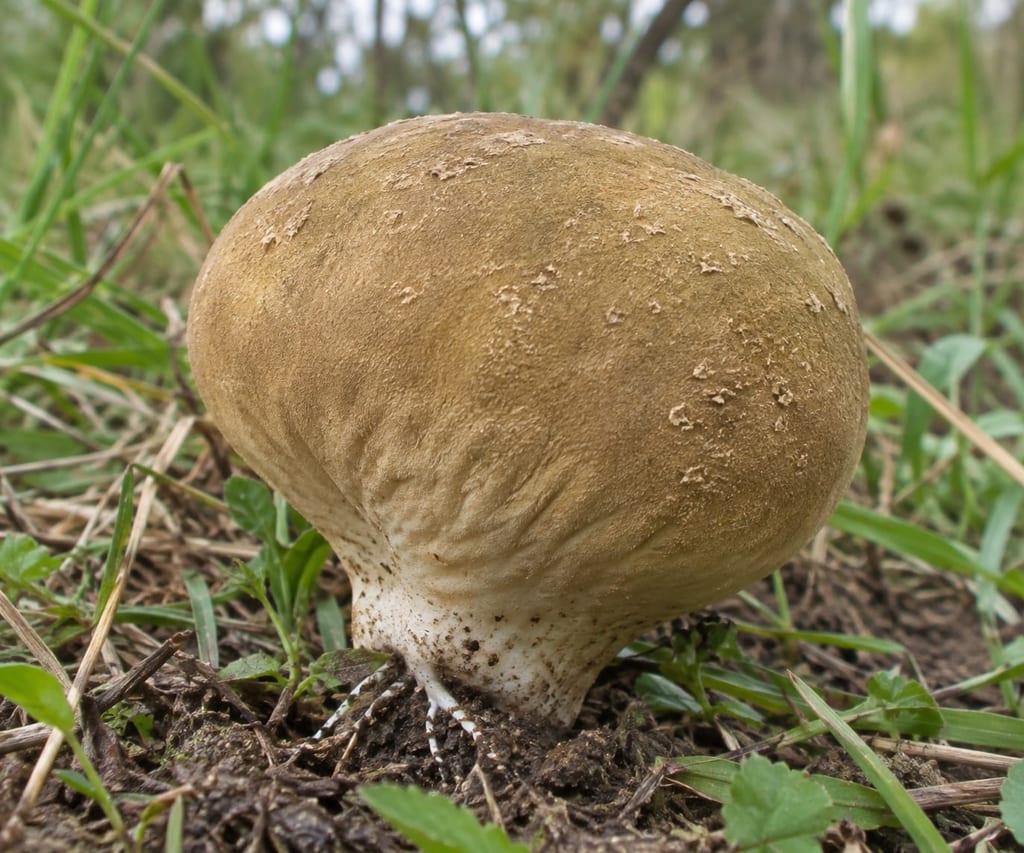
A tropical African puffball recorded in West African range accounts and Ethiopian edible-mushroom studies. Ethiopian use evidence is qualified; Benin identification and safety remain unresolved.
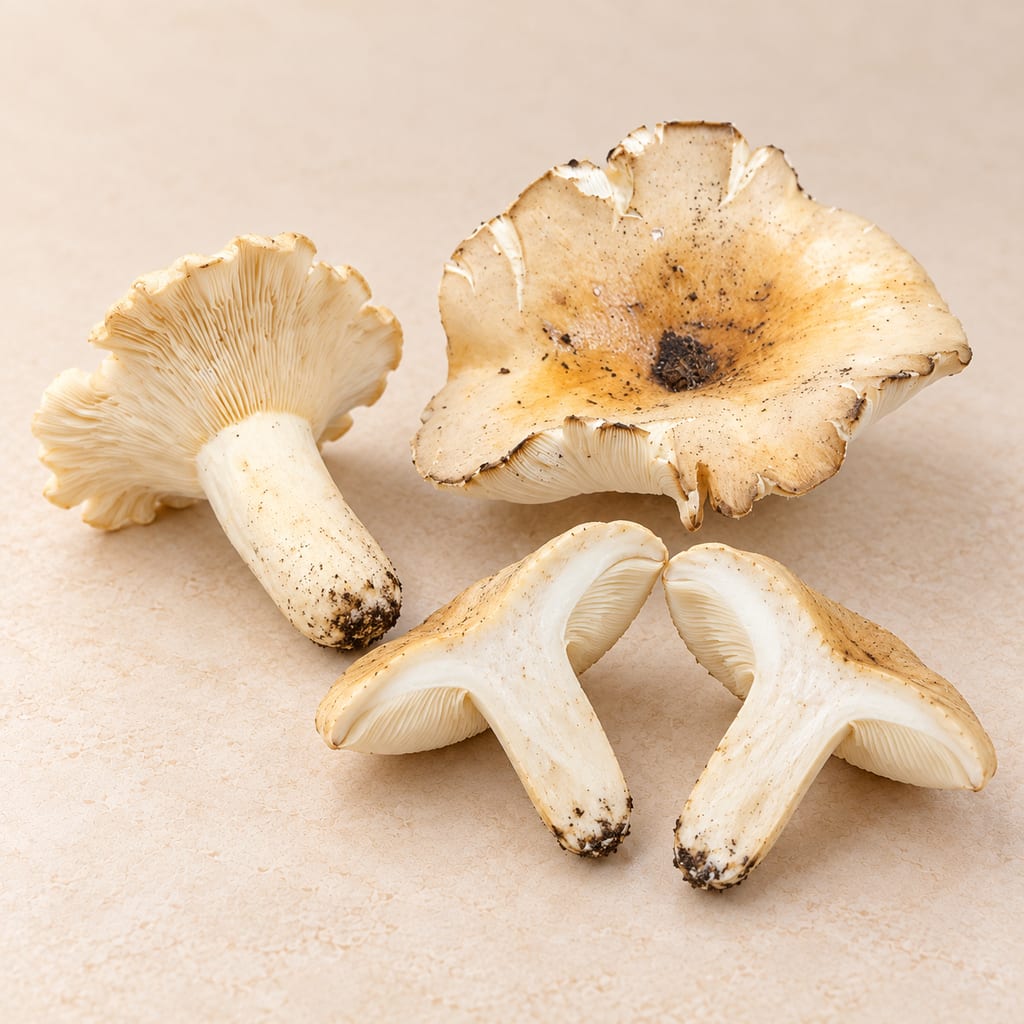
African milkcap, a wild ectomycorrhizal milkcap of woodland in central, eastern and southern Africa, recorded as an edible wild mushroom in regional inventories and food studies.
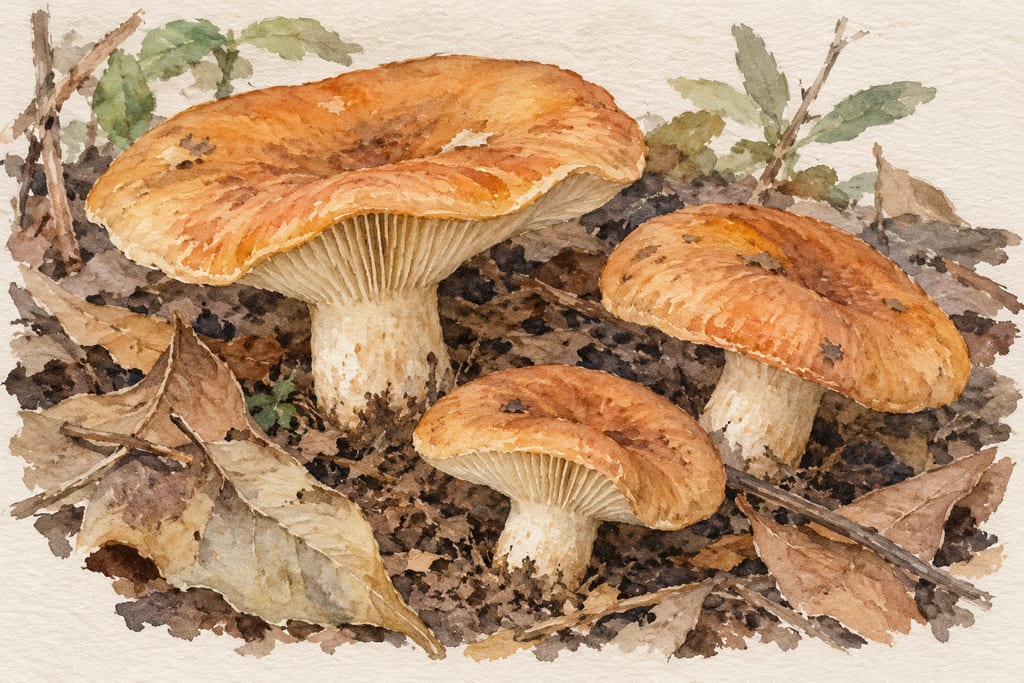
Lactifluus edulis, the African milkcap, is a wild ectomycorrhizal mushroom of the miombo woodlands of tropical Africa. The Edible Fungi of Tropical Africa project lists it as an edible species.
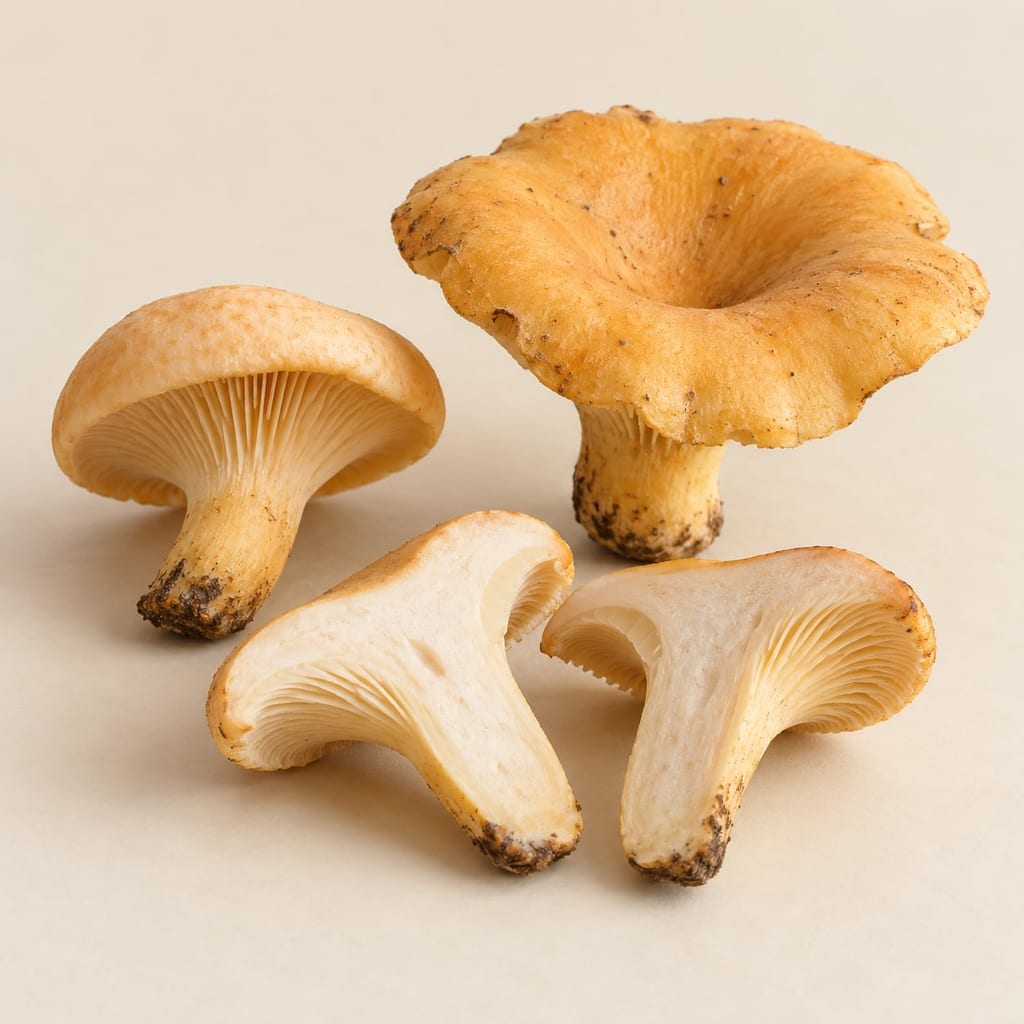
Lactifluus flammans is a milkcap of African miombo and open woodland, recorded in six countries. Its food use and safety are not established by the sources here.
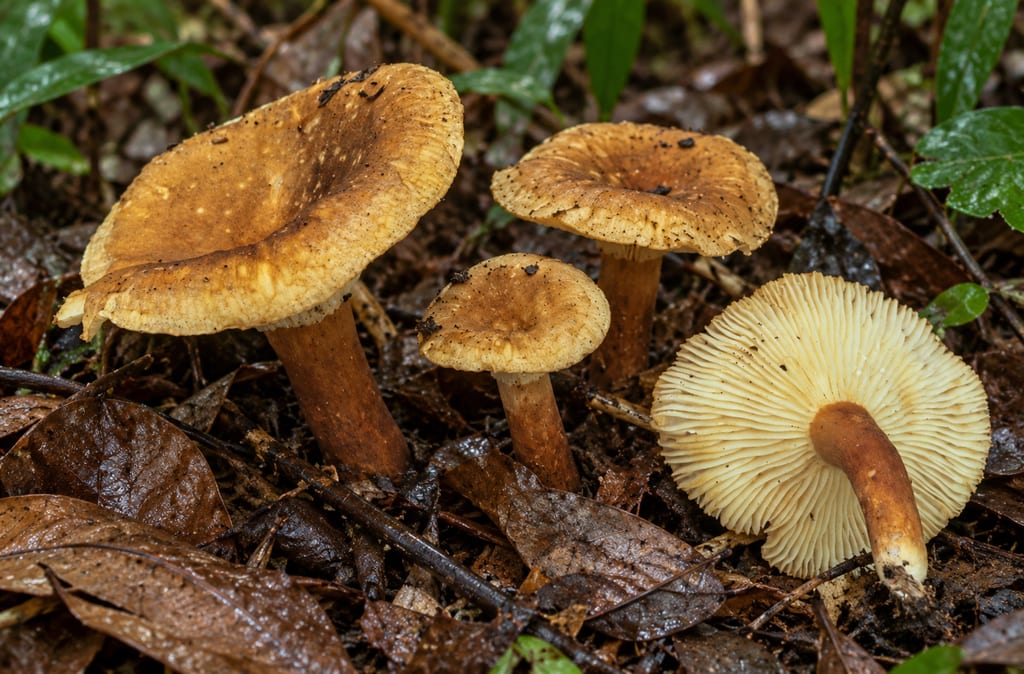
Lactifluus longipes is an African milkcap mushroom recorded in Cameroon, the DR Congo, Gabon and Togo. It is listed in an institutional inventory of edible species. Its identity, preparation and current safety are not settled by the sources.

Rice contributes starch to flatbreads, steamed breads, batters and many distinct fermentations. Its species, milling and starch character shape how it cooks, binds, expands and feeds enzymes.
No community contributions have been published for this entry yet.
Sign in to contribute. Published comments and photos are free to read.
EFTA (European Fungi Taxonomy Association)Identity · Geography · Ecology · Safety
Lactarius tenellusRecorded regions include Benin, Burundi, Cameroon, DR Congo, Côte d'Ivoire, Kenya, Malawi, Niger, Tanzania, Togo, Zambia and Zimbabwe
Ectomycorrhizal with Brachystegia, Julbernardia, Isoberlinia and Uapaca in miombo
Smaller fruit bodies than L. kabansus and a strongly crenellated cap margin; orange stipe base absent
The page does not state that the species is edible and gives no preparation advice
Cited in: What it is; Where it is recorded; Food status; Ecology and what remains unknown
Mycologie (Muséum national d'Histoire naturelle, Sciences Press)Taxonomy · History
New Lactarius species from ZimbabweVerbeken and Walleyn gave L. tenellus a replacement name, nom. nov., in a 2001 synopsis of tropical African Lactarius subgenus Plinthogali
Cited in: What it is
KarsteniaFood · Geography
Tanzanian mushrooms and their uses 6. LactariusMany Lactarius species are considered edible in Tanzania, with contradictory opinions among tribes
L. tenellus has been recorded in Togo
Cited in: Where it is recorded; Ecology and what remains unknown