What the mushroom is
Lactifluus edulis is a milkcap, a mushroom that exudes a white latex when cut. It was first described as Lactarius edulis by Verbeken and Buyck and transferred to Lactifluus by Buyck in 2011. The catalogue treats the name as a research label and records the synonym Lactarius edulis as a search alias.
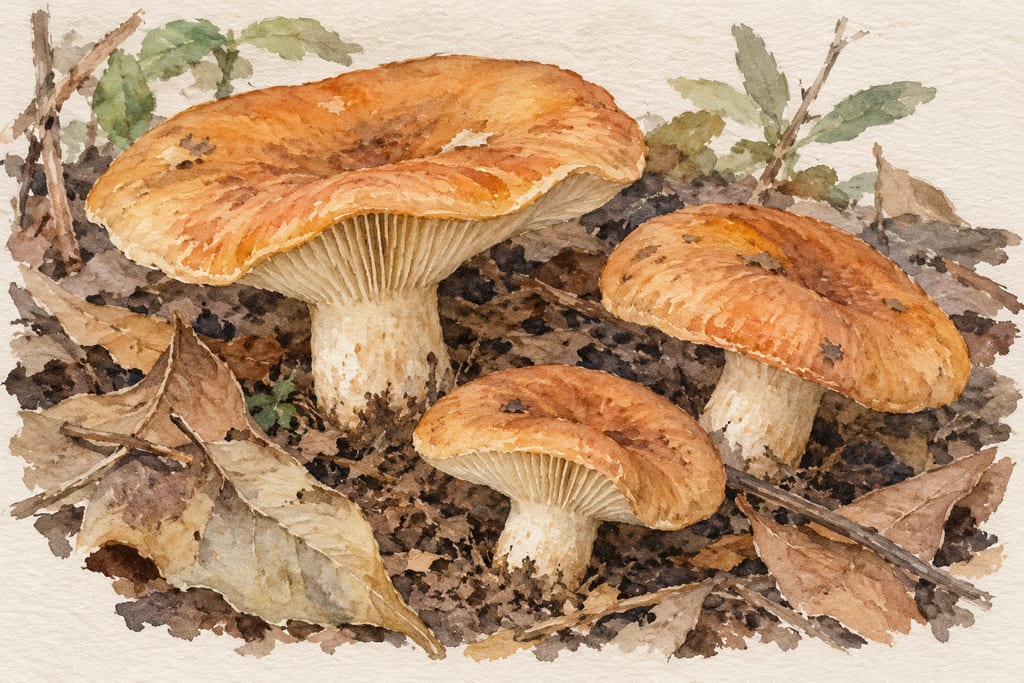
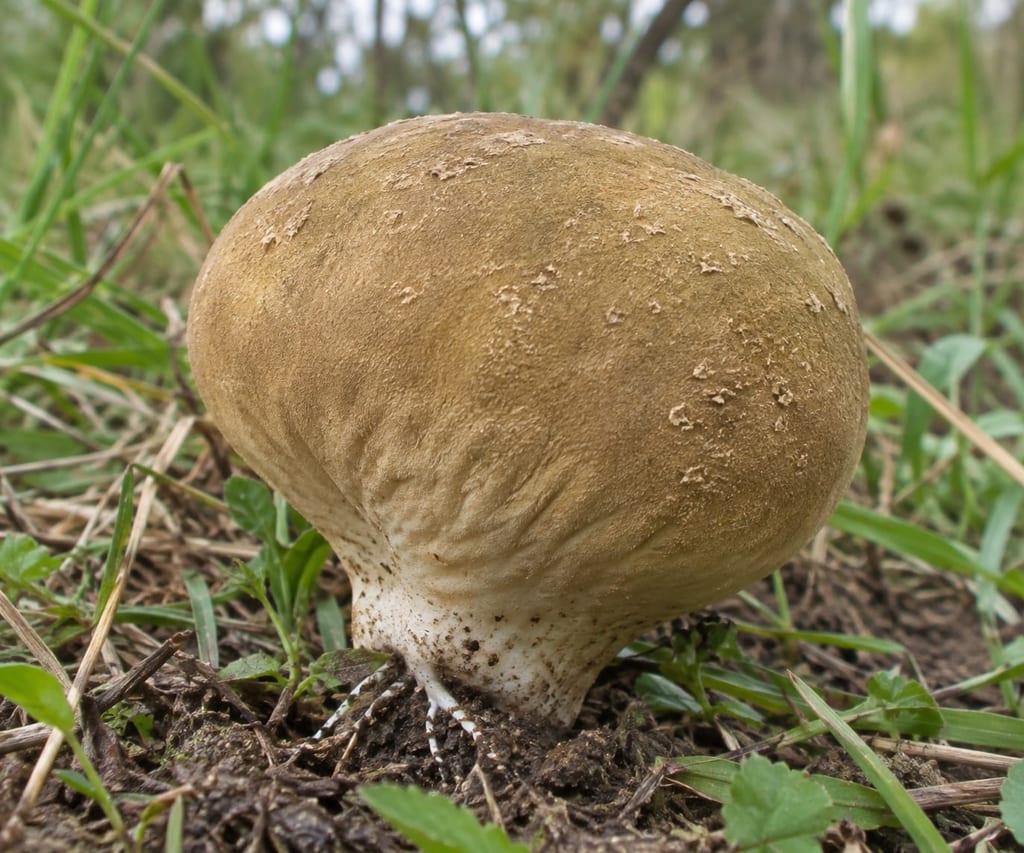
The fruiting body is solid and fleshy. The cap is 50 to 150 mm across, convex and then flattened with a wide central depression. It is dry and matt at first and cracks in dry weather. The stipe is short and thick, 30 to 50 mm long, and almost white at the top. The gills are widely spaced, thick and brittle, and cream to pale yellow. The latex is abundant, white and mild. The spore print is whitish.
Sources for this section
Habitat and ecology
The species grows on the ground in open woodland and miombo, forming ectomycorrhizal associations with a wide range of host trees, among them Brachystegia, Uapaca and Julbernardia. The catalogue records its supply as wild.
Sources for this section
Look-alikes
The closest species is Lactifluus densifolius. In the field the two look very similar, and the EFTA description separates them mainly by gill density, which is very low in L. edulis. A field identification that relies on the cap colour alone is therefore not reliable.
Sources for this section
Food use as recorded
The catalogue describes the species as a regional milkcap in the EFTA edible-species inventory, with food, market or specialist evidence. The EFTA description gives its taste as mild and pleasant, with a nutty note, and its smell as fruity. The sources give no preparation method, and the catalogue states that preparation, identity and current safety need separate validation before any use.
Sources for this section
Identification and safety
Inclusion in the catalogue does not establish identity, edibility or a safe preparation for this species. The catalogue's review labels are kept as supplied. The species assignment of regional records of Lactifluus in tropical Africa depends on matching the specimen to the EFTA illustrations and descriptions, and a specialist should confirm it. This page gives no edibility verdict for wild specimens.
Sources for this section
Open questions
The sources do not record local names, preparation or storage, or how much the species is gathered and sold. Confirmation of the Lactifluus edulis and Lactifluus densifolius records against herbarium material would settle the look-alike question.
Sources for this section
Places
Benin
Documented use · Country evidenceCatalogued regional record; the EFTA page cites a Benin field guide among its illustrations.
Burundi
Documented use · Country evidenceCatalogued regional record; the EFTA page cites a Burundi field book on the mushrooms of western Burundi among its illustrations.
DR Congo
Documented use · Country evidenceCatalogued regional record.
Malawi
Documented use · Country evidenceCatalogued regional record.
Mozambique
Documented use · Country evidenceCatalogued regional record.
Niger
Documented use · Country evidenceCatalogued regional record.
Nigeria
Documented use · Country evidenceCatalogued regional record.
Tanzania
Documented use · Country evidenceCatalogued regional record; a Tanzanian mushroom book is among the EFTA illustrations.
Togo
Documented use · Country evidenceCatalogued regional record.
Zambia
Documented use · Country evidenceCatalogued regional record.
Zimbabwe
Documented use · Country evidenceCatalogued regional record.