Identity and naming
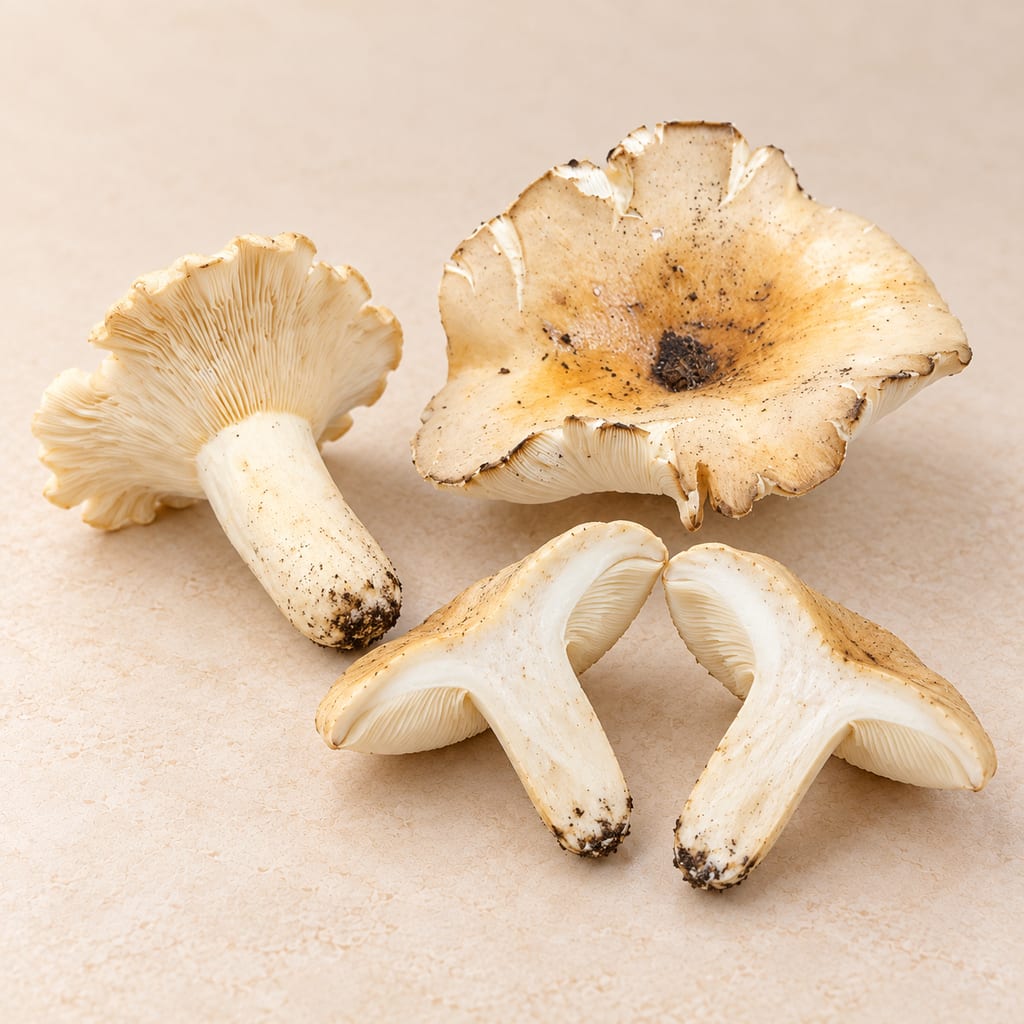
Lactifluus densifolius is a milkcap in the family Russulaceae. The Fermentea catalogue uses this name as a research label. Its synonym Lactarius densifolius is kept as a search name, and the name has not been checked against a current taxonomic authority for this page.
The common name African milkcap is applied in the sources to several different species, so the scientific name is the only dependable way to refer to this fungus. The European Fungi Traders Association (EFTA) species page states that L. densifolius is macroscopically very similar to Lactifluus edulis, and that the density of the lamellae is the main visible difference. It also notes possible confusion with Lactifluus inversus.
Sources for this section
Ecology and habitat
The species is ectomycorrhizal, meaning it forms a partnership with the roots of trees. EFTA describes it as often associated with Julbernardia paniculata, a legume tree of African woodland. Its fruiting bodies therefore depend on the host tree and on the woodland soil that supports it.
Because the mushroom grows with its host tree, it is a wild crop: the catalogue records its supply as wild, not cultivated. No cultivation method is documented for it in the sources used here.
Sources for this section
Use and harvest
The EFTA edible-species inventory lists L. densifolius as a regional milkcap used as food. A review of underutilised wild edible fungi in Africa also lists it among the species harvested in important quantities, particularly in the African woodland zones.
The sources used here do not describe how the mushroom is cooked, dried or stored, and they do not give a regional recipe. The catalogue's food-use summary is a record of use, not a method. Preparation, identity and current safety are recorded by the catalogue as needing separate validation.
Sources for this section
Regional records
The catalogue records food, market or specialist use for this species in Benin, Burundi, the Democratic Republic of the Congo, Malawi, Mozambique, Tanzania, Togo and Zambia. Each entry is a country-level record. The sources do not give localities, so no place within these countries is established for this species.
Sources for this section
Safety and identification
Safety wording: this page describes what the sources record. It is not an identification guide and it gives no verdict that this fungus is safe to eat. The catalogue states that the institutional edible-species record does not by itself establish identity, a safe preparation or current safety, and that these need separate validation by specialists.
Milkcaps are difficult to separate from one another, and the EFTA note names two look-alikes. A wild mushroom should be identified by a qualified expert before anyone eats it.
Sources for this section
Places
Benin
Documented use · Country evidenceCountry-level record of food use in the catalogue; no locality given.
Burundi
Documented use · Country evidenceCountry-level record of food use in the catalogue; no locality given.
Democratic Republic of the Congo
Documented use · Country evidenceCountry-level record of food use in the catalogue; no locality given.
Malawi
Documented use · Country evidenceCountry-level record of food use in the catalogue; no locality given.
Mozambique
Documented use · Country evidenceCountry-level record of food use in the catalogue; no locality given.
Tanzania
Documented use · Country evidenceCountry-level record of food use in the catalogue; no locality given.
Togo
Documented use · Country evidenceCountry-level record of food use in the catalogue; no locality given.
Zambia
Documented use · Country evidenceCountry-level record of food use in the catalogue; no locality given.