Overview
Lactifluus rubiginosus is a milkcap of miombo woodland in Tanzania and Zambia. The EFTA edible-species inventory lists it as a regional milkcap. The catalogue records its supply as wild and its ecology as ectomycorrhizal in miombo.
The EFTA species page does not describe food use or preparation. The catalogue marks the record as an institutional inventory entry whose preparation, identity and current safety require separate validation.
Sources for this section
Description
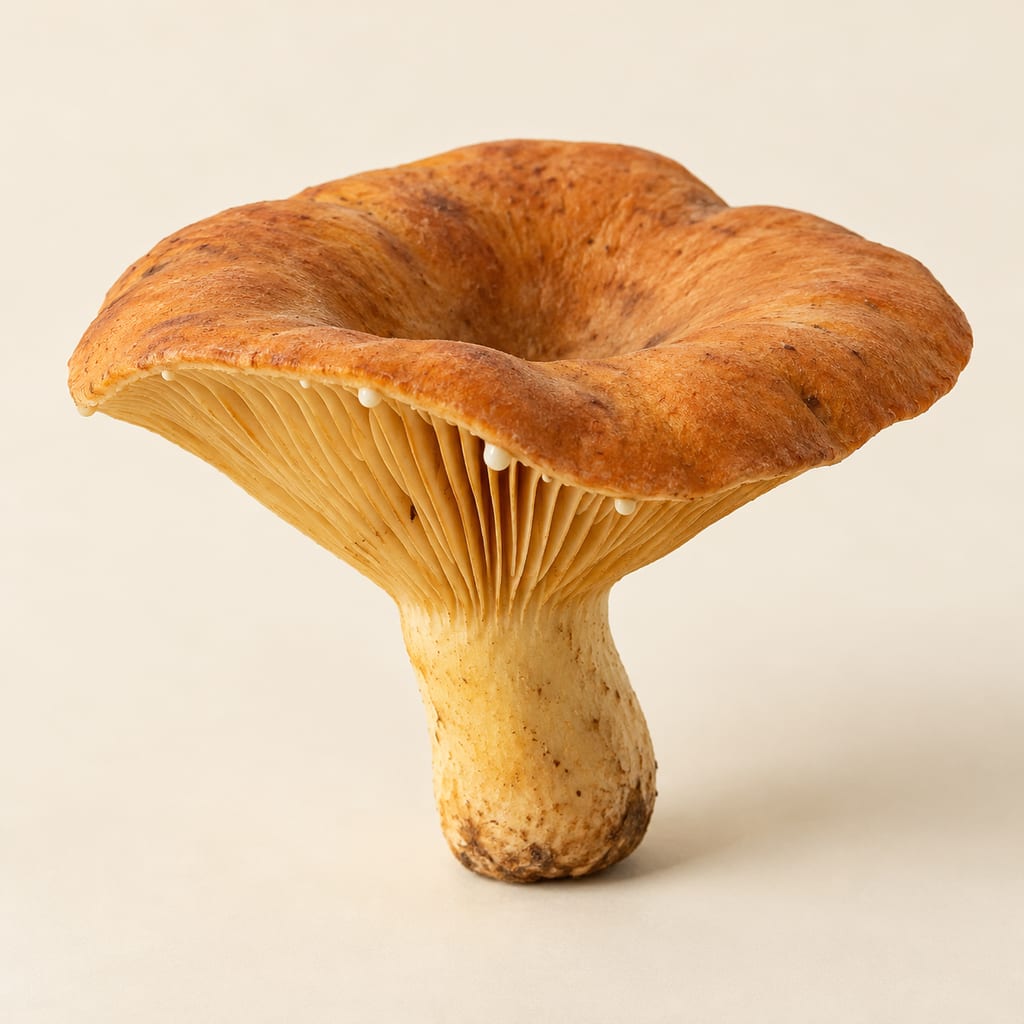
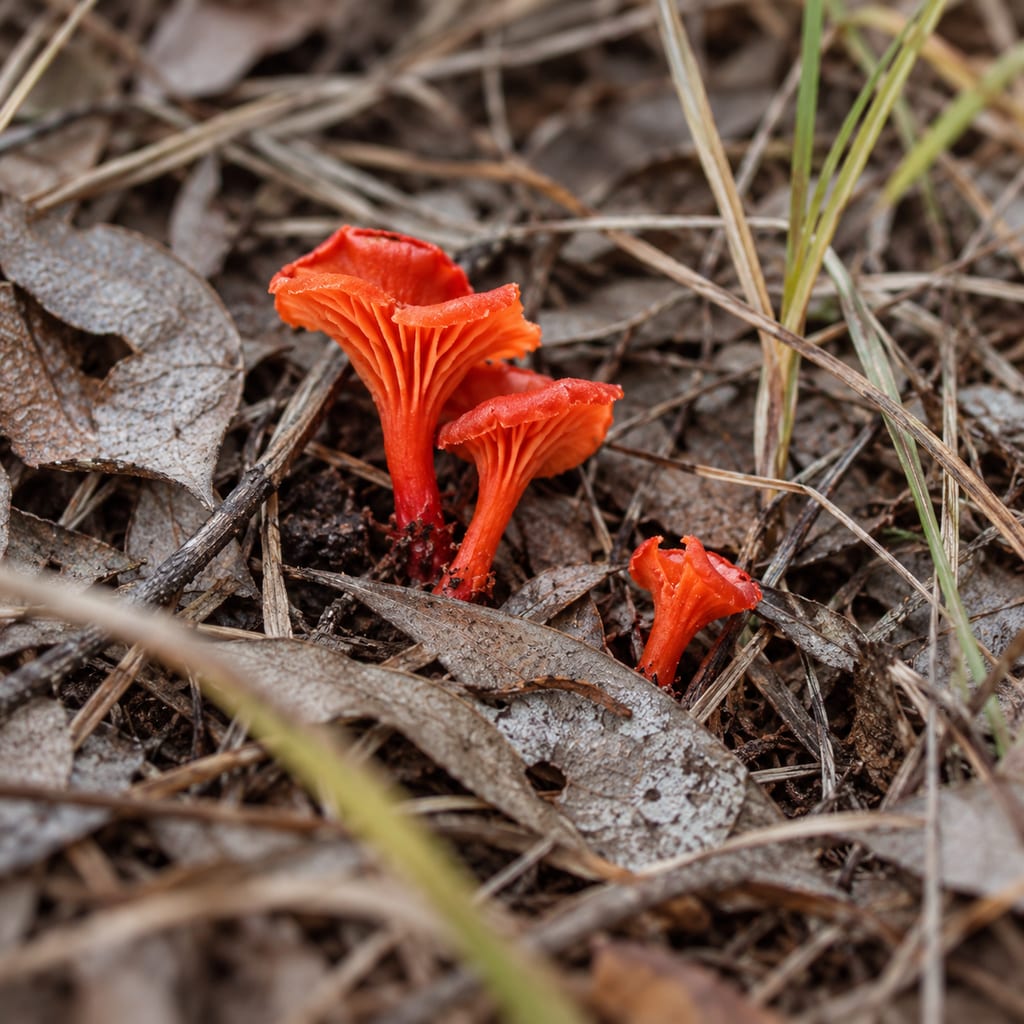
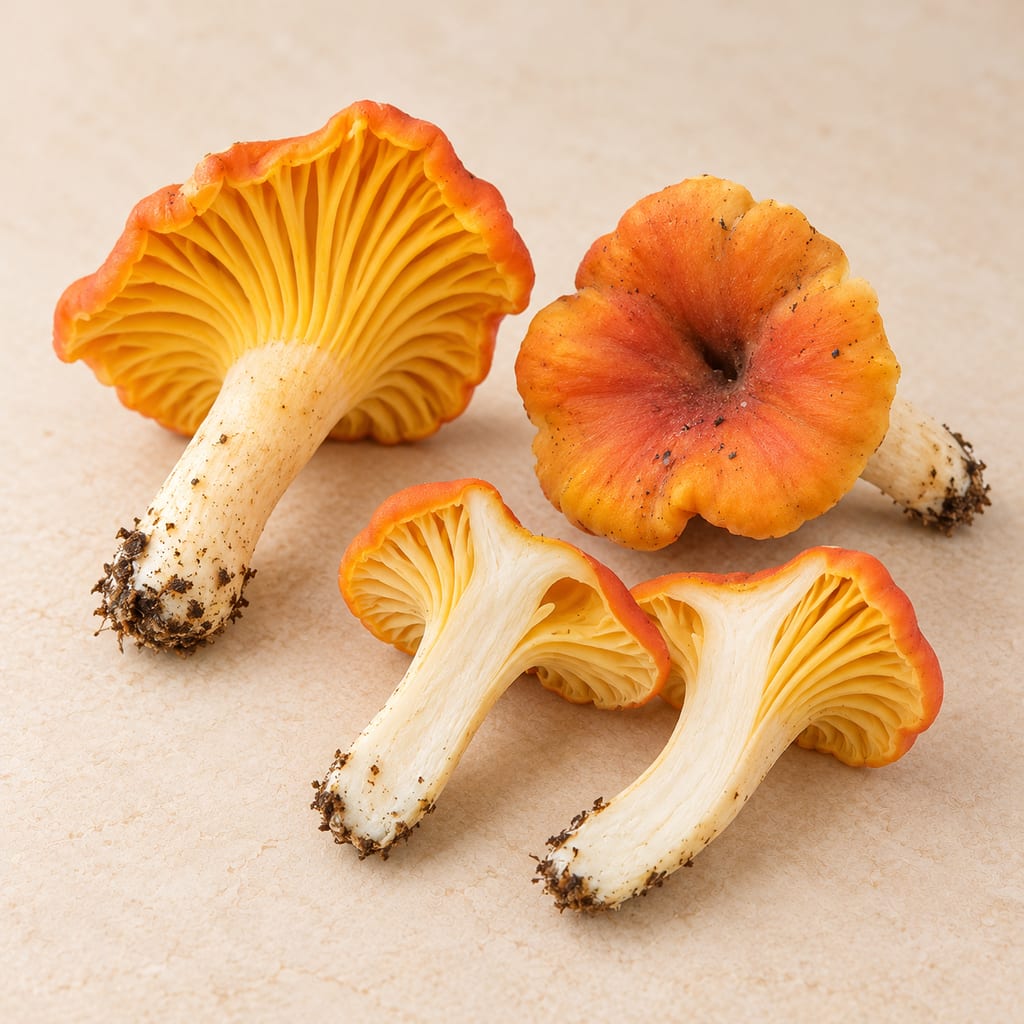
The cap is 40 to 110 millimetres across, firm and plano-convex to plane, with a dry surface that is finely and completely wrinkled to veined, in reddish-orange to brown tones. The gills are subdecurrent to decurrent, uneven and yellowish-orange. The stipe is 35 to 82 by 16 to 22 millimetres, cylindrical, dry and finely velvety, pale orange to whitish in its upper half. The flesh is very firm, with weak odour and mild taste. The latex is abundant, watery, white and sweet.
Sources for this section
Microscopy and identification
The spores are ellipsoid, sometimes elongated, about 8.2 to 10.4 micrometres long, with amyloid ornamentation of warts that are aligned or joined in a fine network. The basidia are four-spored. Pleurocystidia and clamp connections are absent. The EFTA page names abundant white latex and the spore ornamentation as the key features, and says that confirming identification needs microscopic examination.
The illustrated references use the former name Lactarius rubiginosus, so searches should include both names.
Sources for this section
Ecology and distribution
Lactifluus rubiginosus is ectomycorrhizal, living with trees in miombo woodland. The EFTA page records it from Tanzania and from Zambia, citing Verbeken and Walleyn (2010) and Härkönen and colleagues (2015).
Sources for this section
Food use and safety
The catalogue records the species as a regional milkcap in EFTA's edible-species inventory. The EFTA page gives no culinary use, no preparation and no toxicity statement. Milkcaps differ in taste and edibility, and an inventory listing does not show that every collection is safe to eat.
Do not use this page to identify or eat wild fungi. Confirm identification by microscopy with a qualified mycologist or a reliable regional authority before any consumption.
Sources for this section
Places
Tanzania
Documented use · Country evidenceDistribution note from the EFTA page; not an origin claim.
Zambia
Documented use · Country evidenceDistribution note from the EFTA page; not an origin claim.