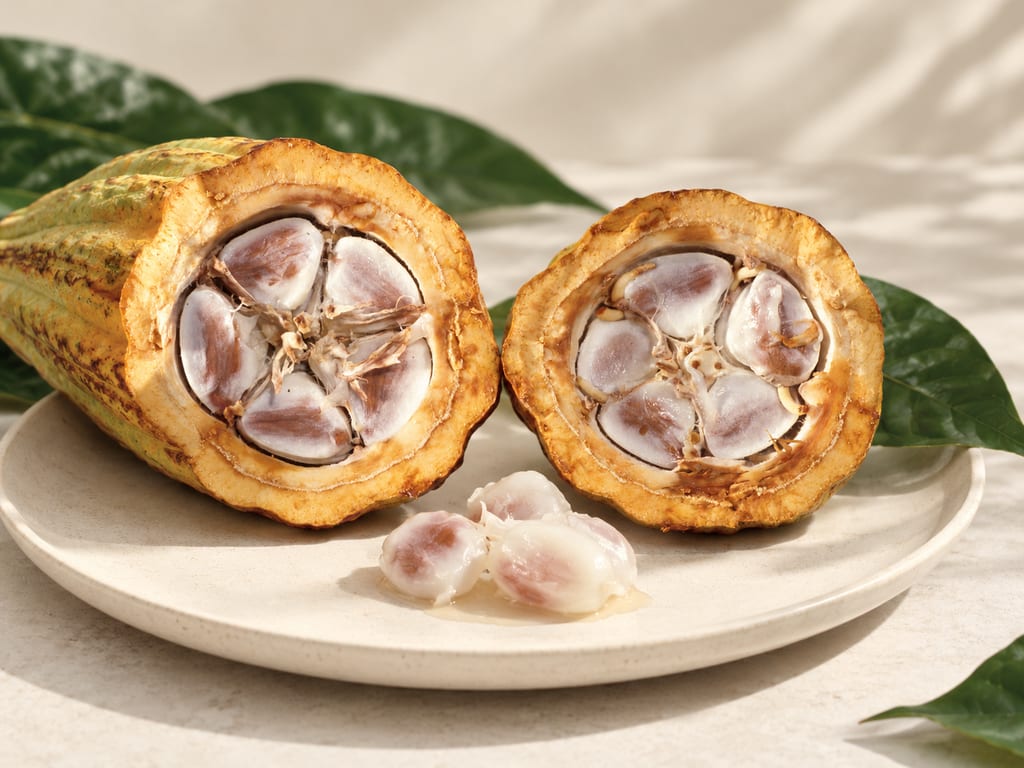
Cacao pulp
Cacao pulp is the moist, sweet-acid mucilage around cacao seeds. It fuels bean fermentation and can be extracted for fruit drinks, wine and vinegar.
 FermenteaWhere food goes to change
Mushrooms
Termitomyces mammiformis is a termite mushroom with a small cap, eaten in several African countries and listed as edible in the EFTA list. Its identity and safety need separate checking; regional records do not settle them.
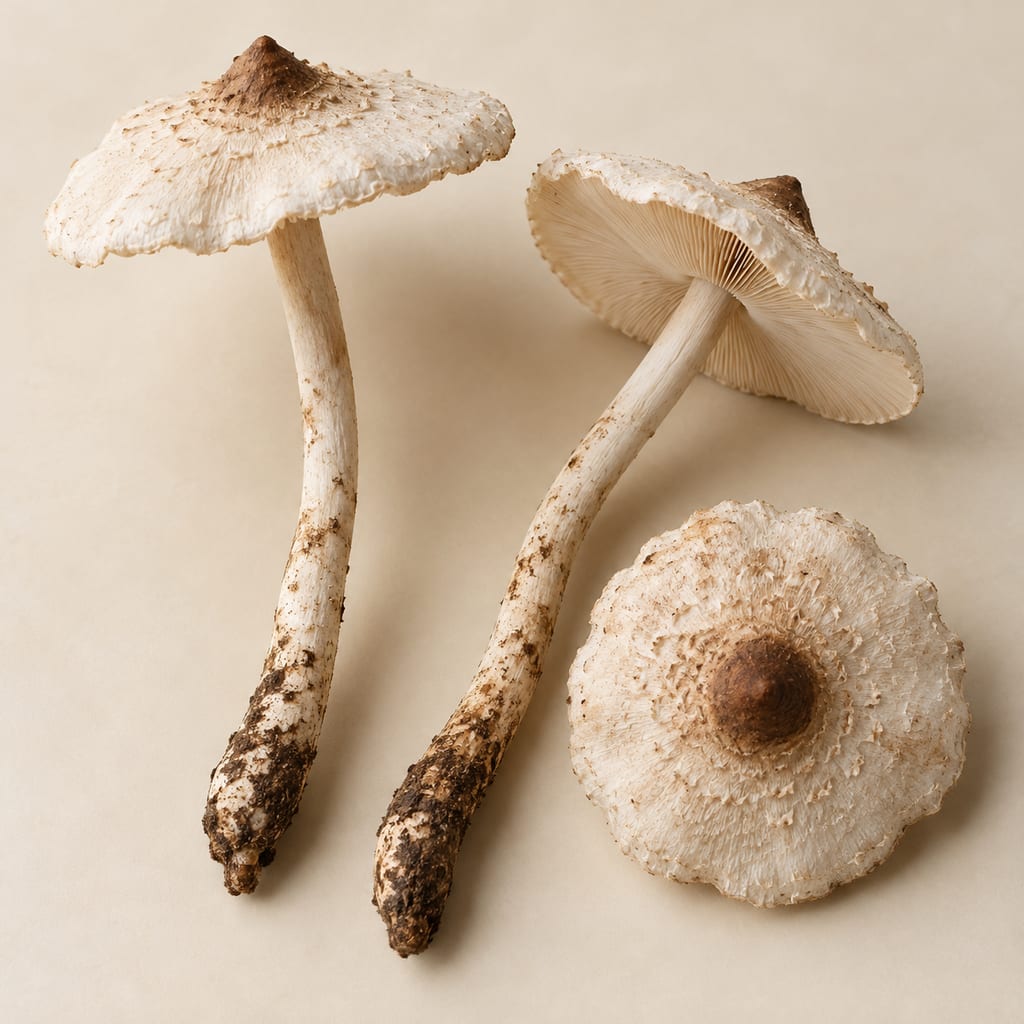
Termitomyces mammiformis is a termite mushroom of tropical Africa. It grows from the mounds of termites of the subfamily Macrotermitinae, in dry forest and in plantations, and the catalogue records it as a wild, termite-associated fungus. Compared with some relatives in the genus it has a small cap.
The species is recorded as a food across a wide belt of central and west Africa, and a 2026 Chinese catalogue lists it as edible as well. Those records show that it is eaten; they do not describe a traditional preparation or a safety assessment.
Termitomyces forms a mutualistic association with termites of the subfamily Macrotermitinae. A review of the genus describes its species as a source of protein, minerals and other nutrients, and notes that almost all of them are regarded as edible. The review also notes that T. titanicus is the largest edible mushroom in the world.
The catalogue records T. mammiformis as a termite symbiont of dry forest and plantations.
A Cameroon study of Termitomyces species eaten in that country reports that T. mammiformis is rich in minerals, with 14.4 grams of ash per 100 grams of dry material. The figure comes from one analysis of dried specimens and describes that sample only.
The value describes that sample and should not be read as a standard for the species.
The European Food Safety Authority's species list includes T. mammiformis as a regional termite mushroom eaten in parts of Africa. Local reports describe it as an edible wild mushroom that foragers collect, and one species account notes that it is sold in some markets.
The sources do not record a traditional recipe or preparation for this species. The catalogue flags that the culinary tradition requires follow-up, so no cooking method is given here.
The catalogue lists the food-use regions as Cameroon, the Central African Republic, the Republic of Congo, the Democratic Republic of the Congo, Gabon, Guinea, Nigeria and Zanzibar in Tanzania, with China added from the Chinese catalogue. Each entry is a country-level record.
Country-level lists do not establish how common the species is in any of these places, and they do not make the distribution of the species continuous across them.
The catalogue's caution is that the Termitomyces species list is an institutional edible-species record. Preparation, identity and current safety require separate validation, and the Chinese catalogue entry is a research lead, not an independent safety assessment.
A species account warns that some Termitomyces species can be confused with poisonous fungi, and names Chlorophyllum molybdites as a look-alike to watch for. No edibility verdict follows from the regional lists. A specialist should confirm the identity of any specimen before it is eaten.
Country-level record from the European Food Safety Authority species list.
Country-level record from the European Food Safety Authority species list.
Country-level record from the European Food Safety Authority species list.
Country-level record from the European Food Safety Authority species list.
Country-level record from the European Food Safety Authority species list.
Country-level record from the European Food Safety Authority species list.
Country-level record from the European Food Safety Authority species list.
Listed as Tanzania (Zanzibar) in the catalogue.
Listed as edible in a national species catalogue; the culinary tradition is not recorded.
Cacao pulp is the moist, sweet-acid mucilage around cacao seeds. It fuels bean fermentation and can be extracted for fruit drinks, wine and vinegar.
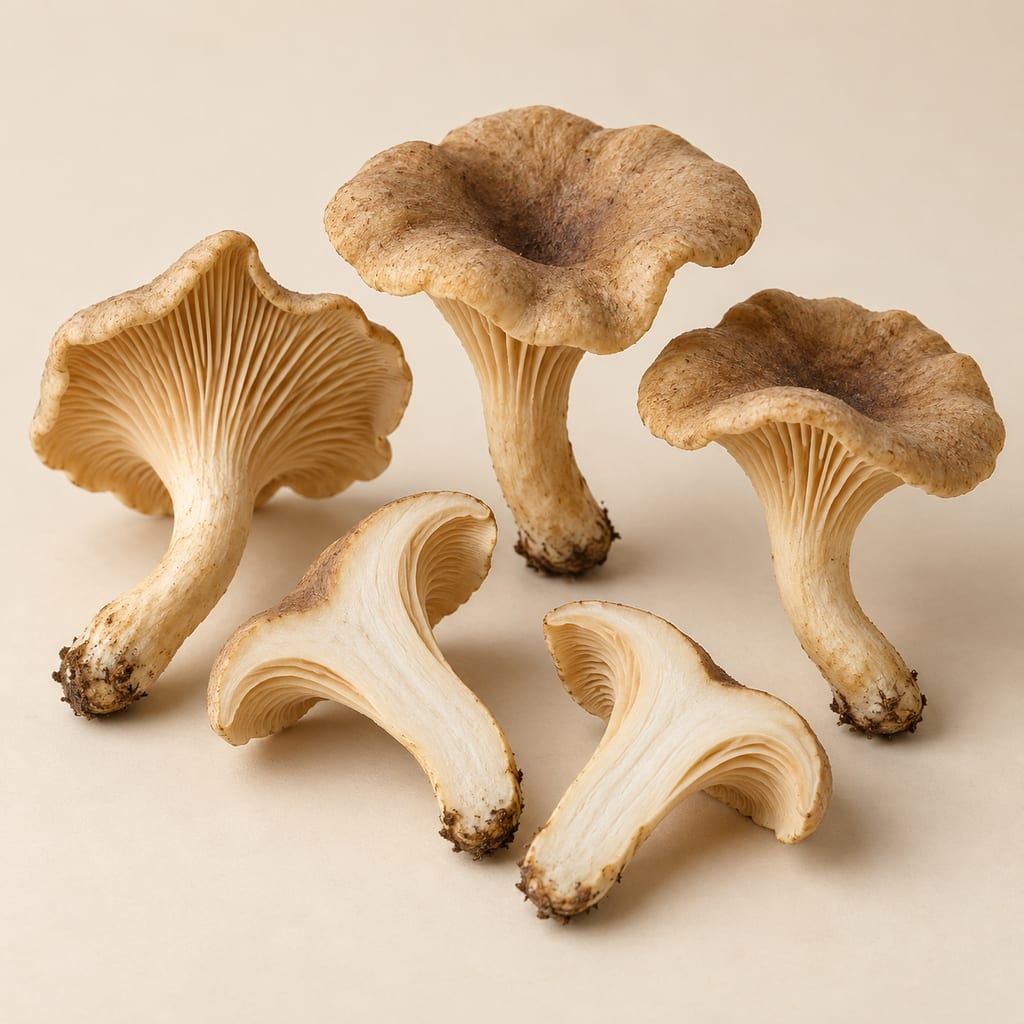
Cantharellus isabellinus, the African chanterelle, is a rainforest mycorrhizal fungus of tropical Africa that the catalogue lists in an edible-species inventory, with some regional records still needing confirmation.
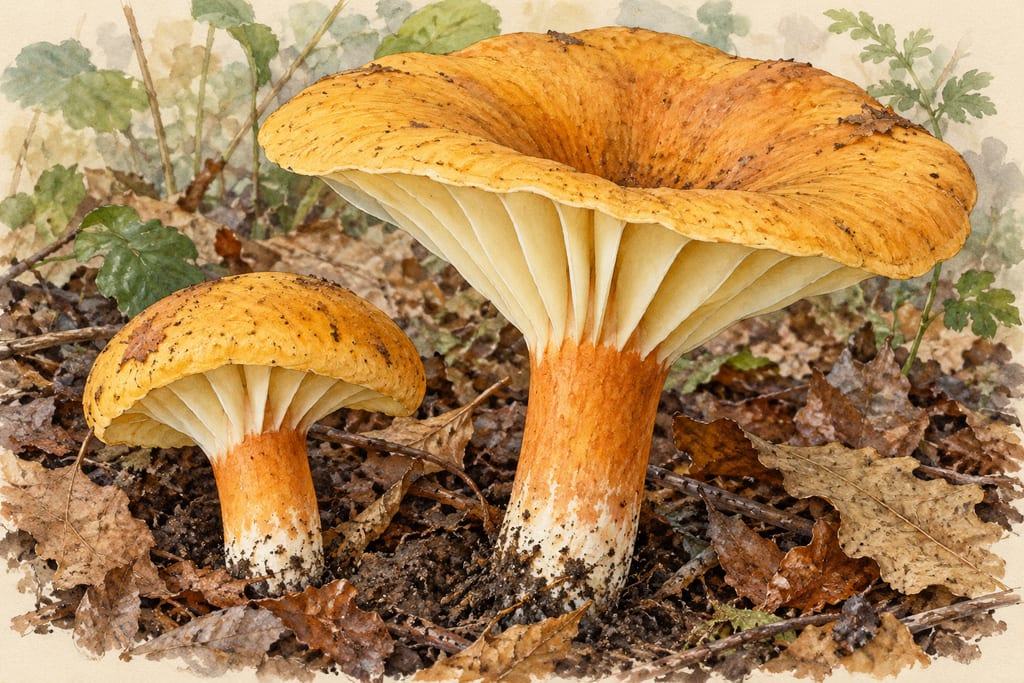
Lactifluus gymnocarpus is an African milkcap, a wild woodland mushroom of the Lactifluus group, recorded as an edible species in West and Central Africa.
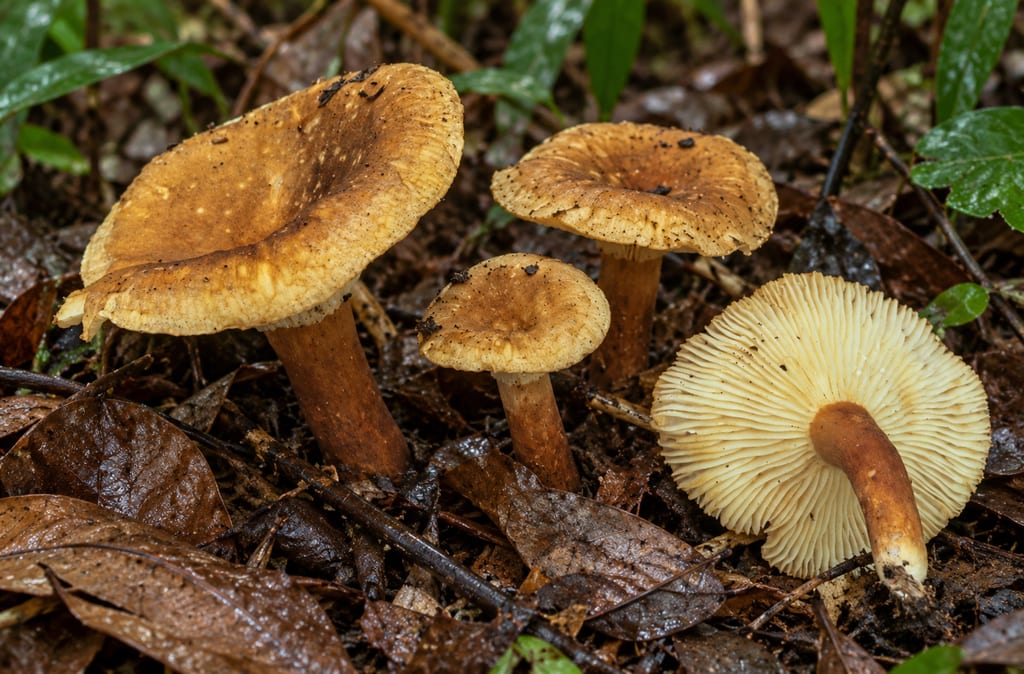
Lactifluus longipes is an African milkcap mushroom recorded in Cameroon, the DR Congo, Gabon and Togo. It is listed in an institutional inventory of edible species. Its identity, preparation and current safety are not settled by the sources.
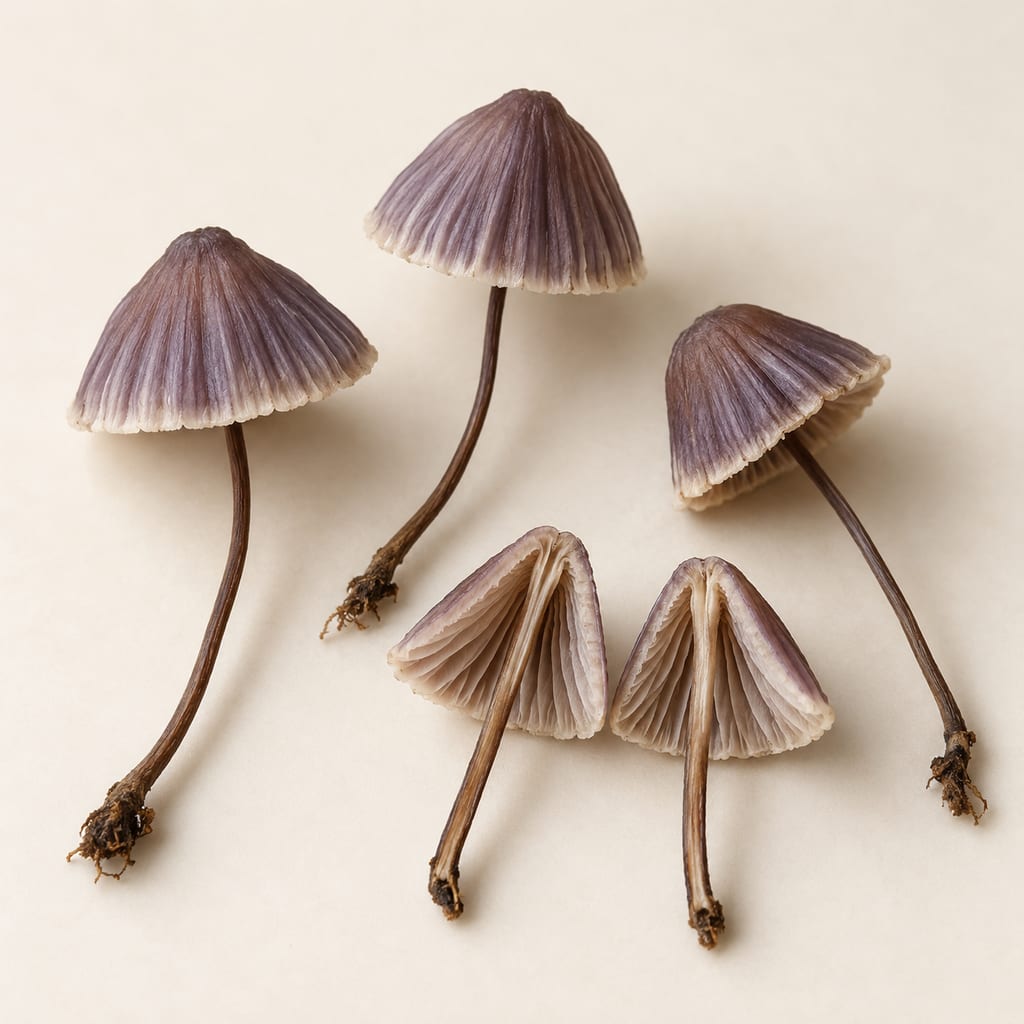
Marasmius bekolacongoli is a wild mushroom of Central African rainforest that field surveys in Cameroon, Gabon and the Democratic Republic of the Congo record as eaten by local people.
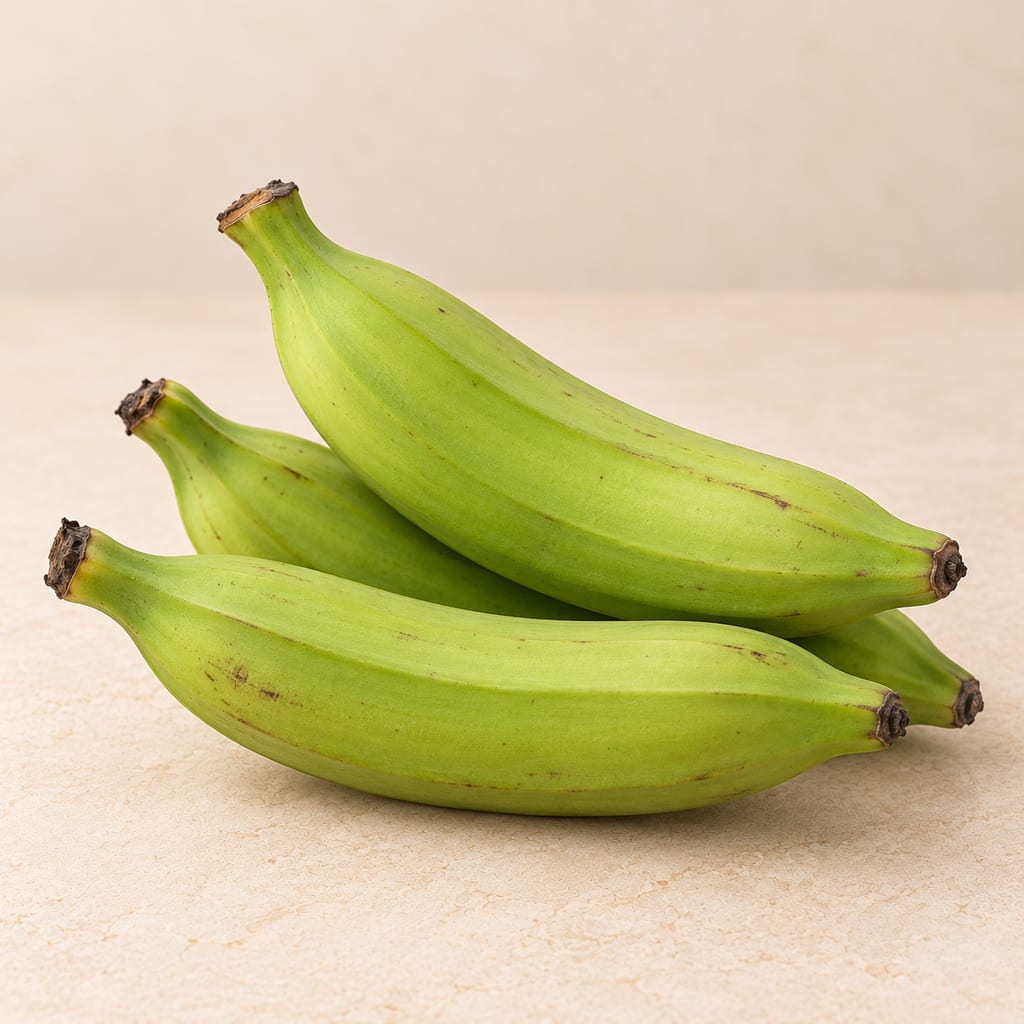
Plantains are starchy cooking bananas used green through fully ripe. Their firmness and sweetness shift with maturity, and ripe mashed fruit appears in a University of Rhode Island Liberian rice-bread adaptation.
Russula acuminata, the African brittlegill, is a wild ectomycorrhizal mushroom of humid forest in Cameroon and DR Congo. An institutional inventory lists it as edible; its preparation and identity still need validation.
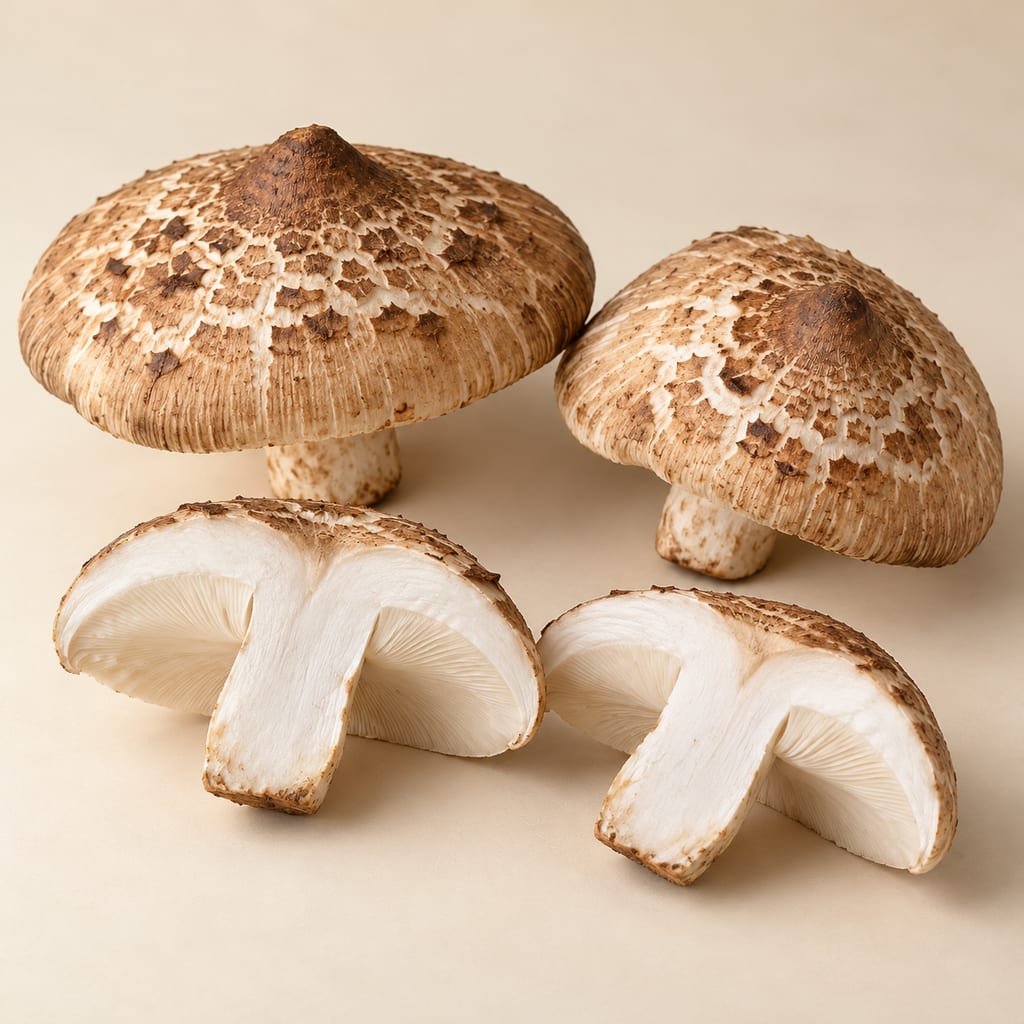
The termite mushroom, a large wild fungus of tropical Africa that fruits on Odontotermes termite mounds. The EFTA inventory lists it but gives no edibility rating or preparation.
No community contributions have been published for this entry yet.
Sign in to contribute. Published comments and photos are free to read.
European Food Safety Authority (EFTA) edible species listFood use · Distribution · Safety
Termitomyces mammiformisRegional termite mushroom food taxon listed for Cameroon, Central African Republic, Republic of Congo, DR Congo, Gabon, Guinea, Nigeria and Zanzibar.
Institutional edible-species record; identity and current safety require separate validation.
Cited in: Overview; Food use; Distribution; Safety
CAST journal platform (Chinese Academy of Sciences journal)Food use · Checklist
Chinese species catalogue entry (2026)Listed as edible or edible-and-medicinal; a research lead, not an independent safety assessment.
Cited in: Overview; Distribution
PubMed CentralGenus · Nutrition · Safety
Termite Mushrooms (Termitomyces), a Potential Source of Nutrients and Bioactive Compounds Exhibiting Human Health Benefits: A ReviewAlmost all Termitomyces species are regarded as edible; T. titanicus is the largest edible mushroom.
Some Termitomyces species can be confused with poisonous fungi; Chlorophyllum molybdites named as a look-alike in a species account.
Cited in: The genus and its termite partners; Food use; Safety
ResearchGate (journal article record)Nutrition
Nutrient content of some mushroom species of the genus Termitomyces consumed in CameroonT. mammiformis rich in minerals, 14.4 g ash per 100 g dry material.
Cited in: Nutrition