What the fungus is
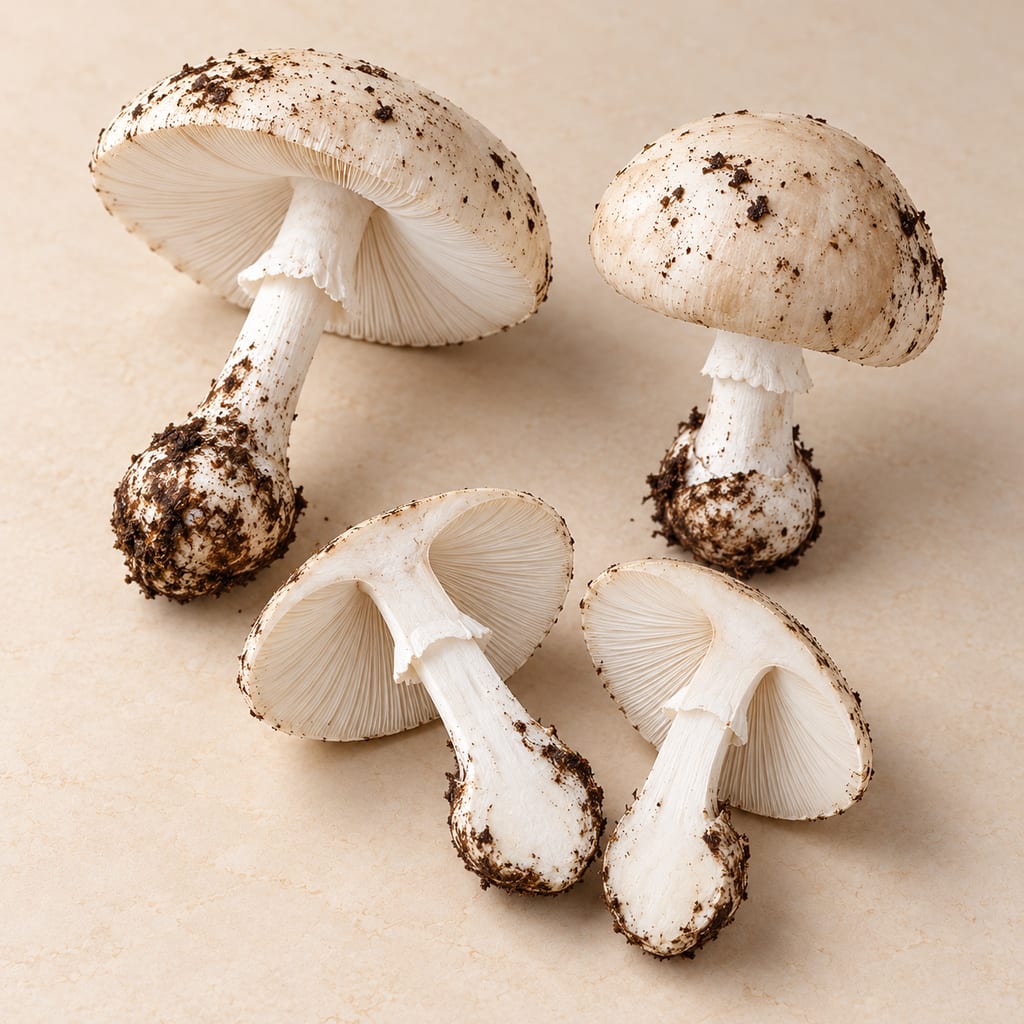
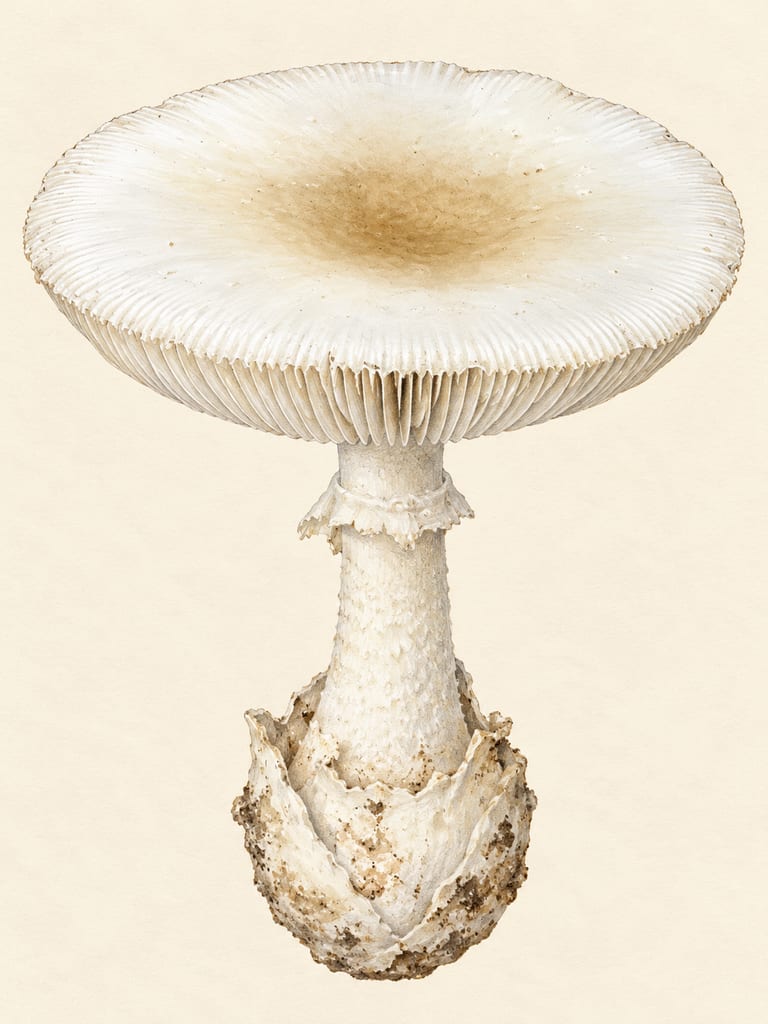
Termitomyces mbuzi is a basidiomycete fungus of the genus Termitomyces. Species of this genus grow in a partnership with fungus-growing termites of the subfamily Macrotermitinae, and the mushroom fruits above the termite nests. The species is recorded in Tanzania.
The European Forest Institute species page describes it as one of the whitest termite mushrooms in Africa, alongside T. microcarpus and T. schimperi, with a sharp-pointed umbo and a fairly thick stipe for the overall size of the fruiting body.
Sources for this section
Harvest and food use
The Fermentea catalogue records T. mbuzi as a regional termite-mushroom food taxon in Tanzania, harvested from the wild. The research summarised here does not give a documented local name, a recipe or a preparation for this species specifically.
A Tanzanian study records as many as 25 species of Termitomyces from the country. Harvesting of wild mushrooms in the Lake Victoria basin for household food and for trade between households is described as widespread. Commercial sales of wild harvests in Tanzania are reported to contribute significantly to family incomes in an IUCN assessment of a related species.
A Slow Food Ark of Taste entry describes soup with rice or ugali (maize porridge) in Mbeya and Iringa in southern Tanzania. That entry covers T. clypeatus, not T. mbuzi, and should not be read as a preparation for this species.
Sources for this section
Cultivation and research
Termite mushrooms cannot yet be cultivated without termite hosts. Researchers at the University of Copenhagen are testing whether they could become a sustainable human food, and the reported limit on availability is the lack of a cultivation method.
Because the material available is catalogue-level, the page does not give a yield, season or storage behaviour for T. mbuzi.
Sources for this section
Safety and identification
The common label termite mushroom is used for several species, so this item is named by its scientific name. A name on a market stall or in a catalogue does not confirm the species of a specimen.
Do not identify a wild mushroom for eating from this page. Wild termite mushrooms should be identified by a specialist, and unidentified wild mushrooms should not be eaten.
Sources for this section
Places
Tanzania
Documented use · Country evidenceCountry-level record from the catalogue and the Tanzanian study; no locality is given for this species.