
Agar / kanten
A gelling polysaccharide extracted from red seaweeds, sold as kanten strips or powder; it sets firm at a low concentration and stays solid until about 85 °C.
 FermenteaWhere food goes to change
Mushrooms
A Japanese woodland webcap listed as edible in older sources, but food use and safety evidence are limited. Toxic lookalikes and changing taxonomy make this entry unsuitable as consumption advice.
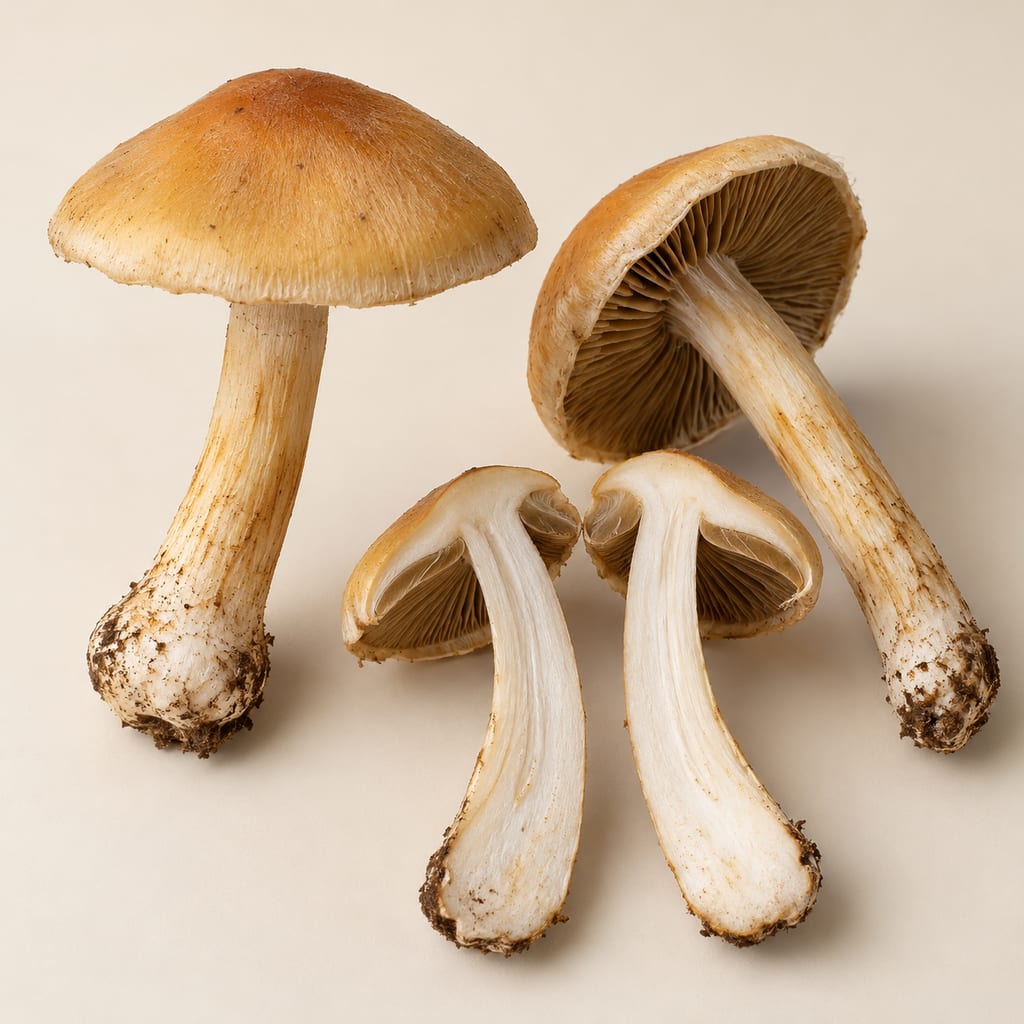
The supplied catalogue lists Cortinarius tenuipes. Index Fungorum now accepts Thaxterogaster tenuipes (Hongo) Zhu L. Yang & Zi R. Wang. The basionym is Cortinarius claricolor var. tenuipes Hongo (1969); the familiar 1987 combination Cortinarius tenuipes (Hongo) Hongo is treated as invalid in the 2025 taxonomic revision. The older name is retained here as an alias because food and field guides use it.
The 2025 treatment ties the name to the Japanese holotype from Ōtsu, Shiga Prefecture, collected in 1954, and designates a sequenced epitype from Yunnan, China. Its description gives a pale yellow, sticky, plano-convex cap with fine pale fibrils, a whitish stem with basal mycelium and sometimes a faint violet tint, and small weakly ornamented spores. Those details explain the taxonomic work; they are not a safe field identification guide.
Ishikawa Prefecture’s forestry guide lists the species under its old name as an autumn fungus of broadleaf woods. A Japanese technical guide describes fruiting on soil in oak woods, often in groups. A Miyagi regional picturebook records a specimen photo from Shichikashuku Town dated October 2010. Together these support regional Japanese autumn records; they do not establish a universal season or distribution.
The 2025 paper’s Yunnan epitype was collected on 10 August in a subtropical broad-leaved Fagaceae forest at 1,774 metres. That date is a single collection, not a repeatable fruiting season. The same paper points to different ecological and taxonomic sources but does not offer a food-use account for that locality.
The FAO 2004 global annex lists Cortinarius tenuipes as edible, but supplies no country-level location for the entry. The annex explains that “edible” in its source compilation does not always mean a fungus is actually eaten; the category “food” requires a clear report. The word “global” describes the compilation, not proof that this mushroom grows or is eaten worldwide.
Ishikawa Prefecture’s guide marks the older name edible, and a Miyagi regional picturebook also gives an edible field-guide status. These are useful Japanese classifications. The sources reviewed do not provide a validated preparation method, species-specific toxicology, or evidence that would support a general safety recommendation.
The Japanese common name can overlap with the name of a poisonous mushroom. JATAFF explicitly cautions that local names are not enough to identify the specimen. It describes pale orange-brown caps, crowded gills that darken with age, a curved stem and cobwebby veil, but those observations should not be used as a recipe for determining a mushroom is safe.
Some Cortinarius relatives, including C. rubellus and C. orellanus, can cause severe kidney injury with delayed symptoms. Those sources do not claim that Thaxterogaster tenuipes contains orellanine. They do show why old names, folk names and broad resemblance are inadequate safety evidence. This page does not recommend gathering, tasting, cooking or eating wild specimens.
The reviewed global classification and Japanese guides do not establish a fermentation or preservation method for this fungus. No fermentation use is documented. It should not be treated as a supported Fermentea fermentation ingredient, and no claim is made that cooking, drying, pickling or fermentation removes a wild mushroom hazard.
Prefectural guide uses the old Cortinarius tenuipes name, lists it as edible and gives autumn broadleaf habitat; no dish or safety method is supplied.
Regional picturebook gives an observer-identified photo record from Shichikashuku Town; not a voucher or proof of consumption.
Holotype locality in the 2025 taxonomic paper; nomenclatural specimen provenance only, not a food-use record.
Epitype locality from a subtropical broad-leaved Fagaceae forest; taxonomy evidence only, not a Chinese food-use claim.
A gelling polysaccharide extracted from red seaweeds, sold as kanten strips or powder; it sets firm at a low concentration and stays solid until about 85 °C.
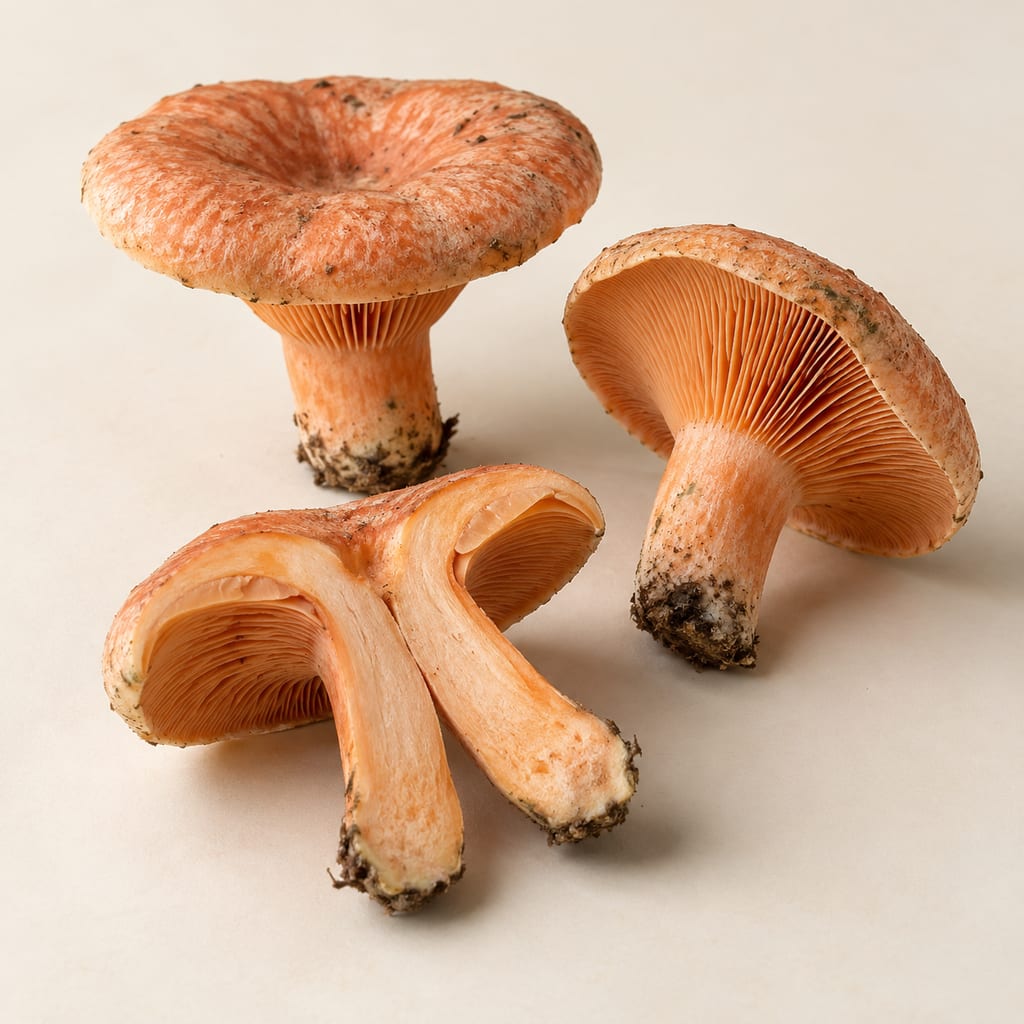
Akahatsu, Lactarius akahatsu, is a wild milkcap of East Asian pine and mixed forests that is sold in Yunnan markets, with its edibility and identity still needing species-level review.

The almond mushroom, Agaricus subrufescens, was cultivated in eastern North America in the 1800s, lost its market, and returned as a cultivated mushroom from Brazil, where it is grown under several names.
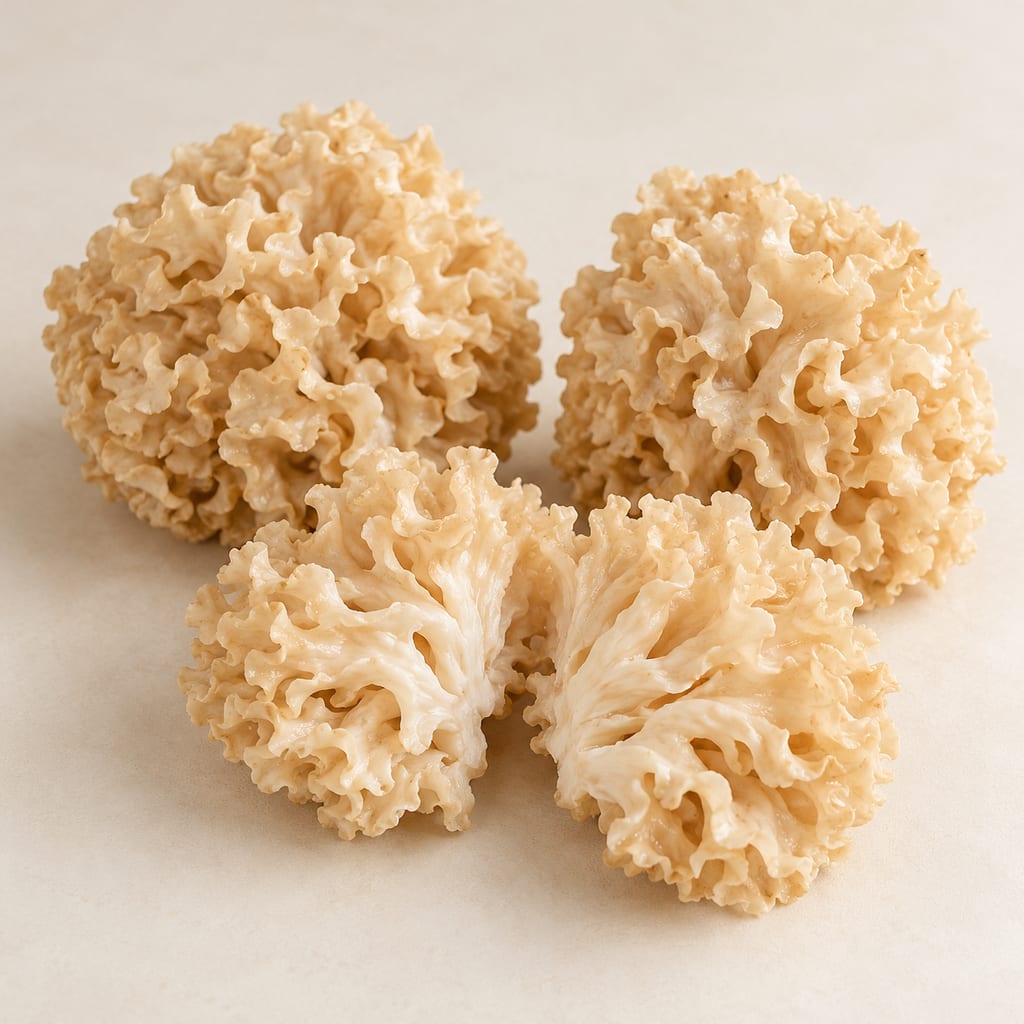
The Asian cauliflower mushroom, Sparassis latifolia, is a cultivated fungus with a frilled, fronded form that is eaten in China, Japan and Korea. Many Asian records under the name Sparassis crispa refer to this species.
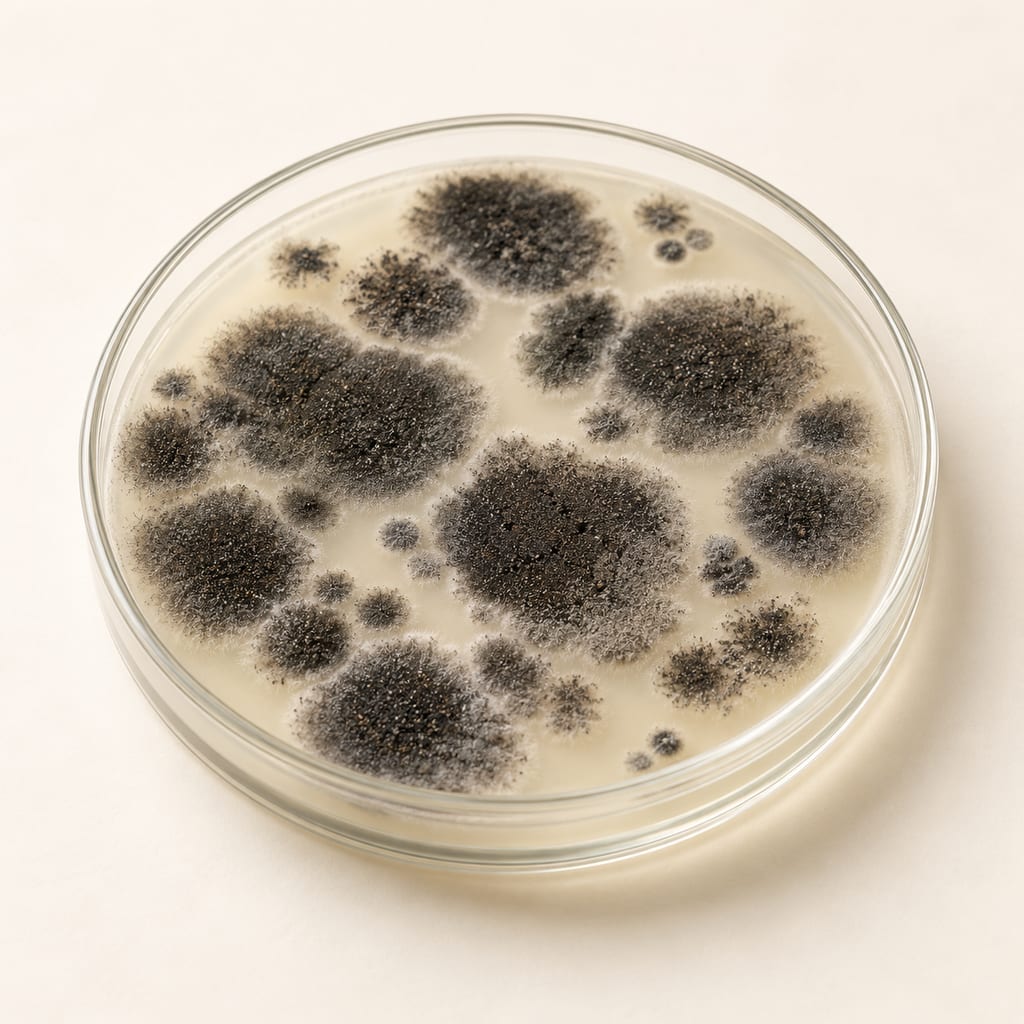
Aspergillus luchuensis is the black koji mould used in Japanese shochu and awamori, valued for the citric acid it makes alongside the starch-converting enzymes of koji.
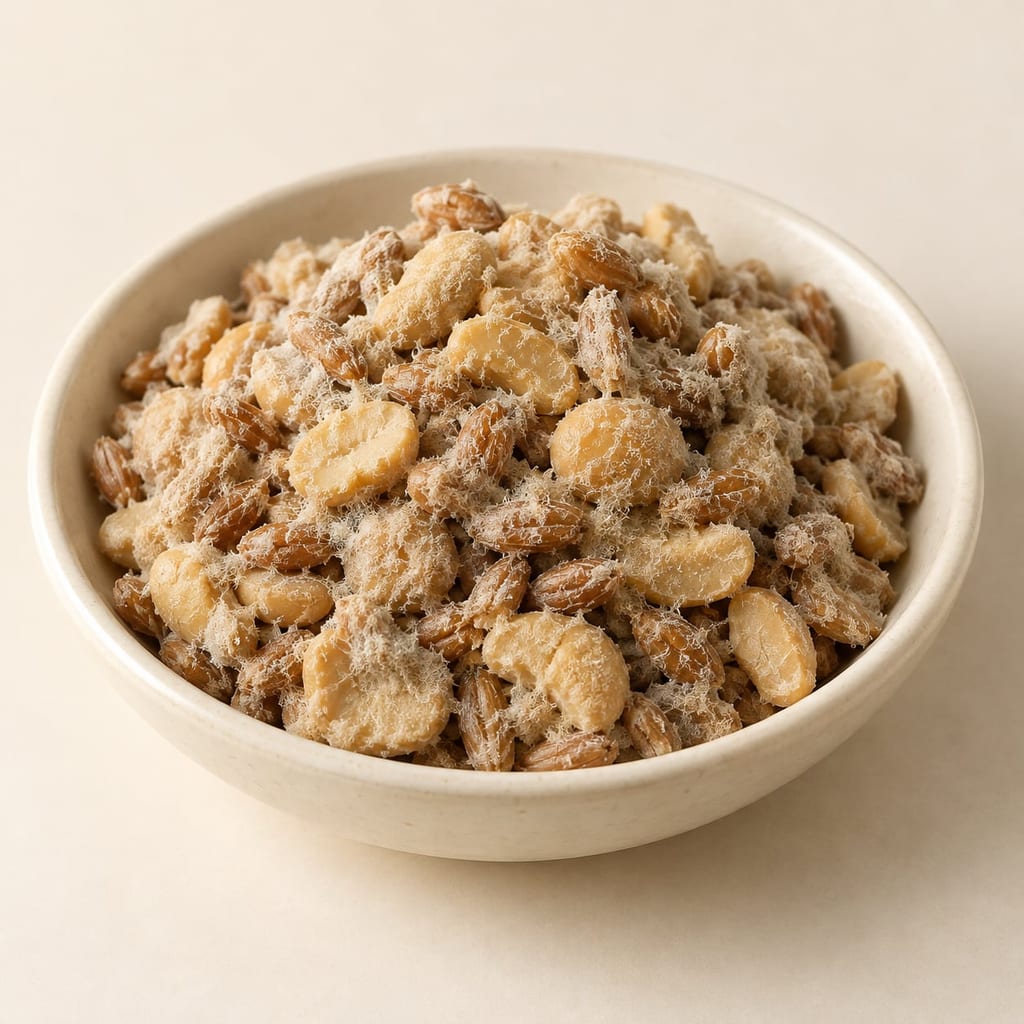
Aspergillus sojae is a koji mould of the Aspergillus flavus group, closely related to A. oryzae, used as a starter in soybean fermentations such as Korean meju, doenjang and ganjang.
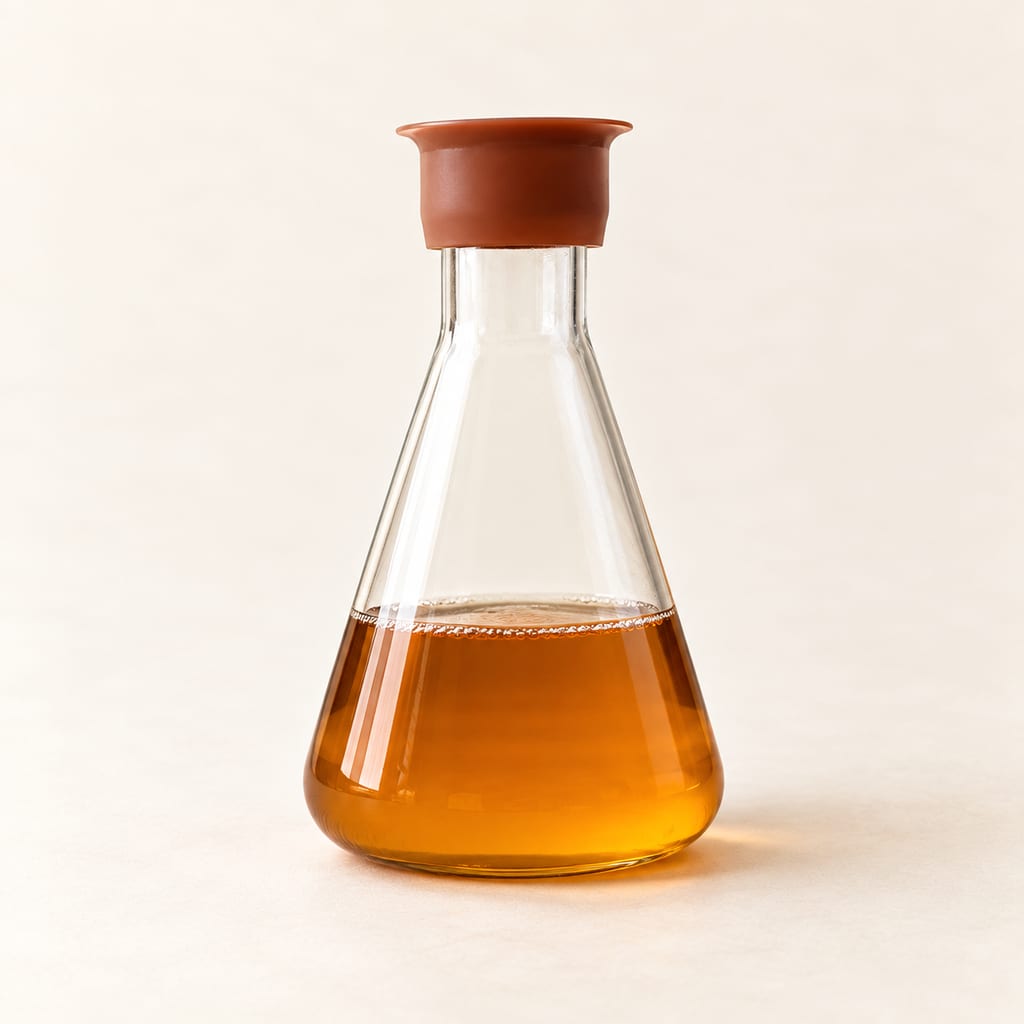
Awamori yeast ferments sugar released from rice koji in the Okinawan spirit’s mash. Sakimoto names the ingredient but gives no strain, form, supplier or dose.
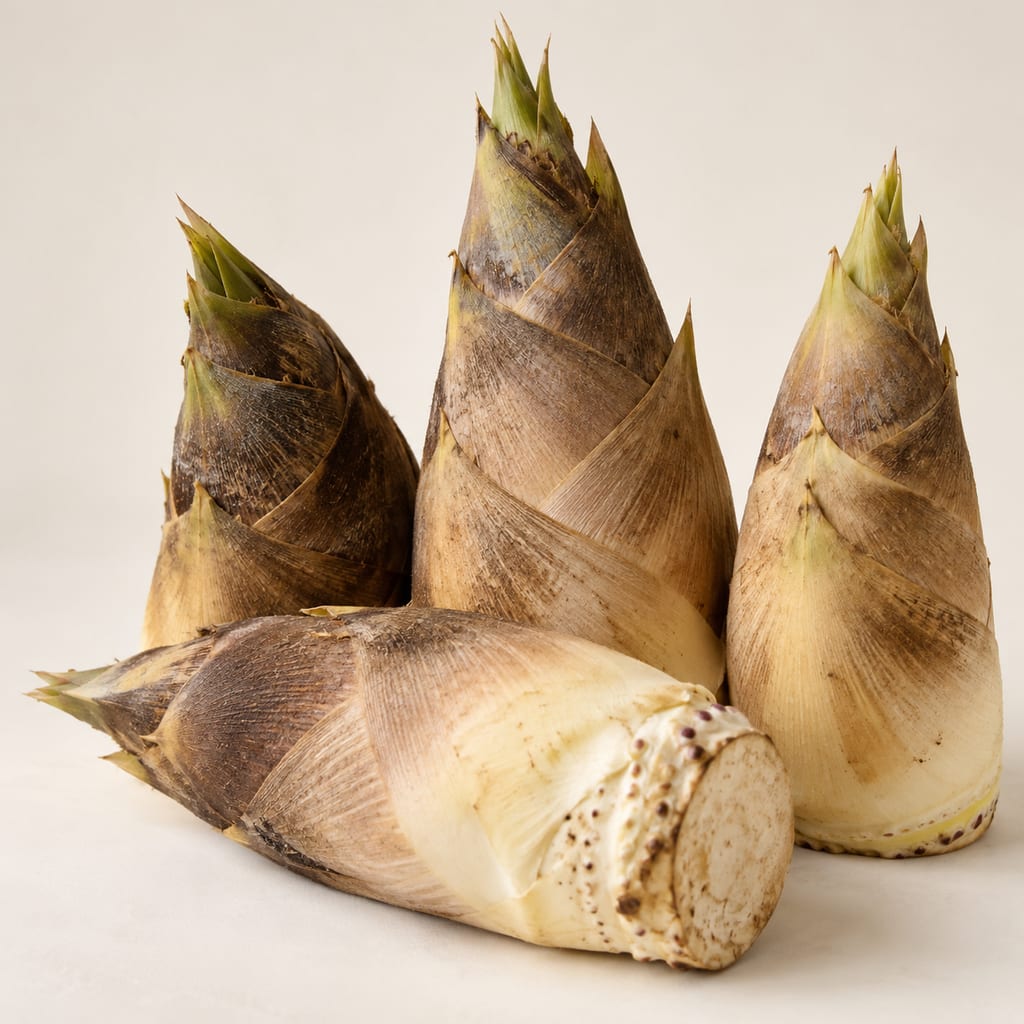
Bamboo shoots are the young culms of many bamboo species, eaten after boiling or leaching in Asia, and fermented into sour and preserved foods in the Himalayas, northeast India and Burma.
No community contributions have been published for this entry yet.
Sign in to contribute. Published comments and photos are free to read.
Index Fungorum, Royal Botanic Gardens, KewTaxonomy
Cortinarius tenuipes — Index Fungorum recordCortinarius tenuipes is the old name; current name is Thaxterogaster tenuipes (Hongo) Zhu L. Yang & Zi R. Wang; basionym Cortinarius claricolor var. tenuipes Hongo.
Cited in: A species with a revised name
MycologyTaxonomy · Ecology · Geography
The genus Thaxterogaster (Cortinariaceae): phylogeny and species diversity in Western China2025 treatment creates the current combination and calls the older 1987 C. tenuipes combination invalid; identifies Japanese holotype and Yunnan epitype; describes diagnostic morphology and taxonomic placement.
Cited in: A species with a revised name; Japanese woodland and autumn records
FAOHistorical use
Wild edible fungi: a global overview of their use and importance to people — Annex 3Lists Cortinarius tenuipes as edible; annex warns that edible labels do not always document actual eating and does not give country detail for this species.
Cited in: What the edible labels mean; No documented fermentation method
Ishikawa Prefectural Forestry Research StationSeason · Ecology · Historical use · Safety
クリフウセンタケ (Cortinarius tenuipes)Uses old name; labels 食毒 as edible and describes autumn fruiting in broadleaf forest; no method is given.
Cited in: Japanese woodland and autumn records; What the edible labels mean; No documented fermentation method
Japan Association for Agriculture and Forestry TechnologyIdentity · Season · Ecology · Safety
クリフウセンタケDescribes autumn fruiting on soil in oak forests and warns that local names can overlap with a poisonous mushroom.
Cited in: Japanese woodland and autumn records; Names, lookalikes and webcap hazards; No documented fermentation method
CAJPN PicturebookSeason · Ecology · Geography
ニセアブラシメジ(クリフウセンタケ)Japanese regional photo/field record from Shichikashuku Town, Miyagi Prefecture, October 2010; page describes autumn and broadleaf habitat and gives food status.
Cited in: Japanese woodland and autumn records; What the edible labels mean
Helsenorge / Norwegian Poisons Information CentreSafety
Poisonous mushrooms in NorwayDocuments severe delayed renal injury from C. rubellus and C. orellanus; does not establish orellanine in T. tenuipes.
Cited in: Names, lookalikes and webcap hazards
North American Mycological AssociationSafety
Mushroom Poisoning SyndromesLists orellanine-producing webcaps and delayed kidney injury; not a species-specific toxin finding for T. tenuipes.
Cited in: Names, lookalikes and webcap hazards
Wikimedia CommonsImage · Provenance
Cortinarius tenuipes 01.jpgCommons file page captions this photograph as Cortinarius tenuipes and states CC BY 3.0/GFDL licensing; same contributor/date as the other four files.
Wikimedia CommonsImage · Provenance
Cortinarius tenuipes 02.jpgCommons file page captions this photograph as Cortinarius tenuipes and states CC BY 3.0/GFDL licensing; same contributor/date as the other four files.
Wikimedia CommonsImage · Provenance
Cortinarius tenuipes 03.jpgCommons file page captions this photograph as Cortinarius tenuipes and states CC BY 3.0/GFDL licensing; same contributor/date as the other four files.
Wikimedia CommonsImage · Provenance
Cortinarius tenuipes 04.jpgCommons file page captions this photograph as Cortinarius tenuipes and states CC BY 3.0/GFDL licensing; same contributor/date as the other four files.
Wikimedia CommonsImage · Provenance
Cortinarius tenuipes 05.jpgCommons file page captions this photograph as Cortinarius tenuipes and states CC BY 3.0/GFDL licensing; same contributor/date as the other four files.