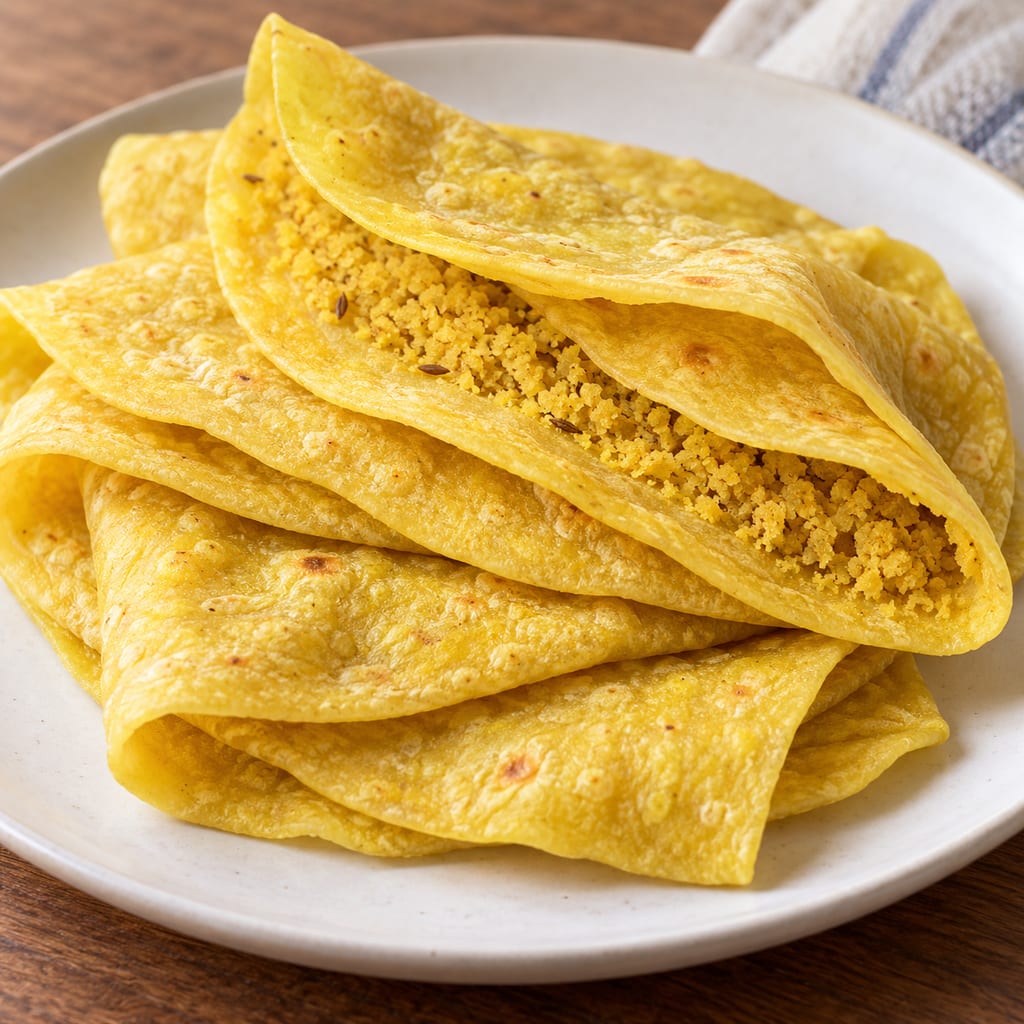
Dholl puri (Mauritian split-pea flatbread)
Kavi Hurrydoss’s Mauritian dholl puri encloses finely ground cumin-seasoned yellow split peas in wheat dough, then rolls and griddle-cooks each filled bread.
 FermenteaWhere food goes to change
Farata · Mauritian roti · Mauritian paratha
Teenuja Dahari’s oil-free Mauritian farata uses hot-water wheat dough, folded square parcels and a tawa to make six soft, layered flatbreads.
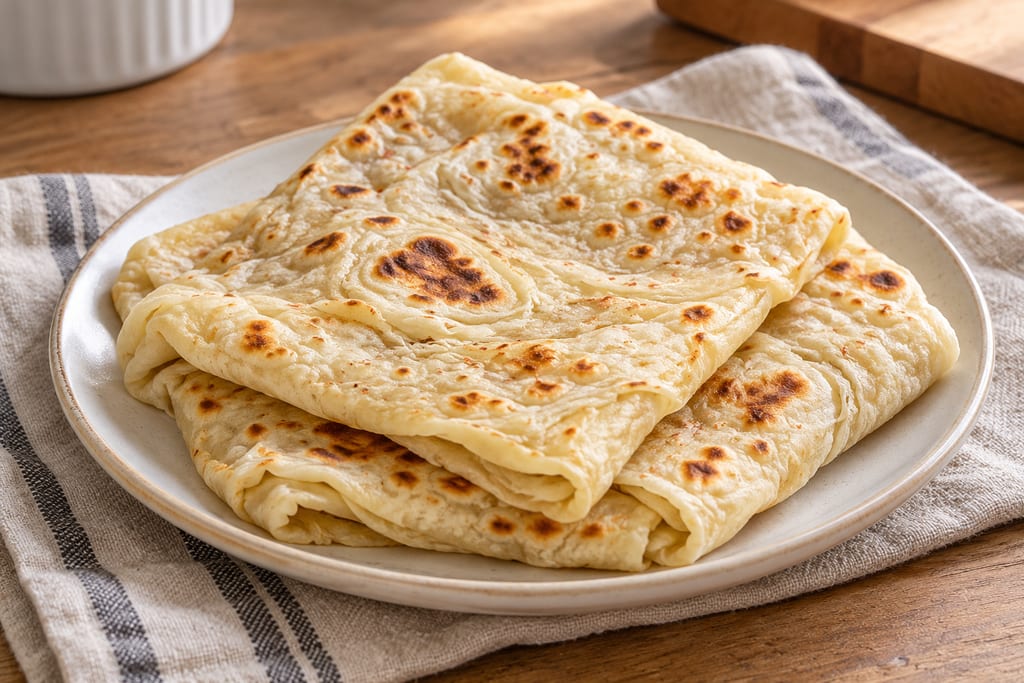
Teenuja Dahari presents roti or farata as a popular street food in Mauritius, often served with white bean curry and rougaille. She notes that fillings and accompaniments vary among sellers. This page records her measured oil-free home version rather than treating it as the single standard farata.
The recipe uses a hot-water dough and folds each thin sheet into a square parcel before rolling it again. The resulting bread is softly layered and griddle-cooked. The author distinguishes this oil-free adaptation from commercial styles that often use oil in the dough and during folding and cooking. A light brushing before folding is optional and gives more pronounced layers.
Boiling water is stirred into the flour with a spoon, then the mixture is allowed to cool until it can be kneaded comfortably. The author describes the finished dough as soft, supple and non-sticky, adjusting the flour or water to reach that feel. The recipe gives no exact water adjustment beyond its 200 ml measure and a possible one or two tablespoons either way.
After a 15-minute covered rest, a brief second knead helps the dough roll into thin sheets. Keep the pieces covered while working; the source cautions against leaving dough exposed to dry out.
Roll each portion to about 2 mm, fold opposite thirds into a rectangle and then fold the short ends inward to make a square. Roll each parcel to 2–3 mm, preserving its rough square shape. This folded form distinguishes the farata from a plain round roti.
The source calls for a hot tawa or crepe pan at medium-high heat. Cook for about 30 seconds on each of the first two sides until bubbles form, then turn again and gently press the puffed side to spread the air. Adjust the heat if the pan becomes too hot. The source does not give a numerical pan temperature or a total batch time.
Serve with curry, rougaille or other accompaniments. Dahari recommends eating the breads fresh on the same day; this recipe adds no longer storage claim.
Teenuja Dahari describes roti or farata as popular Mauritian street food commonly served with white bean curry and rougaille, with toppings varying among sellers. She explains that commercial farata is often made with oil in the dough and during folding and cooking, while her recipe is an oil-free home adaptation; she notes that oil can create more distinct layers. This supports the place and a documented contemporary use, not a precise birthplace, historical start date or single standard formula.
Yield 6 farata · Scaling: source batch only
The recipe adds boiling water to flour; hot water and dough can burn before cooling.
Hazard sourceRaw flour may carry harmful bacteria; do not taste uncooked dough.
Hazard sourceStir the boiling water into the flour with a spoon and wait until the mixture is comfortable to handle before kneading.
Control sourceDo not taste uncooked dough; wash hands, utensils and surfaces after handling raw flour and dough.
Control sourceThe source provides a home oil-free adaptation, not one universal Mauritian farata formula. It describes oil brushing as an optional way to create more distinct layers.
The source gives no storage duration; it recommends eating the rotis fresh on the same day.
Teenuja Dahari presents this as Mauritian roti or farata. No more precise place or origin is claimed.
Kavi Hurrydoss’s Mauritian dholl puri encloses finely ground cumin-seasoned yellow split peas in wheat dough, then rolls and griddle-cooks each filled bread.
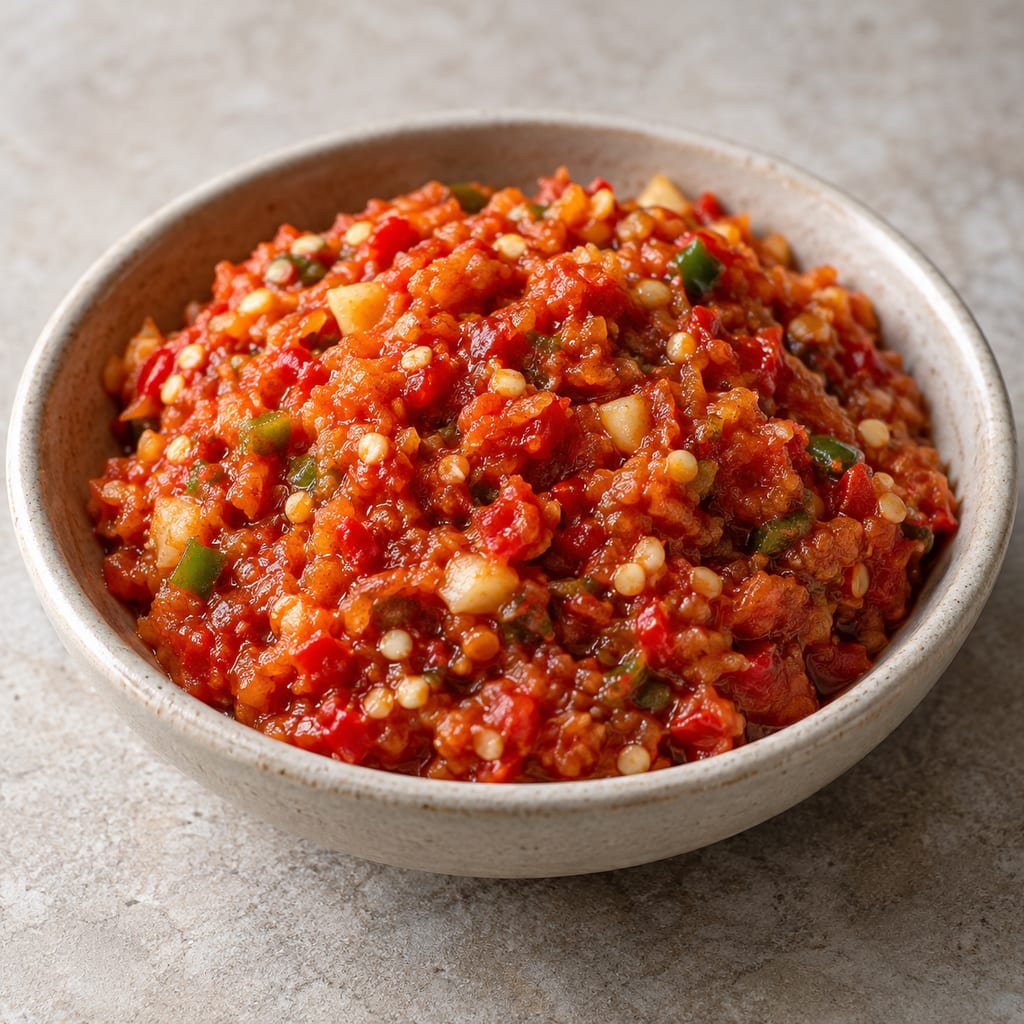
Mazavaroo is a Mauritian hot chilli paste of fresh chillies, garlic, salt and oil with lemon or lime. It is kept refrigerated, and the reviewed recipes say it should rest for days before use.

Mauritian molasses rum is a commercial distilled spirit made from fermented sugar-industry molasses. An official ruling describes one 40% ABV Lazy Dodo bottling; the sources do not define a single recipe for the wider product family.
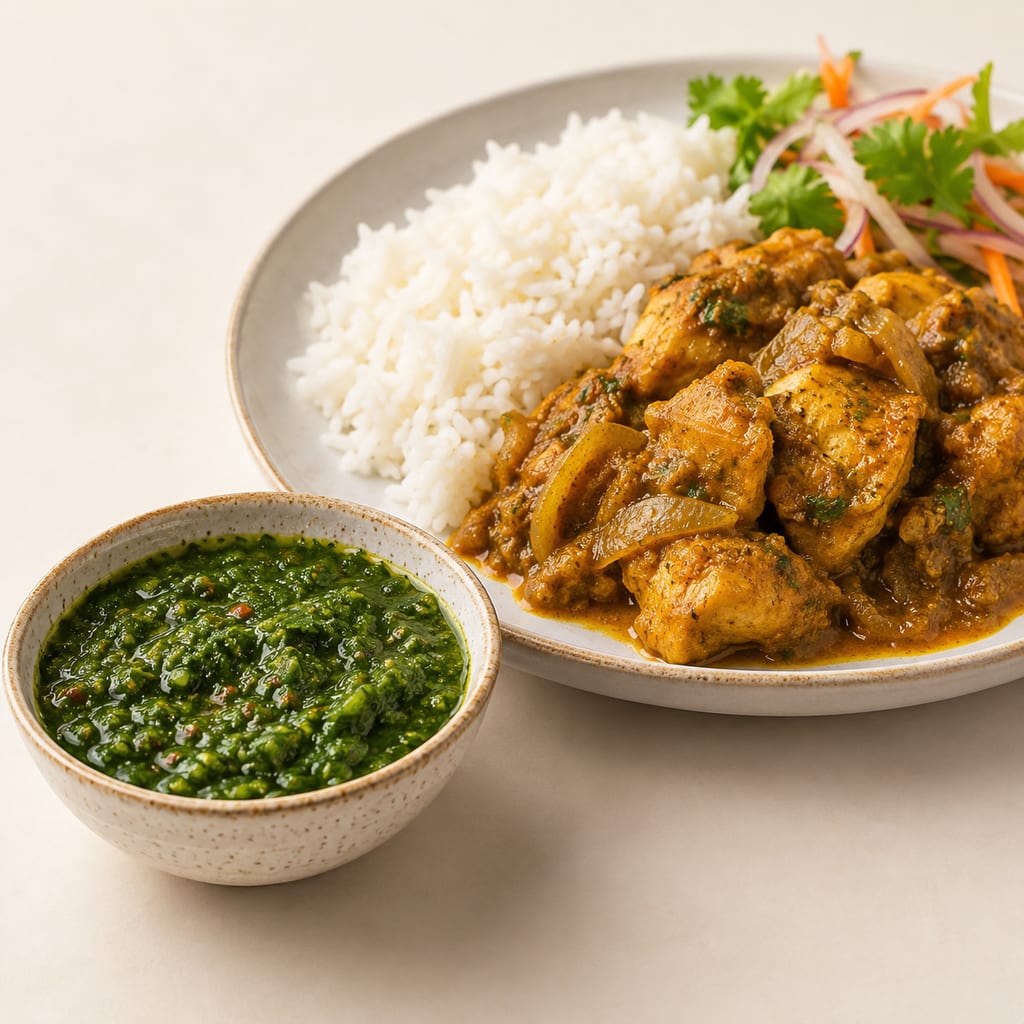
A fresh Mauritian coriander chutney, blended with oil, green onion, chilli and lime, and served beside curry.
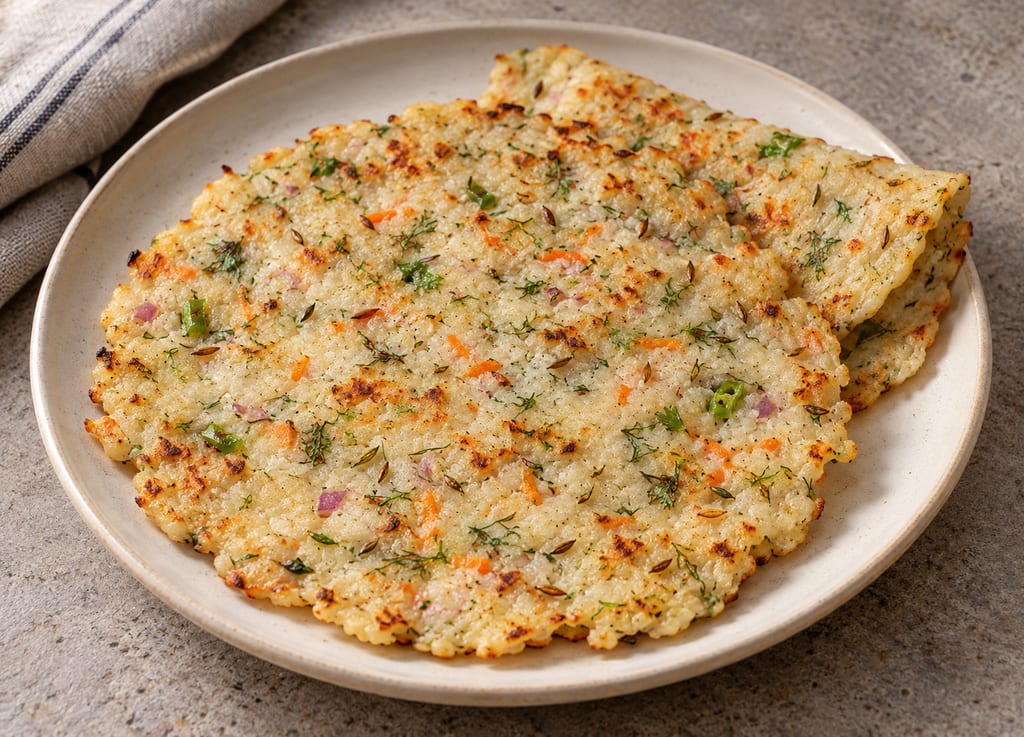
This Karnataka-style akki rotti mixes fine rice flour with vegetables, coconut, herbs and spices, then hand-pats and griddle-cooks the dough.
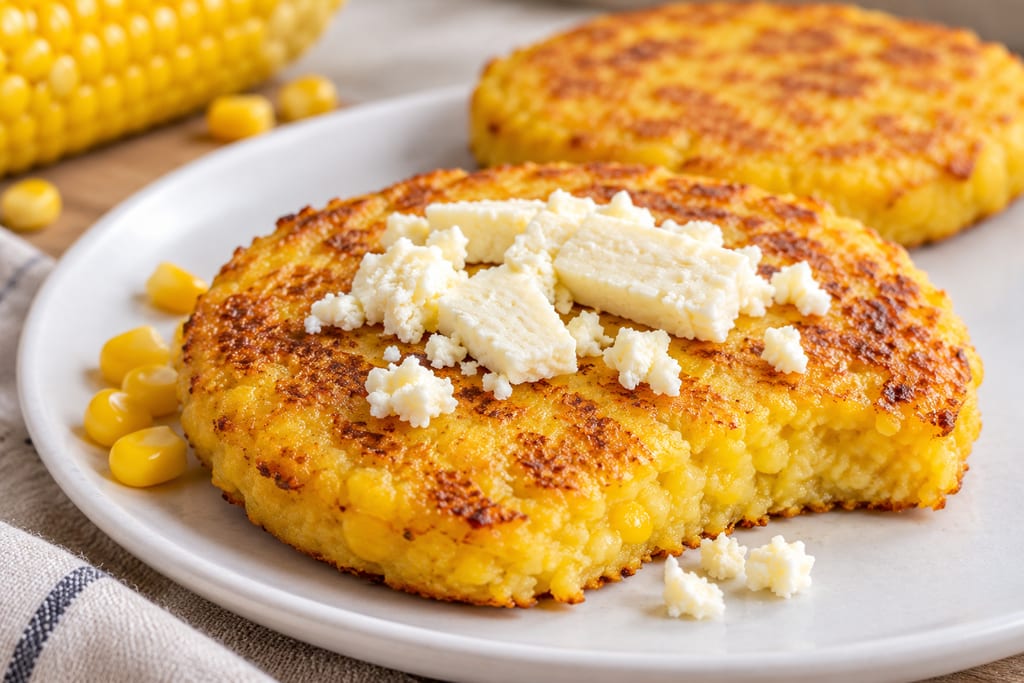
A Colombian Andean griddle cake made from fresh sweet-corn batter, cooked in butter and served with white cheese.
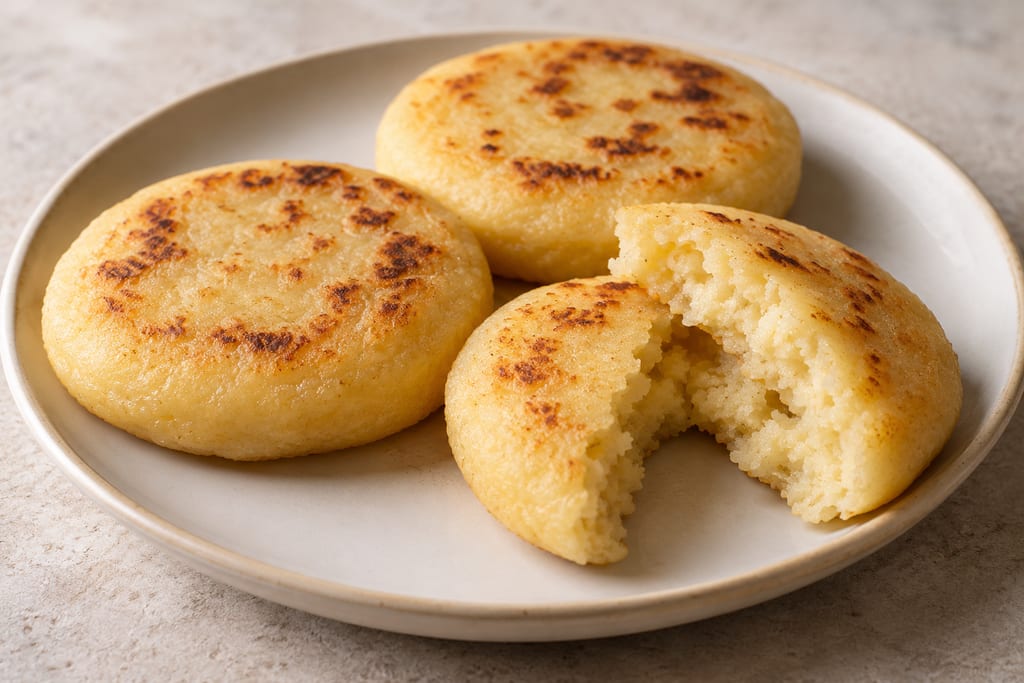
This household version combines precooked corn flour, warm water and salt, then cooks thick rounds on a lightly oiled skillet or griddle. It is one source-specific arepa method, not a universal Colombian or Venezuelan formula.
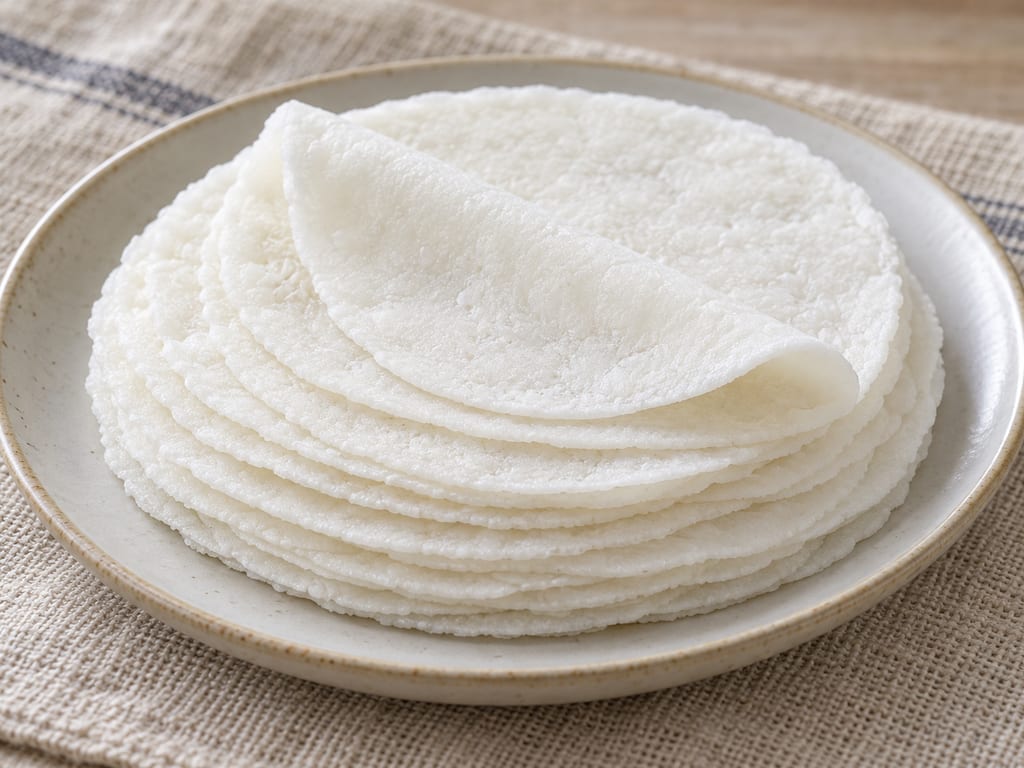
Thin Malabar rice-flour rounds made from roasted rice flour cooked into salted boiling water, kneaded after cooling, and rolled to about 1 mm. They cook on a hot griddle without taking on colour.
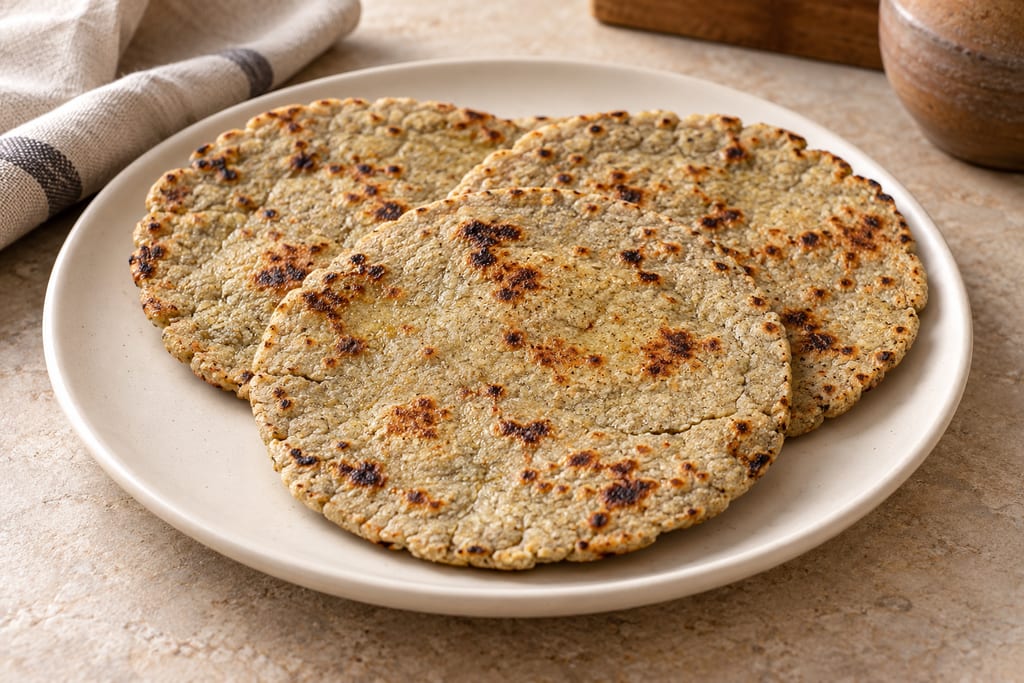
A pearl-millet flatbread shaped between sheets and cooked on a hot tawa. This home batch makes eight.
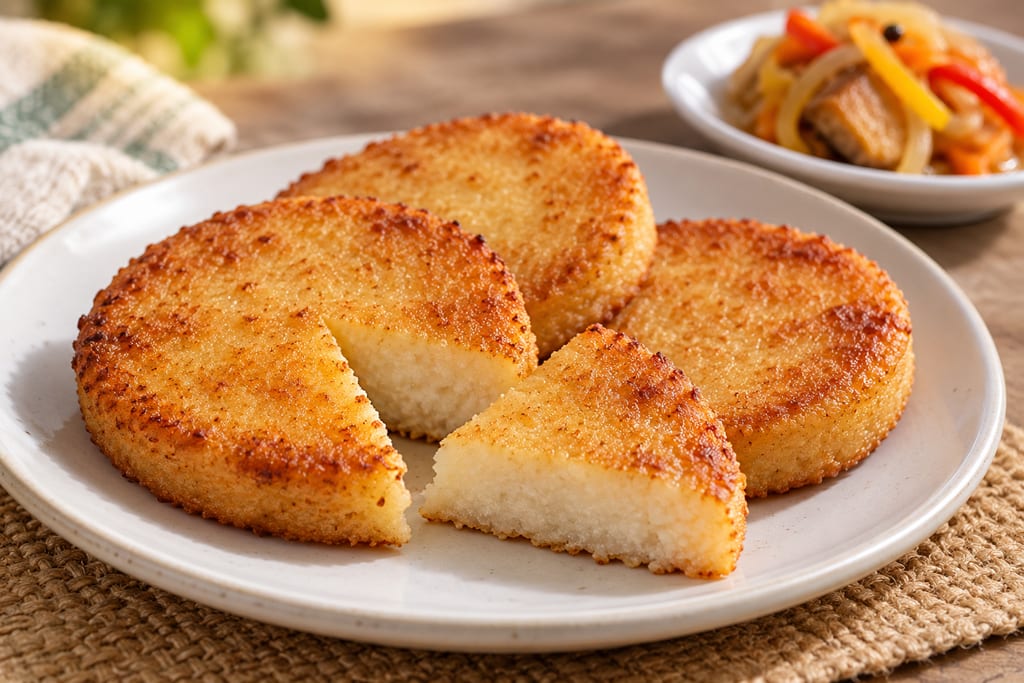
A serving method for approved, prepared bammy rounds: soak them in coconut milk and refry until golden. It does not process raw cassava.
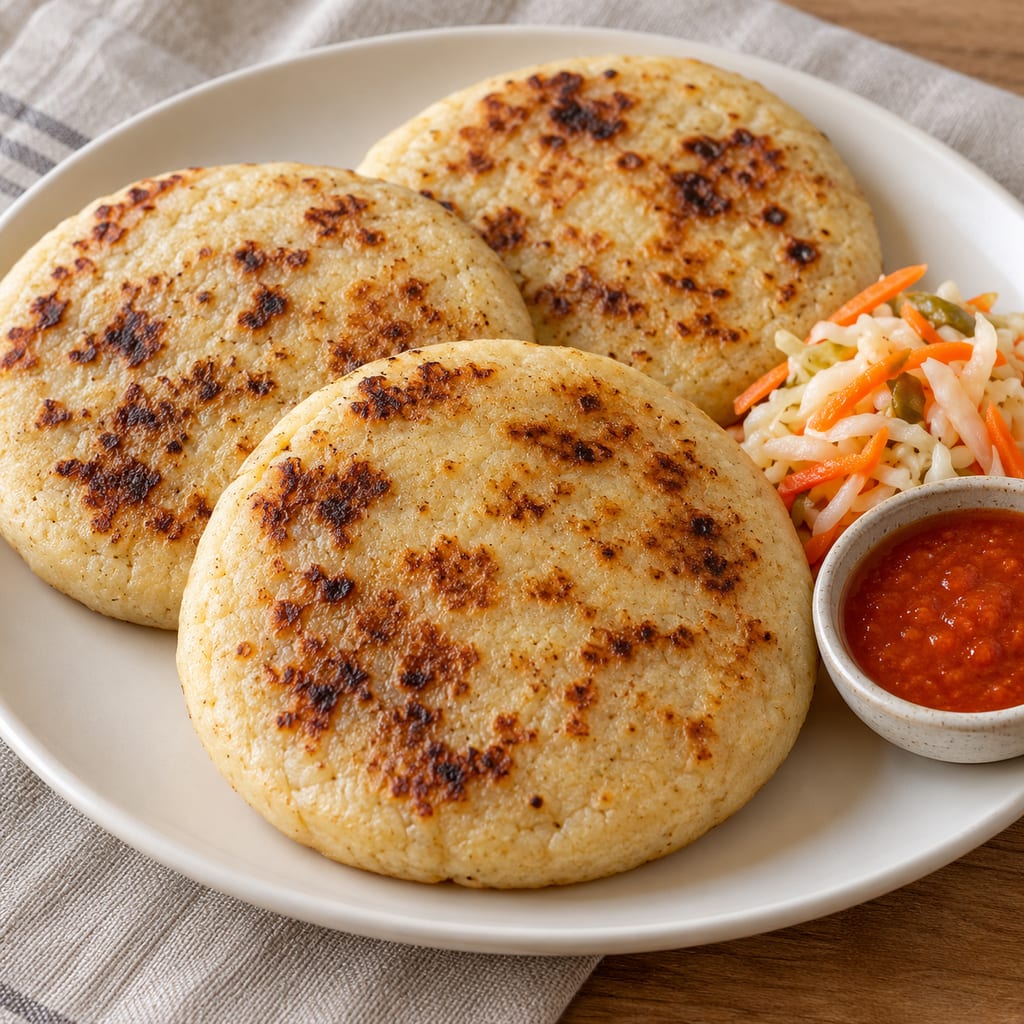
Salvadoran-style masa harina cakes filled with refried beans and cheese, sealed and cooked on an oiled skillet.
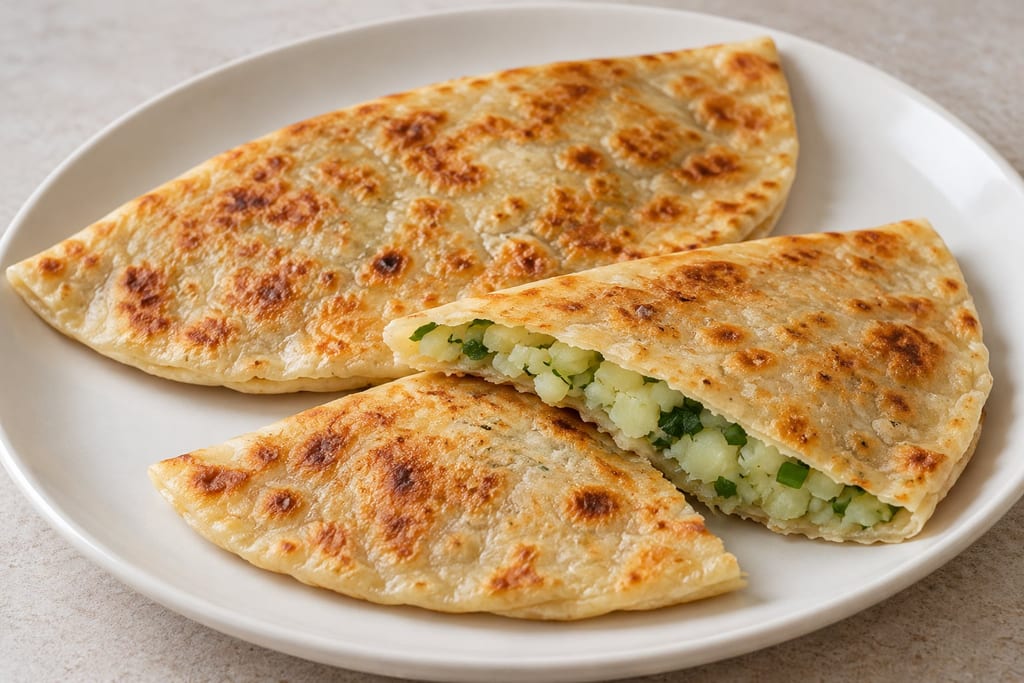
A thin, unleavened Afghan flatbread filled with mashed potato, scallion and cilantro, folded and pan-browned. This version uses a dough made from scratch.
No community contributions have been published for this entry yet.
Sign in to contribute. Published comments and photos are free to read.
VeganlovlieInspiration · Method · Identity · Geography · History
Mauritian Roti and Fillings 1/3: Roti Recipe (Farata/Paratha) – Oil-free VersionTeenuja Dahari identifies roti or farata as Mauritian street food often served with white bean curry and rougaille, while noting accompaniments vary.
The source's oil-free recipe uses 240 g all-purpose flour and 200 ml boiling water, rests the dough for 15 minutes, divides it into six, folds rolled dough into square parcels, rolls to 2–3 mm and cooks on a medium-high tawa for about 30 seconds per side before turning until puffed.
The author distinguishes her oil-free home version from commercial preparations that use oil in dough and at folding and cooking; a light oil brush is an optional way to develop more pronounced layers.
The source says the breads are best eaten fresh on the same day.
U.S. Food and Drug AdministrationSafety
Handling Flour Safely: What You Need to KnowRaw flour may contain harmful bacteria; do not taste uncooked dough and clean hands, utensils and surfaces after handling.