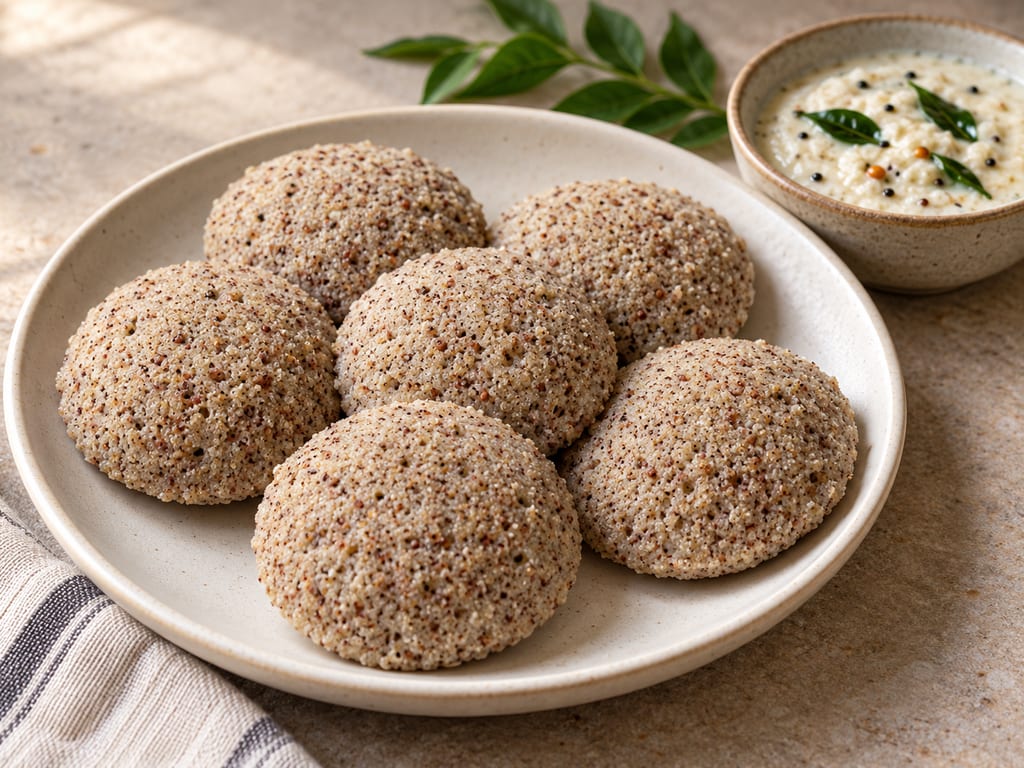
Multigrain millet idli
Multigrain millet idli uses a source-specific naturally fermented grain and urad batter, then cooks it by steaming in moulds. The creator leaves some process measures unquantified.
 FermenteaWhere food goes to change
Modern method
Rice and urad idli uses a source-specific naturally fermented grain and urad batter, then cooks it by steaming in moulds. The creator leaves some process measures unquantified.
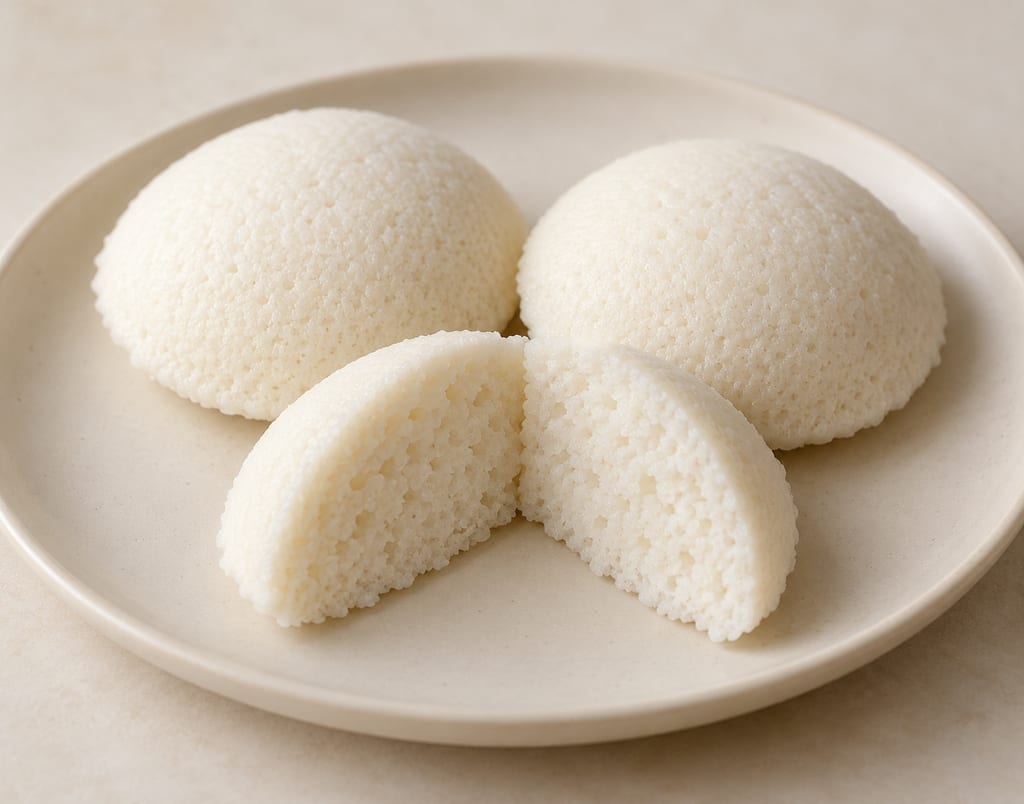
Idli is a steamed, naturally fermented rice-and-legume cake that is particularly associated with southern India.
It is usually round, white or off-white, soft and spongy, with a mildly sour flavour.
Unlike bread made using baker's yeast, idli is typically leavened through the activity of microorganisms naturally associated with its soaked grains and batter.
Its principal ingredients are rice, Oryza sativa, and black gram, Vigna mungo, commonly known as urad dal.
The familiar white version uses hulled urad and prepared rice suitable for idli.
This particular recipe uses four cups of idli rice to one cup of split urad dal, with a small unmeasured addition of fenugreek.
Its source is a cooking demonstration in which one fermented batter produces both idli and dosa.
The distinction between the two is not the name of the batter but what happens after fermentation.
Idli is steamed in moulds, while dosa is spread on a griddle and fried.
Name: Idli — Language: Tamil — Script: இட்லி
Name: Idli — Language: Kannada — Script: ಇಡ್ಲಿ
Name: Idli — Language: Telugu — Script: ఇడ్లీ
Name: Idli — Language: Hindi — Script: इडली
Name: Idli — Language: Malayalam — Script: ഇഡ്ലി
Name: Urad dal — Language: Hindi — Script: उड़द दाल
Name: Black gram — Language: Botanical English — Script: Vigna mungo
Name: Fenugreek / methi — Language: Hindi — Script: मेथी
Local spelling and pronunciation vary.
The word idli identifies a family of preparations rather than one unchanging set of proportions.
Idli has a long South Indian history, but the development of the present-day steamed fermented cake is not fully established.
Medieval texts contain references to foods connected with the name.
The specific combination of rice, urad fermentation and steaming is not necessarily documented in every early reference.
Claims that the complete modern procedure was invented in one particular century should therefore be treated cautiously.
By the modern period, rice-and-urad idli was well established across southern India.
It is associated particularly with Tamil Nadu, Karnataka, Andhra Pradesh, Telangana and Kerala, although its use extends much more widely.
Restaurants, household kitchens and specialist food manufacturers now prepare idli at different scales.
The technological process remained important even when mechanized grinders replaced some traditional stone-grinding equipment.
Ingredient: Idli rice — Quantity: 4 cups — Function: Main starch substrate and steamed cake structure
Ingredient: Split urad dal — Quantity: 1 cup — Function: Viscosity, protein and fermentation substrate
Ingredient: Fenugreek seeds — Quantity: Small amount, not specified — Function: Flavour and batter properties
Ingredient: Water — Quantity: As needed; unmeasured — Function: Soaking and grinding
Ingredient: Salt — Quantity: To preference; unmeasured — Function: Seasoning and fermentation environment
Ingredient: Cooking oil — Quantity: A few drops — Function: Preventing mould adhesion
The original source offers wet muslin as an alternative to greasing the idli plates.
The amount of fenugreek is not specified. A teaspoon quantity from another idli recipe should not be substituted and presented as if it belonged to this one.
Idli rice is commonly a parboiled or otherwise specifically prepared rice chosen for making idli.
Its starch properties influence water absorption and the texture of the steamed cake.
Rice is ground differently depending on whether the intended product is idli or dosa.
For idli, a somewhat coarser rice component can contribute desirable texture.
Urad contains proteins and polysaccharides that help create a thick, aerated batter.
When ground with water, it can develop substantial viscosity.
That physical property helps retain fermentation gases before steaming.
An idli made from rice alone does not necessarily develop the same soft structure.
Fenugreek is Trigonella foenum-graecum.
Its seeds contribute flavour and components that can influence batter viscosity.
The original recipe uses a small amount but does not quantify it.
Fenugreek is not a substitute for the urad.
Use separate soaking bowls, a blender or wet grinder, a large fermentation container, an idli steamer and idli plates.
The original preparation uses an oven with the heating switched off but the light switched on as a warm fermentation location.
The actual temperature achieved depends on the appliance and surrounding conditions.
A switched-off oven is not automatically a temperature-controlled fermentation chamber.
Rinse four cups idli rice.
Remove excess surface starch, dust and any unsuitable material.
Rinse one cup split urad dal together with the unmeasured small amount of fenugreek.
Keep the urad mixture separate from the rice.
The cooking demonstration specifies soaking for five to six hours.
For food-safety purposes, soaking this long should be performed under refrigeration at 4°C or below.
The original source does not provide a numerical soaking temperature.
Drain the soaked urad.
Grind with chilled water for approximately two to three minutes, as shown in the source.
The objective is a fine, light paste.
The exact water volume is not supplied.
Grind the soaked rice in batches.
Add water gradually.
The demonstration describes a batter that drips from a spoon.
This is a qualitative consistency description, not a viscosity measurement.
Mix the rice and urad batters thoroughly by hand.
The creator uses this mixing stage to combine the components and introduce air.
Use clean hands and suitable hygiene.
Place the batter in a large vessel, cover and leave to ferment for at least ten hours.
The source uses an oven with the light switched on and the heat switched off.
The fermentation temperature is not measured.
The vessel needs sufficient headspace for expansion.
Remove the batter needed for idli.
Add salt to preference.
Mix gently.
The original video does not give a salt mass.
Lightly grease the idli plates with oil, or use wetted muslin as demonstrated.
Fill the moulds with batter.
Do not pack or compress the batter as if making an unleavened dough.
Steam covered over high heat for 10–12 minutes.
The cooking duration depends on the source's moulds and steamer.
The final product should reach 74°C internally for at least 15 seconds under the specialist safety guidance.
Remove the idlis from their moulds and serve hot.
The original source does not provide a numerical yield.
Idli fermentation has been investigated scientifically for decades.
The two most obvious transformations are acidification and leavening.
Lactic-acid bacteria convert available carbohydrates into organic acids.
These changes create the mildly sour flavour.
The bacterial community is not constant throughout fermentation.
Early organisms may become less abundant while others dominate later stages.
Heterofermentative bacteria can produce carbon dioxide as part of their metabolism.
This gas becomes trapped in the batter and contributes to an increase in volume.
A 1965 study highlighted Leuconostoc mesenteroides.
A 2019 molecular study found that Weissella and other lactic-acid bacteria contributed strongly to the changing fermentation.
In that later laboratory work, lactic-acid bacteria represented approximately 86% of the bacterial population in the studied fermentation.
The figure is a study-specific observation and cannot be applied automatically to every household batch.
The 2019 investigation measured a decline from pH 6.3 to pH 4.5 over 24 hours in its experimental batter.
This demonstrates the capacity for acidification.
It does not establish the pH achieved by the present ten-hour household method.
Microbial and grain enzymes can modify starch and other nutrients.
These transformations influence the availability of fermentable sugars.
The exact biochemical activity depends on the grains and microbial community.
Fermentation creates gas bubbles inside the batter.
The urad-rich mixture helps maintain those bubbles.
During steaming, heat causes starch gelatinization and protein changes.
The structure sets around the existing bubbles.
The resulting cake has small pores distributed through its interior.
If the batter has insufficient gas, or the bubbles collapse before steaming, the result can be dense.
This explains why grinding, mixing and fermentation all influence softness.
Rice and urad remain the defining ingredients, but their ratios vary.
Larger, flatter idlis are associated with Karnataka.
Their geometry differs from the standard small moulded idli.
These are miniature idlis, often served with sambar.
Some Karnataka preparations use leaf containers rather than conventional metal moulds.
This can refer to a semolina-based preparation often raised without the same overnight rice-and-urad fermentation.
It should not be confused with simply using idli rava in the present batter.
Related steamed fermented cakes occur in coastal western India, with different traditional formulations.
These are associated preparations, not necessarily the same recipe.
Idli is commonly served with sambar, coconut chutney, tomato chutney or other regional accompaniments.
It can be eaten for breakfast, lunch or dinner.
In many homes, the same batter is used to prepare dosa on a later occasion.
The soft, mild cakes absorb sauces and make a useful contrast to pungent chilli, tamarind or lentil-based dishes.
Dense cakes: The batter may have insufficient gas or unsuitable consistency.
Flat cakes: Overmixing can remove gas before steaming.
Sticky centres: The idlis may be undercooked or the batter too wet.
Very sour flavour: The batter may have fermented too long.
Unpleasant smell, unexpected colour or mould: Discard.
Little rise: Temperature, microbial activity or grain conditions may be unsuitable.
None of these observations substitutes for appropriate food-safety controls.
Food-safety guidance specifically covering idli and dosa recommends refrigerated soaking at 4°C or below for lengthy soaking periods.
At room temperature, the recommended soaking limit is four hours.
It also specifies a 74°C internal cooking temperature for at least 15 seconds.
For batter packaged commercially, the guidance specifies verifying pH 4.6 or below.
The source video does not provide a measured pH or independently validated storage period.
Prepared idli should be refrigerated promptly when not eaten immediately.
The modern creator demonstration does not establish the earliest attestation or origin of this food.
Scaling: source batch only
Batter rise, bubbles, aroma, colour and texture are quality observations, not safety proof. The source does not establish measured fermentation temperature, pH or a safe storage time.
The creator does not establish this preparation’s geographic origin.
Multigrain millet idli uses a source-specific naturally fermented grain and urad batter, then cooks it by steaming in moulds. The creator leaves some process measures unquantified.
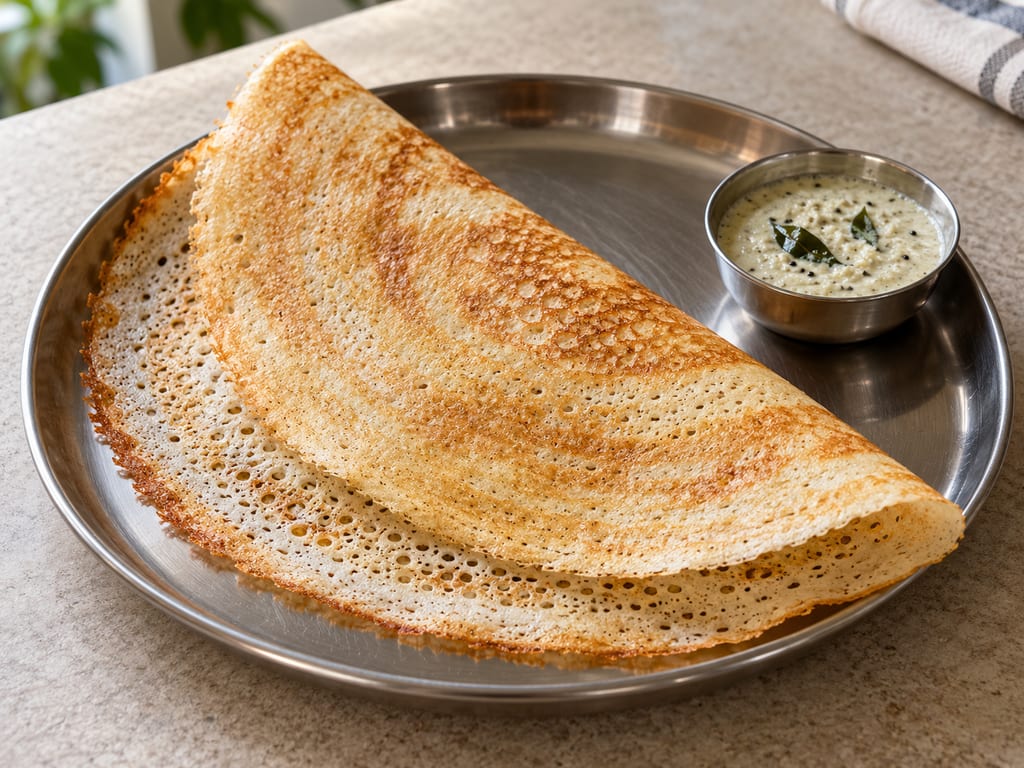
Rice and urad dosa uses a source-specific naturally fermented grain and urad batter, then cooks it by griddling. The creator leaves some process measures unquantified.
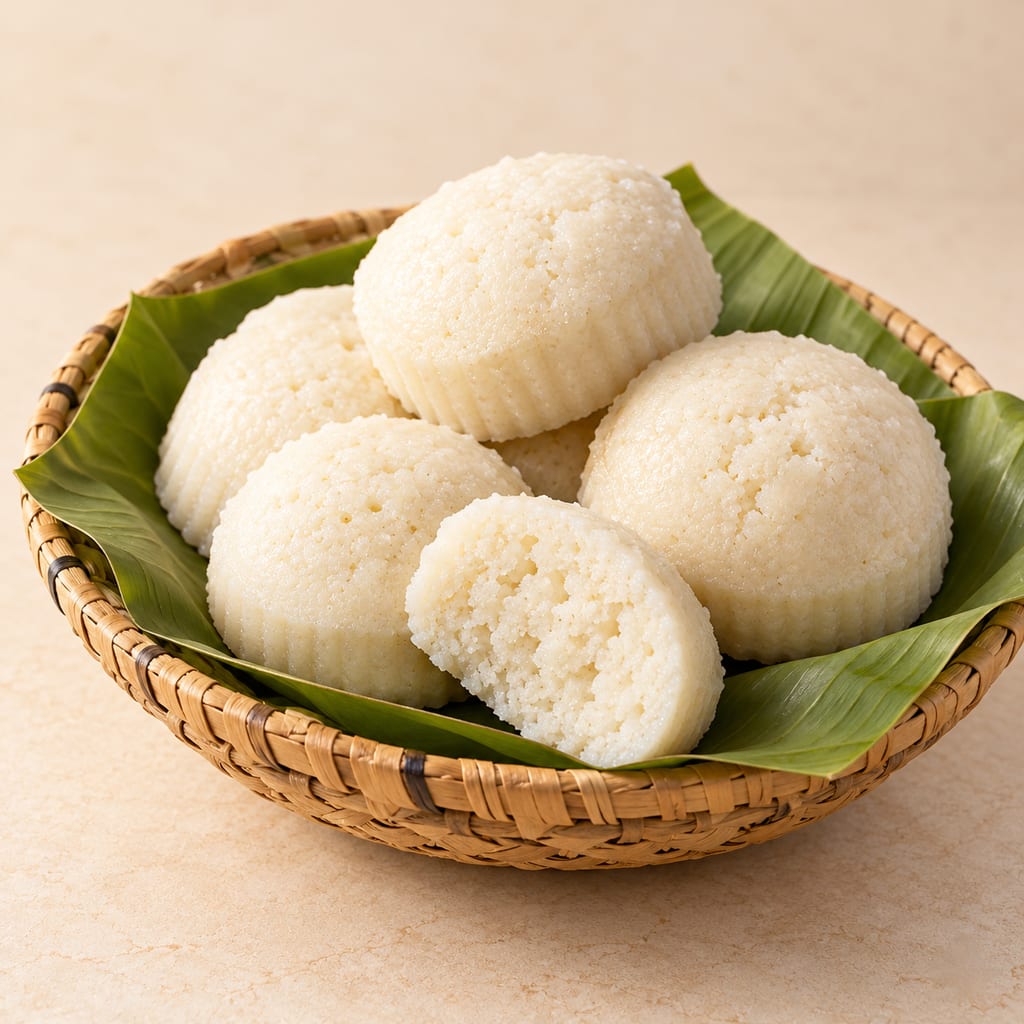
Soft, lightly tangy steamed cereal bread documented across Benin and Togo. This page gives one measured rice-flour research method; maize-based Ablo and mixed-grain versions remain distinct traditions.
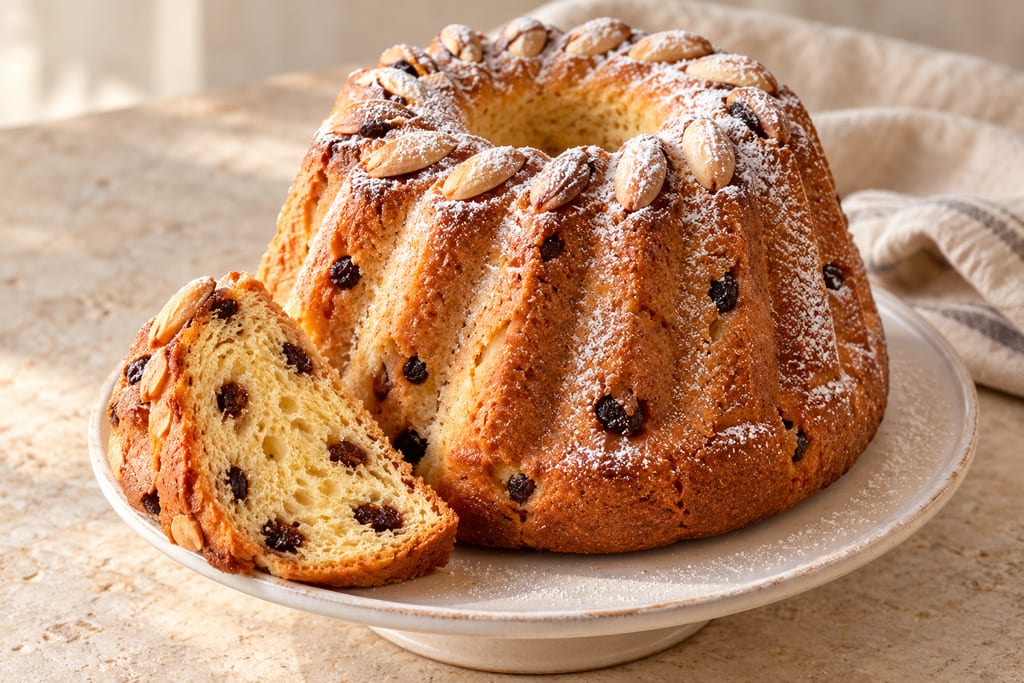
An enriched Alsatian yeast ring with raisins and almonds, kneaded with butter, proofed in a fluted mould and baked until browned.
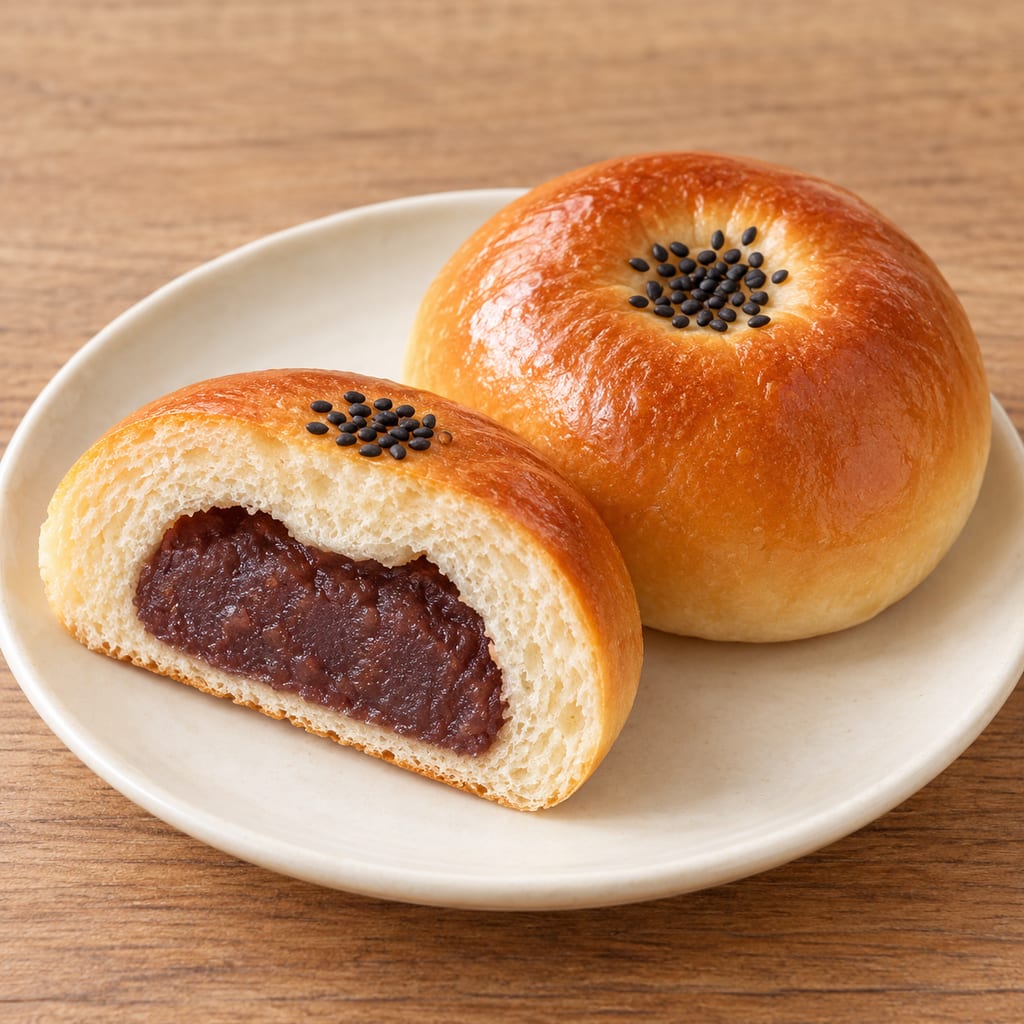
Anpan is a soft wheat bun filled with sweet red-bean paste and finished with egg wash and black sesame. This dough rises with commercial instant yeast.
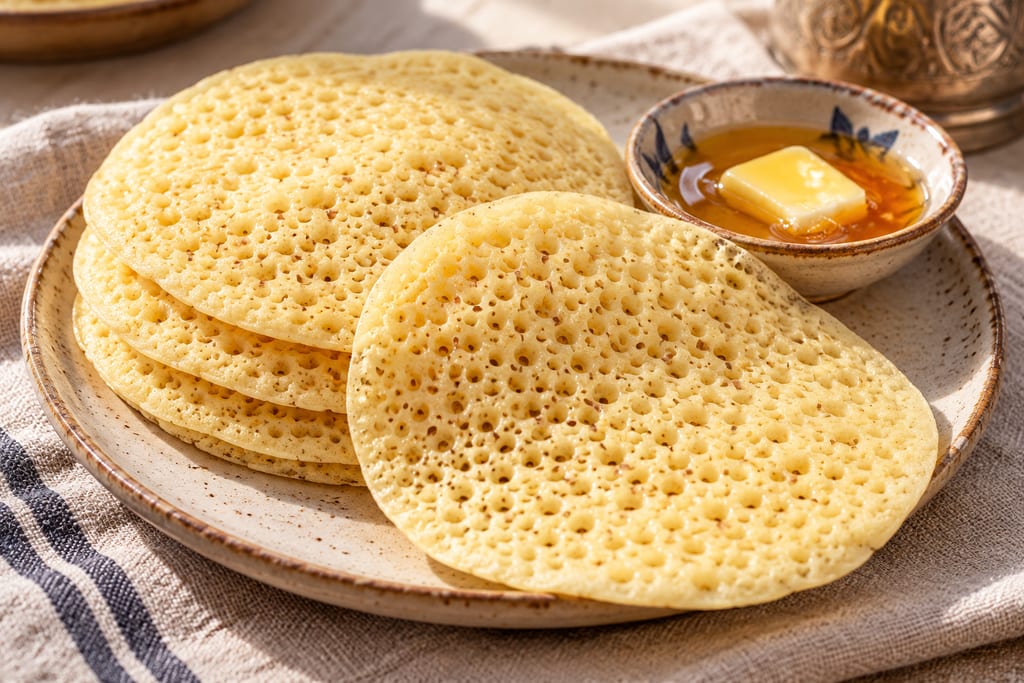
Moroccan semolina pancakes made from a thin yeast batter, rested until foamy and cooked on one side until the surface sets with a honeycomb of holes. This source-specific batch makes sixteen 5-inch pancakes.
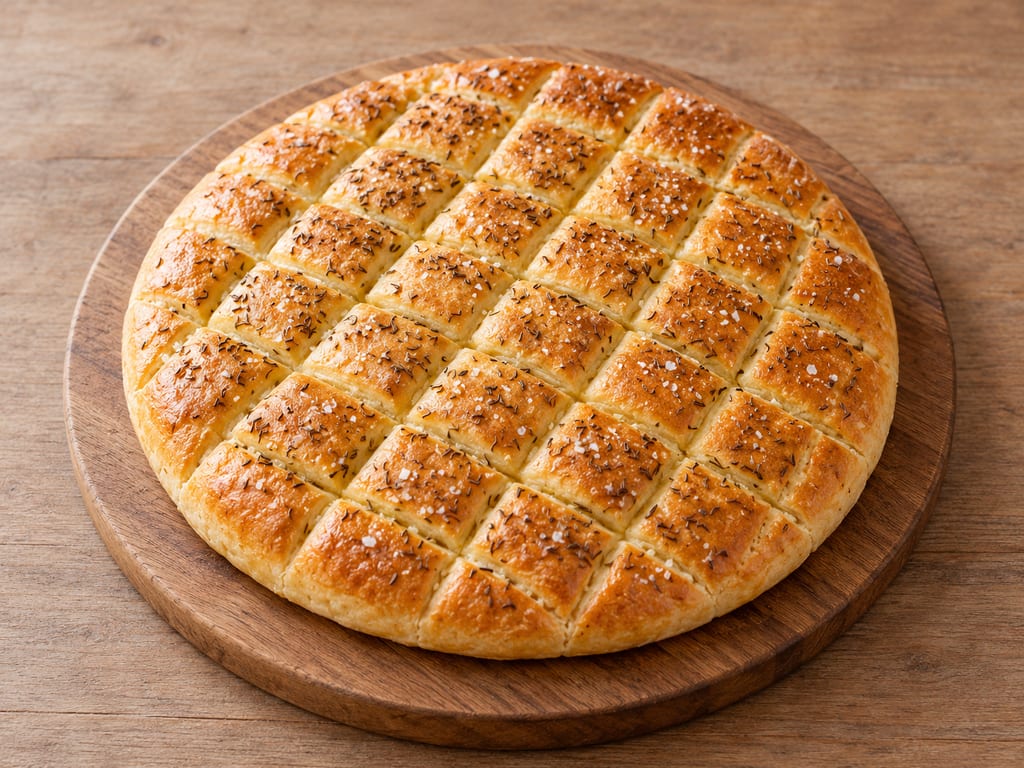
A round Slovenian flatbread scored in a grid and topped with caraway and coarse salt.
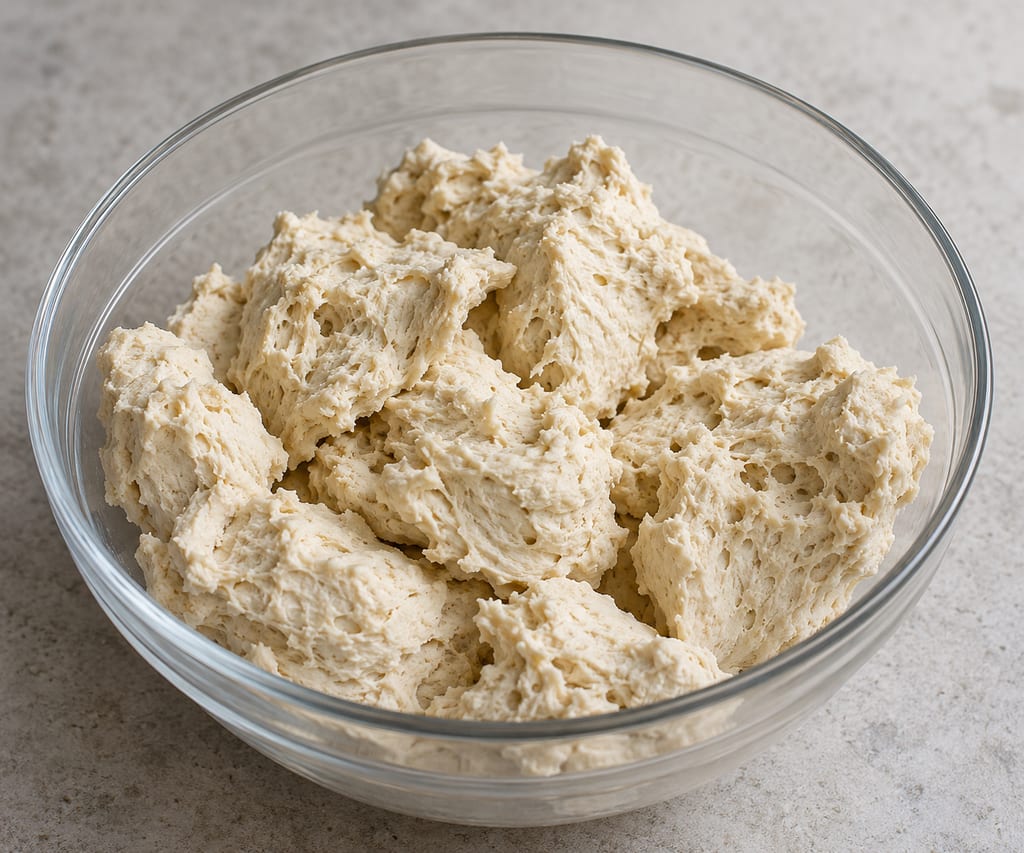
Biga is an Italian bread preferment of flour, water and a little yeast, usually a stiff unsalted mass of about 45 per cent water, fermented ahead and then mixed into the final dough.
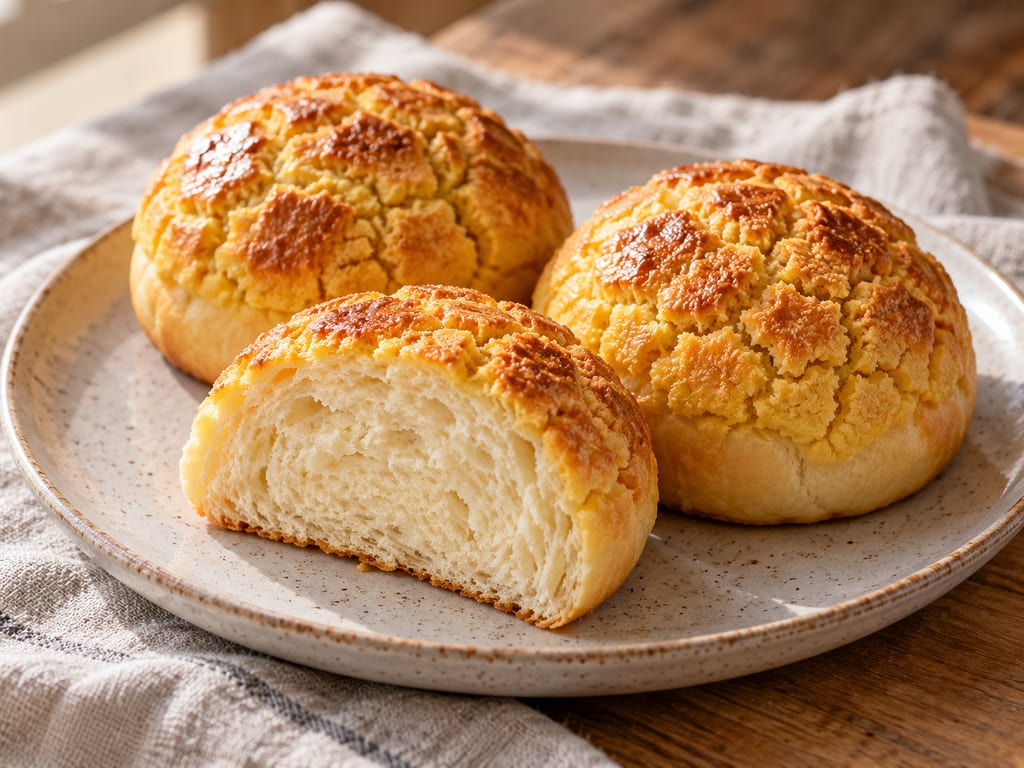
Hong Kong-style pineapple buns have soft yeast dough beneath a crisp, sweet pastry topping.
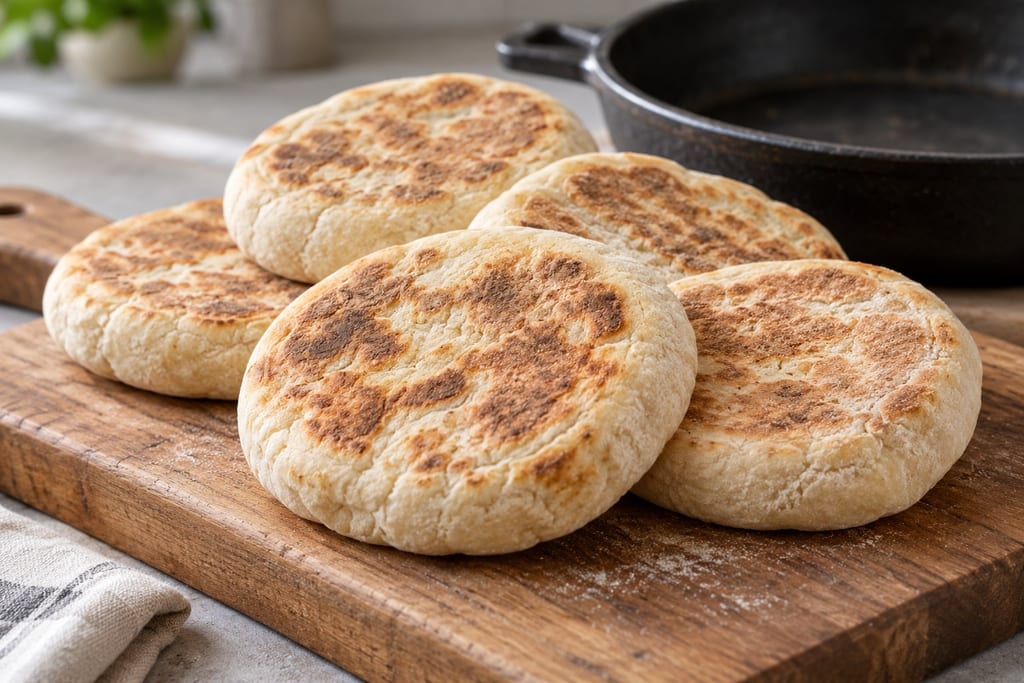
Sweet-potato wheat breads with fresh yeast, browned in a pan and finished in the oven. This is the bread component of Teleculinária's scrambled-egg dish.
No community contributions have been published for this entry yet.
Sign in to contribute. Published comments and photos are free to read.
Canada Tried and TestedInspiration
How to Make Perfect Idli & Dosa Batter (the science of fermentation)Source batch measurements
Soaking, grinding and fermentation stages
Cooking method and creator-stated endpoint
Cited in: What is rice and urad idli?; Names and languages; History; Ingredients; Why idli rice matters; Why urad matters; Why fenugreek appears; Equipment; 1. Wash the rice; 2. Wash the urad and fenugreek; 3. Soak; 4. Grind the urad; 5. Grind the rice; 6. Combine; 7. Ferment; 8. Prepare a portion; 9. Prepare the moulds; 10. Steam; 11. Serve; Conventional rice idli; Thatte idli; Button idli; Kotte kadubu; Rava idli; Sanna; How idli is eaten; Troubleshooting
Cited in: What is rice and urad idli?; The microbiology of idli batter; Lactic-acid bacteria; Leavening; Acidity; Enzymatic activity; Why the idli becomes spongy; Troubleshooting; Safety and storage
Cited in: What is rice and urad idli?; The microbiology of idli batter; Lactic-acid bacteria; Leavening; Acidity; Enzymatic activity; Why the idli becomes spongy; Troubleshooting; Safety and storage
Cited in: Ingredients; 3. Soak; 10. Steam; Safety and storage
Cited in: The microbiology of idli batter; Lactic-acid bacteria; Leavening; Acidity; Enzymatic activity; Why the idli becomes spongy