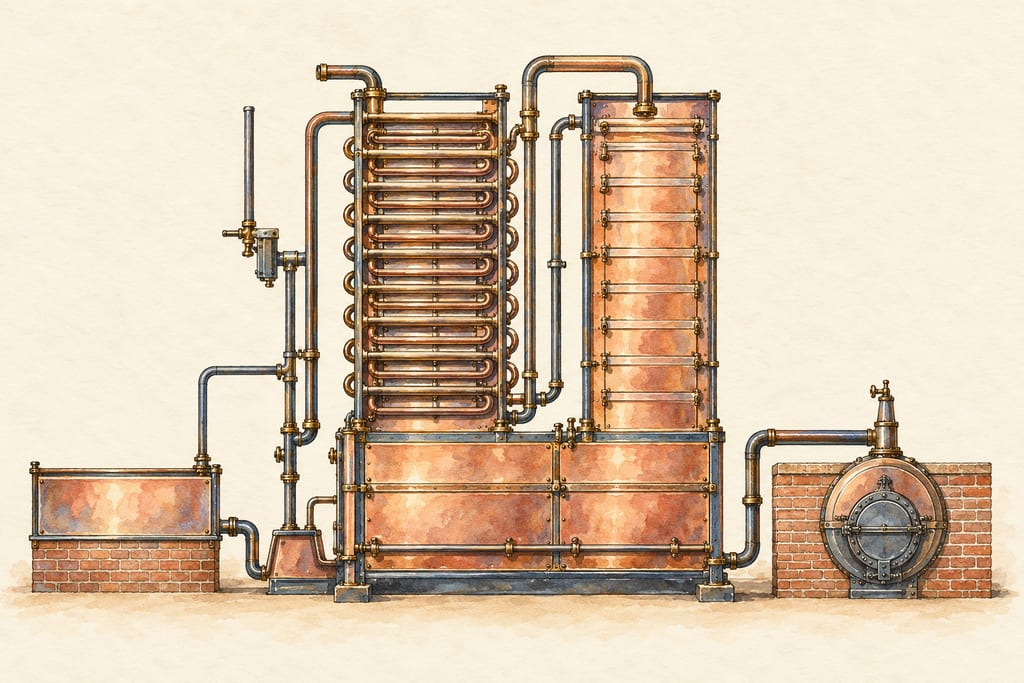
Column still
A column still is a distillation apparatus built around one or more vertical columns. Its continuous and rectifying designs appear in several spirits traditions, but materials and product character vary by installation.
 FermenteaWhere food goes to change
Equipment · Tanks and vats
In Swedish breadmaking, a wooden trough could hold sourdough between bakes; dried dough on its walls could be revived for the next bake. A museum example from Björnlunda documents one traditional form.
Before baker’s yeast became commonplace, sourdough was the ordinary leaven for Swedish rye bread. The Swedish Institute for Language and Folklore describes dough-trough souring: dough fermented in the trough, and sourdough dried onto its surface could be revived when the household baked again. The trough therefore served as a place to keep the next leavening alive between baking sessions, rather than merely as a mixing bowl. This account documents a practice, not a universal schedule or a measured starter recipe.
Yeast changed this routine gradually. Pressed yeast began to be used in the late eighteenth century and became common only later in the nineteenth. That history helps date a change in breadmaking, but it does not date any particular trough or prove when the wooden form first appeared.
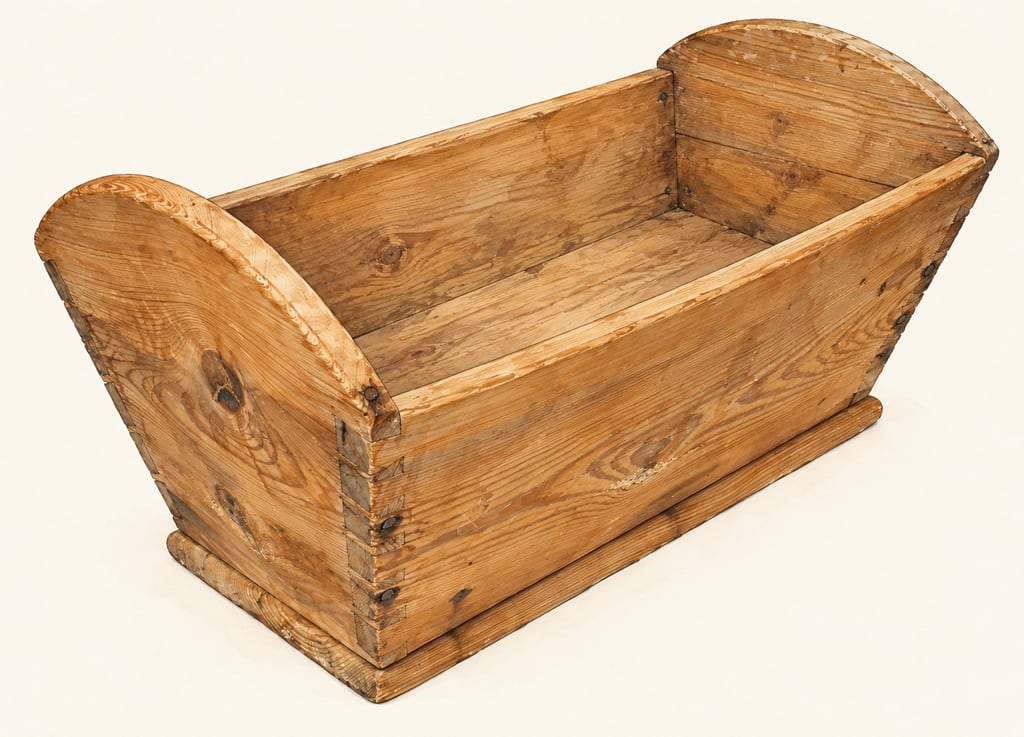
Sörmlands Museum catalogues a wooden dough trough, SLM 38846, from Björnlunda in Södermanland. The collection description records a long, open body with high sides, dovetailed joints, a raised foot and ends that taper and round upward; it also notes metal fasteners in places. These details describe this museum example, not a required pattern for every Swedish trough. The catalogue identifies wood but does not name its species, give dimensions or capacity, or date the object.
The museum photograph shows the empty vessel. It is useful evidence for the shape of SLM 38846, while the separate Matkult account supports the sourdough function. The two records do not establish that this exact object was used for the sourdough process described in the bread history.
The documented practice ties the baking trough to Swedish sourdough bread, while the museum object's catalogue anchors one example to Björnlunda. Neither source establishes a single birthplace for troughs, a standard capacity, a particular wood, a cleaning method or how a present-day reader could obtain one. No performance claim about temperature, airflow or microbial residence follows from the available description. The sound conclusion is narrower: a wooden trough could hold dough, and in the reported tradition dried sourdough on its surface could be brought back into use at the next bake.
The inspected sources document Swedish sourdough trough practice and a museum object but do not date the equipment type or the SLM 38846 example.
No standard capacity or dimensions are established.
Source →Matkult documents sourdough kept and revived in a baking trough in Sweden; it does not locate that practice to one locality.
Locality of the museum's SLM 38846 wooden dough trough; this is an object's catalogue provenance, not proof that all troughs came from here.
A column still is a distillation apparatus built around one or more vertical columns. Its continuous and rectifying designs appear in several spirits traditions, but materials and product character vary by installation.
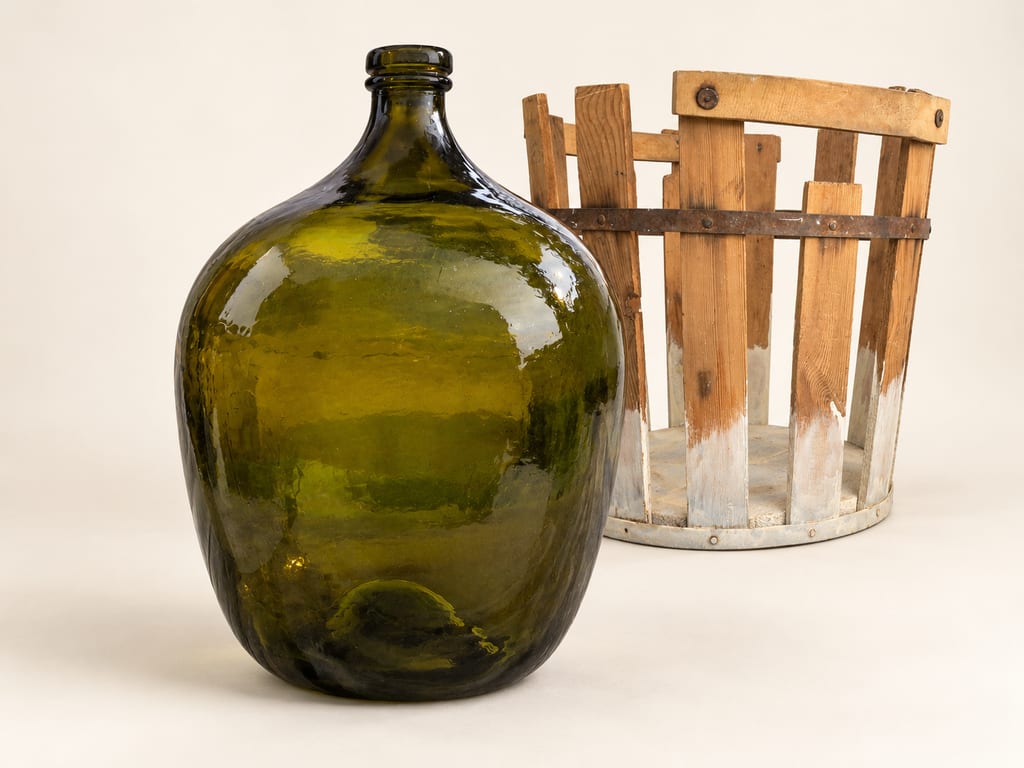
A glass demijohn or carboy is a stout, usually rounded bottle with a narrow neck, used for beverage fermentation, maturation, storage or transport. Its glass body, closure and any protective carrier are distinct parts of the vessel system.
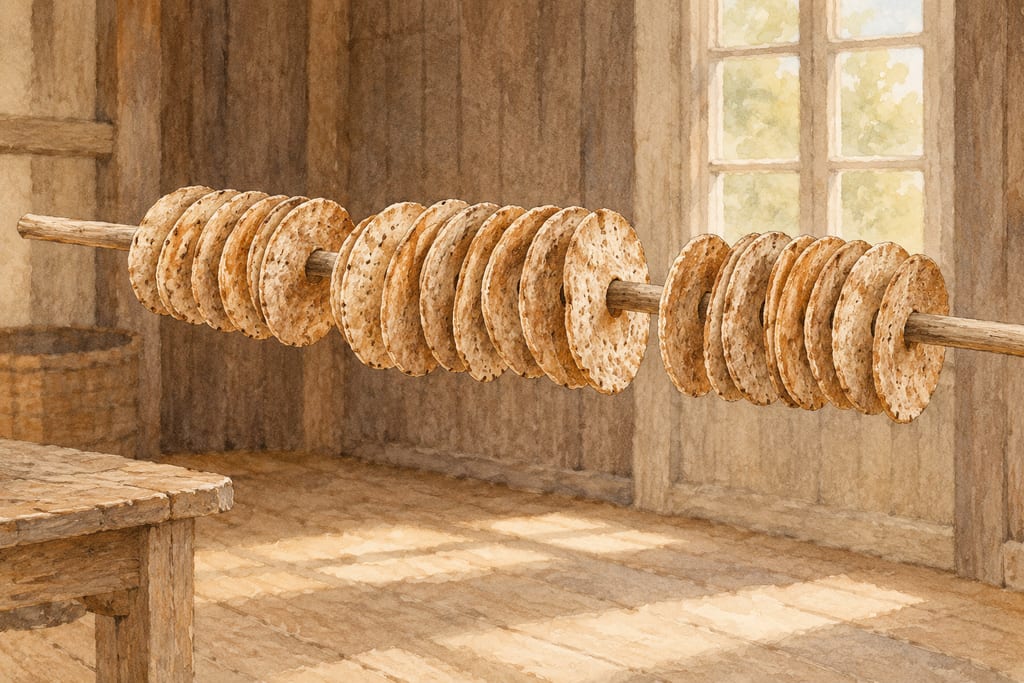
A wooden pole threaded through the central holes of dry Swedish storage loaves lets them hang for drying and storage. Swedish sources document the practice as an old way to keep bread dry; the surviving accounts do not give a standard pole size or one universal arrangement.
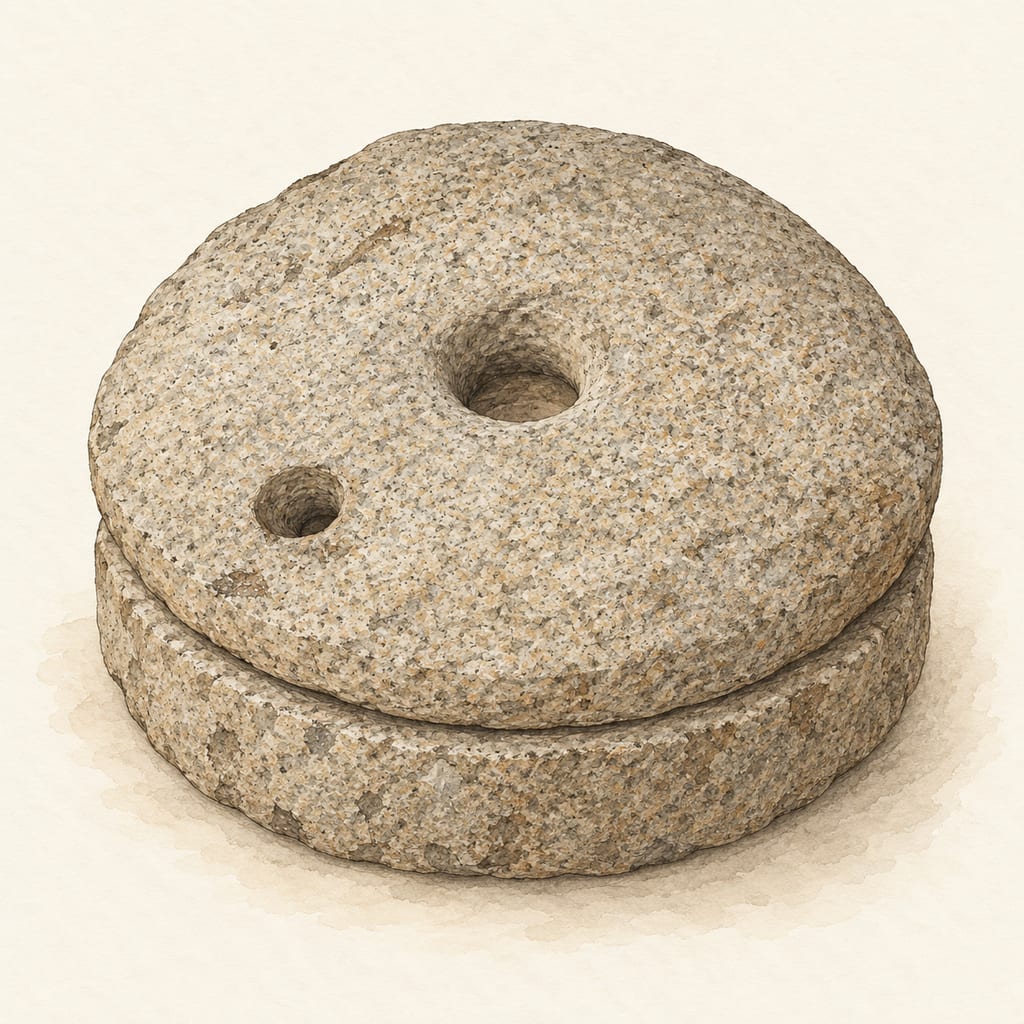
A rotary quern is a hand-operated mill with a runner turning over a fixed bedstone to grind grain. Scandinavian household use of rotary querns increased around the beginning of the Viking Age.
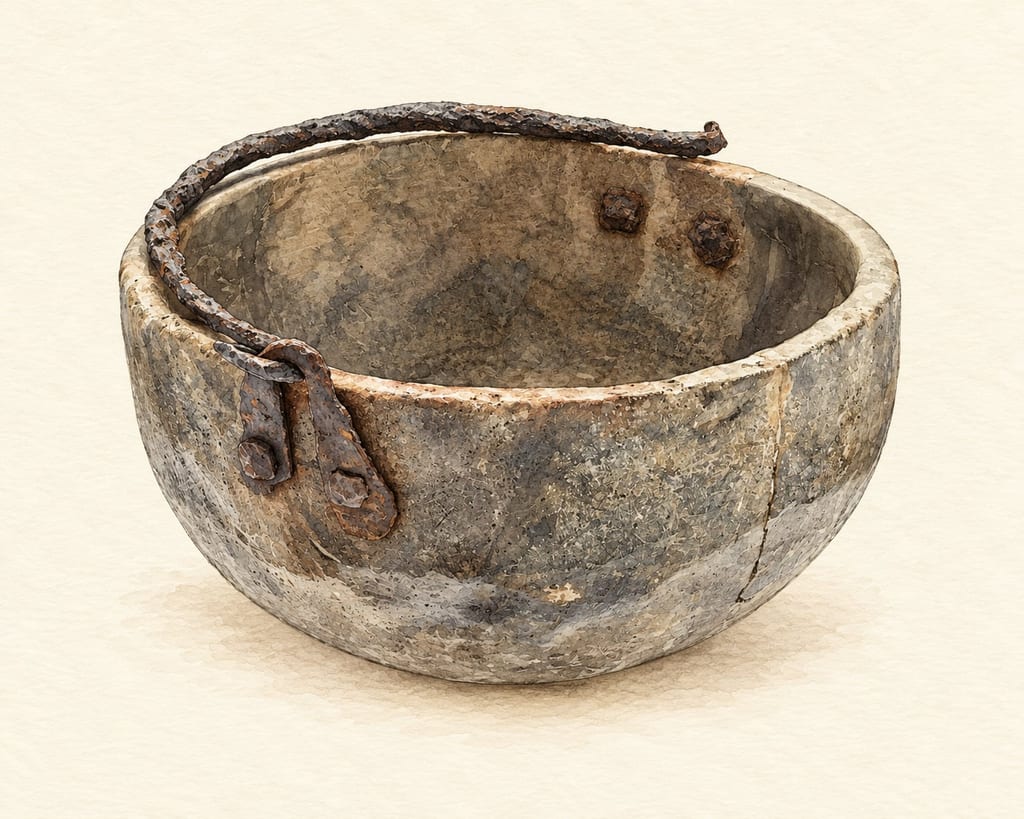
A Viking Age cooking pot carved from soapstone, exemplified by a partly reconstructed Birka grave find with iron handle fittings. Similar vessels were used across Scandinavia, but their forms and later handles changed over time.
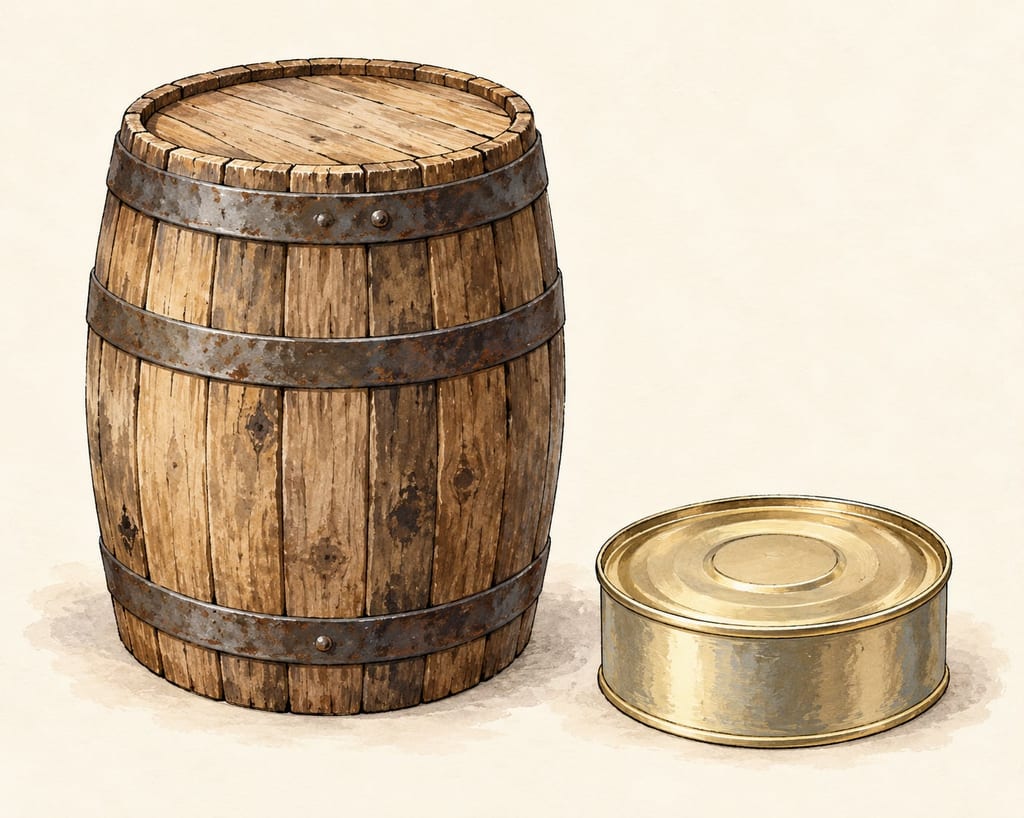
Surströmming production moves from short open brining to closed barrel fermentation, then into tightly sealed low, wide consumer cans where fermentation can continue.
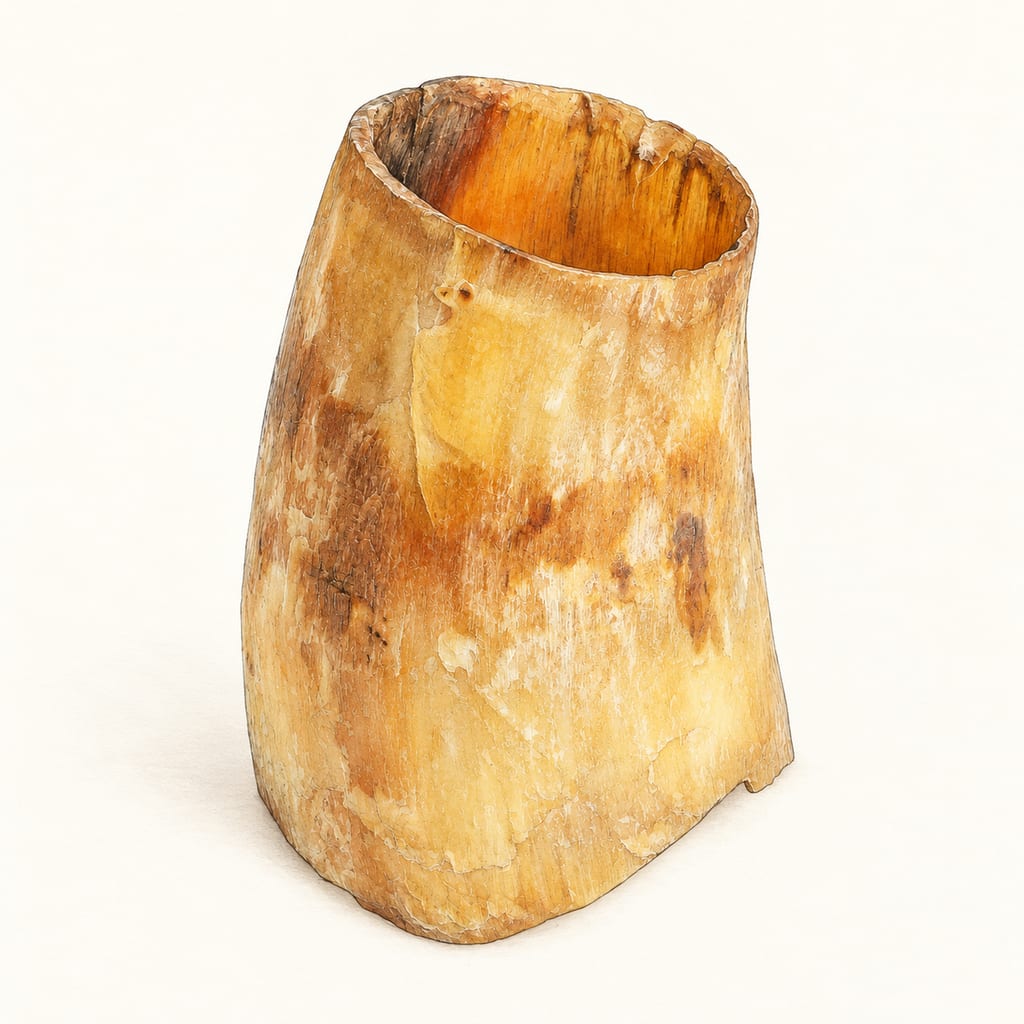
A korvhorn is a cow-horn sausage-stuffing tool used to hold a natural casing open as it is filled. Swedish folklore and museum records preserve the horn form, while modern sausage stuffers may use metal.
No community contributions have been published for this entry yet.
Sign in to contribute. Published comments and photos are free to read.
Institutet för språk och folkminnen (Isof), MatkultHistory · Use
Om jäst och jäsningSourdough was common before baker's yeast became widespread; Swedish rye-bread leavening used sourdough.
Matkult describes dough-trough souring and revival of dried sourdough from the trough at baking time.
Pressed yeast was introduced in the late eighteenth century and became common later in the nineteenth century.
Cited in: A place for the next leaven; A documented wooden form; What the record can and cannot tell us
Sörmlands museumForm · Materials · Geography · Visual reference · Image rights
SLM 38846 – DegtrågMuseum catalogue identifies a wooden dough trough from Björnlunda, Daga, Södermanland, Sweden; wood and metal are recorded.
Collection description gives its elongated form, high sides, dovetailed construction, raised base, tapered rounded ends and metal fasteners.
The record states the image is CC0/no rights reserved. It does not provide a date, dimensions, capacity or wood species, or establish use of this particular object for sourdough.
Cited in: A documented wooden form; What the record can and cannot tell us