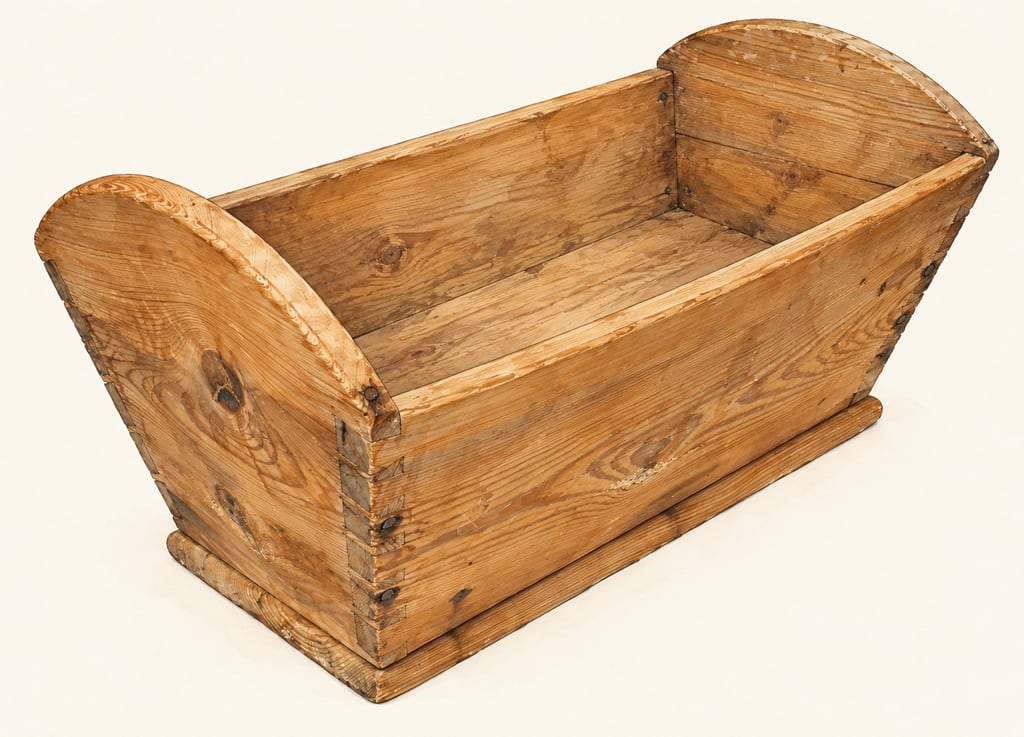
Baking trough
In Swedish breadmaking, a wooden trough could hold sourdough between bakes; dried dough on its walls could be revived for the next bake. A museum example from Björnlunda documents one traditional form.
 FermenteaWhere food goes to change
Equipment · Stuffing and filling tools
Korvhorn · korvtratt · korvring
A korvhorn is a cow-horn sausage-stuffing tool used to hold a natural casing open as it is filled. Swedish folklore and museum records preserve the horn form, while modern sausage stuffers may use metal.
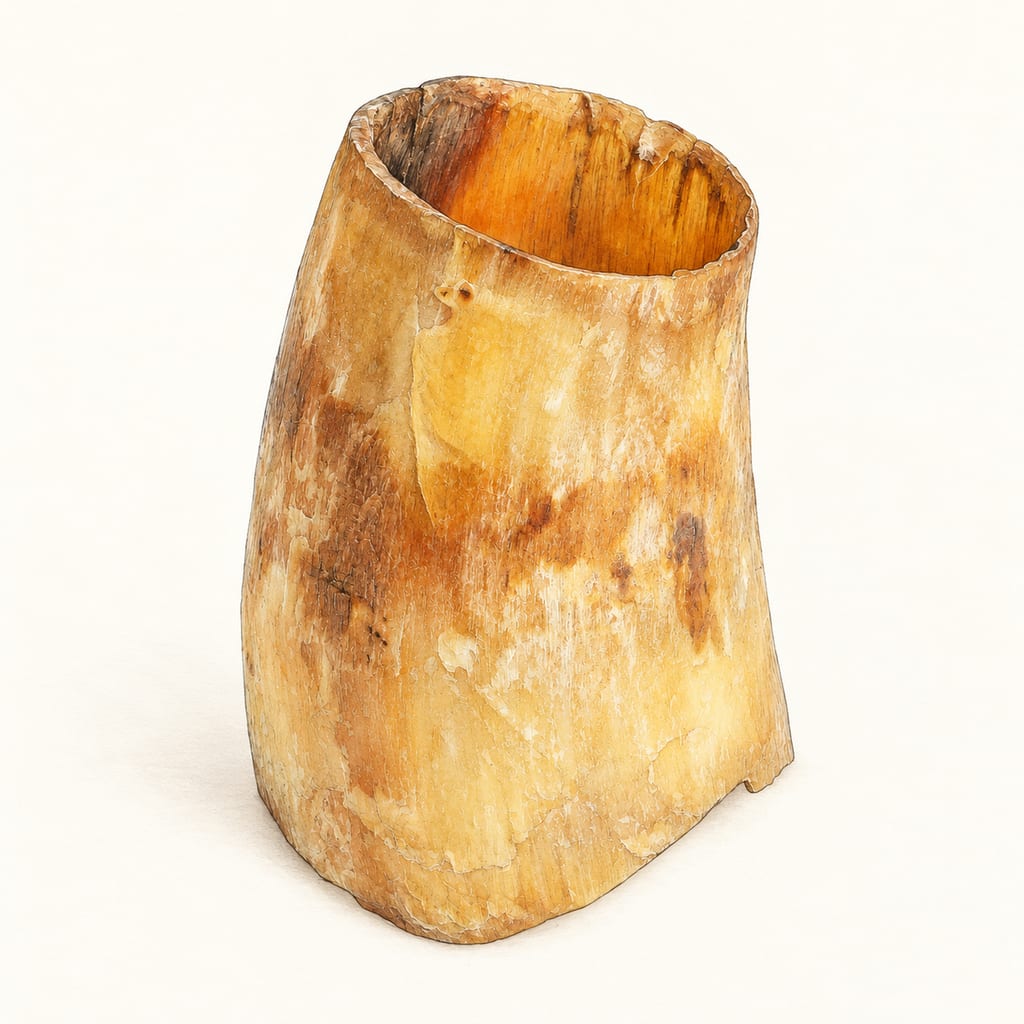
Korvhorn, literally “sausage horn,” is a small stuffing tool made from horn. In an account of older Swedish sausage-making, a piece of cow horn served as the tool over which the intestine casing was placed while sausage was stuffed. The casing is a separate part: the horn supports its opening so it can be filled, rather than acting as the sausage’s lasting container.
Arboga Museum describes the horn’s practical job as keeping the casing stretched open for filling with sausage mixture. The available accounts establish this simple function, but do not give one standardized loading motion, filling pressure or procedure that applies to every household. A korvhorn is therefore best understood as a manually used guide and support for a flexible casing, not as a recipe or a modern mechanical stuffer.
The Swedish name refers to the material as well as the job. Matkult describes a korvhorn as a piece of cow horn. A museum example is catalogued as horn and described as tapering and slightly curved; that page also records the alternate names korvtratt and korvring. The broad visible mouth and naturally narrowing body of the photographed artifact show why this form could hold a casing open while the filling was introduced.
No single dimension defines the type. Arboga Museum records a 5-centimetre diameter for its example, while the Småland museum catalogue records two small horn pieces with different widths and heights. Those are measurements of particular collections, not a required size or a claim that every region used the same form. The type can be described confidently by its cow-horn material and sausage-stuffing function; the precise curvature, cut and dimensions vary between surviving objects.
The horn belonged to a wider household sequence in which meat and offal were chopped, mixed and put into casings. The Swedish archive overview places the korvhorn in the pre-meat-grinder context, when meat for korv, pölsa and sylta was chopped by hand in a chopping trough or on a board. Its regional records also preserve different envelopes: cloth skins in Jämtland, sheep stomach in Norrbotten, and emptied, scraped and washed cattle or sheep intestines in Dalsland. These examples show that the casing material varied; they do not establish that every regional sausage was packed with a horn.
The horn is distinct from the casing, the meat mixture and the finished sausage. It does not itself preserve the food or determine whether a sausage was fresh, salted, dried or cooked. The Matkult archive records all of these as broader dimensions of Swedish sausage practice, but the horn source only documents the stuffing aid. A related Swedish recipe may use a natural casing without specifying that it was filled with this exact tool.
Museum records preserve examples but do not date the invention of the tool. One Arboga Museum horn was donated in 1928; a Småland museum example entered its register in 1966. These are collection dates, not dates of manufacture or proof of when Swedish households first used horn for stuffing. The folklore source describes the practice as old but supplies no single start date.
The form remains useful to distinguish in historical descriptions: a horn section is a reusable implement, whereas animal intestine or cloth is the casing being filled. Sources note that contemporary tools of the same function are usually metal, while the Swedish name korvhorn remains in use. That modern naming does not make a metal funnel a cow-horn artifact. The records do not establish present-day production or sale of traditional horn examples, nor do they specify a cleaning routine for a museum object in food use.
A Swedish folklore overview places the korvhorn in older household sausage-making. Museum examples were donated or registered in the twentieth century, but those dates do not establish when the tool was made or when the practice began.
Swedish folklore and museum documentation; not an origin claim or assertion of uniform national use.
In Swedish breadmaking, a wooden trough could hold sourdough between bakes; dried dough on its walls could be revived for the next bake. A museum example from Björnlunda documents one traditional form.
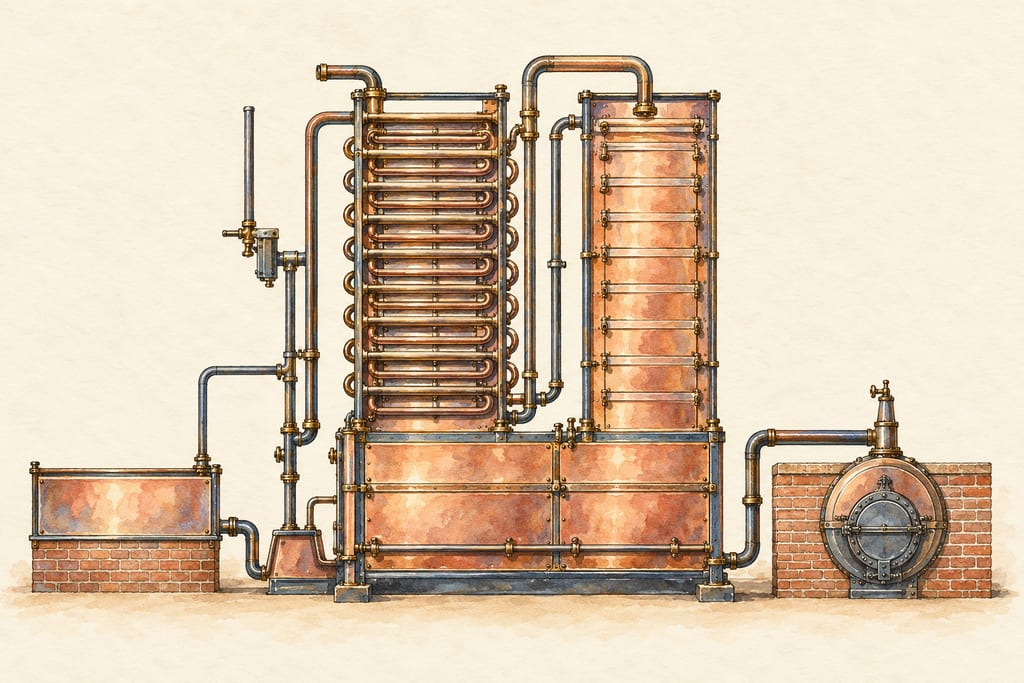
A column still is a distillation apparatus built around one or more vertical columns. Its continuous and rectifying designs appear in several spirits traditions, but materials and product character vary by installation.
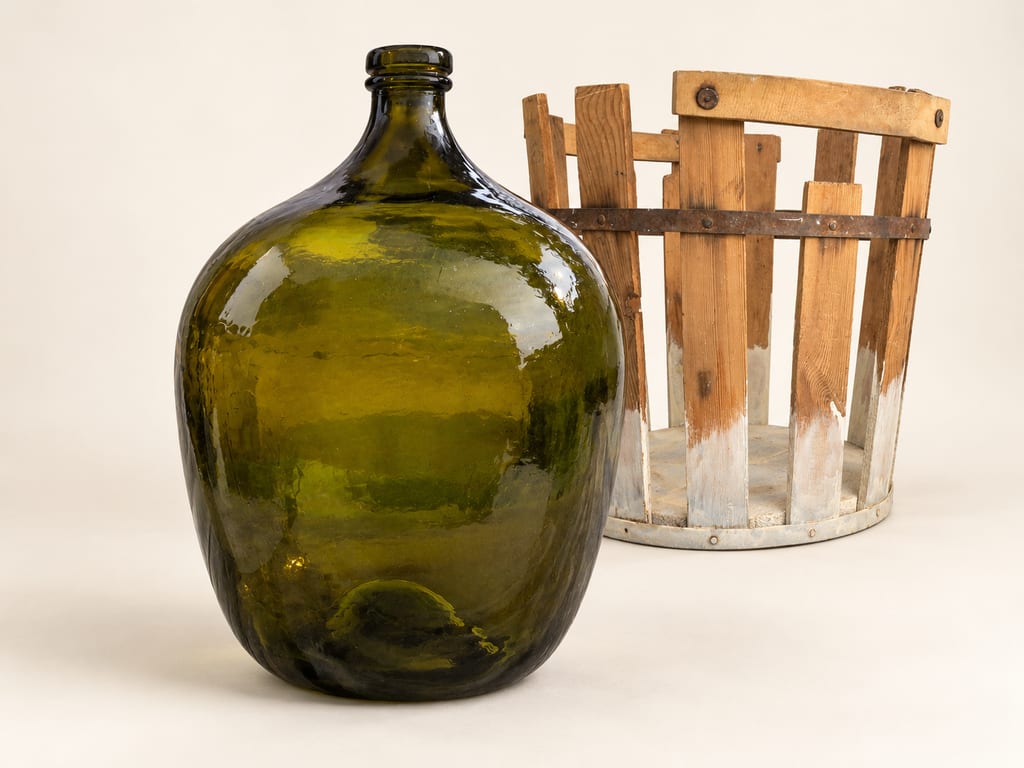
A glass demijohn or carboy is a stout, usually rounded bottle with a narrow neck, used for beverage fermentation, maturation, storage or transport. Its glass body, closure and any protective carrier are distinct parts of the vessel system.
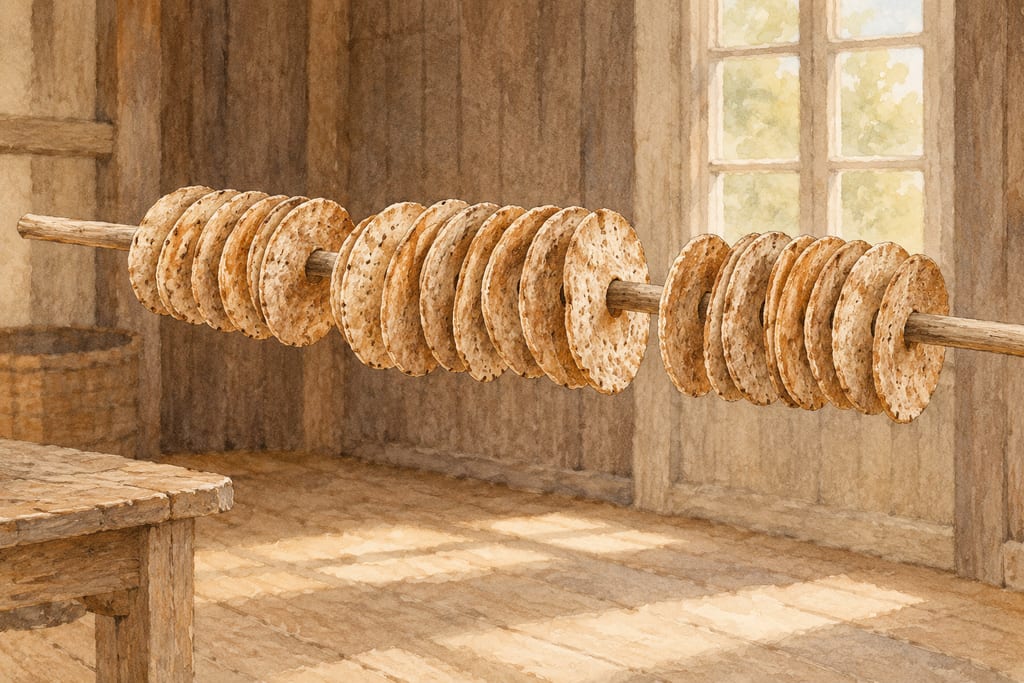
A wooden pole threaded through the central holes of dry Swedish storage loaves lets them hang for drying and storage. Swedish sources document the practice as an old way to keep bread dry; the surviving accounts do not give a standard pole size or one universal arrangement.
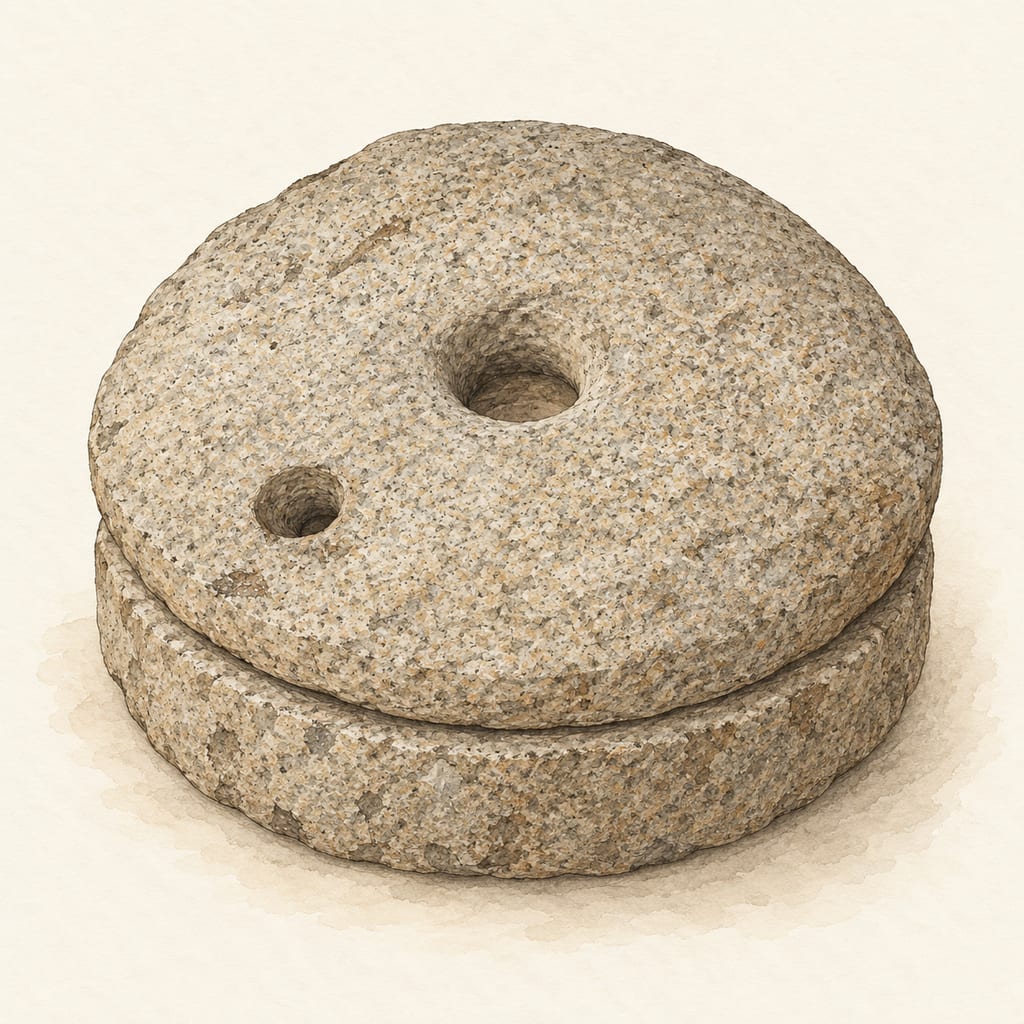
A rotary quern is a hand-operated mill with a runner turning over a fixed bedstone to grind grain. Scandinavian household use of rotary querns increased around the beginning of the Viking Age.
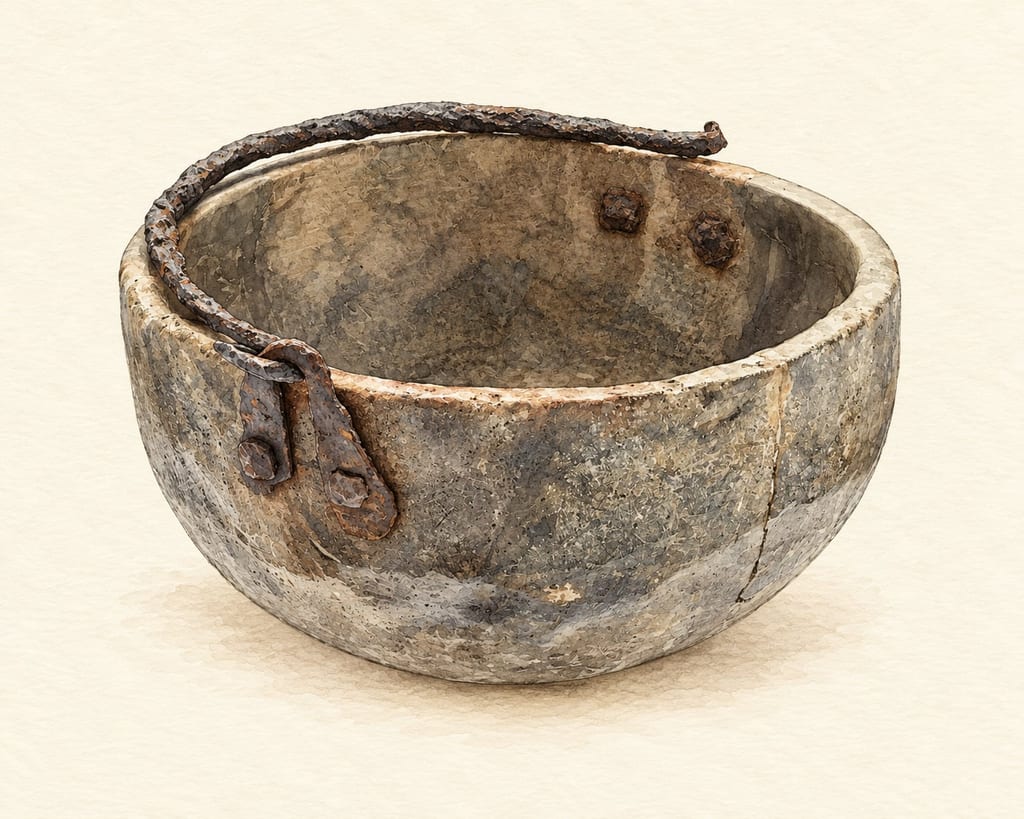
A Viking Age cooking pot carved from soapstone, exemplified by a partly reconstructed Birka grave find with iron handle fittings. Similar vessels were used across Scandinavia, but their forms and later handles changed over time.
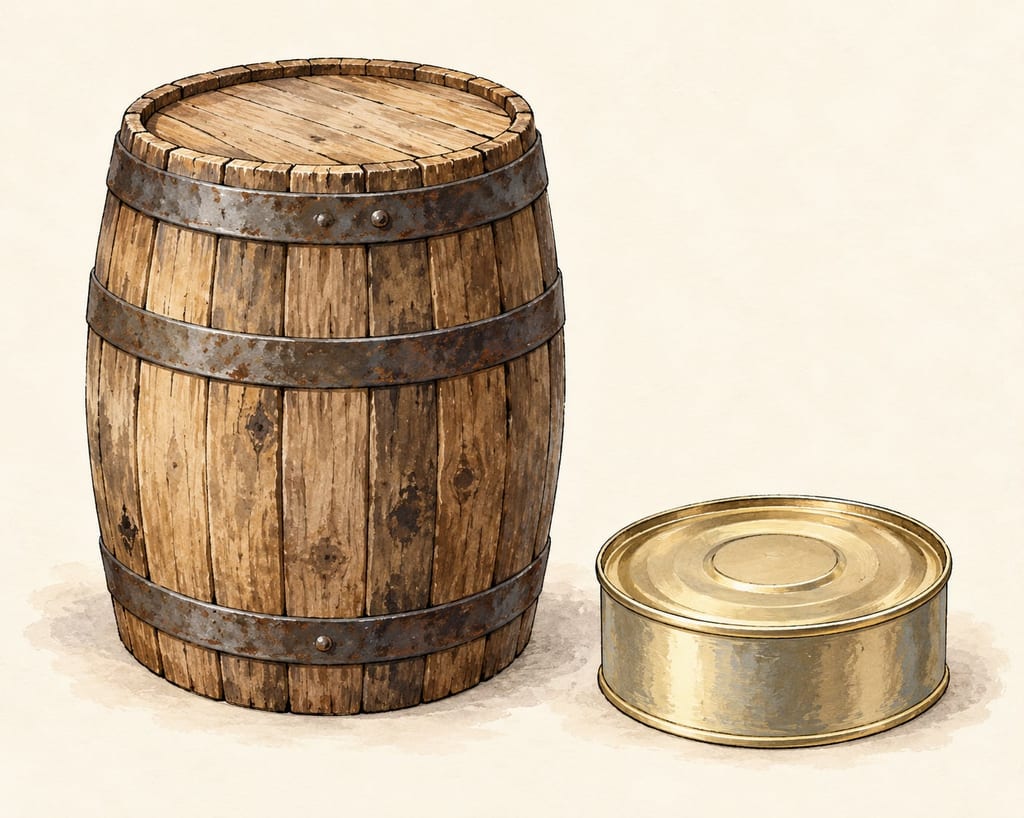
Surströmming production moves from short open brining to closed barrel fermentation, then into tightly sealed low, wide consumer cans where fermentation can continue.
No community contributions have been published for this entry yet.
Sign in to contribute. Published comments and photos are free to read.
Institutet för språk och folkminnen (ISOF), MatkultHistory · Method · Geography · Regional variation
Korv och pölsaIn older Swedish practice, meat was chopped by hand before meat grinders; when sausage was stuffed, casing was threaded onto a korvhorn, a piece of cow horn; regional records describe varied casings including cloth in Jämtland, sheep stomach in Norrbotten, and cleaned intestines in Dalsland.
Cited in: A cow-horn tool for filling casings; Shape and material; Part of a varied Swedish sausage practice; What the surviving record can tell us
Kulturparken Småland / Smålands museum, DigitaltMuseumMorphology · Materials · Dimensions · Image attribution
Korvhorn (M 18828-a-b)Museum object catalogued as horn and described as tapering and slightly curved; the record lists alternate names korvtratt and korvring, item dimensions and museum acquisition history. Photo is credited to Jörgen Ludwigsson; the page licenses the photo CC BY while cautioning that depicted object rights may be separate, so the gallery link is recorded as link-only.
Cited in: Shape and material; What the surviving record can tell us
Arboga MuseumFunction · Materials · Dimensions · History
Veckans föremål v. 32: Korvhorn (AM476)Cow-horn korvhorn used to hold casing stretched open so it could be filled with sausage mixture; the museum records a 5 cm diameter and donation by Signe Lundqvist in 1928; it notes that same-function modern tools are usually metal.
Cited in: A cow-horn tool for filling casings; Shape and material; What the surviving record can tell us