Knäckebröd
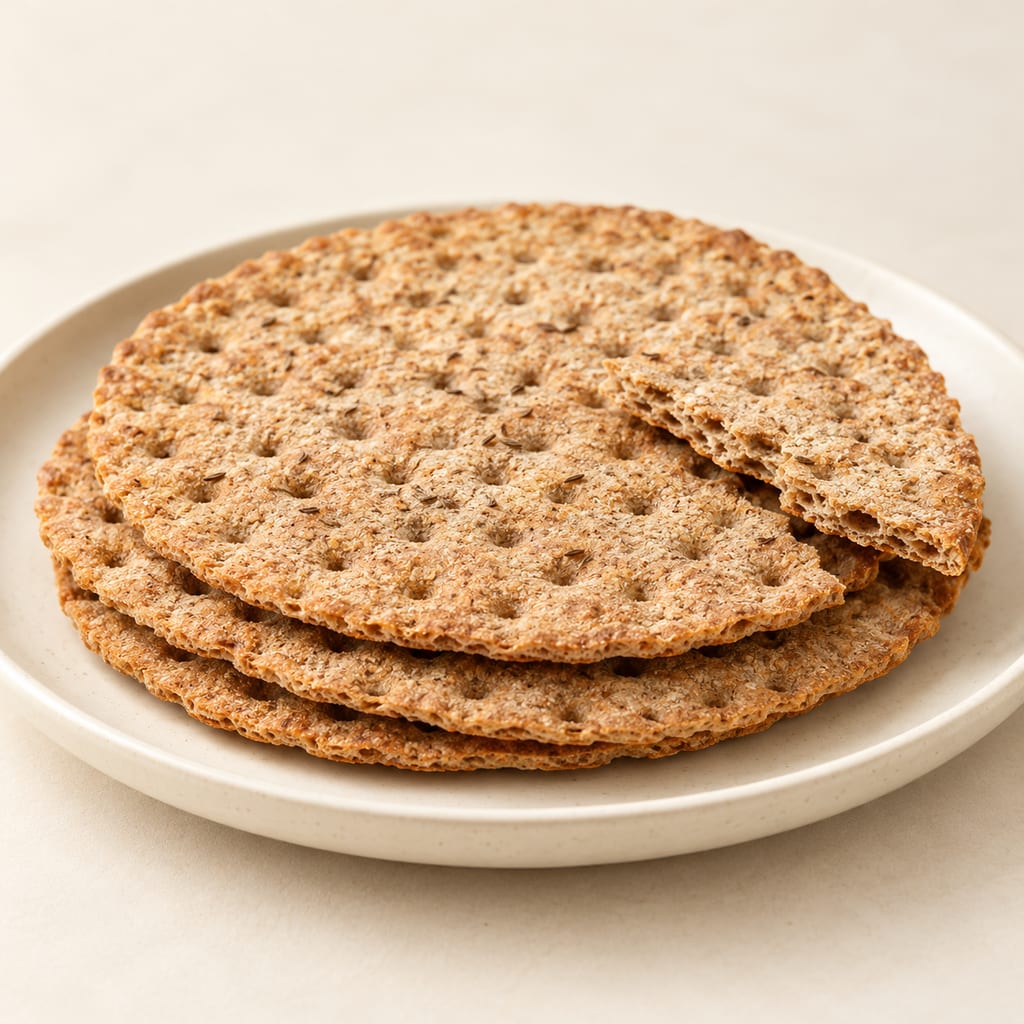
A Swedish home batch of eight thin rye-and-wheat crispbreads, yeast-risen once and baked until hard.
 FermenteaWhere food goes to change
Equipment · Drying poles and racks
Bread-drying poles · Drying pole for knäckebröd
A wooden pole threaded through the central holes of dry Swedish storage loaves lets them hang for drying and storage. Swedish sources document the practice as an old way to keep bread dry; the surviving accounts do not give a standard pole size or one universal arrangement.
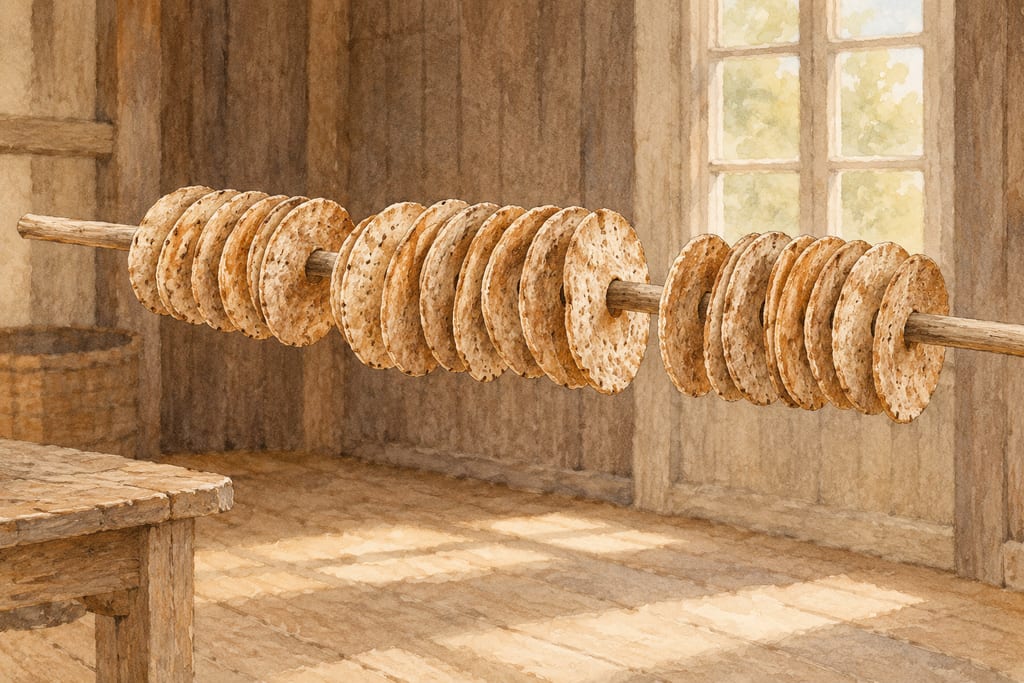
In traditional Swedish bread storage, the pole and the loaf were designed to work together. Round, hole-shaped storage breads could be threaded onto a horizontal pole, lifting them clear of ordinary shelves and leaving air around each cake. Smaka Sverige describes hanging the breads to dry as part of making a durable store. The pole is therefore a simple piece of storage equipment, while the hole is the feature that makes the arrangement possible.
This account should be kept distinct from modern bread displays. The historical function was drying and keeping a supply of bread; a contemporary rack used only to show crispbread does not by itself document the older practice. The sources do not specify a standard length, wood species, installation height or number of loaves, so the object is described by its documented purpose rather than reconstructed from invented measurements.
Smaka Sverige places this practice within the history of tunnbröd and spisbröd. It explains that milling could depend on seasonal water availability, making it useful to turn flour into bread that kept better than fresh bread. Thin cakes could be dried; hole-shaped loaves could be hung from a pole. The page records the name spisbröd in the sixteenth century and cites Olaus Magnus's 1555 account of bread baking. This attests to an early-modern bread-storage tradition, not necessarily to the first invention of the pole.
Bread types and local practices varied. The same government page names several northern Swedish landscapes for tunnbröd, while also noting regional differences in grains and seasonings. Those details belong to bread history; they do not prove the pole arrangement was identical in every province. Likewise, Skedvi Bröd is a modern protected regional expression and should not be used as evidence for the construction or use of older drying poles.
A pole pierced through the breads' central openings offers a compact way to hang many dry loaves in a household space. In the historical system described by Smaka Sverige, hanging supports the final drying and storage of the bread. The exact setting and supports are not consistently specified by the available accounts. A surviving photograph credited in its filename to Nordiska Museet and hosted by Knäckebröd Online shows a long wooden rod carrying hole-shaped crispbreads; the photographer is listed as unknown, and the reuse rights are not stated. It is linked as an external reference, not reproduced as Fermentea-owned imagery.
For readers, the reliable takeaway is functional: the bread hole is not merely decorative, and the pole is not just a serving rod. Together they formed one way to dry and store bread. The sources do not provide a build plan, maintenance schedule or safe load, so those should be established locally if someone adapts the idea. The equipment record describes the historical form without claiming that a modern replica would reproduce every past arrangement.
The cited sources provide no standard pole dimensions, spacing or supported load.
Source →Swedish sources document the practice; they do not establish use in every locality or exclusivity to Sweden.
A Swedish home batch of eight thin rye-and-wheat crispbreads, yeast-risen once and baked until hard.
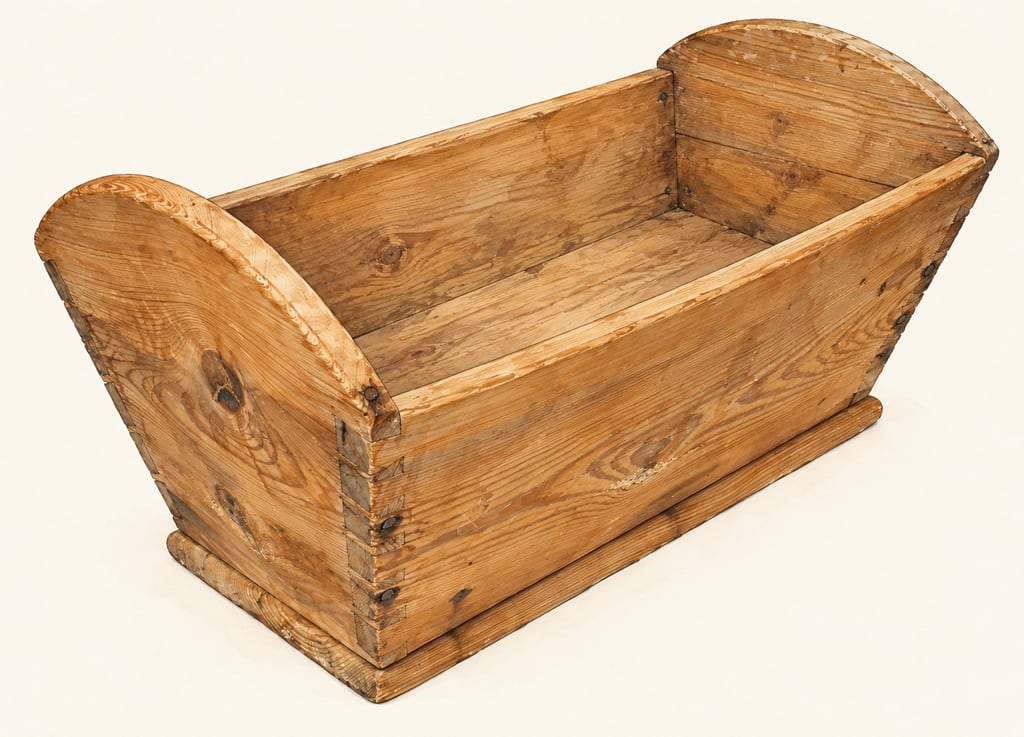
In Swedish breadmaking, a wooden trough could hold sourdough between bakes; dried dough on its walls could be revived for the next bake. A museum example from Björnlunda documents one traditional form.
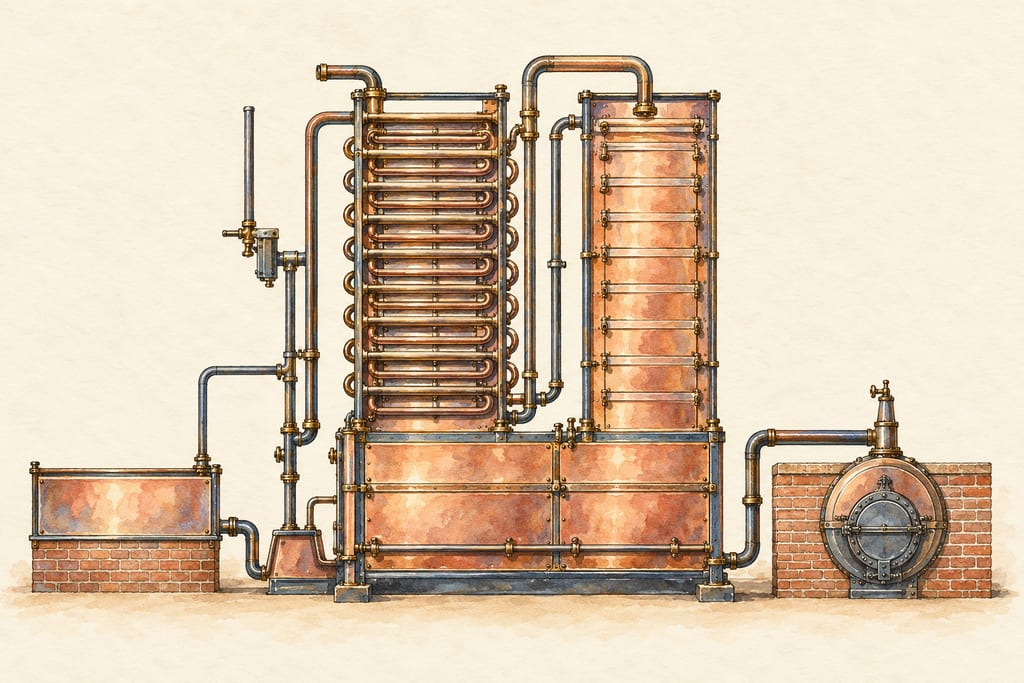
A column still is a distillation apparatus built around one or more vertical columns. Its continuous and rectifying designs appear in several spirits traditions, but materials and product character vary by installation.
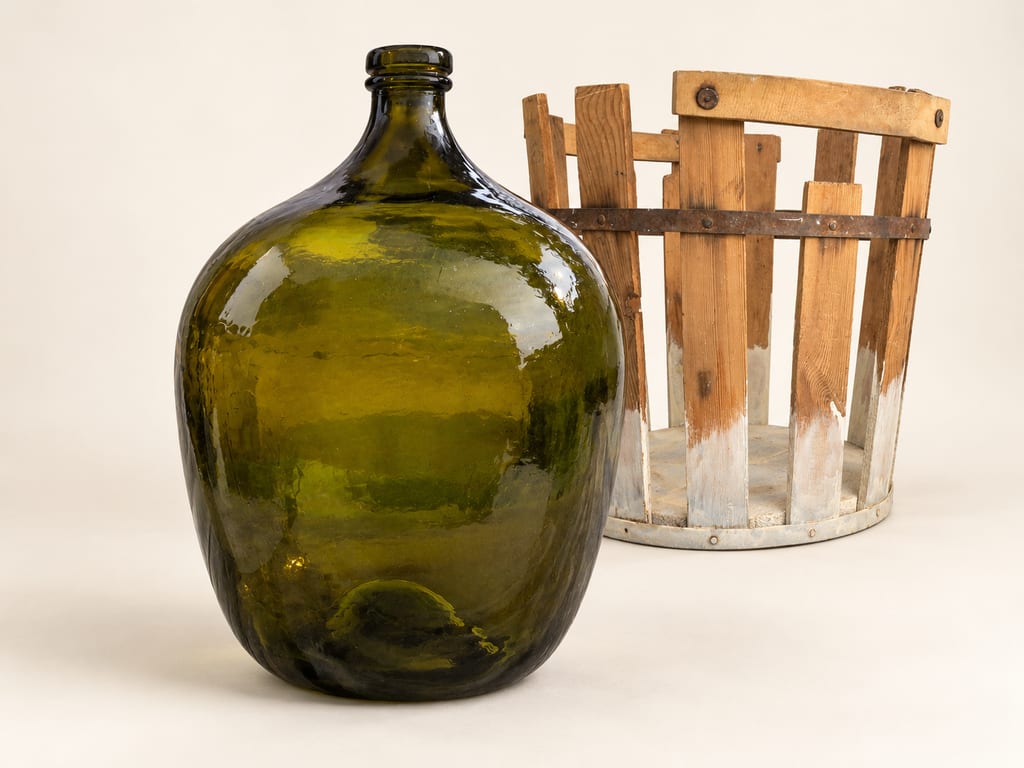
A glass demijohn or carboy is a stout, usually rounded bottle with a narrow neck, used for beverage fermentation, maturation, storage or transport. Its glass body, closure and any protective carrier are distinct parts of the vessel system.
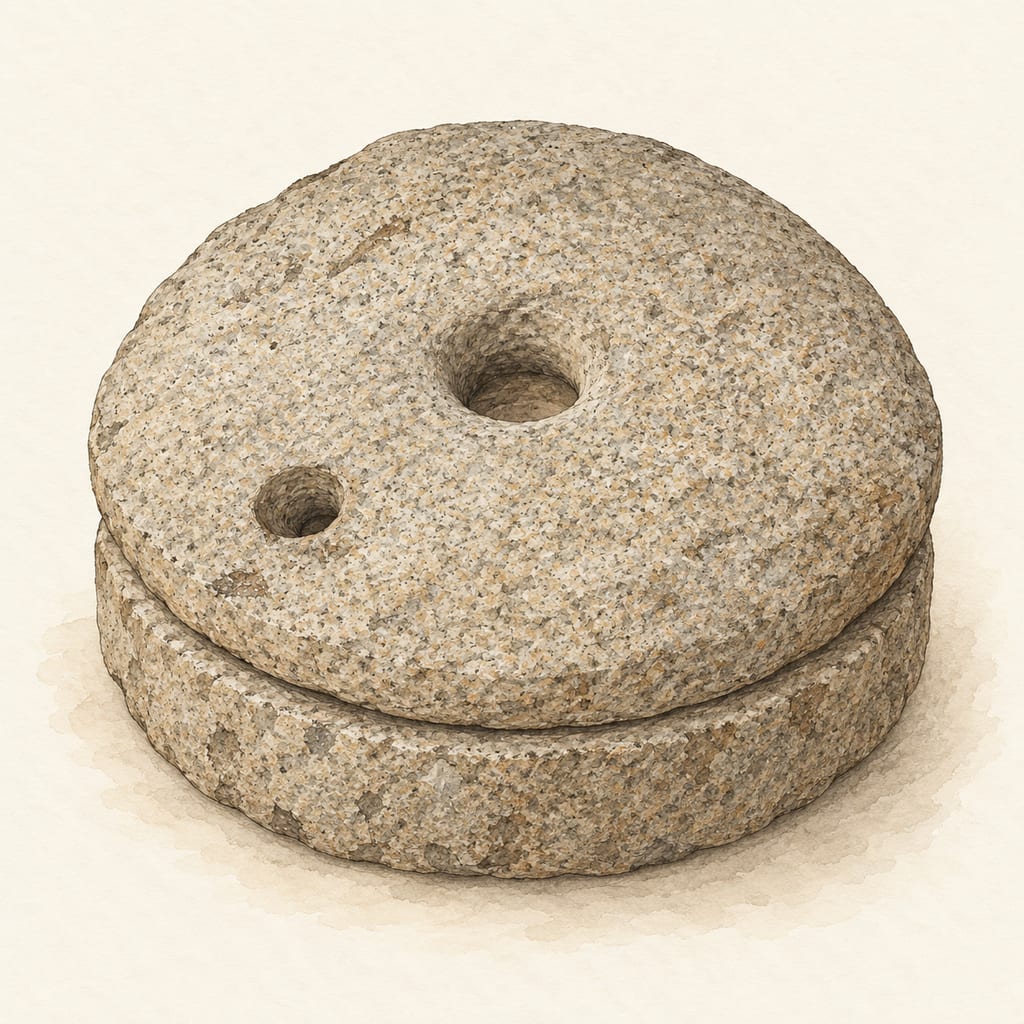
A rotary quern is a hand-operated mill with a runner turning over a fixed bedstone to grind grain. Scandinavian household use of rotary querns increased around the beginning of the Viking Age.
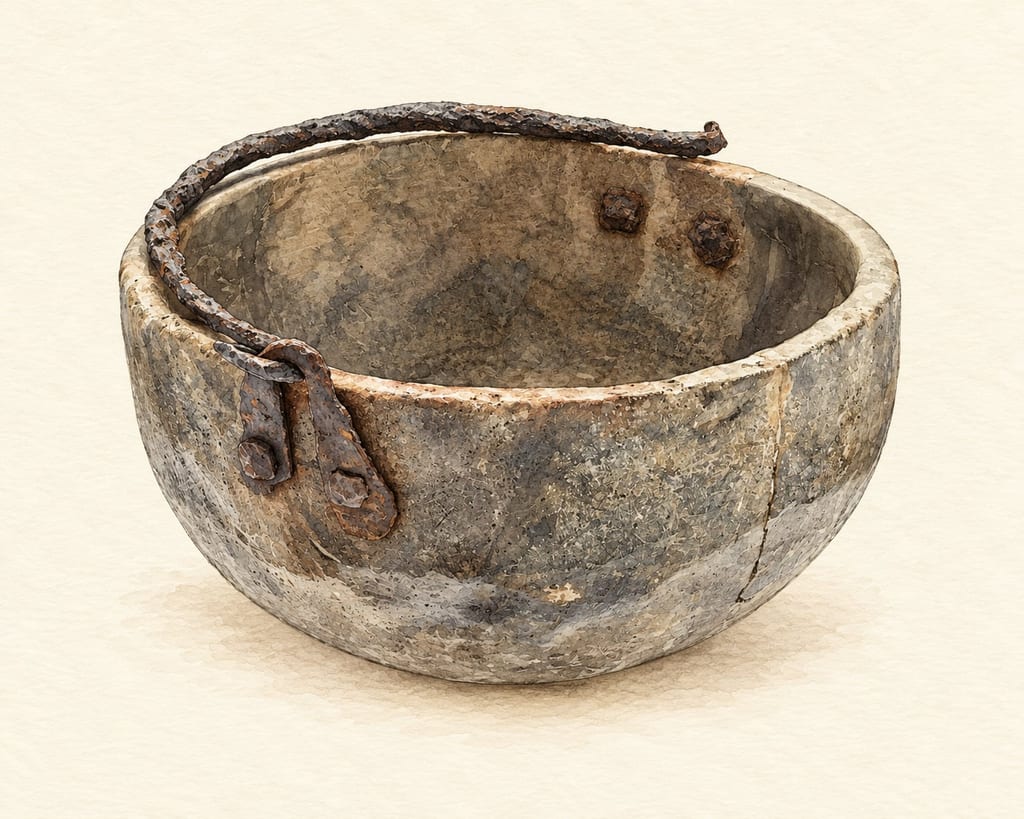
A Viking Age cooking pot carved from soapstone, exemplified by a partly reconstructed Birka grave find with iron handle fittings. Similar vessels were used across Scandinavia, but their forms and later handles changed over time.
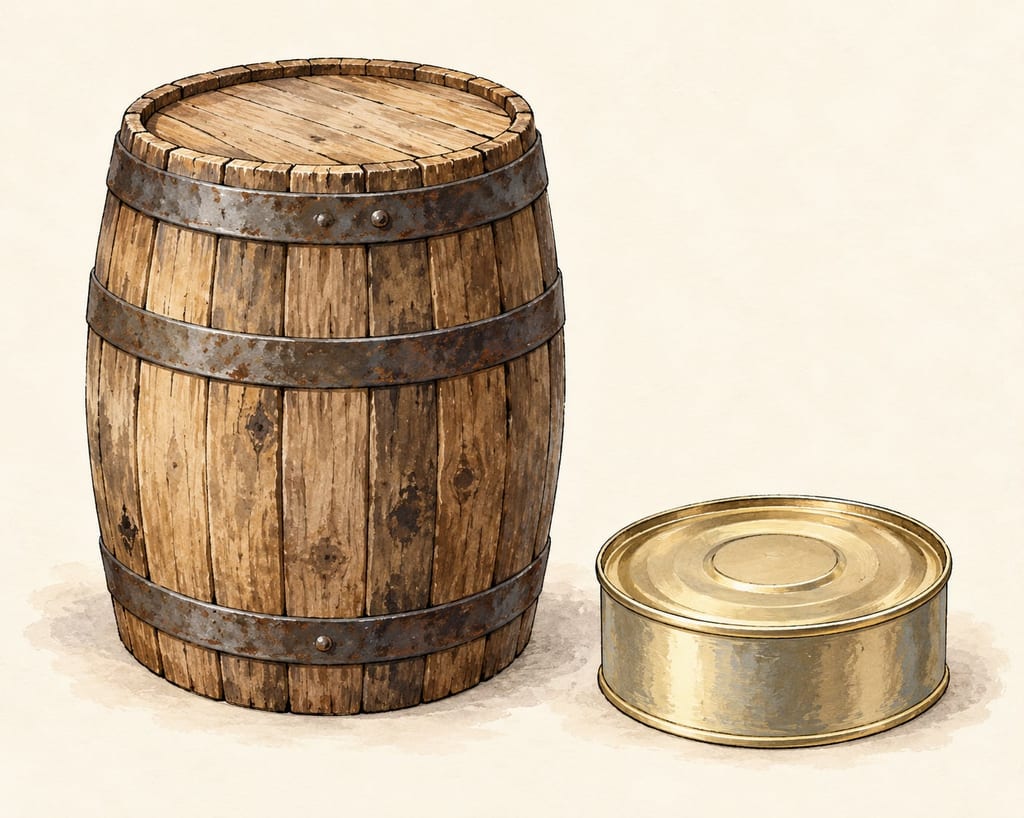
Surströmming production moves from short open brining to closed barrel fermentation, then into tightly sealed low, wide consumer cans where fermentation can continue.
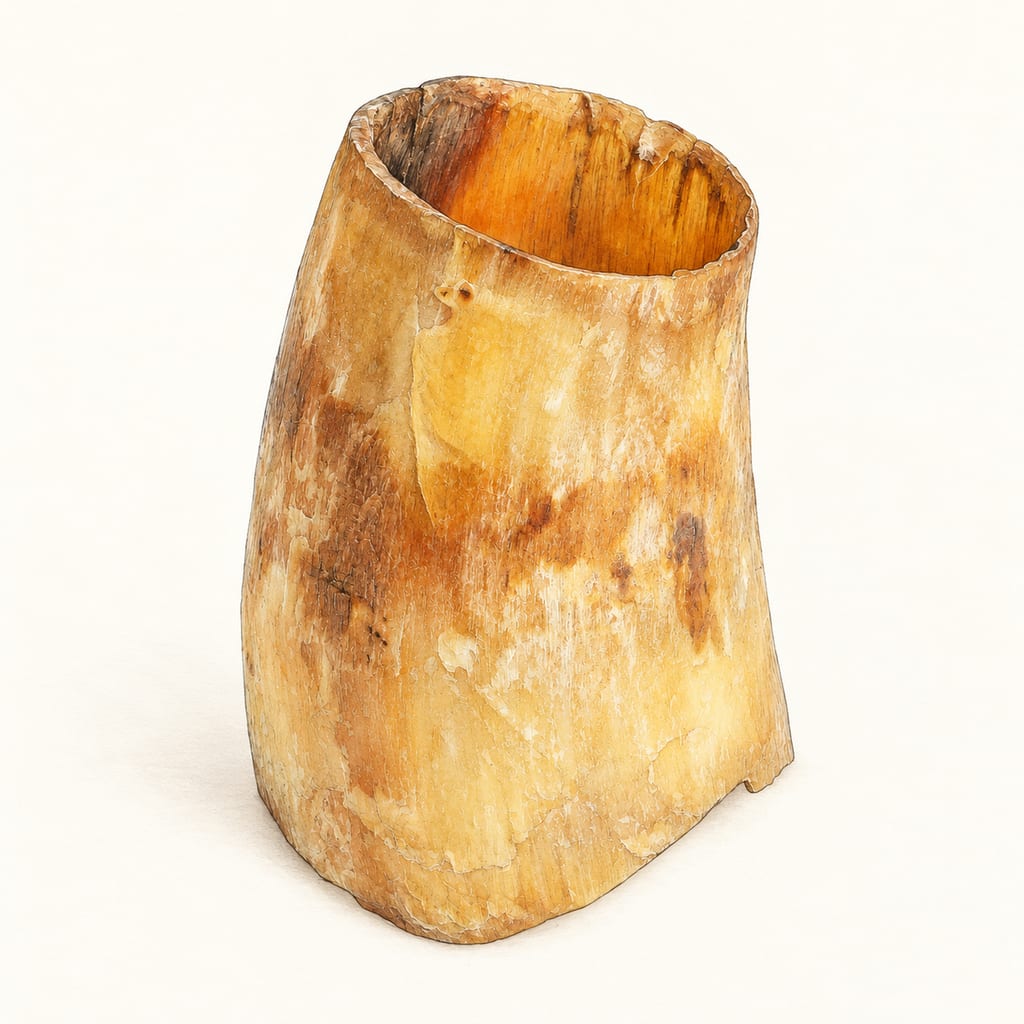
A korvhorn is a cow-horn sausage-stuffing tool used to hold a natural casing open as it is filled. Swedish folklore and museum records preserve the horn form, while modern sausage stuffers may use metal.

A gelling polysaccharide extracted from red seaweeds, sold as kanten strips or powder; it sets firm at a low concentration and stays solid until about 85 °C.

A Dominican table and seasoning condiment of sour orange juice, mixed with lime and salt and bottled raw; garlic, oregano or a hot pepper may be added for meat or a spicier bottle.

Cicerbita alpina is an alpine perennial whose tender shoots and leaves have been eaten raw or cooked. Sámi milk preparations and modern Carnian dishes are distinct uses, with serious identification and preservation limits.

Japanese skipjack tuna cooked, then repeatedly smoked and dried over a wood fire by the hand-fired tebiyama method into a hard block for shaving into dashi: the first stage of katsuobushi.

A Swedish-style spirit vinegar made by fermenting neutral alcohol with live vinegar bacteria, with a separate guide to commercial ättika strengths.

A yeast-raised wheat ring shaped from a firm dough, briefly boiled and baked. This source-batch formula gives a gently malted crust and a chewy crumb.

A warm dip of garlic, anchovy and olive oil, often enriched with butter, that Piedmont serves over a flame with raw and cooked vegetables and bread.

Bechamel is a white sauce of milk thickened with a butter and flour roux, one of the French mother sauces, and the base from which Mornay and other cheese and cream sauces are made.
No community contributions have been published for this entry yet.
Sign in to contribute. Published comments and photos are free to read.
Smaka Sverige (Swedish Board of Agriculture)Historical attestation · Geography · Function
TunnbrödThe government food-culture page says hole-shaped storage breads were hung on a pole to dry.
The page records spisbröd terminology in the sixteenth century and cites Olaus Magnus's 1555 description of bread baking.
It describes thin breads as a response to flour storage needs when milling depended on seasonal water availability.
Cited in: A pole made useful by a hole; Bread storage in Sweden; Form, evidence and limits
Knäckebröd Online / HF Gruppen ABForm · Visual reference · Drying
Knäckebrödets historia och Sveriges historia går hand i handThis company history describes Swedish crispbread drying on poles and central holes in the loaves.
The image filename credits Nordiska Museet, and the hosted page lists photographer unknown; reuse rights are not stated, so the image is linked only and remains attributed to the source page.
Cited in: A pole made useful by a hole; Bread storage in Sweden; Form, evidence and limits