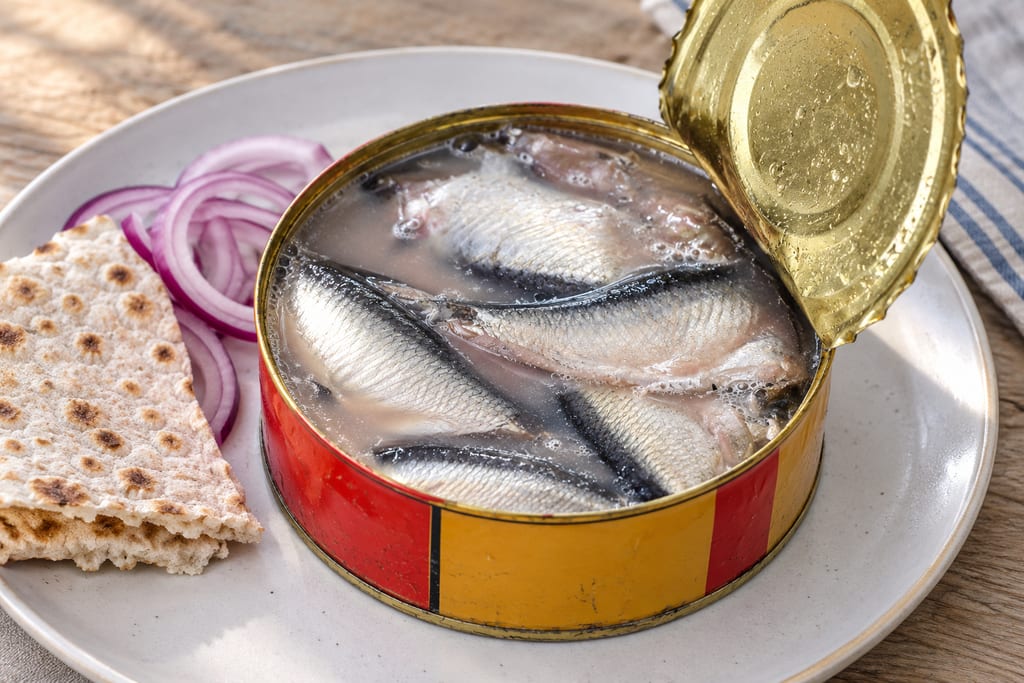
Surströmming
Salted, barrel-fermented Baltic herring from Sweden, surströmming is packed in shallow tins where fermentation may continue. Its traditional production is a specialist commercial process, not a household formula.
 FermenteaWhere food goes to change
Equipment · Barrels and casks
Surströmming production moves from short open brining to closed barrel fermentation, then into tightly sealed low, wide consumer cans where fermentation can continue.
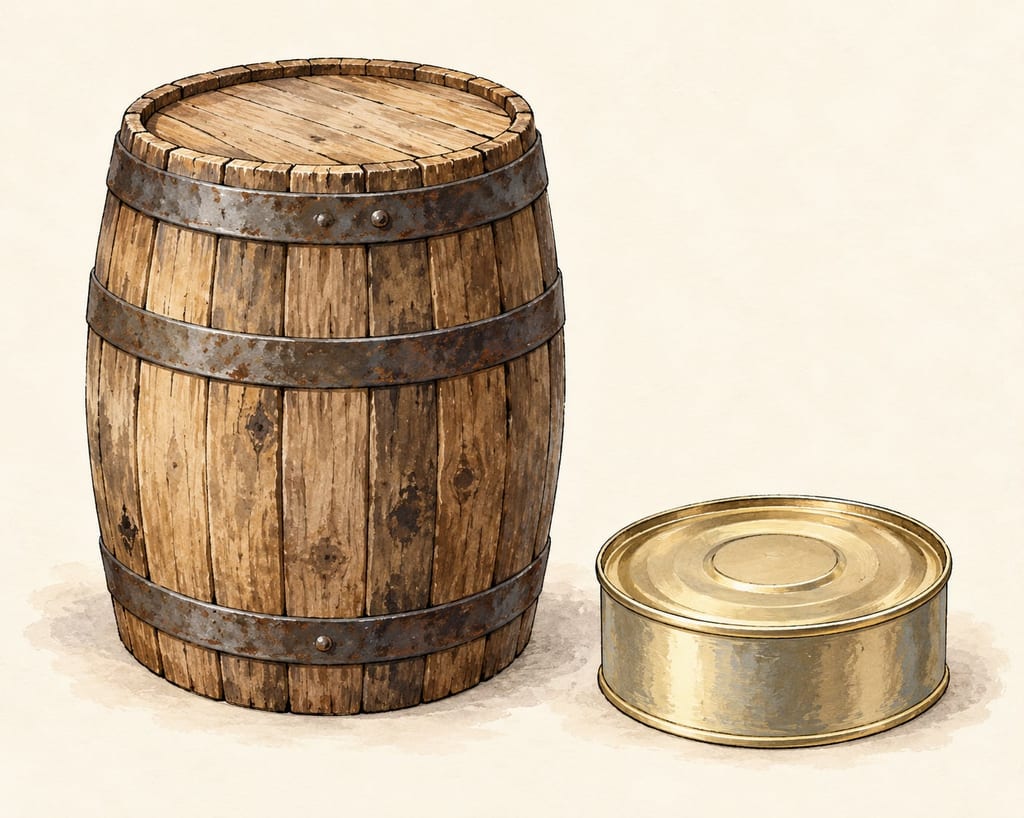
Surströmming production uses a succession of vessels rather than one all-purpose fermenter. The Swedish Food Agency describes herring caught in the northern Baltic being sorted, chilled and rinsed before a short brining stage in open vessels. After preparation, fresh brine is added and fermentation proceeds in closed barrels until the producer considers the product mature. It is then packed into tightly sealed cans or other consumer containers.
The distinction matters. An open brining vessel, a closed fermentation barrel and the final package do different jobs. A can is not just a serving dish: the Agency notes that gas continues to form after packing and may raise pressure, so the closure is part of the product's containment. These sources describe a commercial production system, not a household recipe.
Wooden barrels are a documented traditional form in some Swedish production, but they are not universal. Swedish Lapland's account of Kallax says local producers still ferment fish in wooden barrels and describes the vessel as part of a community practice passed between generations. The Swedish Food Agency separately specifies closed barrels for the fermentation stage without saying every producer uses the same material.
Photographs in the Ulvö Museum's saltery archive show a historical range of work around wooden barrels: barrels at fermentation, their opening after maturation, fish being transferred from a barrel and a 1956 canning operation. The old images help explain how bulk fermentation and later packaging were handled in one saltery. The museum lists the photographer as unknown, so its archive image is linked with rights unknown rather than treated as an openly reusable photograph.
The can is a separate vessel in the production chain. The inspected Kallax package photograph shows a sealed metal can that is noticeably flatter and wider than an ordinary beverage can. It is a useful example of one brand's form, not a dimension standard for all producers. The Swedish Food Agency uses the broader description of tightly sealed consumer cans or other containers.
Packing does not necessarily end fermentation. The Agency describes gas formation during storage and warns food businesses that package tightness matters. A sealed can therefore represents a continuing stage of containment, not simply a decorative or serving format. Its label and brand identify the photographed product, but they should not be copied into a generic drawing of the equipment.
The Swedish Food Agency identifies surströmming as a product made and eaten in Sweden from herring caught in the northern Baltic. Within that national setting, Kallax in Norrbotten and Tynderö in Västernorrland are distinct documented production locations. In Kallax, a regional account describes community production and wooden-barrel fermentation. Oskars, based in Tynderö, gives its own company milestones: the first Oskars barrel in 1955 and its first branded can in 1966.
Those dates belong to one producer's history. They do not mark the beginning of Swedish herring fermentation, the first barrel anywhere or the invention of the low can. Museum photographs of historical saltery work and older herring-preservation material show continuity and change, but the origin of the full equipment family is unresolved.
The change from open brining to a closed barrel and then a sealed consumer package records a change in the process, not merely a change in size. The barrel holds the fish and brine during bulk maturation; the can makes the finished product transportable while containing ongoing gas formation. Actual materials and equipment differ between producers, and the barrel photo or product package alone cannot establish the fermentation conditions.
The Swedish Food Agency's pages are guidance for food-business control and explicitly describe their examples as non-binding. This equipment entry is not a validated home-fermentation procedure. It does not supply a recipe, a safe process parameter or instructions for managing pressure. The sources support explaining the vessel sequence and its documented Swedish contexts, not improvising a food-safety protocol.
The Swedish Food Agency describes today's surströmming process through brining, barrel maturation and sealed consumer packaging. Oskars' company history says its first barrel was made in 1955 and its first Oskars-branded can appeared in 1966; these are milestones for that producer, not dates for the first Swedish barrel or can.
The equipment description does not provide a safe home-fermentation method. The Swedish Food Agency material is non-binding guidance for food-business hazard controls, and its product-specific parameters must not be generalized.
Source →A Kallax wooden-barrel tradition and an Oskars producer chronology are documented examples, not universal dates, vessel materials or can specifications for all Swedish surströmming.
Source →The Ulvö Museum photographs have an unknown photographer and no reuse licence is stated on the page; the image is linked with rights unknown and is not evidence for every producer's equipment.
Source →The Swedish Food Agency describes surströmming as a fermented herring product made and eaten in Sweden; this country-level evidence does not make a claim of exclusive origin.
Regional and public-broadcast sources document a community production tradition here, including fermentation in wooden barrels; that evidence applies to Kallax, not every Swedish producer.
Oskars identifies its factory shop in Tynderö; SVT places its surströmming factory in Västernorrland. This documents one producer location, not the origin of the vessel forms.
Salted, barrel-fermented Baltic herring from Sweden, surströmming is packed in shallow tins where fermentation may continue. Its traditional production is a specialist commercial process, not a household formula.
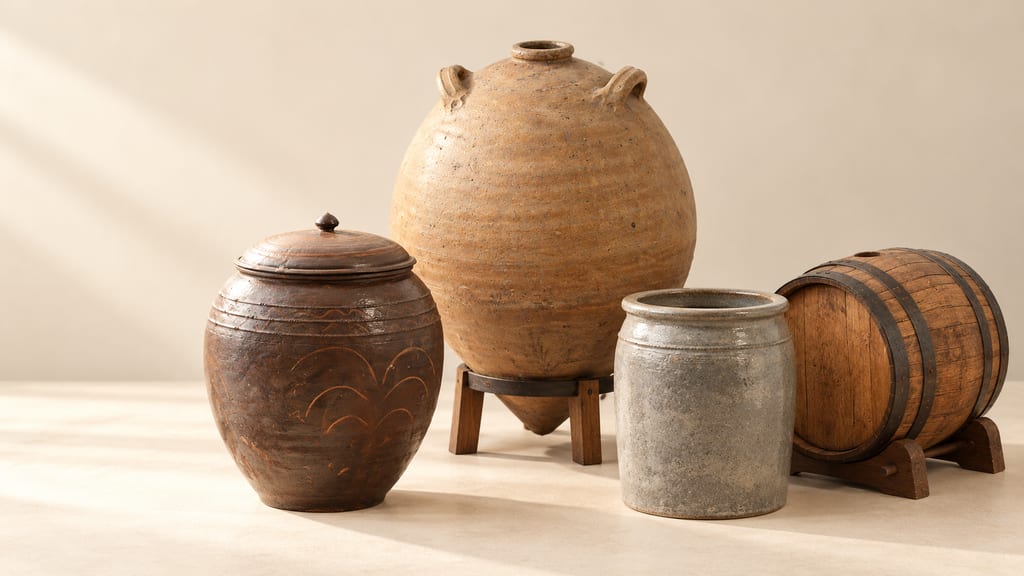
Jars, barrels, skins, leaves, pits and whole rooms decide much of what happens to fermented and cured food. This is how a container works on its contents, and how people in different places chose theirs.
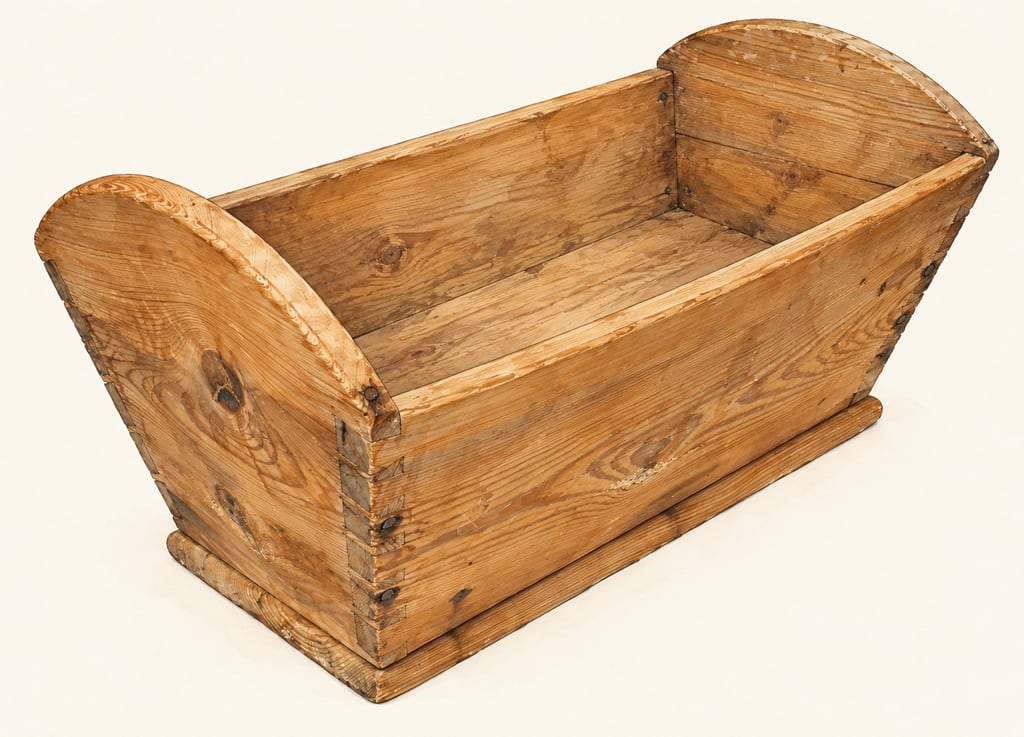
In Swedish breadmaking, a wooden trough could hold sourdough between bakes; dried dough on its walls could be revived for the next bake. A museum example from Björnlunda documents one traditional form.
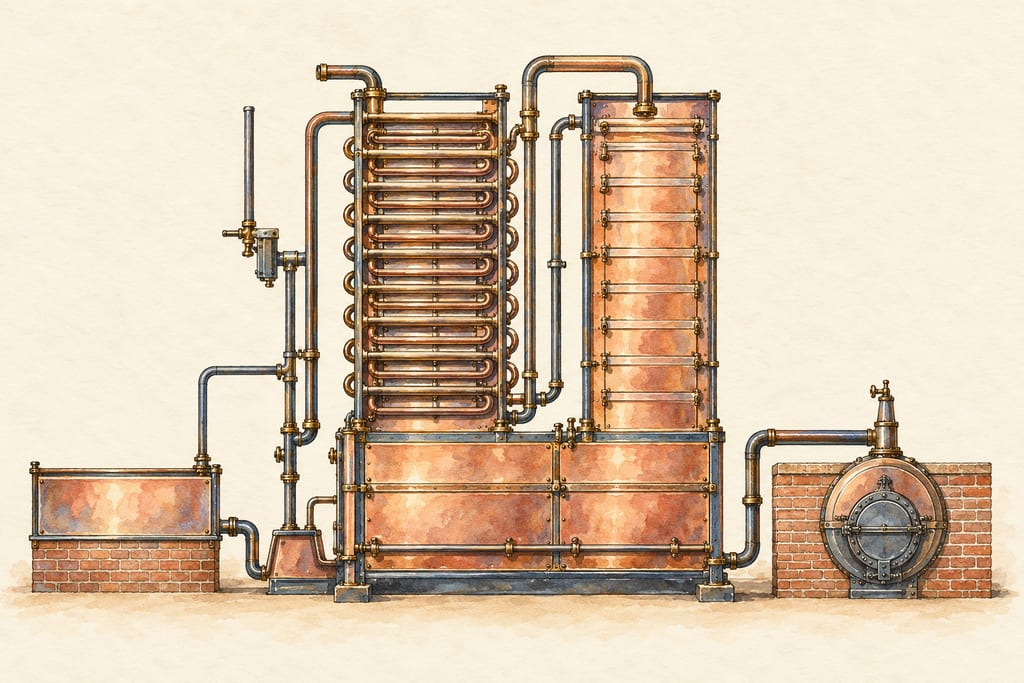
A column still is a distillation apparatus built around one or more vertical columns. Its continuous and rectifying designs appear in several spirits traditions, but materials and product character vary by installation.
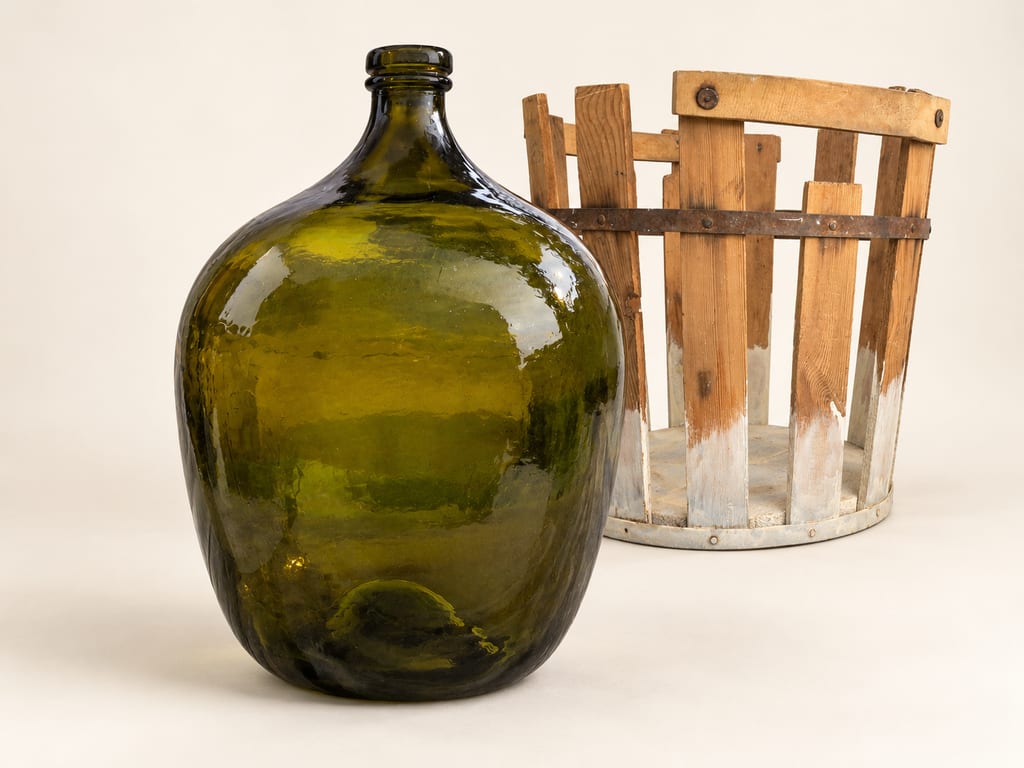
A glass demijohn or carboy is a stout, usually rounded bottle with a narrow neck, used for beverage fermentation, maturation, storage or transport. Its glass body, closure and any protective carrier are distinct parts of the vessel system.
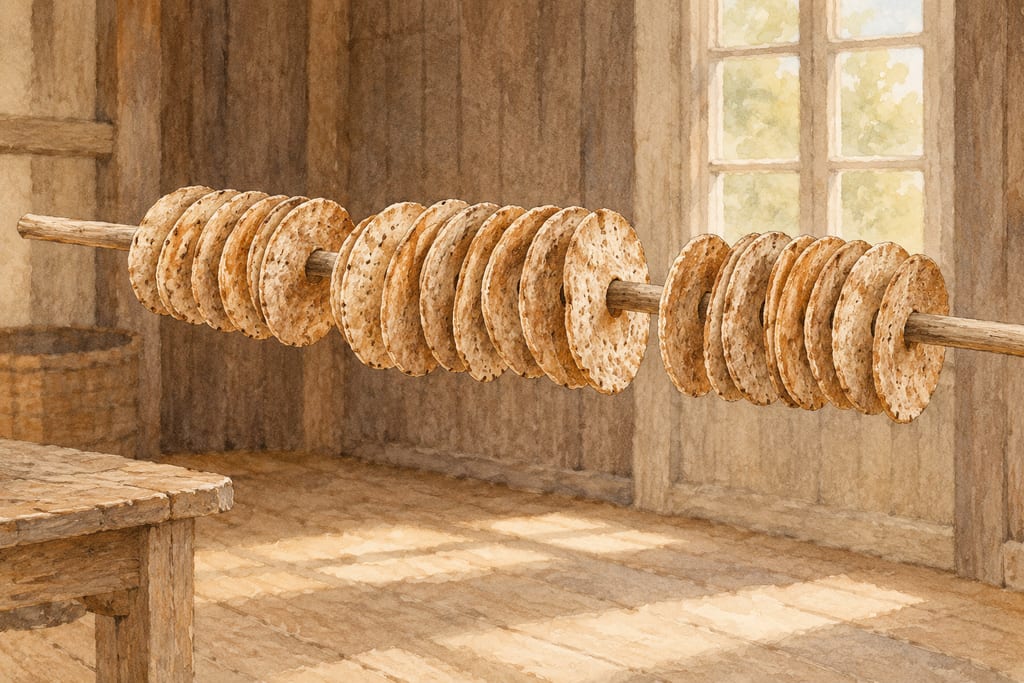
A wooden pole threaded through the central holes of dry Swedish storage loaves lets them hang for drying and storage. Swedish sources document the practice as an old way to keep bread dry; the surviving accounts do not give a standard pole size or one universal arrangement.

A rotary quern is a hand-operated mill with a runner turning over a fixed bedstone to grind grain. Scandinavian household use of rotary querns increased around the beginning of the Viking Age.
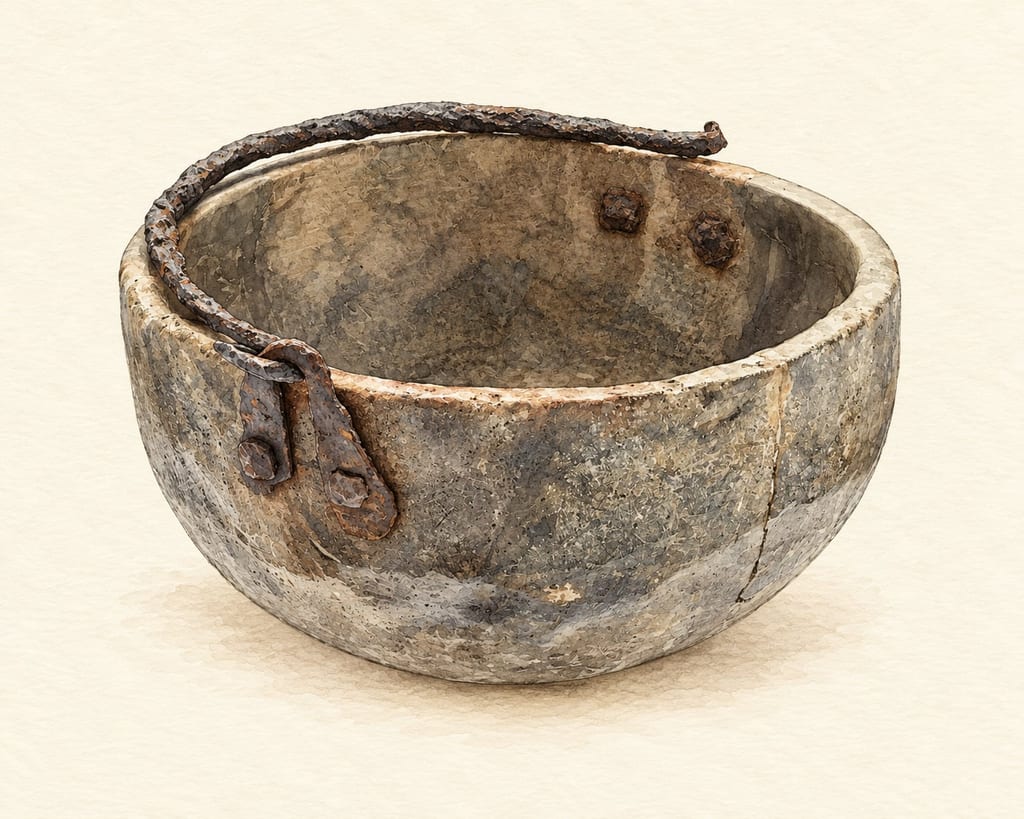
A Viking Age cooking pot carved from soapstone, exemplified by a partly reconstructed Birka grave find with iron handle fittings. Similar vessels were used across Scandinavia, but their forms and later handles changed over time.
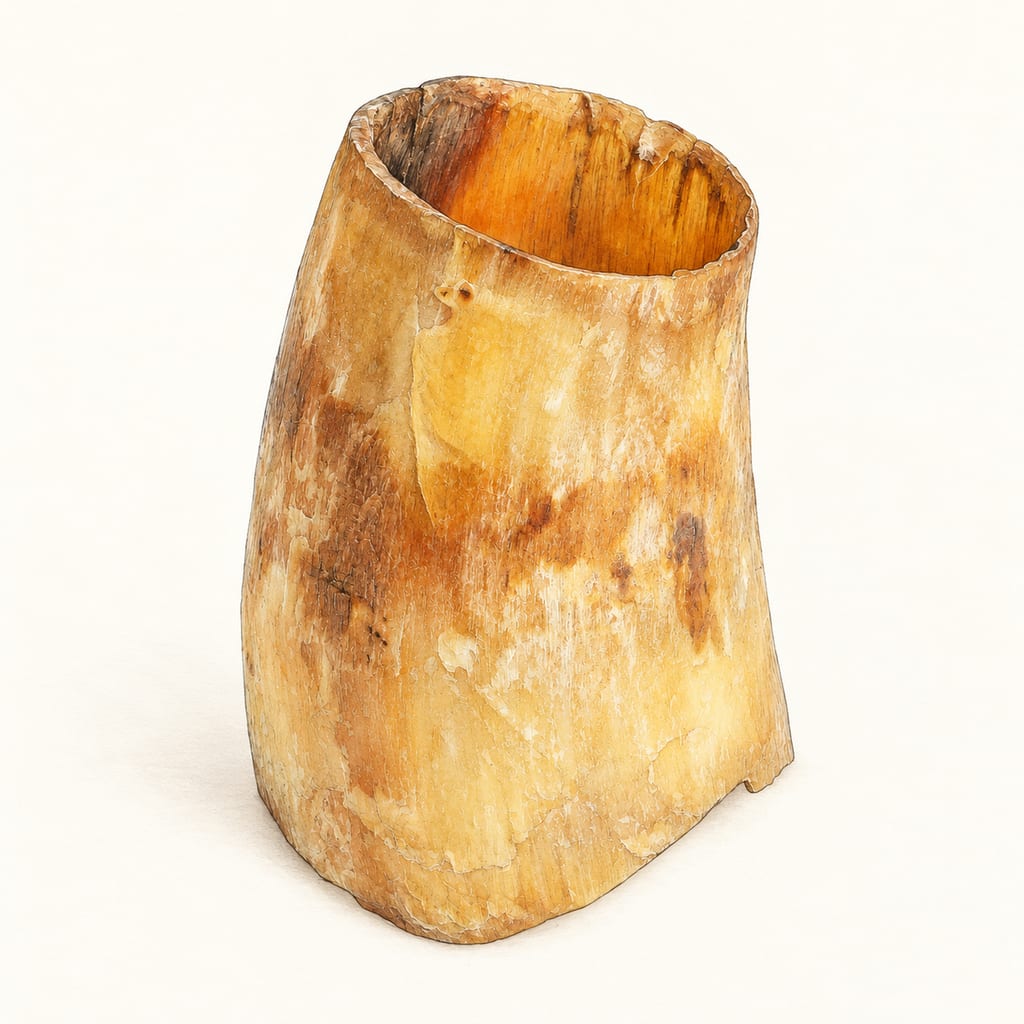
A korvhorn is a cow-horn sausage-stuffing tool used to hold a natural casing open as it is filled. Swedish folklore and museum records preserve the horn form, while modern sausage stuffers may use metal.
No community contributions have been published for this entry yet.
Sign in to contribute. Published comments and photos are free to read.
Livsmedelsverket (Swedish Food Agency), KontrollwikiProcess · Equipment · Geography
Fermenterad fiskThe Agency describes surströmming made from herring caught in the northern Baltic, first brined in open vessels, then fermented in closed barrels with fresh brine, and finally packed in tightly sealed cans or other containers.
Gas forms during storage and can create pressure in the sealed consumer package, so package tightness matters.
The Agency states that surströmming is produced and consumed in Sweden and notes that its guidance is non-binding.
Cited in: Two containers, several stages; The low, wide consumer can; Swedish places and producer histories; What the vessels tell you—and what they do not
Livsmedelsverket (Swedish Food Agency), KontrollwikiProcess · Equipment · Safety
Surströmming – Princip 2 – Identifiera kritiska styrpunkterThe Agency's surströmming control example describes closed airtight barrels, a top grid, barrel maturation and sealed consumer packaging; it explains that pressure and leaks are product-specific control concerns.
The page is non-binding food-business guidance, not a consumer recipe or general safety validation.
Cited in: Two containers, several stages; What the vessels tell you—and what they do not
Oskars SurströmmingHistory · Producer history · Geography
Om ossOskars states that its first barrel of surströmming was made in 1955 and that the first can bearing the Oskars name appeared in 1966; these dates describe that company only.
Oskars identifies its factory shop in Tynderö.
Cited in: Swedish places and producer histories
Swedish LaplandDocumented use · Geography · Materials · History
Fermented herring – a tradition like no otherThe story documents Kallax as a surströmming-producing community in Norrbotten and says it is one of the few producers still fermenting fish in wooden barrels.
It describes fish being held in a strong brine, then weaker brine in barrels, with barrel storage and community preparation; those details describe the producer interviewed, not a universal schedule.
Cited in: The wooden fermentation barrel; Swedish places and producer histories
Ulvö MuseumHistorical attestation · Visual reference
Surströmmingsprocessen i bilderThe museum archive caption identifies photographs of surströmming fermentation in wooden barrels, opened barrels of matured fish, transfer from a wooden barrel before canning, and canning at Fridolf Nordqvist's saltery in 1956.
The museum credits the historical photographs to an unknown photographer.
Cited in: The wooden fermentation barrel; Swedish places and producer histories
Wikimedia CommonsImage · Form
Can of Surströmming.jpgThe inspected photograph depicts one sealed low, wide Kallax-branded surströmming can; its page dates the photograph to 19 September 2012 and licenses it CC BY-SA 3.0.
Cited in: The low, wide consumer can
SVT NyheterDocumented use · Geography · History
Exklusiv surströmming är efterlängtad i KallaxSVT reports that Kallax community production began in 1939, describes local production in wooden barrels for roughly eight weeks, and reports around 1,000 numbered cans annually in 2017; those statements concern that community, not all Swedish producers.
SVT Nyheter VästernorrlandDocumented use · Geography
Karl-Evert missar aldrig surströmmingspremiären: ”Det är viktigt”SVT locates Oskars' surströmming factory in Tynderö, Västernorrland.