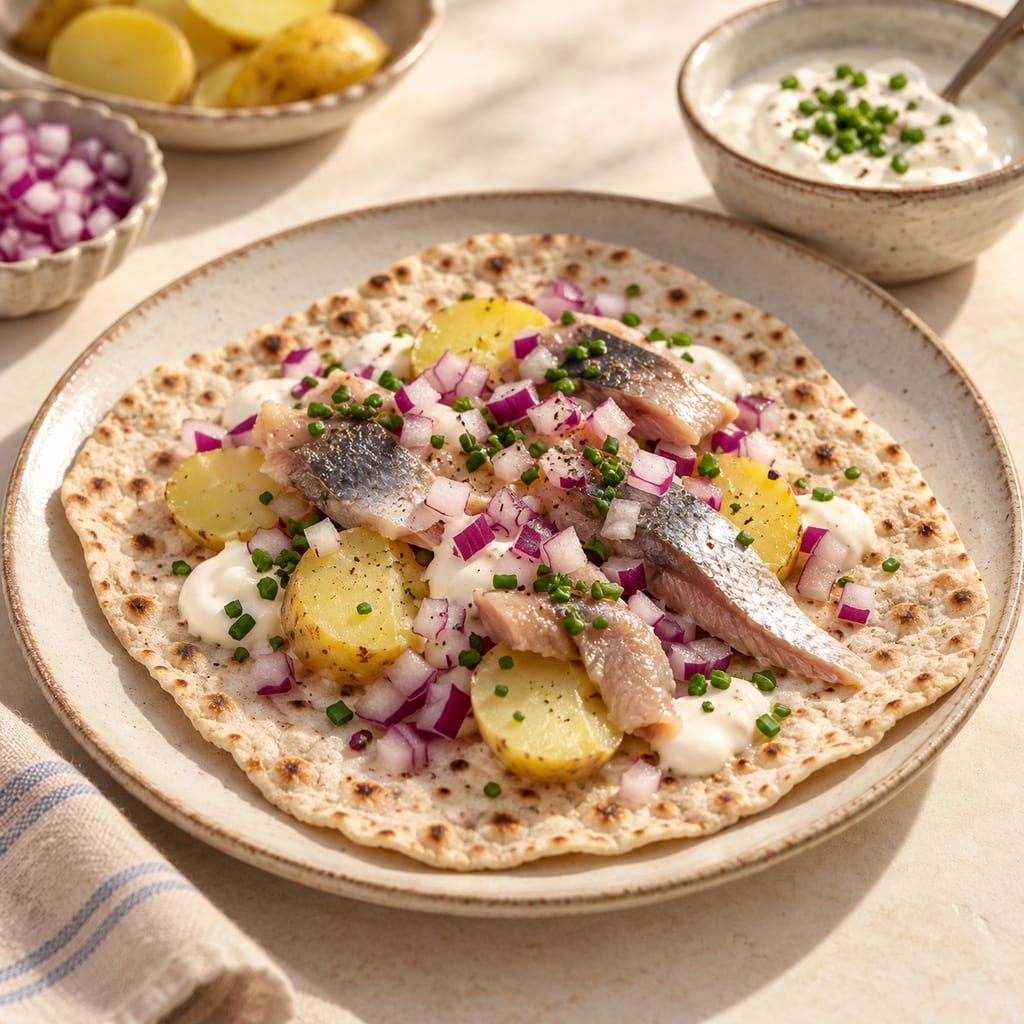
A surströmming meal
A Swedish late-summer meal of commercially prepared surströmming, tunnbröd, potatoes, onion and cultured cream. This is a serving preparation; the specialist fish fermentation is not made at home here.
 FermenteaWhere food goes to change
Surströmmingsfisk
Salted, barrel-fermented Baltic herring from Sweden, surströmming is packed in shallow tins where fermentation may continue. Its traditional production is a specialist commercial process, not a household formula.
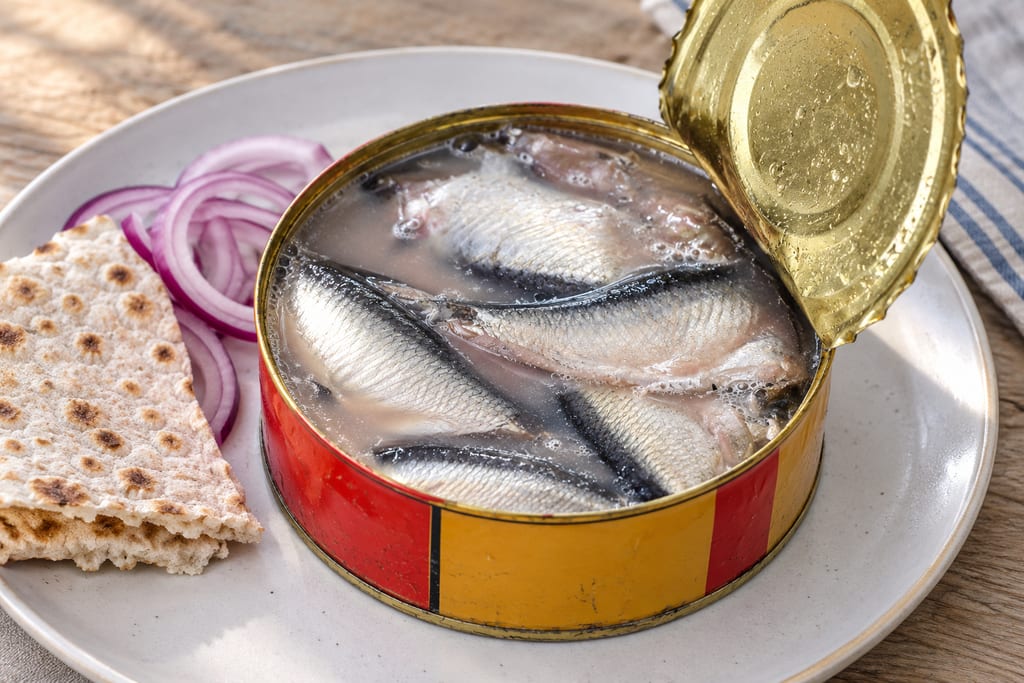
Surströmming is herring preserved by salt and active fermentation, traditionally associated with Sweden's Baltic coast and especially the north. Its best-known modern form is packed in a shallow metal can. The can is part of the process rather than a neutral wrapper: fermentation may continue after packing, and the closure must tolerate the gas and pressure that can result.
The Nordiska museet traces surströmming in Sweden to at least the sixteenth century, when it was traded as preserved food. That is a documentary floor, not a precise origin date. Fermented fish preservation is older than the written references that survive, and the museum's account does not support a confident single inventor or birthplace.
The food began as practical everyday fare in a farming society where preserving seasonal catches mattered. Salt was costly, and fermentation offered another way to keep fish. In the nineteenth century, surströmming spread across social groups. Better packages—first wooden barrels and pottery, later cans—made distribution farther south easier. A food described as humble became a seasonal delicacy and a marker of northern identity.
The third Thursday in August is the familiar season premiere. The museum says the date was fixed in 1940 after competition and demand encouraged the sale of insufficiently fermented fish. The convention marks when people begin opening tins together; it is not a safety test and does not specify a universal fermentation schedule. The museum notes that the product has been known beyond the north, even as northern Sweden remains its strongest regional association.
Spring is important to the story because herring is caught when it is ready to spawn, as the museum explains. Seasonal abundance gave coastal communities a brief supply that had to be handled before it spoiled. Salting and fermentation made that catch last beyond the fishing period, connecting a seasonal harvest with food for later months. The page can identify that relationship without pretending every district used identical boats, gear, or timing.
The spread of the food also reflects changes in trade and social status. The museum notes that surströmming moved across social groups during the nineteenth century. A product that had been associated with ordinary preservation became something people sought out for a particular season and meal. This is not a simple story in which one modern can suddenly made an old food fashionable: changes in salt costs, market access and packaging each altered how and where the herring could be eaten.
The Swedish Food Agency's Kontrollwiki describes a commercial process in which fresh herring is received under chilled, traceable conditions, brined, cleaned, matured in barrels and then canned. The authority explicitly warns that its HACCP example cannot be copied across every product. This recipe therefore records the process architecture and its purpose, while leaving quantities, exact salt targets, temperatures, equipment specifications and release tests to a processor's validated plan.
The agency's example begins with a blood-brining stage and removal of the gills, stomach and intestines; it describes weighing fish and brine into tared barrels, fitting a grid, closing and rolling the barrels to mix. Fish must remain submerged and protected from air. The fish's preparation and brine chemistry are managed together, not guessed from an old household ratio.
The museum's traditional overview gives a broad chronology: spring-caught herring is cleaned, held about two days in strong brine until blood is removed, then transferred to weaker brine for six to eight weeks; canning commonly followed in early July. Those details explain a seasonal tradition and help readers picture the stages. They are not a validated modern formula. The Food Agency gives product-specific examples and says actual processes need their own hazard analysis.
Canning does not necessarily stop fermentation. The product can keep maturing inside its sealed tin, which is why commercial seams and packaging need to handle pressure. A loose or leaking closure is a process failure, not an invitation to taste the contents. Commercial storage instructions belong to the specific producer and product.
The two brines described in the museum's account have separate jobs in that historical sequence: the first helps remove blood, and the later brine accompanies longer maturation. In the Food Agency's commercial account, measured additions and controlled conditions are safety-critical rather than matters of taste alone. These descriptions are not interchangeable recipes. A process built for one catch, fish size, salt source, barrel, room and can seam may not transfer to a different combination.
The vessel changes the process environment. In the barrel, a cover and grid help hold the fish below the brine; rolling a closed barrel mixes the contents in the agency's example. Keeping fish submerged limits air contact, which the agency associates with reducing rancidity and mould. Once the fish enters a can, the container becomes a sealed pressure boundary. It is the continuity between these stages—liquid coverage, controlled salt, maturation and a suitable closure—that makes the product a managed process rather than fish simply left in a jar.
Salt is both an ingredient and a control. It changes the conditions in which microbes can grow; an insufficient or inconsistent salt balance can permit hazards that a properly managed process is intended to prevent. The Swedish Food Agency identifies Clostridium botulinum as a specific concern when salt is too low and discusses controls for the fish-to-brine ratio. Its published thresholds are part of an example HACCP plan and must not be lifted out of that product context.
Surströmming should not be reduced to 'lactic souring'. The Swedish Food Agency describes fermented fish as a category whose processes and hazards differ by product. A 2000 microbiology study isolated strictly anaerobic, salt-tolerant bacteria from canned Swedish fermented herring, including organisms in the genus Haloanaerobium. The researchers suggested these organisms may contribute to the strong flavour and swollen cans; their study does not prove one universal cause for every aroma or can's expansion.
The fish is not sterilized by fermentation. The can's environment, salt, time, temperature, fish condition and package integrity interact. That is why consumer smell or appearance cannot verify safety and why the professional process has both microbial and physical controls.
Microbiology research helps explain why a single familiar fermentation label is inadequate. The 2000 study examined bacteria isolated from canned surströmming and described them as strictly anaerobic and salt tolerant. That finding is about organisms recovered from the study's samples; it does not define every organism in every batch or give a consumer a way to assess a tin. The researchers proposed a possible link between the isolates, flavour and swollen cans, but their findings do not establish swollen packaging as a normal or safe sign.
Salt also has a different role from seasoning added at the table. During production it shapes water and microbial conditions across fish and brine. A restaurant or household portion can taste salty or intense, but seasoning the served fish cannot recreate a controlled preservation process. Sensory descriptions—salty, pungent, tender, oily—help characterize the food; they do not measure salt distribution, parasite control, histamine risk, or seam integrity.
The move from bulk vessels to consumer cans changed how surströmming travelled. The Nordiska museet connects improved packaging with sale farther south and the food's shift into festive use. A barrel is suited to maturation at production scale; a sealed tin carries a portion to the table while fermentation may continue. They are distinct stages and have different engineering needs.
Modern packaging is also visible in company histories. Oskars says it began in 1955, when founder Oskar Söderström made his first barrel, and introduced its first branded can in 1966. This is one producer's history rather than a date for the whole tradition. The company's current serving suggestions—almond potatoes, crème fraîche, red onion and dill—illustrate one contemporary table, not a single canonical recipe.
Historical photographs of workers and open barrels show that the production environment has changed. They should not be treated as a blueprint for present-day equipment. The vessel's material, closure and scale matter because they shape the liquid and gas environment; modern barrel, can and cold-chain controls need to match the product being made.
The producer's dates show one route into modern markets. Oskars attributes the company start to Oskar Söderström in 1955, first barrel that year, and its branded can to 1966. Its story illustrates how a local process can be adapted for a retail package while remaining associated with a regional food tradition. It does not date the first can in Sweden or mean all producers share the same milestones.
Modern product references show two visual forms that readers might otherwise confuse: large production vessels and the much shallower consumer tin. Older photographs may show wooden tubs and manual work; more recent scenes can use plastic barrels or other commercial equipment. Image dates and captions matter. A photograph of historical handling is evidence for its own period, not proof of the current vessel design or a recommendation to reproduce a past workspace.
Surströmming is usually presented as a meal rather than eaten as a large portion by itself. The Nordiska museet describes thin flatbread, onion and sometimes schnapps; Oskars suggests almond potatoes, crème fraîche, red onion and dill. A surströmmingsklämma wraps the fish with bread and accompaniments. Tunnbröd, potato, onion, chives and cultured cream appear in many descriptions, but exact combinations vary between households and regions.
The strong, salty fish is used in small amounts, while bread and potato make the serving filling and onion or cream changes the balance of each bite. These accompaniments are added at the table: they do not belong in the fermentation barrel or can. Soft flatbread folds around fillings; a crisp version gives a brittle base. The choice changes the eating texture rather than the preserved fish.
A producer's directions should guide opening and storage. The distinctive aroma is part of the food's reputation, but aroma alone cannot establish whether a product has been handled safely. Service custom, including the August premiere, describes when and how people eat it; it does not replace product controls.
Service can be informal or ceremonial. A tin may anchor a late-summer gathering, with each person building a small wrap and adjusting the accompaniments. The museum's mention of flatbread, onion and schnapps captures a familiar outline, while producer recommendations and regional descriptions add potatoes, cultured cream, dill or other additions. These accounts are examples, not a complete inventory of every local custom. A visitor can understand the meal better by seeing it as a shared tasting in which the strong fish is portioned and balanced, rather than as a single standardized plate.
Some people open the can outdoors because its aroma is strong and brine may splash. That is a practical service custom, not an instruction to ignore the label or handle a suspicious package. Keep the unopened product according to its specified cold storage, protect surfaces during opening, and use leftovers only as the producer directs. The fish remains a ready-to-serve preserved product; accompaniments are prepared separately.
Surströmming is related to other salted or fermented fish only at a broad level. Its whole or piece herring, brine, barrel maturation and continuing fermentation in cans distinguish it from dried fish, smoked fish, salted fish kept without active fermentation, or fish sauces that break down into a liquid seasoning. Their preservation goals, textures and microbial conditions are not interchangeable.
The museum's historical record begins in the sixteenth century; it does not prove that a modern surströmming method was made by Vikings or followed unchanged from antiquity. The named fish, vessels, handling standards, packaging and market all developed over time. Describing the tradition carefully leaves room for older fish preservation without projecting current cans or modern controls into periods where the evidence is absent.
Surströmming is best understood as a northern Swedish preserved-food tradition and a specialist fermented-fish process that became a shared seasonal meal. Its barrel, tin and table tell different parts of that story: controlled maturation, ongoing packaged fermentation, and a communal way of serving a strongly flavoured fish.
Salt-fermented herring from elsewhere may resemble surströmming in broad ingredients, yet a similar fish, barrel or brine does not make methods equivalent. Some products are strongly salted and held without active fermentation; others dry, smoke, or break fish down into a sauce. Their finished moisture, texture, vessels, microbes and hazards differ. The Food Agency's warning against copying an example process is especially useful when comparing traditions: a general resemblance is not a validated substitution.
History also requires restraint. The surviving Swedish museum record does not justify describing the modern preparation as a Viking recipe. Nor should nineteenth-century commercial changes be projected onto the sixteenth-century trade record. What can be said with confidence is that fermented herring was traded in Sweden by that period, that the tradition changed with society and packaging, and that the August premiere has become a recognizable modern custom. Separating these layers makes the history richer and more accurate.
The Nordiska museet documents surströmming as a traded preserved food in Sweden by the sixteenth century; this is a surviving historical record, not a claim that the method began then.
The Swedish Food Agency identifies growth risk if salt control is inadequate in fermented fish.
Hazard sourceThe agency identifies parasites including Anisakis and ties release timing to the validated maturation control in its commercial example.
Hazard sourceIncoming herring requires supplier, catch and temperature controls; the agency identifies histamine and contaminants among hazards to assess.
Hazard sourceFermentation can continue after packing and generate gas; commercial closures must be designed and controlled for that pressure.
Hazard sourceTreat the cited process as commercial documentation only. Do not use its example as a home recipe; the Swedish Food Agency says examples cannot be copied directly across products or processes.
Control sourceFor commercial production, use a product-specific HACCP assessment covering incoming-fish traceability and chilling, salt-to-fish/brine balance, submerged storage, maturation release, and pressure-rated hermetic seams.
Control sourceBuy finished surströmming from a legitimate producer and follow that can's storage, opening and after-opening directions. Do not infer safety from smell, taste, or package shape.
Control sourceThis is a historical and commercial-process account, not a do-it-yourself fish-fermentation method. Do not ferment raw herring at home using the narrative timings or numbers as a formula.
Never taste a leaking, damaged or abnormally pressurized package; follow the producer's instructions and local food-safety guidance.
The museum documents trade and tradition in Sweden; this does not claim a single place of origin.
The museum identifies the north as especially associated with surströmming; the food is eaten elsewhere in Sweden too.
A Swedish late-summer meal of commercially prepared surströmming, tunnbröd, potatoes, onion and cultured cream. This is a serving preparation; the specialist fish fermentation is not made at home here.
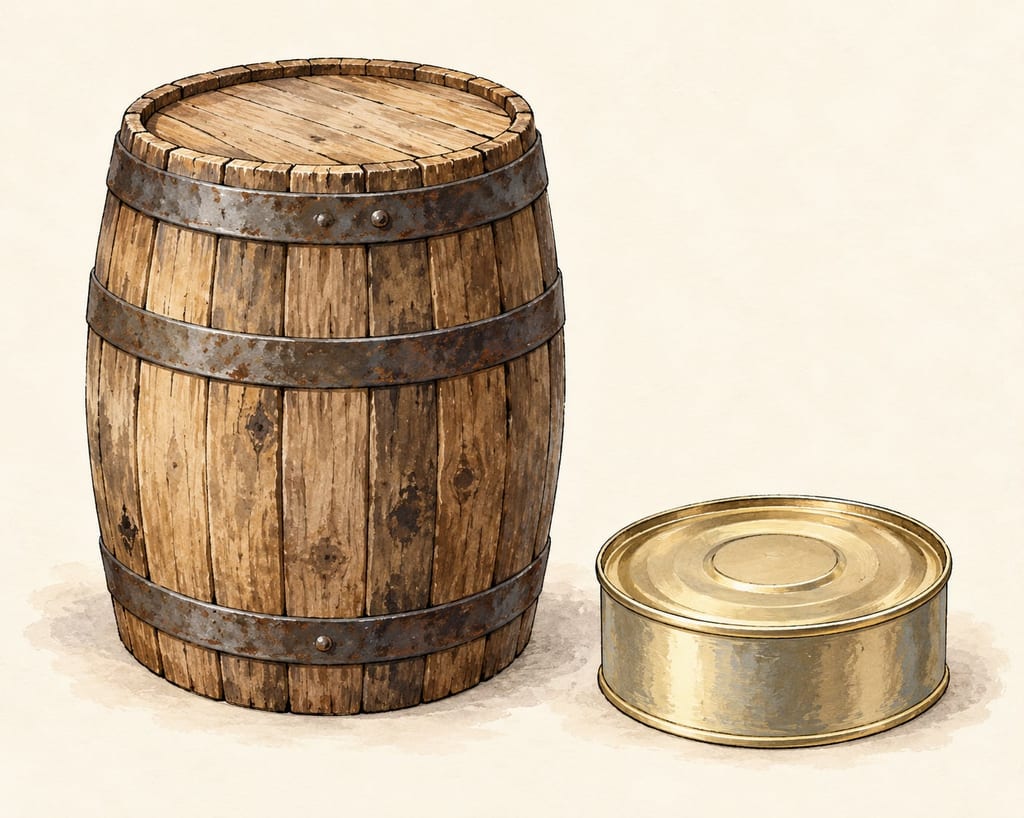
Surströmming production moves from short open brining to closed barrel fermentation, then into tightly sealed low, wide consumer cans where fermentation can continue.

Dry salami, sour pork with rice, matured sheep and aged blubber follow different paths from animal to food. Their stories connect microbes with climate, slaughter, migration and the meals people share.
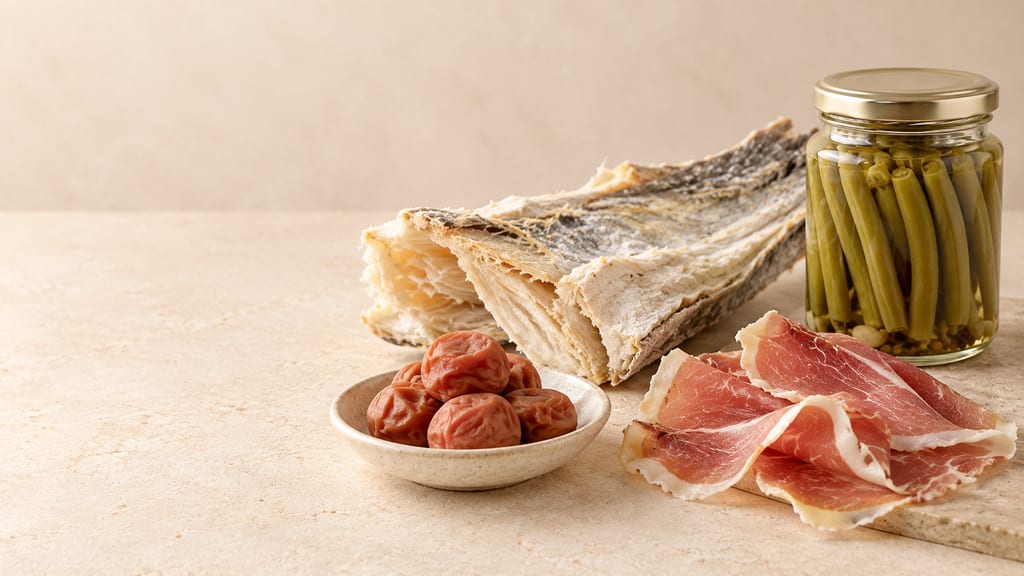
Every preserved food is a stack of barriers against microbes, enzymes, air and time. This is how they work, what a recipe's numbers measure, and how cooks worldwide build them.
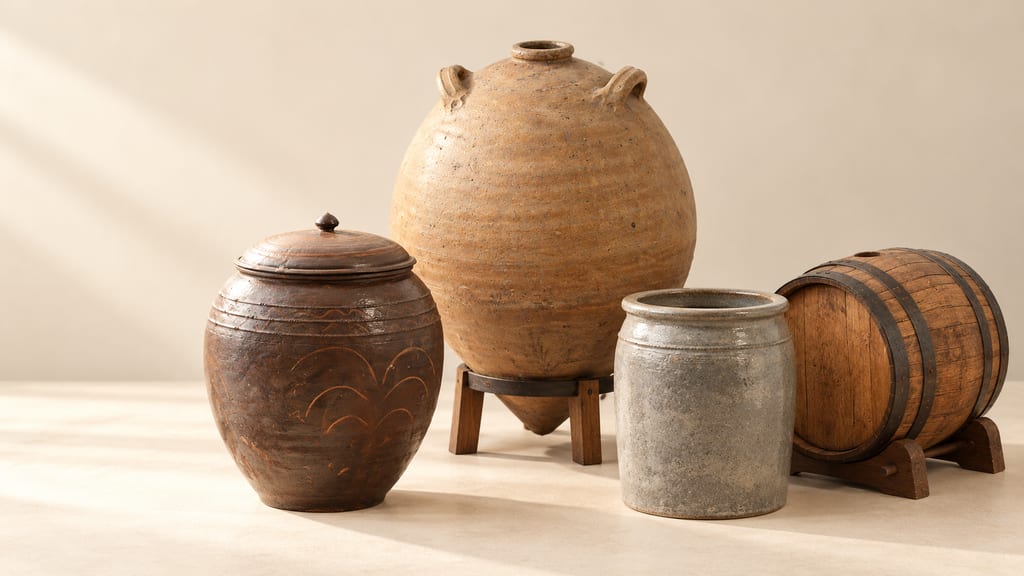
Jars, barrels, skins, leaves, pits and whole rooms decide much of what happens to fermented and cured food. This is how a container works on its contents, and how people in different places chose theirs.
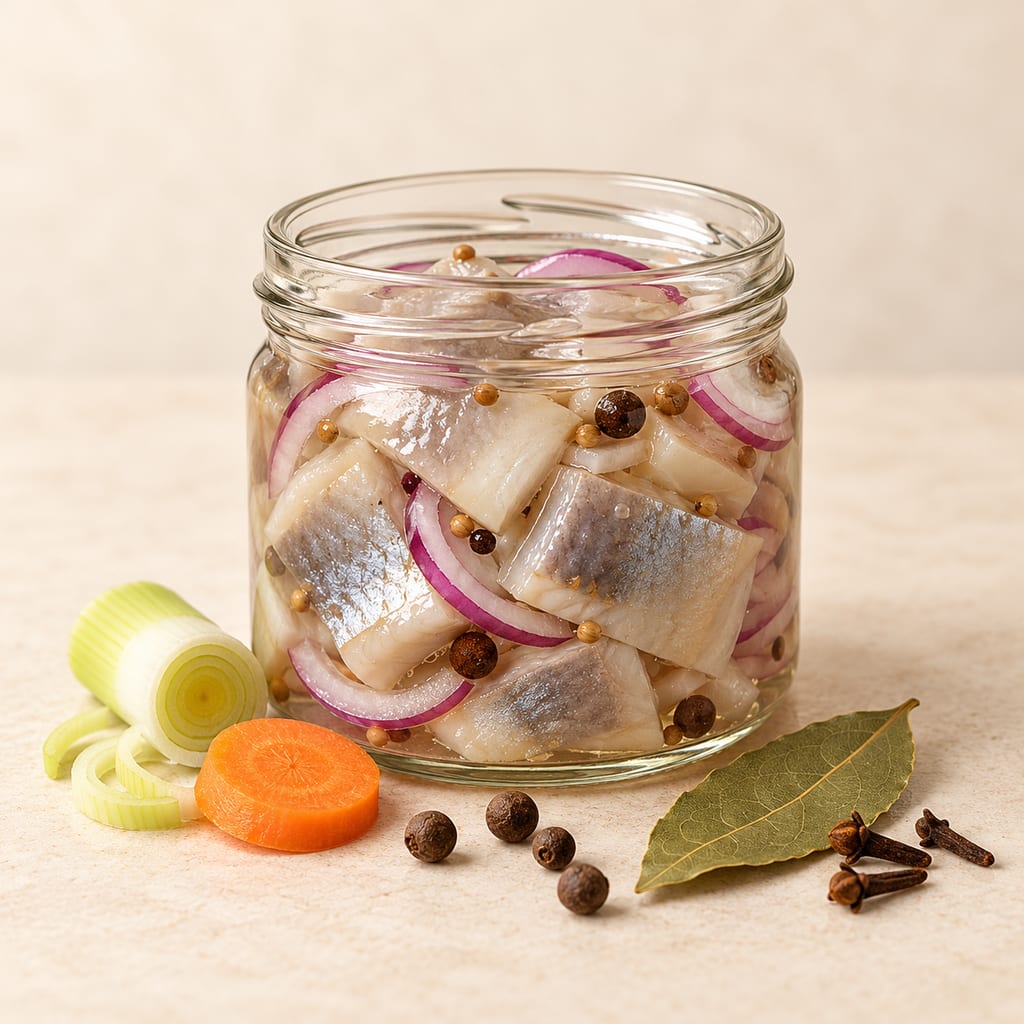
A Swedish ready-to-dress herring preparation: add the classic sliced aromatics and spices to already prepared herring, then serve or chill for fuller flavour.

A Swedish-style spirit vinegar made by fermenting neutral alcohol with live vinegar bacteria, with a separate guide to commercial ättika strengths.

Crushed or milled barley cooked in water until the starch softens and the mixture thickens, the plainest way a northern household turned stored grain into a meal, here with apple and hazelnut.
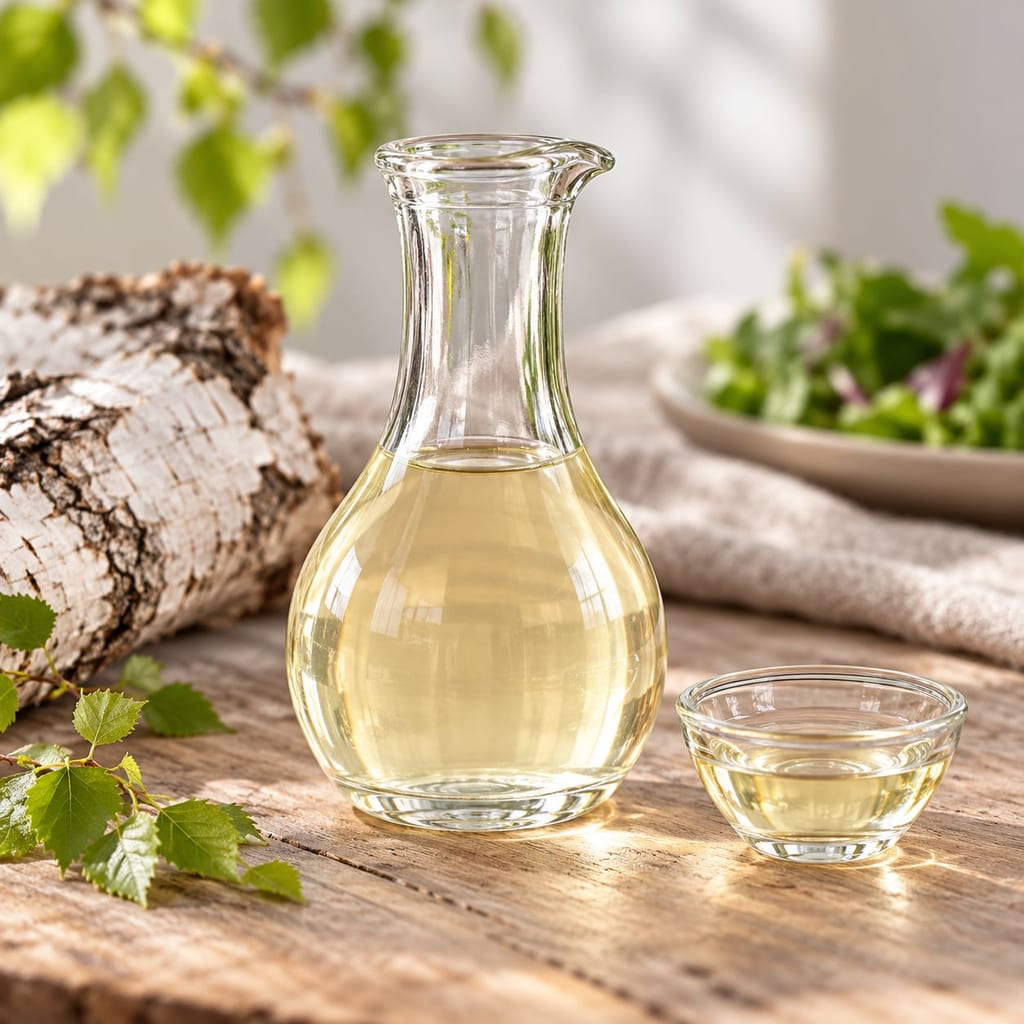
Vinegar from spring birch sap fermented to alcohol and then acetic acid, usually with added sugar or honey because the sap is so dilute; made in Sweden and described in older eastern European accounts.

Filmjölk is a Swedish cultured milk with mild acidity and a spoonable body. This recurring batch uses filmjölk from the previous batch to culture fresh milk.
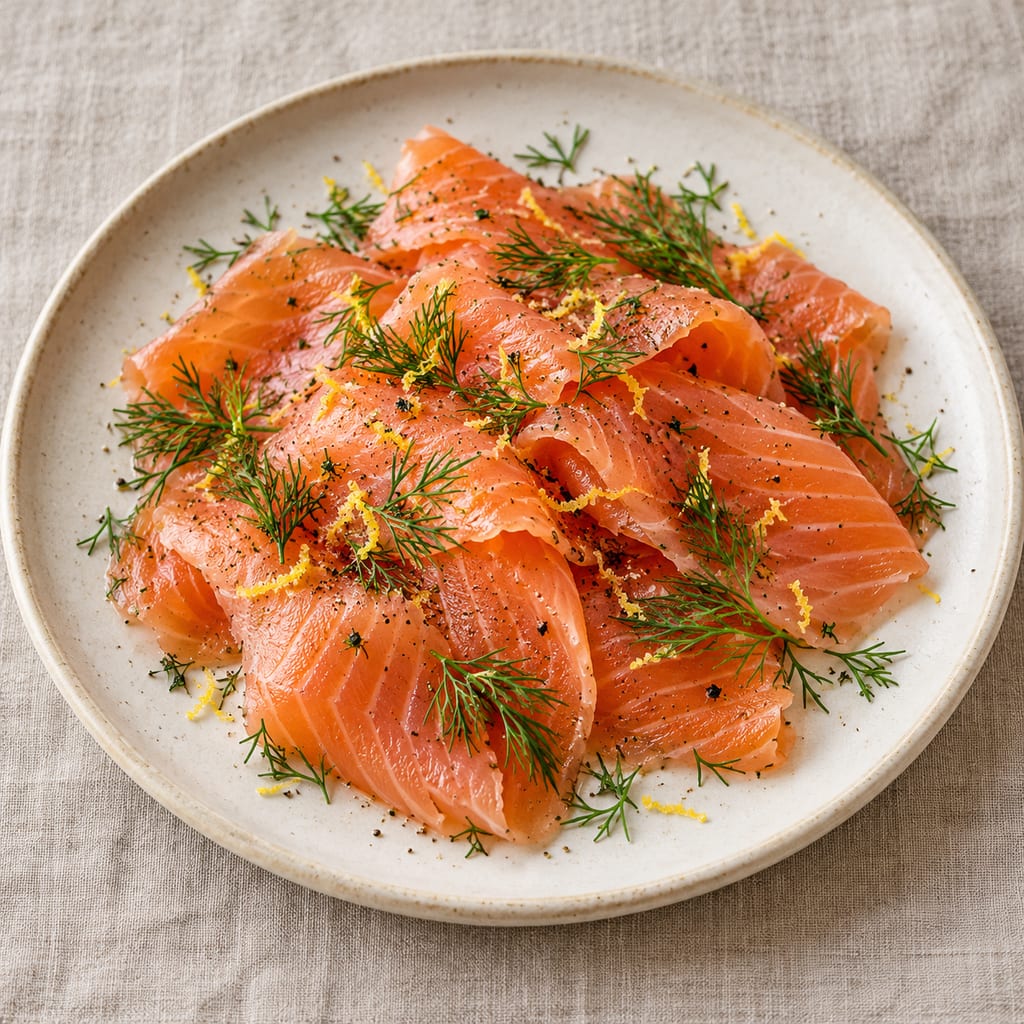
Salmon is cured with salt, sugar, pepper, dill and lemon zest under refrigeration.

Soft Swedish wheat buns filled with butter, sugar and cinnamon. This 20-bun home batch uses fresh yeast, two short proofs and pearl sugar.

A Swedish home batch of eight thin rye-and-wheat crispbreads, yeast-risen once and baked until hard.
A concrete fermentation tank installed below ground at a Senegalese fish-processing site was documented as an adaptation that emulated the older practice of burying fish during fermentation.

A documentary account of Icelandic hákarl, fermented and dried Greenland shark. It describes cultural context and one production study, not a home preparation method.
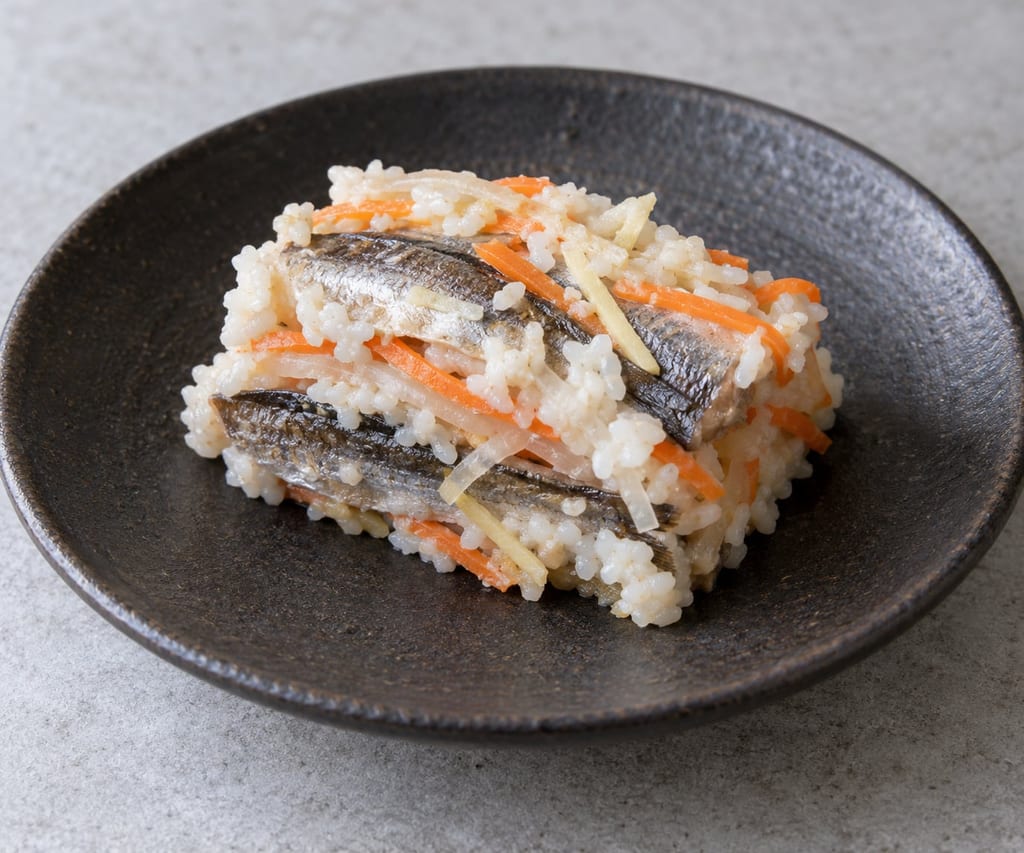
Hokkaido izushi layers fish, vegetables, rice and kōji for cold-season lactic fermentation. This MAFF recipe uses small hatahata with a vinegar pretreatment; it is one regional household formula, not a universal izushi method.
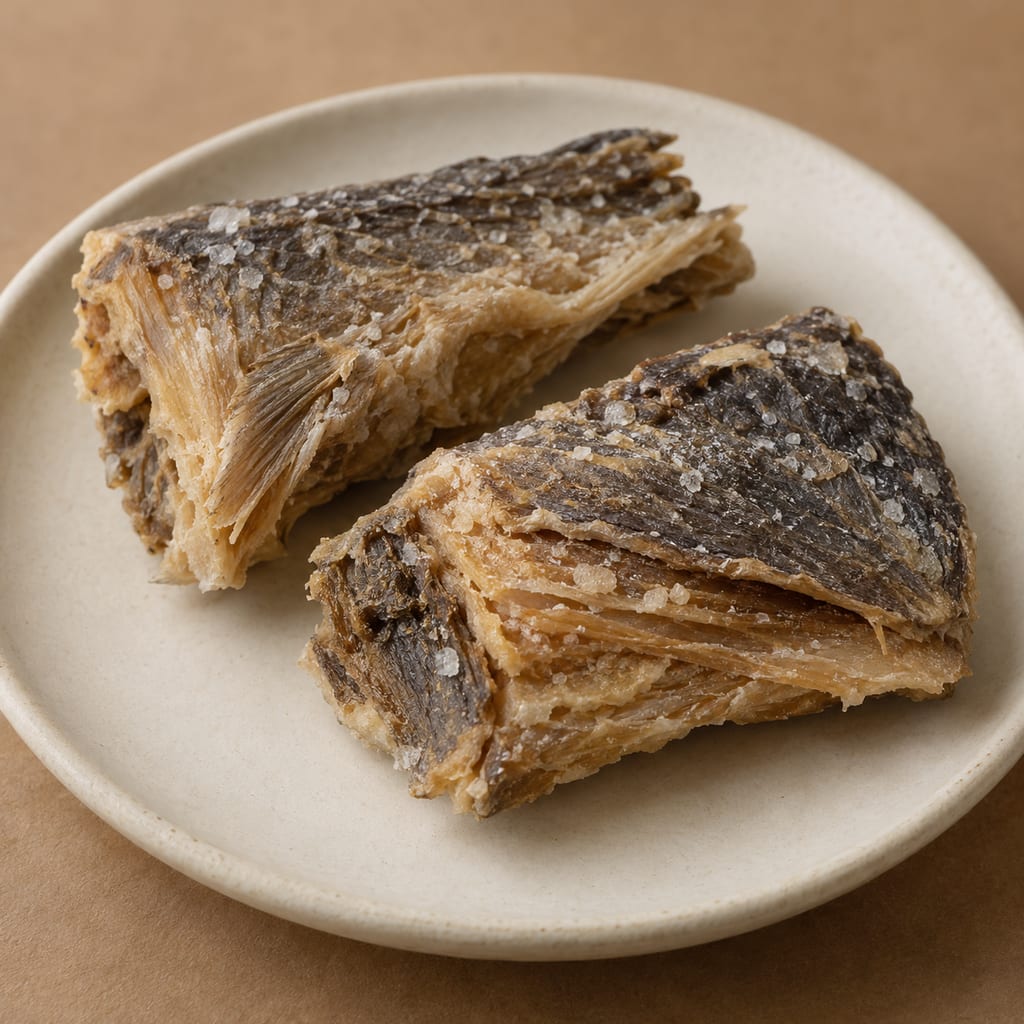
Lanhouin is a strongly flavoured fermented fish condiment documented in coastal West Africa, including southern Benin. This page records one published research reproduction as evidence, not as a validated home-preservation recipe.
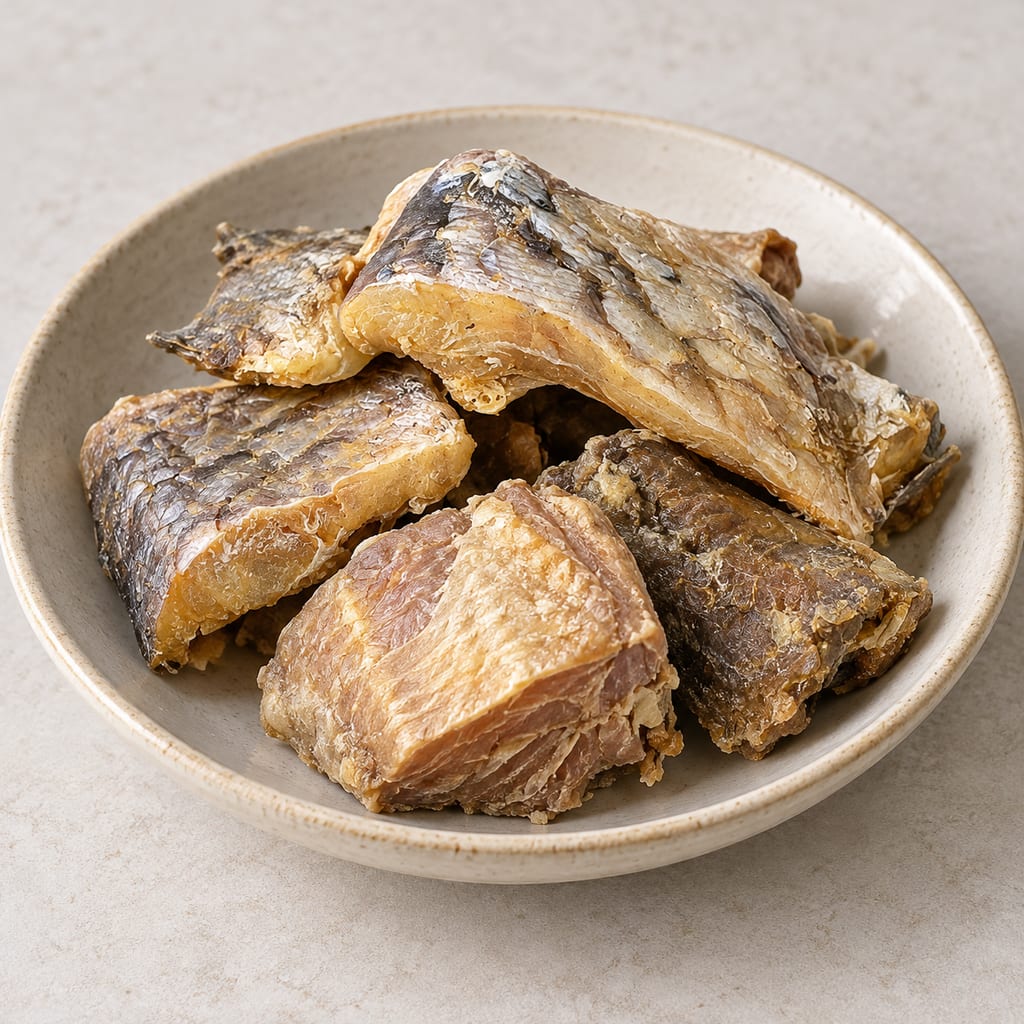
Momone is a Ghanaian salted and fermented fish condiment made from varied marine fish. Historical surveys describe both semi-dried and drier products, with salting and drying methods differing across coastal communities.
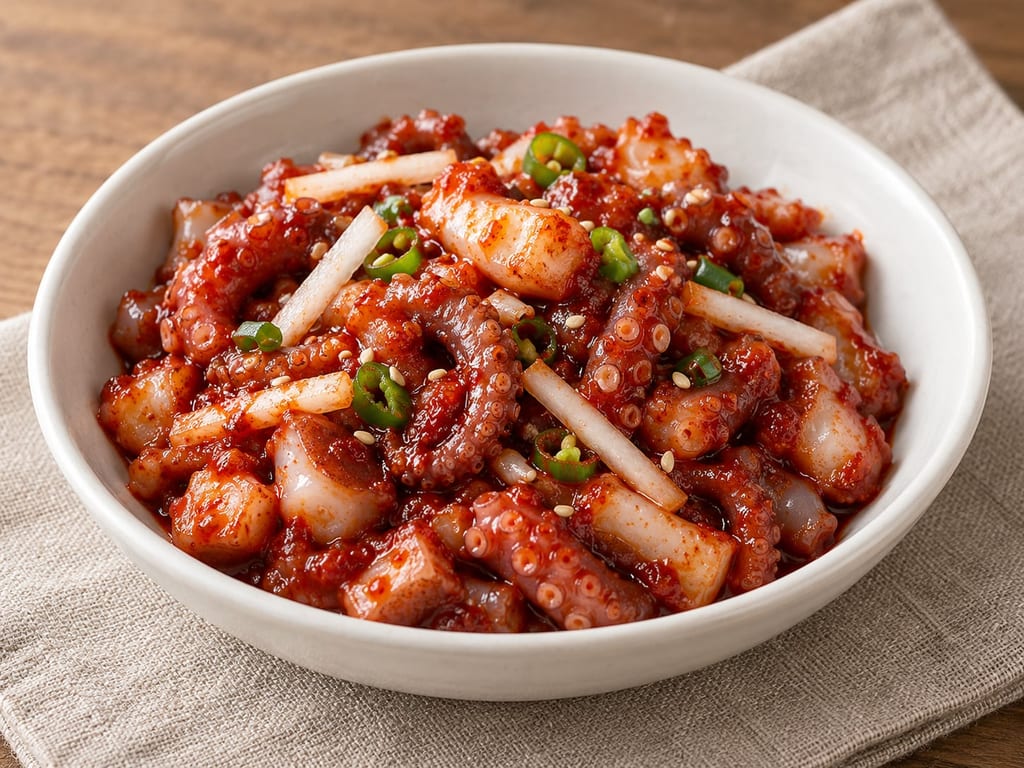
Nakji jeotgal is Korean salted octopus, served among jeotgal varieties with rice. This entry documents the dish and one creator’s quick-home version; it does not provide a household preparation method.
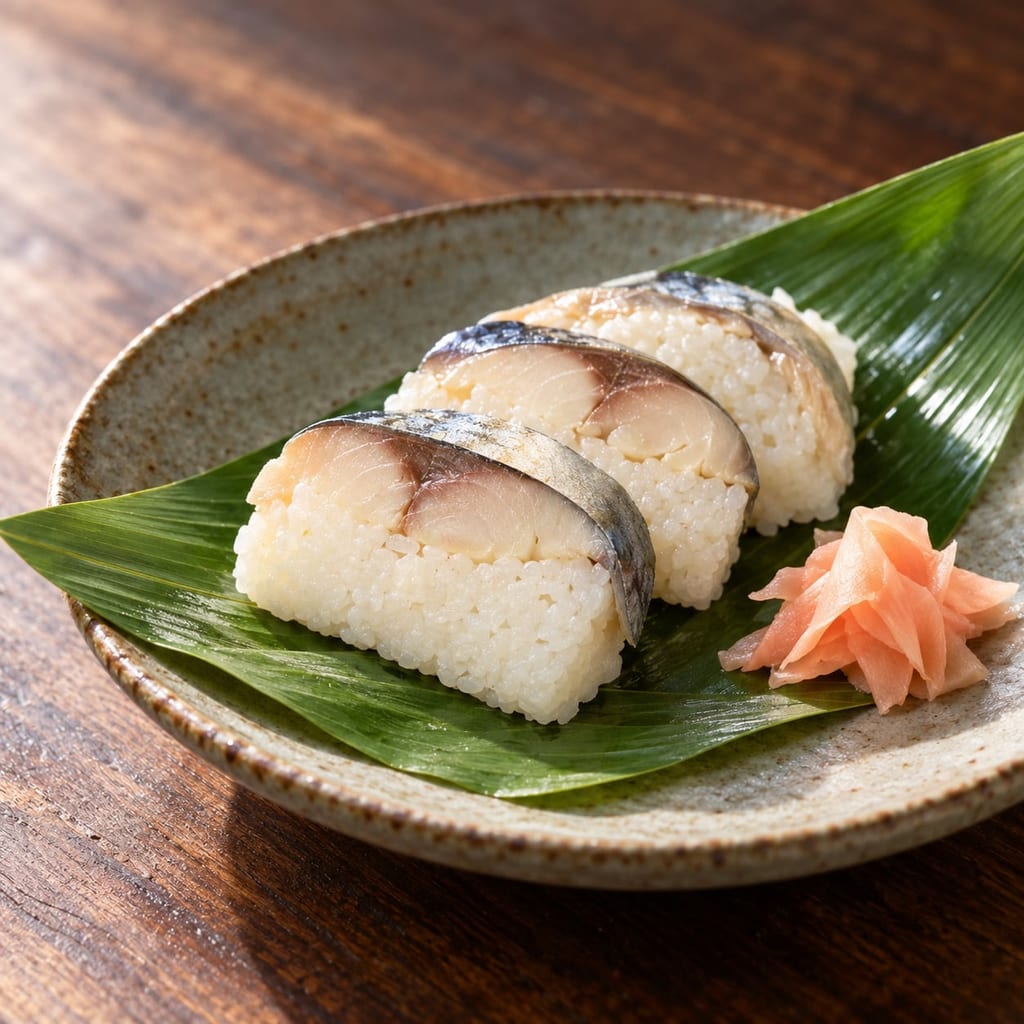
A documentary account of Japanese narezushi, a family of salted-fish and rice ferments. This entry preserves the East Kishu (Mie) source’s identity and regional context without providing a household preparation method.
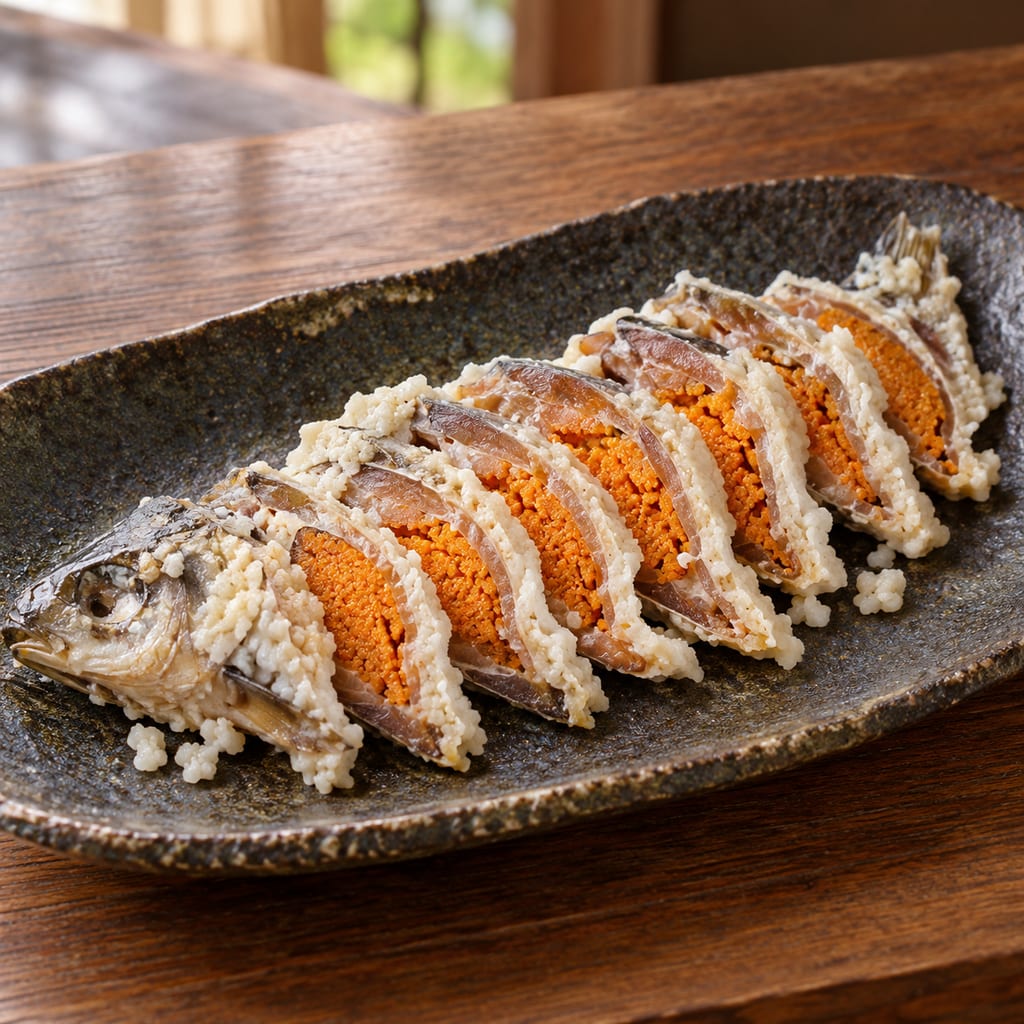
A documentary account of funazushi, Shiga’s long-ripened narezushi associated with Lake Biwa and roe-bearing nigorobuna. It preserves regional, historical and cultural context; it is not a household preparation guide.

A gelling polysaccharide extracted from red seaweeds, sold as kanten strips or powder; it sets firm at a low concentration and stays solid until about 85 °C.

A Dominican table and seasoning condiment of sour orange juice, mixed with lime and salt and bottled raw; garlic, oregano or a hot pepper may be added for meat or a spicier bottle.

Cicerbita alpina is an alpine perennial whose tender shoots and leaves have been eaten raw or cooked. Sámi milk preparations and modern Carnian dishes are distinct uses, with serious identification and preservation limits.

Japanese skipjack tuna cooked, then repeatedly smoked and dried over a wood fire by the hand-fired tebiyama method into a hard block for shaving into dashi: the first stage of katsuobushi.

A yeast-raised wheat ring shaped from a firm dough, briefly boiled and baked. This source-batch formula gives a gently malted crust and a chewy crumb.

A warm dip of garlic, anchovy and olive oil, often enriched with butter, that Piedmont serves over a flame with raw and cooked vegetables and bread.

Bechamel is a white sauce of milk thickened with a butter and flour roux, one of the French mother sauces, and the base from which Mornay and other cheese and cream sauces are made.
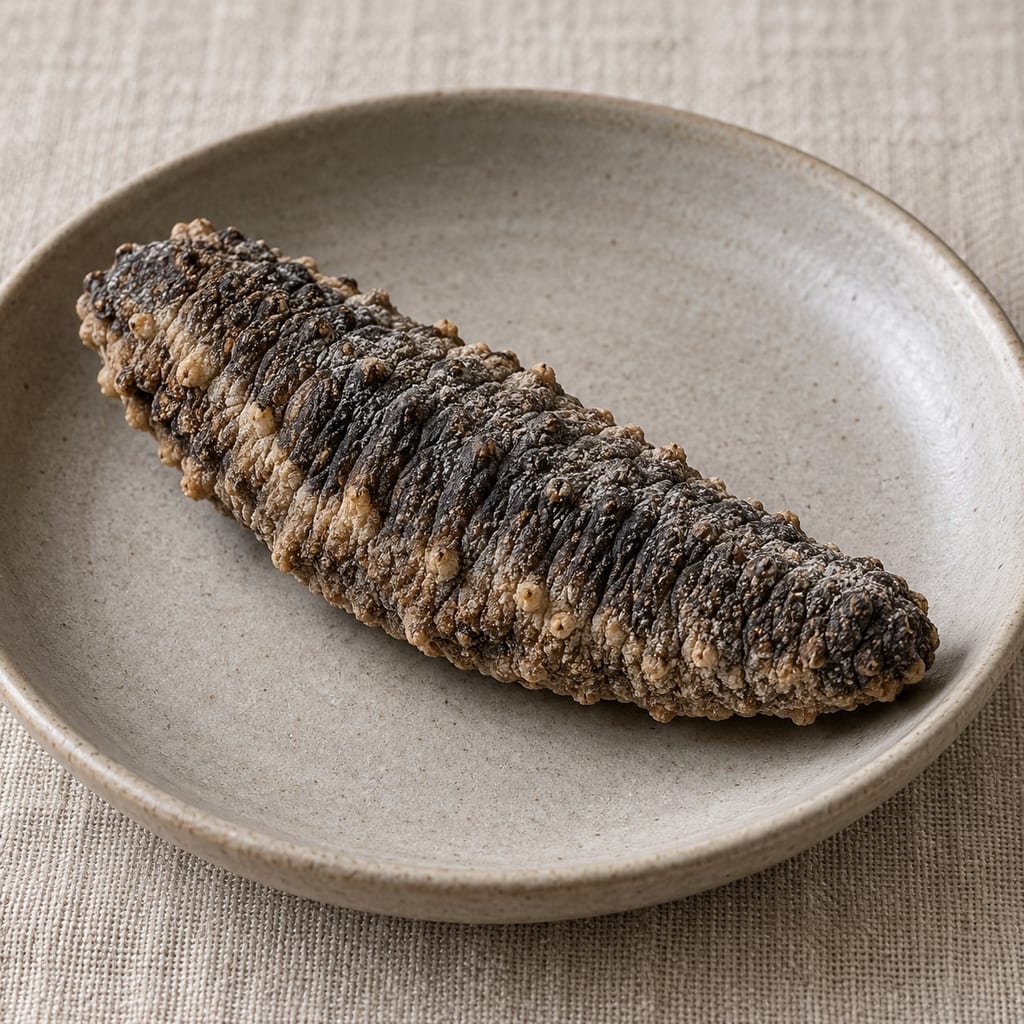
Sea cucumber cleaned, boiled and dried, sometimes with smoke, into a long-keeping trade product; Makassan processing in Arnhem Land is documented from at least the eighteenth century.
No community contributions have been published for this entry yet.
Sign in to contribute. Published comments and photos are free to read.
Nordiska museetHistory · Geography · Season · Serving · Method
SurströmmingKnown in Sweden since at least the sixteenth century and traded as preserved food; nineteenth-century spread and packaging changes; spring fishing; historical two-stage brining and maturation overview; 1940 premiere-date convention; northern regional identity and serving customs.
Cited in: A preserved fish with a northern Swedish identity; What the commercial process does; From barrel to can; Serving a finished ferment; Historical boundaries and careful comparison
Swedish Food Agency (Livsmedelsverket), KontrollwikiCommercial process · Hazards · Safety controls
Surströmming – Princip 2 – Identifiera kritiska styrpunkterCommercial example includes incoming fish controls, blood-brining, removal of gills and specified viscera, weighed brine, closed barrels, keeping fish submerged, and product-specific controls; the source warns that its example cannot be copied to all products.
Cited in: A preserved fish with a northern Swedish identity; What the commercial process does; Salt, microbes and the distinctive flavour
Swedish Food Agency (Livsmedelsverket), KontrollwikiCommercial process · Safety controls · Packaging
Surströmming – Princip 3–5The agency's example describes salt and maturation critical controls and pressure-capable hermetic cans; it cannot be copied across every product and process.
Cited in: What the commercial process does; Salt, microbes and the distinctive flavour
Swedish Food Agency (Livsmedelsverket), KontrollwikiProcess boundary · Safety
Fermenterad fiskFermented-fish HACCP examples cannot be copied directly across products; a product-specific assessment is required.
Cited in: What the commercial process does
International Journal of Food Microbiology; PubMed recordMicrobiology · Flavour research
Strictly anaerobic halophiles isolated from canned Swedish fermented herrings (Surströmming)The 2000 study isolated strictly anaerobic salt-tolerant bacteria including Haloanaerobium from canned surströmming; the authors proposed a possible contribution to flavour and swollen cans, not a proven universal cause.
Cited in: Salt, microbes and the distinctive flavour; Historical boundaries and careful comparison
Oskars SurströmmingProducer history · Modern serving
Om ossOskars reports its founding in 1955, first barrel in 1955, branded can in 1966, and serving preferences; producer-specific history and advice.
Cited in: From barrel to can; Serving a finished ferment