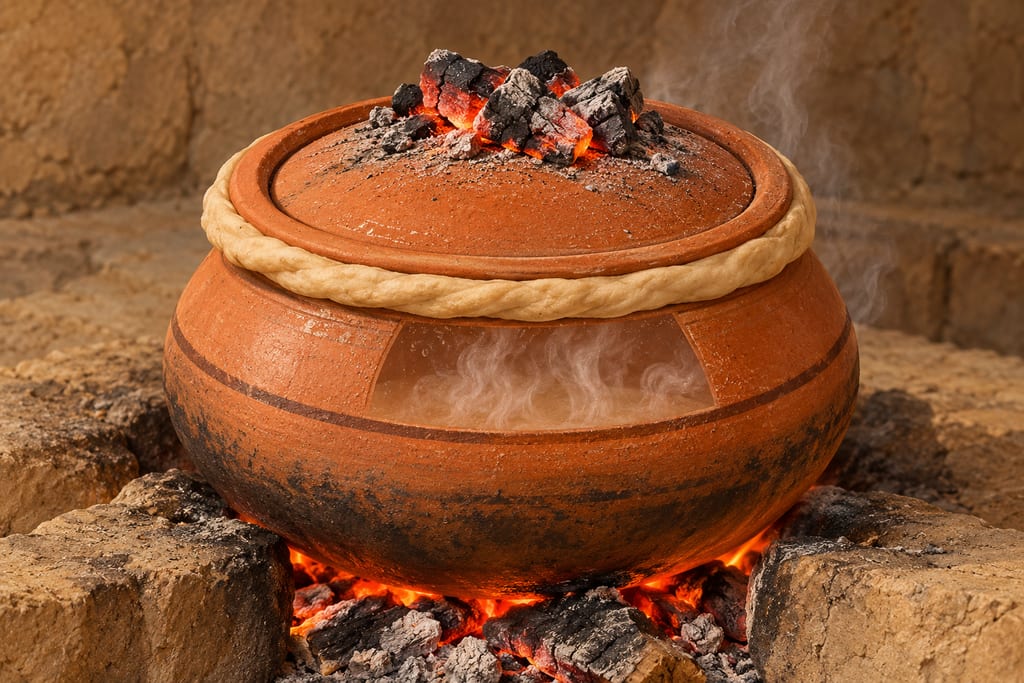
A pot for setting and serving curd
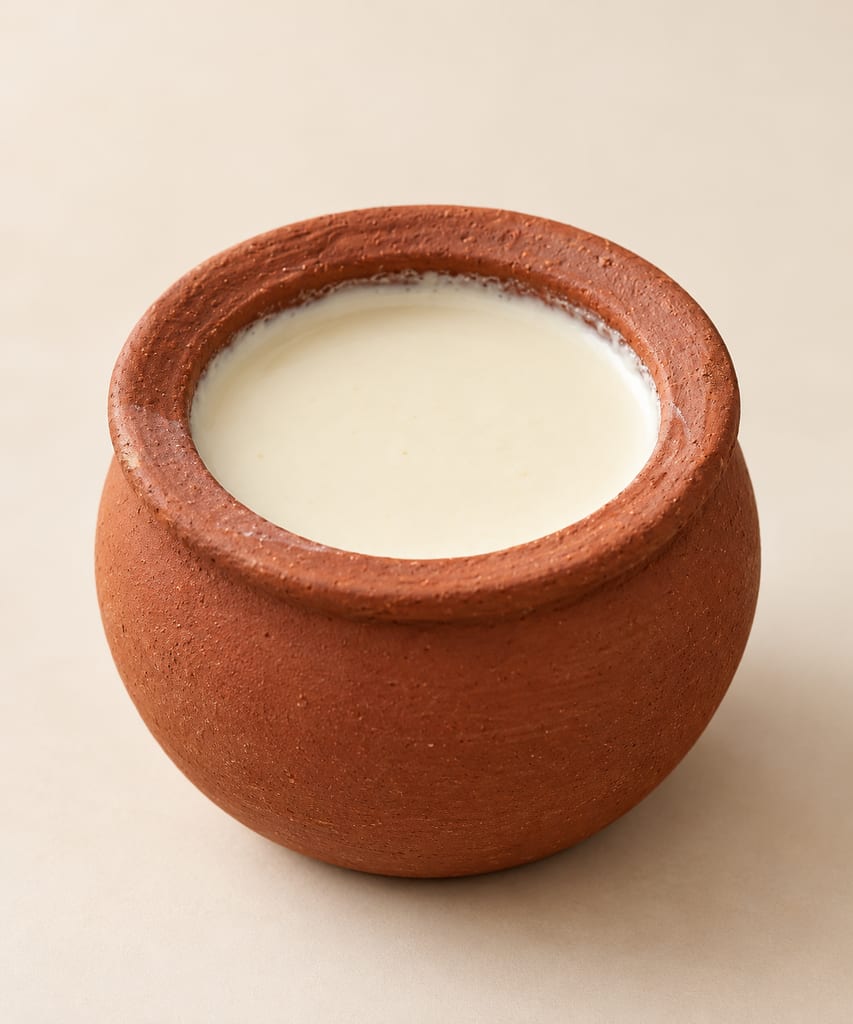
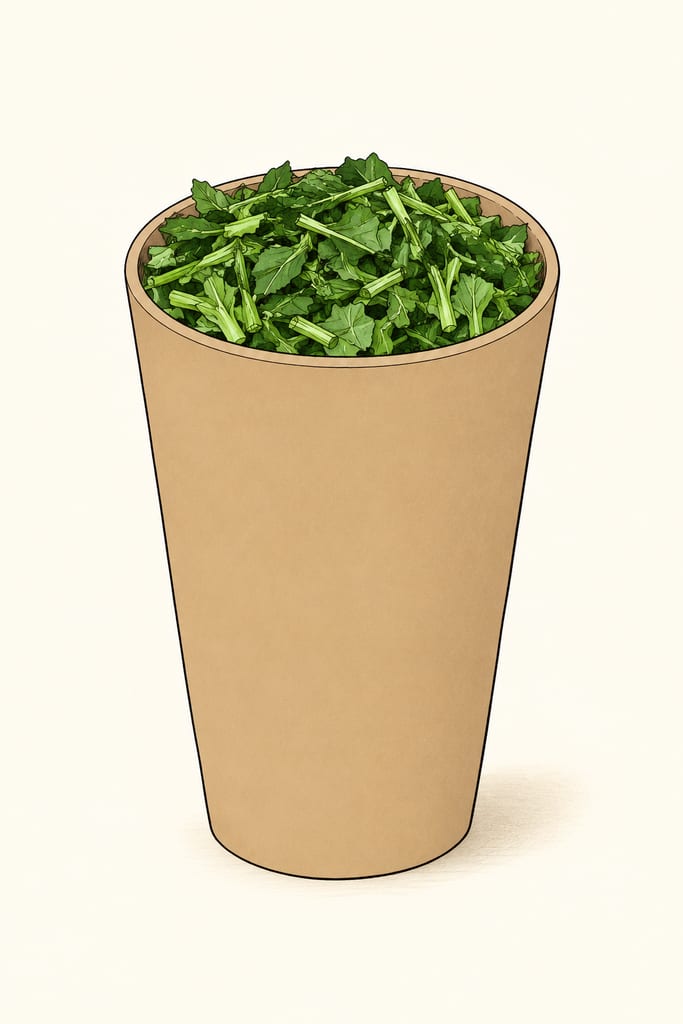
Dahi and sweetened mishti doi are set in earthenware vessels that can also become the serving or retail container. The forms are not one standard jar: documented examples include individual tapered cups and wider, rounded pots. An Indian dairy-technology teaching account describes sweetmakers setting dahi in shallow circular earthen pots; it notes that these help collect whey that may separate from the curd. For mishti dahi, the account describes sale in pots of varying sizes and chilled service.
The regional names and vessels matter. Mishti dahi, also called mishti doi, lal dahi or payodhi in the teaching account, is associated with eastern India, particularly West Bengal, Assam, Bihar and Odisha. The source documents a regional use, not a single birthplace for the pot. Dahi itself is broader than this sweetened preparation, and a small retail cup does not imply the shape or scale of a pot used to set a larger batch.
Sources for this section
Clay, moisture and the curd
The characteristic surface is usually a plain, unglazed earthenware interior around a smooth set curd. Unglazed clay is porous, so moisture can move through the vessel and affect the product’s physical texture. That does not make the clay a starter culture: acidification comes from the milk fermentation, while the vessel contains the setting curd and can influence its moisture exchange.
The National Dairy Research Institute’s 2013–14 report separately describes selection of a direct-vat-set Streptococcus thermophilus culture for mishti doi, based on sugar tolerance, rapid setting and acidification, and includes a photograph captioned “Preparation of Misti Doi in earthen pot.” The text and image distinguish two parts of the process: a chosen culture ferments the milk, while the earthen pot is the vessel in which the product is prepared. The report’s culture selection is an institutional research result, not a claim that every household or sweetmaker uses that strain.
A University of Moratuwa study examined clay pots used to package Sri Lankan buffalo curd. In its tested set, repeated re-firing increased porosity; after the third firing, the researchers reported excessive water loss and a resulting pH reduction. This supports a specific physical point about those pots and that curd. It does not establish the same response for every clay body, or a re-use instruction for Bengal’s mishti doi vessels.
Sources for this section
Recognising the vessel without overgeneralising
The useful distinctions are in shape and use: a shallow circular pot for a sweetmaker’s dahi, a small cup sold with an individual portion, and a broader pot for setting a larger quantity can all belong to the same earthenware family without being interchangeable in scale. The National Dairy Research Institute photograph shows mishti doi prepared in a pot; a contemporary Times of India recipe likewise directs the cook to pour the sweetened milk-and-curd mixture into a clay pot and let it set. Those are documented examples, not a universal specification.
No inspected source gives a standard capacity, wall thickness, clay composition, firing schedule or manufacturer for this item. The sources also do not supply a universal washing or seasoning method. Pottery used for curd should therefore be described from the particular source and vessel in hand rather than assigned an invented maintenance routine. The pot’s documented role is containment during setting and, often, sale or service; its material may affect water loss, but its presence alone says nothing about the starter, temperature, timing or safety of the fermentation.
Sources for this section
Equipment details
CapacitySources describe pots of varying sizes but give no capacity.
SizeThe sources show and describe several forms but specify no dimensions.
PowerNo power The pot contains the setting curd without mechanical power.
How you get oneNot established The sources describe use and shape but do not document a maker, supplier or route of purchase.
CareThe consulted sources do not establish a cleaning, seasoning, reuse or storage routine for the dahi and mishti doi pots described here.
Made of
- unglazed clay — vessel body
The documented forms are earthenware; the sources do not specify a clay body, temper, glaze recipe or firing method for the Bengali pots.
Limits
There is no evidence here that a pot supplies a starter culture, or that one size, pore structure or cleaning practice applies to all dahi and mishti doi vessels.
Source →A Sri Lankan buffalo-curd packaging study found changes after repeated re-firing in its tested pots; its measurements do not establish care or reuse rules for Bengali mishti doi pots.
Source →Places
Eastern India
Documented use · Region evidenceThe educational account places mishti dahi in eastern Indian states, especially West Bengal, Assam, Bihar and Odisha, and describes sale in earthen pots. It does not claim that the vessel originated there.