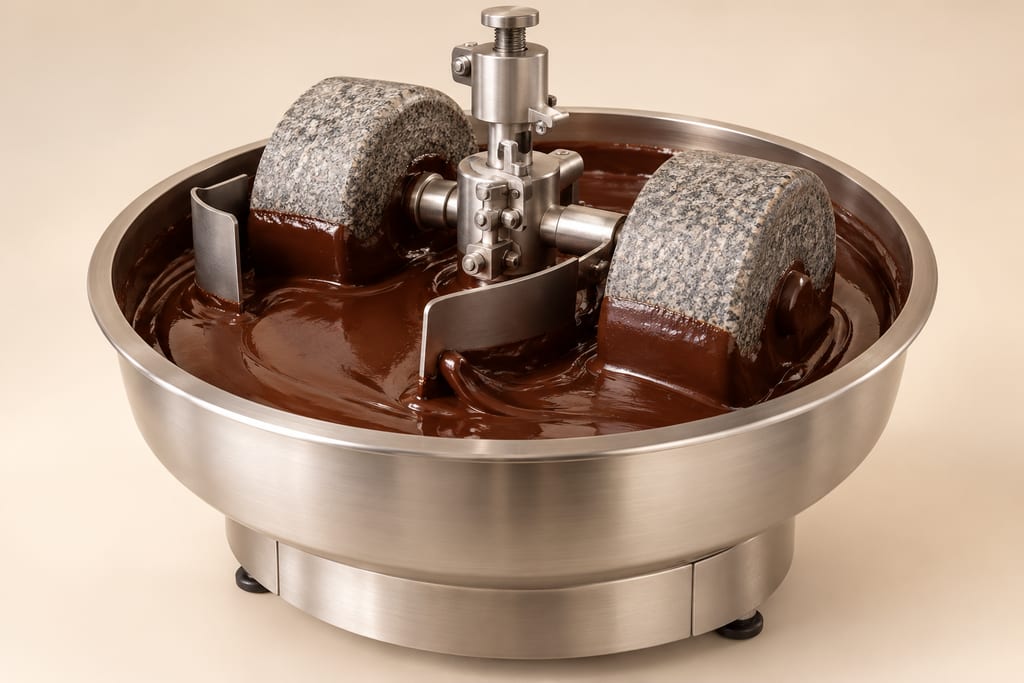
Chocolate refiner (melanger)
A chocolate refiner or melanger uses powered rotation and stone rollers to refine cocoa mass. Some models also process nut and seed pastes; design, material and operating limits vary.
 FermenteaWhere food goes to change
Equipment · Jars, pots and crocks
सन्धान पात्र · Aravindasava vessel
An earthen fermentation pot documented in Ayurvedic asava and arishta preparations. Studies in India compare pot and non-earthen vessels; field research in Sri Lanka records both earlier buried pots and later, varied factory practice.
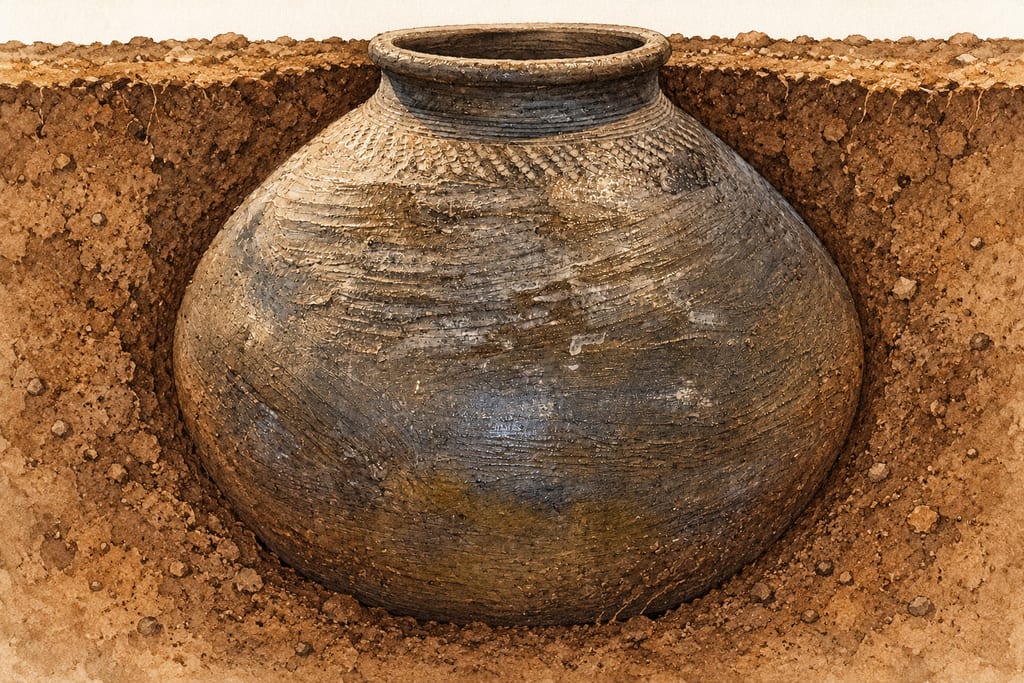
Asava and arishta are Ayurvedic preparations whose alcoholic fermentation has been studied in earthen pots. The Sanskrit name sandhāna pātra (सन्धान पात्र) means a fermentation vessel. These preparations are not one fixed recipe, and the pot described here is not a standardized product with a single shape or capacity. In a 1986 study, researchers at the Captain Srinivasa Murti Drug Research Institute for Ayurveda in Madras prepared Aravindasava using a textual method in an earthen pot and compared it with modified glass-vessel methods. A 1988 study examined Dasamularishta in earthen pots alongside stainless steel and porcelain.
A gallery entry for a pot in Galle National Museum identifies it as a vessel used for Ayurvedic arishta. The photograph shows a broad, rounded earthen body, a short, narrowed neck and a substantial rim. The catalogue gives no object date, workshop, clay composition or measurements, so this single museum vessel illustrates one recorded form rather than proving a universal design. The paper studies likewise do not give a general shape specification.
The experiments warn against treating material as the only variable. In the 1986 comparison, the glass vessel received an autoclaved preparation and selected yeast inoculations, while the classical earthen-pot batch followed a different procedure. The glass batch produced more alcohol in that study, but the researchers changed vessel and preparation together; the finding does not show that glass is generally superior, or that clay itself caused the difference.
The 1988 study used matching earthen pots with a capacity of 7.5 litres and tested several fill volumes. The pot filled to three quarters gave better results than the other fills in that experiment. The authors also reported comparable results from stainless-steel and porcelain vessels. These findings concern one formulation and experimental setup; they do not establish a required capacity, fill level or vessel material for all asava and arishta preparations. The documented experiment makes fill conditions part of the vessel choice, but it does not define one rule for every batch.
The 1980s papers describe a textual procedure in which the earthen pot is coated with ghee, fumigated with pippali, filled, closed with a lid and sealed with cloth and mud. The procedure they discuss places the pot in the ground or in a heap of paddy for about a month. Those are reported preparation steps, not evidence that all makers followed the same treatment or that burial gives a measured temperature.
A 1992 field study in Sri Lanka shows that practice had already varied. Researchers report that manufacturers remembered buried earthen vessels as the earlier method, while saying none of the surveyed producers used that exact practice at the time. Larger production had shifted toward wooden barrels; some smaller asava batches still used earthen vessels. They also recorded factories using buried porcelain vessels and others fermenting on the surface. The report describes some local ways of preparing a new pot, including fumigation and ghee, but those observations should not be generalized to every workshop or country.
The studies document Indian research use in Madras; the field study documents Sri Lankan manufacturing and use in Kandy, Colombo and Galle. The museum photograph adds a separately catalogued arishta vessel from Galle, but neither it nor the studies establishes where this pot type originated. No inspected source dates the earliest use of an asava or arishta vessel, identifies a potter who makes them today, or gives a typical cost, wall thickness or standard dimensions.
This equipment page describes the vessel and the process conditions reported around it, not the medical efficacy or recommended use of the preparations. The experimental results do not prove that one material produces a better medicine, and the vessel's preparation, fill and closure are not interchangeable across every formulation. The most defensible description is therefore a broad-bodied earthen fermentation pot with locally documented preparation variants and no universal specification.
No inspected publication dates the vessel's earliest use. Studies dated 1986 and 1988, and a Sri Lankan field report published in 1992, document later practice only; they do not date an origin.
The 1986 comparison changed both vessel and preparation: its glass-vessel method used an autoclaved preparation inoculated with selected yeasts, unlike the classical earthen-pot method. Its alcohol result therefore does not isolate vessel material as the cause.
Source →The two studies tested earthen vessels in named asava and arishta preparations at a Madras Ayurveda research institute; this is documented research use, not a claim of origin.
A 1992 field study surveyed manufacturers and practitioners in Kandy, Colombo and Galle and records changing use of earthen vessels; it does not claim the vessel originated in Sri Lanka.
A chocolate refiner or melanger uses powered rotation and stone rollers to refine cocoa mass. Some models also process nut and seed pastes; design, material and operating limits vary.
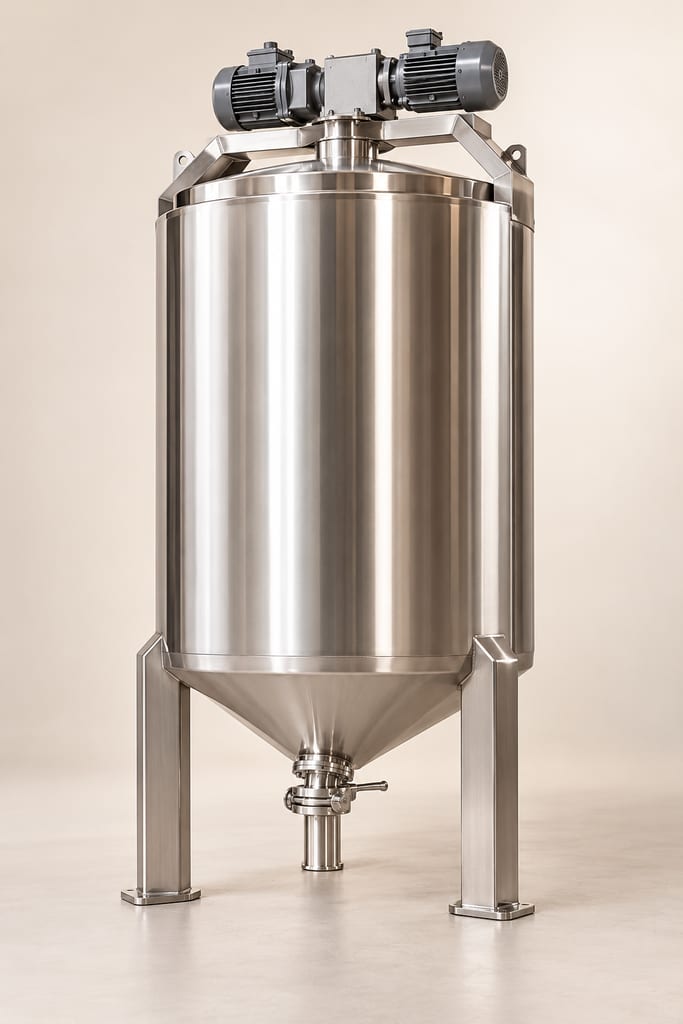
Contemporary vessels used to ferment coffee cherries or pulped coffee with restricted air exchange. Drums, rigid tanks and hermetic bags differ in material and monitoring; “anaerobic” alone does not describe a batch's conditions.
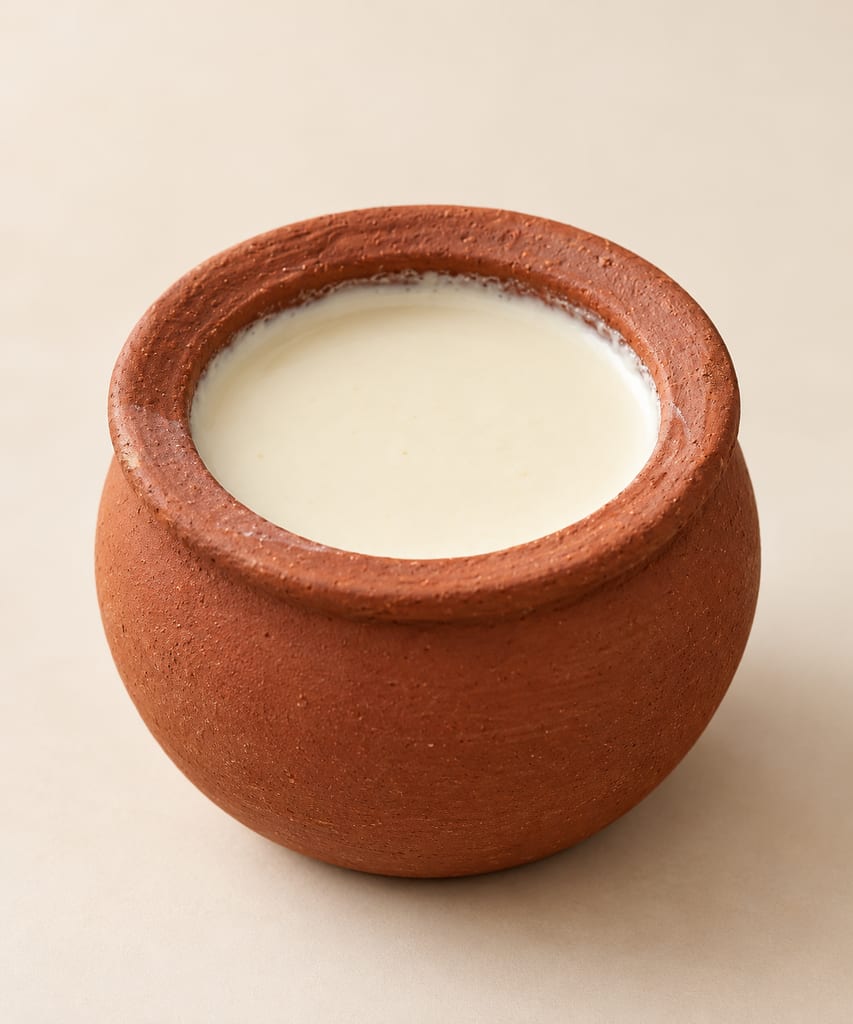
Unglazed earthen pots are used to set and often serve dahi and Bengali mishti doi. Documented forms range from small cups to shallow, broad vessels; no standard size or capacity is established.
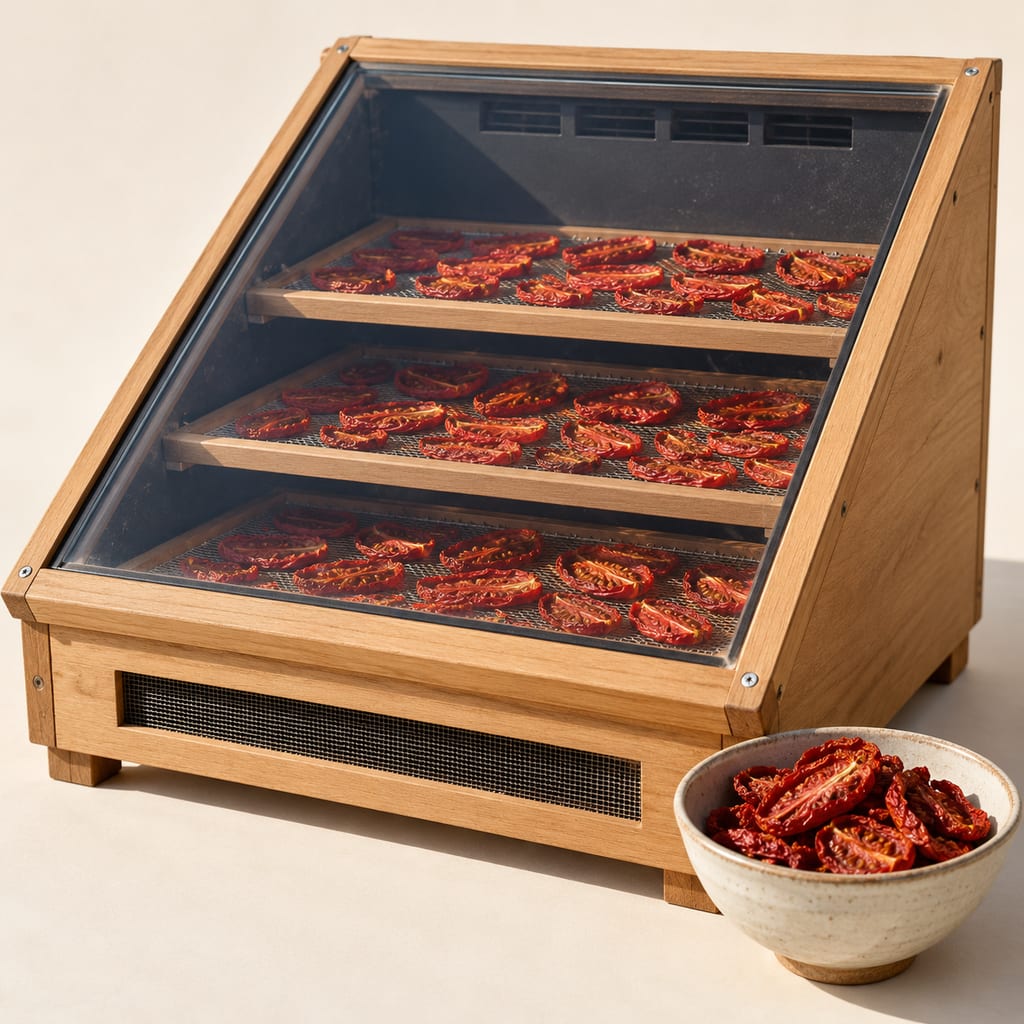
A glazed cabinet in which sunlight passes through a transparent cover onto a dark interior while air moves over mesh trays. The Brace-type cabinet is documented with a dimensioned drawing from 1978.
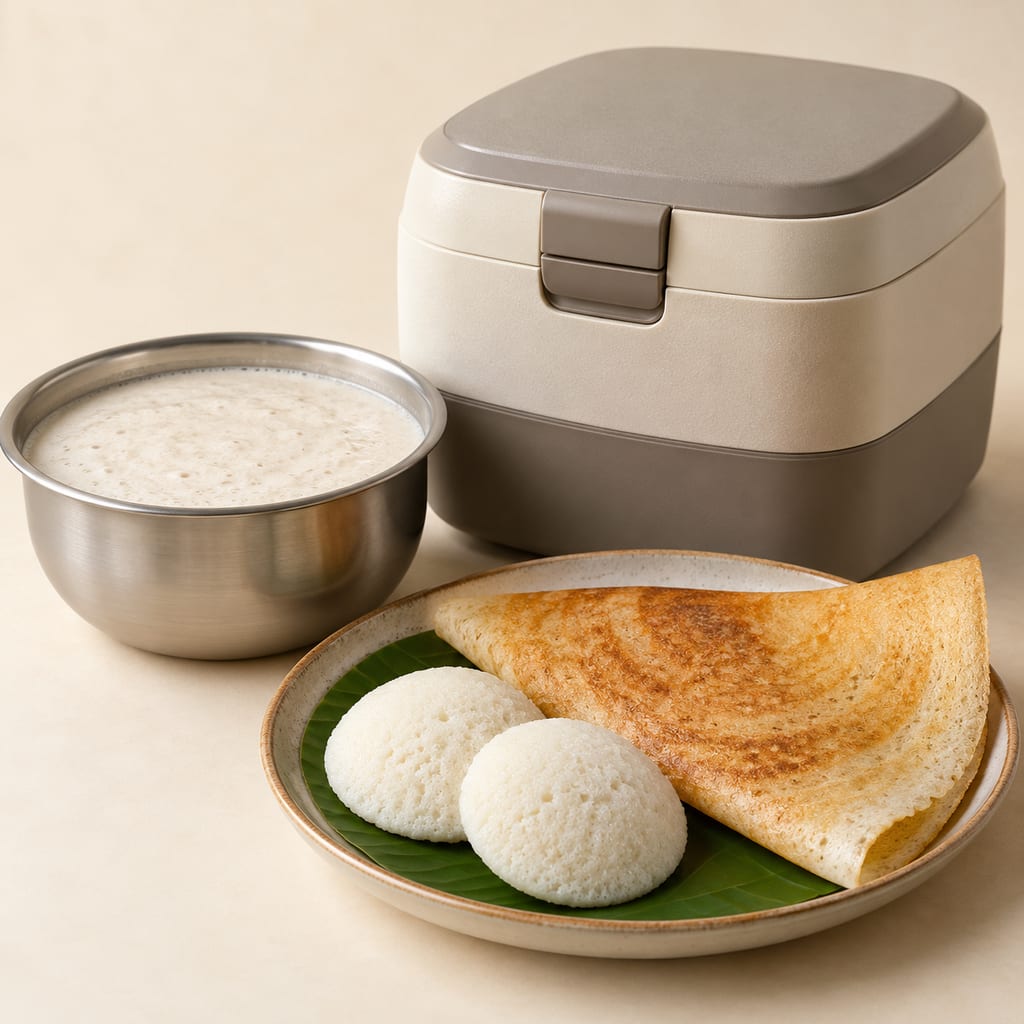
A warm, sheltered spot or closed box used to ferment rice and black gram batter overnight for idli and dosa, where the kitchen runs cool.
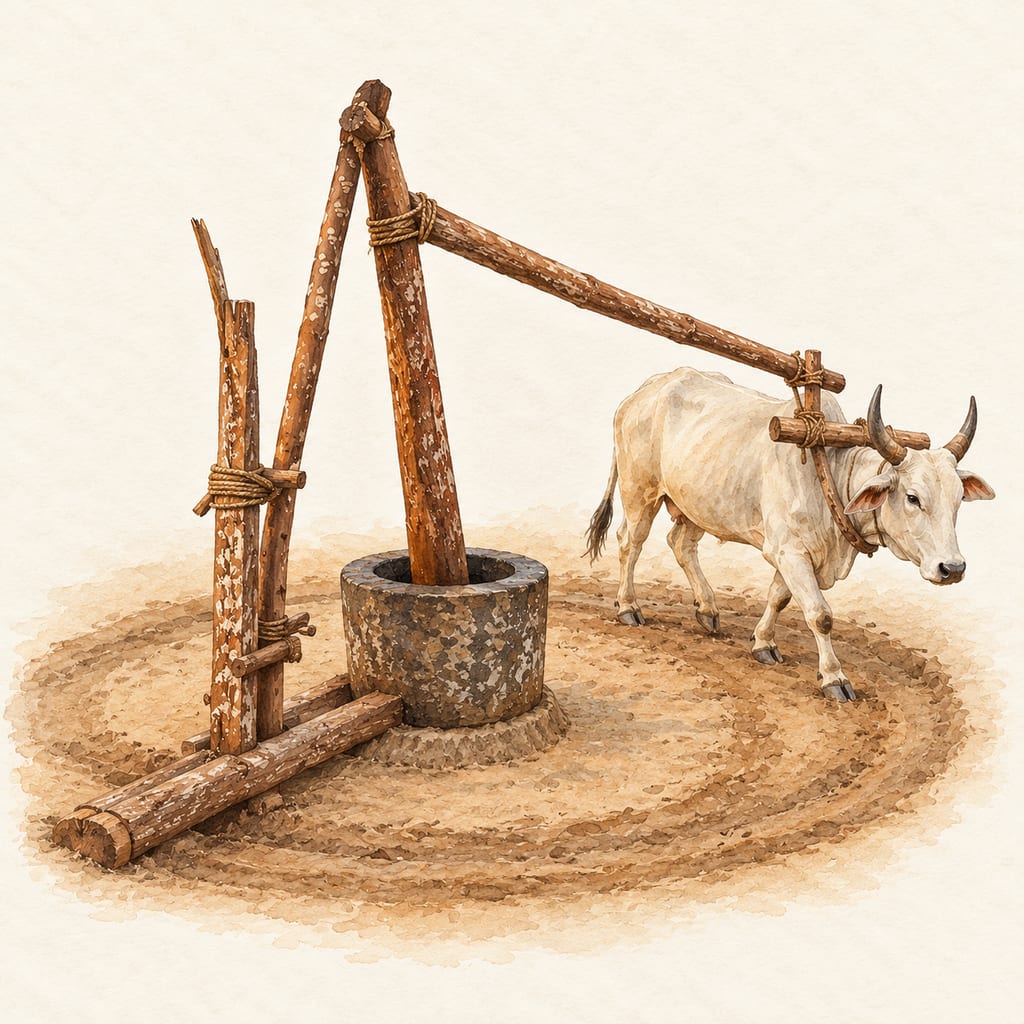
A traditional Indian oil press built around a circular mortar and upright pestle, turned by an animal through a weighted beam; regional versions differ in materials, scale and drive.

Gundruk pots and dhungro are fermentation containers documented in Nepal and one Darjeeling household. FAO describes earthenware; a 2024 figure identifies a bamboo-made airtight dhungro buried in a pit within a cow-dung heap.
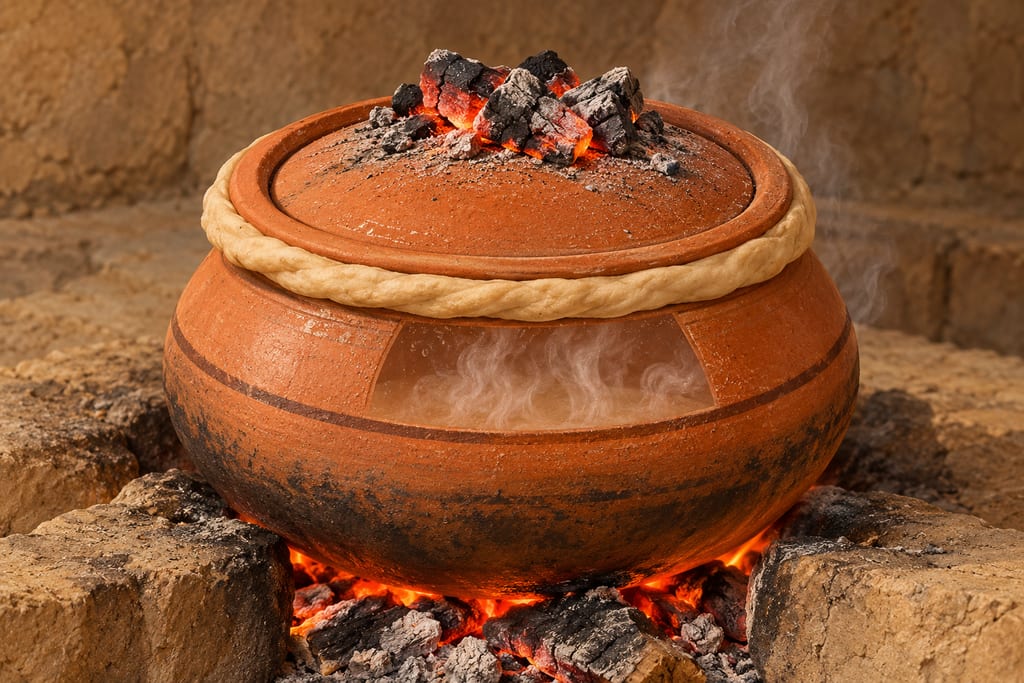
A handi is a cooking pot used in dum, a slow-cooking method documented in northern India. Sources record earthenware handis in a Delhi village and dough-sealed cooking pots in Awadhi and Delhi food traditions.
No community contributions have been published for this entry yet.
Sign in to contribute. Published comments and photos are free to read.
Ancient Science of LifeComparison · Use
Experimental studies on the fermentation of aravindasavaThe 1986 study compared a textual earthen-pot method with modified glass-vessel methods that also changed sterilisation and yeast inoculation.
The glass-vessel method produced more alcohol in that experiment; the result does not isolate vessel material as the cause.
Cited in: The earthen pot and its working names; A vessel is part of the method; What the record can and cannot say
Ancient Science of Life, volume 8, 1988, pages 68–70Capacity · Comparison · Use
Comparative and fermentation standardisation studies on DasamularishtaThe study used identical 7.5-litre earthen pots, comparing fills and also stainless-steel and porcelain vessels.
The three-quarter fill of the earthen pots gave better results than other fills in that experiment; steel and porcelain results were reported as comparable.
Cited in: The earthen pot and its working names; A vessel is part of the method; Textual preparation and changing factory practice; What the record can and cannot say
Journal of the European Ayurvedic Society, volume 2 (1992)History · Geography · Care · Use
Investigations on Nimba Arishta, an Immunomodulating Ayurvedic Drug Obtained by FermentationA field study in Sri Lanka reports historically buried earthen fermentation vessels, their replacement in scaled factory production by large wooden barrels, and occasional earthen pots for smaller asava batches.
The report describes some local vessel preparation and sealing practices; these are observations from the surveyed Sri Lankan manufacturers, not a universal standard.
Cited in: Textual preparation and changing factory practice; What the record can and cannot say
WisdomLib, Galle National Museum photo galleryForm · Image reference
Ancient Ayurvedic Clay PotThe gallery caption identifies the pictured earthen pot as used for Ayurvedic medicine and its Sinhala caption specifies arishta mixing; the record supplies no manufacture date.
The page credits the photograph to Gabe Hiemstra and states CC BY-NC-ND 4.0; the item uses it only as an attributed outside link and private subject reference.
Cited in: The earthen pot and its working names; What the record can and cannot say