A cooking pot shaped by a method
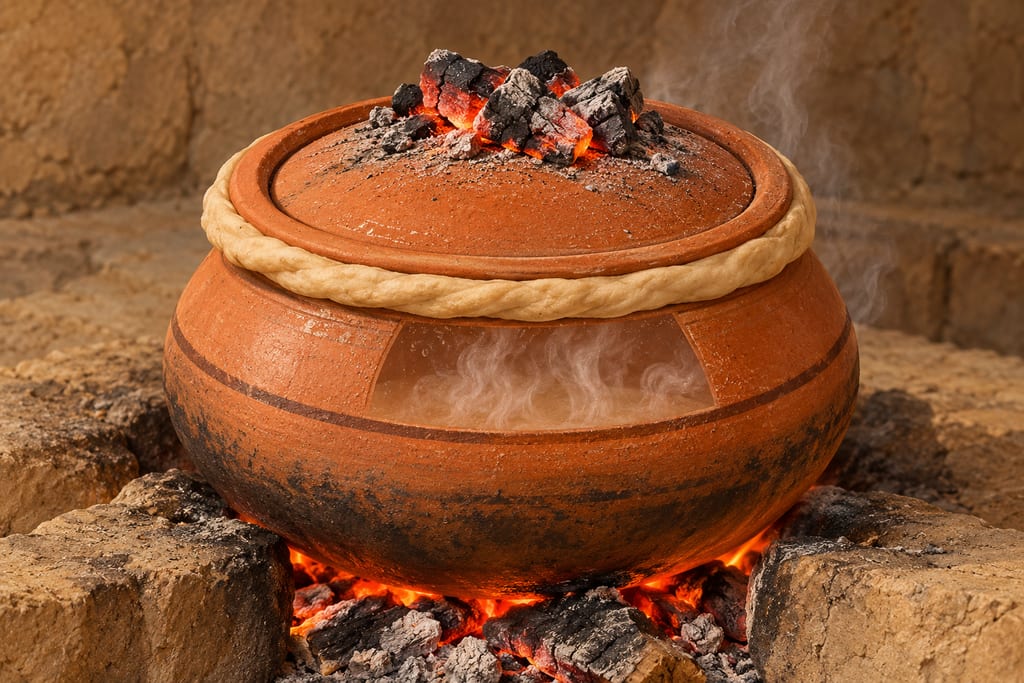
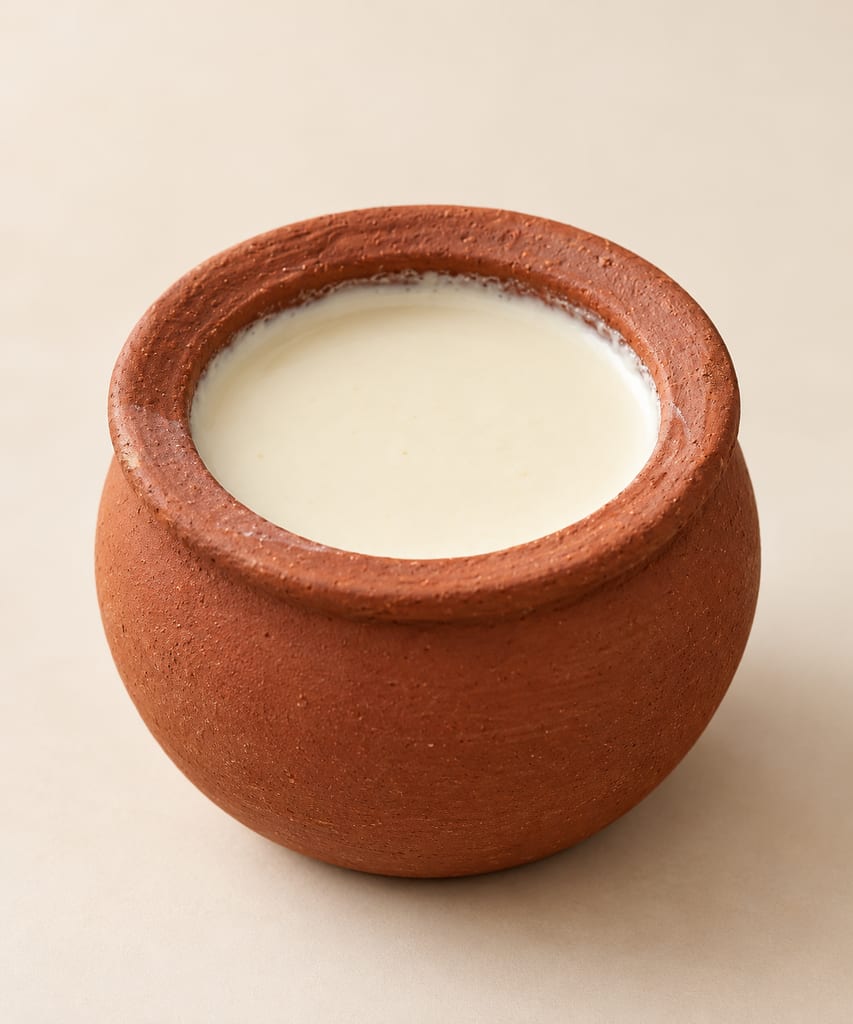
Handi is a name used for cooking pots in several South Asian contexts, rather than one standardized object with one material and profile. In the dum method associated with Awadhi cooking and Delhi cuisine, rice, meat, spices and liquid are enclosed in a heavy lidded pot. A dough strip seals the meeting of lid and pot. Gentle heat below, sometimes joined by embers on the lid, keeps the vessel enclosed while the food cooks in its own steam.
The seal is practical: it limits escaping steam and reduces evaporation. That changes the cooking environment inside the pot, but it does not make the vessel pressure-rated. It should not be confused with a canning closure, and a handi is not evidence that a food was safely preserved.
Sources for this section
Earthen handis in a Delhi pottery record
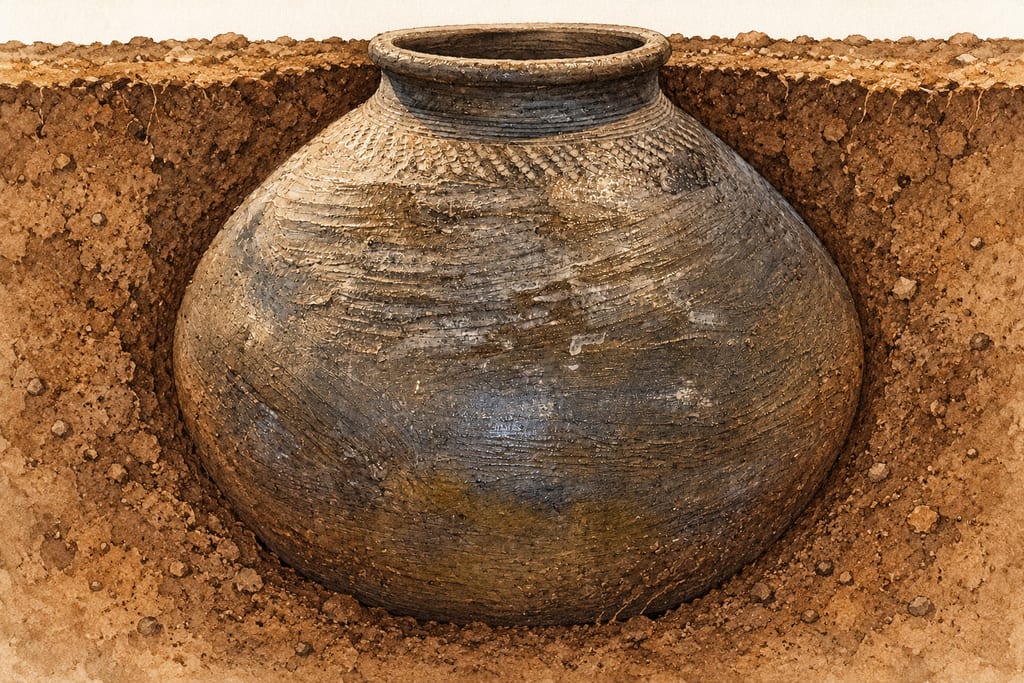
A village study based on the 1961 Census describes handias among earthenwares made by Kumhar potters in Chhattarpur, Delhi. Its local handi is round, with a narrower mouth and a broader middle; it was set over a fire for boiling pulses and vegetables. The report gives a mouth of roughly four to eight inches, a middle diameter of ten to fifteen inches and a length of about nine to ten inches. These are measurements for the form observed in that village, not specifications for every handi.
The survey records earthen cooking vessels as part of household practice in the community it studied, including handis used for meat and vegetables. It notes that demand for several village-made earthenwares declined as households shifted to glass and metal vessels and as some families moved away. This is a historically situated account of one Delhi pottery economy, not a claim that all handis were clay or that one community used them identically everywhere.
Sources for this section
Form, heat and what remains variable
The sources support more than one useful image of the handi: a locally documented round earthen cooking vessel and the heavy lidded pot used to enclose dum. A pot's body holds the food and its lid supports the seal; the cooking arrangement manages heat from below and, in some descriptions, from above. The sources do not establish a universal capacity, wall thickness or material for every dum handi. Historical village measurements therefore remain attached to that local example.
A handi can be carried and moved, so it belongs among equipment rather than built structures. Its relationship to heat is direct: it sits over a fire, while the dum account describes gentle heat and sometimes top embers. The dough seal is removed after cooking; it is not a substitute for a fitted pressure lid. No inspected source gives a universal seasoning, cleaning or storage routine, so those details are left to the maker and particular vessel.
Sources for this section
History
A 1961 Delhi village pottery survey records handis among locally made cooking vessels; current Incredible India pages describe dum cooking with a handi in Delhi and Awadhi contexts.
Equipment details
PowerFire or solid fuel The dum account describes gentle heat below and, in some arrangements, embers above the lid.
How you get oneBought from a maker The Delhi village pottery survey records potters making earthen cooking handis. It does not establish where a reader can obtain one today.
Made of
- Earthenware (fired clay) — Pot body
A 1961 Delhi village pottery study documents local earthen handis; this material is not established for every handi or dum vessel.
Limits
A dough-sealed lid encloses steam for cooking; it is not a canning seal or a validated pressure closure.
Source →Places
India
Traditional use · Country evidenceGovernment tourism pages document handi/dum cooking in Delhi and Awadhi contexts; this country row does not claim a single origin.
Chhattarpur, Delhi
Historical attestation · Locality evidenceA village pottery study records Kumhar-made earthen handis here; this is a local historical attestation, not a birthplace claim.