A mortar turned by a beam
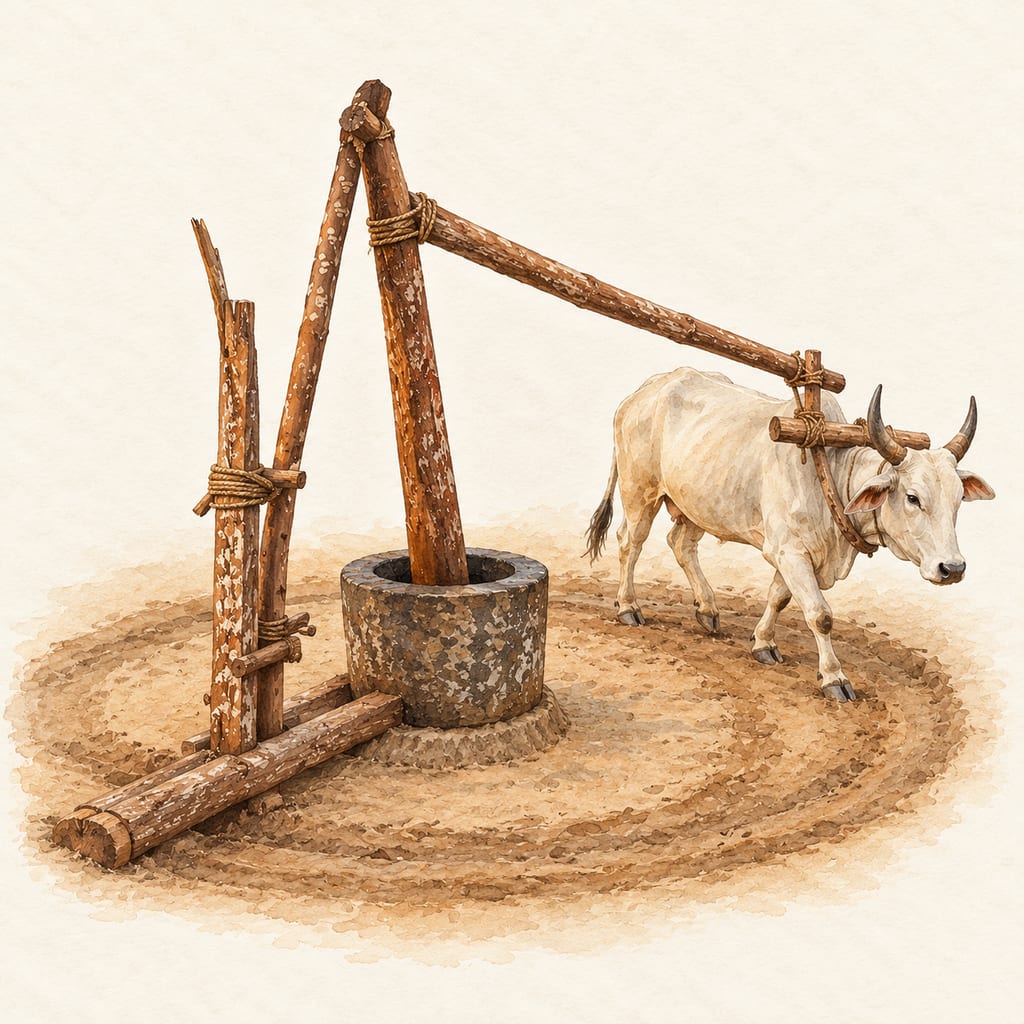
A ghani, also called kolhu or chekku, is a traditional oil press built around a circular mortar and upright pestle. K. T. Achaya’s FAO account describes stone or wooden mortars, with oilseed worked in a central pit. A curved or angled wooden member holds the pestle; a long load-beam connects it to an animal walking around the mortar. Weight on the beam presses the pestle against the seed. The arrangement first crushes the seed, then squeezes out oil. Achaya also notes that some small ghanis in certain areas were operated by human labour. The name covers related machines, not one standard model.
Sources for this section
Regional forms and scale
The FAO account describes large granite ghanis in southern India taking 35–40 kg of seed and using two animals and two operators. Western Indian wooden ghanis are described at 8–15 kg, often with a plugged oil outlet at the base. Bengal examples are smaller, around 5–10 kg per charge, and may crush rape and mustard together. Mortar material, pestle height, outlet and beam vary. These are example seed charges, not a universal capacity or instructions for building a press.
Sources for this section
A sesame batch in the historical account
Achaya records a sesame example with staged water additions as the pestle turns. The operator breaks up material that climbs the pit wall and tests the cake by rolling it in the palm; after about 45 minutes, frothy oil may rise. Once the pestle is lifted, oil is drained through an outlet where present or collected with cloth, and the compacted cake is removed. The account explains how water additions affect grip, frictional heating and oil release. These details describe the cited process, not a recipe for an untrained operator or a modern operating specification.
Sources for this section
A careful history
The FAO chapter calls the ghani a traditional Indian oil-processing method, but does not date this exact machine. It says a Sanskrit text from around 500 BCE refers to an oil press without describing its construction, and that earlier evidence leaves the precise extraction method uncertain. Achaya also cites a thirteenth-century South Indian temple depiction. These are separate historical references; none warrants assigning a single ancient date as the origin of every ghani design. The chapter also notes operation beyond India, so the Indian tradition should not be mistaken for exclusive use.
Sources for this section
History
Achaya describes the traditional animal-powered press in India. He notes an undescribed Sanskrit textual reference to an oil press around 500 BCE; earlier evidence does not establish how oil was extracted. This is not a date for this exact ghani design.
Equipment details
CapacitySource reports seed charges of 35–40 kg (large southern granite), 8–15 kg (western wooden), and 5–10 kg (Bengal); not litres or a universal specification.
SizeNo general dimensions are given.
PowerHand or animal power Traditional versions use an animal yoked to a beam; source notes human-powered small ghanis and later electric adaptations as distinct variants.
How you get oneNot established The cited historical account does not establish a current acquisition route or price.
Made of
- Stone or wood — Mortar
The source describes both, including southern Indian granite and western Indian wood. - Hardwood — Pestle and beam assembly
A stout upright pestle and load-beam; pestle design varies.
Limits
Regional forms vary in material, scale, pestle, drive and seed handling.
Source
The FAO account is historical process description, not current animal-welfare, food-safety, cleaning or maintenance guidance.
Source
Achaya reports lower oil yield and more residual cake fat than modern expellers for sesame or groundnut; performance varies by seed and configuration.
Source
Places
India
Traditional use · Country evidenceAchaya documents multiple regional ghani forms within India; the source does not establish India as sole place of use or a precise origin date.