Borniak Smoker 150 BBQ INOX Wi-Fi
A 150-litre Wi-Fi electric smoking cabinet with a brushed stainless-steel exterior, automatic wood-chip smoke generator and 150°C maximum. Exact model BS150IWUK.
 FermenteaWhere food goes to change
Equipment · Kettles, coppers and boilers
kotły kuprowe · bocian stirrer
A large copper cauldron and long wooden bocian paddle were used to cook Lower Vistula plum powidła over an open fire. The vessel and stirrer form a regional equipment pair.
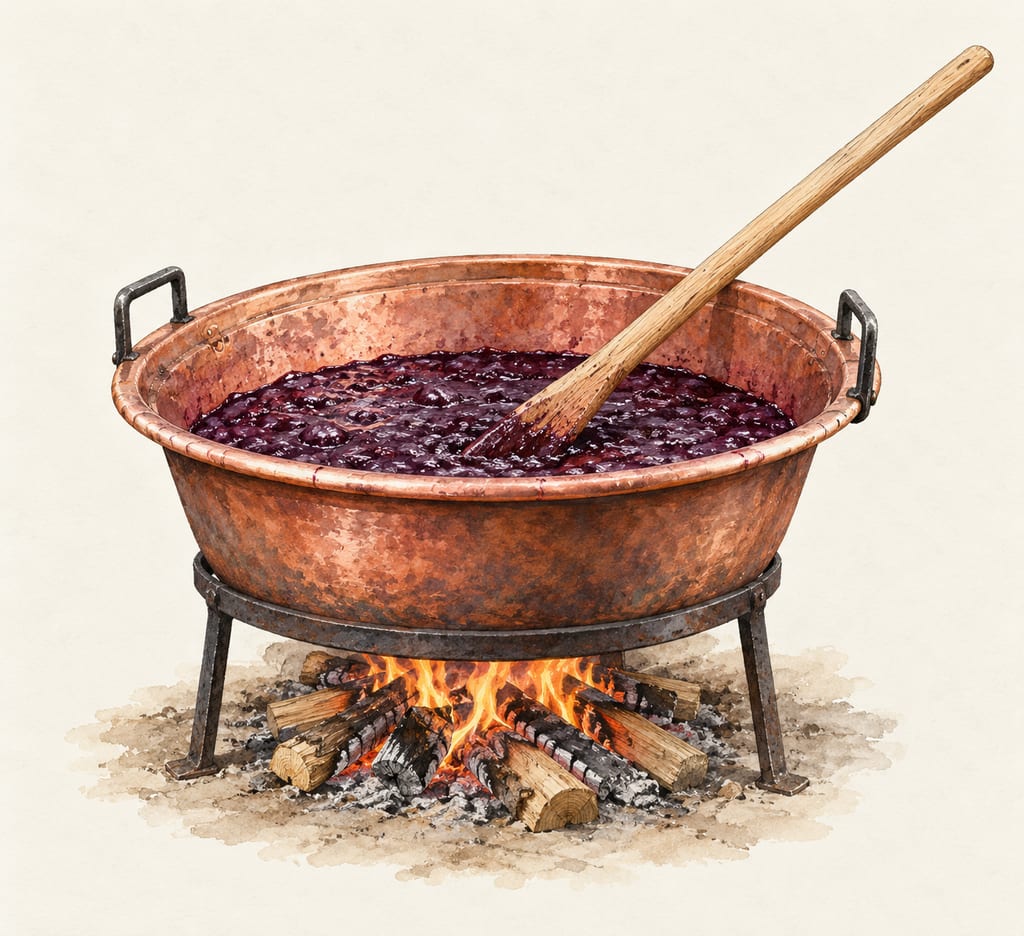
Lower Vistula powidła are plum preserves associated with a distinctive cooking setup: a large copper cauldron over an open fire and a long wooden stirrer known locally as a bocian. The Polish agricultural ministry records fruit reduction in heated cauldrons from the sixteenth century and describes copper cauldrons and wooden paddles as traditional equipment. The regional landscape-park account places these tools in the plum-growing communities along the river, where the cauldrons were called kuprowe. This record concerns that documented regional pairing; it does not claim that all plum preserves or all large kettles used the same design.
The cauldron provided a broad vessel for cooking ripe plums while water evaporated from the fruit. The wooden paddle kept the thickening mass moving during the long open-fire cook. The ministry describes the finished consistency as the point when the mass began to pull away from the kettle walls and fell from the stirrer in large sheets. This is a historical description, not a universal temperature, timing or safety test. The regional park account identifies the paddle as a bocian and notes that local Węgierka plums were valued because their pits separated readily from the flesh. Where fruit was cooked with pits, the ministry also records purpose-made ceramic sieves for straining them; those sieves are a related tool, not part of the cauldron-and-paddle pair.
At the turn of the nineteenth and twentieth centuries, the Lower Vistula stretch between Bydgoszcz and Gniew had more than two thousand home orchards, according to the regional park authority. Families used the fruit themselves and sold surplus in nearby towns. Plum varieties and pit-removal practices differed: a local ecotype could release its stone easily, while other fruit was cooked with pits and strained afterwards. The kettle and stirrer therefore belonged to a broader set of local tools, including ceramic sieves made by potters in Gruczno. The ministry lists the named powidła among Poland’s traditional products for Pomorskie Voivodeship; the regional history extends along a broader river corridor.
The open-fire method is laborious and depends on a person repeatedly moving the paddle through a thickening batch. The sources do not give a standard cauldron capacity, measured dimensions, maker, wood species or purchase route, so none is assigned here. They also do not specify a universal cleaning method or safe handling protocol. A 2017 report from Strzelce Dolne describes the Plum Festival’s large cauldrons over open fires and public demonstrations in which visitors could try cooking powidła. The landscape-park authority reports a revival of traditional copper-cauldron cooking in several Lower Vistula locations beginning in the late 1990s. These events show a living public adaptation; they are not evidence that every modern demonstration reproduces every historic detail.
Copper cauldrons and wooden stirrers are portable equipment, distinct from the hearth or fire site that supports them. Their use over an open flame brings ordinary risks from fire, hot metal and hot fruit; the sources consulted do not supply rated loads, guards, handles or a safe operating procedure. This page does not infer those specifications. The named equipment is directly associated with Powidła śliwkowe z Doliny Dolnej Wisły. The same general class of heated cauldrons appears in other fruit-preserving traditions, but that resemblance does not establish identical construction or shared origin.
The Polish Ministry of Agriculture's traditional-product entry says fruit reduction in heated cauldrons is recorded from the sixteenth century and describes copper cauldrons and wooden stirrers. Regional landscape-park material identifies large kuprowy cauldrons and bocian stirrers in Lower Vistula plum processing, especially around the nineteenth and early twentieth centuries.
Regional accounts describe copper cauldrons and bocian paddles for plum powidła; this is a place of documented use, not an exclusive origin claim.
A regional newspaper reports an open-air plum festival with large cauldrons and hands-on demonstrations; this documents a contemporary public event.
A 150-litre Wi-Fi electric smoking cabinet with a brushed stainless-steel exterior, automatic wood-chip smoke generator and 150°C maximum. Exact model BS150IWUK.
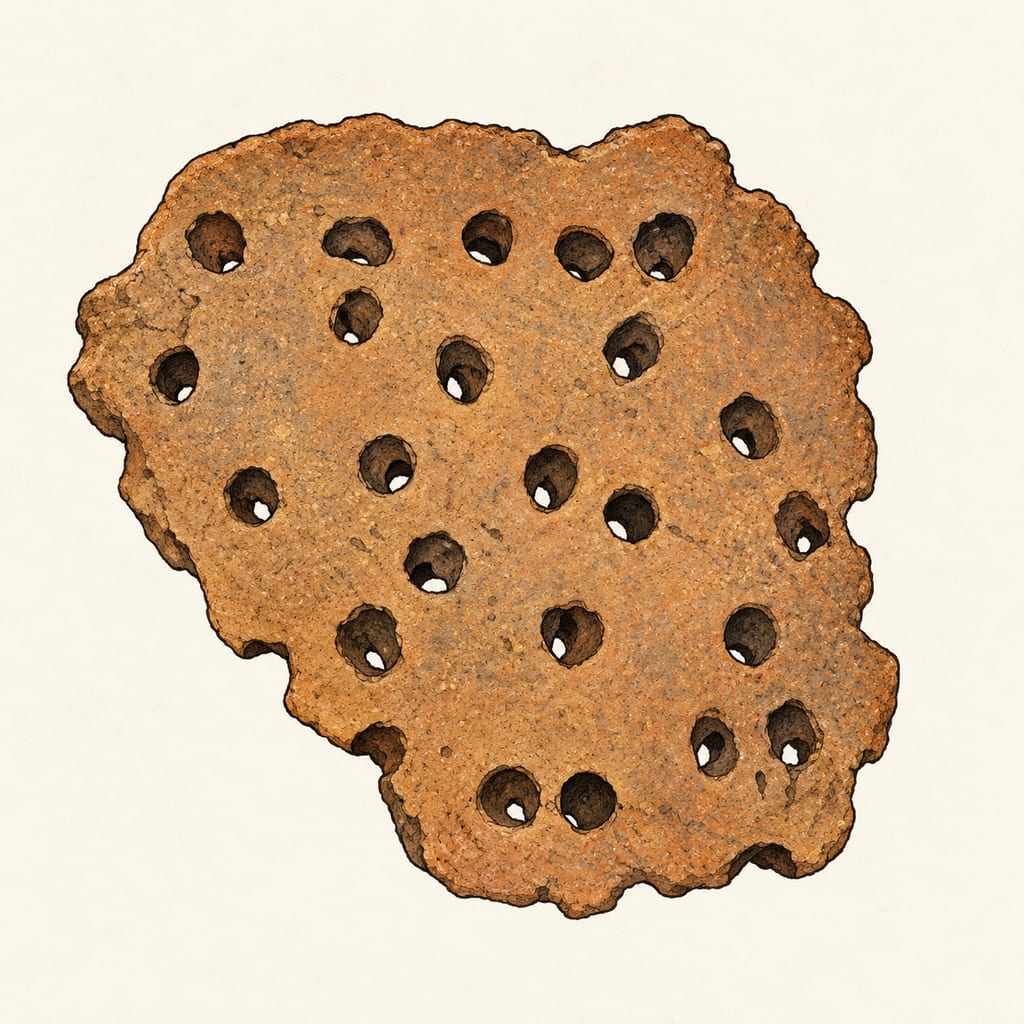
An unglazed, hole-pierced ceramic fragment from Neolithic Kuyavia, interpreted as a cheese strainer through its form and milk-fat residues; no standard complete shape is established.

A gelling polysaccharide extracted from red seaweeds, sold as kanten strips or powder; it sets firm at a low concentration and stays solid until about 85 °C.

A Dominican table and seasoning condiment of sour orange juice, mixed with lime and salt and bottled raw; garlic, oregano or a hot pepper may be added for meat or a spicier bottle.

Cicerbita alpina is an alpine perennial whose tender shoots and leaves have been eaten raw or cooked. Sámi milk preparations and modern Carnian dishes are distinct uses, with serious identification and preservation limits.

Japanese skipjack tuna cooked, then repeatedly smoked and dried over a wood fire by the hand-fired tebiyama method into a hard block for shaving into dashi: the first stage of katsuobushi.

A Swedish-style spirit vinegar made by fermenting neutral alcohol with live vinegar bacteria, with a separate guide to commercial ättika strengths.

A yeast-raised wheat ring shaped from a firm dough, briefly boiled and baked. This source-batch formula gives a gently malted crust and a chewy crumb.

A warm dip of garlic, anchovy and olive oil, often enriched with butter, that Piedmont serves over a flame with raw and cooked vegetables and bread.

Bechamel is a white sauce of milk thickened with a butter and flour roux, one of the French mother sauces, and the base from which Mornay and other cheese and cream sauces are made.
No community contributions have been published for this entry yet.
Sign in to contribute. Published comments and photos are free to read.
Ministry of Agriculture and Rural Development of PolandMaterials · Method · History · Geography
Powidła śliwkowe z Doliny Dolnej WisłyThe fruit-preserving method of reducing plums by evaporation in heated cauldrons is recorded in sources from the sixteenth century.
The traditional method uses copper (kuprowy) cauldrons and wooden stirrers; ceramic sieves were used to separate pits.
The product was added to Poland's traditional-products list in 2007 and is listed for Pomorskie Voivodeship.
Cited in: A regional kettle and stirring pair; How the equipment worked; A landscape shaped by orchards; Limits and related foodways
Zespół Parków Krajobrazowych Województwa Kujawsko-PomorskiegoMaterials · Method · Geography · History
Tradycja i kulturaThe Lower Vistula stretch between Bydgoszcz and Gniew had more than 2,000 home orchards at the turn of the nineteenth and twentieth centuries; local plums included an ecotype whose pits separated readily.
Regional accounts name large copper cauldrons and bocian stirrers over an open fire; revival demonstrations began in several places in the late 1990s.
Cited in: A regional kettle and stirring pair; How the equipment worked; A landscape shaped by orchards; Traditional practice and its public revival; Limits and related foodways
Tygodnik BydgoskiImage · Modern adaptation
Święto Śliwki w Strzelcach Dolnych [ZDJĘCIA]The 2017 Strzelce Dolne Plum Festival included large cauldrons over open fire and public demonstrations of plum cooking; photographs are credited to Anna Kopeć.
Cited in: Traditional practice and its public revival
Official Journal of the European UnionHistory · Geography
Powidła śliwkowe z Doliny Dolnej Wisły — protected geographical indication specificationThe EU product specification documents the Lower Vistula protected product and the named traditional equipment terms kotły kuprowe and bocian; method records extend to the sixteenth century.
Cited in: A regional kettle and stirring pair