
'Nduja di Spilinga
Soft, spreadable Calabrian pork sausage made with a great deal of red chilli and fatty pork, stuffed into natural casings, sometimes smoked and matured while staying soft.
 FermenteaWhere food goes to change
Built structures · smoking-sheds
Manoka's fish smoking takes place on pole racks inside airy houses; local partners later tested earth-brick and insulated metal prototypes to reduce wood use and processing time.
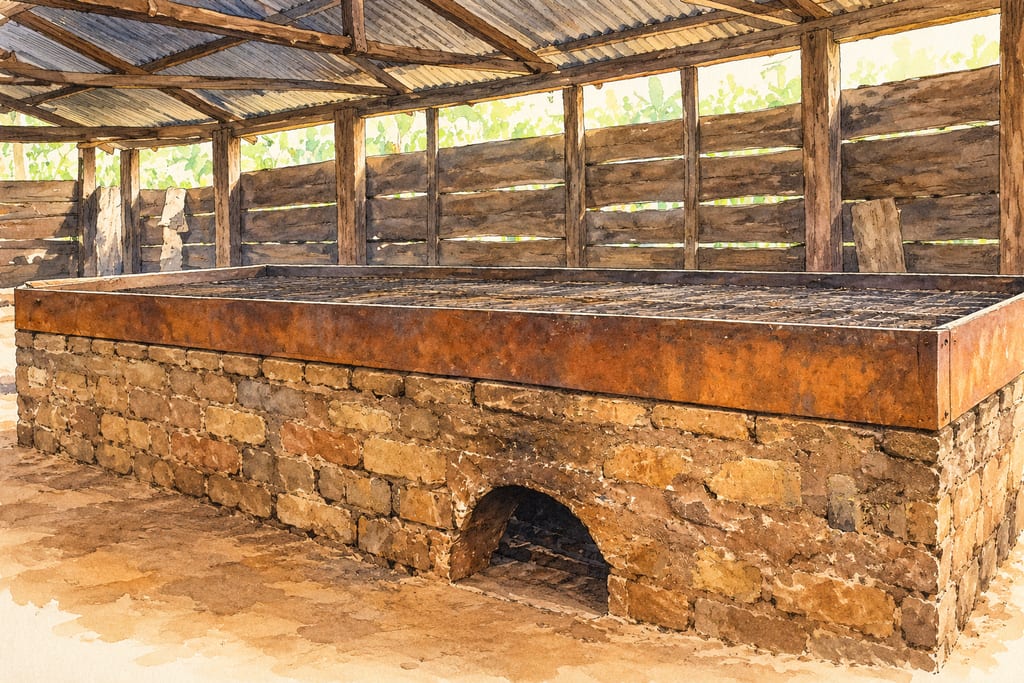
On Manoka Island, fish smoking takes place on pole-built racks inside houses that are generally open enough for air to pass through. The island lies in the Cameroon estuary and is part of Douala. Fishing is a major local livelihood, and women are the processors responsible for smoking. Fuel comes from the island's mangroves; palétuvier is identified as the most targeted wood. These details tie the smoking house to the island's fishing and woodfuel economy, but they do not establish one plan used by every household.
The documented descriptions give no dimensions, roof or wall materials, hearth geometry, foundation, or exact distance between fire and fish. This record captures the local structure and its redesign history rather than offering a construction drawing.
Beginning in 2019, CIFOR and partners worked with the University of Douala and the Association des femmes fumeuses de Manoka (AFUMA) to develop improved smokers through participatory trials. The first prototype was made from earth bricks and placed with the association for testing. A later version used metal and glass wool. Both were local responses to the wood demand and space use of the traditional arrangement.
In a reported comparison involving 200 kilograms of fresh fish, the traditional smoker used 1.33 cubic metres of mangrove poles over three days. The earth-brick prototype used 0.88 cubic metres over two days, a 33 percent saving in the report. The later metal-and-glass-wool prototype used 0.16 cubic metres of wood over one day in the reported trial, presented as an 88 percent saving against the traditional arrangement. These figures describe those trials, not guaranteed rates for other fish, loads or installations.
The CIFOR woodfuel brief places the prototypes in a wider effort to reduce pressure on Wouri estuary mangroves. It describes fish smoking as an important economic activity on Manoka and records women's work across the processing chain. The structure is both a processing place and part of a locally managed livelihood and fuelwood system.
The available sources do not publish an engineering plan, foundation detail, fire-clearance dimensions, material grades, airflow specification, loading schedule or fish-safety endpoint. They also do not establish that one prototype replaced every traditional house. The trial results should not be treated as build specifications or generalized beyond the reported comparison.
The 2021 project account describes fish smoking on pole racks inside airy houses and reports participatory development of earth-brick and insulated-metal prototypes with Manoka processors.
A build is made where it stands: moving it means building it again.
The source places Manoka in Douala, within the Cameroon estuary; it does not identify a precise house address.
Soft, spreadable Calabrian pork sausage made with a great deal of red chilli and fatty pork, stuffed into natural casings, sometimes smoked and matured while staying soft.

A way to add independent temperature logging to an existing food dehydrator without changing its built-in controls or protections. It is a monitoring method, not a rewiring plan.

Pleurotus cystidiosus is the abalone mushroom, a cultivated oyster-type fungus with dark brown caps that grows more slowly and is more demanding than other Pleurotus species.

A dark, balanced vinegar from Emilia-Romagna made by combining cooked or concentrated grape must with wine vinegar, then acetifying and refining it in wood under a protected specification.

A living dairy inoculum that starts controlled cream fermentation, developing acidity and aroma before sour cream or cultured butter is finished.

A small electric incubator holds jars at a selected temperature for yogurt and other documented warm food preparations. Controls, capacity and vessel arrangement vary by model.

Adygean salt is a seasoned table salt associated with Adygea and the wider North Caucasian culinary tradition. Salt is blended with garlic and a variable selection of herbs and spices; the exact mix depends on the named style and maker.

The African Caesar-group mushroom, Amanita masasiensis, is a wild ectomycorrhizal species of central and southern African woodlands, eaten locally. The genus contains deadly poisonous species, so identification needs care.
No community contributions have been published for this entry yet.
Sign in to contribute. Published comments and photos are free to read.
Forests News / CIFOR-ICRAFHistory · Geography · Materials · Use · Comparison
Cameroun : Deux nouveaux prototypes de fumoirs à poisson permettent de faire des économies sur le bois énergieManoka is located in Douala within the Cameroon estuary; traditional pole-rack smokers stand inside airy houses.
Women processors undertake fish smoking; mangrove wood is used as fuel and palétuvier is identified as the most targeted species.
CIFOR and partners began participatory prototype work in 2019 with AFUMA and the University of Douala.
For a reported 200 kg fresh-fish comparison, the traditional arrangement used 1.33 m³ of mangrove poles over three days; an earth-brick prototype used 0.88 m³ over two days, reported as a 33% saving.
A later metal and glass-wool prototype used 0.16 m³ of wood for 200 kg of fresh fish over one day in the reported trial, described as an 88% saving against the traditional arrangement.
The account does not provide a dimensioned construction plan or universal performance guarantee.
Cited in: Pole racks in an airy island house; Local prototypes and what the trials show; Documented limits
CIFOR-ICRAFContext · Use
Sustainable Woodfuel Brief #9: Woodfuel consumption rate and relieving pressure on mangroves from fish smoking and lack of managementThe brief describes fish smoking as a primary economic activity on Manoka and notes the role of women processors.
It records traditional smoking's high fuelwood demand and places improved smokers within broader sustainable woodfuel work.
Reported processing periods and wood demands describe local practice, not universal operating specifications.
Cited in: Local prototypes and what the trials show; Documented limits