← Equipment

Equipment · Jars, pots and crocks

Matlu

માટલું · matla · matlu pot · undhiyu earthen pot

Loading ratings…

An earthen cooking pot associated with Gujarati undhiyu: Gujarat Tourism describes it turned upside down and fired. A field report documents a related ubadiyu matlu near Dungri in South Gujarat.

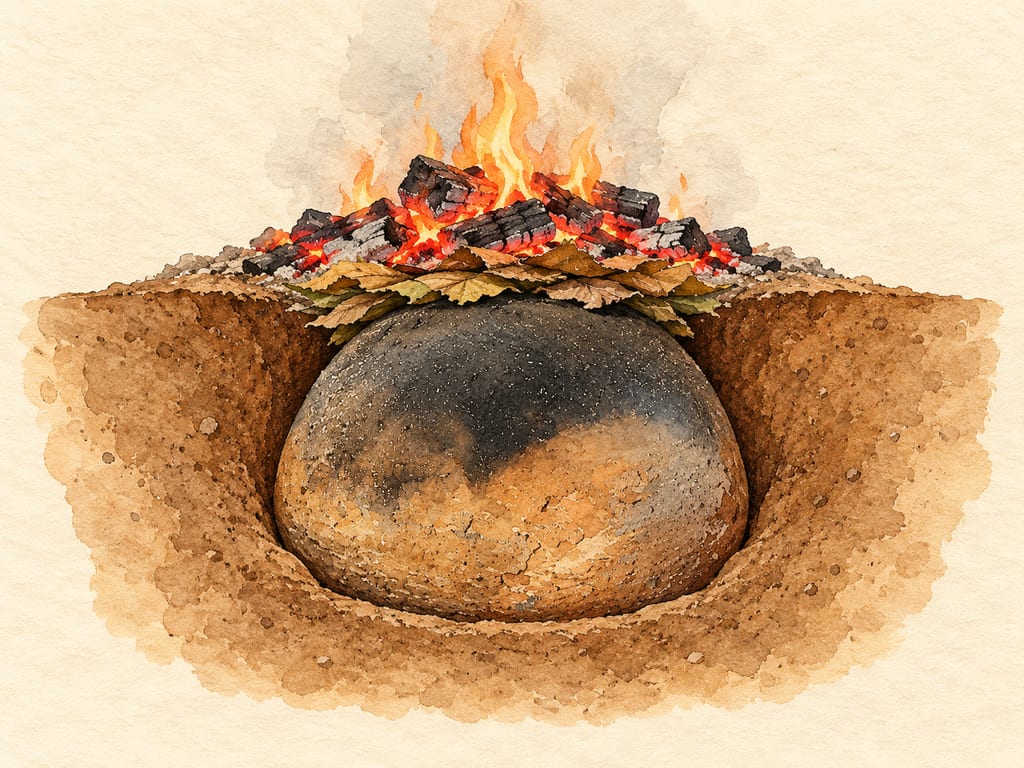
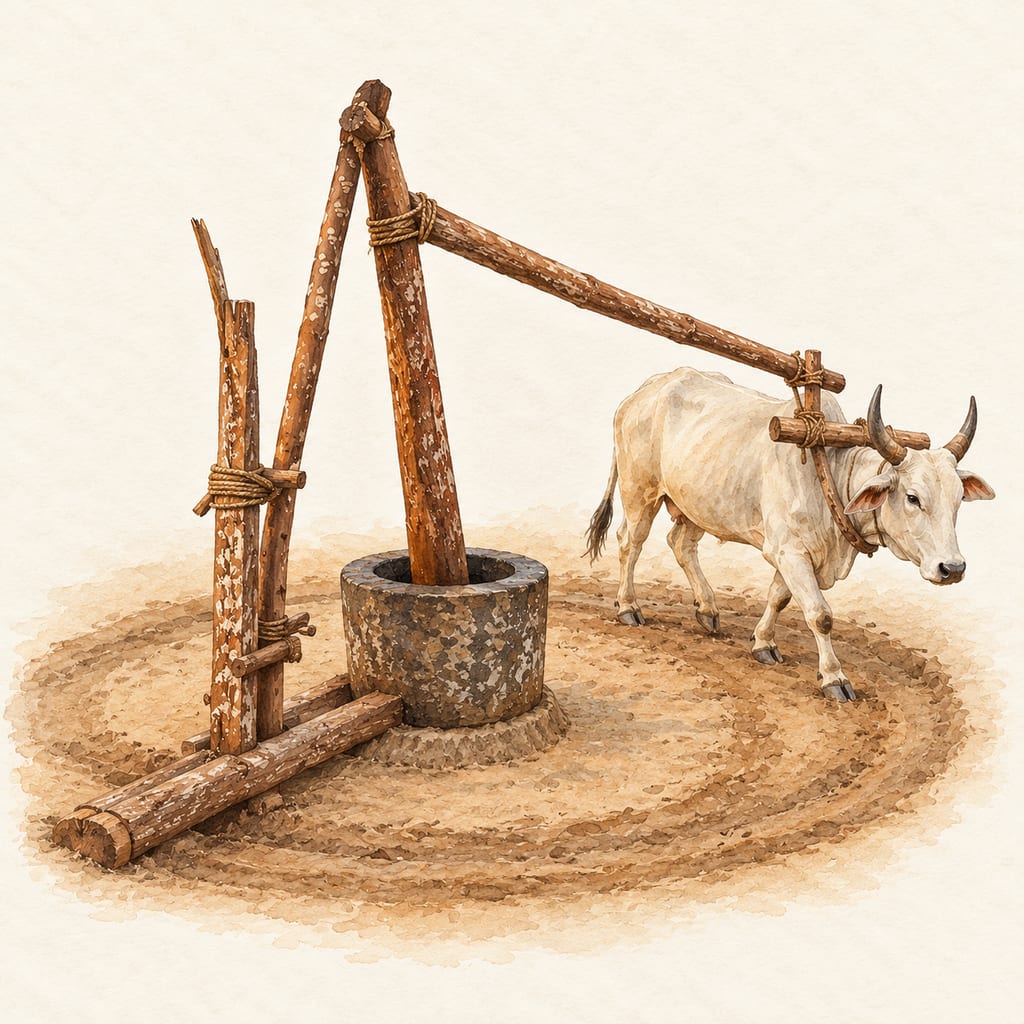
Watercolor cutaway showing an inverted earthen matlu in surrounding soil with leaves and a modest fire above, as described for traditional undhiyu.

A pot that turns the cooking method upside down

A matlu, also written matla, is an earthen pot associated with Gujarati undhiyu. Gujarat Tourism describes layers of green beans, plantain, purple yam and muthia placed in the pot with green garlic, carom and grated coconut. It then says the pot is hung upside down and fired; the slow cooking gives the vegetables a smoky flavour. In this account, the vessel's orientation is not a decorative detail. It is central to how the dish is named and prepared.

The supplied heat-processing atlas connects the word undhu with “upside down” and records the inverted vessel as the defining feature of traditional preparation. That account also cautions that contemporary stovetop undhiyu and local pit-pot preparations are related but distinct. The records therefore use matlu for the earthen cooking pot, while keeping the better documented heating arrangements attached to their particular source and place.

Sources for this section

Form and material

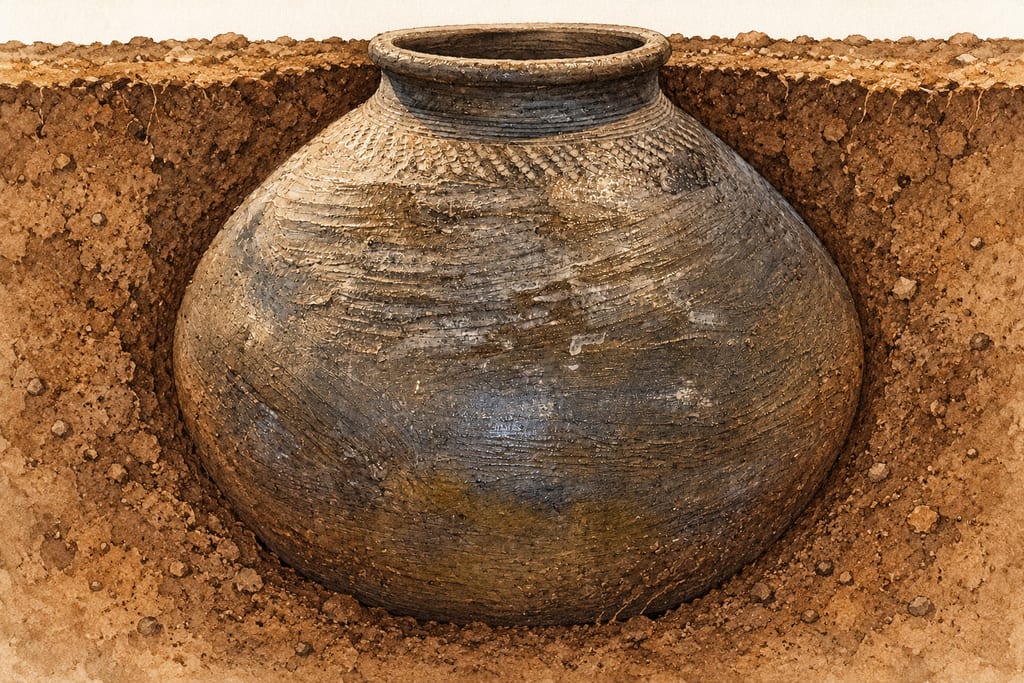
The sources identify the matlu as a clay or earthen pot, but do not provide a general drawing, measured profile, clay recipe, firing schedule, glaze, wall thickness or standard capacity. A photograph from a South Gujarat ubadiyu kitchen shows a rounded, darkened earthen vessel at the fire. It offers a real example of a matlu in a related use, not a template that proves all undhiyu pots share its exact shape.

That limit matters when describing a traditional tool. The word names a pot used in a particular cooking arrangement; it does not certify the materials or direct-fire safety of every contemporary vessel sold under a similar name. One cook in Dungri told the reporter that his pots were made with less water content so they would resist cracking during prolonged high heat. This is a documented local maker's account, not a universal pottery specification.

Sources for this section

Loading, turning and firing

The official tourism description gives the sequence in brief: layer seasonal vegetables and muthia in the earthen pot, turn it upside down, and fire it. A separate field report describes a matlu for ubadiyu, a related South Gujarati winter preparation near Dungri village. In that account, the cook packs the ingredients closely, places leaves at the top, seals the mouth with clay, inverts the pot and cooks it among embers with wood and dried dung cakes around it.

These reports describe overlapping family practices, not one interchangeable recipe. The Dungri reporter says the ubadiyu pot cooks the ingredients in their own steam and notes that the local cook distinguishes it from undhiyu, which he describes as prepared in oil. The field observation is useful for understanding one matlu and its fire setting; it should not overwrite the more limited Gujarat Tourism description or stand for all undhiyu.

Sources for this section

A regional cooking landscape

Undhiyu is associated with Gujarat, while sources emphasize distinct local versions. A Condé Nast Traveller feature describes an underground, inverted earthen-pot method and recounts claims linking the dish especially to Surat and South Gujarat. It also reports differences in seasoning across regions. These accounts support a Gujarati setting but do not establish a single inventor, fixed recipe or exclusive place of origin.

The same article links winter gatherings and seasonal produce with the dish's contemporary public life. Gujarat Tourism's list of ingredients also points to a seasonal vegetable combination, but neither source specifies a universal calendar or an exhaustive ingredient set. A matlu is one part of this cooking history: the pot, orientation, closure and surrounding heat belong together, while variations in ingredients and fuel remain local.

Sources for this section

What the record leaves open

The sources consulted do not date the origin of the matlu, describe a standardized pottery workshop, or establish a universal size. They also do not provide a validated household firing procedure, cleaning regimen or food-contact standard. A vessel used over embers in a reported field kitchen is evidence of that use, not a safety test for a different pot.

The strongest description is therefore specific: an earthen cooking pot named in Gujarat Tourism's undhiyu account, turned upside down and fired; alongside it, a 2021 field report records a related matlu use for ubadiyu near Dungri, with a clay seal and an ember bed. The illustrated hero is editorial art based on those documented forms and settings, not a photograph, archaeological reconstruction or complete cooking instruction.

Sources for this section

History

Gujarat Tourism describes an earthen matla in undhiyu preparation. A 2021 field report documents a matlu used for ubadiyu near Dungri, South Gujarat.

Equipment details

CapacityThe sources do not give a standardized capacity for a matlu.
SizeNo measured dimensions are reported for the undhiyu matla. One field report gives a batch capacity for a specific ubadiyu pot, not a general specification.
PowerFire or solid fuel The documented method uses external fire or embers; fuel and placement vary by reported practice.
How you get oneNot established The cited sources do not identify a standard supplier or current purchasing route for an undhiyu matlu.
CareThe sources do not give a complete care or food-contact standard. They describe an earthen pot used with fire; follow the potter's material-specific instructions and do not assume every clay vessel is suitable for direct-fire cooking.

Made of

  • Fired earthenware — Cooking vessel
    Gujarat Tourism calls the matla an earthen pot; the Dungri report identifies the observed matlu as clay. Sources do not specify clay composition, firing temperature, glaze, wall thickness or maker.

Limits

The word matlu or matla does not by itself prove one shape, capacity, clay body, lid or firing arrangement; the cited accounts describe particular uses.

Source →

The Dungri field report concerns ubadiyu, a related South Gujarati preparation, and its specific cook's account should not be generalized to every undhiyu method.

Source →

Places

Gujarat

Traditional use · Region evidence

A documented regional cooking association; no single origin or statewide vessel design is claimed.

Dungri, near Valsad

Documented use · Locality evidence

This place is documented for one related ubadiyu use of a matlu, not as the origin of undhiyu or the only matlu tradition.

Related

Community

No community contributions have been published for this entry yet.

Share what you made

Sign in to contribute. Published comments and photos are free to read.

Sources