
'Nduja di Spilinga
Soft, spreadable Calabrian pork sausage made with a great deal of red chilli and fatty pork, stuffed into natural casings, sometimes smoked and matured while staying soft.
 FermenteaWhere food goes to change
Equipment · Milk frothers
handheld electric frother · battery-powered milk frother · electric milk whisk
A handheld battery frother spins a small whisk in milk to add foam. Its possible use in warm drinking chocolate is a modern adaptation, not a documented traditional substitute for a molinillo.
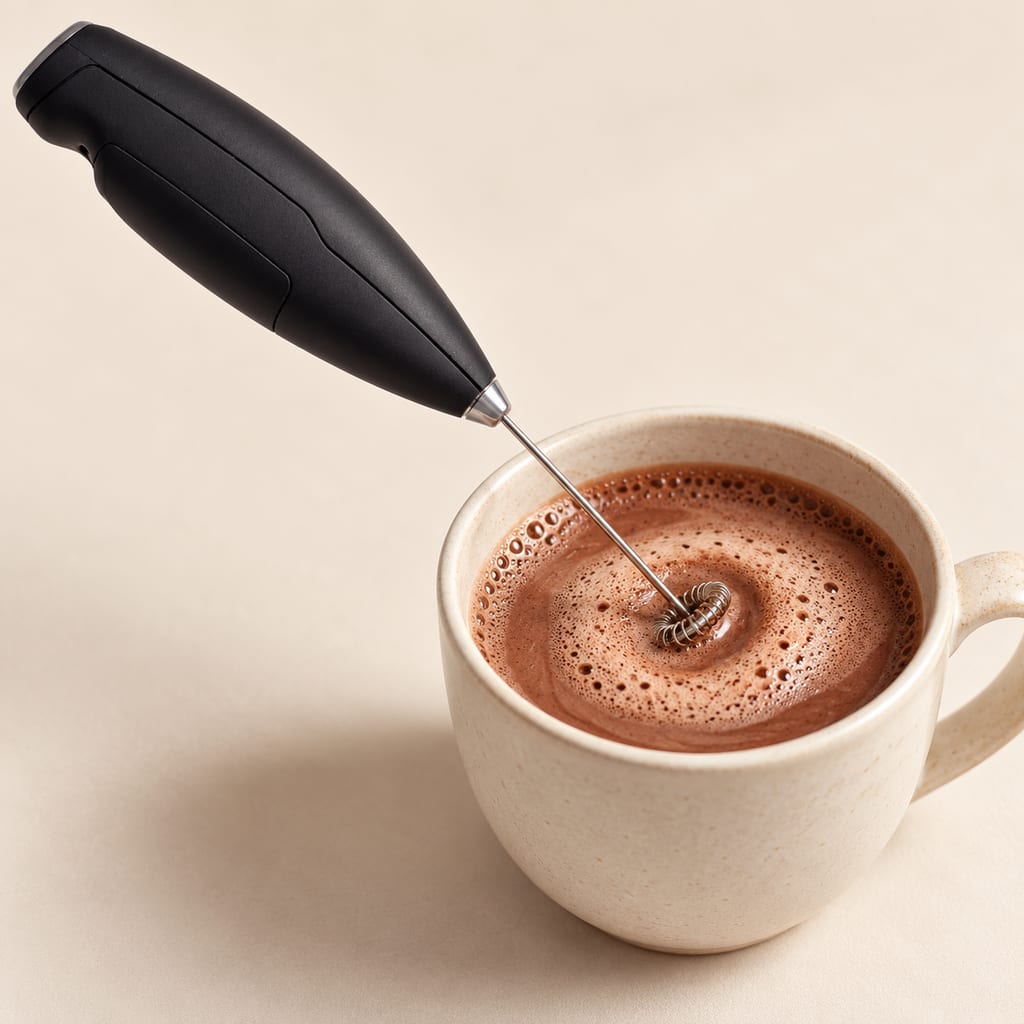
The earliest dated example in this source set is a Commons photograph of a battery-powered wand from 2006. That date records one specimen, not the device's invention or place of origin. It is also distinct from a historical molinillo: Smithsonian Magazine describes that hand-turned wooden whisk in Mexican chocolate-making, not an electric wand.
The inspected modern photographs show a handle connected by a narrow shaft to a spring-wire whisk head. A manufacturer also documents a double-whisk model. Rotating these small heads in milk adds air; none of these examples is a cacao mill or refiner.
A Tzumi manual describes a handheld wand with a double whisk powered by two AA batteries. For that model, it directs the user to put 2–4 ounces of warm or cold milk in a cup, place the whisk near the bottom, hold the button and move the whisk gently up and down as foam forms.
The manual gives 20–30 seconds or until the milk doubles in volume. Those figures belong to that product's instructions; they are not a universal timing target. The manual says to switch the unit off before removing the whisk and to rinse the whisk and wand with hot water.
The research record suggests a modern frother as a possible alternative for aerating a warm drinking-chocolate beverage, but the sources collected here do not document that particular use. This entry therefore does not claim that the handheld electric wand is a traditional chocolate tool or that its foam matches another implement's result.
Smithsonian Magazine describes a different whisk: a carved wood, bone and brass molinillo used in Mexico to beat melted chocolate and milk heated together until frothy. It is turned between the palms. That historical tool and setting give context for chocolate frothing; they do not establish a direct lineage to battery wands.
The 2006 Commons photograph documents one battery-powered wand; the later file and Tzumi manual document other examples. These records establish modern forms and product-specific instructions, not the date or place of invention, manufacture, universal dimensions, or one standard material.
The source set gives a milk-frothing procedure, not a chocolate recipe. It does not name a general maker or procurement route. Any adaptation to warm chocolate should follow the selected device's instructions and the drink's own recipe rather than treating the historical molinillo and electric frother as interchangeable.
Manufacturer manuals describe important differences between devices. One Fackelmann model is specified as a 3-volt unit with two AA batteries, a plastic housing and stainless-steel functional parts. Its manual also says not to immerse the main housing and to keep fingers and utensils clear of the moving whisk; those specifications apply to that model, not every frother.
Tchibo's rechargeable wand instructions warn that splashes from hot liquids can scald. They say to put the whisk into the liquid before switching on, switch off and wait for it to stop before removal, and never immerse the handle. These are device-specific precautions; a reader should follow the chosen model's instructions.
A Commons file dates a battery-powered wand photograph to 2006; a manufacturer manual describes one two-AA handheld model. Neither source establishes where or when the device was invented.
The Tchibo rechargeable-frother manual warns that splashes from hot liquid can scald.
Hazard sourceA moving whisk can injure fingers or catch utensils; Fackelmann directs users to keep them away while it runs.
Hazard sourceManufacturer manuals warn against immersing the powered handle or using a damaged unit.
Hazard sourceThe manufacturer warns against short circuiting, heating or damaging the batteries.
Hazard sourceFor the cited rechargeable model, immerse the whisk before switching on, switch off and wait until it stops before removing it, and do not immerse the handle.
Control sourceFor the cited Fackelmann model, keep fingers and utensils clear of the running whisk and keep the unit away from children.
Control sourceFor the cited Fackelmann model, use the specified AA batteries with correct polarity; do not short circuit, heat, damage or recharge disposable batteries.
Control sourceThe cited operating instructions are for milk and do not document a chocolate recipe or validate a drinking-chocolate process.
Source →A handheld frother aerates liquid; it does not grind or refine cacao.
Source →The sources do not establish a generic frother's origin, manufacture place or standard dimensions.
Source →The cited model manual and examples do not establish the invention or manufacture place of handheld electric milk frothers; an image-maker's location is not evidence of product origin.
Soft, spreadable Calabrian pork sausage made with a great deal of red chilli and fatty pork, stuffed into natural casings, sometimes smoked and matured while staying soft.

A way to add independent temperature logging to an existing food dehydrator without changing its built-in controls or protections. It is a monitoring method, not a rewiring plan.

Pleurotus cystidiosus is the abalone mushroom, a cultivated oyster-type fungus with dark brown caps that grows more slowly and is more demanding than other Pleurotus species.

A dark, balanced vinegar from Emilia-Romagna made by combining cooked or concentrated grape must with wine vinegar, then acetifying and refining it in wood under a protected specification.

A living dairy inoculum that starts controlled cream fermentation, developing acidity and aroma before sour cream or cultured butter is finished.

A small electric incubator holds jars at a selected temperature for yogurt and other documented warm food preparations. Controls, capacity and vessel arrangement vary by model.

Adygean salt is a seasoned table salt associated with Adygea and the wider North Caucasian culinary tradition. Salt is blended with garlic and a variable selection of herbs and spices; the exact mix depends on the named style and maker.

The African Caesar-group mushroom, Amanita masasiensis, is a wild ectomycorrhizal species of central and southern African woodlands, eaten locally. The genus contains deadly poisonous species, so identification needs care.
No community contributions have been published for this entry yet.
Sign in to contribute. Published comments and photos are free to read.
TzumiOperation · Care · Safety
Puree Milk Frother ManualOne handheld model has a handle, wand and double whisk and uses two AA batteries.
Its instructions use 2–4 oz warm or cold milk, put the whisk near the bottom, hold the button and move it gently up and down; they give 20–30 seconds or until volume doubles as model-specific guidance.
The manual instructs the user to switch the unit off before removing the whisk and to rinse the whisk and wand with hot water.
Cited in: One model's operating instructions; Limits of the evidence
Smithsonian MagazineComparison · History · Geography
A Historic Kitchen Utensil Captures What it Takes to Make Hot Chocolate From ScratchThe article describes a 1930s Mexican molinillo, a carved wood, bone and brass utensil turned by hand to froth melted chocolate and milk heated together.
It does not document a modern battery frother used in drinking chocolate.
Cited in: Modern examples and historical distinction; Chocolate is an adaptation, not a historical claim; Limits of the evidence
Wikimedia CommonsImage reference · Form · Period
File:Milk frother (258748248).jpgThe inspected image shows a silver battery wand with a long shaft and spring-wire whisk head.
The file page dates the photo to 8 September 2006 and states CC BY 2.0; the date is not an invention date.
Cited in: Modern examples and historical distinction; Limits of the evidence
Wikimedia CommonsImage reference · Form
File:Milk frother wand battery powered.jpgThe inspected own-work photo shows a black battery-powered wand with a long shaft and spring-wire whisk head.
The file page states CC0 1.0; the image does not establish universal form or manufacture location.
Cited in: Modern examples and historical distinction
FackelmannMaterials · Power · Safety · Care
42319 Electric milk frother instructionsOne battery-powered Fackelmann model is specified as 3 V, uses two AA batteries, and has a plastic housing with stainless-steel functional parts; these specifications are not universal.
The manual says not to immerse the main housing, to keep fingers and utensils away from the moving whisk, and to keep the device away from children.
It instructs users to keep the unit clean and dry and not touch or detach the whisk while it runs.
The manual warns against short-circuiting, damaging, heating or disassembling the AA batteries and specifies correct type and polarity; these battery precautions apply to the cited product.
Cited in: Modern examples and historical distinction; Safety and model-specific materials
TchiboSafety · Operation
Rechargeable milk frother: Instructions for useThis rechargeable handheld model is for milk and other suitable liquids, not thick or solid substances.
Its manual warns that splashes from hot liquids can scald, says to immerse the whisk before switching on and switch off and wait for it to stop before removing it, and says never to immerse the handle.
The manual says to clean the whisk after each use. These precautions apply to this specific model.
Cited in: Safety and model-specific materials