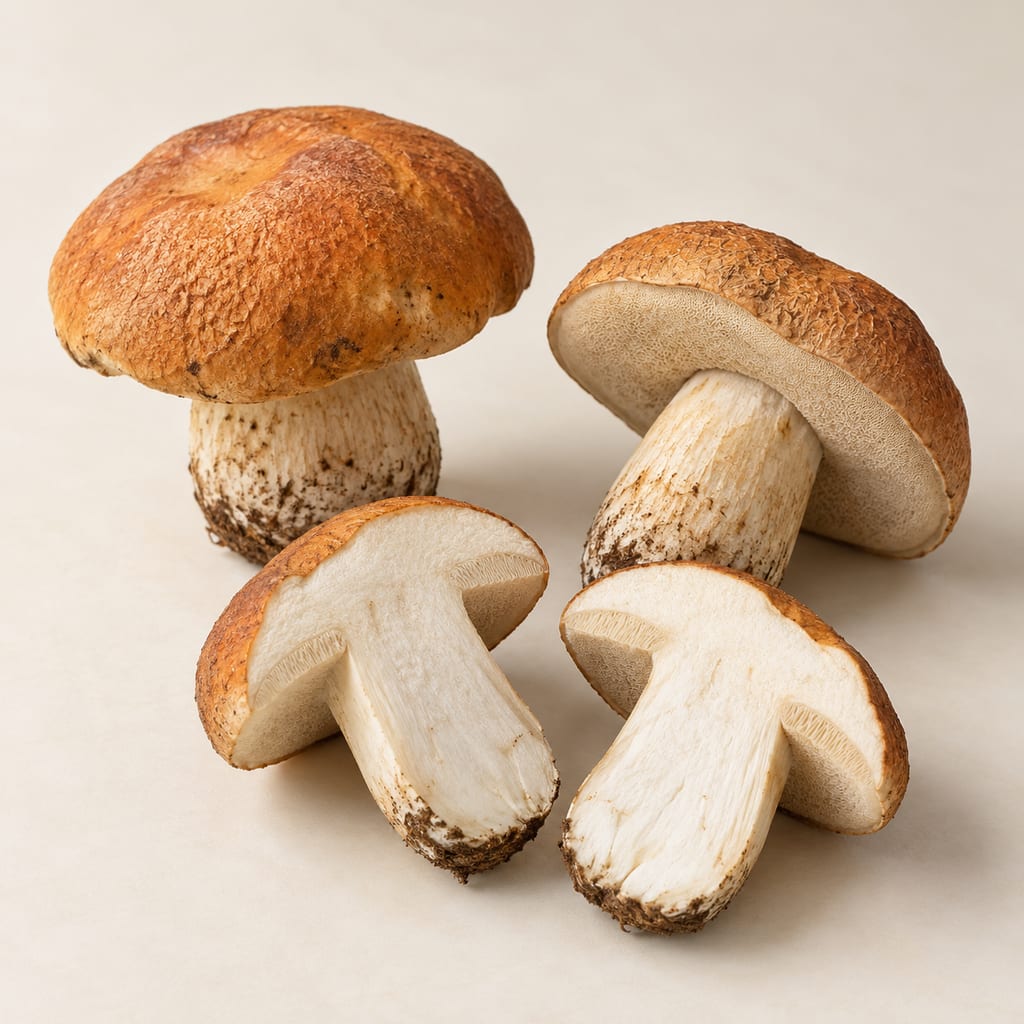
Ballou's bolete
Tylopilus balloui, the burnt orange bolete, is a tropical bolete recorded as food in Guyana. Sources disagree on whether it is worth eating, and its species concept needs checking.
 FermenteaWhere food goes to change
Other
Boletellus ananas, the pineapple bolete, is a forest bolete of Guyana that one Patamona group eats and others avoid; a researcher reported mild stomach upset after eating it, so it is not a recommended edible.
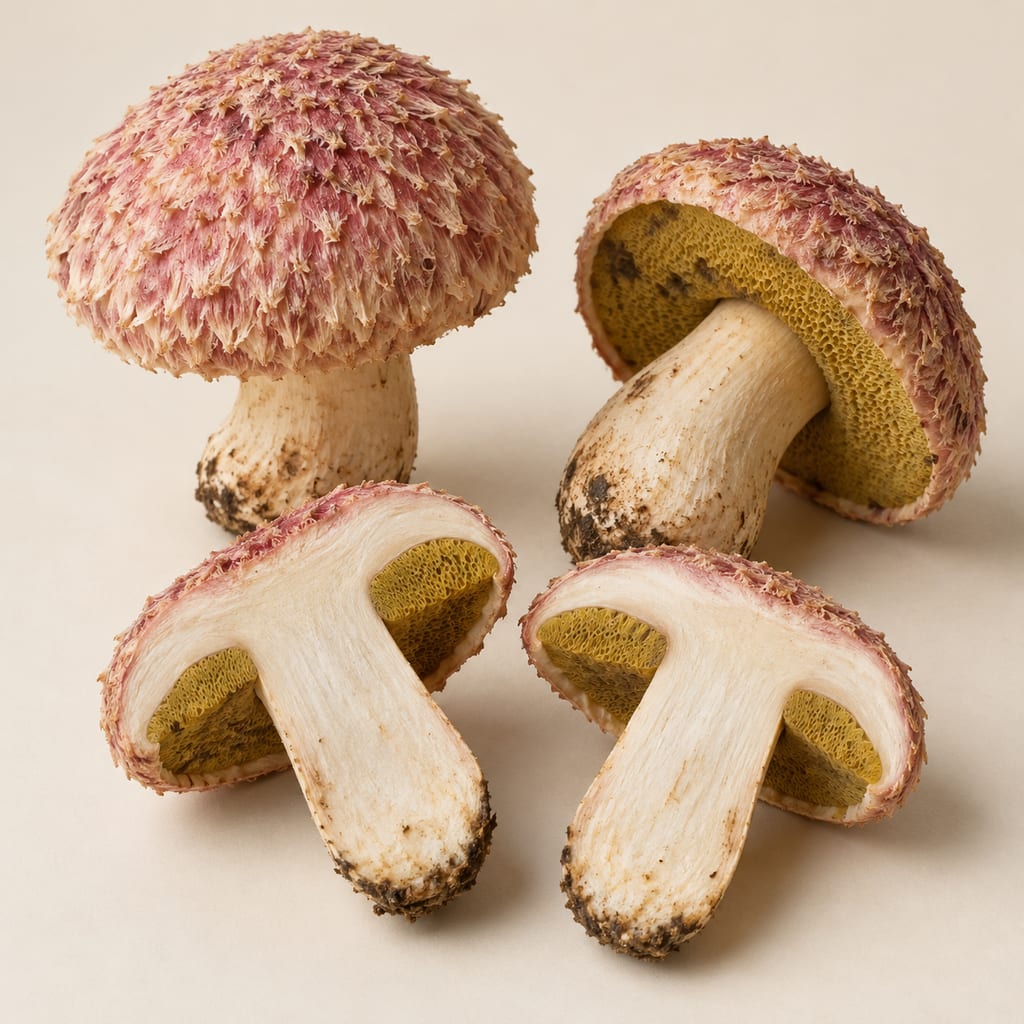
The pineapple bolete, Boletellus ananas, is a bolete, a mushroom with a pored rather than gilled underside, recorded from forests of Guyana. The local name aawahgo is given in the supplied record. The species is ectomycorrhizal, meaning it grows in partnership with forest tree roots, and it is found in the wild.
The species is documented as a food for one Patamona group in Guyana. Other groups avoid it, and a researcher reported stomach upset after eating it. The sources therefore record contested use and do not recommend it as an edible.
The supplied record keeps the name Boletellus ananas as the source survey used it. A later Guyana study, published in Mycotaxon in 2008, recorded the variety Boletellus ananas var. ananas from Guyana and described a related new species. The name and its varieties are not confirmed here against current taxonomic authority.
The supplied record gives the English name pineapple bolete. That name does not confirm any identification.
The record places the species in forest and describes it as ectomycorrhizal. Ectomycorrhizal fungi depend on the roots of living trees, so they are gathered from the forest floor and cannot be grown in a simple bed.
The 2004 survey of edible mushrooms in Guyana records that one Patamona group eats the species and that other groups avoid it. The supplied record uses the phrase contested food use for this reason. The record does not describe the dish, the gathering season or any preparation that the eating group uses.
The sources do not establish a preparation for this species. No cooking, drying or storage instruction is given here, and none should be inferred from other boletes.
A researcher reported mild gastrointestinal upset after eating the mushroom, and the supplied record marks the safety status as a conflict for research only. The sources do not establish that the pineapple bolete is safe to eat, and they do not describe how to tell it from its look-alikes. Nothing on this page should be used to identify or eat a mushroom found in the wild.
The full text of the 2004 Guyana survey could not be read for this page. The facts above come from the survey title and bibliographic record, and from the supplied catalogue entry, which quotes the field report. Each claim should be checked against the paper before it is used beyond this page.
The sources leave open the preparation used by the eating group, the cause of the reported stomach upset, the local names beyond aawahgo, and the look-alike species in Guyana. These are the next questions for a field study with the Patamona communities and for a specialist review of the specimens.
Recorded in the Guyana survey; the record does not place it more precisely.
Tylopilus balloui, the burnt orange bolete, is a tropical bolete recorded as food in Guyana. Sources disagree on whether it is worth eating, and its species concept needs checking.

Animal blood is a perishable food material used fresh, coagulated, cooked, dried or processed into ingredients. Its uses range from grain-filled puddings to functional protein ingredients, each with distinct history and handling needs.
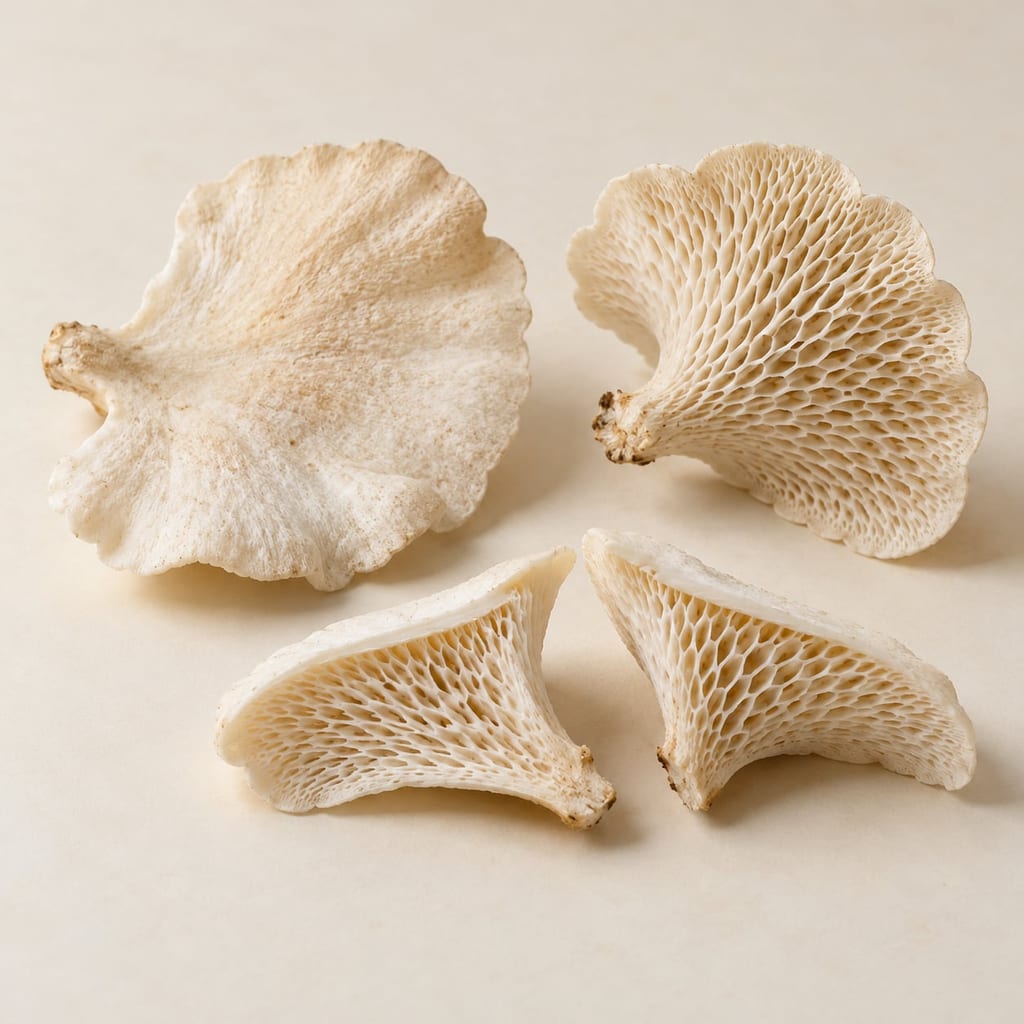
Brazilian honeycomb polypore, Favolus brasiliensis, is a wood-growing fungus of tropical forests recorded as food in Brazil and Guyana. It has no standardized food-safety assessment.
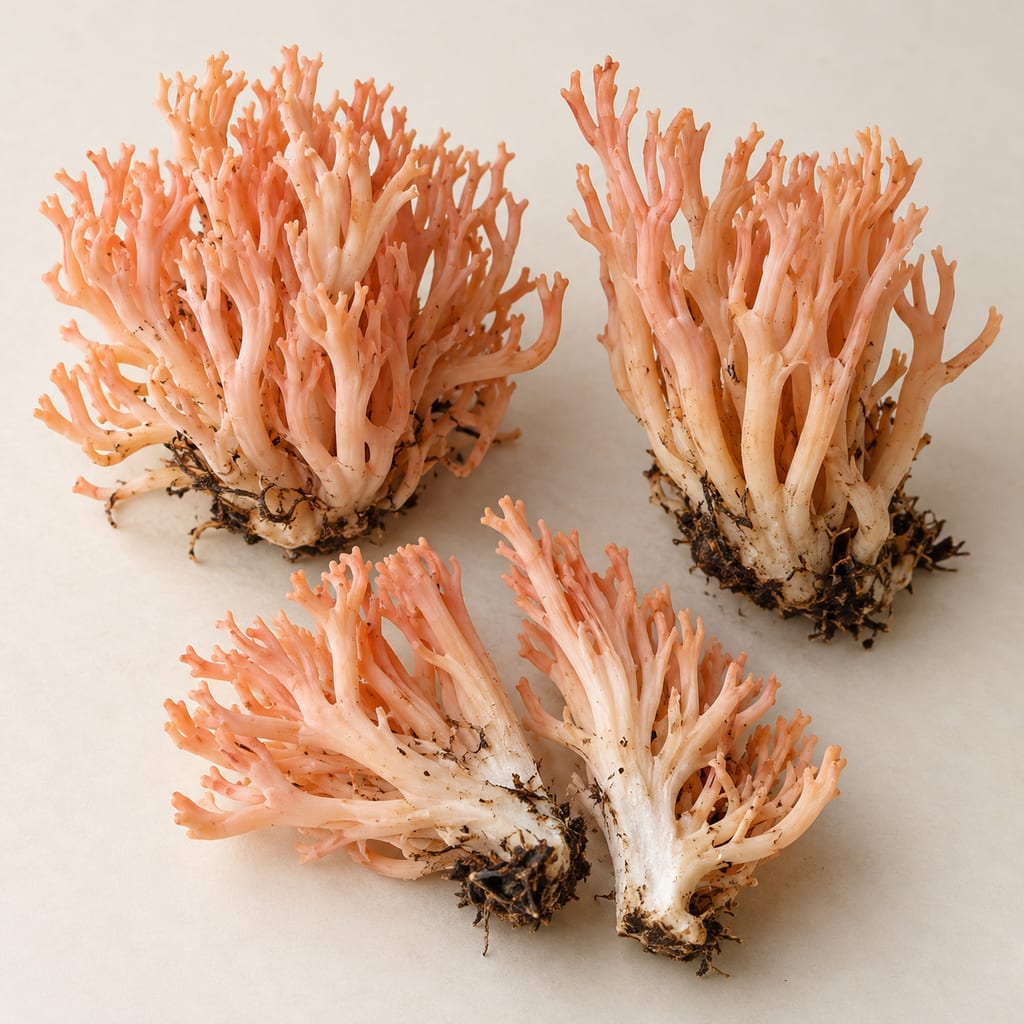
Clavulina kunmudlutsa is a coral fungus of white-sand forest in the Pakaraima Mountains of Guyana. The Patamona people, who give it the local name kunmudlutse, eat it; its preparation is not recorded in the sources read.
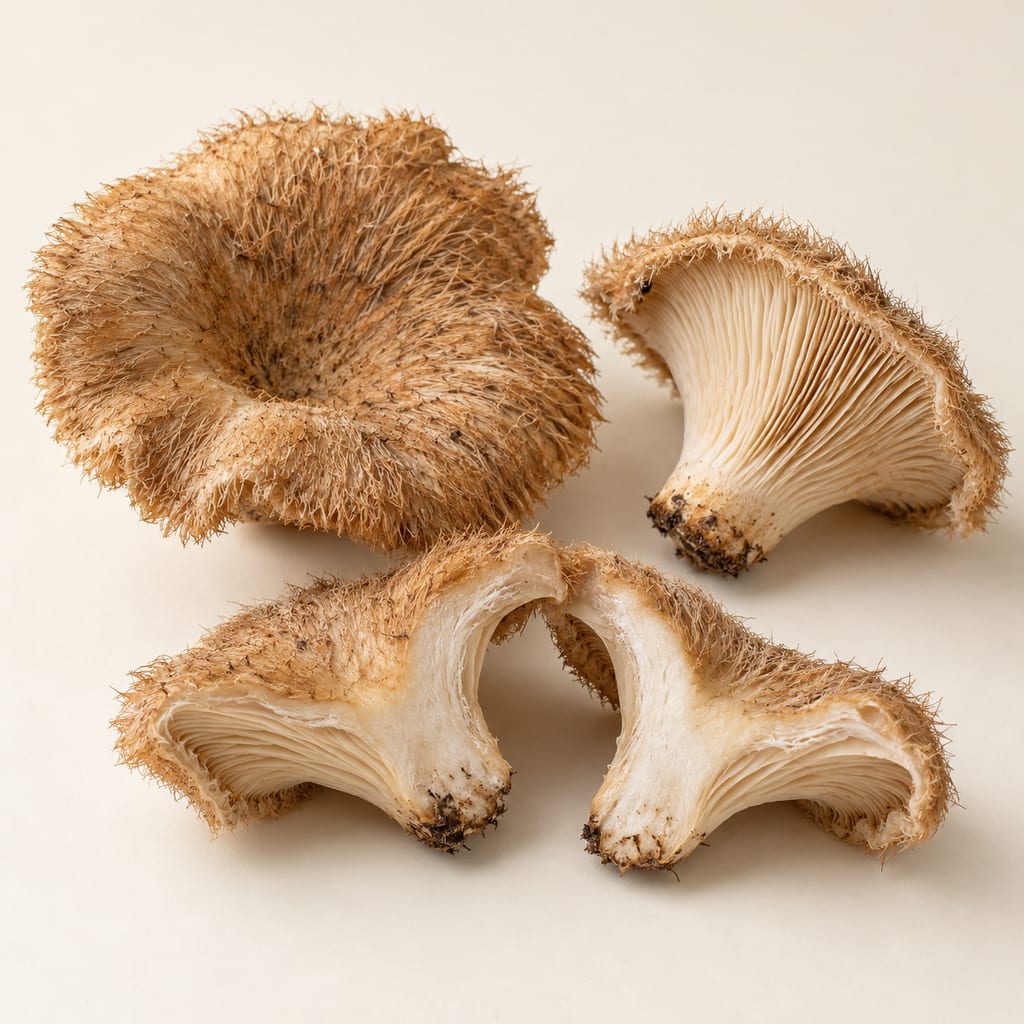
A wood-rotting bracket fungus of Brazil and Guyana that Indigenous Amazonian communities eat as a staple. Its edibility is contested in some field guides, and no standardised food-safety assessment exists.
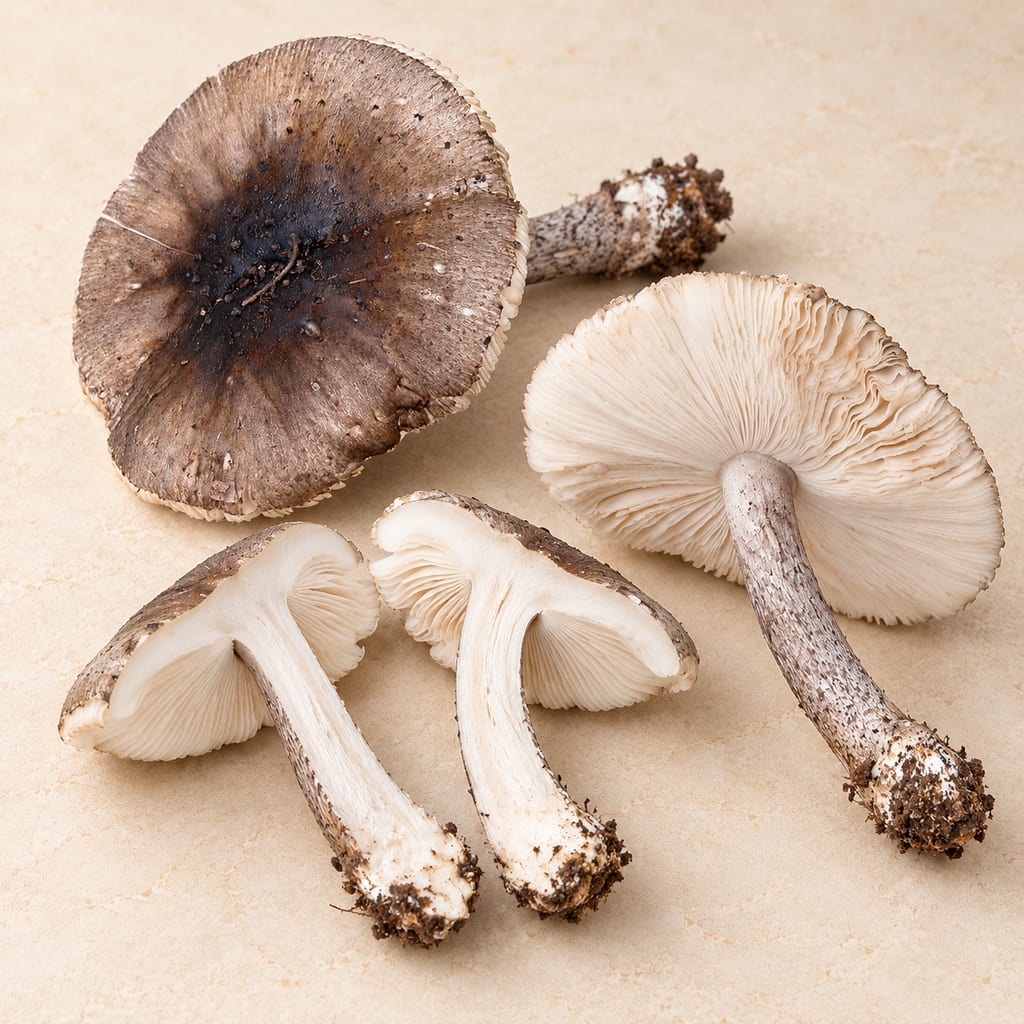
Pulutukwe is the Patamona name for Amanita perphaea, a wild Amanita of the Pakaraima Mountains of Guyana that the Patamona people value as food. Its identity is not established for other Amanitas.
A Rhizopus mould stage converts starch in cassava for the Wapishana drink parakari. The published abstracts name the mould and its role but not the full culture method.
No community contributions have been published for this entry yet.
Sign in to contribute. Published comments and photos are free to read.
Mycologist 18(3)Food use · Safety
Edible mushrooms from Guyana (Henkel, Chin, Aime and Andrew, 2004)Documented as a food of one local Patamona group and avoided by others; the local name aawahgo is recorded.
A field report describes mild gastrointestinal upset in a researcher after eating it; recorded as contested food use, not a recommended edible.
Cited in: Overview; Identity and taxonomy; Ecology and habitat; Food use among the Patamona; Preparation; Safety and identification; Sources and limits; Open questions
Fermentea supplied fungi catalogueFood use
Supplied fungi catalogue record for Boletellus ananasPineapple bolete; aawahgo. Guyana. Forest, ectomycorrhizal, wild supply. Safety conflict recorded; research only.
Cited in: Overview; Identity and taxonomy; Ecology and habitat; Food use among the Patamona; Preparation; Safety and identification; Sources and limits; Open questions