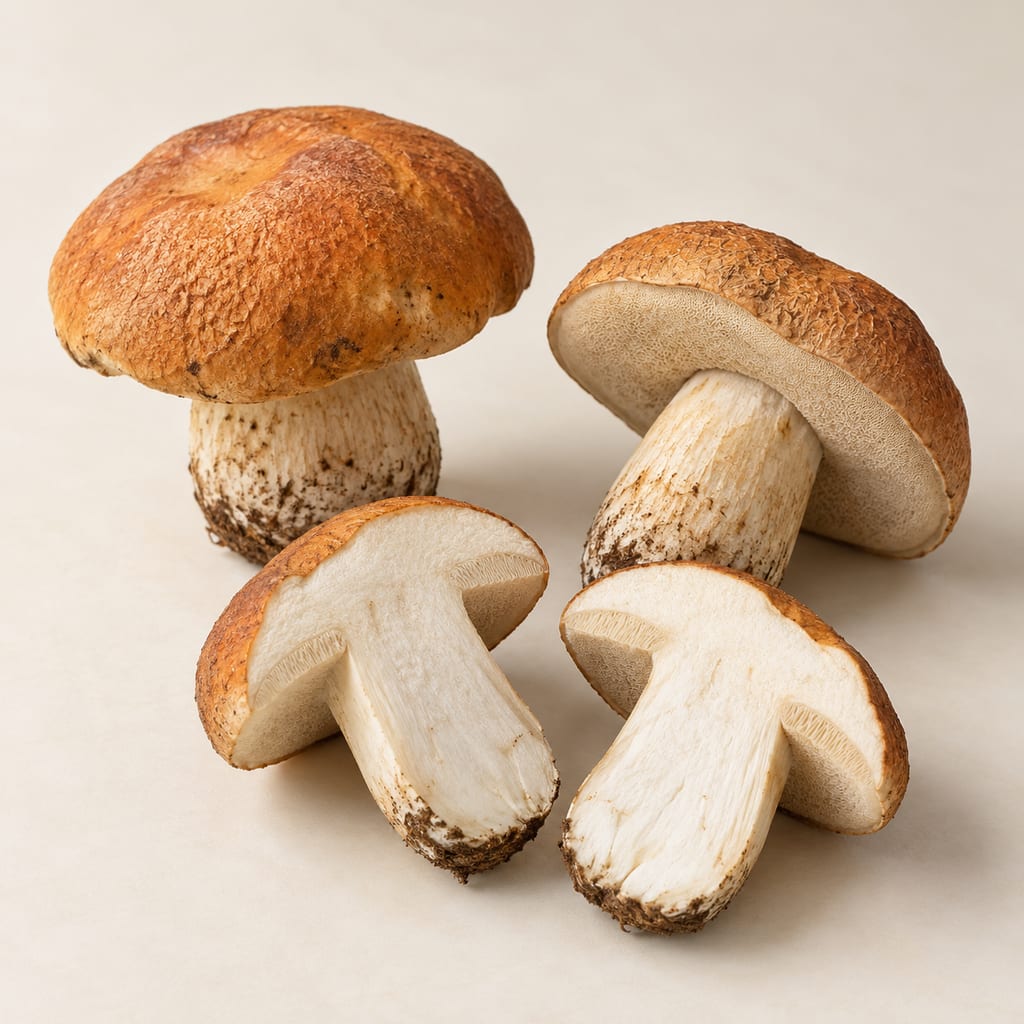
Ballou's bolete
Tylopilus balloui, the burnt orange bolete, is a tropical bolete recorded as food in Guyana. Sources disagree on whether it is worth eating, and its species concept needs checking.
 FermenteaWhere food goes to change
Mushrooms
Clavulina kunmudlutsa is a coral fungus of white-sand forest in the Pakaraima Mountains of Guyana. The Patamona people, who give it the local name kunmudlutse, eat it; its preparation is not recorded in the sources read.
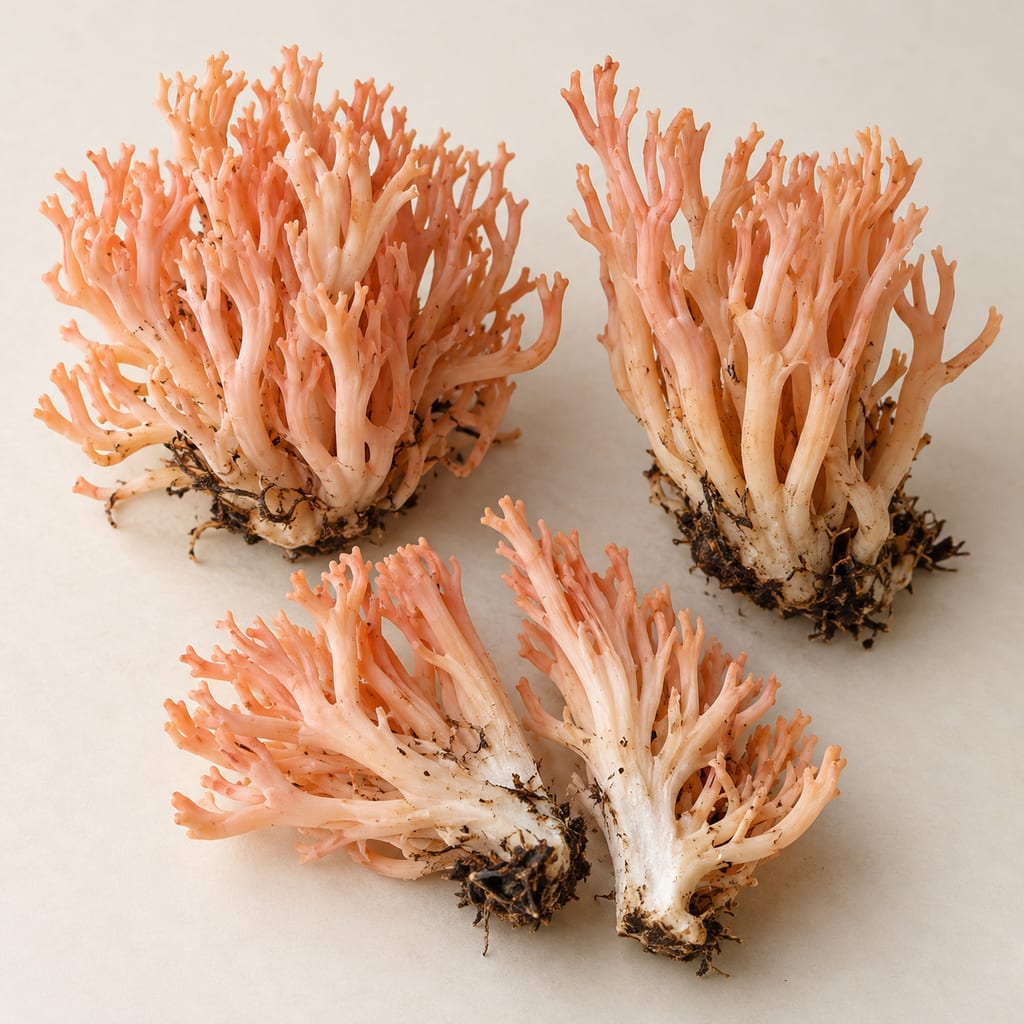
Clavulina kunmudlutsa is a coral-shaped fungus of the order Cantharellales. Henkel, Aime and colleagues described it as a new species in 2011 in Mycologia, from specimens collected in the Pakaraima Mountains of Guyana. The epithet kunmudlutsa is the Patamona name for the fungus, and the species was described alongside a second new species, C. tepurumenga, which the same authors also described as food for the Patamona.
The authors call both species important edible fungi for the Patamona Amerindians. That is the only food statement in the abstract. The abstract gives no preparation, cooking method, quantity or consumption detail, and the full text of the Patamona use was not available in the sources read.
The species is ectomycorrhizal, which means it grows in partnership with the roots of trees. The sources name the host as Dicymbe corymbosa, a legume tree of the genus Dicymbe. It favours white-sand soils in forests dominated by Dicymbe trees. The fungus is recorded as wild, and no cultivation is described.
Its range is stated differently across sources. The 2011 description places it in the Pakaraima Mountains of Guyana. Other databases also list an occurrence in Colombia, and one reports three sites in Guyana and one in Colombia. This page treats Guyana as the documented food region and does not extend the food use to Colombia.
Unidentified Clavulina records in older studies cannot be assumed to be this species; the catalogue flags the same caution.
The authors also report sequence data (ITS and 28S rDNA) for the new species. The name is a research label and has not been checked against a current taxonomic authority. A closely related species, C. sprucei, has been recorded again in Guyana after a gap since 1853.
No edibility verdict for the general public follows from the sources read. The published statement is that the Patamona eat the fungus. It is not a safety assessment, it does not give preparation that makes it safe, and it does not establish the species' toxicity profile.
Anyone considering eating a coral fungus should have the specimen confirmed by a specialist, and should not rely on a visual match or a catalogue entry.
The sources read give no account of how the Patamona gather, cook or store the fungus, no local food context beyond the statement of use, and no conservation status beyond the IUCN data-deficient rating mentioned in secondary sources. The next research question is what the local preparation is, and whether a Guyanese ethnobotanical record documents it.
The collections and the Patamona food record come from the Pakaraima Mountains of Guyana. Other range records (Colombia) are secondary in the sources and are not used here.
Tylopilus balloui, the burnt orange bolete, is a tropical bolete recorded as food in Guyana. Sources disagree on whether it is worth eating, and its species concept needs checking.
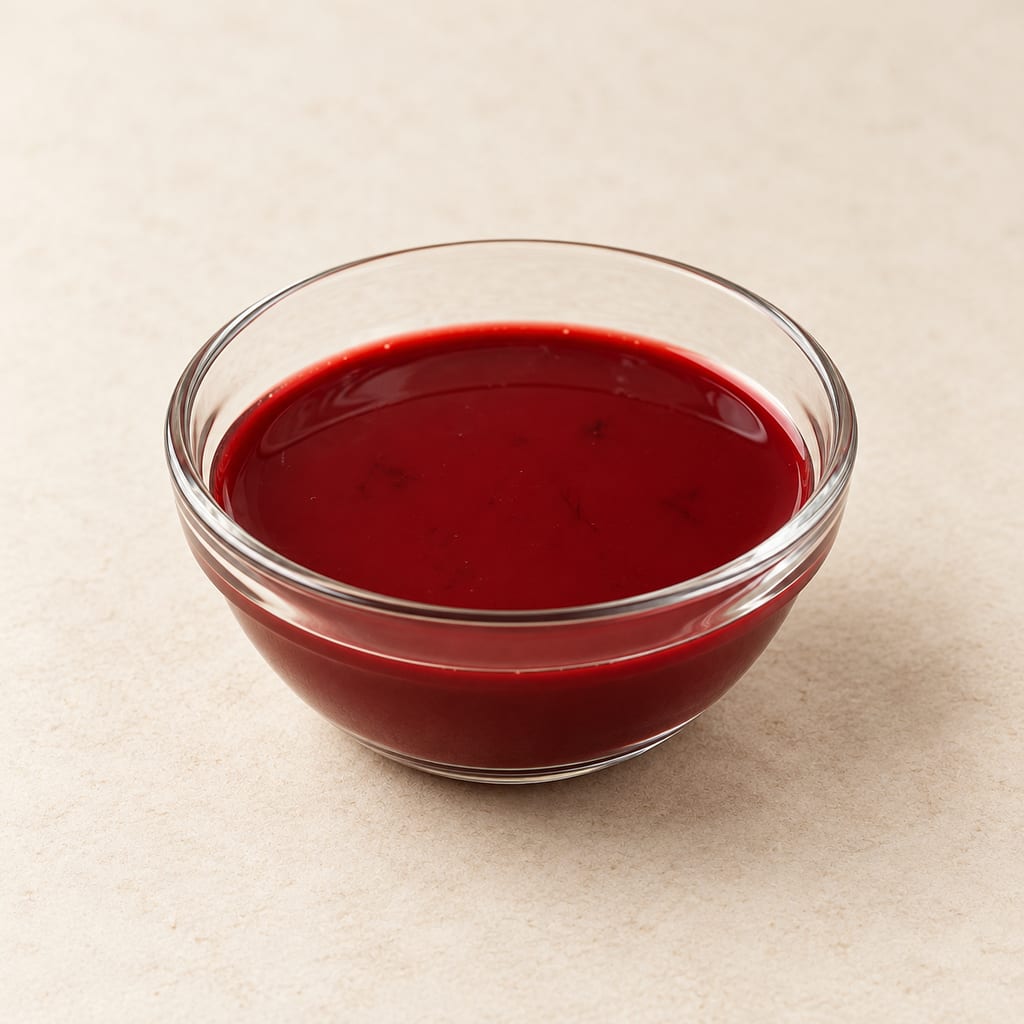
Animal blood is a perishable food material used fresh, coagulated, cooked, dried or processed into ingredients. Its uses range from grain-filled puddings to functional protein ingredients, each with distinct history and handling needs.
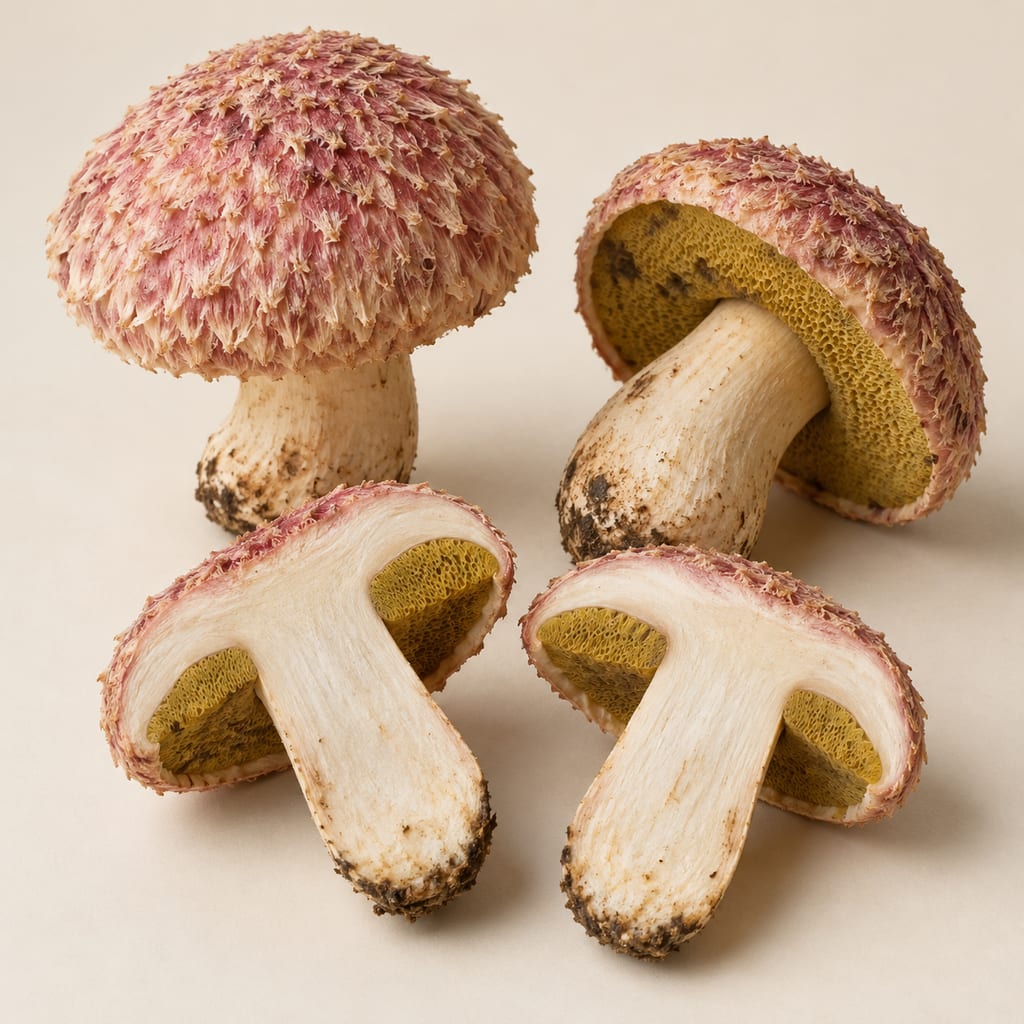
Boletellus ananas, the pineapple bolete, is a forest bolete of Guyana that one Patamona group eats and others avoid; a researcher reported mild stomach upset after eating it, so it is not a recommended edible.
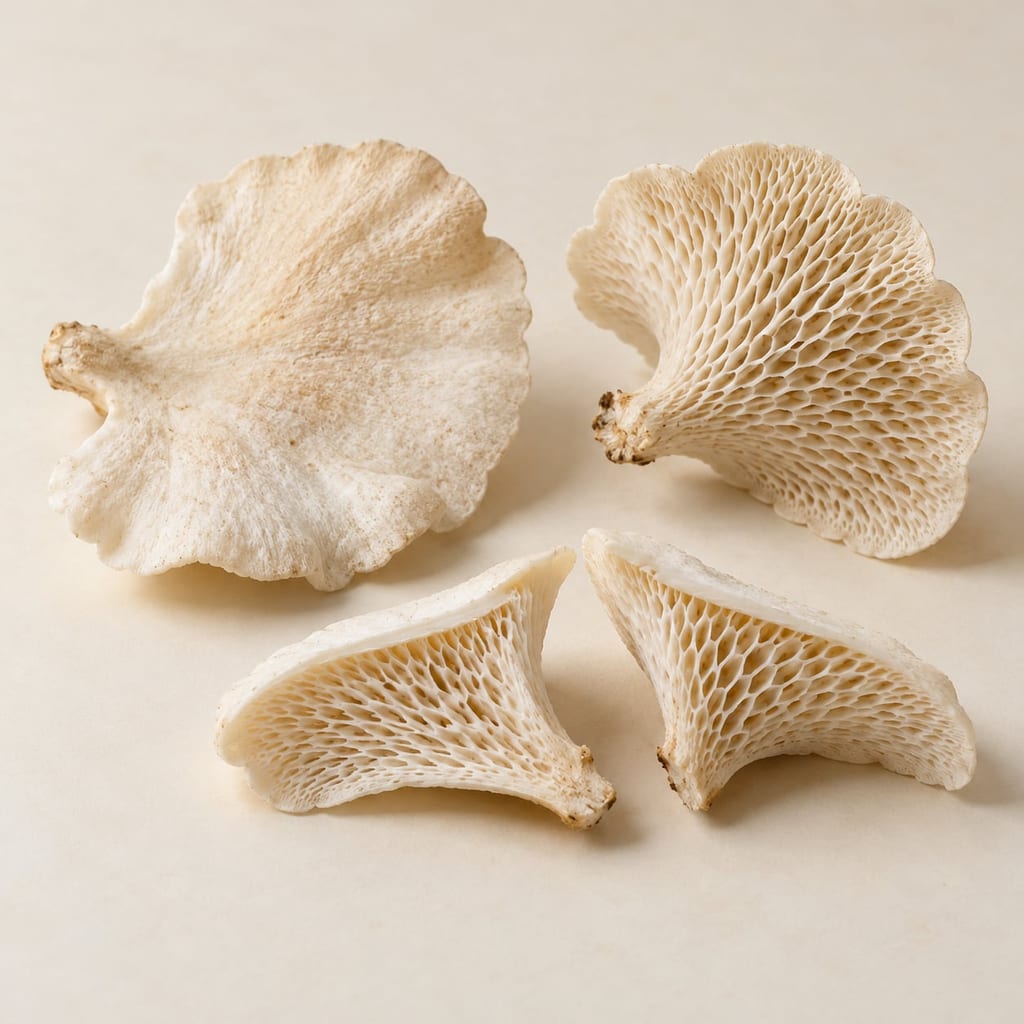
Brazilian honeycomb polypore, Favolus brasiliensis, is a wood-growing fungus of tropical forests recorded as food in Brazil and Guyana. It has no standardized food-safety assessment.
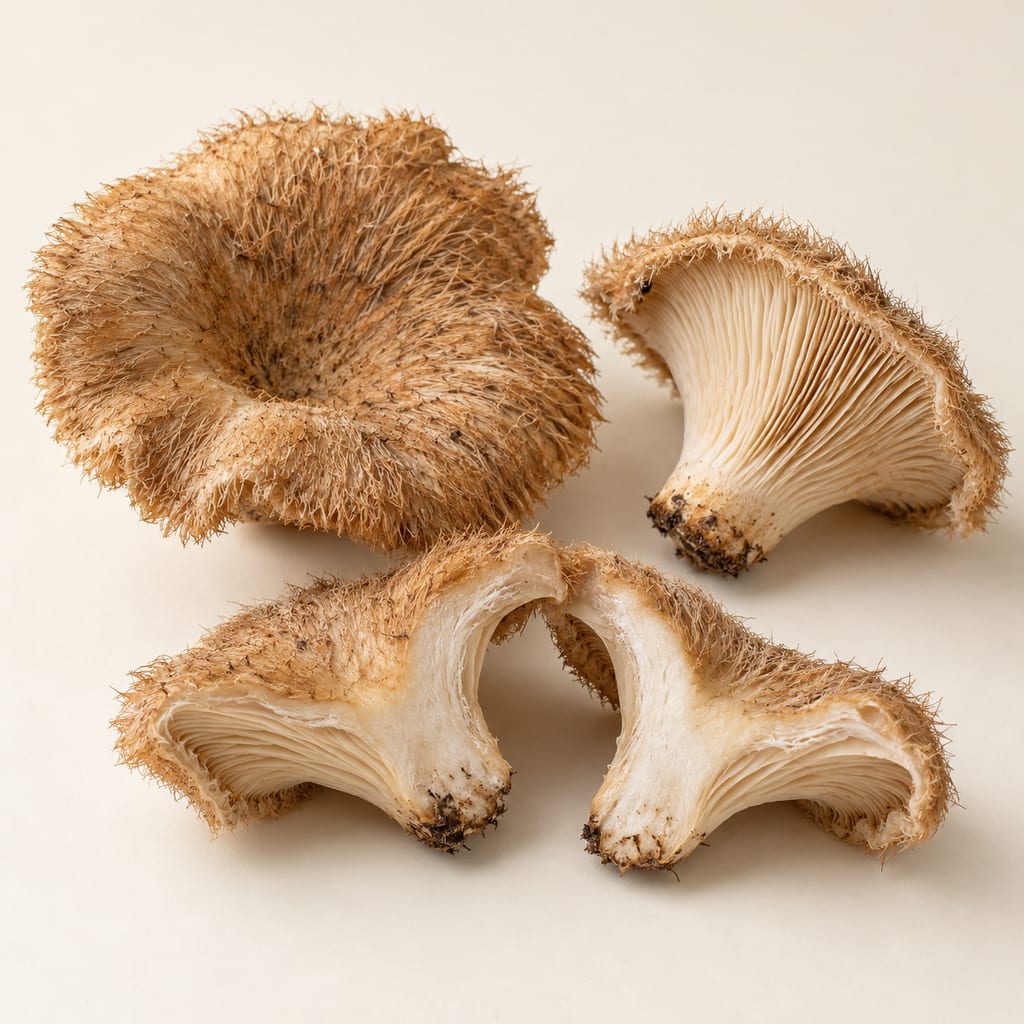
A wood-rotting bracket fungus of Brazil and Guyana that Indigenous Amazonian communities eat as a staple. Its edibility is contested in some field guides, and no standardised food-safety assessment exists.
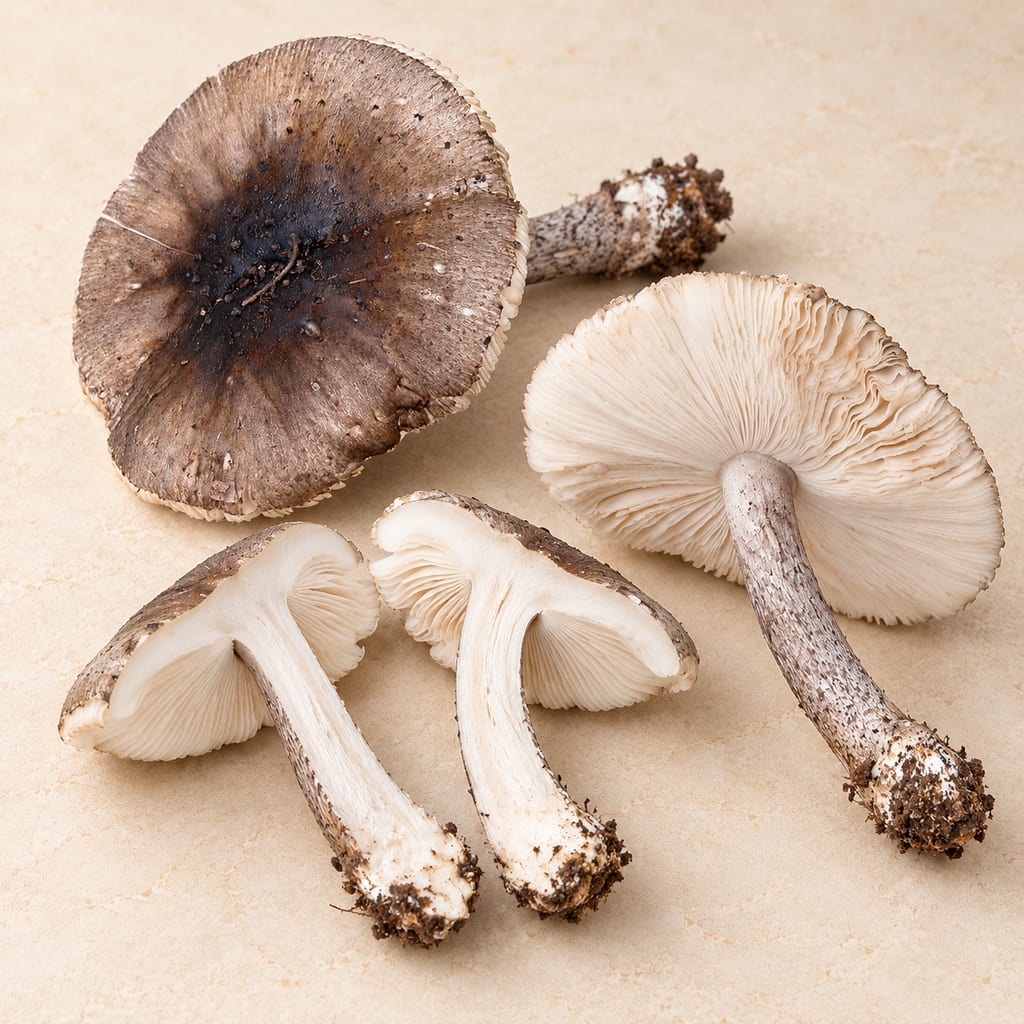
Pulutukwe is the Patamona name for Amanita perphaea, a wild Amanita of the Pakaraima Mountains of Guyana that the Patamona people value as food. Its identity is not established for other Amanitas.
A Rhizopus mould stage converts starch in cassava for the Wapishana drink parakari. The published abstracts name the mould and its role but not the full culture method.
No community contributions have been published for this entry yet.
Sign in to contribute. Published comments and photos are free to read.
MycologiaIdentity · History · Method
New species and distribution records of Clavulina (Cantharellales, Basidiomycota) from the Guiana ShieldClavulina kunmudlutsa described as new from Guyana (Pakaraima Mountains), Mycologia 103(4): 883-94, 2011.
Both new species described as important edible fungi for the Patamona Amerindians.
Ectomycorrhizal in Dicymbe-dominated forest; white-sand soils (secondary sources, to be checked).
Cited in: A coral fungus named by the people who eat it; Where it grows; Identity and the name in older studies; Safety and identification; Open questions