
Almond mushroom
The almond mushroom, Agaricus subrufescens, was cultivated in eastern North America in the 1800s, lost its market, and returned as a cultivated mushroom from Brazil, where it is grown under several names.
 FermenteaWhere food goes to change
Mushrooms
A wood-rotting bracket fungus of Brazil and Guyana that Indigenous Amazonian communities eat as a staple. Its edibility is contested in some field guides, and no standardised food-safety assessment exists.
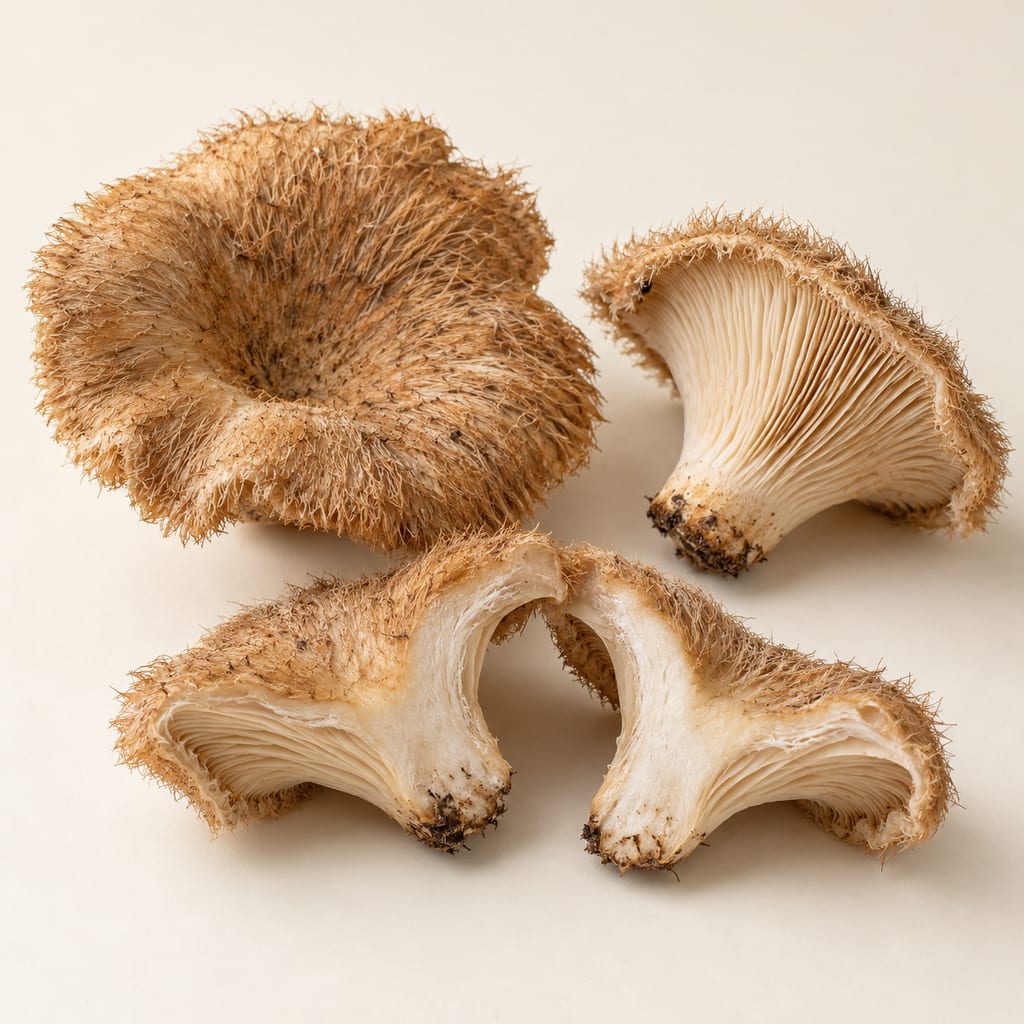
Lentinus crinitus, known as the hairy sawgill, is a bracket fungus that grows on wood in Brazil and Guyana. It is a documented food fungus of Indigenous Amazonian communities, where it is eaten as a staple in several groups' diets. The name is the scientific name; the English common name is the one the catalogue records.
The species is widely distributed in Brazil, occurring in almost all of the country's biomes and in other South American countries.
The catalogue describes the species as a wood-inhabiting fungus of Brazilian forests. It grows on dead or living wood and is part of the decay of timber in the forest. Its supply is recorded as unknown, which means the sources do not say whether the mushroom is gathered in the wild or grown.
Several Amazonian communities eat the mushroom, among them the Yanomami and Txicó in Brazil, the Uitoto, Muinane and Andoke in Colombia, the Hotï in Venezuela and rural communities in Loreto, Peru. The cited abstract describes it as a staple food for these groups.
The Uitoto harvest the mushroom young, because older fruiting bodies become tough and leathery. They eat it roasted on yarumo leaves and cooked in broth. A study of Yanomami foods reports that the species is easier to cultivate than many wild fungi and already has a place in Yanomami cooking, which suggests a route to commercial production. No cultivation method is recorded in these sources.
One analysis of samples from a cultivated site reports about 61 per cent moisture, 14 per cent crude protein, 1.5 per cent ether extract, 26 per cent crude fibre and 3.4 per cent mineral matter. The authors conclude that these values are similar to other commercial fungi. These are figures from one site and one set of samples, and they do not describe the species everywhere.
The sources record documented consumption by Indigenous communities, but they do not establish a standardised food-safety assessment. The catalogue states that documented occurrence and consumption do not make such an assessment.
Field guides disagree. One guide quoted in the research is reported to call the species not edible, while noting that Brazilian Indigenous people eat it boiled. This conflict is not resolved by the sources available here, so this page does not give a verdict. Identification of wood-rotting fungi needs local expertise and a reference that covers look-alikes. Appearance, smell and taste do not establish safety.
The sources do not give a standard preparation, a measured toxicity profile for the wild fruiting bodies, or the season and harvest pattern. A next research question is which field guide is correct about the edibility conflict, and how the boiled and roasted preparations compare in the communities that use them.
Widely distributed in Brazilian biomes; the record gives no locality for food use.
Named groups include the Yanomami, Uitoto and Hotï; the list is from the cited abstract and is not a full census of users.
Recorded in the catalogue for Guyana; no locality is given.
The almond mushroom, Agaricus subrufescens, was cultivated in eastern North America in the 1800s, lost its market, and returned as a cultivated mushroom from Brazil, where it is grown under several names.
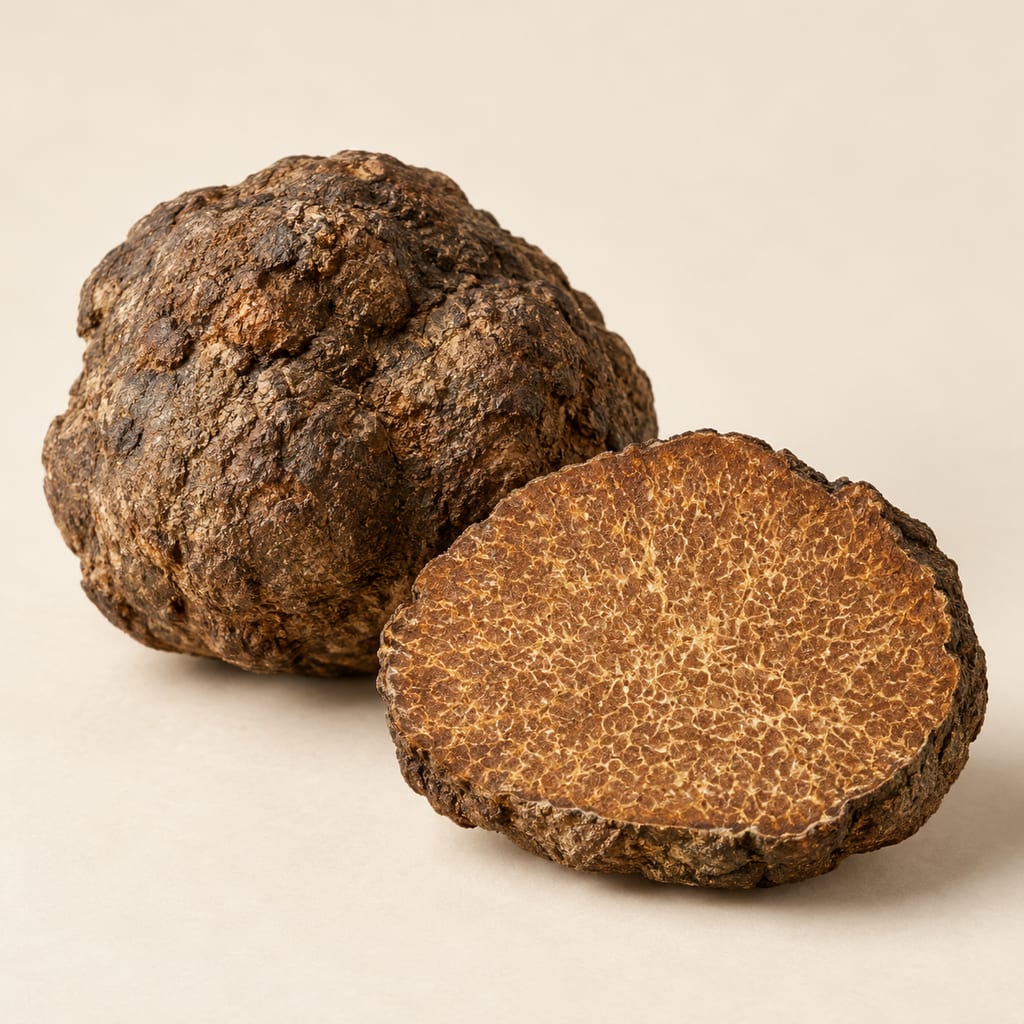
Polyporus indigenus, a polypore of the Brazilian Amazon. Its underground sclerotium, not the fruiting body, is the part people eat, and it is known locally as pão do índio.
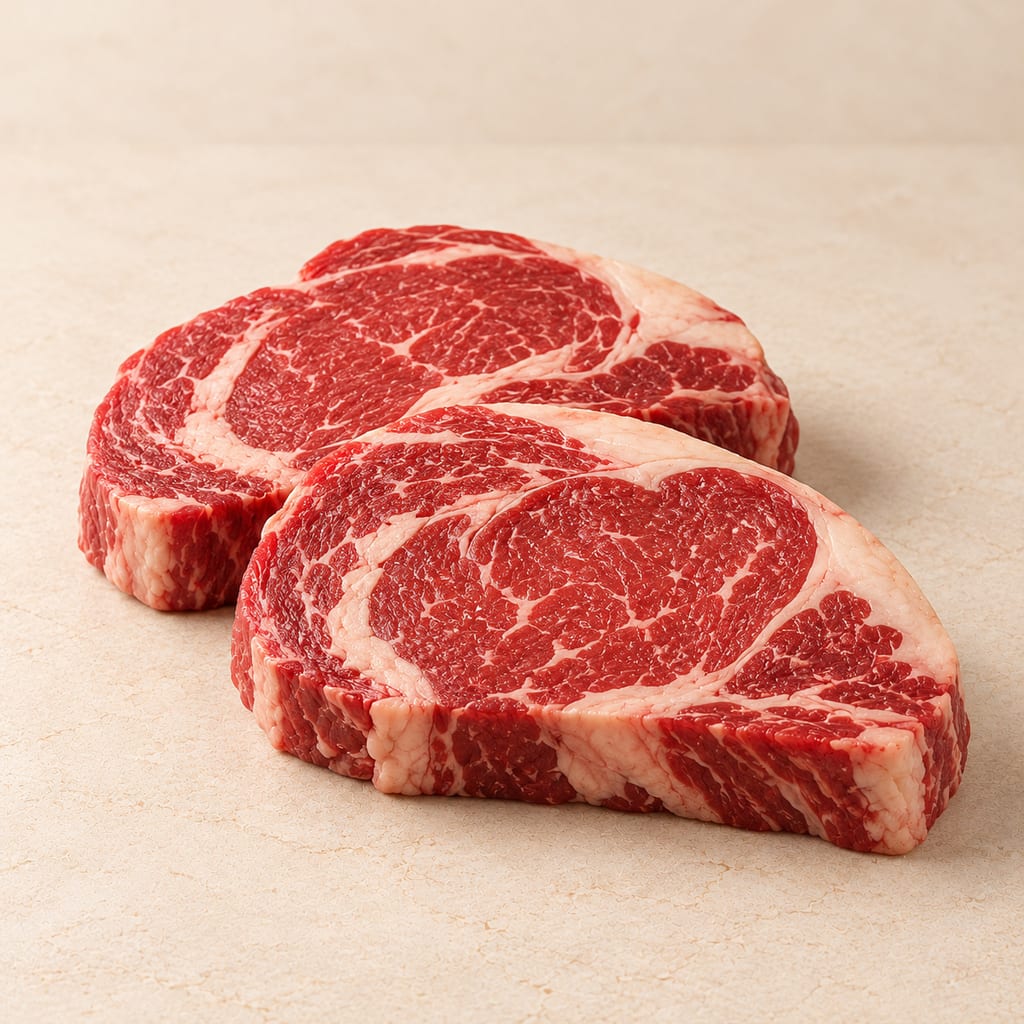
Beef is the meat of domestic cattle, Bos taurus and Bos indicus, sold as steaks, roasts, ground meat and cured products, and used in broths, salami and koji seasonings.
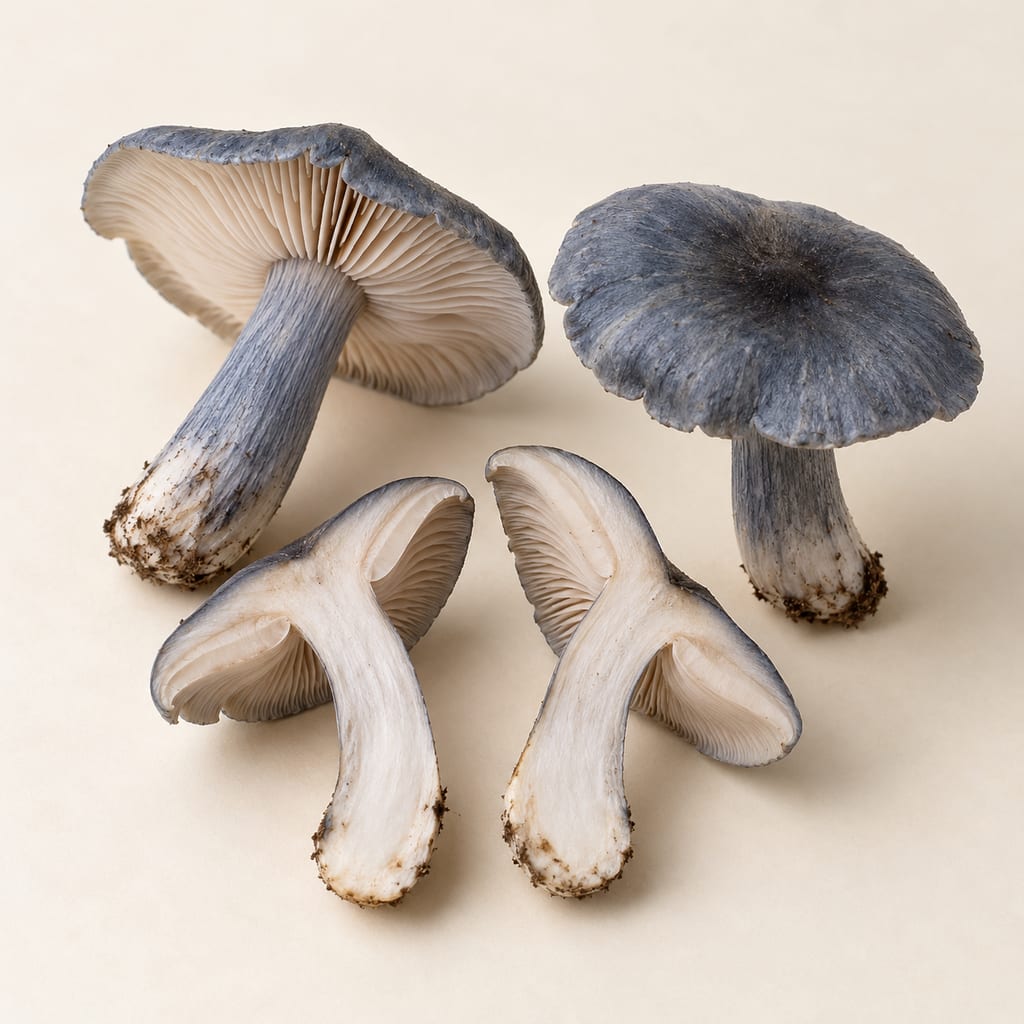
Bloxam's entoloma is a rare pink-gilled mushroom of old grasslands. Historical sources call it edible, but food-use evidence and older identifications remain uncertain; this does not recommend gathering or eating it.
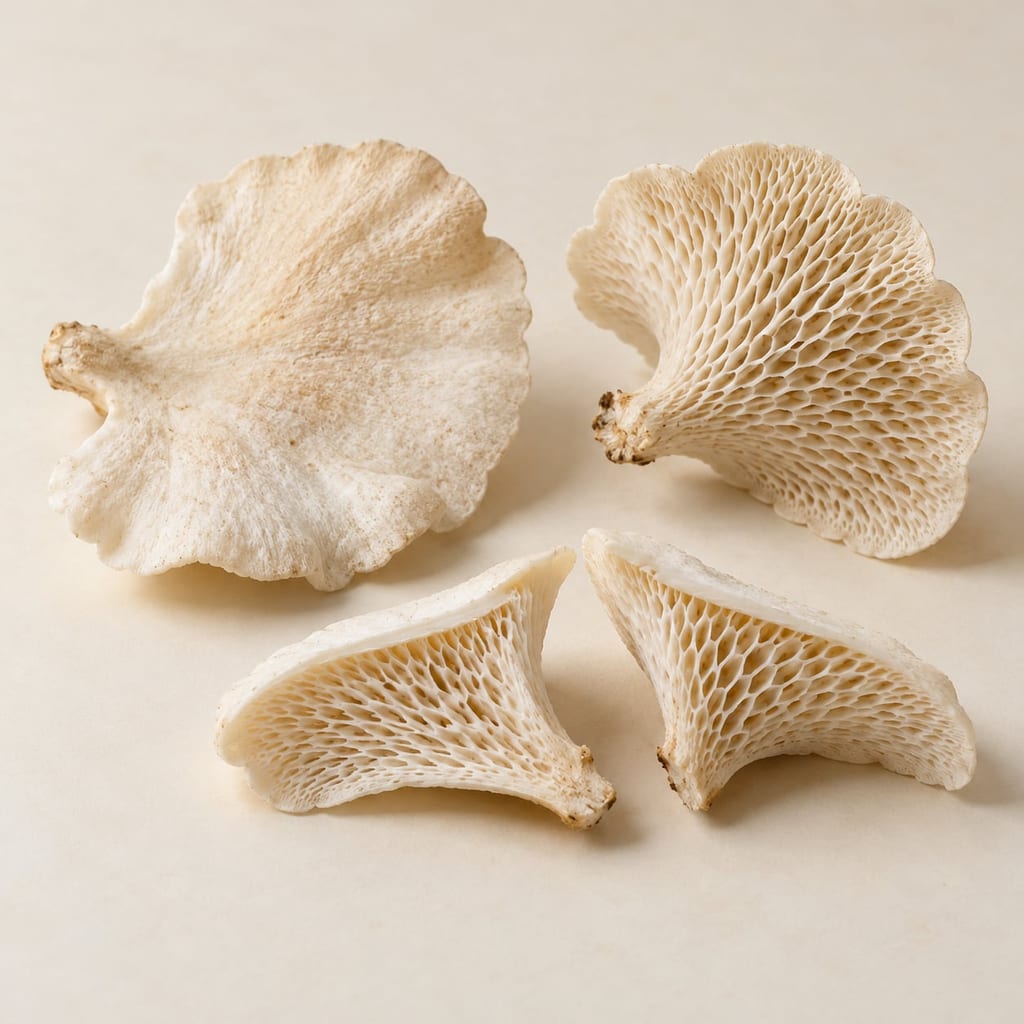
Brazilian honeycomb polypore, Favolus brasiliensis, is a wood-growing fungus of tropical forests recorded as food in Brazil and Guyana. It has no standardized food-safety assessment.
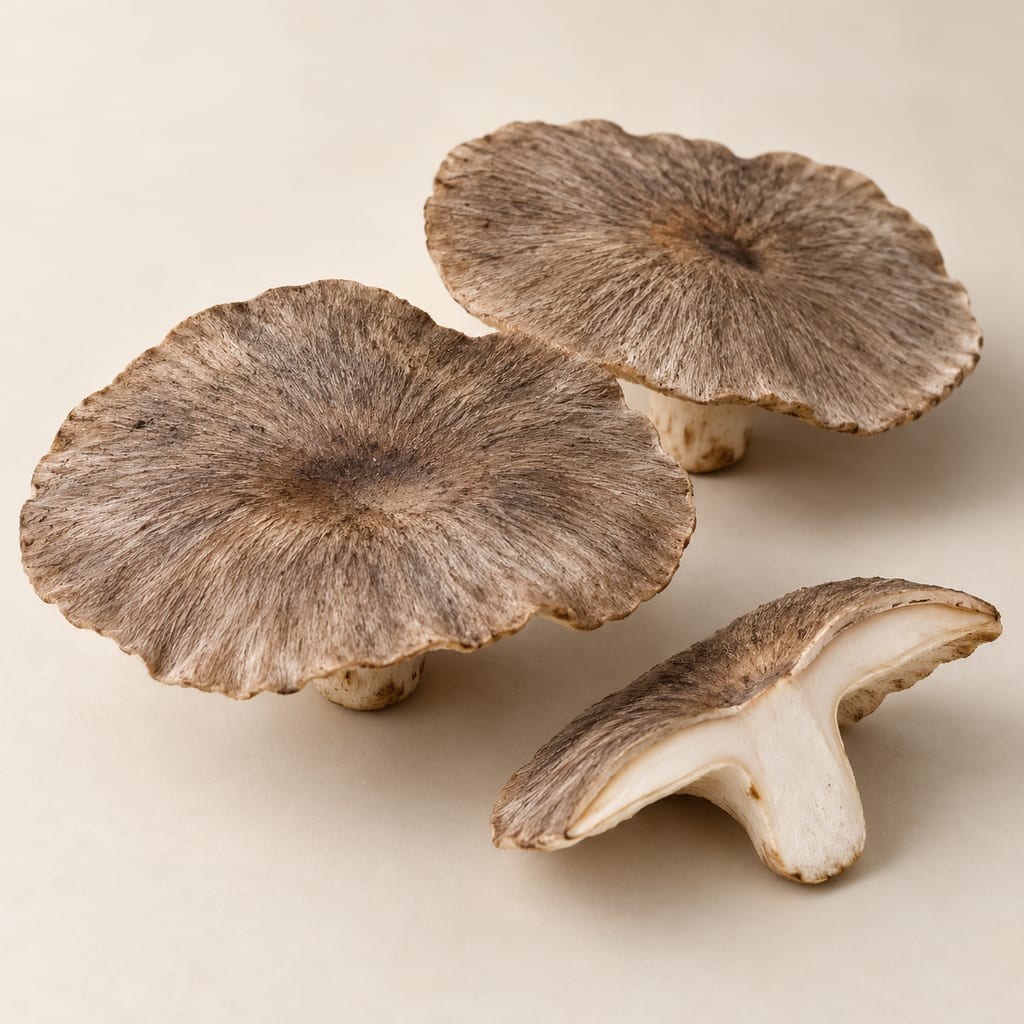
Bresadolia paradoxa is a large fungus of dead hardwood logs in Amazon and Atlantic Forest sites in Brazil and Colombia. Its only edibility source is a conservation assessment, so the claim is lightly documented.
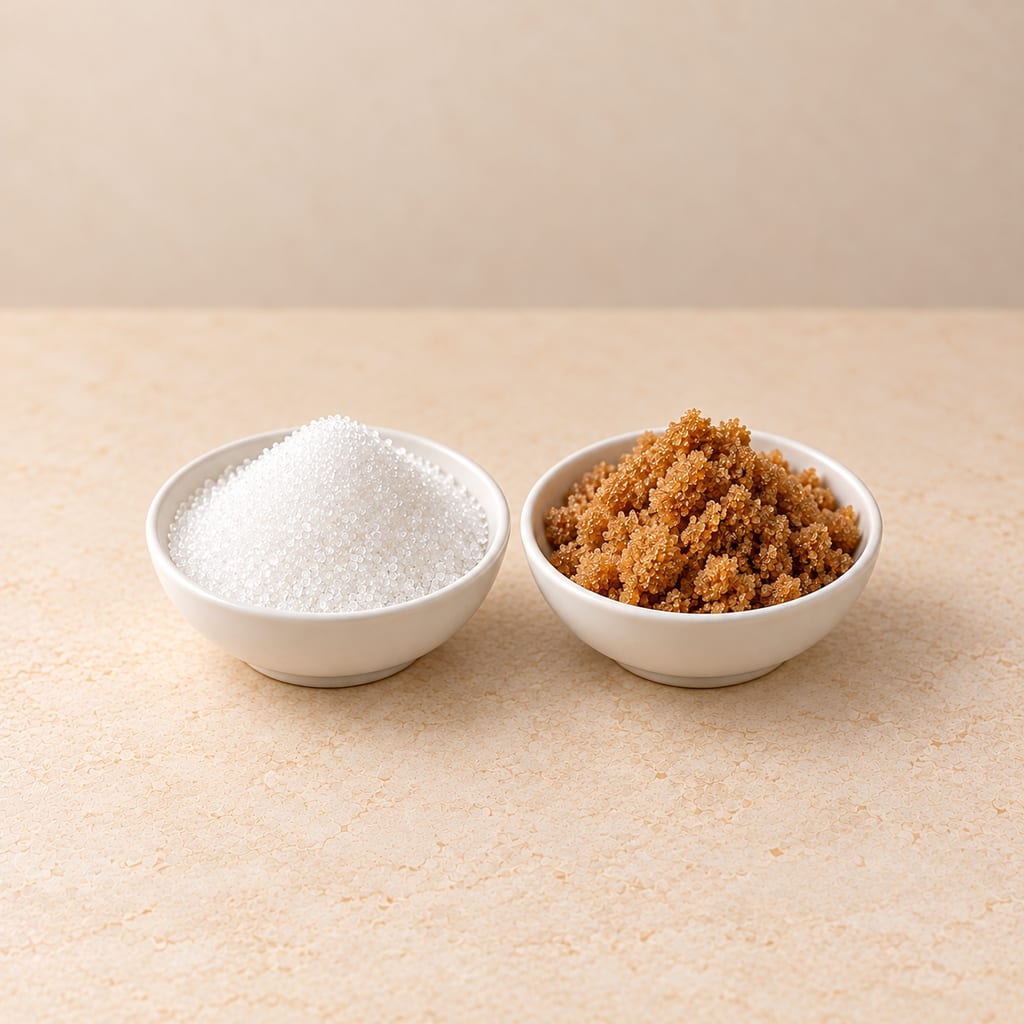
White sugar is refined sucrose, almost pure; brown sugar is sucrose with molasses, left in or added back. Molasses makes brown sugar moister, darker and more strongly flavoured.
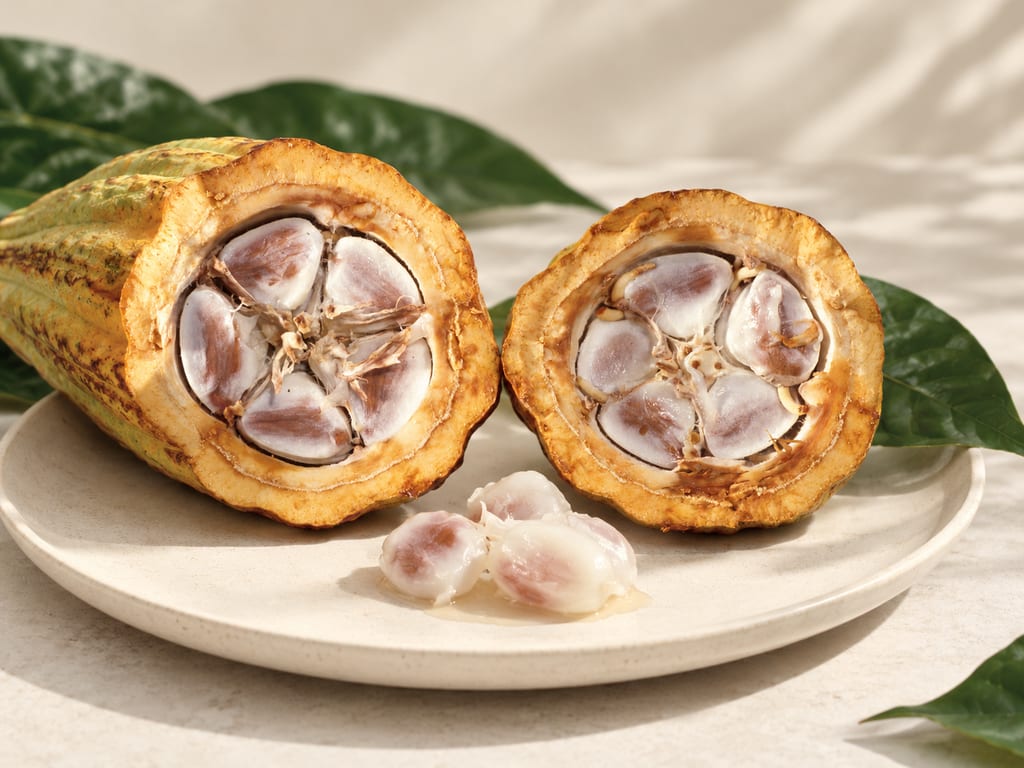
Cacao pulp is the moist, sweet-acid mucilage around cacao seeds. It fuels bean fermentation and can be extracted for fruit drinks, wine and vinegar.
No community contributions have been published for this entry yet.
Sign in to contribute. Published comments and photos are free to read.
SpringerTaxonomy · Food use · Ecology
https://link.springer.com/article/10.1186/s43008-024-00171-8Documented Indigenous Amazonian food fungus; recorded for Brazil and Guyana in the catalogue.
Wood-inhabiting; widely distributed in Brazilian biomes.
Documented occurrence and consumption do not establish a standardised food-safety assessment.
Cited in: Overview; Ecology; Edibility and safety; What is still unknown
SciELO (Ciência e Tecnologia de Alimentos)Food use · Method · Composition
Lentinus crinitus food use, Amazonian communities and composition (Ciencia e Tecnologia de Alimentos abstract)Staple food for Yanomami, Txicó, Uitoto, Muinane, Andoke, Hotï and rural Loreto communities.
Uitoto harvest young, roast on yarumo leaves and cook in broth.
Cultivated-site analysis: 61% moisture, 14% crude protein, 1.5% ether extract, 26% crude fibre, 3.4% mineral matter.
Cited in: Overview; Food use among Indigenous communities; Composition
Tropical Fungi (Henkel et al.)Food use · Background
Edible Mushrooms of Guyana (Henkel et al., 2004, The Mycologist)Guyana food-fungus record for the species, per the catalogue supplied source.
Cited in: Edibility and safety