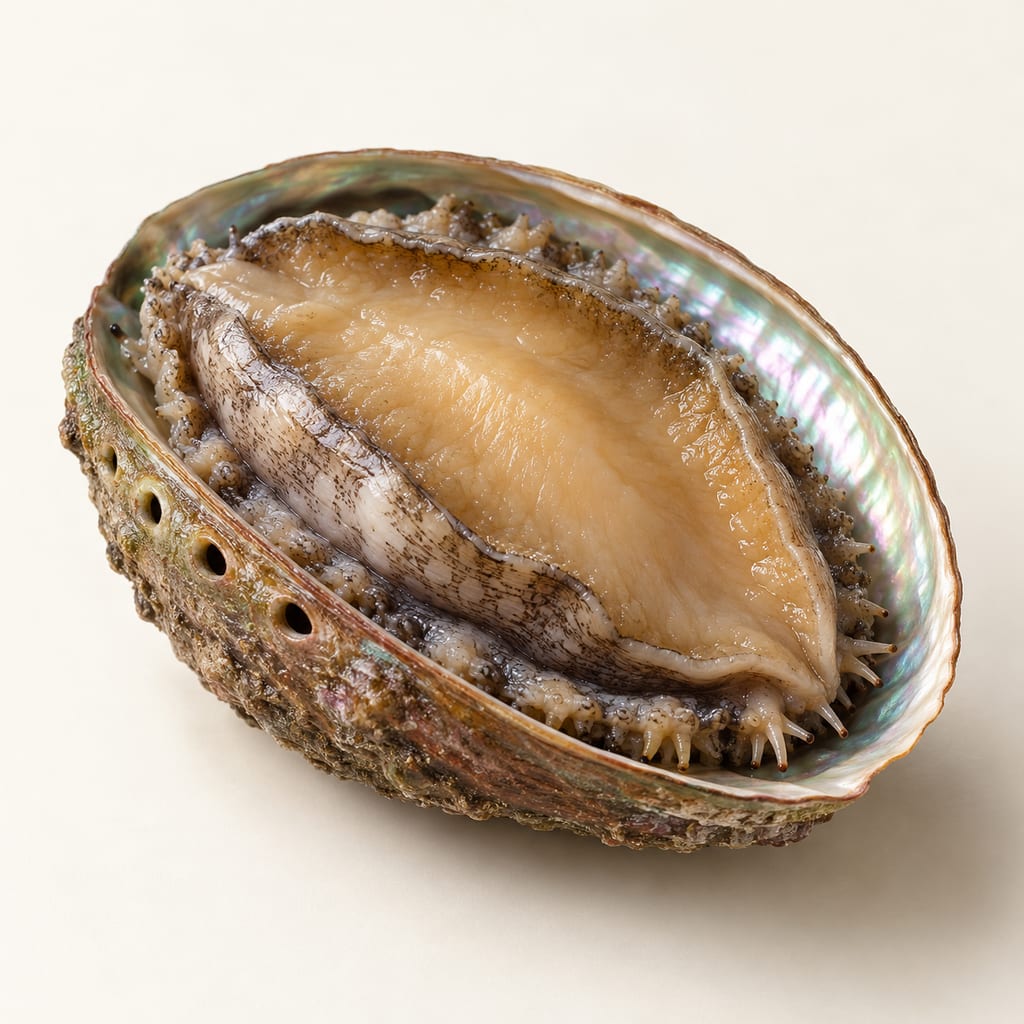
Abalone
Abalone are marine snails valued for their broad muscular foot and distinctive shell. They are eaten fresh or dried and appear in documented Korean dishes and preserved seafood traditions.
 FermenteaWhere food goes to change
Substrates
Dallae, Allium monanthum, is a small Korean spring allium eaten raw, in doenjang soup and as jangajji. Its regional names and growing advice are less settled than its food use.
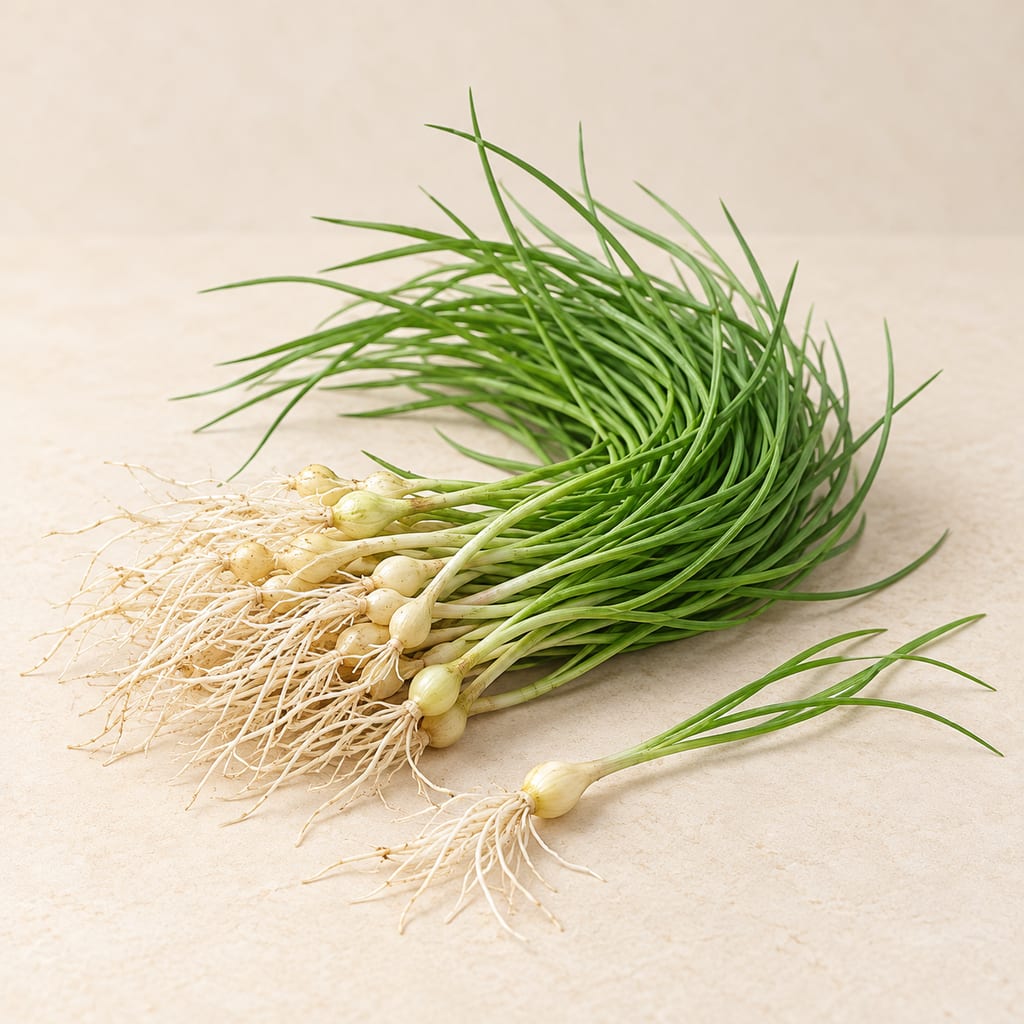
Kew accepts Allium monanthum Maxim. in Amaryllidaceae and lists Korea in its native range. The Academy of Korean Studies encyclopedia and the Rural Development Administration's Nongsaro food-material page both map the Korean name 달래 (dallae) to this species. Older Korean pages file it under Liliaceae, a family label from their own era rather than Kew's present treatment.
The Academy also records 달랑개, 달링괴, 산산, 소산, 소총 and 야산, and warns that dallae has been confused with 족지 and 산마늘. Nongsaro discusses 돌달래 and 산달래 without making every one of those labels a secure synonym. A name, a general description or a smell cannot identify a market lot or a gathered plant, and the sources give no complete lookalike key.
The Academy describes dallae as a spring food eaten as seasoned raw greens, boiled or steamed and served with chojang or gochujang, added to spring doenjang soup, or made into jangajji. Nongsaro separately lists raw seasoning, soup, pancakes and pickled preparations. These are accounts of food contexts, not measured recipes with quantities, yield, process endpoints and storage limits.
A 2013 study of Korean germplasm accessions names the bulb and the white leaf sheath as edible parts. That statement belongs to the paper's crop and breeding context and does not verify a plant gathered under a similar regional name.
The Academy places dallae in Korean mountains and fields and notes warm-bed production that brings supply into early spring or winter. Nongsaro lists facility cultivation from January to March and outdoor crop periods in October and from March to May. It gives no structure, heating system or trial site behind the facility calendar.
Nongsaro ties the crop to cooler conditions: a growth optimum around 20 °C, and drying and summer dormancy above 25 °C. It describes loam or sandy loam free of coarse gravel and unfinished compost, about 80% sunlight and growth in partial shade. These are observations and advice on a food-material page, not experimentally defined tolerance limits.
Yi and Kim's 2013 paper examines 271 Korean gene-bank accessions from four provinces. Bulbs were planted in March 2012 at a Kyungpook University experimental field, with drip irrigation when the soil became very dry. The paper states an 80 cm spacing and also describes a separate six-plant, three-replicate measurement design; how the two relate is unclear, and neither is household spacing advice or a yield result for the species.
A 2004 Korean horticulture paper compares open-field and shade cultivation of local strains labelled 달래 and 산달래. Its abstract reports better growth under shade and similar bulb production in the two settings. Only the abstract was available: the trial site, accession identity and numbers are unknown, so it cannot quantify a home shade system.
The 2013 paper says A. monanthum and A. grayi belong to the same species yet gives them separate experimental labels, which conflicts with Kew. Kew places A. grayi Regel under A. macrostemon and notes that some sources have accepted it. The conflict does not settle the identity of the 2004 material.
No source supplies a measured dish recipe, a validated preservation process, a storage life or a food-safety endpoint for dallae. A reported raw or pickled use does not show that an unidentified allium is safe. The Academy cites a 1971 cultivation article whose text was not obtained. Container sizes, a hardiness scheme, a frost threshold and a heat limit for the species were not found.
Kew lists Korea in the native range, and Korean sources describe it growing in mountains and fields. No single locality is claimed.
Abalone are marine snails valued for their broad muscular foot and distinctive shell. They are eaten fresh or dried and appear in documented Korean dishes and preserved seafood traditions.

Pleurotus cystidiosus is the abalone mushroom, a cultivated oyster-type fungus with dark brown caps that grows more slowly and is more demanding than other Pleurotus species.
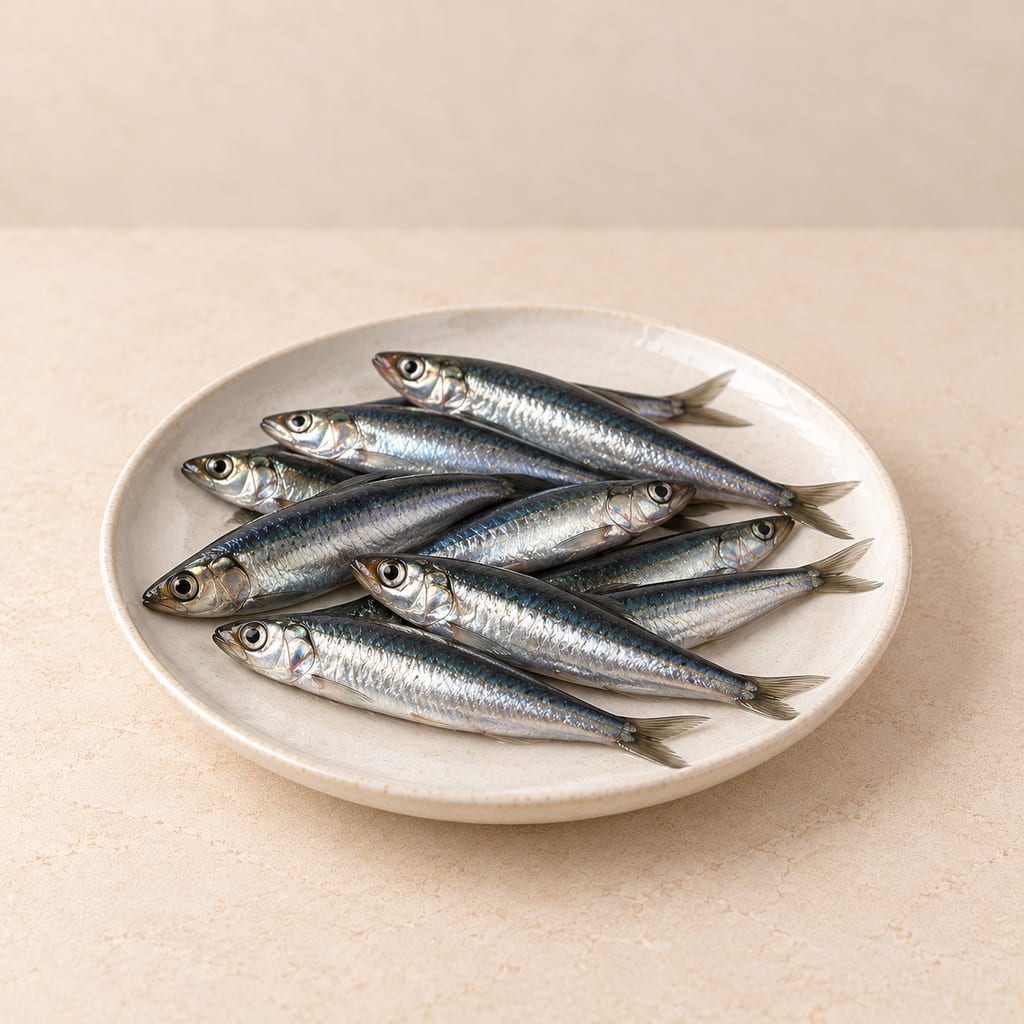
Anchovies are small schooling sea fish of the family Engraulidae, eaten fresh or dried and above all salted: as fillets in oil, whole salted fish or fish sauce.
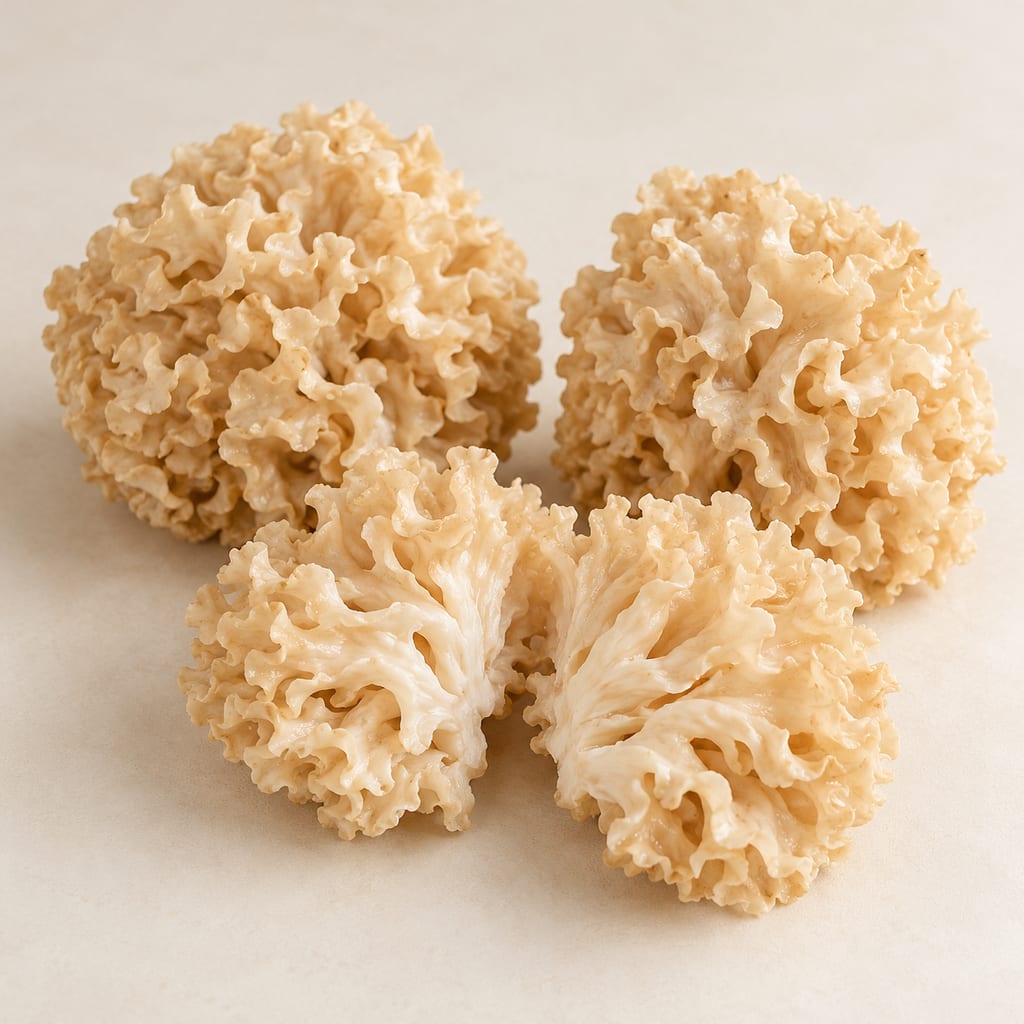
The Asian cauliflower mushroom, Sparassis latifolia, is a cultivated fungus with a frilled, fronded form that is eaten in China, Japan and Korea. Many Asian records under the name Sparassis crispa refer to this species.
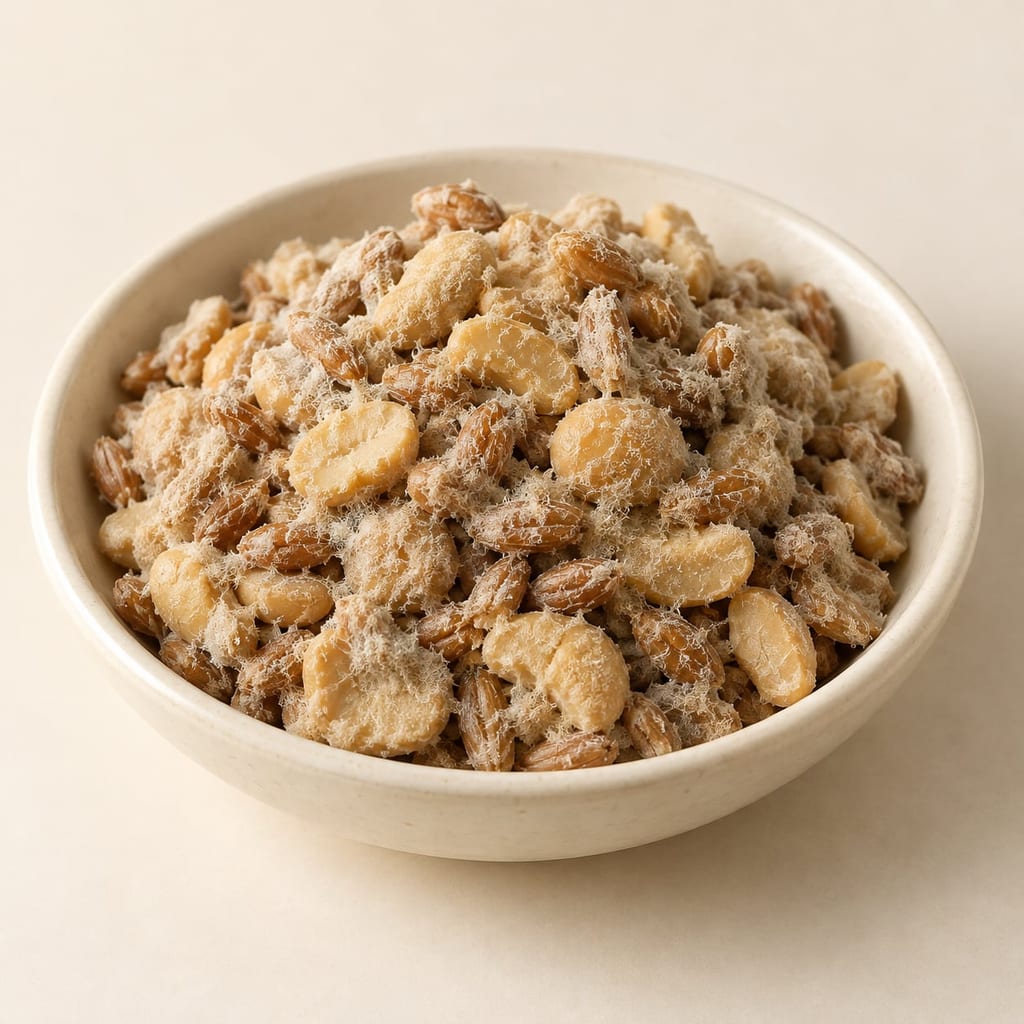
Aspergillus sojae is a koji mould of the Aspergillus flavus group, closely related to A. oryzae, used as a starter in soybean fermentations such as Korean meju, doenjang and ganjang.
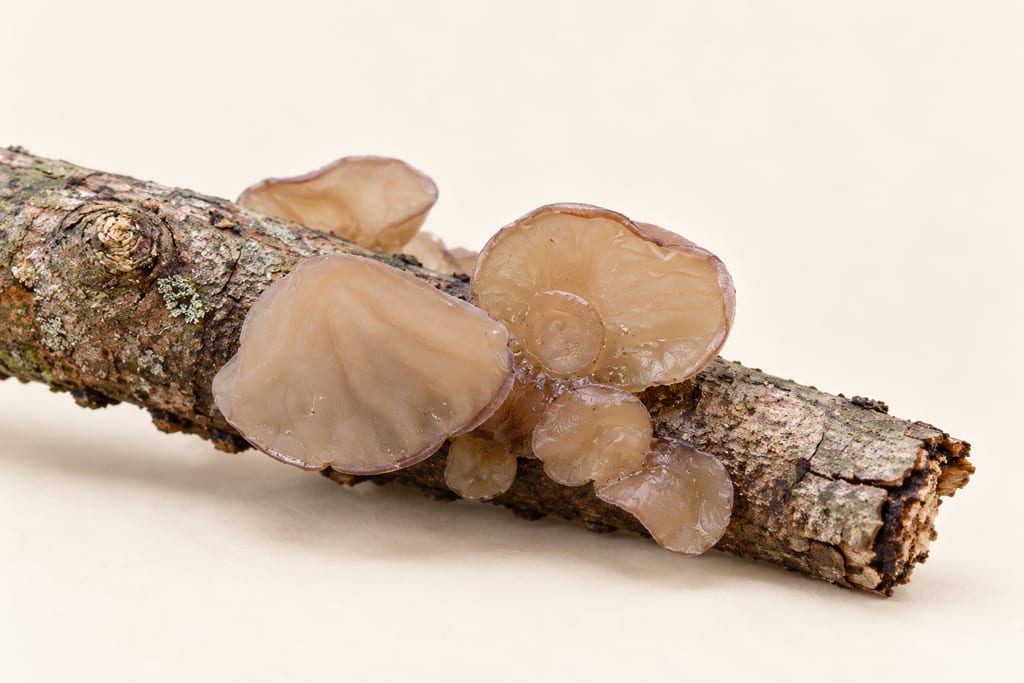
A small wood-decaying jelly fungus recognized as a distinct East Asian species. A Chinese edible-fungi catalogue lists it as edible, but species-specific preparation and safety evidence remain limited.
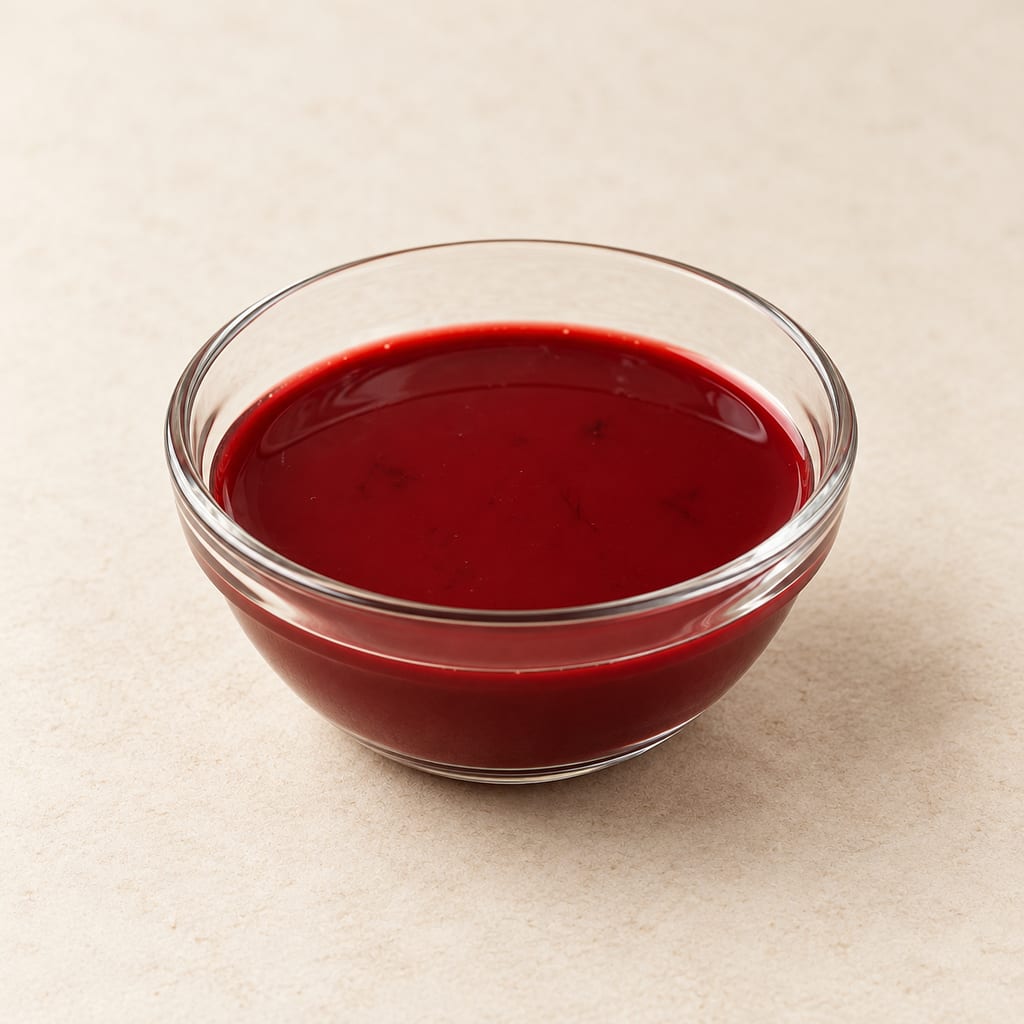
Animal blood is a perishable food material used fresh, coagulated, cooked, dried or processed into ingredients. Its uses range from grain-filled puddings to functional protein ingredients, each with distinct history and handling needs.
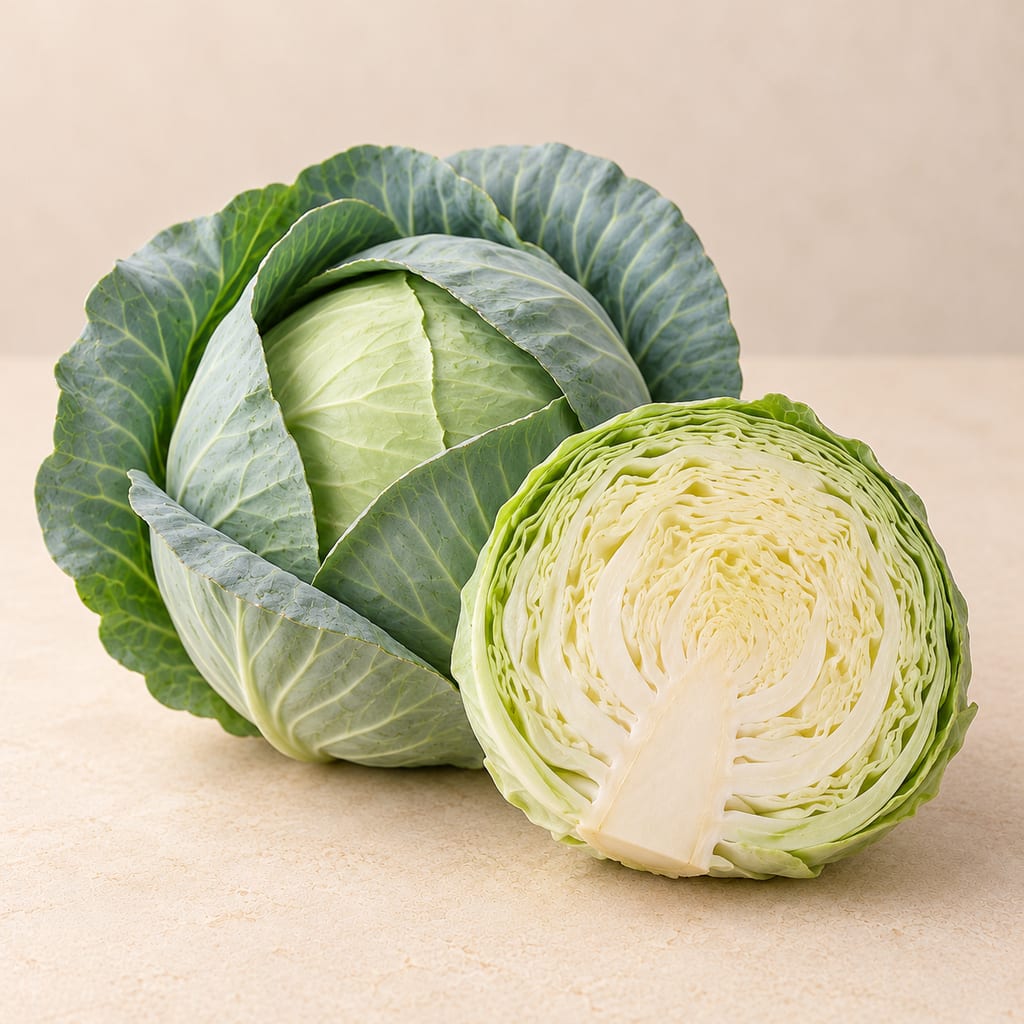
Cabbage is the dense leafy head of Brassica oleracea, a European vegetable that keeps for months and is the classic raw material for sauerkraut, with napa cabbage the base of kimchi.
No community contributions have been published for this entry yet.
Sign in to contribute. Published comments and photos are free to read.
Royal Botanic Gardens, KewIdentity
Allium monanthum Maxim. | Plants of the World OnlineAccepted name, family and native range
Cited in: Names and identity
Academy of Korean StudiesUse · Identity
달래 | Encyclopedia of Korean CultureFood uses, other names, confusion with 족지 and 산마늘, warm-bed production
Cited in: Names and identity; In the Korean spring kitchen; Seasonal supply and crop observations; What the sources leave open
Rural Development Administration, Republic of Korea; Nongsaro Agricultural-Food Information SystemUse · Cultivation
이달의 식재료: 달래Food uses, crop calendar, temperature and soil observations
Cited in: Names and identity; In the Korean spring kitchen; Seasonal supply and crop observations; What the sources leave open
Gihwan Yi and Kyung-Min Kim, American Journal of Plant Sciences 4 (2013), 1054-1059Cultivation · Identity
Analysis of Genetic and Biogeography Diversity of Korean Indigenous Wild Rocambole (Allium monanthum Max)271 Korean accessions; bulb and white leaf sheath as edible parts; field trial details
Cited in: In the Korean spring kitchen; Cultivation studies and their limits
Riu Il, Kim Chang Kil, Kim Kyung-Min and Oh Joung-Youl, Horticultural Science & Technology 22(3), 270-277 (2004); KCI record and abstractsCultivation
달래와 산달래 지방종의 생육 특성 및 유연관계 분석Open-field and shade comparison of local strains
Cited in: Cultivation studies and their limits
Royal Botanic Gardens, KewIdentity
Allium grayi Regel | Plants of the World OnlineA. grayi placed under A. macrostemon
Cited in: Cultivation studies and their limits