What it is
Pleurotus nebrodensis was first described as Agaricus nebrodensis by Giuseppe Inzenga in 1863. A 2016 study confirmed it as a valid species, separate from the Pleurotus eryngii complex, although an older treatment by Saccardo had made it a variety of P. eryngii. A 2024 article in Italian Botanist records a subspecies, P. nebrodensis subsp. fossulatus, from Asia, which also grows on Prangos ferulacea.
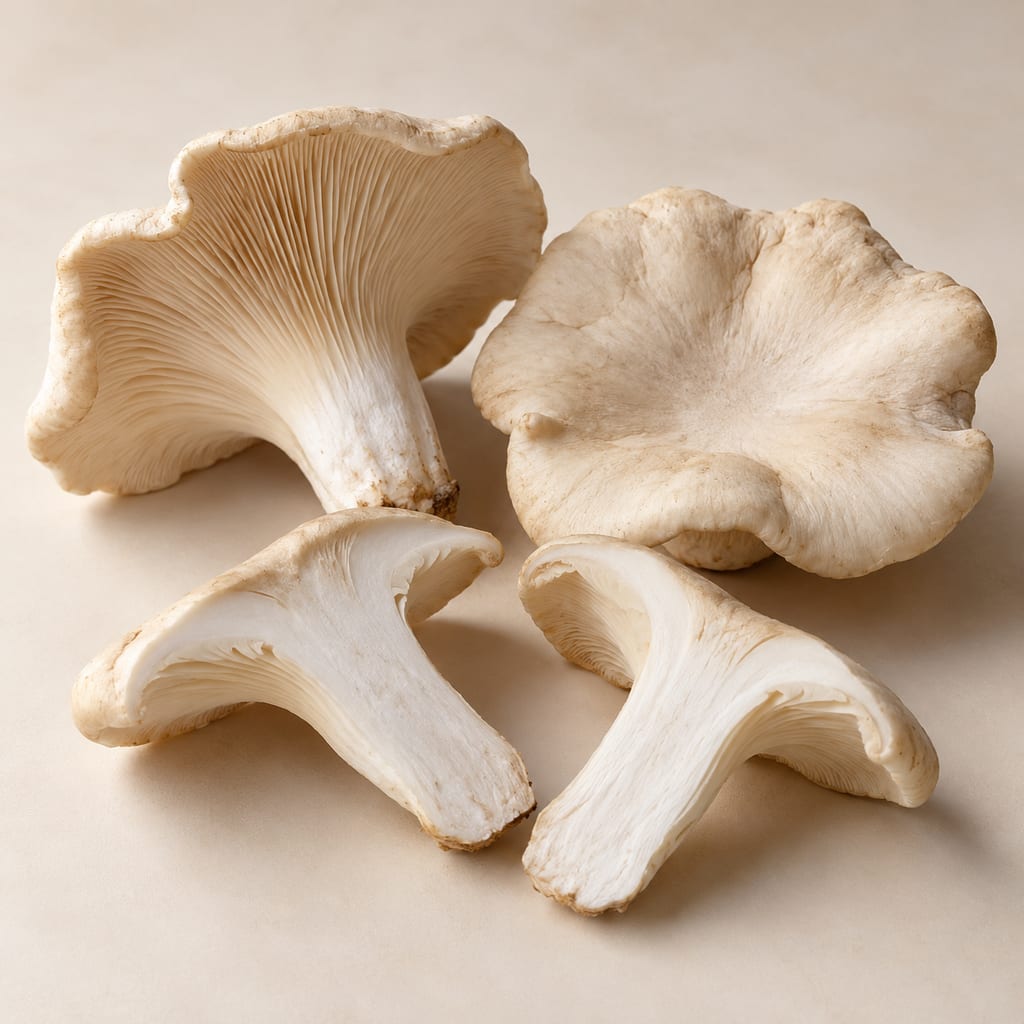
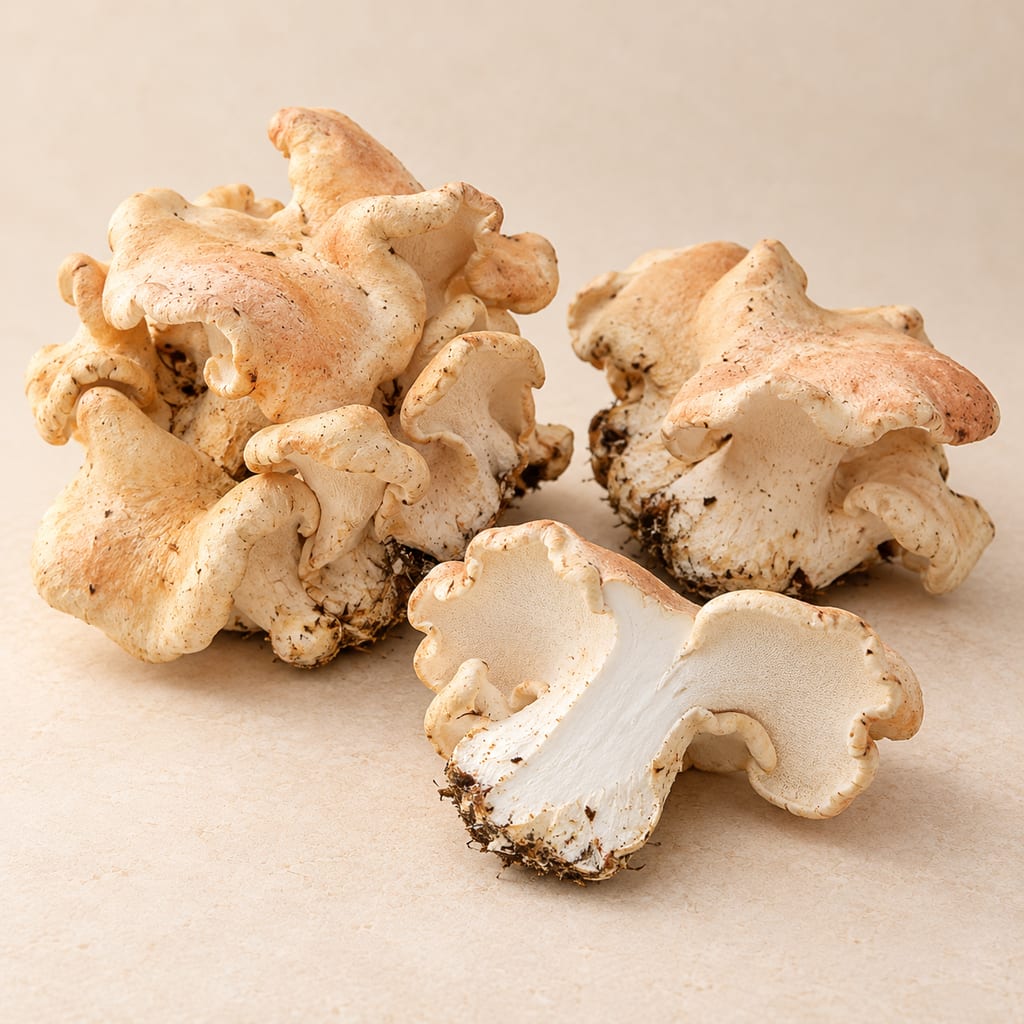
The fruiting body has a white to cream cap of 3 to 15 cm, an eccentric or lateral stipe, and grows solitary or in clusters. Identification combines these features with microscopic characters: the spores measure 12.5 to 15.1 (to 18) by 5.2 to 6.1 micrometres, and the species has clamp connections. ITS sequencing is used to confirm identity.
Sources for this section
Habitat and host
In its native habitat the fungus grows on the dead roots of Prangos ferulacea, a perennial herbaceous plant of the carrot family. The fruiting season in the Madonie mountains runs from late April to early June, in pastures at the sampled sites, 1,263 and 1,794 metres above sea level.
The catalogue records the species as associated with the carrot family, Apiaceae, in its native habitat.
Sources for this section
Status and conservation
The species is on the IUCN Red List and appears in the IUCN TOP 50 Mediterranean Island Plants. The 2024 article describes its extent of occurrence as under 100 square kilometres, with fewer than ten localities left and fewer than 150 mature individuals. The authors describe the population as severely fragmented.
Pressures named in the article include a growing number of collectors, a high market price of 50 to 60 euros per kilogram, and harvesting of young fruiting bodies. A 2017 park regulation bans collection in zone A and bans gathering fruiting bodies under 3 centimetres elsewhere. The authors say these rules are often ignored and that the species and its habitat lack international protection. The catalogue notes that wild populations have conservation concerns, so the origin of any supply matters.
Sources for this section
Cultivation
Cultivation is treated as a way to reduce pressure on wild stands and to provide income for local growers. The PLEURÒN project, approved in 2023 by the Sicilian Administrative Region, aims to grow the fungus on a pilot scale in protected environments, with farms in the Madonie area among its partners. The authors report that cultivated fruiting bodies have the same organoleptic features as wild ones, citing earlier work.
A 2024 test of twelve bags sold as P. nebrodensis by a southern Italian company found that only some clustered with P. nebrodensis; others grouped with P. eryngii sensu stricto or with a different P. eryngii subspecies. The catalogue's note that cultivated provenance is crucial follows from this finding.
Sources for this section
Use and identification
The authors describe the fungus as a prized mushroom with remarkable organoleptic properties and a mildly farinaceous taste. They give no cooking guidance, so no preparation is established here. The authors note that hunters sometimes mix it with the similar-looking P. eryngii var. elaeoselini.
The catalogue describes it as a large pale cultivated mushroom and records regional cultivation as its supply.
Sources for this section
Safety
This entry is not an edibility verdict or an identification. The 2024 article makes no statement about toxicity. Its identification guidance rests on microscopic and molecular characters, not on field appearance alone, and it records a confusion risk with P. eryngii var. elaeoselini.
Park rules restrict collection in its native habitat, so a wild specimen should not be taken for use without the permissions and identification that the rules require.
Sources for this section
Places
Madonie mountains, Sicily
Traditional use · Region evidenceThe native range is the Madonie park in northern Sicily; the sampled fruiting sites were in the mountains there. Cultivation is recorded elsewhere in the catalogue but not located.