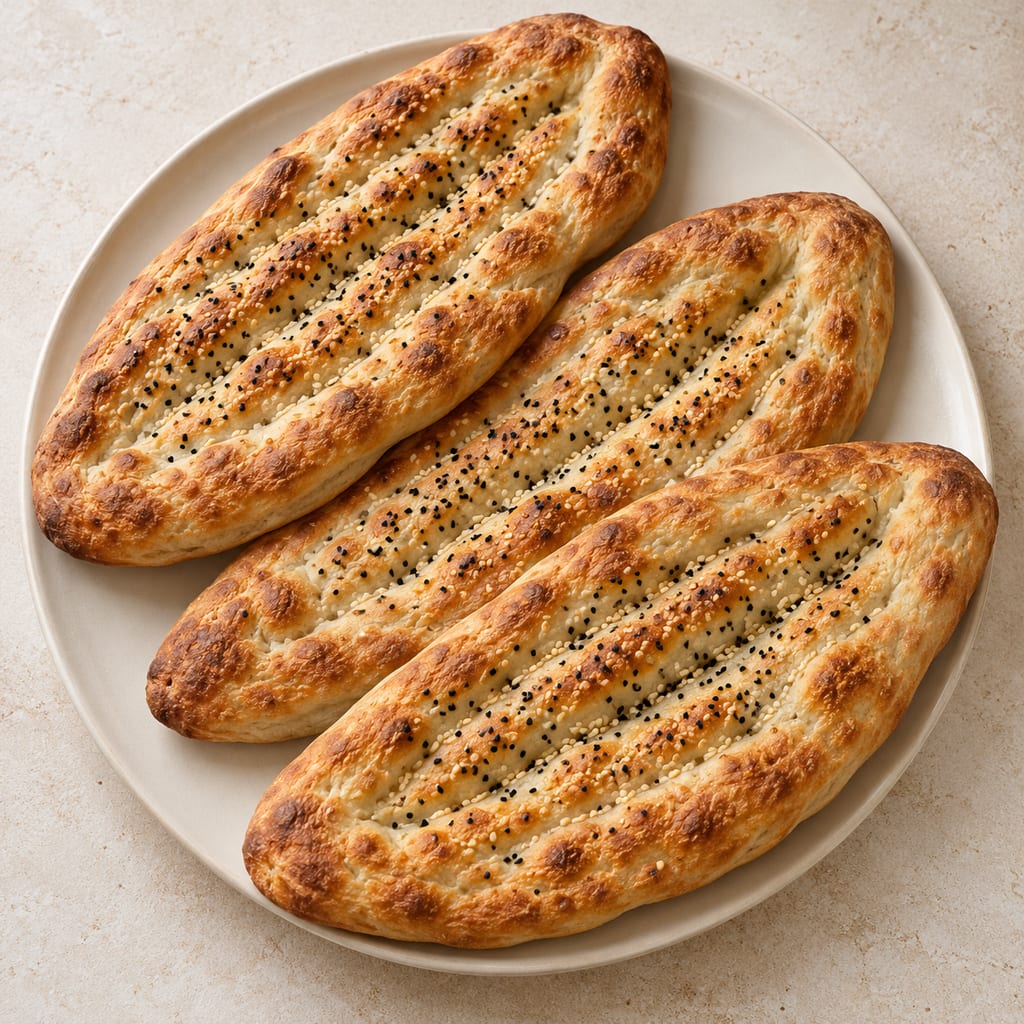
Afghan naan
A long oval Afghan wheat bread, leavened with yeast, grooved along its length and baked until crisp outside and chewy within.
 FermenteaWhere food goes to change
Sesame Onion Nan · Uyghur naan · Uyghur nan
Two round Uyghur sesame-onion flatbreads, made with a yogurt-enriched yeast dough and baked on a preheated stone.
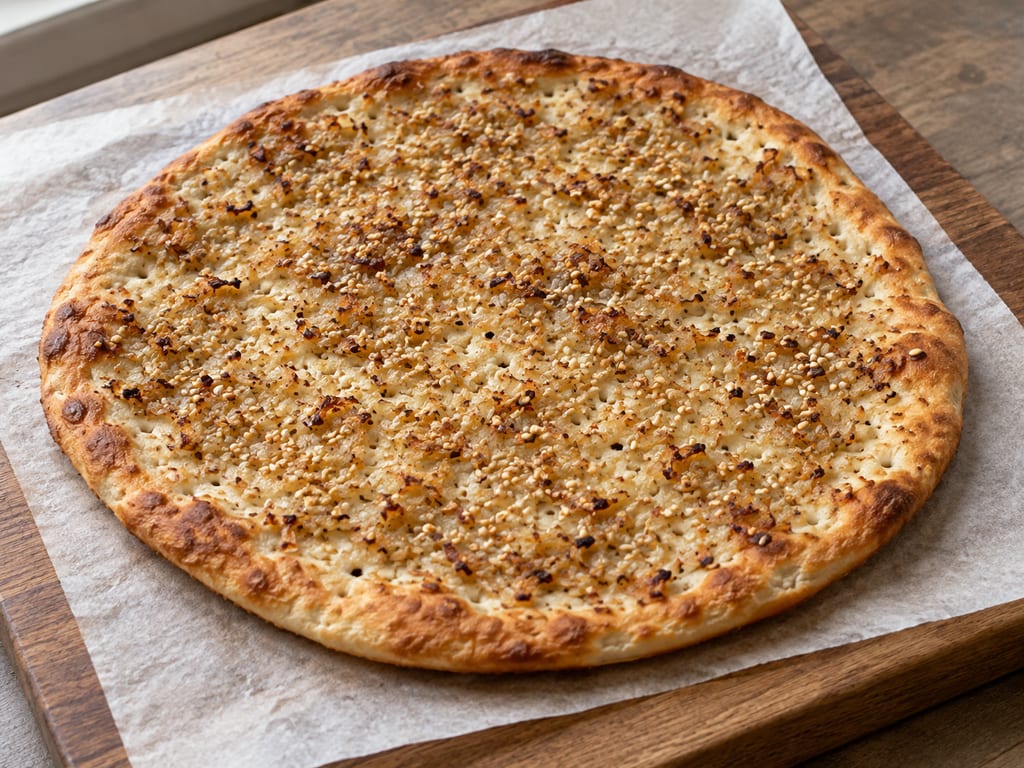
This recipe uses the independent Gourmet/Epicurious sesame-onion nan formula, which gives a home-oven setting of 450°F (232°C). It does not reproduce the separate DolanChick bazaar naan’s stamped centre and raised rim. That source’s “200 degrees” setting remains ambiguous and is retained only as provenance, not as an instruction.
This is a documented home-oven sesame-onion nan formula associated by its publisher with Uyghur flatbreads. Its round shape and cooked onion-sesame topping are supported; it is not the thick-rimmed, centre-stamped DolanChick bazaar variant. The sources do not establish a first attestation for this recipe.
Yield 2 11-inch flatbreads · Scaling: source batch only
Flour can carry harmful bacteria and this dough also contains raw egg; uncooked dough should not be tasted.
Hazard sourceKeep raw flour and dough separate from ready-to-eat food, wash hands and work surfaces after handling, and do not taste the dough before baking.
Control sourceContains wheat/gluten, milk, egg and sesame.
Do not taste raw dough; bake as directed.
The author describes this as Uyghur naan and discusses daily food and traditional tannour baking; this records cultural association rather than a precise birthplace.
A long oval Afghan wheat bread, leavened with yeast, grooved along its length and baked until crisp outside and chewy within.
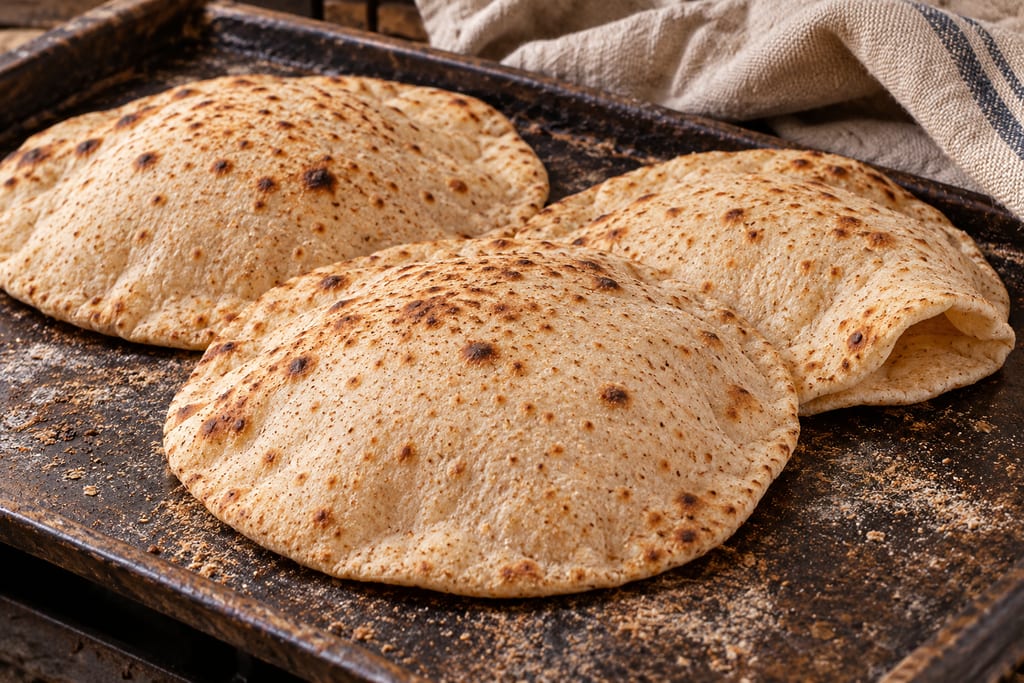
This home adaptation of Egyptian aish baladi uses a refrigerated yeast biga, whole-wheat dough, bran dusting and a very hot baking surface to make 16 pocketed rounds.
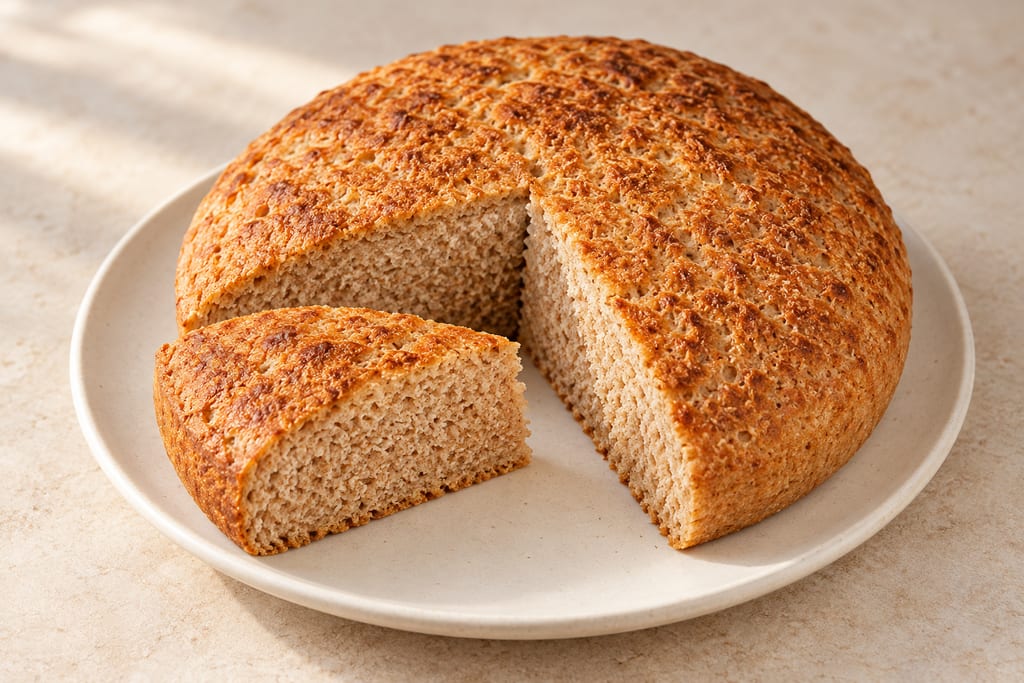
This oven-baked Amdo balep uses yeast, whole-wheat and white flour, a long covered rise and a two-sided bake in a heavy oven-safe pot.
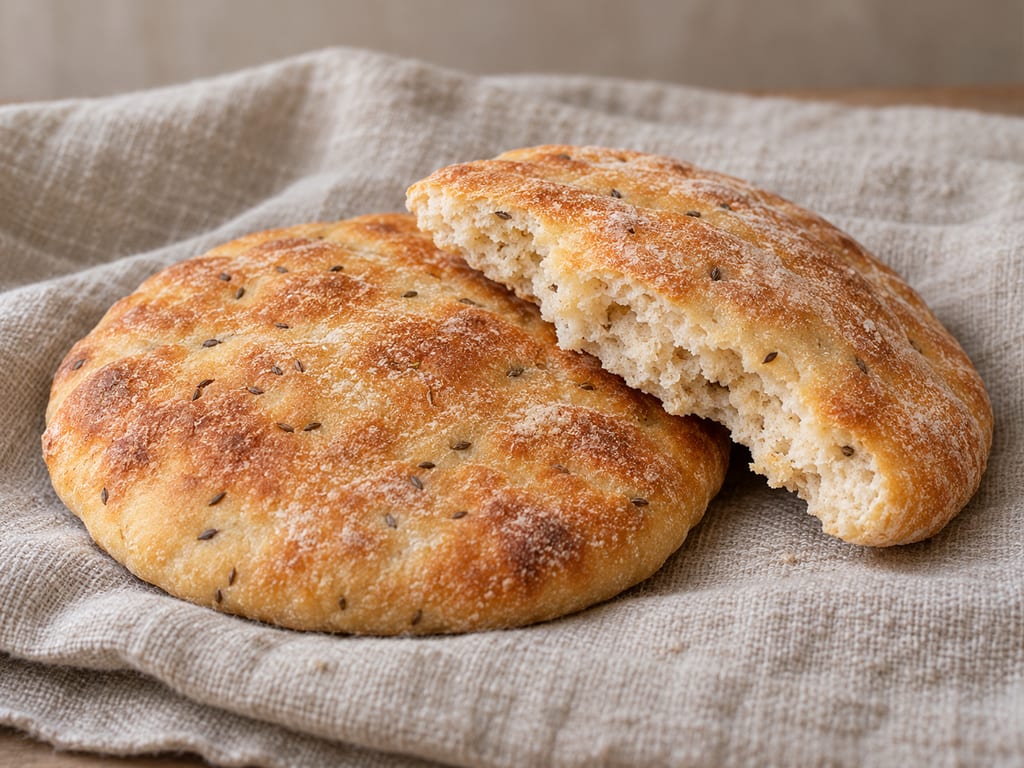
A measured, yeast-raised Ayacucho chapla home method shared by Thermomix Peru presenter Roxanna Salaverry. It makes thin, anise-scented rounds baked at 240°C; the historic qunchu-leavened form is documented separately.
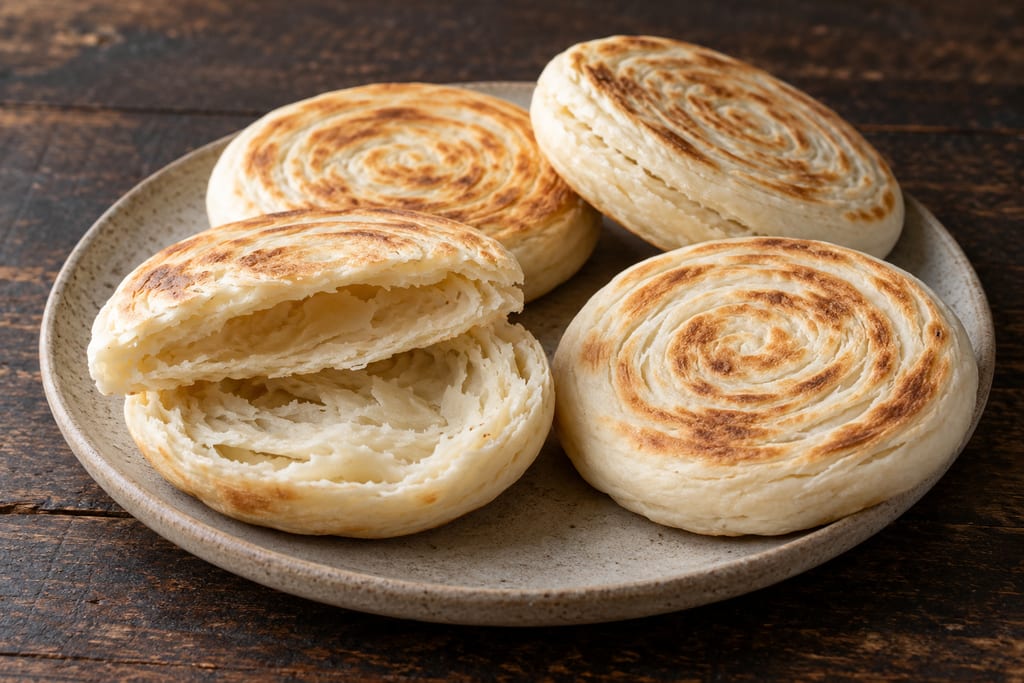
This Shaanxi-associated yeast flatbread uses a simple water dough, coiled shaping and a skillet bake. It is the bread used in roujiamo, not the filled meat dish.
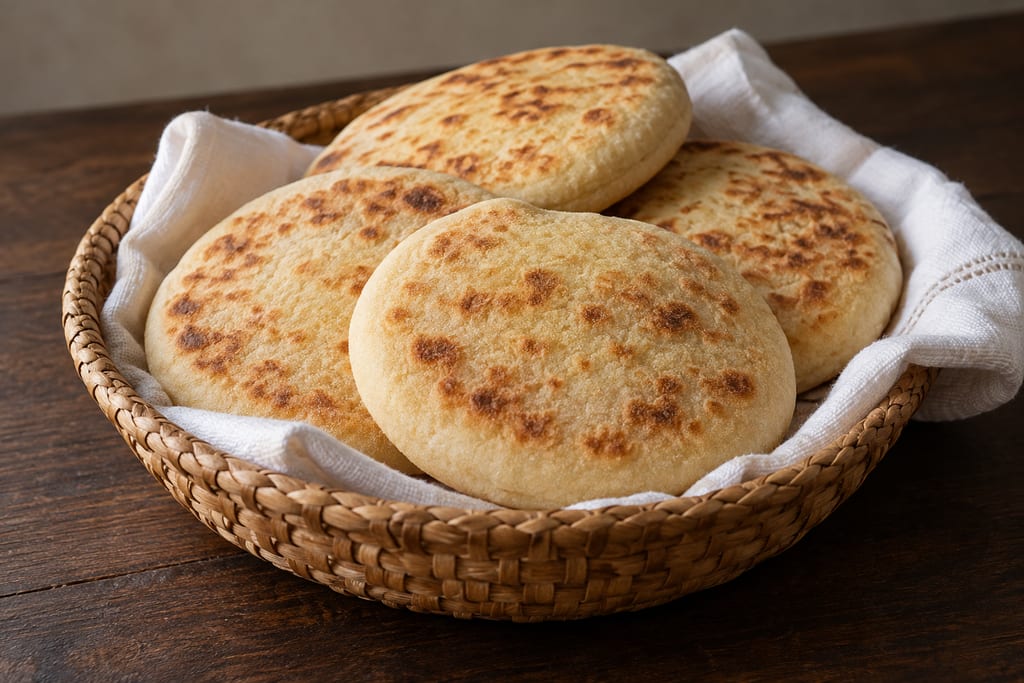
A Moroccan yeast-raised semolina pocket bread cooked on a dry pan or griddle; this measured batch makes about twenty 4-inch rounds.
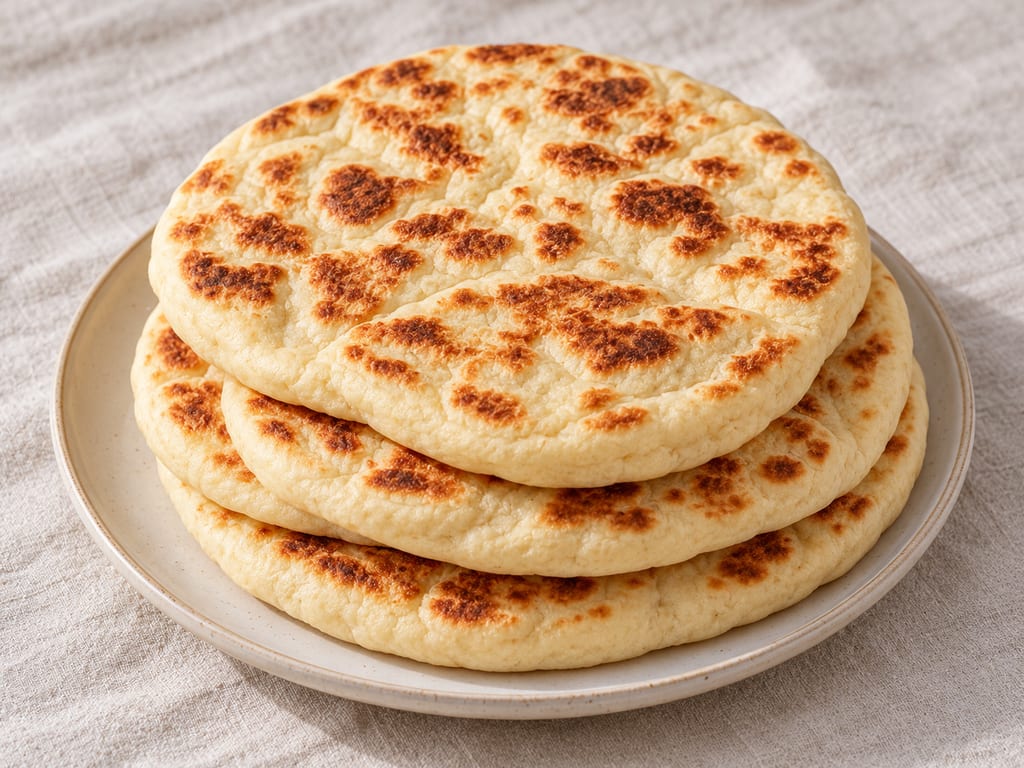
This Turkish bazlama uses yeast, plain yogurt and olive oil for a soft dough cooked in a skillet. Shape it into twelve small or six larger rounds, flip as bubbles appear, and wrap the breads to keep them soft.
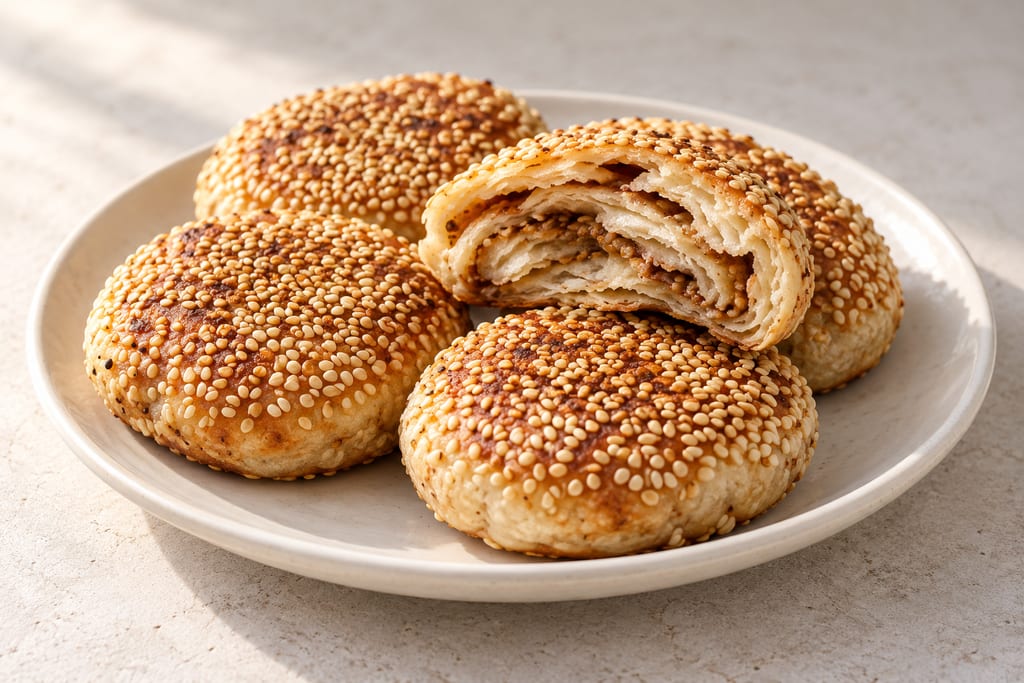
A Beijing-style yeast dough is layered with seasoned sesame paste, sealed into small buns, briefly pan-fried, seeded, and baked.
No community contributions have been published for this entry yet.
Sign in to contribute. Published comments and photos are free to read.
Gourmet via EpicuriousMethod · Geography
Sesame Onion NanThe recipe is identified as Uyghur flatbreads; its measured ingredients, two-flatbread yield, dough rise, onion-sesame topping, 450°F oven, baking-stone and baking-time instructions support the complete home method.
Cooking Uyghur Food With Dolan ChickHistory · Geography
Bazaar-Naan (بازارنان)The author describes Uyghur naan as everyday food and traditional tannour baking.
This is a distinct thick-rimmed, stamped-centre bazaar form; its domestic-oven setting is given as 200 degrees without a scale and is not used in this formula.
U.S. Food and Drug AdministrationSafety
Handling Flour Safely: What You Need to KnowFlour and raw eggs may carry harmful bacteria; do not eat raw dough; keep raw flour and eggs away from ready-to-eat foods and clean hands, utensils and surfaces after handling.