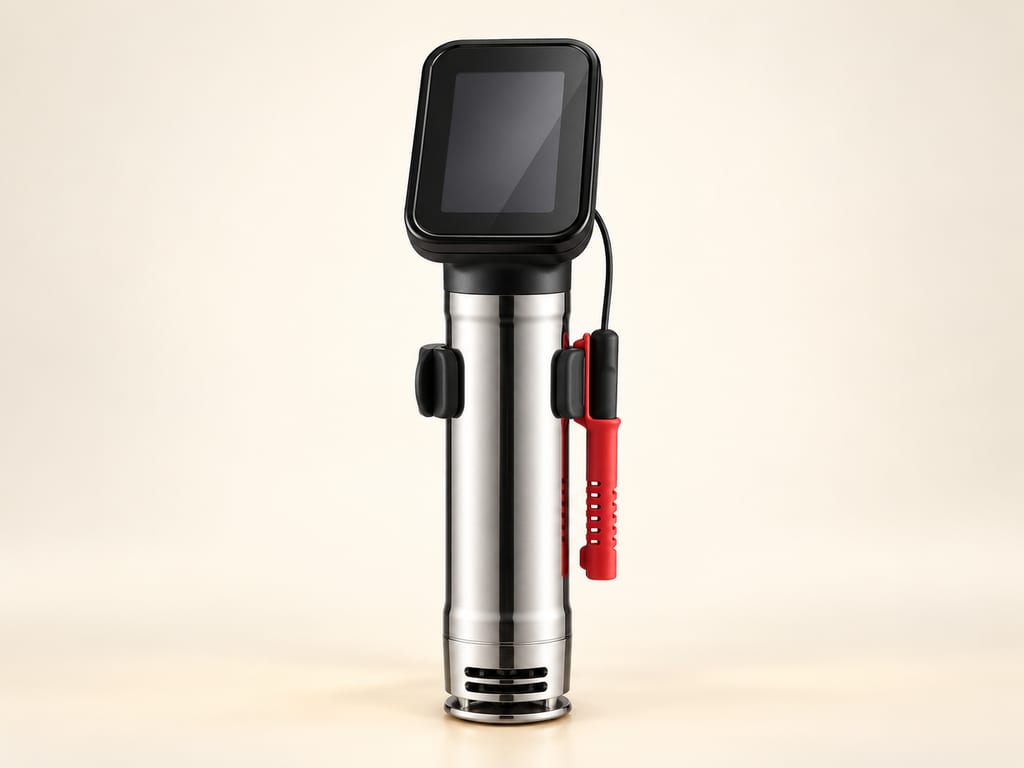
Breville/PolyScience HydroPro
The HydroPro is Breville | PolyScience’s commercial immersion-circulator family: CSV700 HydroPro and CSV750 HydroPro Plus heat and circulate a separate water bath.
 FermenteaWhere food goes to change
Equipment · Incubators and warm holds
Anova Sous Vide Precision Cooker · Anova Precision Cooker 3.0
The Anova Precision Cooker 3.0 is a clamp-on electric immersion circulator with a stainless skirt, adjustable clamp and two-line touchscreen. It heats and moves water around food held separately.
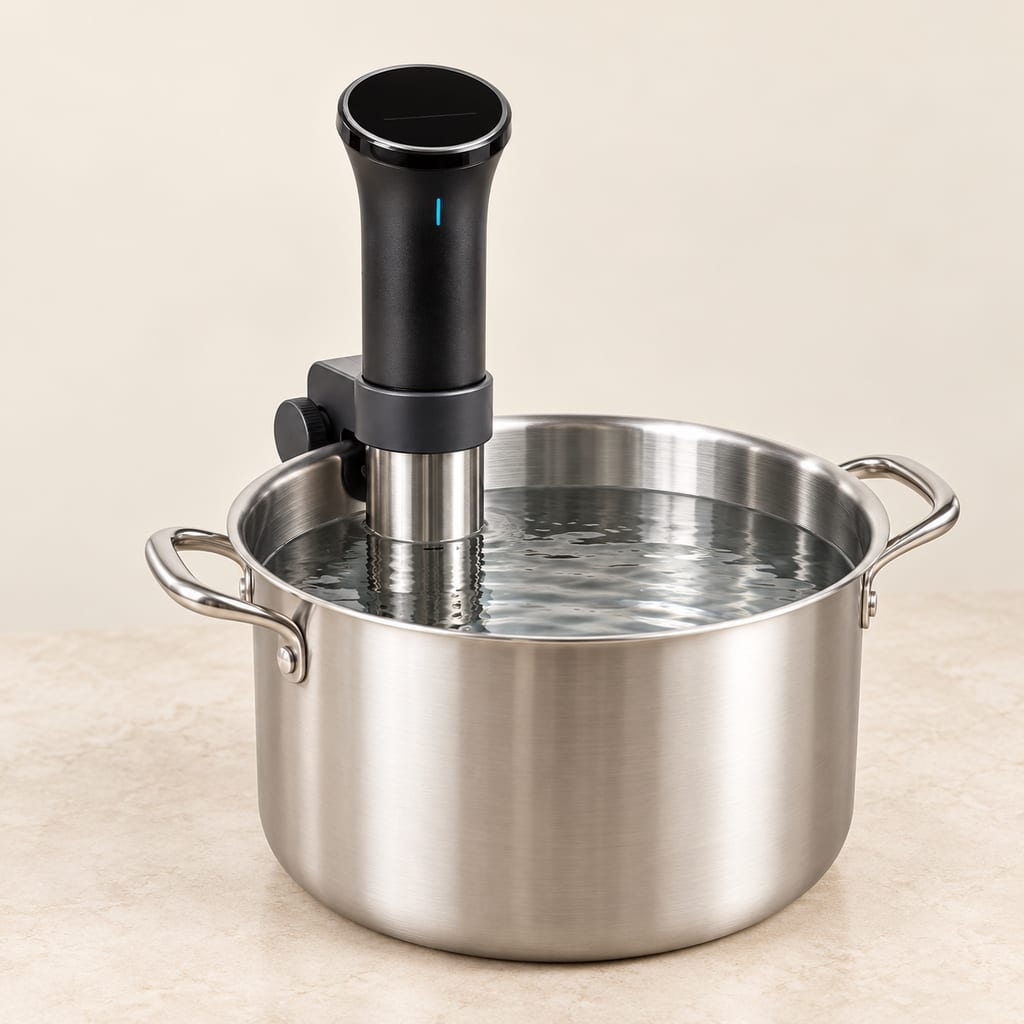
Anova describes the Precision Cooker as a product line that began in 2014 and calls the current Precision Cooker 3.0 its third generation. The model is an electric immersion circulator: it attaches to a separate pot, heats the water and moves it through the bath. It is not a tank, and the appliance does not touch food that remains inside a sealed bag or another suitable container.
That model boundary matters. Anova's current 3.0 page lists a two-line touchscreen, dual-band Wi-Fi, an adjustable and detachable clamp, and a removable stainless skirt. Those are specifications for the current product page. This record does not transfer them to previous Precision Cooker generations or to other circulator brands.
The 3.0 clamps to the rim of a water-filled pot. Its heater and pump circulate the bath around a separate food bag or container while its controller follows a set temperature. Anova's guide marks minimum and maximum water levels and says the 3.0 shuts off at its 65 mm minimum water level. It lists a flow rate of 8 litres per minute and a 0–92 °C setting range with stated accuracy of ±0.1 °C. These are manufacturer specifications, not independent measurements of every point in a pot or the temperature inside the food.
Anova lists the cooker at 1100 W and gives dimensions of 78 mm wide, 138 mm deep and 325 mm high, with a mass of 0.9 kg. Its product page names plastic and stainless steel and an IPX7 rating. The cooker is designed to work in water within its marked immersion range; a rating does not erase the manual's water lines or permit the whole unit to be submerged.
A contributor recipe hosted on Anova's recipe platform uses an Anova Precision Cooker to hold a water bath around small jars of yogurt. The author heats the milk separately, cools it below 110 °F / 43.3 °C, mixes in yogurt culture, fills 4 oz jars and holds them in a bath at that setting for 12 hours. The page does not identify the cooker's generation, and Anova's safety article describes the appliance as intended for cooking. This is a documented modern adaptation, not a manufacturer fermentation program or a general yogurt protocol.
The same platform's whipped-ricotta recipe uses a different, non-fermentation preparation: milk and vinegar are held in a sealed bag in a water bath before the curds are drained and whipped. Together, these examples show the appliance's role as a controller of surrounding water. The cook or recipe supplies the food, container, culture, time and endpoint; the circulator does not ferment food or validate a process.
Anova's quick-start guide instructs the user to fill a pot with water, secure the clamp to its rim and lower food in a sealable bag. It says to put the pot on a heat-safe surface away from counter edges. Keep the cooker within the marked water range and follow its own instructions; its temperature display concerns the bath, not a direct measurement of the food inside a jar or pouch.
For cleaning, Anova's 3.0 guide says to unplug before disassembly, remove and wash the stainless skirt with mild dish soap or in a dishwasher, and gently clean exposed metal and plastic without bending the components. It recommends a lightly damp microfiber cloth for the display. The separate safety page warns that the pot and circulator can be hot, requires a firmly secured clamp and level surface, and says not to use the unit if it has fallen into water.
Anova's current product page dates the first Precision Cooker to 2014 and describes 3.0 as the third generation. That is the manufacturer's account of its own product line, not a history of immersion circulators as a whole.
The manufacturer specifies water-only operation and cooking use. Food stays in a sealed bag or separate container; do not circulate milk, brine or other food directly through the pump.
Source →Temperature range, stated accuracy, flow rate, power, sensor cutoff and dimensions here describe the current Precision Cooker 3.0. They do not establish specifications for previous Anova generations or other brands.
Source →Anova identifies its company in San Francisco, but the inspected product and manual sources do not establish where this appliance is manufactured or the geographic spread of its use.
The HydroPro is Breville | PolyScience’s commercial immersion-circulator family: CSV700 HydroPro and CSV750 HydroPro Plus heat and circulate a separate water bath.
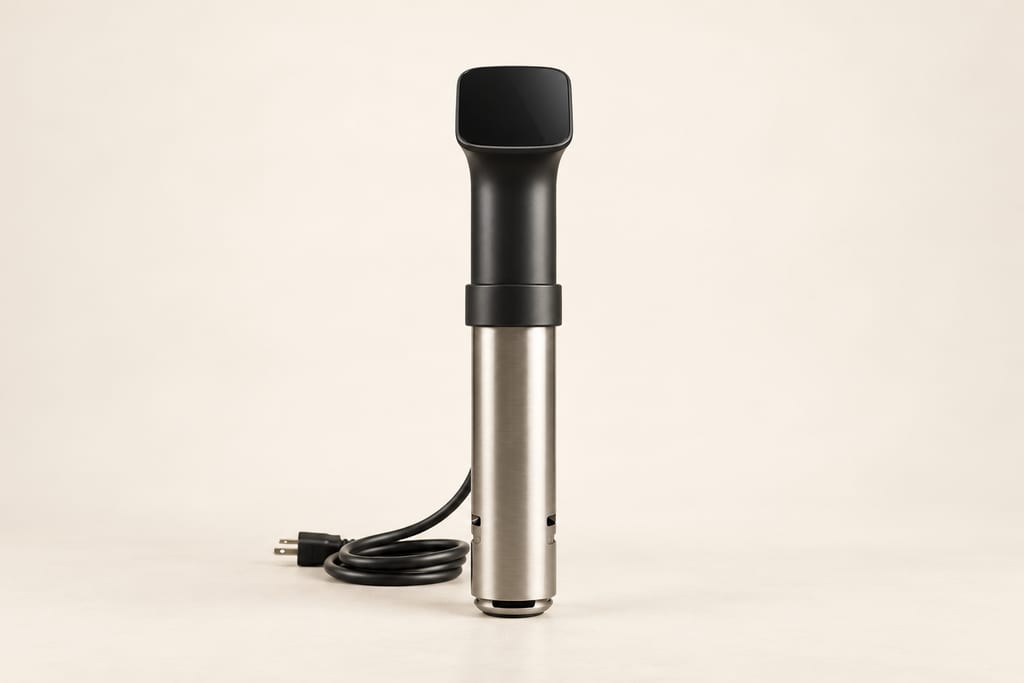
An immersion circulator heats and moves water around food held separately in bags or containers. For fermentation, it can provide a controlled warm bath for jar-based cultures when the recipe and appliance support that use.

Soft, spreadable Calabrian pork sausage made with a great deal of red chilli and fatty pork, stuffed into natural casings, sometimes smoked and matured while staying soft.

A way to add independent temperature logging to an existing food dehydrator without changing its built-in controls or protections. It is a monitoring method, not a rewiring plan.

Pleurotus cystidiosus is the abalone mushroom, a cultivated oyster-type fungus with dark brown caps that grows more slowly and is more demanding than other Pleurotus species.

A dark, balanced vinegar from Emilia-Romagna made by combining cooked or concentrated grape must with wine vinegar, then acetifying and refining it in wood under a protected specification.

A living dairy inoculum that starts controlled cream fermentation, developing acidity and aroma before sour cream or cultured butter is finished.

A small electric incubator holds jars at a selected temperature for yogurt and other documented warm food preparations. Controls, capacity and vessel arrangement vary by model.

Adygean salt is a seasoned table salt associated with Adygea and the wider North Caucasian culinary tradition. Salt is blended with garlic and a variable selection of herbs and spices; the exact mix depends on the named style and maker.

The African Caesar-group mushroom, Amanita masasiensis, is a wild ectomycorrhizal species of central and southern African woodlands, eaten locally. The genus contains deadly poisonous species, so identification needs care.
No community contributions have been published for this entry yet.
Sign in to contribute. Published comments and photos are free to read.
Anova CulinaryIdentity · History · Form · Materials · Specifications · Manufacture
Anova Precision® Cooker 3.0Anova says the first Precision Cooker launched in 2014 and calls the current 3.0 its third generation.
The current page lists 1100 W, adjustable and detachable clamp, removable skirt, a 65 mm minimum water-level shutoff, 8 L/min flow, 0–92 °C range, stated ±0.1 °C accuracy, 78 × 138 × 325 mm dimensions, 0.9 kg mass, plastic and stainless steel, IPX7 and dual-band Wi-Fi.
Cited in: A third generation of Anova's cooker; How the cooker manages the water bath
Anova CulinaryOperation · Care · Safety
Precision Cooker Product DocumentationThe quick-start guide says fill a pot with water, secure the adjustable clamp to its rim, place food in a sealable bag, and put the pot on a heat-safe surface away from edges.
The guide documents 3.0-specific adjustable height, controls, Wi-Fi setup, skirt removal and cleaning.
Cited in: How the cooker manages the water bath; Setup and care
Anova Culinary SupportLimits · Safety · Care
Safety Procedures While Using the Anova Precision® CookerAnova says the cooker is for cooking with water only, must stay within the marked immersion limit and should be clamped firmly to a level bath tank.
The manufacturer warns about hot surfaces and pouches, calls for unplugging before cleaning, and says not to use a unit that has fallen into water.
Cited in: How the cooker manages the water bath; Cultured-food examples and their limits; Setup and care
Anova Culinary recipe platformDocumented use · Modern adaptation
Sous Vide YogurtA contributor uses an Anova Precision Cooker to hold a bath for yogurt in 4 oz jars, at 110 °F / 43.3 °C for 12 hours after heating, cooling and inoculating the milk.
The page does not identify the generation used and is not the model manual or a validated safety standard.
Cited in: Cultured-food examples and their limits
Anova Culinary recipe platformDocumented use · Culinary adaptation
Sous Vide Whipped RicottaThe contributor recipe cooks milk and vinegar together in a sealed bag in a water bath controlled by an Anova Precision Cooker, then drains and whips the curds.
This is a bagged cooking use, not a fermentation method or a claim about the current generation.
Cited in: Cultured-food examples and their limits
