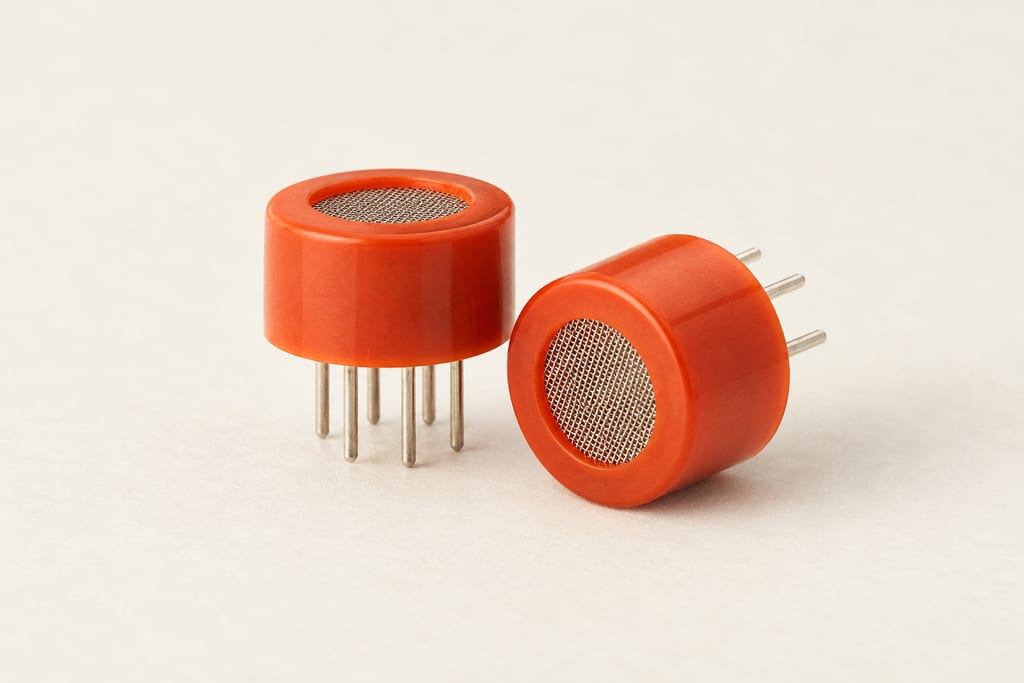
Ethanol-vapour gas sensor
An ethanol-vapour gas sensor responds to alcohol in air, not directly to alcohol by volume in fermented liquid. Different gas sensors and bubble counters measure distinct signals.
 FermenteaWhere food goes to change
Equipment · Instruments
An infrared beam counter registers bubbles crossing a defined liquid column. Counts can track change over time, but do not measure gas volume or establish alcohol or residual sugar.
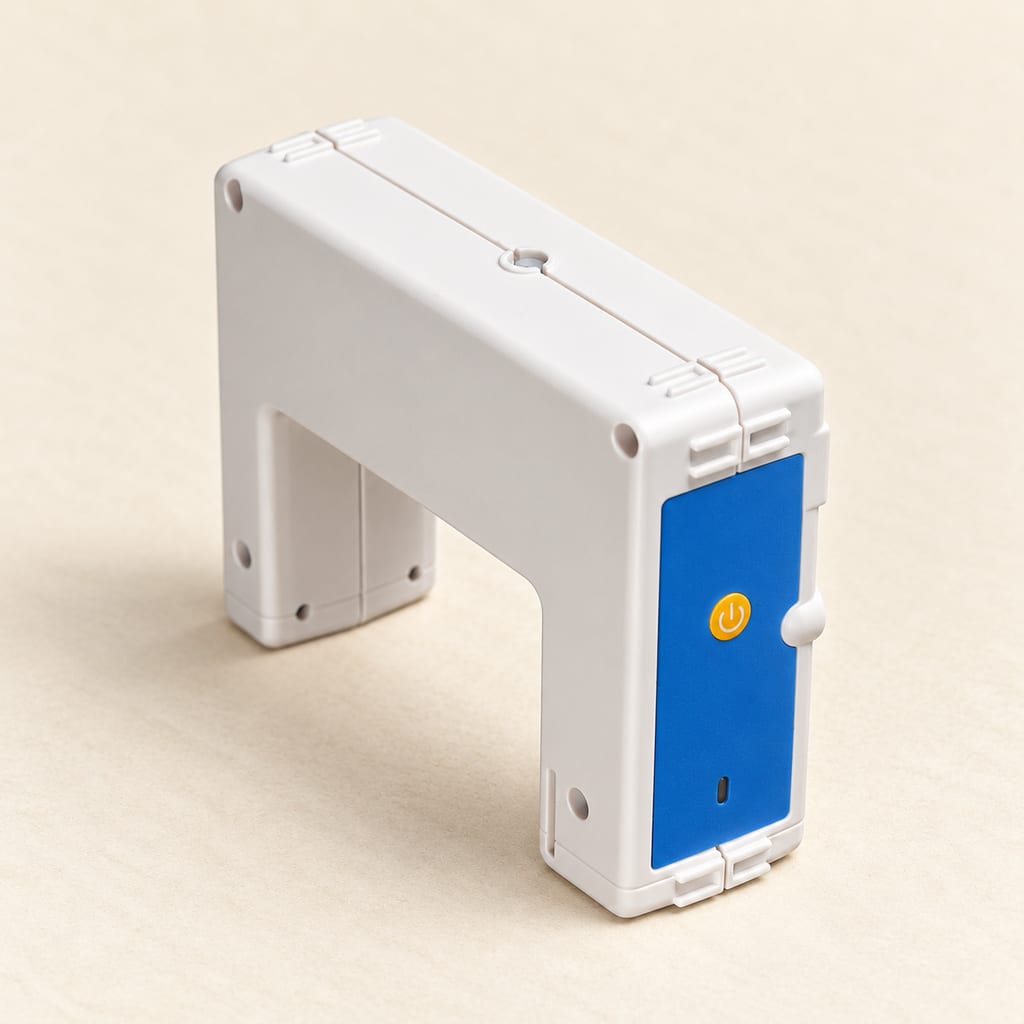
The available documentation describes a contemporary wireless electronic bubble counter, not the origin of bubble counting as a practice. Data Harvest's current model and manual establish an infrared sensor example with USB and Bluetooth connectivity, but do not identify an inventor, first date or historic place for the wider instrument category. This page therefore treats the 1240 as a modern product example and leaves the instrument class's earlier history unknown.
An optical bubble counter detects interruptions in a light path; it does not watch a fermenting vessel or measure dissolved gas. In Data Harvest's documented model 1240, an infrared emitter and receiver face across an 83 mm gap. When a bubble rises through a liquid column positioned between them, it momentarily changes the beam and the electronics register a count. The device has an indicator LED and a reset button, while its current version connects by USB or Bluetooth. These details describe that product, not every instrument called a bubble counter.
For bubbles, the documented sensor reports an absolute number of detected interruptions. Its preset conversions from 23 to 29 drops per cubic centimetre are calibrated drop ranges and should not be applied to gas bubbles. The manufacturer says bubble counts can show a change in gas production over time, but bubbles vary in shape and travel irregularly. To be counted consistently they should rise separately from the same origin; small fine bubbles may be missed. A count therefore describes the behavior of a particular setup, not a calibrated quantity of gas.
A useful arrangement first brings gas to one defined outlet and then sends it through a liquid column positioned in the sensor gap. Data Harvest's teaching worksheet shows a sealed reaction flask, delivery tubing and a water-filled reservoir; the manual instructs users to align the column with the infrared path and check that each bubble triggers the indicator. It cautions that bubbles should rise individually, and that bright ambient infrared light can cause false readings. The manual also warns about backflow in its example arrangement. These are setup-specific measurement cautions, not a general fermenting or pressure-control design.
The supplied Fermentea kombucha background archive flags an optical counter as unhelpful for an ordinary open kombucha vessel: much of the escaping gas is not collected at one defined outlet. That observation follows the instrument's operating principle. If gas leaves across the open surface rather than entering a single measurement column, the count cannot represent all gas produced. Even with a separate collection experiment, the result remains a count trend under that setup; it does not establish total gas volume, alcohol content, residual sugar or which microbes produced the gas. The manufacturer's examples establish use in controlled educational yeast-fermentation experiments, not a validated kombucha assay.
The current product example is a compact electronic sensor with a rigid housing and a clear open gap between two arms. Its housing material and production site are not identified in the cited pages. Data Harvest lists its UK address, but a seller address is not evidence that the device is manufactured there; neither the product page nor manual establishes where bubble counters originated. The references support a contemporary educational instrument and defined laboratory arrangements. They do not establish a traditional fermentation tool, a universal construction, or a direct measurement method for beverage composition.
The cited manufacturer offers a current Bluetooth/USB infrared sensor and documentation. These sources describe one product family and use cases, not the invention date, geographic origin or shared design of all bubble counters.
No source in this record establishes a place.
An ethanol-vapour gas sensor responds to alcohol in air, not directly to alcohol by volume in fermented liquid. Different gas sensors and bubble counters measure distinct signals.

Soft, spreadable Calabrian pork sausage made with a great deal of red chilli and fatty pork, stuffed into natural casings, sometimes smoked and matured while staying soft.

A way to add independent temperature logging to an existing food dehydrator without changing its built-in controls or protections. It is a monitoring method, not a rewiring plan.

Pleurotus cystidiosus is the abalone mushroom, a cultivated oyster-type fungus with dark brown caps that grows more slowly and is more demanding than other Pleurotus species.

A dark, balanced vinegar from Emilia-Romagna made by combining cooked or concentrated grape must with wine vinegar, then acetifying and refining it in wood under a protected specification.

A living dairy inoculum that starts controlled cream fermentation, developing acidity and aroma before sour cream or cultured butter is finished.

A small electric incubator holds jars at a selected temperature for yogurt and other documented warm food preparations. Controls, capacity and vessel arrangement vary by model.

Adygean salt is a seasoned table salt associated with Adygea and the wider North Caucasian culinary tradition. Salt is blended with garlic and a variable selection of herbs and spices; the exact mix depends on the named style and maker.

The African Caesar-group mushroom, Amanita masasiensis, is a wild ectomycorrhizal species of central and southern African woodlands, eaten locally. The genus contains deadly poisonous species, so identification needs care.
No community contributions have been published for this entry yet.
Sign in to contribute. Published comments and photos are free to read.
Data Harvest Group LtdForm · Operating principle · Model specification
1240 - Wireless Drop Bubble Counter: IntroductionThe documented model places an infrared emitter and receiver 83 mm apart; interruption of the beam by a drop or bubble produces a counted digital signal.
The counter can display an absolute bubble count; its preset 23–29 drops per cm³ volume conversions are for drops, not bubbles.
The current model has USB and Bluetooth compatibility.
Cited in: History and scope; How the counter detects bubbles; A count is not a volume; Form, geography and limits of the evidence
Data Harvest Group LtdUse · Limitations · Care
1240 - Wireless Drop Bubble Counter: Usage InformationA bubble column is placed between the receiver and emitter so each rising bubble changes the infrared beam.
The manual says bubbles cannot be calibrated for volume and can indicate change in gas production over time; inconsistent or overlapping bubbles may not count reliably, and small fine bubbles are unlikely to be detected.
The manual advises checking alignment and shielding the sensor from strong ambient infrared light; it also warns about backflow in the described apparatus.
Cited in: A count is not a volume; The outlet and column matter; Why an open kombucha jar is a poor fit
Data Harvest LtdCurrent product example · Applications · Manufacturer location
Wireless Drop & Bubble Counter SensorThe current 1240 sensor is marketed as a portable Bluetooth- and USB-compatible product with long battery life.
The supplier lists yeast enzyme fermentation of sucrose as one educational activity and documents gas-evolution teaching experiments with a defined delivery tube and water reservoir.
The seller lists its address in Bedfordshire, United Kingdom; this does not establish manufacturing location or international reach.
Cited in: History and scope; The outlet and column matter; Why an open kombucha jar is a poor fit; Form, geography and limits of the evidence