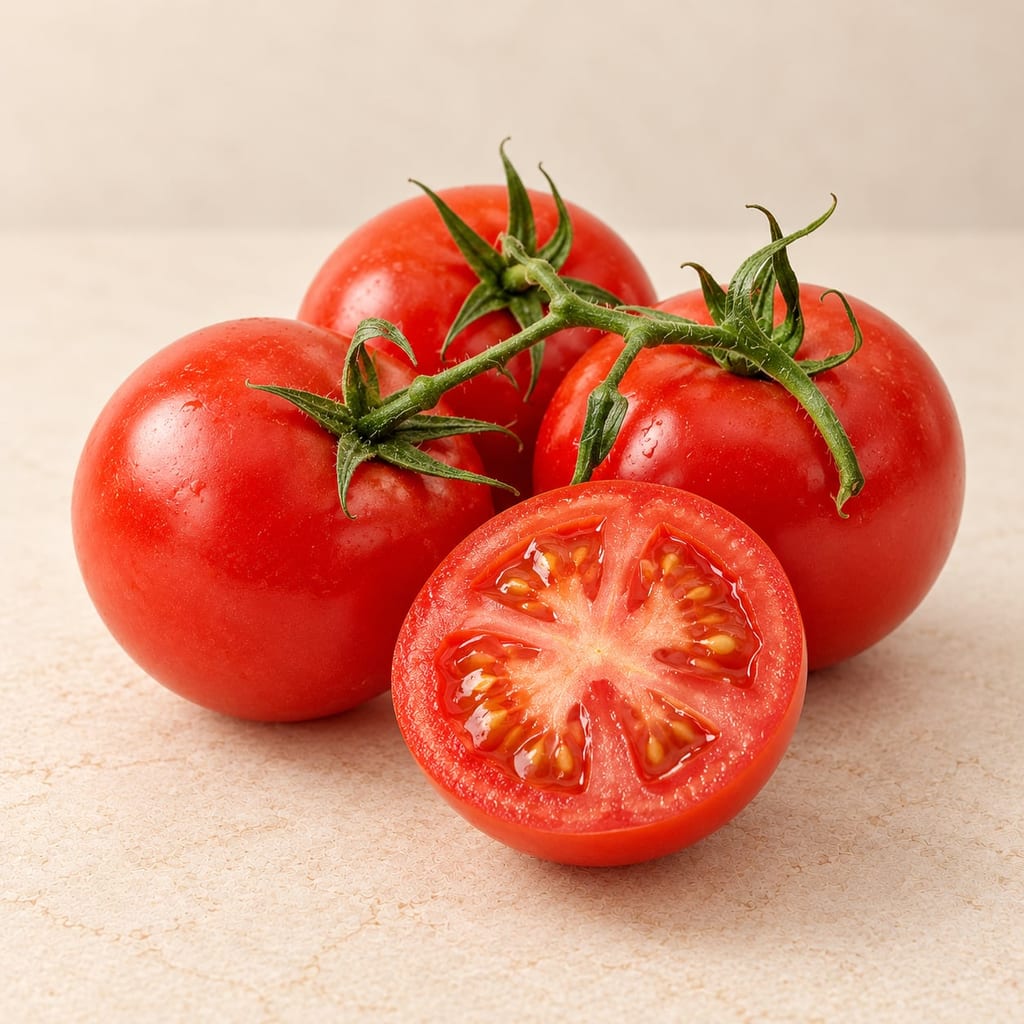
Tomatoes
Tomatoes are the fruit of Solanum lycopersicum, wild in the Andes and domesticated in Mesoamerica. They are eaten ripe or green, fresh, cooked, canned and fermented.
 FermenteaWhere food goes to change
Equipment · Jars, pots and crocks
A household produce cooler built from two clay pots, wet sand and a damp cover. Evaporating water cools the inner chamber without a powered refrigerator; it suits hot, dry, ventilated settings.
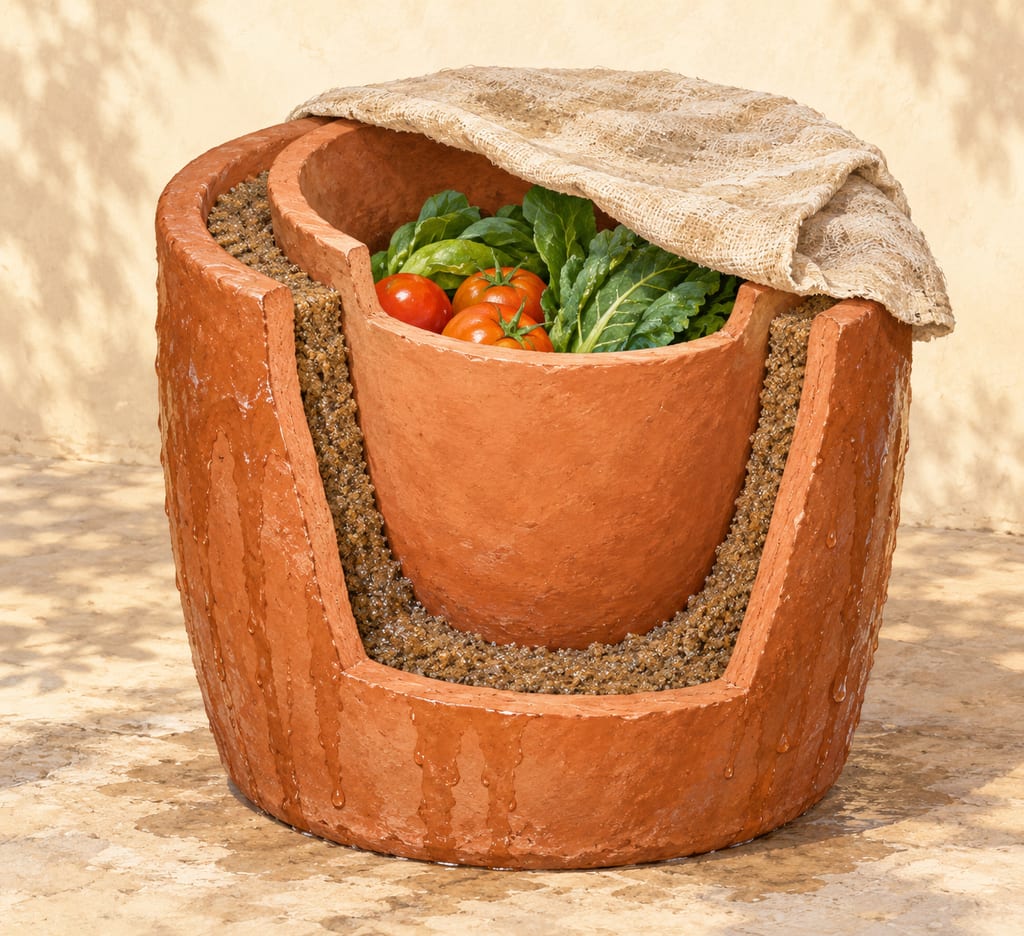
The household clay-pot cooler described here uses a smaller clay pot inside a larger clay pot, with wet sand filling the space between them. Fruits and vegetables sit in the inner chamber. As water evaporates through the damp sand and porous clay, it draws heat from the inner chamber and raises its humidity. A damp cloth or jute cover shields the opening. This pot-in-pot arrangement is distinct from the larger brick or pad-based chambers used for cooperative crop storage.
In a 2018 field evaluation in Mali, the clay pots were made from locally available clay; a women's cooperative near Mopti produced the pots used in the study. The report gives a 10–100 litre expected storage-volume range for its pot-in-pot class, not a fixed specification. The assembly guide notes that a fully assembled cooler can be heavy, so it should be assembled where it will be used. Local pot size and availability shape the practical capacity and cost.
The cooler works best in hot, dry conditions with airflow, shade and water. Keep the sand and cover damp, typically watering daily, and clean the unit regularly. The guide recommends it for fruit and vegetables only: it does not provide the temperatures needed for meat, dairy or medicines. Evaporative cooling becomes less effective as ambient humidity rises, so it is not a substitute for refrigeration in humid conditions or for temperature-controlled storage.
Mali is the place association supported by the field evidence here: clay-pot coolers were tested for household vegetable storage, and a cooperative near Mopti made pots for that work. The dated study records a contemporary application, not the invention date of the cooler or an exclusive origin. A 2021 guide developed with local research and agricultural partners documents continued assembly and use. The linked MIT photograph shows a cooler being watered in Bankass, Mali.
The earliest dated source used here is a 2018 Mali field evaluation. It documents household pot-in-pot coolers but does not establish when the design or the wider practice began. A 2021 guide describes assembly and care.
Evaporative performance depends on hot, dry air, access to water, shade and airflow; high ambient humidity reduces the cooling effect.
Source →The guide limits this cooler to fruit and vegetables; it is not suitable for storing meat, dairy or medicines.
Source →A women's cooperative near Mopti made the pots used in the Mali study; this documents use and manufacture in the region, not invention or origin.
Tomatoes are the fruit of Solanum lycopersicum, wild in the Andes and domesticated in Mesoamerica. They are eaten ripe or green, fresh, cooked, canned and fermented.

Soft, spreadable Calabrian pork sausage made with a great deal of red chilli and fatty pork, stuffed into natural casings, sometimes smoked and matured while staying soft.

A way to add independent temperature logging to an existing food dehydrator without changing its built-in controls or protections. It is a monitoring method, not a rewiring plan.

Pleurotus cystidiosus is the abalone mushroom, a cultivated oyster-type fungus with dark brown caps that grows more slowly and is more demanding than other Pleurotus species.

A dark, balanced vinegar from Emilia-Romagna made by combining cooked or concentrated grape must with wine vinegar, then acetifying and refining it in wood under a protected specification.

A living dairy inoculum that starts controlled cream fermentation, developing acidity and aroma before sour cream or cultured butter is finished.

A small electric incubator holds jars at a selected temperature for yogurt and other documented warm food preparations. Controls, capacity and vessel arrangement vary by model.

Adygean salt is a seasoned table salt associated with Adygea and the wider North Caucasian culinary tradition. Salt is blended with garlic and a variable selection of herbs and spices; the exact mix depends on the named style and maker.

The African Caesar-group mushroom, Amanita masasiensis, is a wild ectomycorrhizal species of central and southern African woodlands, eaten locally. The genus contains deadly poisonous species, so identification needs care.
No community contributions have been published for this entry yet.
Sign in to contribute. Published comments and photos are free to read.
MIT D-Lab and World Vegetable Center - MaliMethod · Materials · Geography · Performance · Limits
Evaporative Cooling Technologies for Improved Vegetable Storage in Mali: Evaluation, Full ReportA 2018 field evaluation studied household clay pot coolers in Mali in pot-in-pot and pot-in-dish configurations. Clay pots were made from local clay; a women's cooperative near Mopti made study pots. Its summary lists 10–100 L as the expected storage volume for pot-in-pot coolers, not a universal capacity.
Cited in: A nested clay-pot cooler; Documented use in Mali
MIT D-Lab, World Vegetable Center and Institut d'Economie RuraleMethod · Materials · Care · Limits
Evaporative Cooling for Fruit & Vegetable Storage: A Guide to Assembling, Using, & Maintaining Clay Pot CoolersThe guide describes a larger outer pot with an inner chamber, wet sand between them, and a damp cloth covering; it calls for shade, ventilation, keeping sand and cover damp, regular cleaning and produce-only use.
Cited in: A nested clay-pot cooler; Documented use in Mali
Global MITDesign context · Geographic distinction
Designing off-grid refrigeration technologies for crop storage in KenyaThe MIT account distinguishes household double-clay-pot coolers from larger evaporative chambers studied in Kenya; the larger chamber is a separate design and is not described here as clay-pot equipment.
Cited in: A nested clay-pot cooler
Abdul Latif Jameel Water and Food Systems Lab, MITImage · Regional use
Piloting evaporative cooling technologies to improve vegetable shelf-life and farmer income in Western IndiaThe page caption identifies a photo of Ousmane Sanogo watering a clay pot cooler in Bankass, Mali; the page credits the Antony and Verploegen research team.
Cited in: Documented use in Mali